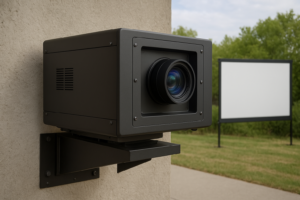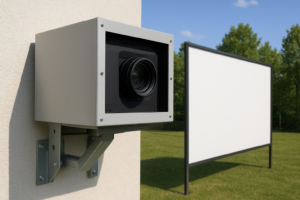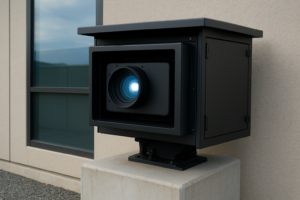

Climate Controlled Enclosures for Projection Mapping Projects
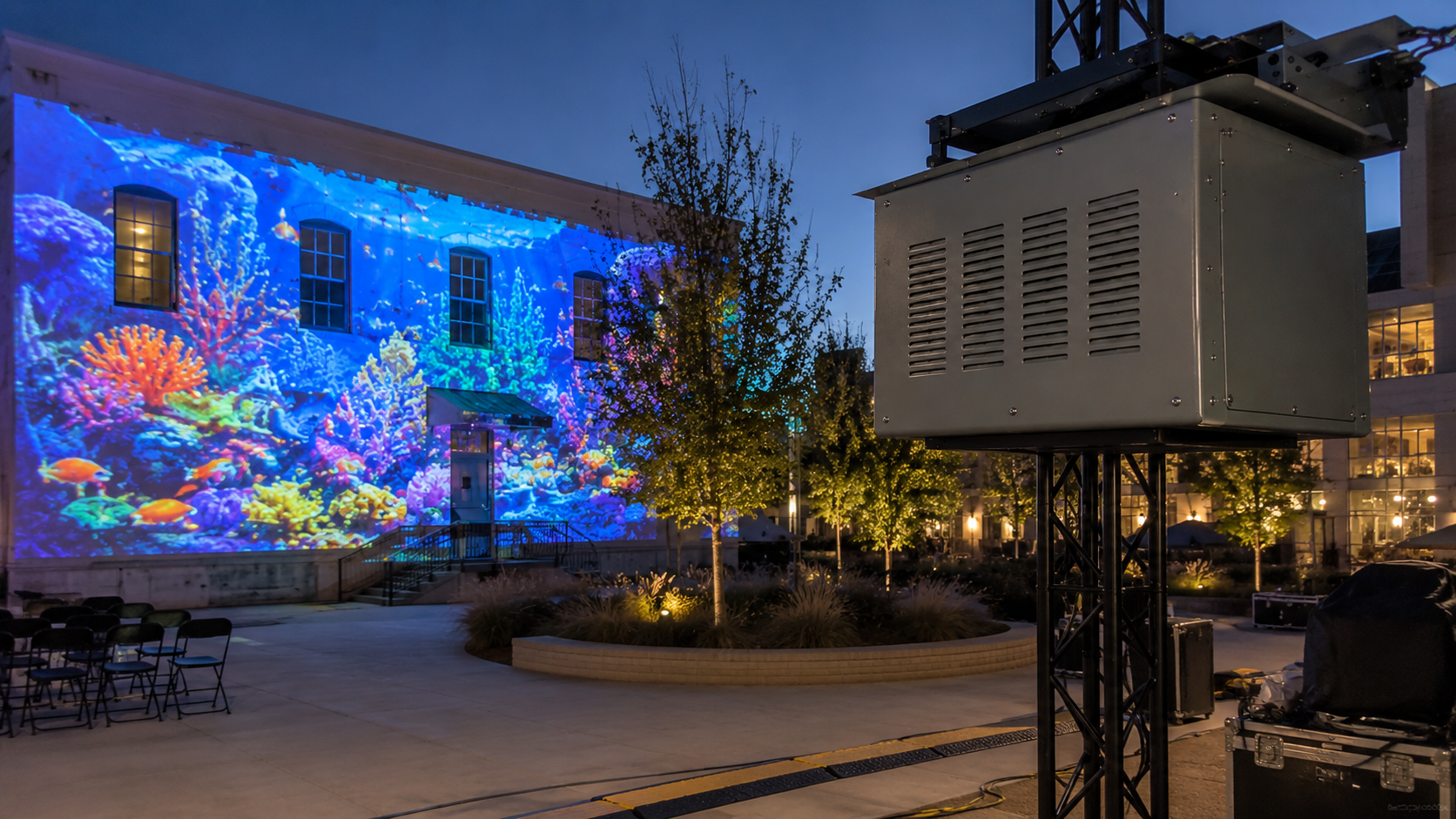
Climate Controlled Enclosures for Projection Mapping Projects
Climate controlled enclosures for projection mapping help protect projectors used in outdoor shows, building mapping, immersive displays, seasonal events, and permanent visual installations. Projection mapping looks clean when the audience sees the final image. However, behind that image, the projector has to survive heat, cold, humidity, dust, rain, wind, long runtimes, and fixed alignment demands.
That is where the enclosure becomes critical.
Unlike a casual indoor projector setup, projection mapping usually requires precision. The projector must stay locked into position, aimed correctly, and protected from the environment. If the projector moves, overheats, fogs, or gets dirty, the mapped image can shift, fade, distort, or fail completely.
Because of that, the enclosure should be planned as part of the projection mapping system from the beginning.
Projection Mapping Needs a Stable Projector Position
Projection mapping depends on alignment. The content is designed to fit a specific surface, such as a building, wall, sculpture, stage set, retail facade, museum exhibit, or outdoor structure.
Once that content is mapped, even small projector movement can create visible problems. A slight bump can throw the image off the edges. A mounting shift can break the illusion. In addition, lens movement or poor enclosure placement can make the mapped content look sloppy.
Therefore, the projector needs a stable, protected mounting location.
A climate controlled enclosure helps keep the projector installed in a fixed position while protecting it from outdoor exposure. As a result, the mapping system becomes easier to operate night after night.
Outdoor Mapping Creates More Stress Than Movie Projection
Projection mapping projects often run longer than standard movie presentations. Some systems operate for several hours per night. Others run for weeks during seasonal events, public art displays, hospitality activations, retail campaigns, or themed attractions.
During that time, the projector faces changing outdoor conditions.
Heat can build during long runtimes. Meanwhile, humidity can rise after sunset. Dust, pollen, and insects can collect around vents. Rain or wind can also create exposure issues, especially on fully outdoor installs.
ProjectorEnclosure.com describes the Defender Series as climate controlled projector enclosures built for outdoor and harsh-environment installations, with weather-resistant construction, insulation, secure access, active climate control, and service-friendly design.
That feature set fits projection mapping because the projector must stay protected without losing alignment.
Why Climate Control Matters for Mapped Installations
A standard protective box may block some rain or dust. However, projection mapping requires more than basic coverage.
The projector still needs a controlled operating environment. It must breathe properly, stay within safe temperature ranges, avoid moisture problems, and maintain a clear optical path. Otherwise, performance can suffer during the show.
Climate controlled enclosures help support:
- Temperature management
- Moisture reduction
- Dust protection
- Secure projector placement
- Cleaner cable routing
- Service access
- Lens and window alignment
- More reliable long-term operation
Because mapping projects depend on repeatable performance, climate control becomes part of the creative system. It protects the hardware that makes the visual illusion possible.
Defender Series Enclosures for Projection Mapping
The Defender Series is a strong choice for projection mapping because it is built for demanding outdoor environments. ProjectorEnclosure.com states that these enclosures help protect projection equipment from changing temperatures, humidity, rain, snow, dust, and public-facing installation risks.
That protection matters for mapped installations in locations such as:
- Building facades
- Theme parks
- Museums
- Resorts
- Universities
- Stadiums
- Outdoor event spaces
- Retail environments
- Public art installations
- Holiday projection shows
In addition, Defender-style enclosures can support custom sizing, custom finishes, projector and lens clearance adjustments, modified ventilation, custom mounting support, locking access panel changes, and project-specific cable or power routing.
Those options help the enclosure fit the projector, surface, environment, and installation design.
Projection Mapping in Harsh Conditions
Outdoor mapping often happens where weather cannot be perfectly controlled. Even if the event runs only at night, the projector may sit outside through daytime sun, wind, moisture, dust, and temperature swings.
ProjectorEnclosure.com specifically discusses projection mapping in harsh conditions and explains that Defender climate controlled enclosures help make mapping possible in rain, snow, or heat.
That is important because mapped installations often have tight timelines. If a projector goes down during a show, the issue becomes visible fast.
A climate controlled enclosure helps reduce that risk by protecting the projector before, during, and after the event.
Dust and Moisture Can Damage Image Quality
Projection mapping depends on image clarity. Dust near the lens, dirt on the projection window, or moisture around optics can weaken the final image.
BenQ notes that dust can affect projector performance and recommends protecting projectors from dusty environments.
https://www.benq.com/en-us/knowledge-center/knowledge/what-can-you-do-to-protect-your-school-projectors-from-dust.html
Moisture deserves the same attention. The U.S. EPA explains that unmanaged moisture can affect materials and systems over time.
https://www.epa.gov/sites/default/files/2014-08/documents/moisture-control.pdf
Although those sources do not focus only on projection mapping, the lesson applies clearly: outdoor electronics need protection from dust and moisture if they are expected to perform reliably.
Lens Direction and Projection Window Planning
For projection mapping, lens direction matters from day one. The projector must aim directly at the mapped surface, and the enclosure must support that angle.
If the projector uses an acrylic or glass projection window, the window must line up cleanly with the lens. Poor alignment can cause reflections, brightness loss, distortion, or unwanted beam clipping.
Before installation, confirm:
- Projector model
- Lens model
- Throw distance
- Mapping surface size
- Beam path
- Lens shift requirements
- Mounting height
- Service access
- Cable routing
- Window alignment
- Outdoor exposure level
ProjectorEnclosure.com recommends sharing projector model, lens model, dimensions, installation location, exposure level, temperature range, humidity concerns, mounting method, access direction, finish preference, and clearance limits before sizing a climate controlled enclosure.
With that information, SSI can help match the enclosure to the projector and mapping environment.
Better Enclosure Planning Means Better Shows
Projection mapping is visual storytelling. The audience sees motion, color, architecture, atmosphere, and illusion. However, the show only works when the technical foundation stays reliable.
A climate controlled enclosure supports that foundation.
It helps keep the projector fixed, protected, serviceable, and ready. In addition, it makes the installation look more professional by organizing the projector, mount, power, and cabling into a cleaner system.
For serious outdoor mapping, the enclosure should not be treated as a last-minute accessory. It should be part of the production plan.
Final Takeaway
Outdoor projection mapping needs more than a bright projector. It needs stable alignment, environmental protection, clean airflow, moisture control, secure mounting, and service access.
Climate controlled enclosures for projection mapping help protect the projector from heat, cold, rain, dust, humidity, and long-term outdoor exposure. For building mapping, event visuals, public displays, and permanent installations, a Defender Series enclosure gives the projector a stronger foundation.
Call 888-631-5880 or visit ProjectorEnclosure.com to review your projector model, lens, mapping surface, and installation environment.
Sources
ProjectorEnclosure.com — Climate Controlled Projector Enclosures
https://projectorenclosure.com/climate-controlled-projector-enclosures/
ProjectorEnclosure.com — Projection Mapping in Harsh Conditions
https://projectorenclosure.com/mapping-harsh-environments/
SSI Displays — Projector Enclosures
https://ssidisplays.com/projector-enclosures/
ProjectorEnclosure.com — The Defender Series Enclosures
https://projectorenclosure.com/store/the-defender-series-enclosures/
ProjectorEnclosure.com — Projector Enclosures Overview
https://projectorenclosure.com/projector-enclosures/
BenQ — Protecting Projectors From Dust
https://www.benq.com/en-us/knowledge-center/knowledge/what-can-you-do-to-protect-your-school-projectors-from-dust.html
U.S. EPA — Moisture Control Guidance
https://www.epa.gov/sites/default/files/2014-08/documents/moisture-control.pdf
Element14 — How Sunlight, Humidity, and Moisture Affect Electronics
https://community.element14.com/learn/learning-center/the-tech-connection/b/blog/posts/how-do-sunlight-humidity-and-moisture-affect-electronics