
Outdoor Home Theatre Projector Enclosures for Rain, Dust, and Backyard Debris
Climate Controlled Projector Enclosures for Outdoor Rain and Dust Protection
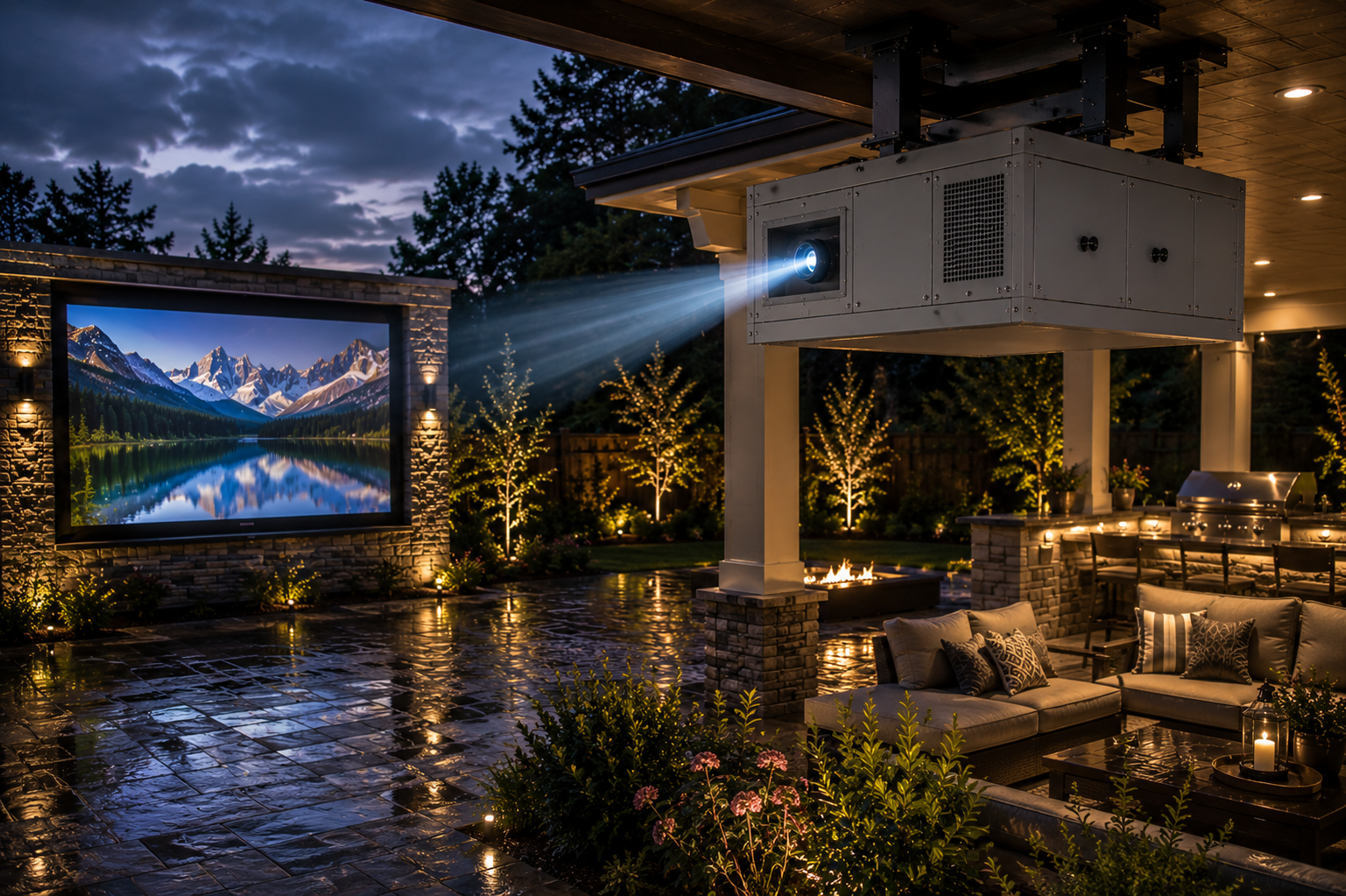
Climate controlled projector enclosures help protect outdoor home theatre projectors from rain, dust, pollen, insects, and backyard debris. A projector may sit under a patio cover or pergola, but outdoor air still moves through the space. Wind can push moisture sideways, dust can settle into vents, and pollen can collect around the lens area.
Because of that, outdoor projector protection needs to go beyond a simple roof.
A backyard theatre should feel ready for movie nights, sports, parties, and family events. However, the projector cannot stay reliable if it constantly fights outdoor exposure. Rain, dust, and debris can affect airflow, image clarity, electronics, and long-term performance.
That is exactly where a climate controlled enclosure becomes valuable.
Why Rain Is Still a Problem Under Covered Patios
Covered patios help, but they do not fully protect projector equipment. During storms, wind can push rain sideways. In addition, water can splash from nearby surfaces, drip from roof edges, or collect around mounting structures.
For outdoor home theatres, this creates risk in several ways:
- Moisture can reach electrical components
- Water can collect near cable entry points
- Humidity can rise after rain
- Damp surfaces can attract dust and debris
- Outdoor hardware can corrode over time
- Lens areas can become dirty or fogged
As a result, a projector should not be treated like patio furniture. It needs a purpose-built protective housing.
ProjectorEnclosure.com describes its Defender Series climate controlled projector enclosures as built for outdoor and harsh-environment installations, with weather-resistant construction, insulation, secure access, active climate control, and service-friendly design.
Dust and Pollen Can Quietly Damage the Experience
Rain gets the attention, yet dust and pollen usually create the slow problems.
Outdoor projectors rely on airflow. When dust enters the projector or collects around vents, the cooling system has to work harder. Meanwhile, pollen, leaves, dirt, and insects can settle around the lens area or enclosure openings.
That buildup can lead to:
- Reduced airflow
- More frequent cleaning
- Higher operating temperatures
- Dirty lens surfaces
- Lower image clarity
- Shorter equipment life
- Unexpected shutdowns
BenQ notes that dust can affect projector performance and recommends protecting projectors from dusty environments.
https://www.benq.com/en-us/knowledge-center/knowledge/what-can-you-do-to-protect-your-school-projectors-from-dust.html
For backyard theatres, that advice applies even more strongly. Outdoor air carries dust every day, not just during storms.
Backyard Debris Creates Real Maintenance Issues
Homeowners often think about rain and heat first. Still, backyard debris can be just as frustrating.
Leaves, grass clippings, insects, spiderwebs, ash from fire pits, pollen, and dust from nearby landscaping can all reach outdoor AV equipment. In pool areas, moisture and chemical exposure may also add another layer of concern.
Over time, these small contaminants build up. Then, the projector may need more cleaning, more service, or more frequent adjustments.
A climate controlled enclosure helps reduce direct exposure. Instead of leaving the projector open to the environment, the enclosure creates a controlled barrier between the projector and the backyard.
Why a Basic Cover Does Not Solve Dust or Rain
A soft cover may help when the projector is off. However, it usually needs to be removed during use. Once removed, the projector becomes exposed again.
Also, a basic cover does not manage airflow while the projector runs. If it remains too close to the projector during operation, it can trap heat. If it leaves gaps, dust and moisture can still get in.
That is the classic problem with temporary protection: it helps a little, but it does not support full-time outdoor operation.
Climate controlled projector enclosures solve the issue more completely. They protect the projector during downtime and support the projector during operation.
How Defender Series Enclosures Help Protect Outdoor Projectors
The Defender Series is designed for installations where a standard projector housing is not enough. ProjectorEnclosure.com states that these climate controlled projector enclosures help protect valuable projection equipment from changing temperatures, humidity, rain, snow, dust, and public-facing installation risks.
For outdoor home theatres, that means better protection from common backyard conditions.
Key benefits include:
- Weather-resistant exterior construction
- Active climate control support
- Insulated enclosure body
- Secure access panels
- Service-friendly design
- Custom sizing options
- Projector and lens clearance adjustments
- Custom finish options
- Cable and power routing support
Because of those features, the enclosure becomes part of the outdoor theatre system instead of an add-on.
Rain and Dust Protection Starts With Correct Sizing
A good enclosure has to fit the projector correctly. If the housing is too tight, airflow may suffer. If it is oversized or poorly planned, the installation may look bulky and awkward.
Before ordering, gather the projector details and installation conditions.
ProjectorEnclosure.com recommends sending the projector make and model, lens model, dimensions, installation location, exposure level, expected temperature range, humidity concerns, mounting method, required access direction, desired finish, and site clearance limits.
That process helps SSI review the right fit for the projector, lens, airflow, service access, and environment.
Additionally, the lens side must aim toward the screen. If the projector sits behind an acrylic projection window, that window should align with the lens and projection path.
Best Locations for Protected Outdoor Theatre Installs
Climate controlled projector enclosures work well in many backyard layouts.
Strong use cases include:
- Covered patios
- Pergola-mounted theatres
- Poolside viewing spaces
- Outdoor kitchens
- Garden cinema walls
- Sports viewing patios
- Backyard projection mapping setups
- Vacation homes
- Lakeside homes
- Coastal homes
In each case, the enclosure helps the projector stay installed and protected. Therefore, the homeowner can enjoy the theatre without dragging equipment in and out after every use.
That convenience matters, but protection is the real win.
Plan Service Access Before Mounting
Rain and dust protection should not make maintenance difficult. Eventually, someone may need to inspect the enclosure, wipe the projection window, check vents, service cables, or remove the projector.
Before installation, confirm:
- Access panels can open fully
- The enclosure is reachable from a ladder or platform
- Cable entries are clean and protected
- Vents have enough surrounding clearance
- The projection window can be cleaned
- Mounting brackets do not block service areas
- The projector can be removed if needed
With this planning, maintenance stays manageable. Without it, even simple cleaning can become annoying.
A Cleaner System Looks More Professional
Outdoor home theatres should look intentional. A projector sitting on a table can work, but it rarely looks premium. In contrast, a clean enclosure mounted into the patio structure creates a more finished appearance.
The best setups hide cables, align the projector properly, and match the enclosure finish to the surrounding structure. As a result, the theatre feels like part of the home.
For high-end backyards, this matters. The enclosure protects the projector, but it also improves the visual quality of the install.
Final Takeaway
Rain, dust, pollen, insects, and backyard debris can cause long-term problems for outdoor projectors. A roof or basic cover may help slightly, but it does not create the level of protection needed for a permanent outdoor home theatre.
Climate controlled projector enclosures provide a stronger solution. They help protect the projector from outdoor exposure while supporting cleaner installation, better reliability, and easier use.
For backyard theatres that need to stay installed, protected, and ready, a Defender Series climate controlled enclosure is the smart move.
Call 888-631-5880 or visit ProjectorEnclosure.com to review your projector, lens, mounting location, and outdoor theatre environment.
Sources
ProjectorEnclosure.com — Climate Controlled Projector Enclosures
https://projectorenclosure.com/climate-controlled-projector-enclosures/
ProjectorEnclosure.com — 5 Questions to Ask Before Choosing a Projector Enclosure
https://projectorenclosure.com/choosing-outdoor-enclosure/
SSI Displays — Projector Enclosures
https://ssidisplays.com/projector-enclosures/
ProjectorEnclosure.com — Projector Enclosures Overview
https://projectorenclosure.com/projector-enclosures/
BenQ — Protecting Projectors From Dust
https://www.benq.com/en-us/knowledge-center/knowledge/what-can-you-do-to-protect-your-school-projectors-from-dust.html
ProjectorEnclosure.com — The Defender Series Enclosures
https://projectorenclosure.com/store/the-defender-series-enclosures/
U.S. EPA — Moisture Control Guidance
https://www.epa.gov/sites/default/files/2014-08/documents/moisture-control.pdf
Element14 — How Sunlight, Humidity, and Moisture Affect Electronics
https://community.element14.com/learn/learning-center/the-tech-connection/b/blog/posts/how-do-sunlight-humidity-and-moisture-affect-electronics
Outdoor Projector Enclosures For Amphitheaters