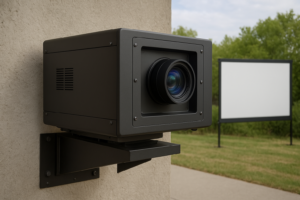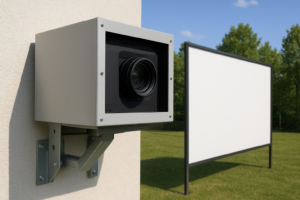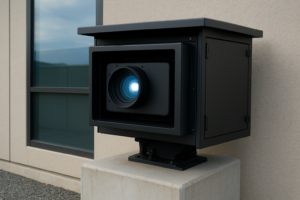

Climate Controlled Projector Enclosures for Building Projection Mapping
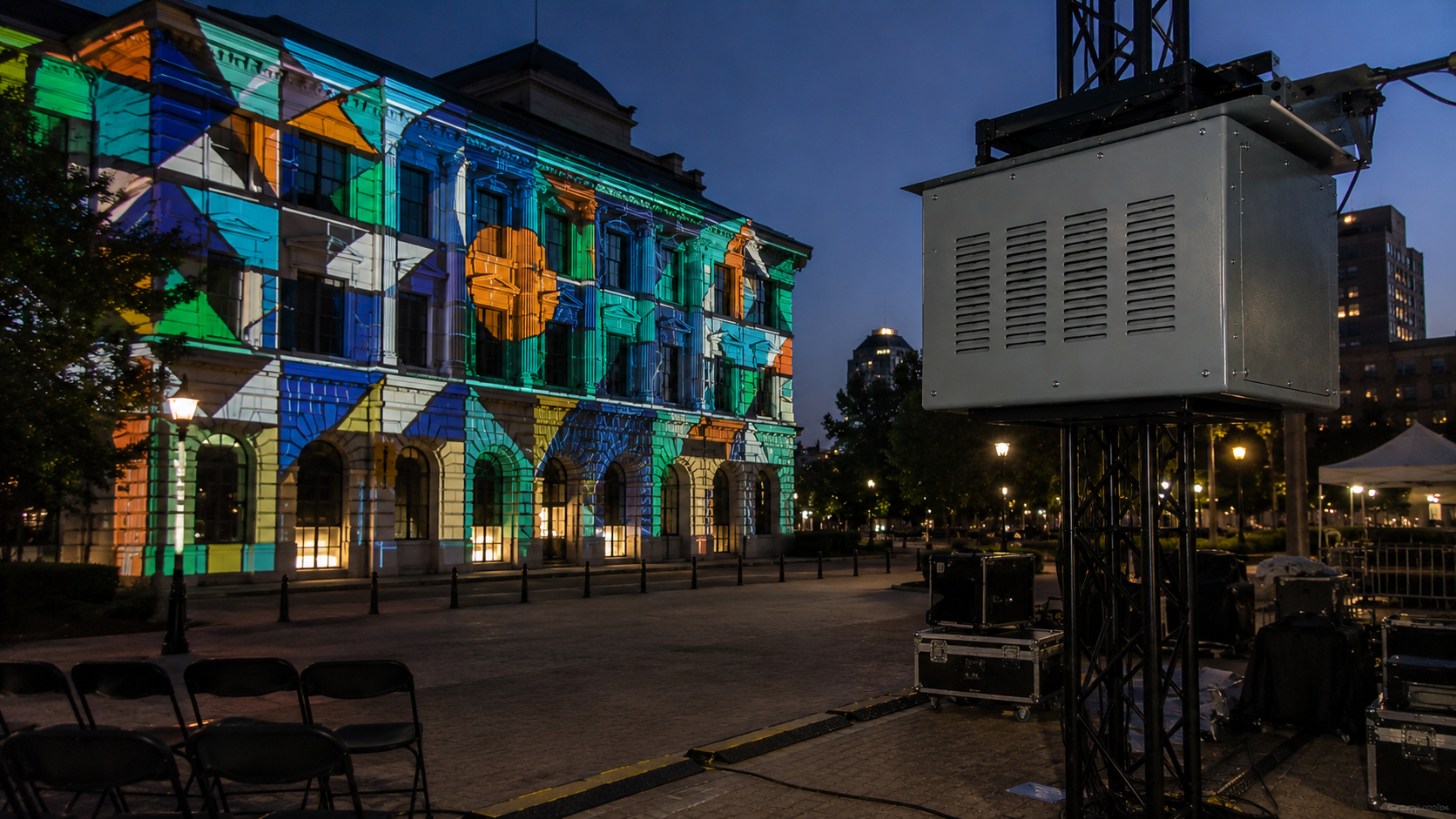
Climate Controlled Projector Enclosures for Building Projection Mapping
Climate controlled projector enclosures for building projection mapping help protect projectors used to transform walls, facades, storefronts, museums, resorts, campuses, and event venues into large-scale visual displays. Building mapping can look effortless from the audience side, yet the technical setup has to work through real outdoor conditions.
That means heat, cold, rain, dust, humidity, wind, long runtimes, and strict projector alignment all matter.
A projector cannot shift, overheat, fog, or collect debris during a mapped show. If it does, the image may lose alignment, brightness, or clarity. Because of that, the enclosure should be treated as a core part of the projection mapping system, not a last-minute accessory.
Building Mapping Depends on Fixed Alignment
Projection mapping on a building requires precision. The content is designed around the actual surface, including windows, columns, doors, rooflines, signs, and architectural details.
Once the projector is aligned, even a small movement can create visible problems.
For example, a graphic that once lined up with a window may suddenly land on a wall section. Likewise, animated edges can drift away from architectural corners. As a result, the illusion breaks quickly.
A climate controlled enclosure helps keep the projector mounted in a fixed position. In addition, it protects the projector from weather and environmental exposure while the system stays in place.
Outdoor Facades Create Tough Conditions
Building projection mapping often happens outside. Therefore, the projector has to deal with conditions that indoor AV systems never face.
During the day, the enclosure may sit in heat or direct environmental exposure. At night, humidity can rise. Meanwhile, dust, pollen, insects, and wind can move through the site. Rain or snow may also affect the area before or after the show.
ProjectorEnclosure.com describes the Defender Series as climate controlled projector enclosures built for outdoor and harsh-environment installations. These enclosures combine weather-resistant construction, insulation, secure access, active climate control, and service-friendly design.
That combination makes sense for building mapping because the projector has to stay protected without losing its mapped position.
Climate Control Protects the Show, Not Just the Projector
A climate controlled enclosure protects the projector hardware. However, it also protects the quality of the show.
When a projector overheats, the mapped experience can stop completely. When dust collects around the lens or projection window, the image may look softer. If moisture builds up near optics or electronics, reliability can suffer.
Therefore, climate control supports the final visual result.
A strong enclosure strategy can help with:
- Heat management
- Cold-weather protection
- Moisture reduction
- Dust and pollen protection
- Secure fixed mounting
- Cleaner cable routing
- Service access
- Projection window alignment
- Long-term outdoor installation
Because building mapping projects often involve public audiences, event deadlines, and high-value content, those details matter.
Defender Series Enclosures for Mapped Buildings
The Defender Series is built for outdoor projector protection where standard housing is not enough. ProjectorEnclosure.com states that Defender climate controlled projector enclosures help protect projection equipment from changing temperatures, humidity, rain, snow, dust, and public-facing installation risks.
That protection supports building projection mapping applications such as:
- Museum facade mapping
- Retail storefront visuals
- Resort and hotel activations
- University campus projections
- City event mapping
- Stadium exterior visuals
- Holiday building projections
- Corporate event displays
- Outdoor art installations
- Theme park structures
In many of these settings, the projector may remain installed for days, weeks, or longer. So, the enclosure needs to protect the system before, during, and after showtime.
Lens Direction and Window Alignment Are Critical
Building mapping depends on a clean beam path. The projector lens must face the mapped surface, and the enclosure must support that exact direction.
If the enclosure includes an acrylic or glass projection window, the window must align with the lens. Otherwise, reflections, brightness loss, distortion, or beam clipping can affect the mapped image.
Before installation, confirm:
- Building surface dimensions
- Projector model
- Lens model
- Throw distance
- Mounting height
- Lens shift range
- Beam angle
- Window alignment
- Service panel access
- Cable route
- Site exposure
ProjectorEnclosure.com recommends sharing projector model, lens model, dimensions, installation location, exposure level, temperature range, humidity concerns, mounting method, access direction, finish preference, and clearance limits before sizing a climate controlled enclosure.
That information helps SSI review fitment, airflow, lens clearance, service access, and enclosure direction before quoting.
Weather Can Interrupt Poorly Protected Mapping Setups
Building mapping is often scheduled around public events. That leaves very little room for projector failure.
Rain, heat, cold, dust, or humidity can create problems if the projector sits in the wrong housing. Even a temporary event can face rough conditions during setup, rehearsal, showtime, and teardown.
ProjectorEnclosure.com discusses projection mapping in harsh conditions and explains that Defender climate controlled enclosures help make mapping possible in rain, snow, or heat.
That matters because mapped events are visual. If the projector fails, the audience sees the problem immediately.
Dust and Moisture Can Reduce Image Quality
Large building projections need as much clarity as possible. Dust near the projection path can soften the image. Moisture can also create long-term reliability concerns for exposed electronics and optical surfaces.
BenQ notes that dust can affect projector performance and recommends protecting projectors from dusty environments.
https://www.benq.com/en-us/knowledge-center/knowledge/what-can-you-do-to-protect-your-school-projectors-from-dust.html
In addition, the U.S. EPA explains that unmanaged moisture can affect materials and systems over time.
https://www.epa.gov/sites/default/files/2014-08/documents/moisture-control.pdf
For outdoor mapping, these concerns are practical. Dust and moisture do not need to destroy a projector overnight to cause problems. Instead, they can slowly reduce performance, increase maintenance, and raise failure risk.
Permanent and Temporary Mapping Both Need Enclosures
Some building mapping projects run for one night. Others become semi-permanent or seasonal installations. Either way, the projector needs protection.
Temporary projects still need weather-resistant planning because setup can begin days before the event. Meanwhile, permanent installs need even stronger protection because the projector remains exposed for much longer.
A climate controlled enclosure can support both scenarios.
For temporary projects, it helps protect the projector during event conditions. For permanent installs, it helps create a stable long-term equipment location.
Either way, the enclosure protects the projector’s role in the show.
Cable Routing Should Be Planned Early
Building projection mapping often requires more than one cable. Power, signal, network, control, media playback, and backup systems may all be involved.
Because of that, cable routing should be planned before the projector enclosure is mounted.
A clean system should consider:
- Power source location
- Signal cable path
- Network access
- Media server location
- Cable ramps or covers
- Weather-safe routing
- Service loops
- Locking access
- Backup equipment placement
- Technician access
ProjectorEnclosure.com lists project-specific cable and power routing as one of the custom options available for climate controlled enclosure projects.
That flexibility helps integrators build cleaner and more reliable mapping systems.
Better Enclosures Make Better Production Workflows
Projection mapping projects often involve creative teams, AV integrators, designers, installers, event producers, and site managers. When the enclosure is planned correctly, the workflow improves.
The projector stays in position. Technicians can access the equipment. Cables route cleanly. The projector has better protection from weather. Also, the final installation looks more professional.
As a result, the creative team can focus on the content instead of fighting the hardware.
That is the real value of a proper enclosure. It makes the technical system feel dependable.
Final Takeaway
Building projection mapping needs precision, protection, and repeatable performance. A projector must stay aligned to the facade while surviving outdoor exposure, weather changes, dust, humidity, and long runtimes.
Climate controlled projector enclosures for building projection mapping help protect the projector and the show itself. For facades, museums, resorts, retail spaces, campuses, and public events, a Defender Series enclosure gives the mapping system a stronger technical foundation.
Call 888-631-5880 or visit ProjectorEnclosure.com to review your projector model, lens, building surface, and installation environment.
Sources
ProjectorEnclosure.com — Climate Controlled Projector Enclosures
https://projectorenclosure.com/climate-controlled-projector-enclosures/
ProjectorEnclosure.com — Projection Mapping in Harsh Conditions
https://projectorenclosure.com/mapping-harsh-environments/
BenQ — Protecting Projectors From Dust
https://www.benq.com/en-us/knowledge-center/knowledge/what-can-you-do-to-protect-your-school-projectors-from-dust.html
U.S. EPA — Moisture Control Guidance
https://www.epa.gov/sites/default/files/2014-08/documents/moisture-control.pdf
ProjectorEnclosure.com — The Defender Series Enclosures
https://projectorenclosure.com/store/the-defender-series-enclosures/
ProjectorEnclosure.com — Projector Enclosures Overview
https://projectorenclosure.com/projector-enclosures/
Element14 — How Sunlight, Humidity, and Moisture Affect Electronics
https://community.element14.com/learn/learning-center/the-tech-connection/b/blog/posts/how-do-sunlight-humidity-and-moisture-affect-electronics
SSI Displays — Projector Enclosures
https://ssidisplays.com/projector-enclosures/