
Fan-Cooled Projector Enclosures for Building Projection Mapping
Fan-Cooled Projector Enclosures for Building Projection Mapping
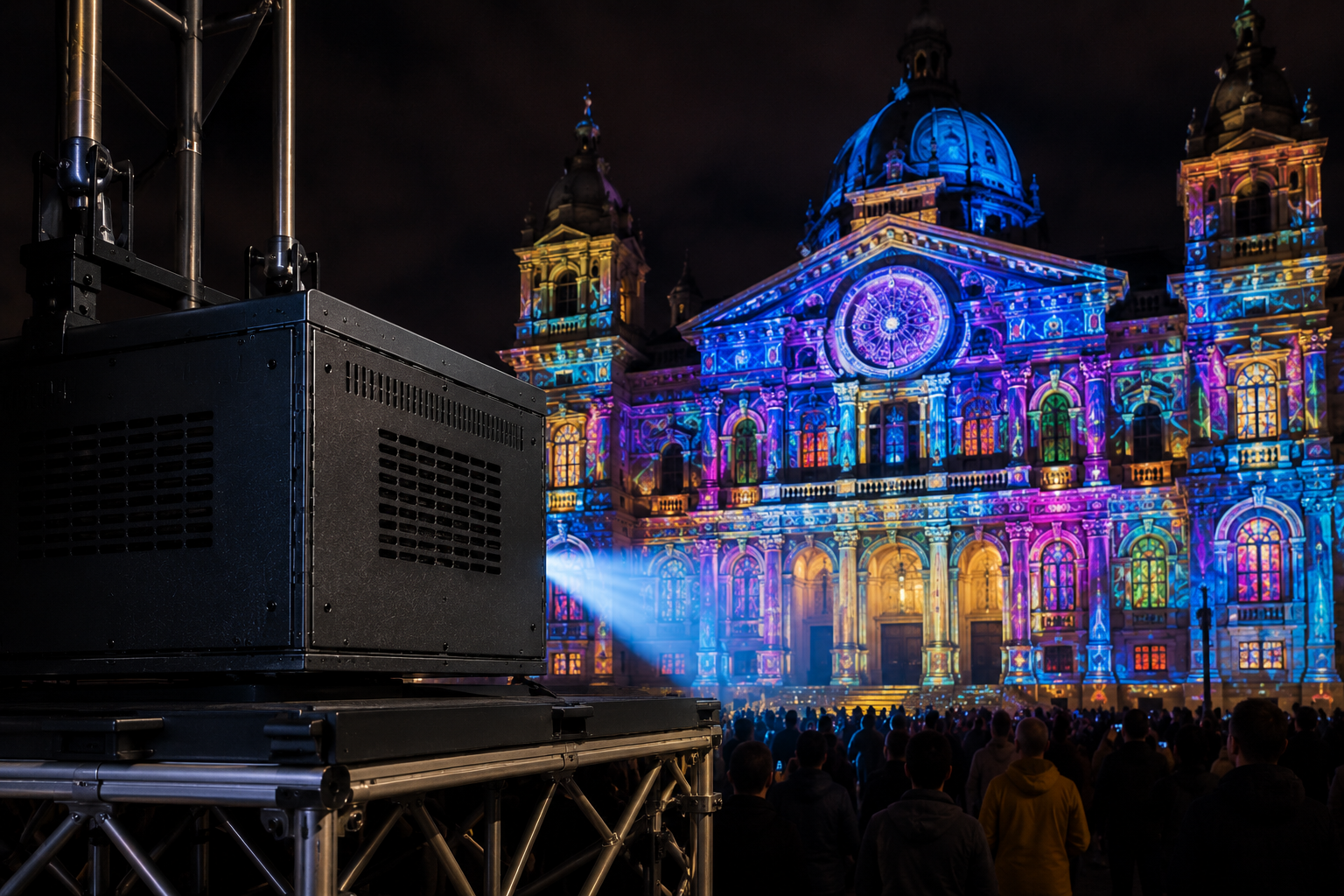
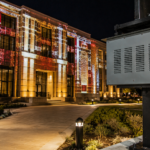
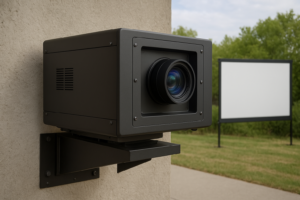
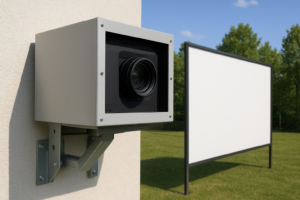
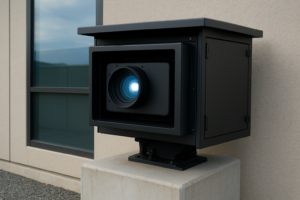
A fan-cooled projector enclosure can be a smart solution for building projection mapping projects where the projector is installed in a covered, mild, or semi-protected location. Projection mapping depends on image alignment, projector stability, airflow, and clean installation planning. Therefore, the enclosure matters almost as much as the projector itself.
Building projection mapping can transform walls, façades, courtyards, entryways, storefronts, churches, museums, hotels, and public buildings into animated visual displays. However, these projects can also put projectors in difficult locations.
A projector may sit on a rooftop, balcony, covered patio, temporary platform, truss structure, booth, or interior window line. Because of that, it needs protection from dust, accidental contact, tampering, heat buildup, and installation movement.
A fan-cooled projector enclosure helps solve those problems when the environment does not require full climate control. It protects the projector while still helping air move through the enclosure.
As a result, the projection mapping system looks cleaner, stays more secure, and supports better long-term operation.
Why Building Projection Mapping Needs Projector Protection
Projection mapping is different from basic projection. Instead of simply aiming at a flat screen, the projector aligns content to architectural surfaces. That may include windows, columns, doors, arches, brick walls, stonework, signage, and irregular building features.
ProjectorCentral explains that projection mapping can transform objects, venues, stadiums, concert halls, and building exteriors with projected visuals. Barco also describes projection mapping as a technique that uses light and color on irregular shapes and non-flat surfaces.
Because of that, precision matters.
If the projector shifts, even slightly, the mapped image can drift off the architecture. A window animation may no longer line up. A doorway effect may lose its edge. A mapped logo may fall outside the intended surface.
Therefore, building projection mapping needs a stable projector setup. A fan-cooled enclosure helps protect the projector from accidental bumps, public access, loose cabling, and setup-related movement.
Why Airflow Matters in Projection Mapping Enclosures
Projectors generate heat. They also need proper ventilation.
Epson warns users not to block projector slots or openings because they provide ventilation and help reduce heat-related operating risk. Epson also warns against placing projectors in closed-in cabinets unless proper ventilation is provided.
That matters during projection mapping because many shows run for hours. For example, a holiday building show may run every night for several weeks. A museum façade projection may run through an evening event. A hotel courtyard display may loop content during guest arrivals.
Therefore, the projector needs protection. However, it also needs air.
A random sealed box can trap heat. In contrast, a purpose-built fan-cooled projector enclosure helps protect the projector while supporting airflow.
That difference matters during long mapping events.
What a Fan-Cooled Projector Enclosure Does for Projection Mapping
A fan-cooled projector enclosure gives the projector a ventilated protective housing. It helps guard against dust, tampering, accidental contact, visual clutter, and heat buildup.
ProjectorEnclosure.com explains that fan-cooled projector enclosures are built for environments where airflow, dust control, security, and service access matter. The site also lists projection mapping as one of the ideal applications for fan-cooled enclosures.
In addition, ProjectorEnclosure.com explains that fan-cooled systems use filtered ambient air and exhaust hot air from the enclosure. It recommends fan-cooled protection for indoor, covered, or mild environments, while fully outdoor or harsh environments usually call for climate-controlled protection.
Because of that, fan-cooled enclosures work well for many covered projection mapping setups.
They can help protect against:
- Dust
- Heat buildup
- Public tampering
- Accidental contact
- Cable clutter
- Rooftop or truss activity
- Temporary event setup movement
- Visual distraction from exposed equipment
- Long show runtimes
- Alignment disruption
For building projection mapping, that protection helps keep the show cleaner and more controlled.
Best Building Projection Mapping Applications for Fan-Cooled Enclosures
A fan-cooled projector enclosure can support many building mapping projects. However, it works best when the projector sits indoors, under cover, or in a mild semi-protected location.
1. Storefront Projection Mapping
Retail storefronts can use projection mapping for holiday windows, product launches, grand openings, seasonal campaigns, and after-hours visual displays.
Because storefront installations often sit near sidewalks or public areas, projector protection matters. A fan-cooled enclosure can help secure the projector and keep the install looking more professional.
2. Museum and Gallery Façades
Museums and galleries often use projection mapping for evening events, donor nights, cultural storytelling, and temporary exhibits.
A projector may sit inside a window, under a canopy, or on a temporary platform. Therefore, a fan-cooled enclosure can help protect the projector while preserving alignment.
3. Hotel Courtyards and Resort Buildings
Hotels can use building projection mapping for guest arrivals, weddings, branded events, product launches, and seasonal hospitality experiences.
If the projector sits under a covered balcony, roof structure, or semi-protected event position, fan-cooled may work well. However, if the projector faces direct weather, climate-controlled protection becomes the safer choice.
4. Churches and Historic Buildings
Churches and historic buildings can use projection mapping for Christmas shows, Easter events, community festivals, memorial visuals, and architectural storytelling.
Because these projects often require precise alignment with arches, windows, stonework, and columns, projector stability matters. A fan-cooled enclosure helps reduce movement and public contact in mild covered setups.
5. Corporate and Civic Buildings
Corporate campuses, city halls, universities, and civic buildings can use projection mapping for anniversaries, ceremonies, fundraising events, public art, and community celebrations.
A protected projector installation can help the production team maintain a cleaner and safer setup during repeated show runs.
When Fan-Cooled Works Best for Projection Mapping
A fan-cooled projector enclosure works best when the projector has some protection from harsh weather.
For example, fan-cooled can be a strong fit when the projector is:
- under a covered walkway
- inside a window line
- mounted under a balcony
- placed inside a projection booth
- mounted to covered truss
- positioned in a shaded courtyard
- used for a short-term mild-weather event
In these situations, the projector still needs dust protection, airflow, and security. However, it may not need active heating, cooling, or condensation control.
That is where fan-cooled makes sense.
When Climate-Controlled Protection Makes More Sense
Fan-cooled is not the right choice for every building projection mapping project.
If the projector faces direct rain, snow, extreme heat, freezing temperatures, high humidity, salt air, or year-round exposure, a climate-controlled enclosure usually makes more sense.
The National Weather Service explains that heat index combines air temperature and humidity, which means outdoor conditions can feel hotter than the actual temperature. NOAA’s U.S. Climate Normals also provide long-term climate data that helps planners understand regional temperature and precipitation patterns.
Therefore, the project location matters.
A covered building projection in coastal California may work well with fan-cooled protection. However, an exposed mapping projector in Florida, Arizona, Minnesota, or a mountain region may need full climate control.
Real-World Places Where This Makes Sense
Fan-cooled projector enclosures can help building projection mapping projects in many cities, especially when the projector is installed in a protected location.
Los Angeles, California
Los Angeles offers storefronts, studios, hotels, museums, and branded event spaces. Fan-cooled enclosures can work well for covered building mapping projects and temporary activations in mild conditions.
San Diego, California
San Diego’s mild coastal climate can support many covered outdoor and semi-protected projection mapping setups. However, direct ocean exposure or salt air should still be reviewed carefully.
Austin, Texas
Austin has music venues, restaurants, brand activations, universities, and public events. Fan-cooled enclosures can work in covered event spaces, while exposed summer installs may need climate-controlled protection.
Las Vegas, Nevada
Las Vegas uses large-scale visuals across hotels, event venues, and entertainment spaces. However, heat can become extreme. Therefore, fan-cooled may work for indoor or covered evening mapping, while exposed outdoor installs usually need climate control.
Orlando, Florida
Orlando is a strong projection mapping market because of attractions, hotels, restaurants, and event venues. However, humidity and storms can create risk. Covered mild installs may use fan-cooled protection, but exposed outdoor mapping should move toward climate-controlled protection.
New York City, New York
New York building projection mapping can support retail launches, civic events, museums, and brand activations. Fan-cooled enclosures can help with protected window-line or covered setups, while winter exposure may require climate-controlled protection.
Why Building Projection Mapping Should Avoid DIY Boxes
A DIY projector box may seem like a simple way to hide and protect equipment. However, it can create serious problems.
First, a sealed box can block airflow. Next, it can make projector service harder. Also, it may create cable routing issues, alignment problems, or heat buildup during long shows.
Projection mapping already requires precision. Therefore, the enclosure should support the installation, not fight it.
A purpose-built fan-cooled projector enclosure supports ventilation, mounting, access, cable routing, and security. In other words, it protects the projector without suffocating it.
That difference matters when the building becomes the screen.
Benefits for Building Projection Mapping Teams
Better Projector Protection
First, the enclosure helps protect the projector from dust, contact, tampering, and setup activity.
Better Airflow
Next, fan-cooled ventilation helps move air instead of trapping heat around the projector.
Cleaner Event Appearance
Also, the enclosure makes the installation look more professional than exposed projector hardware.
Better Alignment Stability
Because the projector sits inside a protected housing, the system can better resist accidental movement.
Easier Service Access
In addition, a purpose-built enclosure gives technicians a clearer path for access, inspection, and adjustment.
Better Public-Facing Presentation
Finally, the hardware stays visually secondary while the mapped building becomes the main experience.
What to Check Before Choosing a Fan-Cooled Projector Enclosure
Before ordering a fan-cooled projector enclosure for building projection mapping, confirm the projector model, lens model, total projector depth, width, height, wattage, airflow direction, throw distance, mounting location, and service access.
Also, ask:
- Will the projector sit indoors, outdoors, or under cover?
- Will the projector face direct rain, sun, or snow?
- Will the show run for several hours?
- Does the mapping require precise alignment?
- Can the public reach the projector?
- Will the projector sit on truss, a roof, a balcony, or a booth?
- Does the enclosure allow enough airflow?
- Will the projector need easy service access?
- Does the location get high humidity or extreme heat?
- Does the project need fan-cooled or climate-controlled protection?
If the projector sits in a mild, covered, or semi-protected location, fan-cooled often makes sense. However, if the projector faces harsh outdoor exposure, climate-controlled protection is the better move.
Final Takeaway
A fan-cooled projector enclosure can be an excellent choice for building projection mapping when the projector sits in a covered, mild, or semi-protected location. It helps protect the projector, support airflow, reduce tampering, preserve alignment, and keep the installation looking professional.
Most importantly, it helps the mapped building stay at the center of the experience.
For help choosing the right enclosure size for a building projection mapping projector, contact ProjectorEnclosure.com or Screen Solutions International at 888-631-5880.
Sources
- ProjectorEnclosure.com — Fan-Cooled Projector Enclosures
URL: https://projectorenclosure.com/fan-cooled-projector-enclosures/
Used for fan-cooled enclosure positioning, airflow, dust control, security, service access, mild-environment guidance, and projection mapping application fit. - ProjectorEnclosure.com — Fan-Cooled vs. Climate-Controlled
URL: https://projectorenclosure.com/fan-cooled-vs-climate-controlled/
Used for fan-cooled vs. climate-controlled enclosure selection guidance. - ProjectorEnclosure.com — Home Page
URL: https://projectorenclosure.com/
Used for general fan-cooled enclosure positioning, including filtered ambient air intake and hot air exhaust. - Screen Solutions International — Integrator Series
URL: https://ssidisplays.com/product/integrator-series-2/
Used for Integrator Series product positioning and enclosure style reference. - 2025 Updated Enclosure Price Sheet — Screen Solutions International
Uploaded PDF in this chat.
Used for visual reference of the Integrator Series fan-cooled enclosure likeness and standard black/white powder coat note. - ProjectorCentral — What Is Projection Mapping?
URL: https://www.projectorcentral.com/what-is-projection-mapping-2.htm
Used for projection mapping context across objects, venues, stadiums, concert halls, and building exteriors. - Barco — Projection Mapping
URL: https://www.barco.com/en/solutions/projection-mapping
Used for projection mapping context on irregular shapes and non-flat surfaces. - Epson — Important Safety Instructions
URL: https://files.support.epson.com/docid/cpd5/cpd50650/source/notices/reference/important_safety_instructions.html
Used for projector ventilation guidance and warnings about blocked openings and closed-in cabinets without ventilation. - National Weather Service — Heat Forecast Tools
URL: https://www.weather.gov/safety/heat-tools
Used for heat index and humidity context when evaluating outdoor projection environments. - NOAA NCEI — U.S. Climate Normals
URL: https://www.ncei.noaa.gov/products/land-based-station/us-climate-normals
Used for regional climate planning context, including long-term temperature and precipitation data.