
Fan-Cooled Projector Enclosure for Museum Projection Mapping
Fan-Cooled Projector Enclosures for Museum Projection Mapping
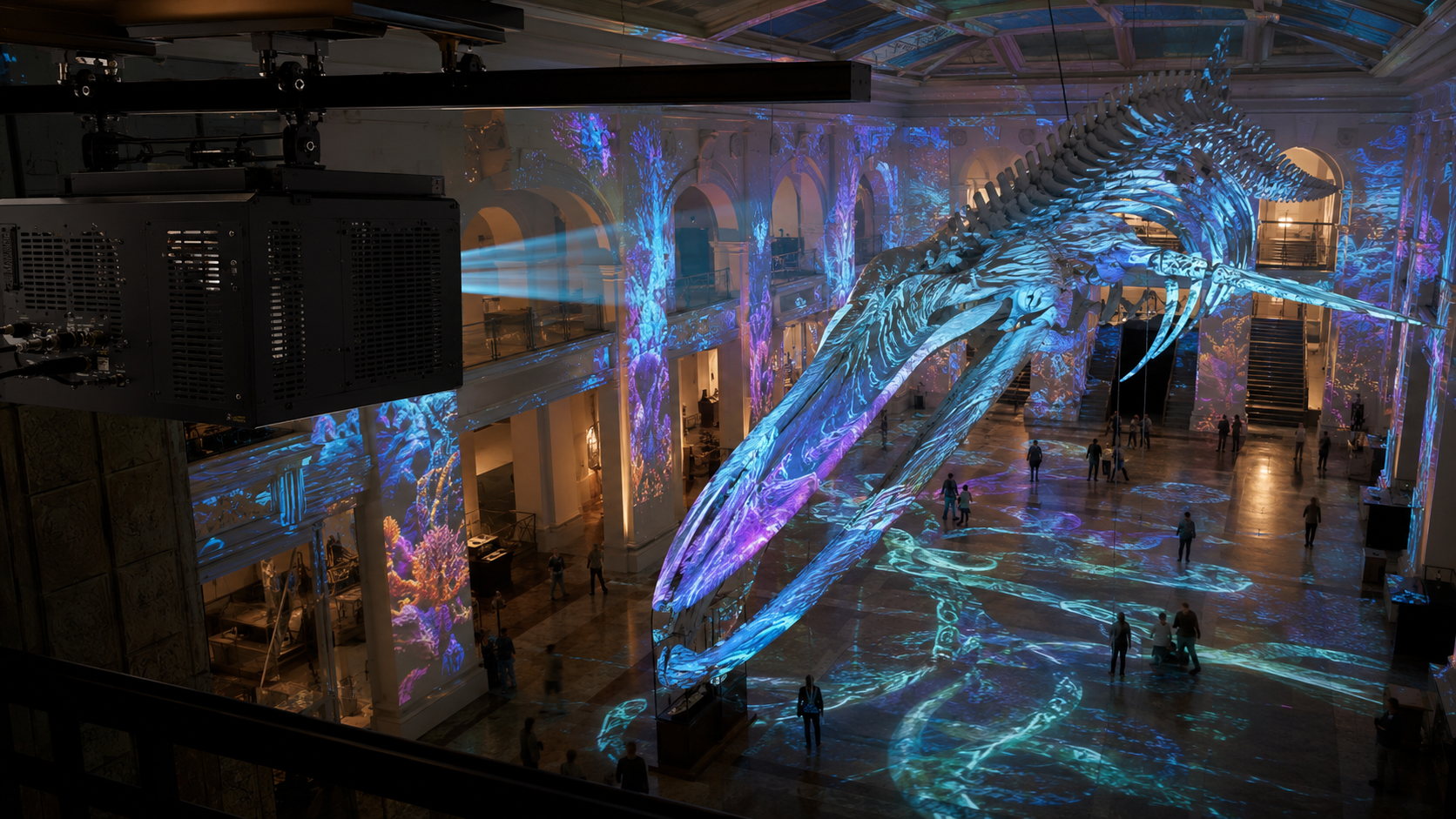
A fan-cooled projector enclosure helps museums, galleries, science centers, cultural exhibits, aquariums, visitor centers, and immersive education spaces protect projector equipment used for projection mapping. Museum projection mapping often runs for long hours, needs precise alignment, and must look clean inside carefully designed exhibit environments.
That creates a real challenge.
The projector needs protection from dust, heat buildup, public contact, tampering, ceiling debris, and exhibit maintenance activity. However, it also needs airflow. Therefore, a fan-cooled projector enclosure can be a strong choice when the projector sits indoors, under cover, or in a mild protected location.
As a result, the exhibit team gets a cleaner installation, better projector protection, and a more polished visitor experience.
Why Museum Projection Mapping Needs a Fan-Cooled Projector Enclosure
Museum projection mapping depends on precision. Instead of projecting onto a basic flat screen, the projector maps visuals onto walls, artifacts, sculptures, architectural surfaces, immersive rooms, or exhibit scenery.
That may include:
- historic walls
- textured exhibit surfaces
- scale models
- artifact replicas
- scenic rockwork
- dome-like rooms
- interactive displays
- floor projection zones
- educational storytelling walls
- immersive gallery environments
ProjectorCentral explains that projection mapping can transform objects, venues, stadiums, concert halls, and building exteriors with projected visuals. Barco also describes projection mapping as a method for projecting light and color onto irregular shapes and non-flat surfaces.
URL: https://www.projectorcentral.com/what-is-projection-mapping-2.htm
URL: https://www.barco.com/en/solutions/projection-mapping
Because of that, alignment matters. If the projector moves, the mapped content may no longer match the exhibit surface.
Therefore, a fan-cooled projector enclosure helps protect both the projector and the mapping alignment.
Why Airflow Matters in Museum Projection Mapping
Projectors generate heat. They also need clear ventilation.
Epson explains that projector air filters and vents need cleaning to help reduce heat-related operating risk caused by blocked ventilation. Epson also warns users not to block projector slots and openings because those openings provide ventilation and help reduce heat-related operating risk.
URL: https://files.support.epson.com/docid/cpd5/cpd59255/source/maintenance/concepts/maint_projector_laser.html
URL: https://files.support.epson.com/docid/cpd5/cpd50650/source/notices/reference/important_safety_instructions.html
This matters in museums because exhibits may run all day. A projection mapping system may loop during public hours, private tours, school visits, donor events, evening programs, and special exhibitions.
Therefore, the projector needs protection. However, it also needs air.
A sealed cabinet can trap heat. Meanwhile, a purpose-built fan-cooled projector enclosure helps move air through the housing while protecting the projector from dust, tampering, and contact.
That difference matters when the projection system supports the entire exhibit.
What a Fan-Cooled Projector Enclosure Does for Museum Exhibits
A fan-cooled projector enclosure gives the projector a ventilated protective housing. It helps guard against heat buildup, dust, public contact, staff contact, cable clutter, and unauthorized access.
ProjectorEnclosure.com positions fan-cooled projector enclosures as useful for projection mapping, museums, retail displays, golf simulators, houses of worship, and other environments where airflow, dust control, security, and service access matter.
URL: https://projectorenclosure.com/fan-cooled-projector-enclosures/
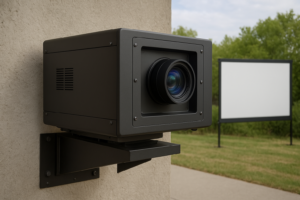
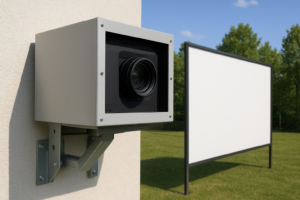
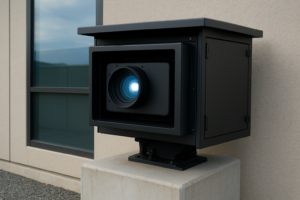
In addition, Screen Solutions International lists the Integrator Series as its fan-cooled enclosure line. The uploaded SSI enclosure price sheet shows the Integrator Series as a black rectangular enclosure with a front projection window, ventilation slots, and black or white powder coat options.
For museums, that design helps the projector feel integrated into the exhibit instead of looking like exposed AV equipment.
A fan-cooled enclosure can help protect against:
- dust
- heat buildup
- public contact
- staff contact
- exhibit reset activity
- cable clutter
- public tampering
- ceiling debris
- long daily runtimes
- visual distraction from exposed hardware
For museum teams, that protection helps keep the exhibit focused on the story.
Best Museum Projection Mapping Applications
A fan-cooled projector enclosure can support many museum projection mapping projects. However, it works best when the projector sits indoors, under cover, or in a mild protected location.
1. Immersive History Exhibits
History museums can use projection mapping to bring old cities, battlefields, migration routes, architecture, and cultural moments to life.
For example, a museum could map moving light onto a historic street model. It could also project animated timelines across walls, maps, and artifacts.
Because these systems may run all day, a fan-cooled projector enclosure helps protect the projector while supporting airflow.
2. Science Center Projection Mapping
Science centers can use projection mapping for space exhibits, ocean environments, geology displays, biology rooms, and interactive learning spaces.
Since these rooms often host school groups and heavy visitor traffic, the projector needs protection. A fan-cooled enclosure helps reduce public access and keeps the system more secure.
3. Art Gallery Installations
Art galleries often need projection systems to disappear into the environment. The focus should stay on the artwork, not the hardware.
A black or white powder-coated fan-cooled enclosure can help the projector blend into the ceiling, truss, or architectural structure. As a result, the projected content stays central.
4. Aquarium and Nature Exhibits
Aquariums and nature centers can use projection mapping for underwater scenes, habitat storytelling, conservation exhibits, and immersive learning rooms.
However, humidity and moisture matter in these environments. A fan-cooled projector enclosure may work well in protected indoor spaces. However, if the projector sits near high humidity, water features, or open-air environments, climate-controlled protection may make more sense.
5. Visitor Centers and Cultural Attractions
Visitor centers can use projection mapping to show regional history, local landscapes, tourism content, and orientation visuals.
Because these spaces often run content continuously, projector protection matters. A fan-cooled enclosure helps keep the installation cleaner and easier to manage.
Museum Projection Mapping Improves Visitor Storytelling
Projection mapping gives museums a flexible storytelling tool. It can add motion, context, time, scale, and atmosphere without permanently changing physical exhibits.
Blooloop has covered immersive museum and attraction trends that use projection, media, and multisensory content to improve visitor engagement. In addition, AVNetwork has reported on projection-heavy immersive experiences in museums and cultural spaces.
URL: https://blooloop.com/technology/in-depth/immersive-experience-trends/
URL: https://www.avnetwork.com/news
Because of that, projection mapping can help museums create:
- stronger exhibit storytelling
- more immersive visitor journeys
- flexible temporary exhibits
- interactive learning moments
- dramatic donor-event visuals
- cinematic educational spaces
However, the experience only works if the projector stays aligned, protected, and properly ventilated.
That is why the enclosure matters.
Fan-Cooled vs. Climate-Controlled for Museum Projection Mapping
Different museum environments need different enclosure types.
A fan-cooled projector enclosure works best for indoor, covered, mild, or semi-protected museum projection mapping. It helps with airflow, dust control, security, and clean installation.
A climate-controlled projector enclosure works better when the projector faces high humidity, direct outdoor exposure, heat, cold, rain, or long-term environmental stress. For example, outdoor museum façades, open-air sculpture gardens, zoo exhibits, aquarium-adjacent projection areas, and exposed visitor centers may need climate-controlled protection instead.
So, for an indoor immersive gallery, fan-cooled often makes sense. However, for an outdoor museum projection show, climate-controlled protection usually offers the safer path.
Real-World Places Where This Makes Sense
Fan-cooled projector enclosures can support museum projection mapping in major cultural, educational, and tourism markets.
Washington, D.C.
Washington, D.C. has museums, memorials, visitor centers, cultural institutions, and educational exhibits. Fan-cooled enclosures can support indoor mapping exhibits and protected visitor experience spaces.
New York City, New York
New York museums and galleries often use immersive installations to attract visitors. Fan-cooled enclosures can work well indoors, especially in galleries where exposed equipment would distract from the exhibit.
Chicago, Illinois
Chicago museums can use projection mapping for science exhibits, history displays, immersive rooms, and donor events. Fan-cooled works well indoors, while exposed winter installations may need climate-controlled protection.
Los Angeles, California
Los Angeles museums, studios, galleries, and branded cultural spaces often use projection for storytelling and immersive displays. A fan-cooled projector enclosure can help protect projectors in indoor and covered exhibit environments.
Orlando, Florida
Orlando has museums, attractions, aquariums, and themed visitor spaces. Fan-cooled can work indoors, but humidity should guide the final enclosure decision.
London, United Kingdom
London museums and heritage attractions can use projection mapping to animate historic architecture and educational exhibits. Fan-cooled enclosures can help protect projectors in indoor galleries and protected visitor spaces.
Why Museums Should Avoid DIY Projector Boxes
A decorative projector box may seem like an easy solution. However, it can create airflow, service, and alignment problems.
First, a sealed box can block intake and exhaust vents. Next, it can trap heat during long exhibit hours. Also, it can make projector maintenance harder during an active exhibit.
Projection mapping already needs careful alignment. Therefore, the enclosure should support the installation instead of creating new problems.
A purpose-built fan-cooled projector enclosure supports ventilation, mounting, service access, cable routing, and security. In other words, it protects the projector without suffocating it.
That difference matters when visitors experience the same exhibit hundreds of times per day.
Benefits for Museum Projection Mapping Teams
Better Projector Protection
First, the enclosure helps protect the projector from dust, contact, tampering, and exhibit activity.
Better Airflow
Next, fan-cooled ventilation helps move air instead of trapping heat around the projector.
Cleaner Exhibit Design
Also, the enclosure makes the AV system look integrated rather than temporary.
Better Mapping Stability
Because the projector sits inside a protected housing, the system can better resist accidental movement.
Easier Service Access
In addition, a purpose-built enclosure gives technicians a clearer path for inspection and adjustment.
Stronger Visitor Experience
Finally, the projected content stays at the center of the exhibit while the hardware stays secondary.
What to Check Before Choosing a Fan-Cooled Projector Enclosure
Before ordering a fan-cooled projector enclosure for museum projection mapping, confirm the projector model, lens model, total projector depth, width, height, wattage, airflow direction, throw distance, mounting location, and service access.
Also, ask:
- Will the projector sit indoors, outdoors, or under cover?
- Will visitors or staff walk near it?
- Will the exhibit run all day?
- Will the mapping require precise alignment?
- Does the exhibit collect dust from HVAC or visitor traffic?
- Will cleaning crews work near the projector?
- Does the enclosure allow enough airflow?
- Will technicians need frequent service access?
- Does the room include humidity, water features, or haze?
- Does the project need fan-cooled or climate-controlled protection?
If the projector sits indoors or in a covered mild space, fan-cooled often makes sense. However, if the projector faces moisture, humidity, outdoor exposure, or harsh temperatures, climate-controlled protection is the better move.
Final Takeaway
A fan-cooled projector enclosure can be an excellent choice for museum projection mapping when the projector sits in an indoor, covered, or mild protected location. It helps protect the projector, support airflow, reduce tampering, preserve alignment, and keep the exhibit installation looking professional.
Most importantly, it helps museums keep the visitor’s attention on the story instead of the hardware.
For help choosing the right enclosure size for a museum projection mapping projector, contact ProjectorEnclosure.com or Screen Solutions International at 888-631-5880.
Sources
- ProjectorEnclosure.com — Fan-Cooled Projector Enclosures
URL: https://projectorenclosure.com/fan-cooled-projector-enclosures/
Used for fan-cooled enclosure positioning, projection mapping application fit, airflow, dust control, security, and service access. - ProjectorEnclosure.com — Fan-Cooled vs. Climate-Controlled
URL: https://projectorenclosure.com/fan-cooled-vs-climate-controlled/
Used for fan-cooled vs. climate-controlled enclosure selection guidance. - ProjectorEnclosure.com — Home Page
URL: https://projectorenclosure.com/
Used for general fan-cooled enclosure positioning, including filtered ambient air intake and hot air exhaust. - Screen Solutions International — Projector Enclosures
URL: https://ssidisplays.com/projector-enclosures/
Used for SSI’s projector enclosure lineup, including Integrator fan-cooled enclosures and Defender climate-controlled enclosures. - Screen Solutions International — Integrator Series
URL: https://ssidisplays.com/product/integrator-series-2/
Used for Integrator Series product positioning and enclosure style reference. - 2025 Updated Enclosure Price Sheet — Screen Solutions International
Uploaded PDF in this chat.
Used for visual reference of the Integrator Series fan-cooled enclosure likeness and standard black/white powder coat note. - ProjectorCentral — What Is Projection Mapping?
URL: https://www.projectorcentral.com/what-is-projection-mapping-2.htm
Used for projection mapping context across objects, venues, stadiums, concert halls, and building exteriors. - Barco — Projection Mapping
URL: https://www.barco.com/en/solutions/projection-mapping
Used for projection mapping context on irregular shapes and non-flat surfaces. - Epson — Projector Maintenance
URL: https://files.support.epson.com/docid/cpd5/cpd59255/source/maintenance/concepts/maint_projector_laser.html
Used for projector maintenance guidance, including cleaning filters and vents to help reduce heat-related operating risk. - Epson — Important Safety Instructions
URL: https://files.support.epson.com/docid/cpd5/cpd50650/source/notices/reference/important_safety_instructions.html
Used for ventilation guidance and warnings about blocked projector openings. - Blooloop — Immersive Experience Trends
URL: https://blooloop.com/technology/in-depth/immersive-experience-trends/
Used for immersive attraction and museum experience context. - AVNetwork — AV Technology News
URL: https://www.avnetwork.com/news
Used for broader AV, projection, and immersive experience context.