
Fan-Cooled vs. Climate-Controlled Projector Enclosure
Fan-Cooled vs. Climate-Controlled Projector Enclosures
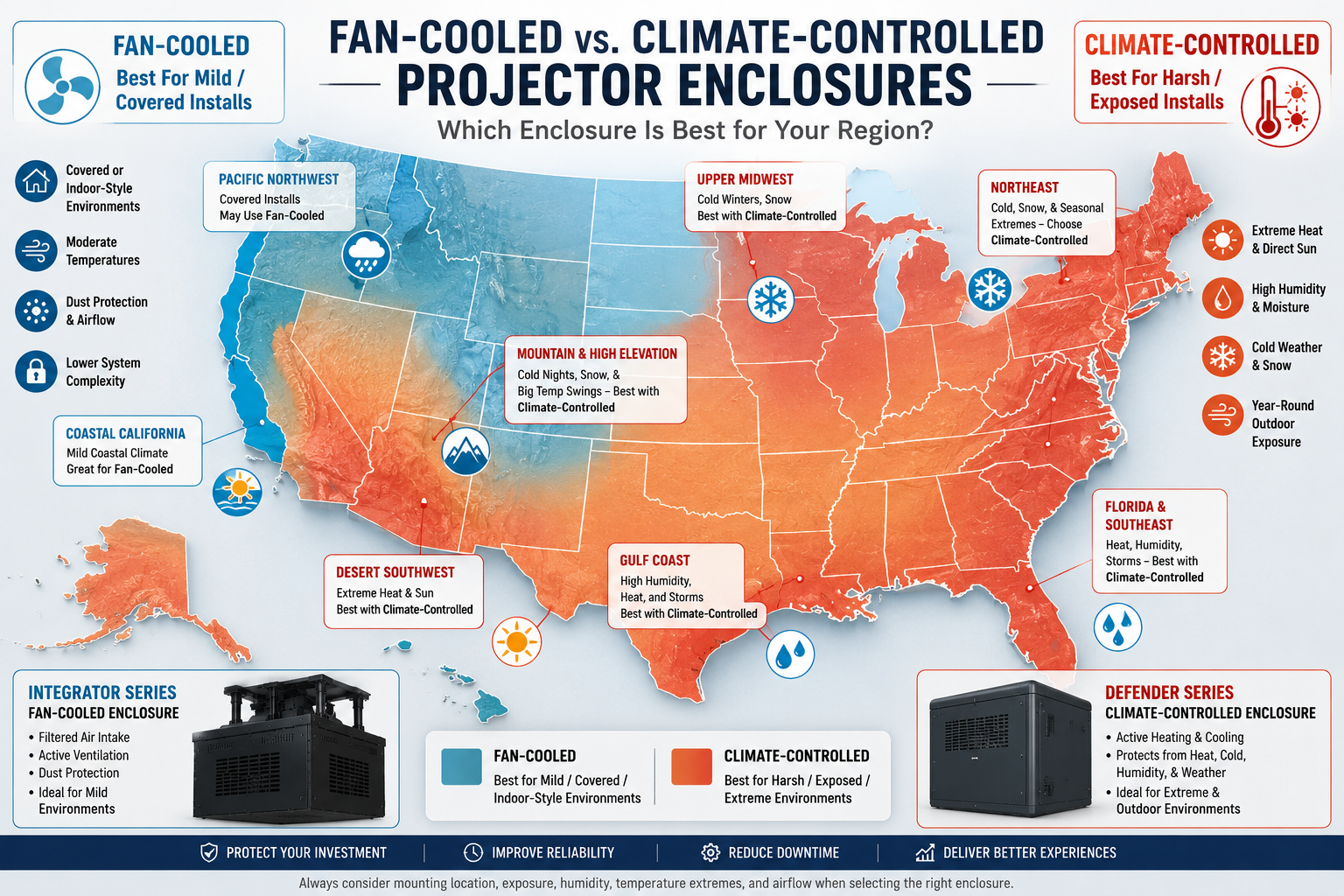
Fan-Cooled vs. Climate-Controlled Projector Enclosures
Choosing between fan-cooled vs climate-controlled projector enclosures depends on where the projector will be installed, how much weather exposure it will face, and what climate conditions are common in that region. A fan-cooled enclosure works best in mild, covered, or indoor-style environments. A climate-controlled enclosure works better in harsh, humid, hot, cold, or fully exposed outdoor locations.
At first glance, the choice may seem simple. However, the right enclosure depends on both the region and the installation conditions. Some parts of the country deal with heat. Others deal with humidity, snow, salt air, or large temperature swings. Because of that, the same projector may need different protection in California, Florida, Arizona, Minnesota, or New York.
Some parts of the country deal with heat. Others deal with humidity. Some regions face snow, freezing nights, or wind-driven dust. Meanwhile, a few areas stay mild enough that a simpler fan-cooled design may be the better fit.
So, if you are trying to decide which type of enclosure makes the most sense, this guide breaks it down clearly.
What Is a Fan-Cooled Projector Enclosure?
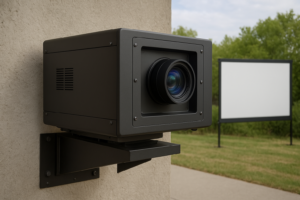
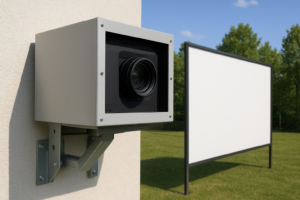
A fan-cooled projector enclosure protects the projector while using filtered ambient air and active ventilation to help remove heat.
In simple terms, it gives the projector a protective housing without adding full internal heating and cooling control.
ProjectorEnclosure.com positions fan-cooled enclosures as a strong fit for mild environments and explains that the Integrator Series brings in filtered air and exhausts hot air from the enclosure. Screen Solutions International also positions the Integrator Series as its fan-cooled enclosure line.
URL: https://projectorenclosure.com/fan-cooled-projector-enclosures/
URL: https://projectorenclosure.com/
URL: https://ssidisplays.com/product/integrator-series-2/
Because of that, fan-cooled enclosures usually make the most sense when the projector is in a covered, semi-protected, or indoor-style environment where the main goals are:
- Dust protection
- Airflow support
- Basic security
- Cleaner installation
- Lower complexity than a full climate-controlled system
What Is a Climate-Controlled Projector Enclosure?
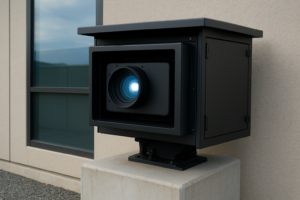
A climate-controlled projector enclosure does more than protect the projector from dust and contact. It also helps actively manage the environment inside the enclosure.
That matters when the projector faces heat, cold, humidity, rain, snow, or year-round outdoor exposure.
ProjectorEnclosure.com explains that climate-controlled enclosures are built for more demanding environments, while Screen Solutions International positions the Defender Series as its climate-controlled enclosure line for hot, cold, and humid conditions.
URL: https://projectorenclosure.com/climate-controlled-projector-enclosures/
URL: https://projectorenclosure.com/fan-cooled-vs-climate-controlled/
URL: https://ssidisplays.com/product/defender-series/
As a result, climate-controlled enclosures usually make more sense when the projector is in a true outdoor environment or in a location with weather extremes.
The Core Difference
The easiest way to understand the difference is this:
Fan-Cooled Enclosures
Best for mild, covered, or controlled environments where the projector mainly needs airflow, dust protection, and security.
Climate-Controlled Enclosures
Best for harsh, exposed, or extreme environments where the projector needs help dealing with heat, cold, humidity, or full outdoor weather.
That said, geography matters. However, installation conditions matter just as much.
For example, a fan-cooled enclosure may work well in a covered patio in California. On the other hand, the same enclosure may not be the right choice for an exposed rooftop in Arizona or a year-round outdoor install in Minnesota.
Why Climate and Weather Matter
Projectors create heat. They also depend on airflow and ventilation.
Epson explains that blocked ventilation and clogged air filters can contribute to overheating. In addition, the National Weather Service explains that heat index combines air temperature and humidity, which means outdoor conditions can feel hotter than the actual temperature. NOAA’s U.S. Climate Normals also provide long-term climate averages that help illustrate how different U.S. regions experience very different conditions over time.
URL: https://epson.com/faq/SPT_V11H335120~faq-150403
URL: https://www.weather.gov/safety/heat-tools
URL: https://www.ncei.noaa.gov/products/land-based-station/us-climate-normals
That matters because a projector enclosure does not live in a vacuum. It lives in the real world.
So, if the enclosure sits in a location with:
- long summer heat,
- high humidity,
- freezing winters,
- wind-blown dust, or
- direct outdoor exposure,
then a climate-controlled enclosure often becomes the safer long-term choice.
Best U.S. Regions for Fan-Cooled Enclosures
A fan-cooled projector enclosure is usually best in milder regions or in protected locations within those regions.
1. Coastal Southern California
Cities like San Diego, Santa Barbara, Irvine, Newport Beach, and many coastal Los Angeles areas often benefit from relatively mild coastal weather.
Therefore, fan-cooled enclosures can work well in:
- covered patios
- outdoor home theaters under cover
- restaurant patios with roof structures
- indoor golf simulators
- covered church or event spaces
- showrooms and experience centers
However, inland desert-adjacent zones in California can become much hotter. So, location still matters.
2. Coastal Northern California
The Bay Area, Marin, Monterey, and other coastal Northern California regions often see more moderate temperatures than inland California.
As a result, fan-cooled enclosures can work well in covered or semi-protected installations, especially when the projector is not exposed to direct rain or harsh sun.
3. Pacific Northwest Mild Covered Installs
Parts of western Washington and western Oregon can support fan-cooled enclosures when the install is under cover and protected from direct moisture.
For example, a projector in a covered outdoor hospitality space in Seattle or Portland may still be a fan-cooled candidate if the enclosure is shielded well from rain.
However, because the region sees frequent moisture, many year-round outdoor installs may still need climate control.
4. Temperate Indoor/Outdoor Hybrid Spaces in the Mid-Atlantic
Parts of the Mid-Atlantic, especially in covered hospitality, retail, or residential applications, can still work with fan-cooled systems when the projector is shielded from direct weather.
This can apply in areas like:
- Northern Virginia
- Maryland
- parts of North Carolina
- parts of Tennessee
Still, once humidity or outdoor exposure increases, climate-controlled becomes more attractive.
5. Indoor Applications Nationwide
This is important: fan-cooled enclosures are not limited to mild coastal states.
In fact, many indoor or covered indoor-style installations anywhere in the U.S. can use fan-cooled enclosures, including:
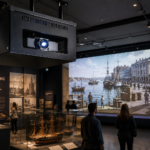
- museums
- classrooms
- churches
- corporate rooms
- retail spaces
- golf simulators
- fitness studios
- event venues
So, even in a hot or cold state, a fan-cooled enclosure may still work indoors or in a protected environment.
Best U.S. Regions for Climate-Controlled Enclosures
A climate-controlled projector enclosure is usually the better choice in regions with significant environmental stress or in fully exposed outdoor installations.
1. Florida and the Southeast
Florida, coastal Georgia, coastal South Carolina, Alabama, Mississippi, Louisiana, and much of the Gulf Coast often deal with high humidity, heat, storms, and moisture.
Because of that, climate-controlled enclosures are often the safer option for:
- outdoor attractions
- church courtyards
- exposed patios
- poolside installs
- theme park environments
- open-air hospitality spaces
Humidity is a major reason. EPA moisture guidance also reinforces how damp environments can create problems for enclosed spaces and materials.
URL: https://www.epa.gov/mold/mold-course-chapter-2
2. Desert Southwest
Arizona, Nevada, inland Southern California, New Mexico, and west Texas often face extreme heat and intense sun exposure.
Therefore, if the enclosure is outside or even semi-exposed, climate-controlled usually makes more sense.
This is especially true in places like:
- Phoenix
- Scottsdale
- Las Vegas
- Palm Springs
- Tucson
A covered install may still allow a fan-cooled option in some cases. However, year-round outdoor exposure in these climates often pushes the project toward climate control.
3. Upper Midwest and Northern Plains
Minnesota, Wisconsin, North Dakota, South Dakota, Michigan, and parts of Illinois often face freezing winters, snow, wind, and major seasonal swings.
Because of that, a climate-controlled enclosure is often the safer choice for any projector that stays outside or in a non-conditioned space.
4. Northeast
New York, New Jersey, Pennsylvania, Massachusetts, Connecticut, Rhode Island, Vermont, New Hampshire, and Maine often deal with cold winters, snow, and strong seasonal changes.
As a result, an exposed outdoor projector in the Northeast usually needs climate control rather than basic fan cooling.
5. Mountain and High-Elevation Regions
Colorado, Utah, Idaho, Montana, Wyoming, and mountain resort regions often bring cold nights, snow, elevation-related temperature swings, and strong weather variation.
Therefore, outdoor projection in these areas often benefits from a climate-controlled enclosure.
A Simple Rule of Thumb by Region
Here is the easiest way to think about it:
Fan-Cooled Usually Fits Best In:
- Mild coastal California
- Some covered Pacific Northwest installs
- Covered Mid-Atlantic installs
- Covered hospitality and residential spaces in temperate areas
- Indoor installations almost anywhere
Climate-Controlled Usually Fits Best In:
- Florida and the Gulf Coast
- The humid Southeast
- The Desert Southwest
- The Upper Midwest
- The Northeast
- Mountain and snow-prone regions
- Any exposed year-round outdoor install almost anywhere
Exposure Matters More Than Zip Code
This point is worth repeating.
A projector’s exact mounting condition can matter more than the city name.
For example:
- A covered patio projector in San Diego may work well with fan cooling.
- An exposed rooftop projector in San Diego may still need climate control.
- An indoor museum projector in Phoenix may work fine with fan cooling.
- An outdoor façade projector in Phoenix may absolutely need climate control.
So, geography gives you a starting point. However, the final decision should also consider:
- direct weather exposure
- sun exposure
- humidity
- daily operating hours
- indoor vs. outdoor mounting
- airflow around the enclosure
- whether the install is seasonal or year-round
Fan-Cooled Advantages
When the application fits, fan-cooled enclosures offer real advantages.
Simpler System
First, they are typically simpler than full climate-controlled units.
Great for Mild Environments
Next, they work very well in mild, covered, or indoor-style installations.
Clean and Professional Look
Also, they still provide a clean, secure, and professional enclosure appearance.
Good Fit for Many Common Projects
Finally, they work well for many common installs such as:
- covered patios
- indoor golf simulators
- retail displays
- schools
- churches
- corporate AV spaces
- museums
- event venues
Climate-Controlled Advantages
Climate-controlled enclosures also offer clear advantages when the environment demands more protection.
Better for Harsh Weather
First, they are better suited to heat, humidity, cold, rain, and snow.
Stronger Year-Round Outdoor Protection
Next, they make more sense for true outdoor installations that stay in place all year.
More Confidence in Difficult Climates
Also, they provide better peace of mind in regions where weather changes quickly or becomes extreme.
Better Fit for Exposed Installs
Finally, they are usually the safer choice for exposed:
- rooftops
- outdoor attractions
- open courtyards
- pool areas
- façade projection systems
- exterior hospitality installs
Which One Should You Choose?
If your projector will live in a mild, covered, or indoor-style environment, a fan-cooled projector enclosure is often the right choice.
If your projector will live in a harsh, humid, hot, cold, or exposed outdoor environment, a climate-controlled projector enclosure is usually the better long-term move.
In short:
- Choose fan-cooled when the space is protected and the weather is manageable.
- Choose climate-controlled when the space is exposed or the climate is demanding.
Final Takeaway
A fan-cooled projector enclosure and a climate-controlled projector enclosure both protect projector equipment, but they do different jobs.
Fan-cooled enclosures are usually best for mild regions, covered installs, and indoor-style environments. Climate-controlled enclosures are usually best for harsh climates, humid areas, hot desert zones, cold northern regions, and exposed year-round outdoor installations.
Most importantly, the best enclosure choice depends on both the region and the exact installation conditions.
If you want help choosing between a fan-cooled Integrator enclosure and a climate-controlled Defender enclosure for your location, contact ProjectorEnclosure.com or Screen Solutions International at 888-631-5880.
Sources
- ProjectorEnclosure.com — Fan-Cooled vs. Climate-Controlled
URL: https://projectorenclosure.com/fan-cooled-vs-climate-controlled/
Used for comparing fan-cooled and climate-controlled enclosure applications. - ProjectorEnclosure.com — Fan-Cooled Projector Enclosures
URL: https://projectorenclosure.com/fan-cooled-projector-enclosures/
Used for fan-cooled enclosure positioning in mild environments. - ProjectorEnclosure.com — Climate-Controlled Projector Enclosures
URL: https://projectorenclosure.com/climate-controlled-projector-enclosures/
Used for climate-controlled enclosure positioning in more demanding environments. - ProjectorEnclosure.com — Home Page
URL: https://projectorenclosure.com/
Used for fan-cooled filtered air intake and hot-air exhaust positioning. - Screen Solutions International — Projector Enclosures
URL: https://ssidisplays.com/projector-enclosures/
Used for SSI’s enclosure lineup, including Integrator fan-cooled and Defender climate-controlled models. - Screen Solutions International — Integrator Series
URL: https://ssidisplays.com/product/integrator-series-2/
Used for fan-cooled Integrator Series product positioning. - Screen Solutions International — Defender Series
URL: https://ssidisplays.com/product/defender-series/
Used for climate-controlled Defender Series product positioning. - 2025 Updated Enclosure Price Sheet — Screen Solutions International
Uploaded PDF in this chat.
Used for visual reference of the Integrator Series fan-cooled enclosure likeness and the overall enclosure family context. - Epson — Air Filter and Vent Cleaning FAQ
URL: https://epson.com/faq/SPT_V11H335120~faq-150403
Used for ventilation, air filter, and overheating guidance. - National Weather Service — Heat Forecast Tools
URL: https://www.weather.gov/safety/heat-tools
Used for heat index guidance and heat/humidity context by region. - NOAA NCEI — U.S. Climate Normals
URL: https://www.ncei.noaa.gov/products/land-based-station/us-climate-normals
Used for long-term climate context across U.S. regions. - EPA — Mold Course, Chapter 2
URL: https://www.epa.gov/mold/mold-course-chapter-2
Used for moisture and damp-environment context relevant to humid regions.
How Climate Controlled Projector Enclosures Protect Backyard Projectors From Heat and Humidity