
Climate Controlled Projector Enclosures for Museum and Exhibit Projection Mapping
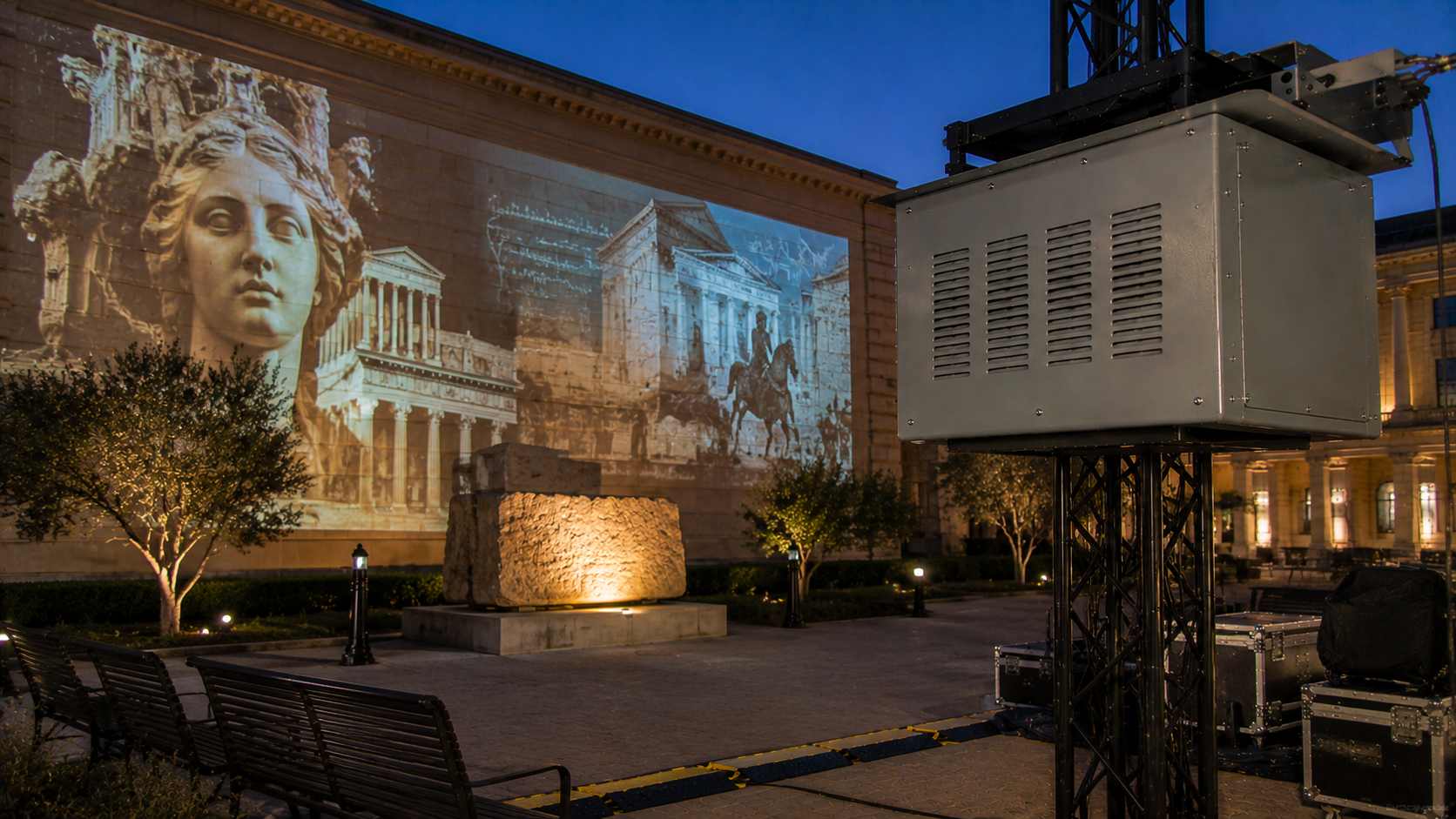
Climate Controlled Projector Enclosures for Museum Projection Mapping
Climate controlled projector enclosures for museum projection mapping help protect projectors used in exhibits, immersive galleries, outdoor museum walls, artifact storytelling, historical displays, and interactive visitor experiences. Museums rely on consistency. Therefore, the projector system needs to run cleanly, stay aligned, and avoid avoidable downtime.
Projection mapping in a museum environment can be delicate. The content often supports education, atmosphere, or storytelling. In addition, the projector may run daily for long hours, sometimes near guests, exhibits, dust, humidity changes, or mixed indoor/outdoor conditions.
Because of that, the enclosure should protect both the projector and the visitor experience.
Museum Mapping Needs Precision and Reliability
Projection mapping works best when the projected content fits the surface perfectly. In a museum, that surface may be a wall, sculpture, artifact replica, exhibit set, architectural detail, immersive room, or outdoor facade.
Once alignment is complete, the projector should stay fixed.
If the projector shifts, the mapped image may drift away from the exhibit details. Likewise, if the projector overheats, collects dust, or develops moisture issues, the display may lose clarity or stop working.
A climate controlled projector enclosure helps support that precision. It keeps the projector protected while allowing the installation to remain stable over time.
Museums Often Have Mixed Environmental Conditions
Some museum mapping projects happen indoors. Others sit in lobbies, courtyards, atriums, outdoor exhibit paths, historic buildings, or semi-covered spaces.
Those environments can create changing conditions.
Dust can collect from visitor traffic. Humidity can rise in older buildings or outdoor-adjacent spaces. Heat can build inside equipment areas. Meanwhile, outdoor installations may also face rain, wind, insects, and temperature swings.
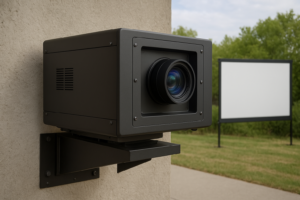
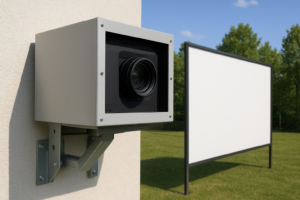
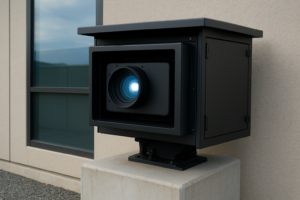
ProjectorEnclosure.com describes the Defender Series as climate controlled projector enclosures designed for outdoor and harsh-environment installations. These enclosures combine weather-resistant construction, insulation, secure access, active climate control, and service-friendly design.
That feature set matters when museums need dependable operation in spaces that are not perfectly controlled.
Long Runtime Exhibits Need Better Protection
Museum projectors often run for many hours per day. In some exhibits, the projector starts before doors open and stays active until closing.
That creates heat. Over time, heat can increase stress on projector components if the system lacks proper airflow and environmental management.
In addition, long runtimes can make dust buildup more noticeable. Air movement around equipment may pull particles toward vents, filters, and projector surfaces.
A climate controlled enclosure helps create a cleaner, more stable operating space for the projector. As a result, the exhibit has a stronger foundation for daily use.
Defender Series Enclosures for Exhibit Environments
The Defender Series is built for projector protection where standard housing is not enough. ProjectorEnclosure.com states that these climate controlled projector enclosures help protect projection equipment from changing temperatures, humidity, rain, snow, dust, and public-facing installation risks.
That makes Defender-style enclosures useful for:
- Outdoor museum facade mapping
- Immersive exhibit rooms
- Historical storytelling displays
- Sculpture projection mapping
- Visitor center experiences
- Science museum installations
- Natural history exhibits
- Atrium projection systems
- Traveling exhibit activations
- Semi-outdoor museum courtyards
In addition, custom sizing, finish options, projector and lens clearance adjustments, cable routing, and mounting support can help the enclosure fit the exhibit design.
Visitor-Facing Projectors Need Security
Museums are public spaces. Even when guests behave respectfully, projector equipment can still be exposed to accidental contact, curious hands, bags, strollers, carts, cleaning equipment, and maintenance activity.
Therefore, projector security matters.
A climate controlled enclosure can help protect the projector from tampering, impact, and public-facing risks. At the same time, it can make the installation look more finished and intentional.
This is especially important when the projector cannot be hidden in a projection booth or ceiling cavity.
Dust Can Affect Exhibit Quality
Dust is a real issue in public spaces. Visitors, HVAC movement, carpets, fabrics, exhibit materials, and maintenance work can all move particles through the environment.
BenQ notes that dust can affect projector performance and recommends protecting projectors from dusty environments.
https://www.benq.com/en-us/knowledge-center/knowledge/what-can-you-do-to-protect-your-school-projectors-from-dust.html
For museum mapping, dust can weaken the visitor experience. If particles collect near the projection path, the image may look softer. If dust affects airflow, the projector may run hotter than expected.
A protective enclosure helps reduce direct exposure and supports a cleaner installation.
Moisture Matters in Historic and Outdoor Museum Spaces
Museums often use historic buildings, older structures, outdoor courtyards, gardens, and architectural facades. Those spaces may not behave like modern climate-controlled rooms.
Humidity, moisture, and condensation can become concerns, especially in older buildings or outdoor-adjacent exhibit zones.
The U.S. EPA explains that unmanaged moisture can affect materials and systems over time.
https://www.epa.gov/sites/default/files/2014-08/documents/moisture-control.pdf
For projector systems, moisture planning should not be ignored. A climate controlled enclosure helps protect the equipment side of the exhibit while the museum protects the visitor-facing environment.
Projection Mapping in Harsh Museum Environments
Museum mapping is not always indoors. Outdoor museum walls, seasonal night exhibits, sculpture gardens, courtyards, and cultural centers may need projection systems that survive weather.
ProjectorEnclosure.com discusses projection mapping in harsh conditions and explains that Defender climate controlled enclosures help make mapping possible in rain, snow, or heat.
This matters when museums use projection mapping for special events, donor nights, outdoor education, public art, or seasonal programming.
A protected projector setup can help the museum expand what it can show and where it can show it.
Lens Direction and Exhibit Alignment Must Stay Clean
Museum mapping often targets specific details. A projected timeline may follow a wall shape. Animated graphics may wrap around a sculpture. A historical overlay may line up with architectural features.
Because of that, alignment matters.
Before choosing the enclosure location, confirm:
- Projection surface type
- Exhibit dimensions
- Projector model
- Lens model
- Throw distance
- Mounting height
- Beam path
- Guest sightlines
- Service access
- Projection window alignment
- Cable routing
- Environmental exposure
ProjectorEnclosure.com recommends sharing projector model, lens model, dimensions, installation location, exposure level, temperature range, humidity concerns, mounting method, access direction, finish preference, and clearance limits before sizing a climate controlled enclosure.
That information helps SSI review fitment, airflow, lens clearance, service access, and enclosure direction.
Clean Design Matters in Museum Spaces
Museum AV equipment should not distract from the exhibit. The enclosure should look clean, intentional, and appropriate for the environment.
Depending on the project, the enclosure may need to blend into a wall, ceiling, truss, exhibit structure, outdoor facade, or service area. Custom finishes can help. So can clean cable routing and thoughtful mounting.
A good enclosure protects the projector without becoming the visual focus.
In exhibit design, that matters. The content should lead. The hardware should support.
Service Access Keeps Exhibits Running
Museum staff and AV technicians need practical access to projector systems. If a projector requires inspection, cleaning, or adjustment, the enclosure should not make service difficult.
A strong enclosure plan should allow teams to:
- Open access panels safely
- Clean projection windows if needed
- Check vents and filters
- Inspect cables
- Adjust projector position
- Remove equipment when required
- Service the system without disrupting guests
Good service access reduces downtime. More importantly, it helps the exhibit stay reliable over time.
Final Takeaway
Museum projection mapping needs precision, reliability, clean design, and long-term equipment protection. Projectors may run daily, face public spaces, sit near exhibits, or operate in mixed indoor/outdoor environments.
Climate controlled projector enclosures for museum projection mapping help protect projectors from heat, dust, humidity, moisture, weather, and public-facing risks. For immersive exhibits, facade mapping, sculpture projection, and cultural experiences, a Defender Series enclosure gives the system a stronger foundation.
Call 888-631-5880 or visit ProjectorEnclosure.com to review your projector model, lens, exhibit surface, and installation environment.
Sources
ProjectorEnclosure.com — Climate Controlled Projector Enclosures
https://projectorenclosure.com/climate-controlled-projector-enclosures/
ProjectorEnclosure.com — Projection Mapping in Harsh Conditions
https://projectorenclosure.com/mapping-harsh-environments/
BenQ — Protecting Projectors From Dust
https://www.benq.com/en-us/knowledge-center/knowledge/what-can-you-do-to-protect-your-school-projectors-from-dust.html
U.S. EPA — Moisture Control Guidance
https://www.epa.gov/sites/default/files/2014-08/documents/moisture-control.pdf
ProjectorEnclosure.com — The Defender Series Enclosures
https://projectorenclosure.com/store/the-defender-series-enclosures/
ProjectorEnclosure.com — Projector Enclosures Overview
https://projectorenclosure.com/projector-enclosures/
Element14 — How Sunlight, Humidity, and Moisture Affect Electronics
https://community.element14.com/learn/learning-center/the-tech-connection/b/blog/posts/how-do-sunlight-humidity-and-moisture-affect-electronics
SSI Displays — Projector Enclosures
https://ssidisplays.com/projector-enclosures/
Projector Enclosures With Heating Systems: Protecting AV Investments in Extreme Climates