
What Makes SSI’s Hush Projector Enclosures Different?
What Makes SSI’s Hush Projector Enclosures Different?
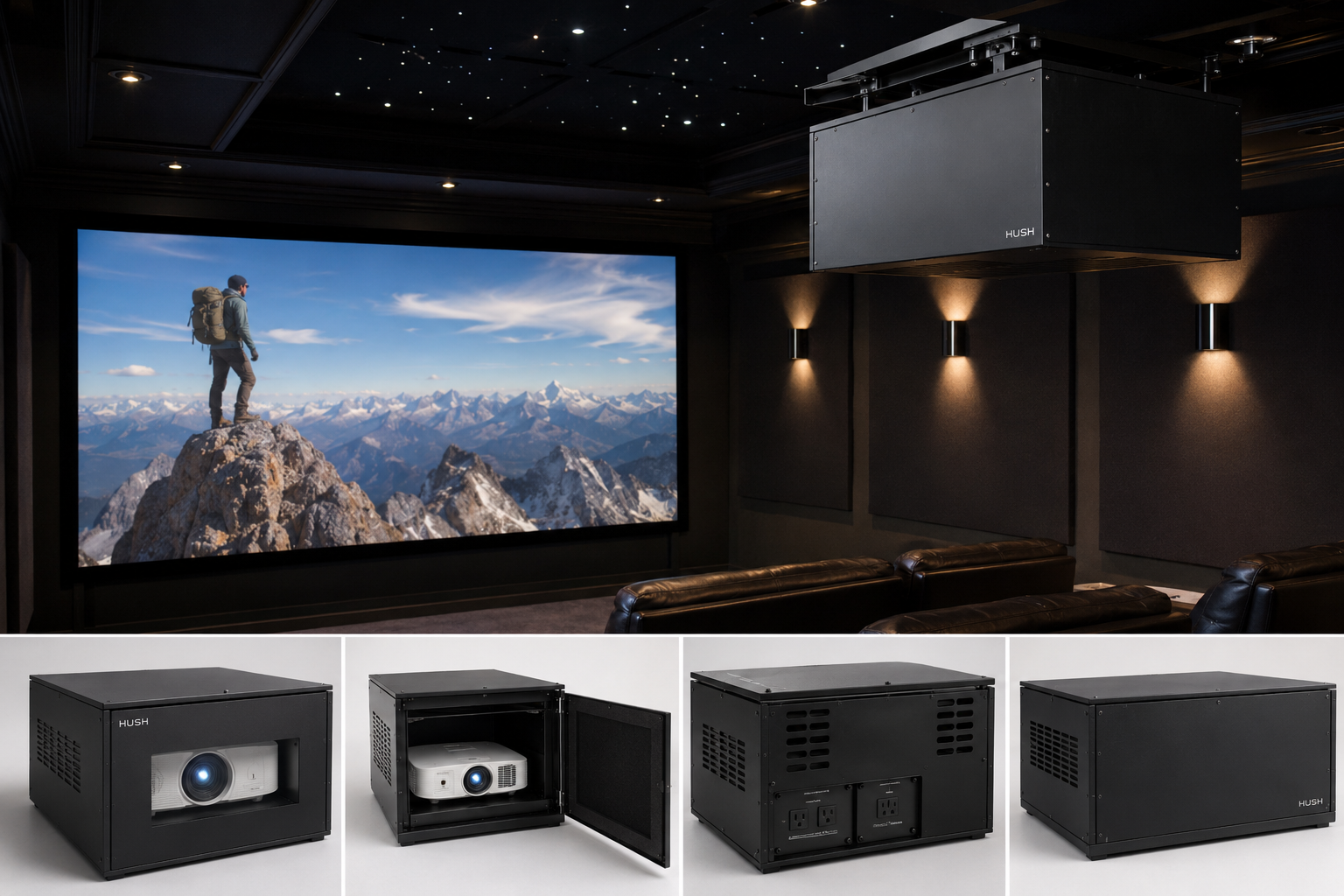
Inside the Technology Behind Engineered Silence
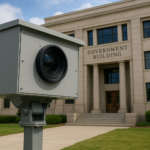
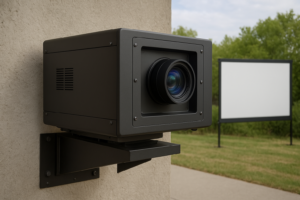
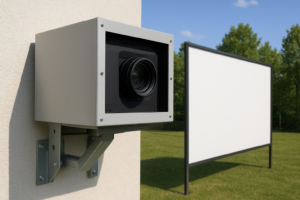
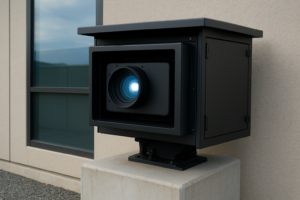
SSI’s Hush Projector Enclosures are built for AV environments where projector noise cannot become part of the experience. These are not basic projector boxes with foam inside. Instead, they combine acoustic insulation, airflow control, internal power management, and secure metal construction to create a quieter, cleaner, and more professional projector installation.
That matters because quiet rooms are unforgiving.
In a home theater, projector noise can distract from dialogue. In a museum, it can break the atmosphere of an exhibit. In a conference room, it can pull attention away from the presenter. In a studio or screening room, even a small amount of fan noise can feel out of place.
SSI’s Hush Series solves that problem with a purpose-built enclosure designed for sound-sensitive installations. Screen Solutions International describes the Hush Series as a fully insulated projector enclosure with fan cooling, two internal outlets, two internal breakers, an adjustable projector shelf, and sub-10 dBA sound output.
Silence That Is Engineered, Not Accidental
Creating a quiet projector enclosure is not as simple as wrapping a projector in foam. In fact, doing that poorly can create a heat problem.
Projectors need ventilation. Epson explains that projector air filters and air vents need cleaning to reduce heat-related operating risk caused by blocked ventilation. Epson also notes that dust buildup inside a projector can increase risk over time.
Therefore, a hush enclosure has to solve two problems at once.
First, it needs to reduce projector noise. Then, it needs to move heat away from the projector safely. If the enclosure only blocks sound, it may trap heat. If it only moves air, it may let fan noise escape.
That is why SSI’s Hush Enclosures focus on acoustic control, airflow design, and internal power management together.
What Is a Hush Projector Enclosure?
A Hush Projector Enclosure is an insulated projector housing designed to reduce unwanted projector noise while still providing cooling, protection, power access, and service access.
ProjectorEnclosure.com describes Hush Projector Enclosures as indoor enclosures built for quiet projector protection in home theaters, museums, offices, studios, and sound-sensitive AV rooms. The product page lists key features including thermostatic fan cooling, fully insulated construction, dual internal outlets, dual internal breakers, an adjustable projector shelf, locking security, 120V power, black or white standard colors, and sub-10 dBA sound output.
In other words, the enclosure does more than hide the projector. It helps control the way the projector interacts with the room.
The Technology Inside a Hush Enclosure
SSI’s Hush Series works because it combines several systems into one enclosure. Each feature solves a specific problem.
1. Multi-Layer Acoustic Insulation
The first layer of performance comes from insulation.
A projector creates sound from internal fans, moving air, vibration, and electronic components. If the projector sits exposed, that noise travels directly into the room. However, a properly insulated enclosure helps absorb and reduce that sound before it reaches the audience.
SSI describes the Hush Series as a fully insulated unit designed for whisper-quiet operation in sound-sensitive installations.
That insulation matters in:
- home theaters
- screening rooms
- museums
- galleries
- recording studios
- offices
- boardrooms
- high-end residential AV spaces
As a result, the audience hears more of the content and less of the equipment.
2. Sound-Isolated Fan Cooling
A quiet enclosure still needs airflow.
Projectors create heat during operation. If the enclosure cannot remove that heat, the projector may throttle, shut down, or experience reduced long-term reliability. Epson Europe warns that overheating messages can occur when vents are blocked or air filters become clogged.
Because of that, SSI’s Hush Enclosures use fan cooling while still keeping sound output low. ProjectorEnclosure.com lists thermostatic fan cooling as a key Hush feature, meaning the enclosure can manage airflow based on temperature needs instead of relying on uncontrolled ventilation.
This is where the engineering matters.
A basic fan can move air, but it can also add noise. A better hush design controls both airflow and sound path. Air needs to move through the enclosure, but projector noise should not have a straight path out into the room.
That balance separates a real hush enclosure from a simple vented box.
3. Internal Electrical Distribution
Power management is another major advantage.
The Hush Series includes two internal outlets and two internal breakers, according to both SSI and ProjectorEnclosure.com.
That matters because projector installations can get messy fast. Without internal power management, installers may need extra cabling, exposed power strips, or awkward wiring outside the enclosure.
Internal electrical distribution helps create a cleaner system by keeping power access inside the housing. It can also reduce cable clutter and make the enclosure feel more turnkey.
For premium AV spaces, that matters visually and practically.
4. Adjustable Projector Support
Projectors vary in size, lens position, throw distance, and airflow direction. Therefore, the enclosure needs flexibility.
SSI’s Hush Series includes an adjustable projector shelf, which helps installers position the projector correctly inside the enclosure.
That feature is especially important in rooms where alignment matters, such as:
- home theaters
- screening rooms
- projection mapping rooms
- boardrooms
- museums
- simulation rooms
- immersive exhibits
Instead of forcing the projector into a fixed position, the adjustable shelf helps support cleaner setup and more accurate alignment.
5. Secure Metal Construction
Quiet performance matters, but protection still matters too.
The Hush Enclosure is not only an acoustic product. It also supports controlled access and project-specific equipment placement in shared installations.
ProjectorEnclosure.com lists a locking access design as one of the Hush Series features.
That is useful in shared or public-facing spaces such as:
- museums
- classrooms
- offices
- galleries
- hospitality venues
- event spaces
- houses of worship
As a result, the projector gains acoustic protection and physical protection at the same time.
Why Sub-10 dBA Sound Output Matters
SSI’s Hush Series lists sound output at sub-10 dBA.
That is a very quiet specification. For context, NIOSH uses A-weighted decibels, or dBA, when discussing workplace noise exposure, and its recommended exposure limit is 85 dBA over an eight-hour workday.
A hush enclosure is not about hearing protection in the OSHA sense. Instead, it is about comfort, immersion, and distraction control. Still, dBA matters because sound-sensitive AV rooms often succeed or fail on small details.
In quiet rooms, unwanted fan noise can feel louder than expected. Therefore, reducing projector sound helps preserve the experience.
Where Hush Projector Enclosures Make the Most Sense
A Hush Enclosure is ideal when the room needs projector performance without projector distraction.
Home Theaters
In a home theater, the audience wants to hear the movie, not the projector fan. A Hush Enclosure helps reduce mechanical noise while keeping the projector protected and ventilated.
Museums and Galleries
Museums often use projectors for immersive exhibits, storytelling walls, and digital art. Since these spaces depend on atmosphere, quiet equipment makes the experience feel more polished.
Corporate Boardrooms
In a boardroom, projector noise can distract from presentations and conversations. A hush enclosure helps the AV system disappear into the room.
Studios and Screening Rooms
Studios, review rooms, and screening spaces need controlled sound. Therefore, projector noise should stay as low as possible.
Houses of Worship
Churches and worship spaces often include quiet moments, spoken word, music, and video. A hush enclosure helps keep projector noise from interfering with the service.
Hush Enclosure vs. Standard Projector Enclosure
A standard projector enclosure usually focuses on protection and airflow. That can work well in many installations.
However, a Hush Projector Enclosure focuses on protection, airflow, and noise reduction together.
That difference matters in sound-sensitive rooms.
A fan-cooled enclosure may protect the projector and help move air. A hush enclosure takes the next step by adding insulated construction, low sound output, and quiet-room design features. SSI’s broader enclosure lineup includes Hush Enclosures, Integrator outdoor fan-cooled enclosures, Defender climate-controlled enclosures, UST enclosures, and projector cages for different use cases.
So, if the primary issue is outdoor weather, choose a climate-controlled Defender enclosure. If the primary issue is quiet indoor operation, choose a Hush Enclosure.
Hush Enclosure Data Snapshot
Here is the quick performance snapshot for SSI’s Hush Projector Enclosures:
- Operating sound level: sub-10 dBA
- Cooling system: thermostatic fan cooling
- Power: 120V
- Internal power: two internal outlets and two internal breakers
- Interior: fully insulated construction
- Projector support: adjustable projector shelf
- Security: locking access design
- Standard colors: black or white
- Primary use: sound-sensitive indoor projector installations
These details come from the SSI Hush Series and ProjectorEnclosure.com Hush Enclosure product pages.
Final Takeaway
SSI’s Hush Projector Enclosures are engineered for silence, not guessed into it.
They combine acoustic insulation, fan cooling, internal power distribution, adjustable projector support, and secure metal construction into a complete quiet-room projector housing. As a result, they help reduce projector noise while still protecting the equipment and supporting airflow.
For home theaters, museums, studios, offices, galleries, and other sound-sensitive AV environments, a Hush Enclosure can make the projector feel less like equipment and more like part of the room.
Engineered silence. AV perfection.
Learn more about SSI’s Hush Projector Enclosures at ProjectorEnclosure.com.
Sources
- ProjectorEnclosure.com — Hush Projector Enclosures
URL: https://projectorenclosure.com/hush-projector-enclosures/
For Hush Enclosure features, including sub-10 dBA sound output, thermostatic fan cooling, fully insulated construction, dual outlets, dual breakers, adjustable projector shelf, locking design, standard colors, and sound-sensitive use cases. - Screen Solutions International — Hush Series
URL: https://ssidisplays.com/product/hush-series/
Used for SSI Hush Series positioning, sub-10 dBA sound output, full insulation, fan cooling, two internal outlets, two internal breakers, adjustable projector shelf, and turnkey sound-sensitive installation language. - Screen Solutions International — Projector Enclosures
URL: https://ssidisplays.com/projector-enclosures/
Used for SSI’s broader projector enclosure lineup, including Hush Enclosures, Integrator fan-cooled enclosures, Defender climate-controlled enclosures, UST enclosures, and projector cages. - ProjectorEnclosure.com — Projector Enclosures Home Page
URL: https://projectorenclosure.com/
For general enclosure category context, including indoor, outdoor, hush, UST, and cage options. - Epson — Projector Maintenance
URL: https://files.support.epson.com/docid/cpd5/cpd59255/source/maintenance/concepts/maint_projector_laser.html
Used for projector maintenance guidance, including cleaning the lens, air filter, and air vents to help reduce heat-related operating risk due to blocked ventilation. - Epson Europe — Air Filter Cleaning FAQ
URL: https://www.epson.eu/en_EU/faq/KA-01509/contents
Used for overheating warnings related to blocked vents and clogged air filters. - NIOSH / CDC — Noise-Induced Hearing Loss
URL: https://www.cdc.gov/niosh/noise/about/noise.html
Used for general dBA context and NIOSH’s 85 dBA recommended exposure limit reference.