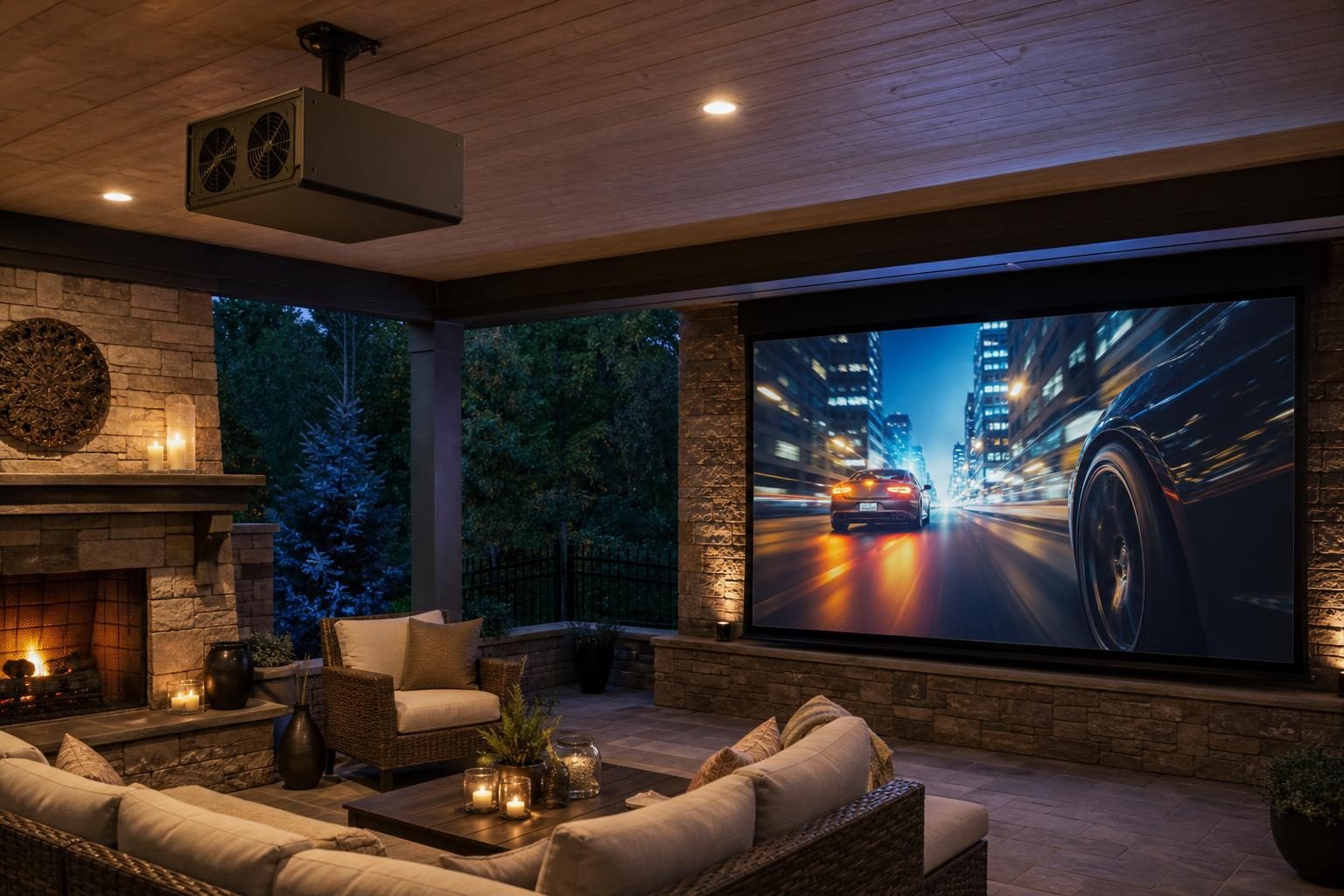
Planning a Fan Cooled Install in Odessa
Odessa sees big swings in temperature from season to season, so think about the full year, not just July. A covered outdoor space can be well over 100°F on a summer afternoon and near freezing on a winter night. A fan cooled enclosure manages projector heat by moving air, so it works best where the surrounding air stays within the projector’s own operating range.
Wind and dust are just as important. Point the intake away from open lots and loading doors, keep the exhaust from blowing back toward the intake, and set a filter-cleaning routine that matches how dusty the site actually gets. In many Odessa facilities that means checking filters more often in spring, when wind is strongest.
Before ordering, send SSI the projector model, lens, mounting height and a photo of the spot. We check lens position, cable entry and service access so your team can reach the projector from a lift or ladder without taking the enclosure down.
- Treat these Odessa-specific planning checks as pre-install gates before finalizing projector enclosure placement.
- Lock lens access direction and service-panel access paths before mounting hardware is finalized so routine maintenance does not require reinstall work.
- Coordinate projector dimensions, lens geometry, and cable bend radius with enclosure footprint to avoid field modifications after installation starts.
- Where heat exposure or weather exposure appears beyond fan-cooled suitability, request climate-controlled enclosure review before final product selection.
- Validate that maintenance personnel can reach filters, lamp access points, and cable connections without removing adjacent architectural elements.
- Document operating duty cycle expectations so airflow planning and service intervals are reviewed against real use patterns.
When site conditions indicate persistent harsh exposure or requirements beyond fan-cooled suitability, SSI can review climate-controlled alternatives before final product selection.