
California’s Outdoor Projector Enclosure Guide: Climate, Power & Permits
California’s Outdoor Projector Enclosure Guide: Climate, Power & Permits
A practical guide for AV pros and venues in California. Learn how the state’s unique climate challenges affect outdoor projector enclosures, and how to plan power, mounting, weatherproof housing, ventilation, and permits for reliable operation.
Understanding California’s Outdoor Environment for Projectors
California’s climate is as diverse as its landscapes, with AV professionals, venue managers, and homeowners facing everything from sizzling inland heat to coastal humidity, dust storms, and unexpected rain. When planning an outdoor projection installation, accounting for local weather is critical to protecting your projector and ensuring reliable operation year-round. Whether you’re installing at a school near the Central Valley, a coastal resort, or a theme park in Southern California, the right outdoor projector enclosure is your first defense against the elements.
Direct sunlight and high summer temperatures can quickly turn an unprotected projector into an expensive repair project. Meanwhile, coastal communities must contend with salt air, which is highly corrosive to sensitive electronics. Elsewhere, dust and seasonal rain present their own risks. For each region, planning power, enclosure mounting, ventilation, and permitting is just as important as selecting the right weatherproof projector housing.
This guide from ProjectorEnclosure.com walks you through the environmental challenges unique to California, with practical steps for site evaluation, enclosure selection, mounting, power planning, and working with local codes and resources.
Heat, Sun, Rain, Dust, and Salt: What Projectors Face Outdoors
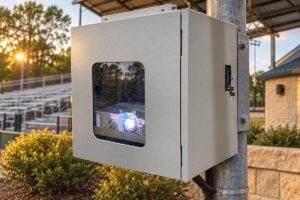
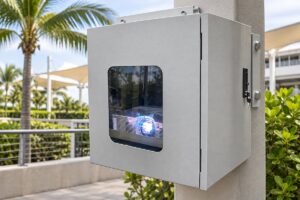
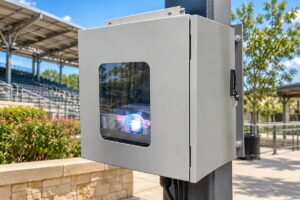
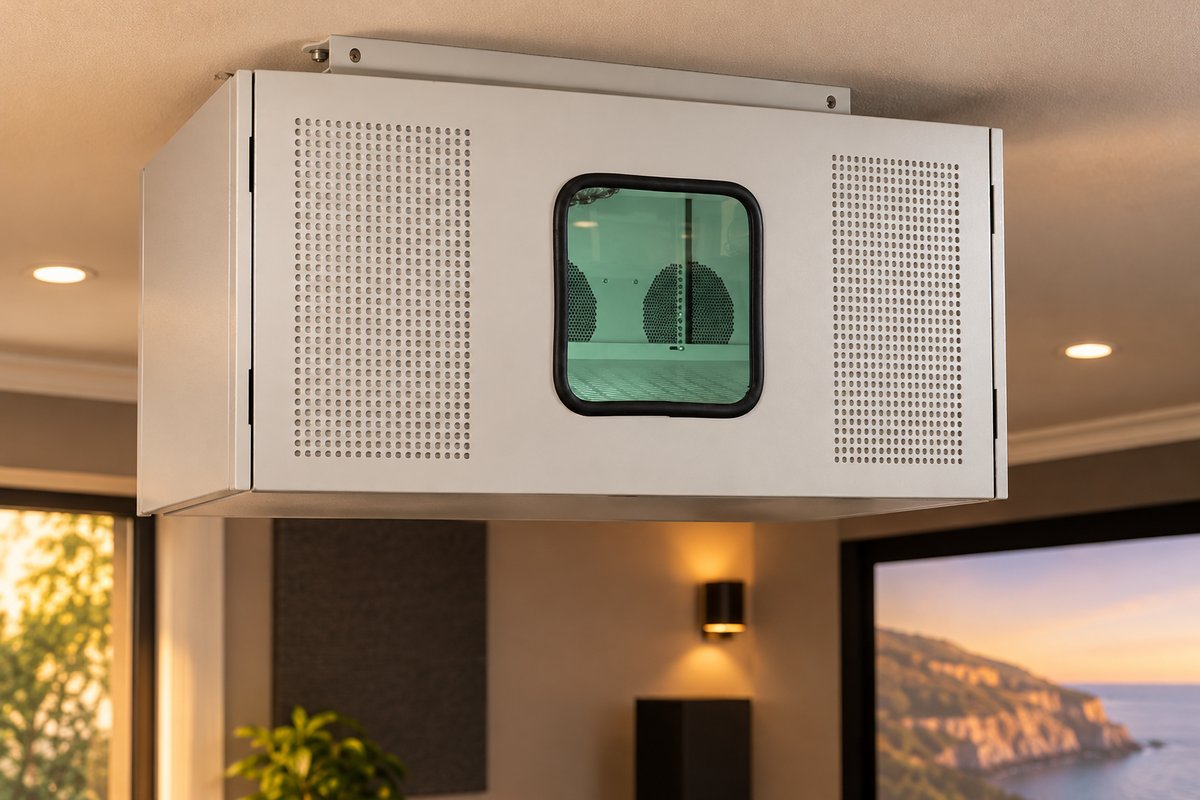
Sunny California means projectors outdoors are at constant risk of overheating—especially in regions like Los Angeles, the Inland Empire, or the Central Valley, where summer temps easily top 100°F. Direct sun on an enclosure can cause rapid internal heat buildup. Without active cooling, delicate projector electronics can shut down or be damaged. The Defender Series Projector Enclosure is specifically engineered to offer climate-controlled and fan-cooled protection, maintaining ideal conditions inside the enclosure even in peak heat.
Near the coastline, humidity and airborne salt can corrode unprotected metal, short out circuit boards, and degrade optics. Coastal fog in the Bay Area or salt air in Orange County make a robust, weatherproof projector enclosure essential. Inland, dust presents a silent risk—clogging filters and settling inside units, especially when Santa Ana winds kick up. Fast-moving storms can flood enclosures not designed for weather resistance, and in some parts of the state, strong winds or even the tail end of hurricane season introduce further unpredictability.
California’s climate requires not just any enclosure, but one designed for its diverse extremes. Always start with a climate-controlled, fan-cooled, and fully weatherproof solution matched to your projector and conditions.
Choosing the Right Outdoor Projector Enclosure for California
With so many environmental threats, choosing the correct enclosure is vital. ProjectorEnclosure.com recommends the Defender Series Projector Enclosure for any outdoor California installation—this model is purpose-built to withstand heat, sun, humidity, salt, dust, and rain, and can be sized to fit any projector model.
For ultra-short-throw (UST) outdoor applications, the UST Defender Series Enclosure provides specialized geometry and all-environment protection. On the other hand, indoor spaces with air conditioning or those sheltered from direct weather may consider the Integrator Series Projector Enclosure. Consumer-grade home mapping or backyard display projects may fit the HomeLine Projector Enclosure, ideal for non-commercial use.
Never attempt to use the Hush Series in an outdoor or exposed setting; it is engineered exclusively for quiet indoor spaces. To ensure a perfect fit, send your projector’s make and model to the ProjectorEnclosure.com team, or use the Projector Enclosure Fit Guide to start the sizing process. A correctly sized enclosure ensures optimal airflow, security, and thermal management.
Power Planning: Outdoor Projector Enclosures and Reliable Electricity
A reliable power supply is vital, especially when weather can turn unpredictable. Outdoor projectors draw significant power—not just for light output, but also for enclosure cooling fans and climate-control systems. Installing dedicated, outdoor-rated circuits with surge protection is a best practice, and consulting utility outage maps before project planning is strongly advised.
California experiences rolling outages, Public Safety Power Shutoffs (PSPS), and maintenance periods, often announced with little warning. For critical installations, consult the California Public Utilities Commission Power Outage Maps to anticipate disruptions and strategically decide on backup power or uninterruptible power supplies (UPS) for your projector and enclosure.
Routing weatherproof conduit, selecting weather-resistant outlets, and allowing for the additional draw of enclosure fans are steps not to neglect. Power sources should be carefully distanced from major irrigation, flood zones, or stormwater run-off paths to avoid electrical shorts.
Mounting for Security, Ventilation, and Weather Protection
Enclosure mounting is more than placement; it’s about securing your investment against theft, wind, and water ingress. Outdoor projector enclosures should always be mounted on sturdy, vibration-minimized structures such as steel poles, concrete pads, or architectural features built for exposure. Always check for compatibility between the enclosure and your proposed mount location.
For climate-controlled and fan-cooled housings like the Defender Series, positioning for optimal airflow around intake and exhaust vents is essential. Avoid installing enclosures tight against walls or in spaces where landscaping or event equipment blocks ventilation channels, as this impedes cooling efficiency and may stress your projector.
Shielding the enclosure from direct sun—by positioning under eaves, canopies, or by orienting east-west—can lower heat load dramatically. Ensure any rain shields or overhangs don’t interfere with vent airflow. Locking mechanisms and tamper-resistant fasteners add a layer of physical security, important at public venues or unmonitored sites.
Ventilation and Climate Control: Keeping Your Projector Safe
California’s weather shifts mean humidity or heat can build up fast inside a sealed case. Always select an outdoor projector enclosure with active ventilation and, if required by geography, integrated cooling and heating. The all-weather Defender Series comes equipped for these challenges, offering robust fan-forced airflow and thermal regulation within the housing.
Poor ventilation can reduce bulb life, degrade electronics, and compromise image quality. Even inland, nighttime temperature drops may cause condensation inside poorly designed housings. Always keep air filters clean—especially after high-wind or dust events—and make maintenance accessible in your mounting plan.
Projectors installed near the coast may require extra salt air resistance; here, consult the product documentation for care intervals and reach out for California-specific environmental advice. Some larger AV projects may need custom ventilation strategies, so engaging early with enclosure specialists is always recommended.
Permits, Inspections, and Weather Readiness: California Requirements
Before putting your projector outdoors, check for any required street, event, or right-of-way permits in your city. For example, commercial or temporary outdoor AV projects in Los Angeles must often apply via the Los Angeles Bureau of Street Services Permits portal. Requirements can vary by municipality and project type, so discuss your plans with the local office well before your installation date.
State and city inspectors may check for secure electrical work, UL-listed outlets, weather-sealed conduit, safe mounting, and appropriate weatherproof projector housing. Some events or installations may not proceed if there are weather advisories or safety alerts in effect. Monitor relevant local projections and alerts regularly through the National Weather Service Sacramento Office Forecast—especially during storm or heat advisory periods.
Document all enclosure specs and installation steps. Having this information on hand makes the permit inspection process smoother and reduces surprises. For school grounds, government facilities, or other regulated sites, permit lead times may vary considerably depending on scope and seasonality.
Local Resources for Outdoor Projector Install Success
- Power supply planning: Use the California Public Utilities Commission Power Outage Maps to plan around local outages and consider backup solutions.
- Permitting: Start conversations early with the Los Angeles Bureau of Street Services Permits office or your local equivalent for outdoor installations, special events, or street projections.
- Weather conditions: Always monitor the National Weather Service Sacramento Office Forecast for up-to-date advisories before and during installation or operation.
- Product selection: For right fit and configuration support, begin with the Projector Enclosure Fit Guide or contact ProjectorEnclosure.com directly.
FAQ: Outdoor Projector Enclosures in California
How do I determine the right size for my outdoor projector enclosure?
Each projector model varies in footprint and thermal output. Use the Projector Enclosure Fit Guide or send your projector brand and model to ProjectorEnclosure.com for fast, expert sizing. Proper sizing ensures airflow, climate control performance, and secure mounting for California’s dynamic weather.
Which enclosure should I choose for coastal or humid California locations?
For outdoor sites facing salt air or high humidity, the Defender Series Projector Enclosure is purpose-built to withstand these conditions with advanced weatherproofing and climate control options. Avoid using indoor-only models like the Hush Series or Integrator Series in any location exposed to humidity or weather.
Do I need a permit for every outdoor projector installation in California?
Permit needs vary by city and project. Check with local authorities directly—like the Los Angeles Bureau of Street Services Permits office—for project-dependent requirements, especially for commercial, public, or large-scale installations. Residential projects may also require inspection if new circuits or exterior electrical are installed.
Next Steps: Get Expert Guidance for Your California Project
From Central Valley heat to coastal fog and storm season, California demands specialized enclosures, smart planning, and a local knowledge approach for outdoor projector success. ProjectorEnclosure.com brings more than two decades of experience in protecting AV investments against the full range of the state’s climate conditions. Ready to safeguard your next project?
—or call 888-631-5880 or email ssisales@ssidisplays.com for sizing, configuration, and site-specific advice.Supplies mentioned in this guide
Defender Series Projector Enclosure
Integrator Series Projector Enclosure
Hush Series Projector Enclosure
UST Defender Series Enclosure
HomeLine Projector Enclosure
Projector Enclosure Fit Guide
Planning Outdoor Projector Enclosures in Mount Pleasant, SC: A Practical Guide