
Nevada Outdoor Projector Enclosures: A Practical Installation Guide
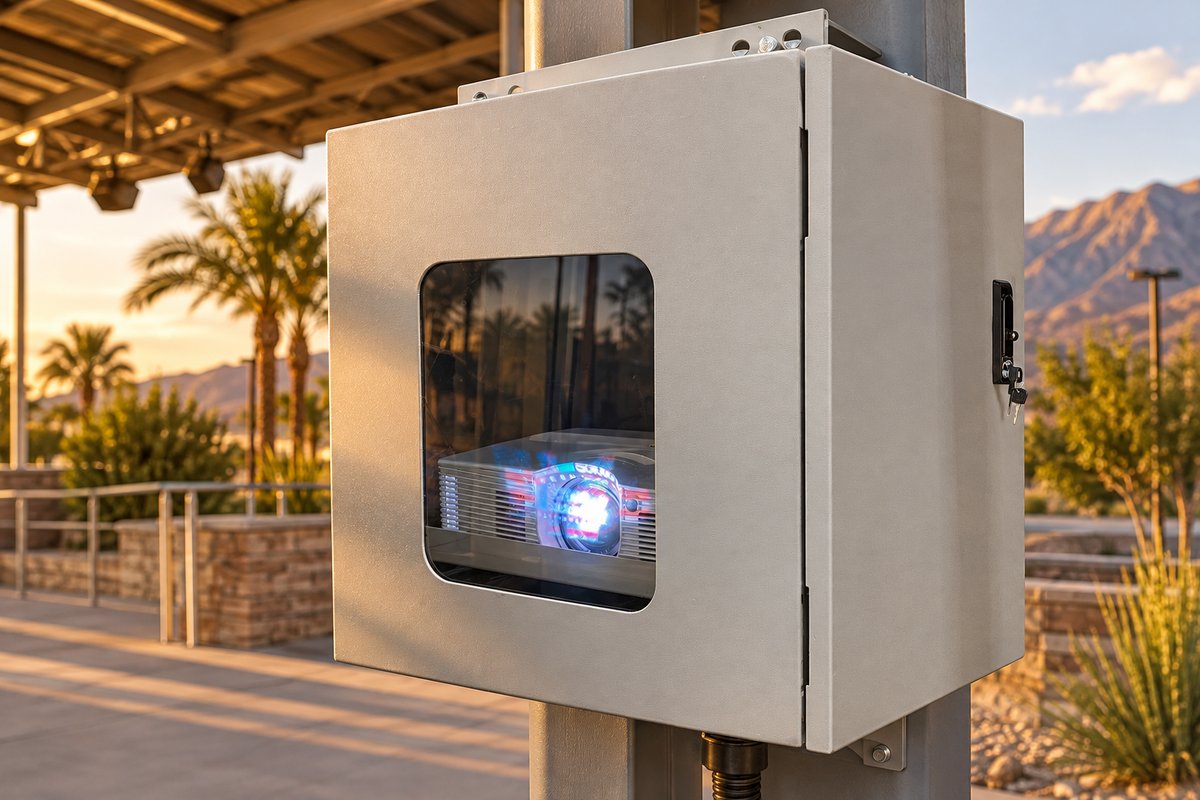
Nevada Outdoor Projector Enclosures: A Practical Installation Guide
Planning an outdoor projector install in Nevada? Discover practical steps to protect your projector from heat, dust, salt air, rain, and storms—plus how to plan power, ventilation, mounting, and permits.
Nevada Climate and Your Outdoor Projector Enclosure
Nevada’s unique climate presents a blend of environmental challenges for outdoor projection. Extended summer heat, direct sunlight, low humidity inland, and the rare but consequential influxes of humidity or rain in certain regions all affect projector reliability. Along the western edge, occasional salt air wafting in from California poses an added threat, while dust storms and seasonal winds are a statewide concern. For any AV integration team or venue operator, protecting expensive projection equipment in these conditions is paramount.
Rapid temperature swings between daytime highs and cooler desert nights can cause condensation, threatening sensitive projector components. Accumulated dust and sand, particularly near highways and open lands, can clog filters, overheat electronics, or mar projection clarity. Rain, though infrequent, can be powerful when it arrives—making watertight and weatherproof projector housing a must.
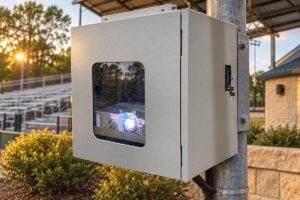
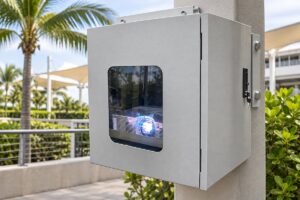
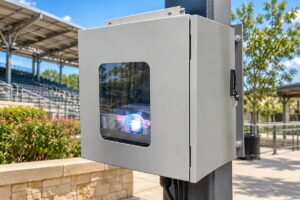
Climate-controlled projector enclosure solutions, like those from ProjectorEnclosure.com, are built to handle intense Nevada conditions. For true outdoor applications, especially where there is direct exposure to sun, dust, and storms, opt for a purpose-designed solution such as the Defender Series Projector Enclosure.
Heat, Direct Sun and Ventilation Strategies
Managing thermal load is the most critical enclosure design factor in Nevada. Not only must the enclosure keep rain and dust out, it must shed heat even when temperatures soar above 110°F and the box sits under direct sun. Properly designed weatherproof projector housing uses active and passive ventilation systems, sometimes incorporating climate control such as fans or air conditioning, to keep internal temperatures in the projector’s safe operating range.
Outdoor venues, schools, theme parks or homes should never use indoor-rated enclosures outside. Only outdoor-specific products like the Defender Series or UST Defender Series Enclosure are engineered for Nevada’s true temperature, dust, and storm loads. Always double-check that your installation plan includes enough shade, forced-air movement, and clearances recommended by the enclosure provider for ventilation.
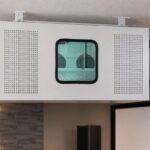
If your application involves a partially protected or semi-conditioned space (such as a covered patio), a product like the Integrator Series Projector Enclosure may be advisable. For advice on proper sizing and cooling, share your projector make and model with ProjectorEnclosure.com for a tailored recommendation.
Humidity, Rain, Dust, and Salt Air Considerations
Though Nevada is often thought of as arid, microclimates with higher humidity or even windborne moisture (particularly near coasts or lakes) are not uncommon. Salt air, while rare, can affect venues near the western border or high-traffic transportation corridors. Storm-driven rain, flash floods, or localized weather events can cause moisture to penetrate inadequately sealed or incorrectly vented projector enclosures.
Weatherproof projector housing must have gasketing, filtered air paths, and materials that withstand both particulate intrusion and corrosive atmospheres. The Defender Series from ProjectorEnclosure.com is specifically constructed for these conditions, keeping out blowing sand and moisture while allowing the necessary airflow. For occasional coastal or highly humid locales, choose options designed to resist corrosion and condensation buildup.
Projectors for outdoor home displays or less demanding locations can use specialized enclosures like the HomeLine Projector Enclosure, provided they are away from open weather and elevated humidity. To address Nevada’s unpredictable patterns, monitor weather using resources like Contact Your Local NWS Office for planning and maintenance scheduling.
Power Planning and Electrical Service in Nevada
Outdoor projector enclosures require robust, stable power to support both the projector and the cooling systems. In Nevada’s summer heat, undervoltage or brownouts can cause equipment failures or reduce lamp and electronics lifespan. Ensure power is routed from reliable, code-compliant sources with grounded, weatherproof outlets rated for outdoor use.
Consult your site engineer or local electrical service provider before installation. NV Energy offers guidance on service upgrades, outage reporting, and energy management, which are especially important for commercial venues with multiple outdoor AV installations. For larger events or venue upgrades, consider future power expansion needs when locating your projector enclosure.
Plan for surge protection and emergency shutdown capability, both for safety and to meet local requirements. Cooling systems—especially climate-controlled projector enclosure models—may require dedicated circuits. Always size your enclosure and power provision to accommodate your projector by referencing the Projector Enclosure Fit Guide and consulting ProjectorEnclosure.com.
Enclosure Mounting, Access, and Security
Mounting a weatherproof projector housing outdoors involves key engineering decisions. Secure attachment to existing structures or custom mounts is essential, both for wind resistance and for tamper deterrence. In addition to the load requirements of the enclosure and projector, installers must account for Nevada’s gusty conditions and the potential for impact from wind-blown debris.
Accessibility for maintenance and filter cleaning should be planned into your mounting strategy. If the enclosure is placed overhead or in a high-traffic area, consider hinged fronts, quick-release latches, and lockability. The Defender Series includes options for securing the enclosure against unauthorized access.
For the best results, work with specialty AV installers or your in-house engineering team to ensure that mounting points and hardware are weather-rated and meet building codes. Regularly schedule inspections before and after major storm or dust events to prevent operational issues.
Ventilation, Airflow, and Preventing Heat Buildup
A key difference between purpose-built outdoor projector enclosures and basic weather shields is engineered airflow. In Nevada, hot stagnant air can rapidly exceed safe operating ranges unless forced ventilation cycles it out. ProjectorEnclosure.com’s Defender Series and UST Defender Series provide fan-cooling and variable airflow paths matched to your projector’s size and heat output.
Always follow manufacturer guidance on clearances for all air inlet and outlet points. Obstructed airflow is a primary cause of heat failure and system shutoff in outdoor environments. Where possible, keep enclosure inlets free of vegetation, fabric, sunshade materials, or accidental blockages.
Venues should check vents and replace filters on a regular schedule, particularly during storm season or local construction periods when dust is prevalent. For installations in climate-controlled or partially covered spaces, the Integrator Series is designed to balance airflow and environmental sealing without overcooling.
Permitting and Regulatory Steps for Nevada Locations
Outdoor projector installations almost always require a review of local permitting procedures, especially for permanent or event-based applications in public or commercial spaces. For venues in unincorporated Clark County, refer to Temporary Events for event permitting guidelines. In the City of Las Vegas, the Special Event Permits page lays out necessary applications for other localities.
Permitting requirements may include electrical inspections, fire safety clearances, or structural reviews, depending on your installation’s scope. Larger projector enclosures, high-mount installations, or those requiring power from the public grid may trigger additional inspections. Review the full scope with your local office well in advance of your intended installation date to minimize surprise delays.
For residential installations, permitting may be simpler, but always check before beginning any permanent outdoor AV project. Plan for lead times, especially during event seasons or peak times for construction projects in Nevada’s resort markets.
Choosing the Right Enclosure: Sizing and Selection
ProjectorEnclosure.com offers a comprehensive line of enclosures to meet the varied Nevada climate and usage cases, but correct sizing is essential to performance. Selecting too small a unit reduces airflow and cooling potential, while too large a box creates inefficient or uneven air distribution. The Projector Enclosure Fit Guide provides a starting point, but users are encouraged to send their projector model and outdoor site details to the ProjectorEnclosure.com team for individualized recommendations.
For any fully outdoor Nevada installation, including event venues, hotel outdoor spaces, and home patios exposed to the weather, choose the Defender Series. For ultra short-throw projector setups at resorts or theme park attractions, the UST Defender Series Enclosure is purpose engineered.
Installers specifying climate-controlled or partially protected locations may select the Integrator Series. For home projection mapping displays not fully exposed to weather, the HomeLine Projector Enclosure can provide effective dust and debris protection. For quiet indoor environments, such as galleries or boardrooms, only the Hush Series Projector Enclosure is recommended—but never outdoors.
FAQ: Nevada Outdoor Projector Enclosure Installations
Does the enclosure need to be climate-controlled or just weatherproof?
For fully outdoor, sun-exposed, or dust-prone Nevada sites, a climate-controlled projector enclosure is best for managing heat buildup, humidity, and dust. Weatherproof projector housing is sufficient only in locations with milder ambient temperatures or extra shade, but for Nevada summers, active cooling is advised.
How do I get power for my projector enclosure?
Coordinate with your electrician to supply a dedicated, weather-rated outlet with clean, consistent power. NV Energy offers information on safe outdoor circuits and upgrades. Plan for the combined draw of the projector and cooling system, including surge protection.
What permits do I need to install an outdoor projector in Nevada?
Your permitting requirements depend on your venue location and installation type. For most public and event venues, check with relevant authorities such as Clark County Temporary Events or the City of Las Vegas Special Event Permits office.
Conclusion: Protecting Your Outdoor Projection Investment
Integrating a projector outdoors in Nevada means planning for more than just image quality—the right enclosure safeguards the investment, ensures reliable operation, and meets the legal and engineering requirements of your site. Rely on expert products from ProjectorEnclosure.com. Their team is ready to assist AV integrators, event hosts, venues, and homeowners in selecting and sizing the ideal climate controlled projector enclosure or weatherproof projector housing for any Nevada environment.
- NV Energy – Electrical service, outages, and outdoor power resources
- Temporary Events – Permit information for outdoor events (Clark County)
- Special Event Permits – Permitting steps in the City of Las Vegas
- Contact Your Local NWS Office – Weather updates and climate data
- Projector Enclosure Fit Guide – Reference for sizing and selection
Supplies mentioned in this guide
Defender Series Projector Enclosure
Integrator Series Projector Enclosure
Hush Series Projector Enclosure
UST Defender Series Enclosure
HomeLine Projector Enclosure
Projector Enclosure Fit Guide
California’s Outdoor Projector Enclosure Guide: Climate, Power & Permits