
A Practical Guide to Outdoor Projector Enclosures in Queen Creek, AZ
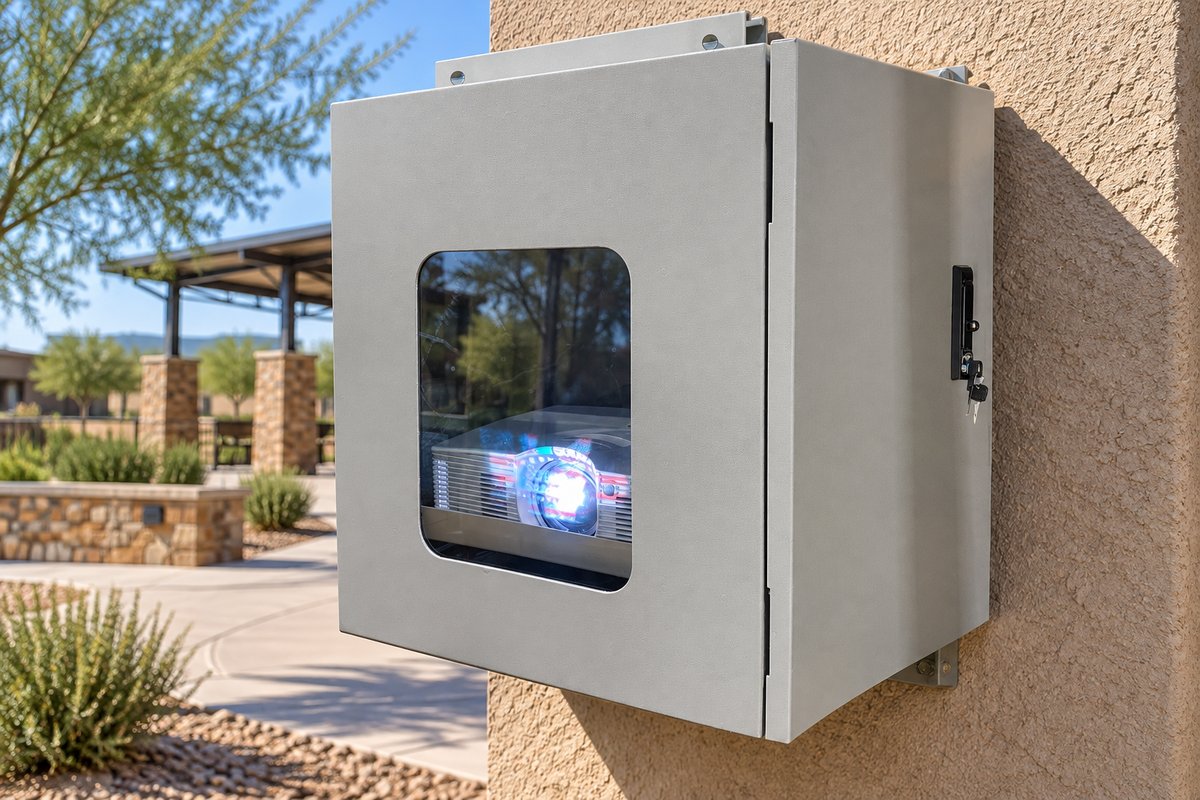
A Practical Guide to Outdoor Projector Enclosures in Queen Creek, AZ
Queen Creek’s heat, sun, and storms challenge your projector investment. Learn how to plan for climate, power, ventilation, and the right weatherproof projector housing.
How Queen Creek Climate Challenges Outdoor Projectors
Queen Creek, AZ, is renowned for its stunning desert vistas and sunshine, but those same elements can spell trouble for outdoor projectors. The combination of extreme summer heat, direct midday sun, dust storms, and seasonal humidity demand careful planning from AV professionals and homeowners alike. An outdoor projector left exposed can quickly overheat, collect dust, or suffer from internal condensation—issues that threaten image quality and equipment lifespan.
Heat waves are common, with daytime temperatures regularly exceeding 105°F in the summer. Humidity remains moderate compared to coastal areas but can rise after monsoon rains, creating conditions where both electronics and optics require protection. While Queen Creek is not directly on the coast, salt air may still be a concern for some sites exposed to imported landscaping features or misting systems. Thunderstorms bring the risk of sudden rainfall and dust, making weather-resilience a top priority for any AV installation.
Understanding these local climate obstacles is essential before installing a projector outdoors. Carefully selecting the right outdoor projector enclosure, like the Defender Series Projector Enclosure, helps shield your equipment from the worst nature offers while supporting brilliant displays all season long.
Choosing the Right Enclosure: Sizing and Series
Projectors come in all shapes, sizes, and cooling needs. That’s why the correct enclosure matters as much as the projector itself. For open weather in Queen Creek, only purpose-built weatherproof projector housing should be considered—standard AV cabinets or generic plastic boxes simply can’t compete.
Start by referencing the Projector Enclosure Fit Guide to match your projector’s model and cooling requirements to an appropriately sized enclosure. ProjectorEnclosure.com asks for your projector’s make and model to help ensure a precise fit, critical for airflow, heat management, and optimal operation through the seasons.
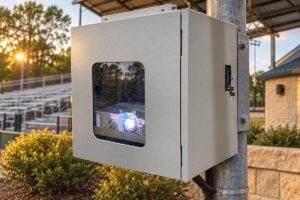
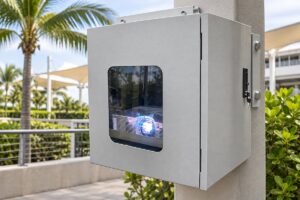
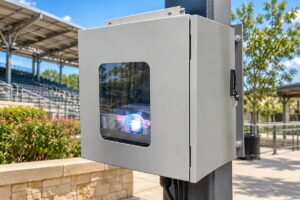
For outdoor installs, the Defender Series Projector Enclosure is the recommended choice, engineered to handle direct sun, high heat, blowing dust, and rainfall. Bulkier projectors, including ultra-short throw models for tight spaces, should look to the UST Defender Series Enclosure. For homes experimenting with holiday mapping or backyard entertainment, the HomeLine Projector Enclosure offers easy protection for consumer displays.
Heat and Ventilation Strategies for the Arizona Desert
Proper ventilation is the cornerstone of effective outdoor projection in Arizona’s climate. Enclosures that fail to remove excess heat will quickly lead to overheating and automatic projector shutdowns, especially under midday sun. High-quality outdoor projector enclosures incorporate fan-cooled, climate-controlled features that actively circulate air and dissipate thermal buildup, safeguarding your projector even when outdoor temperatures soar.
ProjectorEnclosure.com’s Defender Series is engineered specifically for the high temps and sunny exposures of the Southwest. Fan systems are sized according to your projector’s heat output and airflow requirements, which is why specifying your model is essential when ordering. Active cooling is crucial in Queen Creek’s environment—passive vents alone won’t suffice when temperatures spike above 100°F.
To optimize performance, position your enclosure with the least sun exposure possible, such as a shaded northern wall or beneath an architectural overhang. Always follow guidance in the Projector Enclosure Fit Guide when planning installation, and never install an indoor enclosure like the Hush Series Projector Enclosure outdoors, as it is designed solely for quiet, indoor environments.
Power Planning and Electrical Considerations
Reliable power is a non-negotiable for any outdoor AV setup. Before installation, verify your site’s electric service—and potential need for upgrades—using the SRP Service Territory map. This is especially important for larger venues or public spaces in Queen Creek, where stable power delivery protects both projectors and their sophisticated climate control systems.
Each enclosure requires a dedicated outlet rated for both the projector and cooling components. Running power outside often means weatherproof conduit and outdoor-rated outlets to comply with code and ensure operational safety. Many enclosures integrate cable ports and seals to prevent dust and moisture ingress, but all connections should be made by a licensed professional.
Surge protection is recommended to guard against unpredictable monsoon season power interruptions. For best results, discuss your power supply and safety needs with a local electrician, referencing the links above to ensure all local utility and permit requirements are satisfied.
Mounting, Orientation, and Site Selection
Where and how you mount your outdoor projector will largely dictate its lifespan and viewing experience. Begin with a site audit to choose a location with minimal exposure to direct sun and dust-laden winds—common in Queen Creek’s open, landscaped areas. Secure, stable mounting platforms are essential for both safety and image alignment, and each enclosure from ProjectorEnclosure.com offers multiple mounting points for versatility.
Ceiling, wall, or custom rigging may be needed depending on your use case. Theme parks and schools often require anti-theft brackets and tamper-resistant features, while homeowners can opt for simpler post or soffit mounts. Adjust orientation to avoid the sun’s harshest rays, which reduces heat load and prevents image washout, especially during summer afternoons.
Always use mount hardware rated for outdoor loads, and consider accessing professional AV integration support for larger or more valuable installs. Refer to the fit guide for compatibility tips, and plan for seasonal cleaning to prevent dust buildup that accumulates fastest after monsoon storms.
Storms, Dust, and Salt Air: Total Environmental Protection
Whether you’re near a golf course lake, patio misters, or landscaping features in Queen Creek, you’ll want to account for ambient moisture, dust, and even the occasional salt air from water features. Choosing a climate controlled projector enclosure means your equipment stays protected from these harsh environmental realities.
ProjectorEnclosure.com’s Defender Series includes advanced sealing to block dust and moisture, combining tough gaskets with lockable access doors for day-to-day reliability. This prevents common issues such as lens fogging, internal condensation, and dust-logged fans, all of which can reduce performance. If your site faces unique exposures—such as chemical misters, heavy pollen, or spray irrigation—be sure to mention this during sizing so enclosure recommendations can be adjusted accordingly.
Consult the National Weather Service Queen Creek Forecast regularly to plan for maintenance and seasonal cleanings. After heavy rain, wind, or dust storms, inspect the enclosure for any buildup or debris to ensure ongoing protection of your projector investment.
Permits, Codes, and Local Compliance
Outdoor installations in Queen Creek may be subject to building codes, zoning restrictions, and permitting requirements. It’s important to check with your local permitting office for any necessary approvals before mounting a projector enclosure, especially in public-facing or commercial venues such as resorts, schools, or churches.
Electrical upgrades or permanent structures often require permits and inspections. Begin by confirming with your power provider using the SRP Service Territory map, and plan for code-compliant wiring and weather-rated fixtures. Homeowners planning one-off displays should still verify if temporary electrical or structural permits are needed to stay on the right side of regulations.
ProjectorEnclosure.com can provide guidance on sizing and ventilation, but final installation approval rests with local authorities. By addressing compliance early, you’ll avoid delays and keep your outdoor AV project on schedule.
FAQ: Projector Enclosure Planning in Queen Creek
How do I pick the right size for my projector enclosure?
Provide the make and model of your projector to ProjectorEnclosure.com, or use the Projector Enclosure Fit Guide. Proper sizing ensures adequate airflow and optimal protection tailored to your device.
Can I use an indoor enclosure outside?
No. Only outdoor-ready models, such as the Defender Series Projector Enclosure or UST Defender Series Enclosure, are designed to withstand Queen Creek’s extreme weather, heat, and dust. Indoor enclosures like the Hush Series Projector Enclosure are strictly for quiet indoor use.
Do I need a permit to install an outdoor projector enclosure?
Permit needs vary by location and project scope. Check with your local permitting authority and electrical utility for detailed requirements before starting installation. Reference the SRP Service Territory to ensure you understand who manages your local electrical code concerns.
Start Your Projector Protection Plan
With Queen Creek’s challenging climate, the right planning and equipment will protect your investment and ensure flawless outdoor projection through seasons of heat, dust, and storms. ProjectorEnclosure.com brings more than 20 years of specialty expertise to every enclosure recommendation, ensuring your system is sized, cooled, and built for Arizona’s environment. Ready to get started or need help matching your projector?
Supplies mentioned in this guide
Defender Series Projector Enclosure
Integrator Series Projector Enclosure
Hush Series Projector Enclosure
UST Defender Series Enclosure
HomeLine Projector Enclosure
Projector Enclosure Fit Guide
A Practical Guide to Outdoor Projector Enclosures in Glendale, AZ