
Choosing the Right Outdoor Projector Enclosure for Orlando’s Climate
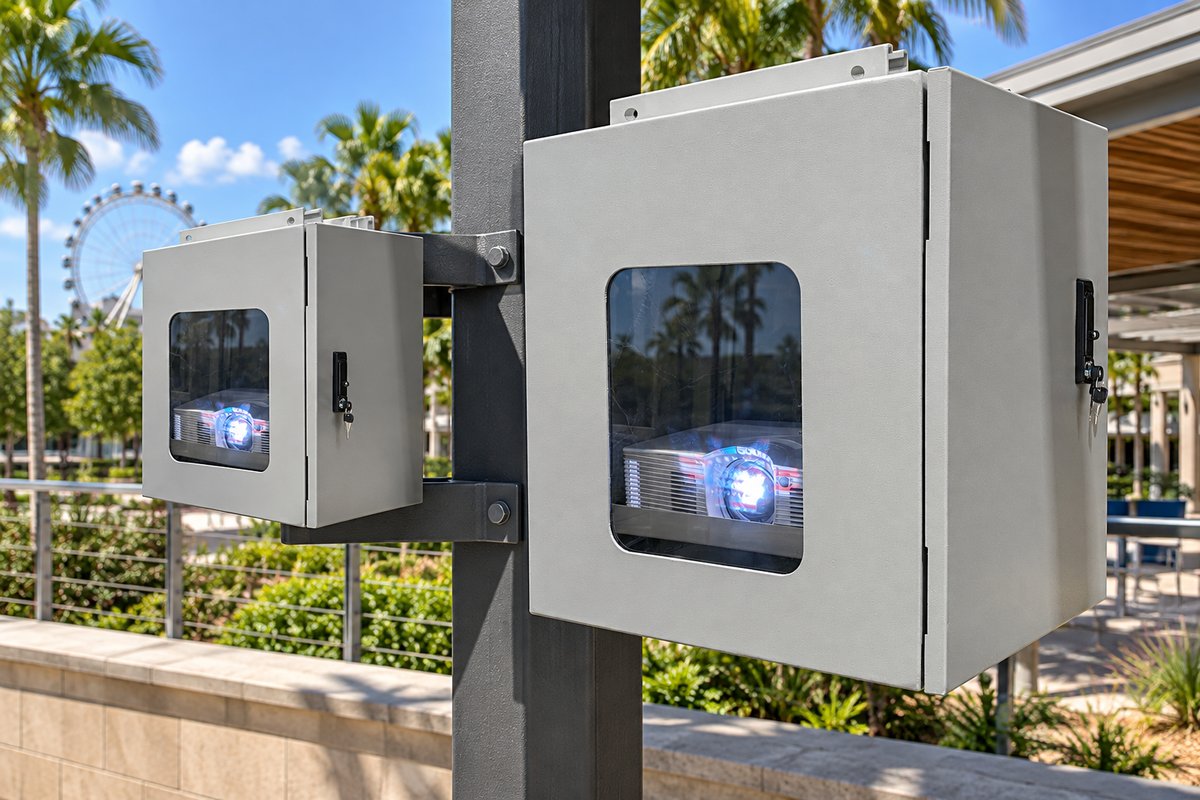
Choosing the Right Outdoor Projector Enclosure for Orlando’s Climate
Wondering how to protect your projector from Orlando’s summer heat, humidity, salt air, and storms? This AV buyer’s guide compares outdoor projector enclosure solutions from ProjectorEnclosure.com with detailed advice for venues, schools, churches, and homeowners.
Orlando’s Climate Challenges for Outdoor Projectors
Orlando’s subtropical climate presents unique challenges for any venue considering an outdoor projector setup. High temperatures and persistent humidity are daily realities from late spring through early fall, while thunderstorms and hurricanes regularly threaten electrical equipment. Even venues far from the coast may deal with mould, dust, and occasional salt air intrusion. Before investing in an outdoor projector enclosure, it’s essential to understand how these factors—combined with intense afternoon sun—can threaten sensitive electronic components and downgrade image performance.
Venues such as theme parks, schools, and resorts around Orlando are often tasked with protecting AV investments in environments exposed to both blazing sunshine and sudden downpours. The risk isn’t just hardware failure: projector lamps, optics, and delicate electronics are particularly vulnerable to corrosion, overheating, and moisture. Planning an installation here means factoring in both the worst of the summer season and the realities of hurricane preparedness—both of which affect enclosure choice and power availability.
Fortunately, modern weatherproof projector housing solutions are designed to address these concerns. Whether you’re considering a climate-controlled projector enclosure or a fan-cooled design, understanding their differences helps ensure reliable, year-round projection outdoors.
Climate-Controlled vs. Fan-Cooled: Which Is Better for Orlando?
A key decision for Orlando buyers is whether to select a climate-controlled projector enclosure or a fan-cooled model. Climate-controlled enclosures typically use active cooling and dehumidification to maintain a stable internal environment, which is crucial during muggy, 90-degree-plus days when projector components are most susceptible to condensation and heat damage. They are generally the preferred choice for truly open outdoor settings or semi-enclosed spaces exposed to the elements.
Fan-cooled enclosures, by contrast, may suffice in covered or shaded areas where projectors receive less direct sunlight and humidity is less severe. While these models do shield against dust and rain, fan-only systems can struggle during peak summer heatwaves—especially in Orlando, where humidity regularly exceeds 70% and dew points frequently surge, challenging passive airflow systems.
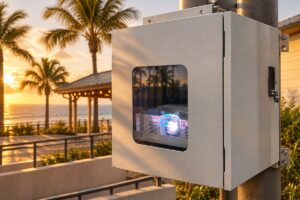
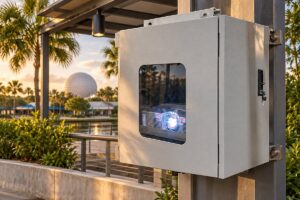
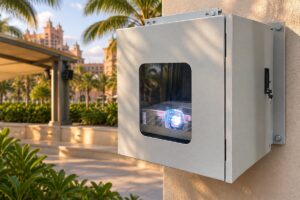
If your projector location is exposed to unfiltered Orlando weather—think open-air patios, poolside installations, or theme park courtyards—a climate-controlled option like the Defender Series Projector Enclosure from ProjectorEnclosure.com offers extra peace of mind. For more protected spaces, a high-quality fan-cooled design may be suitable, especially when matched precisely to your projector model and local conditions.
Ultra-Short-Throw Projectors: Special Enclosure Considerations
Ultra-short-throw (UST) projectors enable immersive, large-format displays in tight spaces but have unique enclosure needs. Their projection angle and airflow requirements often mean that conventional projector housings won’t fit or provide proper cooling. Orlando’s hot summer temperatures and high outdoor humidity make these installations even more challenging, demanding enclosures with advanced airflow management and weather protection.
For UST projectors installed outdoors, the UST Defender Series Enclosure is specifically engineered to accommodate ultra-short-throw lenses and maintain proper airflow. This model features robust climate protection to handle Orlando’s combination of direct sun and sudden storms, preventing internal condensation and overheating by actively managing both air movement and temperature.
Retrofitting generic or indoor enclosures typically leads to moisture problems, image distortion, or early projector failure. If you’re installing a UST projector for an interactive display, resale signage, or creative home projection mapping, ensure the enclosure design matches both your environment and the projector’s dimensions. For best results, review the Projector Enclosure Fit Guide and provide your projector model for customized sizing advice.
Indoor vs. Outdoor Projector Enclosures: Essential Differences
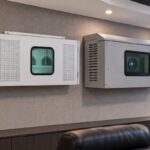
Not all projector enclosures are suitable for outdoor use, and confusing the options can lead to expensive mistakes. Indoor enclosures are optimized for quiet performance and aesthetics inside conditioned spaces, such as boardrooms or classrooms. For example, ProjectorEnclosure.com’s Hush Series Projector Enclosure is purpose-built for reducing projector noise indoors, making it ideal for home theaters, galleries, and offices—but it is never intended for outdoor installation or exposure to open air.
For projects in protected indoor settings where environmental control is already established—think auditoriums or gyms—the Integrator Series Projector Enclosure is a better choice, offering increased airflow and dust protection. However, like the Hush Series, it is not designed for direct exposure to rain, sun, or Orlando’s humid summer evenings.
True outdoor enclosures, such as the Defender Series Projector Enclosure, deliver all-weather protection—critical in Orlando, where sudden showers and windborne debris are frequent throughout the year. Select a model rated explicitly for outdoor use to protect your projector investment from Florida’s climate, and consult the Applicable Codes for Permitting to ensure compliance during installation.
Outdoor Power, Siting, and Weather Concerns in Orlando
Stable electricity and reliable siting are must-haves for any outdoor projector installation in Central Florida. Most enclosures require a dedicated power source—often involving collaboration with a local utility, such as OUC—The Reliable One or Kissimmee Utility Authority. Confirm available service before installation, as outages or surges during thunderstorms can damage both projectors and their enclosures.
Positioning also matters: place enclosures on sturdy mounts away from direct sprinkler spray and allow proper airflow around the unit. The direction of afternoon sun, proximity to tree canopies (which drop sap and debris), and shelter from prevailing winds all affect enclosure longevity. For permanent outdoor setups, consult Orlando’s Applicable Codes for Permitting since electrical and structural requirements may apply, especially for public-facing installations at schools, churches, or entertainment venues.
Lastly, always check the Orlando forecast for severe weather alerts before planning an outdoor movie night or event projection. Enclosures like ProjectorEnclosure.com’s Defender Series are built with storm protection in mind, but proactive monitoring helps avoid unnecessary risk during hurricane season.
Home Projection Mapping and Consumer Outdoor Displays
Outdoor projector usage isn’t limited to commercial spaces in Orlando. Homeowners are increasingly using projection mapping for seasonal décor, game nights, and backyard cinema. However, consumer-grade projectors are no less vulnerable to heat, humidity, and salt air than their commercial counterparts, quickly developing issues if left unprotected.
The HomeLine Projector Enclosure was developed for residential applications, combining weather shielding with a user-friendly design for home display projects. It fits a range of popular projector models and shields against dust, rain, and occasional sun—even in exposed backyards near Orlando’s lakes and wildlife.
For complex effects or larger, more powerful projectors, use the Projector Enclosure Fit Guide to check sizing or contact ProjectorEnclosure.com directly. Send your model number to ensure the enclosure you select delivers the right fit and the level of protection Orlando’s climate demands.
Practical Comparison Table: Enclosure Types for Orlando
| Enclosure Series | Best Use Locations | Weather Protection | Noise Control |
|---|---|---|---|
| Defender Series | Outdoor venues, patios, stages | Maximum (rain, sun, humidity) | Moderate |
| UST Defender Series | Outdoor UST displays | Maximum (specially for UST) | Moderate |
| Integrator Series | Indoor gyms, sanctuaries | Partial (dust, indirect exposure) | Moderate to high |
| Hush Series | Quiet indoor rooms | Indoor only | Maximum |
| HomeLine | Residential outdoor displays | High (weather, dust) | Moderate |
FAQ: Orlando Outdoor Projector Enclosure Decisions
How do I size an enclosure for my projector?
Accurate sizing is essential to ensure proper cooling and protection. Use the Projector Enclosure Fit Guide or send your specific make and model information to ProjectorEnclosure.com for expert recommendations tailored to your installation.
Are permit and code requirements the same for all outdoor projector enclosures?
Permit requirements vary based on your project’s location, structure, and intended use. For commercial venues or large-scale outdoor setups in Orlando, always check with local authorities and reference the Applicable Codes for Permitting before installing mounts, wiring, or projection equipment outdoors.
What should I do if my location is near the Orlando coast or a lake?
Salt air and high humidity near lakes and the coast can accelerate corrosion. Choose a weatherproof projector housing specifically engineered for harsh environments. The Defender Series is highly recommended for installations with added exposure to salt air or persistent moisture.
Have an outdoor projection project in Orlando? Send your projector model to ProjectorEnclosure.com’s team for sizing advice or Request an enclosure quote today.
- OUC—The Reliable One and Kissimmee Utility Authority – for confirming outdoor power service
- Orlando permit codes – for construction and mounting requirements
- Orlando, FL weather forecast – to help plan and protect your outdoor AV investments
Supplies mentioned in this guide
Defender Series Projector Enclosure
Integrator Series Projector Enclosure
Hush Series Projector Enclosure
UST Defender Series Enclosure
HomeLine Projector Enclosure
Projector Enclosure Fit Guide
Comparing Outdoor Projector Enclosures for Miami Gardens: What’s Best for Local Conditions?