
Outdoor Projection Mapping in San Antonio: Protecting Your Projector
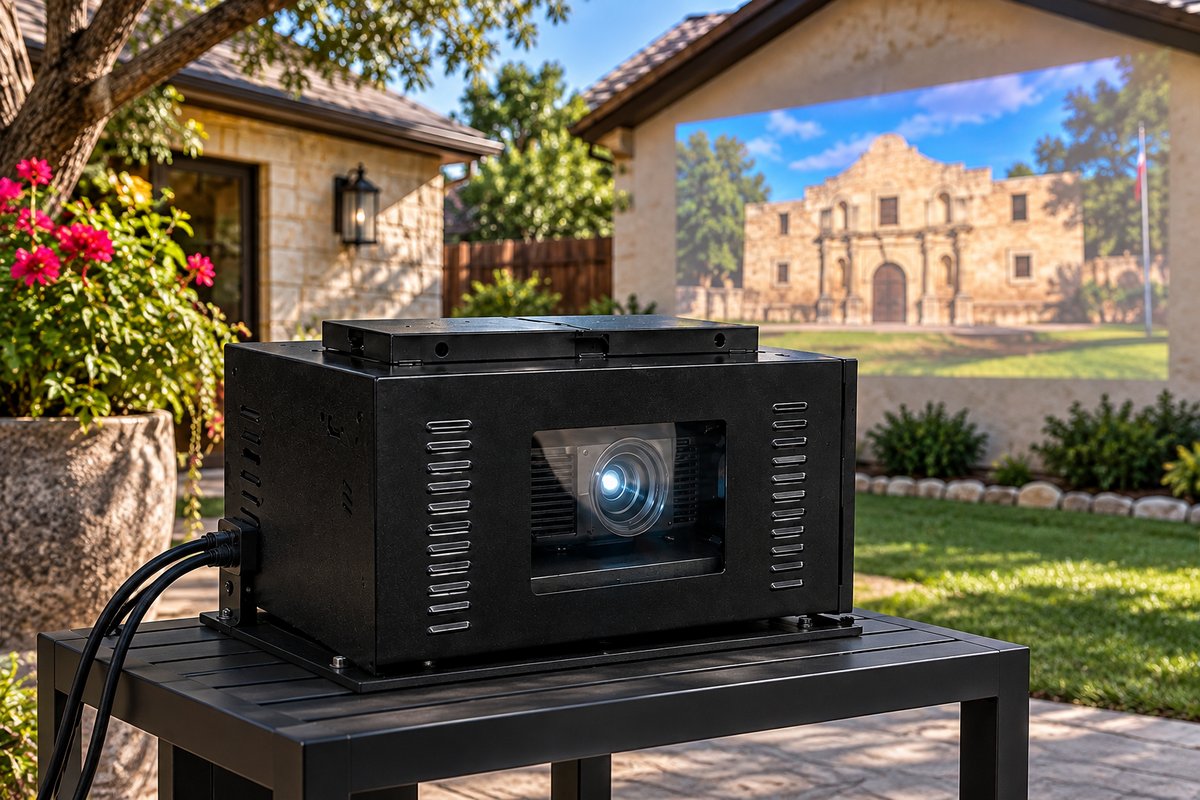
Outdoor Projection Mapping in San Antonio: Protecting Your Projector
Planning holiday or event projection mapping in San Antonio? Learn how local heat, humidity, dust, and rain affect your projector, and discover the right enclosure and installation tips for lasting, safe outdoor shows.
The Holiday Projection Season: What Makes San Antonio Unique
With the holiday and festival season underway, neighborhoods and businesses across San Antonio are preparing stunning projection mapping displays. From Halloween and Christmas shows at home to large-scale building facade projections downtown, outdoor projectors bring magic to local nights. Yet San Antonio’s winter and spring weather—often mixing mild days, damp nights, surprise rain, dust, and the ever-present humidity—demands practical planning to safeguard expensive AV equipment.
Whether you’re decking out your home for trick-or-treaters or planning a community event, the value of a purpose-built projection mapping projector enclosure cannot be overstated. Without protection, Texas weather can quickly damage your projector or bring your display to an early halt. Understanding these local environmental factors and the steps for proper installation will help ensure your projector performs flawlessly throughout the season.
This guide unpacks San Antonio’s weather risks, outlines enclosure options from ProjectorEnclosure.com, and offers actionable tips on power, mounting, ventilation, and permitting for your backyard, event, or business projection mapping show.
San Antonio Weather: What Projectors Face Outdoors
Unlike cooler, drier regions, San Antonio outdoor installations must contend with distinctive challenges. Occasional rainstorms can strike suddenly, especially in late fall and early spring. Humidity levels often spike overnight—even in winter—which promotes condensation inside unprotected projectors. Seasonal dust, pollen, and even traces of salt air (blown in via south Texas winds) are common and can accumulate on sensitive electronics.
This mix of conditions is tough on unprotected equipment. Standard projectors left in open air may quickly suffer from blown dust, corroded fans, and unsightly lens fogging. Rain droplets and heavy dew find any crevice. Local experts recommend using an outdoor projector enclosure for projection mapping that provides protection against dust, water jets, and temperature swings.
If your display is within a few miles of major roads, you’ll also battle fine dust, while anyone near military bases or the south side may notice salt air effects increase during certain weather patterns. Choosing the right enclosure for these combined risks is essential to uninterrupted projections.
Choosing a Projector Enclosure: Defender, UST Defender, and HomeLine
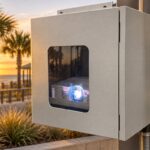
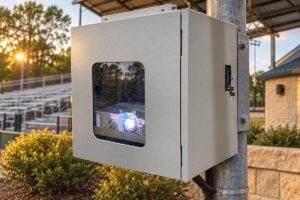
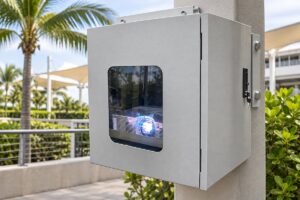
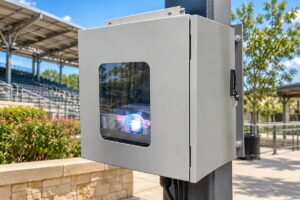
With more than two decades serving commercial and home markets, ProjectorEnclosure.com specializes in enclosures sized for projection mapping. For San Antonio’s outdoor applications, the Defender Series Projector Enclosure is designed to withstand local weather, offering IP66-equivalent protection against powerful water jets and dust ingress. This makes it an all-weather choice for house displays, business facades, and festivals that require weeks of watertight, dust-resistant protection.
If your projection mapping relies on a short-throw or ultra short-throw setup placed close to a wall or door, the UST Defender Series Enclosure offers IP66-equivalent protection in a compact design, ideal for tight spaces or where the projector must be mounted low. This is especially useful for city storefronts, small entry shows, and driveways, where space is tight but you still need robust weather defense.
For home displays and light-use residential mapping, the HomeLine Projector Enclosure is tailored to consumer setups, blending protection and practicality for the holiday enthusiast. Each enclosure is sized specifically to your projector. Need help choosing? Send your projector model to the team or consult the Projector Enclosure Fit Guide for accurate sizing before mounting or buying.
Planning Power for Your Outdoor Enclosure
Powering your outdoor projector isn’t as simple as running an extension cord through a window. Projection mapping displays typically require stable, grounded power—often drawing high amperage or running for many hours in a row. It’s crucial to ensure your outdoor outlet is weatherproofed and rated for outdoor loads.
If you’re not certain your existing outdoor power is sufficient, contact your local utility, CPS Energy, for guidance or to schedule an electrical assessment. Consider hiring a licensed electrician to install a dedicated GFCI (ground fault circuit interrupter) outlet near your enclosure site, improving safety and offering protection from weather-induced shorts or surges.
Always check that your projector and enclosure’s ventilation fans (if any) draw power on the same circuit and that your total load doesn’t exceed the circuit’s rating. This prevents tripped breakers halfway through your show or event. For longer cable runs, use outdoor-rated extension cords and secure all connections to prevent water pooling at plugs.
Enclosure Mounting: Walls, Roofs, and Yards
Where you place and secure your projector enclosure impacts both display quality and weather resilience. For homes, enclosures may be mounted on the ground using a stable deck, on driveways, anchored to exterior walls, or occasionally elevated to project above landscaping. Commercial projects sometimes require mounting enclosures to rooftops, parapets, or custom AV poles—always ensure that the mount and bolts used are rated for outdoor use and the unit’s weight.
Wind considerations are important in San Antonio’s stormy seasons; even all-weather enclosures should be strapped or anchored to prevent toppling. When mounting near the ground, check local drainage after storms to prevent your enclosure from sitting in pooled water. If elevated, ensure no rain can drip directly onto the enclosure’s seams or cable entry points.
Projector Enclosure for House Projection Mapping models are especially popular for homeowners aiming to mount at or near ground level for classic holiday mapping effects. For professional facades, consult with an AV integrator to ensure safe, code-compliant installation.
Ventilation, Cooling, and San Antonio’s Humidity
While the right enclosure blocks rain and dust, proper ventilation is required to prevent electronics from overheating, especially during warm Texas evenings. The Defender Series and UST Defender Series feature engineered ventilation that maintains airflow while keeping water and dust outside. HomeLine enclosures for residential use also rely on careful vent placement to balance airflow with weather resistance.
Position your enclosure in partial shade when possible to minimize direct overheating from sun exposure, especially if projecting through the afternoon. Avoid installing directly against metal fence posts or dark brick, which may radiate heat toward your enclosure. Regularly inspect intake and exhaust vents, clearing away leaves or debris after storms, and check fan operation before major shows or gatherings.
Humidity can condense inside even the best enclosure if unventilated or sealed improperly. Opening the enclosure during dry periods allows air exchange, but always reseal all gaskets before rain. For extended installations, consider silica packets or consult the manufacturer’s recommendations for best protection against internal moisture.
Permitting and Local Regulations: What You Need to Know
In San Antonio, certain outdoor installations—particularly those involving new exterior outlets, hardwired lighting, or mounting enclosures to buildings—may require permits. Homeowners should review the rules from the Residential Permits – City of San Antonio office before beginning work. Commercial events or displays on public or rental property often have stricter requirements, including building and electrical codes and, occasionally, historic overlay restrictions.
Residential users mounting a projector in their yard or on a patio may not need permits if using existing outlets and non-permanent mounting. Structural modifications, such as adding a new wall mount, penetrating a roof, or installing electrical conduit, usually require prior approval. Always check with the permitting office for your specific project to avoid fines or delayed installations.
Businesses, schools, and churches projecting onto facades should involve facilities management and consult both city and property owner guidelines early in the planning process. Compliance with these requirements not only protects your investment but also ensures the safety of guests and passersby throughout your projection show.
FAQ: San Antonio Outdoor Projection Mapping Enclosures
How can I choose the right enclosure for my projector and mapping location?
Start by consulting the Projector Enclosure Fit Guide or send your projector model details to ProjectorEnclosure.com. Defender Series suits most demanding weather conditions, UST Defender is made for short-throw use by walls, and HomeLine serves most home mapping displays.
Can I install my projector enclosure myself, or do I need a professional?
Basic residential setups often allow for DIY installation, provided you’re using safe outdoor power and secure mounting. For larger or higher-value projects, or when adding new wiring, hire a professional AV integrator or electrician and consult the local permit office as needed.
What steps can I take to prevent overheating and moisture inside my enclosure?
Select an enclosure with built-in ventilation—like those in the Defender or HomeLine ranges—place it in shade when possible, and monitor exhaust vents. Regular cleaning, silica packets, and dry-air exchanges further enhance protection against condensation during San Antonio’s humid spells.
Take the Next Step: Get Your Enclosure Right This Season
Whether you’re a homeowner dazzling the block or a business preparing a show-stopping display, a weather-protected, properly installed projector enclosure is key to stress-free projection mapping in San Antonio. By considering the local climate, planning your power and mounting, and checking permit requirements in advance, you’ll ensure your investment delivers crowd-pleasing spectacles all season long.
Request an enclosure quote from ProjectorEnclosure.com to get your projector sized and protected for San Antonio’s weather, or call 888-631-5880 to speak with a team member.
- CPS Energy – Outdoor electric power guidance and upgrades
- Residential Permits – City of San Antonio – Local permit information for outdoor projection installations
Supplies mentioned in this guide
Defender Series Projector Enclosure
UST Defender Series Enclosure
HomeLine Projector Enclosure
Projector Enclosure for House Projection Mapping
Projector Enclosure Fit Guide
Houston's Guide to Outdoor Projection Mapping Projector Enclosures