
Outdoor Projection Mapping in Omaha: A Practical Guide to Projector Protection
Outdoor Projection Mapping in Omaha: A Practical Guide to Projector Protection
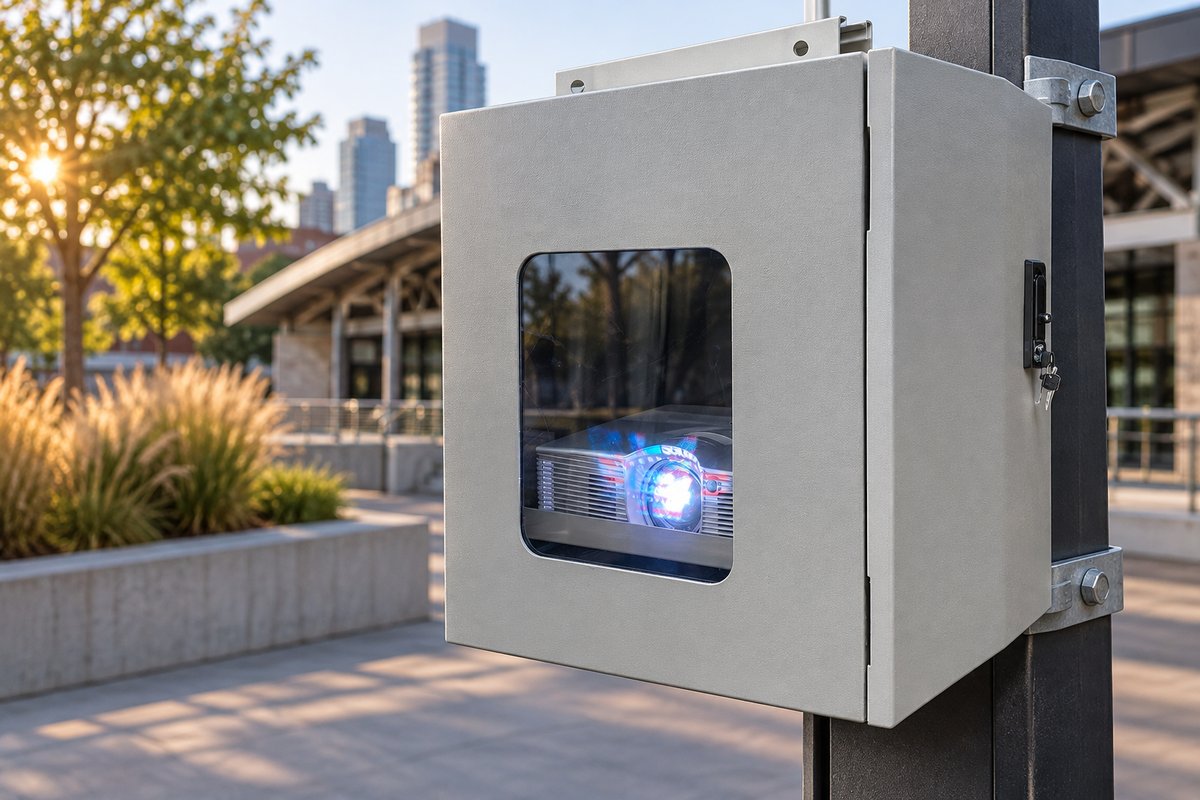
With Omaha’s holiday projection mapping displays in full swing, protecting your outdoor projector from local weather is crucial. This guide covers practical steps—enclosure options, mounting, permits, and power planning—to keep your projection mapping projector running bright all season.
Starting Your Holiday or Projection Mapping Display in Omaha
With the holiday season lighting up Omaha, projection mapping is once again a highlight for local homes, businesses, churches, and schools. Whether you are planning a dazzling Halloween house show, projecting festive animations onto your home’s facade, or running a commercial event on a downtown building, it’s easy to focus on the creative. But as anyone who’s braved Nebraska’s climate knows, ensuring your projector survives the weather—and looks great doing it—is vital. This practical Omaha-focused guide covers the must-know steps and precautions for running a reliable outdoor projection mapping display, with pointers tailored to your environment.
Winter and early spring in Omaha are known for wild swings in temperature, snow, freezing rain, and gusty winds. Dust, humidity, and occasional storms can quickly turn a projector from a showpiece into an expensive casualty. Protecting your investment begins with choosing the right projection mapping projector enclosure—and planning for reliable power, safe mounting, proper ventilation, and, when needed, permits for outdoor enclosures.
How Omaha’s Weather Impacts Your Outdoor Projector
Setting up an outdoor projector in Omaha is very different than in drier or milder climates. The city routinely sees swings in humidity, heavy rains, and can experience dust—especially in transitional weather or after long dry spells. Even close to the Missouri River, elevated humidity and moisture levels are a concern, and winter brings exposure to freezing rain and road salt in the air and on surfaces.
An unprotected projector faces condensation risk, corrosion, electrical shorts, and dust build-up—all potential project killers. These issues aren’t just hypothetical: each can ruin both consumer and professional models in hours. A purpose-built outdoor projector enclosure for projection mapping shields your equipment from these hazards through robust weather protection, internal dust/air filtering, and maintaining a safe internal environment.
Before setting up, check season forecasts from the National Weather Service Omaha / Valley Office to prepare for upcoming rain, snow, or wind events near your show dates. This helps you anticipate if you’ll need extra cable runs, drainage, or access for enclosure checks during unpredictable Omaha weather.
Choosing the Right Protection: Defender, UST Defender, or HomeLine
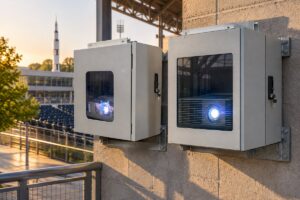
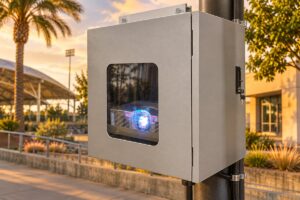
For serious outdoor projection mapping displays—whether it’s a holiday house, storefront, or major event—your projector needs maximum protection. Defender Series Projector Enclosure is designed specifically for all-weather Omaha installs, with IP66-equivalent protection against dust and powerful water jets. That means your equipment is shielded from the heavy rain, windblown dust, and airborne salt that can roll in from winter roads or spring storms.
The Defender Series is available in five sizes, each specified by cooling wattage: Small (500 W), Medium (1,500 W), Large (2,500 W), Large Plus (3,500 W), and Extra Large (4,500 W). Start by matching your projector’s power draw to the enclosure’s maximum cooling wattage, and then confirm your projector’s physical size will fit. Not sure? Use the Projector Enclosure Fit Guide or provide your projector model to the ProjectorEnclosure.com team for personalized advice.
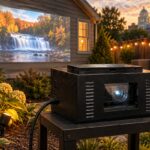
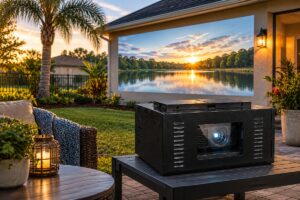
If you’re using a short-throw or ultra-short-throw projector close to the wall, the UST Defender Series Enclosure offers the same IP66-equivalent weather protection in a design tailored for these challenging setups—perfect for mapping onto residential or shop facades where space is tight. Homeowners creating seasonal displays can also consider HomeLine Projector Enclosure, designed for home projection mapping and garden shows. Every enclosure includes a 1-year warranty for peace of mind.
Power Planning: Safe and Reliable Connections in Omaha
Outdoor setups in Omaha require special consideration for safe, weather-resistant power. Between rain, snow, and potential flooding, running extension cords or temporary power lines across your yard or building exterior is never as simple as plugging in indoors. For any semi-permanent or repeating setup, use heavy-duty outdoor-rated cables, weatherproof covers for connections, and secure, grounded outlets.
Check the amperage requirements for your projector against the capacity of your home’s outdoor circuits. Overloading circuits not only risks outages but may also interfere with other holiday lighting, inflatables, or displays running at the same time. If you are running a commercial or public event, consult a local electrician to verify that your setup meets code and has enough dedicated capacity for lighting, sound, and your projector. Reference the City’s Building and Development Division – City Planning Website if you are unsure about local compliance.
Avoid taping down wires across walkways or driveways where snow and ice can hide hazards. Plan power runs that are both practical and safe, with as little exposure to pooling water or drifting snow as possible. For more advanced projection mapping displays on facades or rooftops, consult with an AV integrator familiar with Omaha’s electrical code before installation.
Smart Mounting for Omaha’s Wind, Rain, and Winter
Whether you’re projecting onto your own home or running a major building mapping show, sturdy mounting is essential in Omaha’s climate. Gusty winter winds, spring storms, and freezing-thawing cycles can loosen mounts and hardware if not properly secured. Choose a mounting solution designed for the combined weight of your projector and enclosure, accounting for wind load and possible snow buildup.
For ground mounts on lawns or garden beds, use weighted bases or ground stakes deep enough to withstand strong gusts and shifting soil. For home or commercial facade installations, anchor mounts directly to structural studs or masonry—not just siding or decorative trim. Short-throw displays, in particular, benefit from the UST Defender’s compact shape and mounting options. Reference product guides for each enclosure type before drilling: Projector Enclosure for House Projection Mapping is an excellent starting point for do-it-yourselfers.
Before starting work, confirm your plans do not interfere with existing utilities, gutters, or drainage paths. For commercial setups, or if mounting involves changes to your building exterior, check with the Building and Development Division to determine if a permit or inspection is required.
Ventilation and Preventing Overheating in All Seasons
Projectors generate significant heat—even in freezing conditions. Omaha’s cold snaps may tempt you to think overheating isn’t a concern, but rapid swings in temperature and humidity, especially during spring or fall, can stress components if not properly ventilated. Specialized enclosures like the Defender Series use active cooling and controlled airflow to maintain consistent internal conditions, keeping sensitive electronics safe from both heat spikes and condensation.
Never operate a projector in a fully sealed box or use ‘DIY’ covers that lack airflow management, as these can lead directly to overheating and thermal shutdown. The HomeLine and Defender designs feature engineered air paths and filtering to block dust and moisture without trapping excess heat. Always clear intake and exhaust vents from leaves, snow, or lawn debris before each show.
If your display will run for long periods or in variable Omaha weather, select an enclosure with cooling wattage at or above your projector’s maximum power draw, as detailed in the Projector Enclosure Fit Guide. This safeguards performance and extends the life of your gear—no matter how unpredictable the weather outside.
Permits, Codes, and Local Requirements in Omaha
While most single-family holiday displays on private property require little more than common sense for safety, larger, public, or commercial projection mapping events in Omaha may trigger building permits or inspections. If you’re mounting hardware to a commercial storefront, running outdoor wiring, or installing enclosures on public-facing walls, always check requirements with the Building and Development Division – City Planning Website.
Requirements can vary depending on neighborhood, historic status, utility proximity, or the scope of your installation. Permits may address electrical safety, signage limits, exterior modifications, or tripping hazards for public walkways. Event producers and AV integrators are encouraged to review guidelines in advance, as compliance helps protect your investment and keeps shows running safely.
For personal home projection mapping displays, consult your neighborhood association for any additional covenants and remember to consider the safety of pets, children, and passersby. When in doubt, always err on the side of visibility, accessibility, and safe installation practices for your enclosure.
Planning for Maintenance and Seasonal Storage
A well-cared-for holiday house projection enclosure will deliver vivid displays year after year. Before each season, inspect the enclosure’s seals, cords, and mounting brackets for wear, especially after Omaha’s winter weather or periods of heavy rain. Clean filters and wipe down surfaces to remove dust, salt residue, or debris that can collect in spring winds or after plowing activities nearby.
After the holiday or event season ends, unplug and carefully store your projector and enclosure. Move them indoors if possible, or at least into a sheltered, unheated garage to protect from freeze-thaw cycles. The HomeLine is especially easy to dismount and store, making it a favorite for home users who only install for a few months each year.
If you expect to leave your setup in place year-round (such as for recurring shows or commercial use), schedule at least one check-up during the off-season. Review weather data from the National Weather Service Omaha / Valley Office and look for evidence of water seepage, corrosion, or animal nesting so minor issues don’t turn into show-stoppers.
FAQ: Outdoor Projector Enclosures for Omaha Projection Mapping
How do I determine the right enclosure size for my projector?
Match your projector’s maximum power draw (wattage) to the Defender enclosure’s cooling wattage, and then confirm that your projector physically fits inside. For help, check the Projector Enclosure Fit Guide or contact the ProjectorEnclosure.com team with your projector model.
What makes an enclosure suitable for Omaha’s climate?
Enclosures designed for Omaha must combine IP66-equivalent dust and water protection, forced ventilation, and corrosion-resistant construction. The Defender Series Projector Enclosure and UST Defender Series Enclosure handle heavy rain, humidity, dust, and cold.
Do I need a building permit to set up a projector enclosure outdoors?
For most personal displays, permits are not required, but installations on public buildings, commercial facades, or involving electrical work may require city approval. Check with the Building and Development Division for official guidelines.
Ready to protect your projector and get your projection mapping show shining in Omaha? Request an enclosure quote from ProjectorEnclosure.com or call 888-631-5880. Every enclosure is backed by more than 20 years of experience and a 1-year warranty.
Supplies mentioned in this guide
Defender Series Projector Enclosure
UST Defender Series Enclosure
HomeLine Projector Enclosure
Projector Enclosure for House Projection Mapping
Projector Enclosure Fit Guide
Outdoor Projector Enclosure Planning in Wichita: Weather, Power, and Permits