
Fanning Springs Outdoor Projector Guide: Planning for Heat, Humidity, and Rain
Fanning Springs Outdoor Projector Guide: Planning for Heat, Humidity, and Rain
Learn how Fanning Springs weather—from summer heat to torrential rain—affects outdoor projectors and get real, actionable tips for planning enclosure size, power, mounting, and permits.
Understand the Unique Weather Challenges of Fanning Springs
Fanning Springs, located on the edge of Gilchrist and Levy Counties, is known for its scenic riverside parks, community events, and warm, humid climate. Local venues such as parks, resorts, historic churches, and schools often host outdoor movie nights, live events, and seasonal gatherings that rely on projection technology. However, installing an outdoor projector here means coping with a distinct set of weather stressors—intense summer sun, near-daily humidity, periods of heavy rain, and the unpredictability of hurricane season.
The region’s summer heat can routinely rise above 90°F, with humidity levels that make cooling a challenge for any electronic equipment. Sudden thunderstorms and occasional hurricanes add flood risks and introduce dust and debris, while pollen and other particulates from surrounding woods and fields mean enclosures must be designed for reliable, sealed protection. Reliable references such as the local National Weather Service forecast can help you anticipate and plan for these conditions.
It’s not just climate, but how that climate interacts with your equipment over years of use. Protecting your projector from heat, humidity, and powerful rain is crucial to avoiding costly downtime and hardware failures—making the right outdoor projector enclosure the essential first step.
Choosing the Right Outdoor Projector Enclosure for Fanning Springs
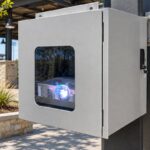
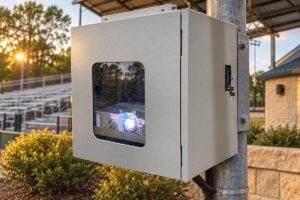
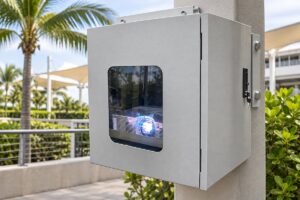
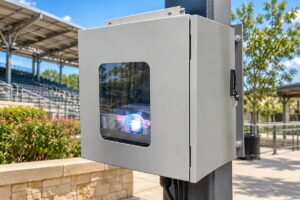
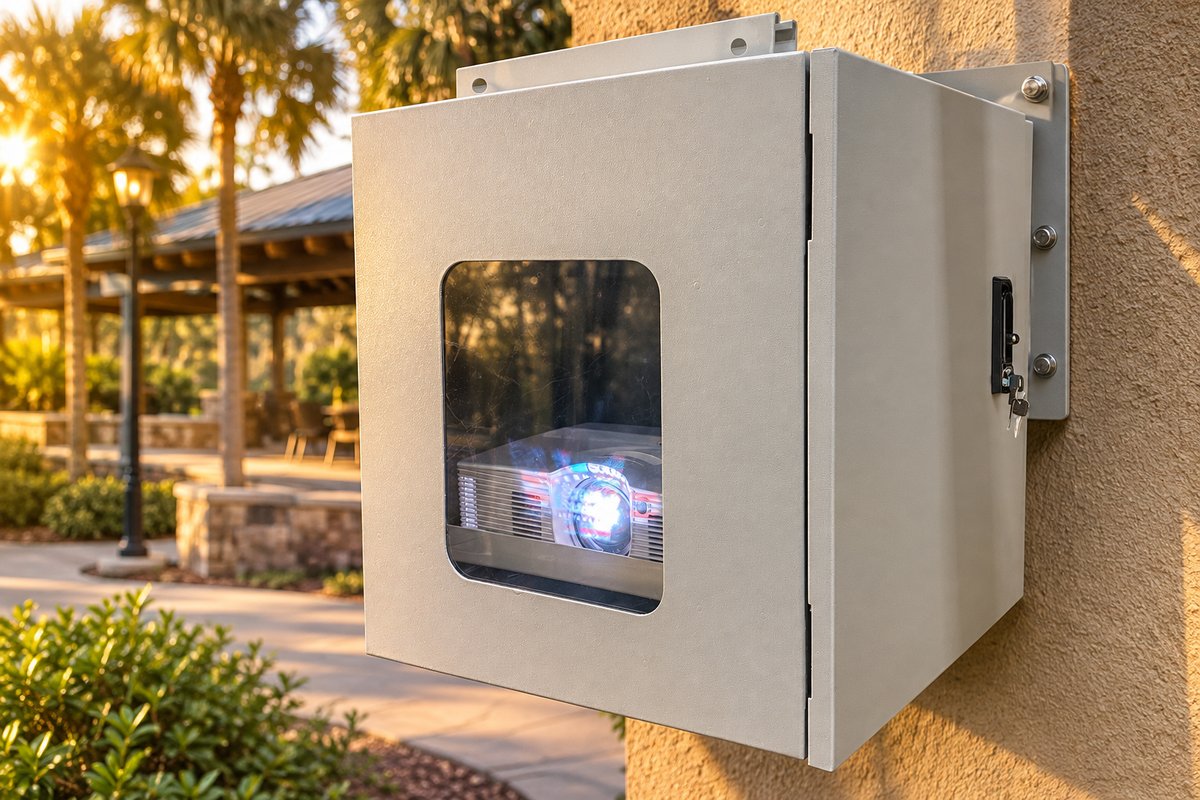
Outdoor projection in Fanning Springs requires technology built for extremes. The Defender Series projector enclosure offers local AV pros and organizations all-weather, climate-controlled protection with IP66-equivalent defense against dust and strong water jets. Unlike indoor models or basic housings, only an enclosure matched to your projector’s heat output, size, and site conditions delivers reliable performance—year-round.
Defender enclosures are offered in five standard sizes, each defined by cooling wattage: Small (500 W), Medium (1,500 W), Large (2,500 W), Large Plus (3,500 W), and Extra Large (4,500 W). To ensure proper cooling and fit, it’s critical to match both your projector’s power draw and its physical size to the enclosure. This two-step process prevents overheating and ensures the components needed for ventilation and climate control fit perfectly. If your setup doesn’t align with a standard size, custom enclosures can be built for your projector and site.
Schools organizing movie nights, resorts adding poolside projections, and local churches or event organizers can all benefit by sending their projector’s make and model to ssisales@ssidisplays.com or calling 888-631-5880. The team at ProjectorEnclosure.com will confirm the right-sized enclosure for your needs.
Planning Power Supply and Cabling for Outdoor Installs
Heat, humidity, and precipitation all underscore the need for reliable, weather-resistant electrical infrastructure. Fanning Springs’ seasonal storms mean every projection install must be checked for appropriate outdoor-rated cabling, surge protection, and, where necessary, dedicated circuits to handle both projector and enclosure cooling loads.
Estimate your total power draw by adding your projector’s rated usage to the cooling and auxiliary components in the enclosure—this is especially important for larger event spaces and permanent venues. Each Defender Series enclosure is matched by cooling wattage, so share your projector’s specification sheet during planning. Remember to factor in accessibility for maintenance and emergency shutoff protocols in case of severe weather or electrical surges.
Running cable outdoors requires attention to local electrical codes, trenching or lifting for power lines, and safely routed HDMI or fiber for signal integrity. It’s best to coordinate with a licensed electrician and check with local building officials if permits or specific code adherence are required for your installation. For safety and compliance, refer to guidelines outlined by the local weather office and the city’s permitting authority.
Structural Mounting: Secure and Stable in Fanning Springs Weather
Outdoor mounting in Fanning Springs must be robust enough for thunderstorms, high winds, and extreme humidity, especially with hurricane season stretching from June through November. Whether installing on a park pavilion, the exterior wall of a school, or custom truss for an event space, the choice of enclosure and mounting hardware directly influences safety and image stability.
Choose weather-resistant, corrosion-proof brackets and anchors suitable for your site’s substrate—concrete, brick, steel, or pressure-treated wood. For high spots near Suwannee River parks and outdoor amphitheaters, additional bracing or sway support may be needed. Verify that mounting hardware is rated for the weight of both your projector and the enclosure—especially critical as climate-controlled units like the Defender Series are heavier than non-weatherproof alternatives.
If your venue is exposed to wind-driven rain or high airborne debris, take advantage of the IP66-equivalent protection in the Defender Series. Pre-planning your mounting ensures durability and ease of access for enclosure maintenance. Carefully note the mounting location in your planning documents, and discuss wind and load factors with your engineering team or venue manager before installation.
Ventilation and Climate Control: The Key to Long-Term Reliability
With Fanning Springs’ relentless summer humidity and temperature peaks, choosing a climate controlled projector enclosure is non-negotiable. Humid, stagnant air accelerates corrosion, mold growth, and electronic failure within a standard housing. The Defender Series enclosure actively manages internal temperature and airflow, expelling heat, moisture, and dust—essentials for maintaining projector performance.
Self-regulating fans and sealed, filtered vents not only control overheating but also block out grains of regional dust and pollen. Unlike simple outdoor boxes or non-sealed indoor models, a Defender enclosure prevents condensation buildup that would otherwise destroy sensitive optics and circuit boards between spring thunderstorms and autumn mugginess.
All Defender Series sizes are built to contain your projector, direct airflow as specified for your model, and withstand power interruptions thanks to smart component layout. Proper ventilation is matched to your projector’s needs—confirm yours using the Projector Enclosure Fit Guide alongside your equipment specs. When in doubt, consult with the ProjectorEnclosure.com team; a custom option is available for unique situations.
Permits, Local Codes, and Practical Planning Tips
Outdoor projector installations in Fanning Springs often require coordination with local permitting offices, especially if you’re mounting enclosures on public buildings, schools, or creating permanent power and AV connections. Requirements may differ by venue type and project scope, so always confirm up-to-date details directly with your city or county offices before beginning site work.
Parks and public venues may require engineering drawings to demonstrate safe mounting or storm-readiness. For private properties, such as resorts or homeowners hosting outdoor displays, compliance with local codes mitigates liability and ensures insurance coverage. Factors such as fire safety, storm protection, and ADA accessibility may all surface in permit review processes.
If your outdoor display is temporary (such as for a seasonal event), requirements may be less rigorous, but plan well in advance and consult your local permitting authority. Stay up to date on current weather hazards using the National Weather Service Fanning Springs forecast, especially during hurricane season.
Fit and Sizing: Matching Your Projector to a Defender Series Enclosure
Proper sizing is the foundation of a reliable outdoor AV setup. The Defender Series is not one-size-fits-all—selecting the right enclosure begins with two critical factors: your projector’s power draw (in watts) and its physical dimensions. Fanning Springs venues vary from small conference lawns to sprawling riverside amphitheaters, so every project demands a tailored approach.
First, consult your projector’s technical manual for its wattage. Each Defender Series size is rated by cooling wattage, from Small (500 W and under) to Extra Large (up to 4,500 W). Then, double-check that your projector’s external dimensions fit comfortably within the internal size of the intended enclosure, ensuring space for cables and ventilation as well.
For help, submit your projector’s make and model to ProjectorEnclosure.com or use the Projector Enclosure Fit Guide. The team will recommend the right-sized standard Defender enclosure or discuss custom builds when necessary—helping you avoid costly mistakes from mis-sized boxes or overheating.
Special Considerations: What About Ultra Short Throw and Custom Needs?
Some venues in Fanning Springs use ultra-short-throw projectors to achieve big images in limited space—such as at poolside bars, café patios, or the city’s historic event pavilions. These models require distinctive all-weather protection, which the UST Defender Series Enclosure is designed to provide, delivering the same robust IP66-equivalent protection and climate control as the standard Defender Series.
If you encounter unusual installation conditions—nonstandard mounting, multiple projectors, or integration with lighting and sound—the ProjectorEnclosure.com team can build a custom enclosure for your projector and site. Whether it’s a one-of-a-kind sculpture display or a permanent entertainment upgrade, start the conversation early to fit your project’s schedule and budget.
Custom solutions ensure all the local factors—ventilation, access, security, and even aesthetics—are addressed for your venue. Be specific about your intended projector, mount location, and environmental hazards when you reach out.
FAQ: Outdoor Projector Enclosures for Fanning Springs
How do I know which Defender Series size fits my projector?
First, check your projector’s wattage—then confirm that its physical size will fit within the chosen enclosure. Send your projector make and model to the team at ProjectorEnclosure.com or use the Projector Enclosure Fit Guide for expert sizing.
What maintenance does a climate controlled projector enclosure need?
Routine maintenance involves inspecting filters and ventilation components, ensuring fans are unobstructed, and checking for debris after storms. The climate-controlled Defender Series is designed for easy access when regular cleaning or monitoring is needed, especially valuable in Fanning Springs’ pollen-heavy months and after summer rainfall.
Do I need a permit to install an outdoor projector enclosure in Fanning Springs?
Permit requirements depend on venue type, mounting location, and if electrical work is involved. Always check with local authorities for the latest regulations and coordinate with a licensed electrician for power and safety. For up-to-date local weather impacts on construction, consult the National Weather Service Fanning Springs forecast.
Outdoor projector planning in Fanning Springs demands knowledge of local climate, solid mechanical planning, and the right enclosure technology. Discovery starts with the right questions—send your projector model to Request an enclosure quote and the team at ProjectorEnclosure.com will match you with a climate-controlled Defender solution, sized and ready for your next outdoor event.
Supplies mentioned in this guide
Defender Series Projector Enclosure
UST Defender Series Enclosure
Projector Enclosure Fit Guide
Practical Guide: Outdoor Projector Protection in Orange, TX