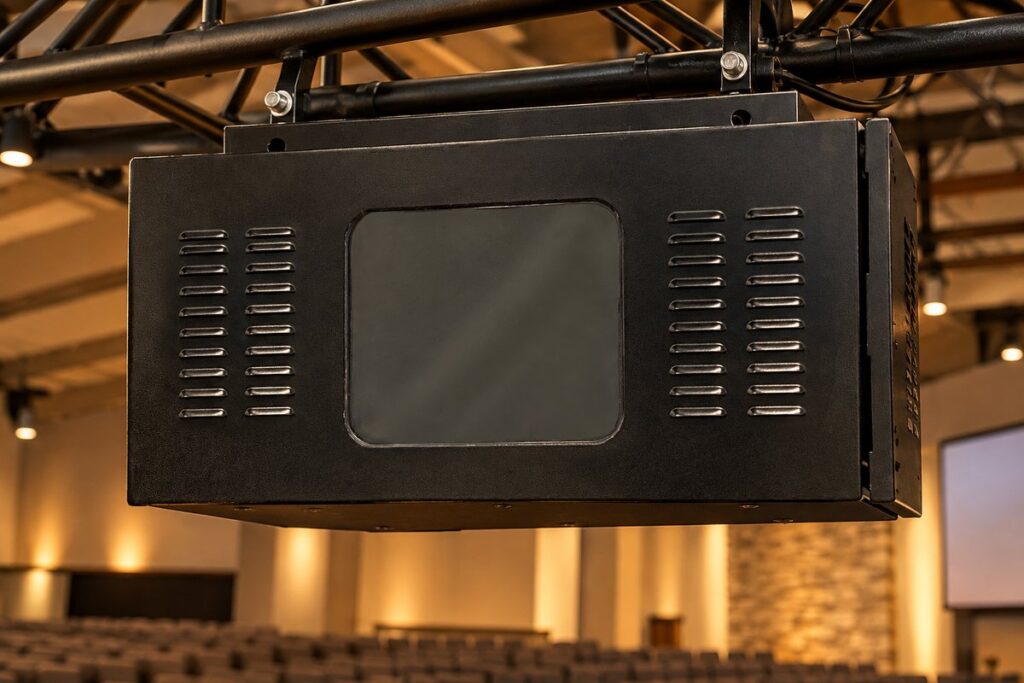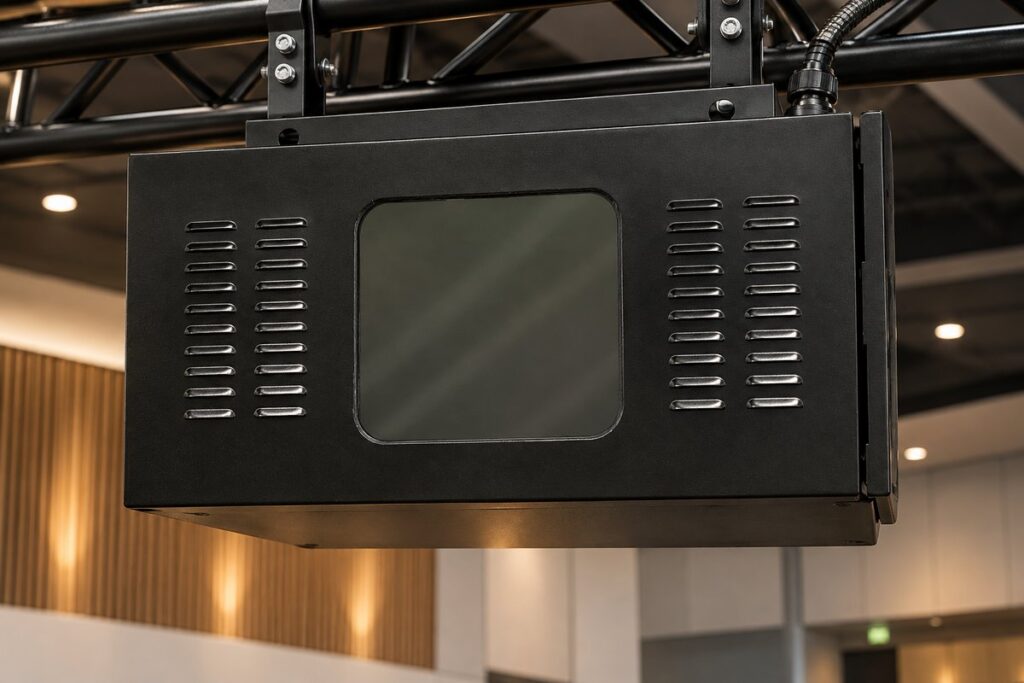

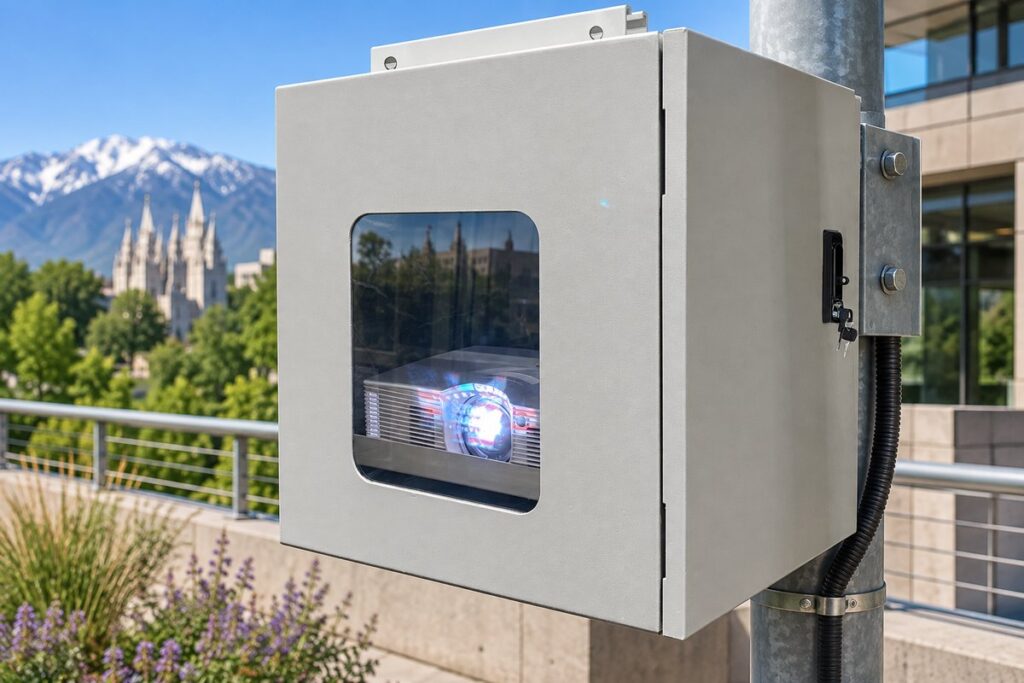
Practical Guide: Outdoor Projector Enclosures for Salt Lake City Projection Mapping

PROJECTORENCLOSURE.COM
Salt Lake City, UT · Planning guide

Practical Guide: Outdoor Projector Enclosures for Salt Lake City Projection Mapping

Salt Lake City’s unique weather demands careful planning for outdoor projection mapping. Learn how to protect your projector and create stunning holiday and facade displays.

Why Salt Lake City’s Climate Demands a Projection Mapping Projector Enclosure

With holiday and wintertime projection displays lighting up Salt Lake City neighborhoods, it’s the season for outdoor projector installations. The city’s climate brings special challenges for anyone planning house projection mapping shows or building façade projections. From rainy evenings and snow to summertime dust and cold snaps, the local weather can risk projector damage without the right protection. Ignoring these factors can lead to a short-lived display or expensive repairs right when your event matters most.

The combination of dry heat, sudden rainstorms, dust, and the occasional salt-laden air near the Great Salt Lake poses unique threats. These elements can clog projector fans, short electronics, or corrode delicate components if not properly shielded. Using a purpose-built projection mapping projector enclosure, sized and weather-guarded for Salt Lake City’s environment, is essential for any outdoor show or installation.

Whether you’re planning a residential holiday mapping show or an ambitious commercial facade projection, following proven steps for local conditions is key. With more than 20 years in business, ProjectorEnclosure.com offers solutions to defend against Salt Lake City’s weather—helping keep your display running reliably through every season.

Understanding Local Threats: Heat, Humidity, Rain, Dust, and Salt Air

Outdoor projectors in Salt Lake City face temperature swings that stress sensitive electronics. Summer brings daytime highs to the 90s, quickly dropping at night, while winter means long, icy evenings. Sudden thunderstorms, gusty winds, and highly variable humidity complicate matters. According to the Salt Lake City Climate Book, seasonal patterns mean projectors are exposed to both heavy rain and pervasive dust throughout the year.

In summer, fine dust can infiltrate electronics or coat optical paths, reducing image clarity and causing overheating. In winter, equipment is tested by freezing night temperatures and rapid thaw cycles. Proximity to the Great Salt Lake also means devices are exposed to saline aerosols, which can corrode components over time if not sealed properly.

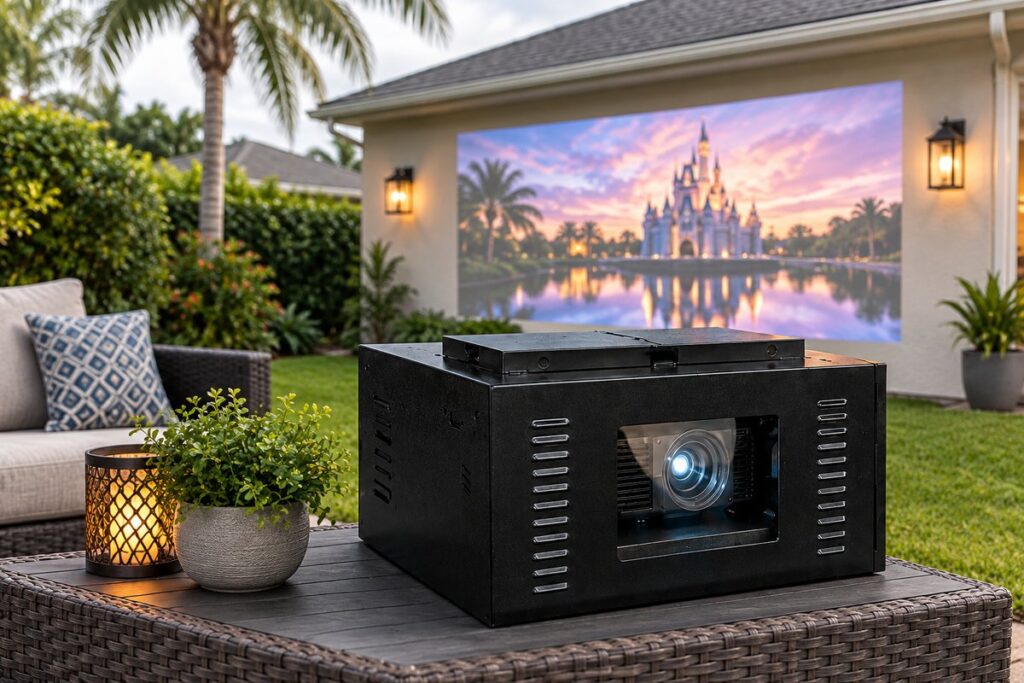
An outdoor projector enclosure for projection mapping with IP66-equivalent protection shields against both powerful water jets and fine dust. This level of defense, available in the Defender Series and UST Defender Series, is tailored for the outdoor challenges of Salt Lake City, helping to extend the life and reliability of your projector in any season.

Selecting the Right Enclosure: Defender, UST Defender, or HomeLine?

Choosing an enclosure comes down to your projector model, display goals, and installation site. ProjectorEnclosure.com offers three lines to suit a range of outdoor projection needs, each designed for robust defense against Salt Lake City’s unpredictable weather.

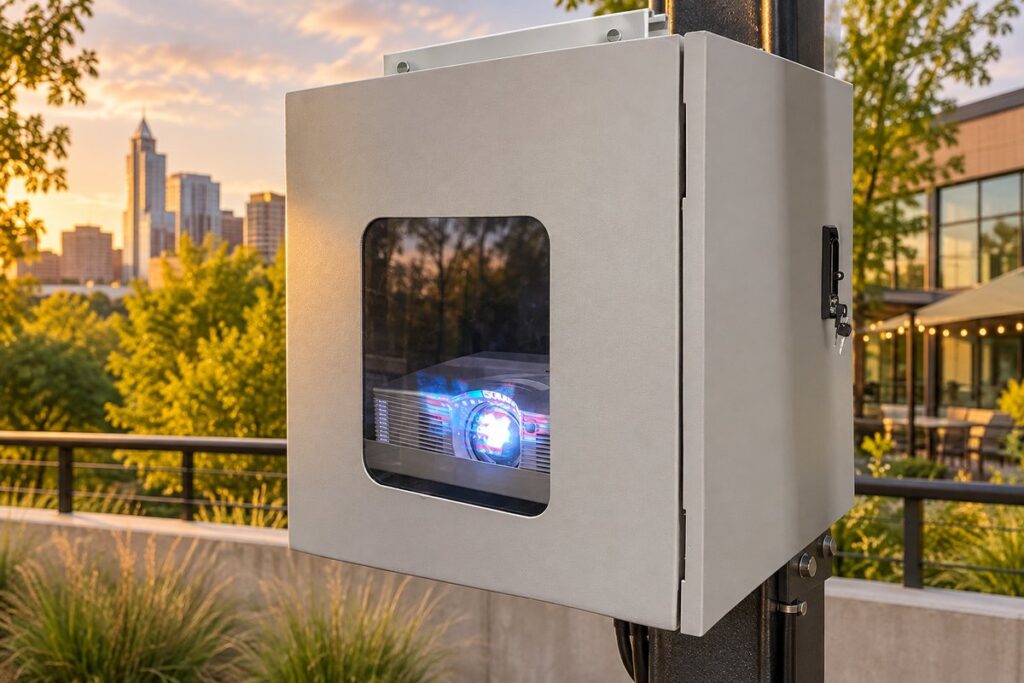
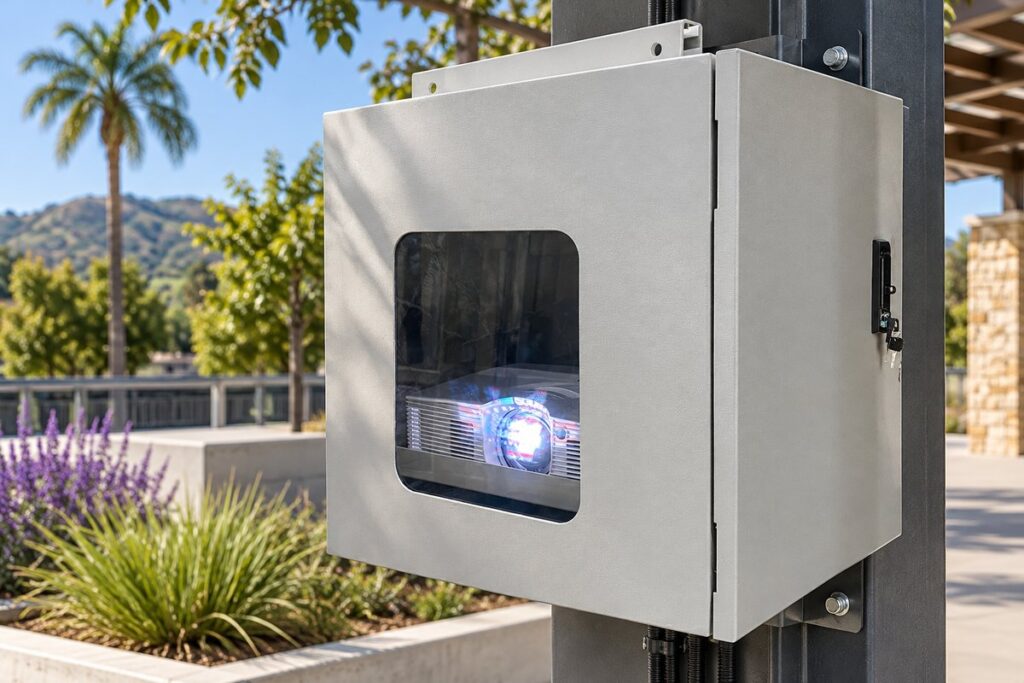
  • Defender Series: Built for all-weather, the Defender Series delivers IP66-equivalent protection from dust, water jets, snow, and salt air. Ideal for festival, church, business, or AV integrator setups on building facades or rooftops.
  • UST Defender Series: Designed for ultra short throw applications, the UST Defender Series Enclosure offers equivalent levels of protection in a unique form factor for close-to-wall projection mapping. This is perfect for tight spaces, storefronts, or short-throw installations at home or on commercial sites.
  • HomeLine: The HomeLine Projector Enclosure is engineered specifically for home projection mapping, such as Halloween or Christmas house shows. Compact and practical for residences, it accommodates various popular projector models without excessive bulk.

If you’re unsure about sizing, send your projector model to ProjectorEnclosure.com, or use their Projector Enclosure Fit Guide to ensure the right enclosure for your needs.

Power Planning and Weather Considerations for Outdoor Projection

Reliable, safe power is non-negotiable for any Salt Lake City outdoor projection mapping setup. Local outages, surges, or wiring errors can shut down your event and risk irreversible projector damage. Always use outdoor-rated extension cords and connect your enclosure to a GFCI-protected outlet to minimize shock hazards. Inspect all cabling for weather and wear before each use, especially during freeze-thaw cycles.

Consult the Rocky Mountain Power Outage and Safety resource for local advisories. During high wind or lightning, it’s advisable to unplug or power down your projector enclosure to safeguard electronics. Schedule power tests ahead of major installations and consider small uninterruptible power supply (UPS) units for critical sequences or unattended shows.

For permanent or semi-permanent displays, have a licensed electrician evaluate load and grounding, especially if you plan to route power outdoors through new junctions or breaker panels. Proper installation not only extends equipment life but also helps comply with city codes. When in doubt, check first with a professional or the referenced outage safety guidelines.

Mounting, Placement, and Structural Safety in Salt Lake City

Securing your projector enclosure is just as important as weather-proofing the electronics inside it. The choice of mounting site—on the ground, a wall, or a roof—depends on both throw distance and how exposed the position will be to wind, snow loads, or potential tampering. For home displays, such as holiday house projection enclosures, aim for stable, level surfaces that keep the enclosure above pooling water or snow drifts but within easy reach for adjustments.

For commercial or facade mapping, heavy-duty brackets or custom supports anchor the enclosure firmly to the structure. Always use corrosion-resistant hardware and verify that the mounting surface can bear the loaded weight (including snow in winter). In areas prone to dust or salt air, consider adding periodic cleaning or bolt inspections to your maintenance routine.

Thieves and vandals can also present risks, especially during popular display seasons. Conceal cable runs where possible and consider lockable enclosures. Before any permanent installation, review the Salt Lake City permits and licensing resource to confirm whether your project requires approval from the city.

Ventilation and Temperature Management in Outdoor Enclosures

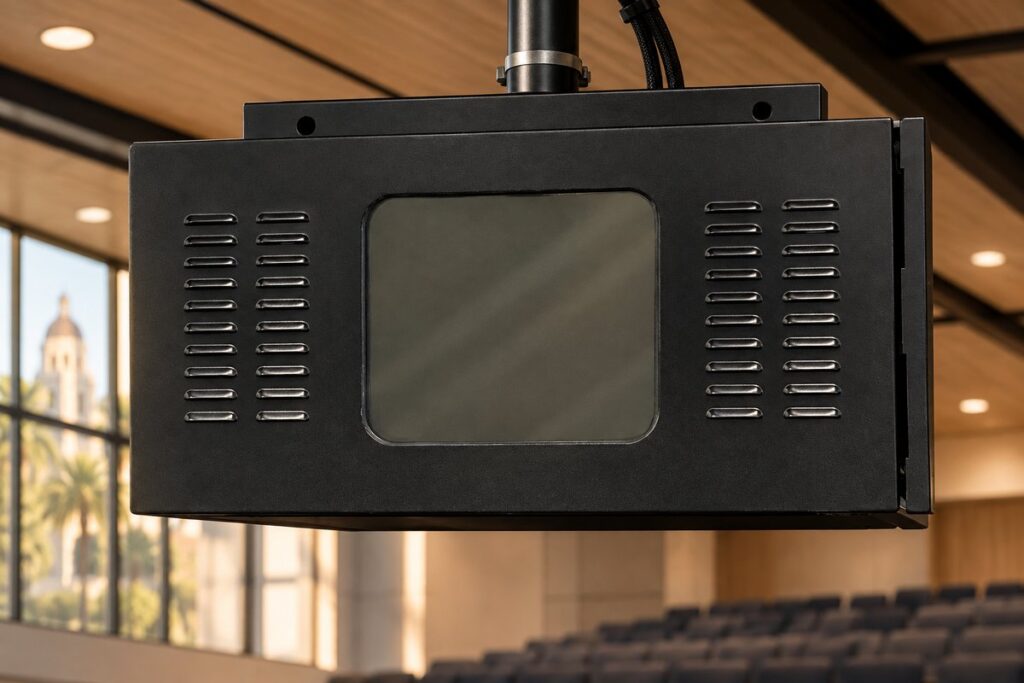
Salt Lake City’s wide temperature swings call for proper ventilation and temperature control inside your projector enclosure. Even the most robust enclosure can overheat a projector if airflow is blocked or if internal fans fail. Look for designs that provide active airflow, rain shroud baffles, and filters that block dust while letting air pass freely.

The Defender Series Projector Enclosure and UST Defender Series Enclosure both feature ventilation options that accommodate Salt Lake City’s extremes. Some enclosures can also be specified with heaters or dehumidifiers for additional protection during especially cold or damp events.

Test airflow before every extended show, especially if placing your setup in a tight space or during the transition between seasons. Schedule seasonal filter checks and follow your projector’s recommendations for temperature operating ranges. Consistent cooling is the unsung hero of long-term reliability for outdoor projection mapping shows.

Permit Planning: What to Know Before Installing a Projection Mapping Enclosure

Salt Lake City, like many municipalities, may require permits for outdoor projection mapping—especially if your event involves public property, a busy facade, or structural mounting. Permit requirements often depend on the scale, duration, and location of your setup, as well as any wiring or electrical work performed.

Start by reviewing the Permits & Licensing information from the City of Salt Lake. Typical considerations may include building modification, public-way use, or a special event application for larger gatherings. Commercial venues should inquire early to avoid last-minute problems before opening night.

For home installations, temporary displays usually need no permit unless they encroach on sidewalks or city infrastructure. However, it’s always wise to double-check requirements—especially for more elaborate or permanent projection setups. If you’re ever unsure of the scope or process, the city’s permitting office can provide project-specific guidance.

Salt Lake City Outdoor Projection: Local Resources at a Glance

ResourcePurpose
Salt Lake City Climate BookCheck historic weather patterns and seasonal risks before planning your installation.
Rocky Mountain Power Outage and SafetyMonitor for outages or plan around power safety warnings in your project area.
Salt Lake City Permits & LicensingResearch installation, wiring, and special event permits for your enclosure project.

Using these resources ensures your projection mapping display is both dazzling and compliant with local requirements, while staying safe through Salt Lake City’s ever-changing weather.

FAQ: Protecting Outdoor Projectors in Salt Lake City

How do I choose the right outdoor projector enclosure for my projector?

Enclosure selection depends on your projector’s size, brightness, throw distance, and intended usage. For permanent or high-value displays, match your exact projector model with a fit guide or contact ProjectorEnclosure.com for sizing help. Defender Series and UST Defender Series are recommended for all-weather needs, while the HomeLine is ideal for home displays.

Do I need a permit for my projection mapping enclosure?

Permit requirements vary by location, type of installation, and event size. Temporary home displays often require no permit, but commercial, public, or structural mounts may need approval. Always check with Salt Lake City’s permits and licensing office before beginning any work.

How can I prevent my projector enclosure from overheating or getting too cold?

Look for enclosures with robust internal airflow, filtered fans, and optional heating or dehumidification for extreme conditions. Test airflow before each extended use, and regularly clean dust filters to prevent blockages during dusty Salt Lake City summers or after storms.

Ready to Plan Your Salt Lake City Projection Mapping Display?

With careful enclosure selection and attention to local power, weather, and permitting details, your outdoor projection mapping display can shine through any Salt Lake City season. ProjectorEnclosure.com provides the Defender Series, UST Defender Series Enclosure, and HomeLine Projector Enclosure—all sized for your projector and ready to face the city’s climate challenges. Be sure to check each product’s compatibility with your model using the Projector Enclosure Fit Guide. For expert guidance and to get started on your project, Request an enclosure quote today.
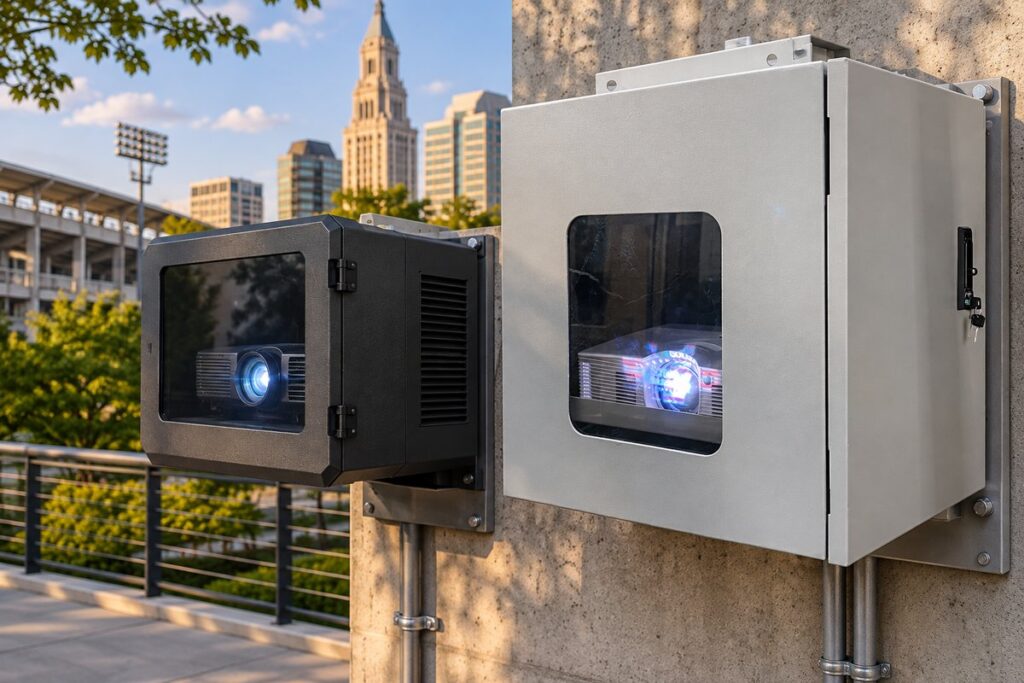
Featured supplies

Supplies mentioned in this guide

PROJECTORENCLOSURE.COM · Salt Lake City, UT guide
Read more

Outdoor Projection Mapping in Los Angeles: Protect Your Projector with Smart Enclosure Planning

PROJECTORENCLOSURE.COM
Los Angeles, CA · Planning guide

Outdoor Projection Mapping in Los Angeles: Protect Your Projector with Smart Enclosure Planning

Discover how to protect your projector for Los Angeles projection mapping shows. Get practical advice on weather, humidity, rain, dust, salt air, and planning enclosures.

Outdoor Projection Mapping in LA: Weather and Seasonal Challenges

With the holiday display season in full swing, Los Angeles’ vibrant neighborhoods come alive with projection mapping shows on houses, storefronts, and building facades. Whether you’re creating a Halloween spectacle or a winter festival scene, outdoor projectors must contend with the city’s unique blend of coastal and urban weather. Even in LA’s famed sunshine, cold nights, sudden rainfall, fog, and salt-laden breezes can threaten your projector’s performance and lifespan.

Despite LA’s dry climate for much of the year, winter and early spring bring periods of rain, high humidity, and wind-blown dust. Many homes and venues near the coast experience a mix of salty air and mist, which can corrode sensitive electronics. To forecast when protection is most critical, check the National Weather Service Los Angeles / Oxnard Office for up-to-date local reports before your event.

The right projection mapping projector enclosure is essential for keeping your show running smoothly through these conditions. Protecting the projector from rain, dust, and salt air should be the first consideration of any AV integrator, event producer, or homeowner planning an outdoor display.

How LA Weather Risks Impact Outdoor Projectors

Humidity and rain are the top risks to outdoor projectors in Los Angeles, especially from December through March. Flash rainstorms can arrive with little warning, and overnight condensation can collect on projectors left outdoors. Electronics exposed to high humidity quickly develop faults or short circuits, and moisture also accelerates lens fogging and corrosion on circuit boards.

Wind is frequently underestimated in the LA Basin. Gusty conditions may whip up fine dust from landscaping or construction sites, which can enter unprotected equipment and settle on fans, optics, and circuit boards. Along the coast, salt-laden air adds another layer of risk, as salt accelerates corrosion on exposed metal parts and connectors.

Temperature swings—from warm afternoons to cold coastal nights—can generate internal condensation inside projector housings and create challenging thermal environments for electronics. A well-engineered outdoor projector enclosure for projection mapping is the only practical solution for high-reliability events and seasonal outdoor installations.

Choosing the Right Outdoor Projector Enclosure for LA Shows

The choice of enclosure matters as much as the projector itself when it comes to projection mapping in variable weather. For demanding outdoor projections—such as holiday house shows, building facades, or holiday events—the Defender Series Projector Enclosure from ProjectorEnclosure.com offers IP66-equivalent protection against dust and powerful water jets. These rugged enclosures are built for outdoor conditions seen throughout LA’s neighborhood displays, commercial events, and seasonal art installations.

If your installation uses a short-throw projector mounted close to the house or wall, the UST Defender Series Enclosure provides the same level of all-weather protection in a profile designed for proximity edge-blending and wide-angle mapping.

For homeowners setting up a holiday house projection enclosure, the HomeLine Projector Enclosure offers reliable weather defense scaled for home use—sized specifically to your projector model and optimized for seasonal shows. Each model can be right-sized: simply send your projector model for sizing.

Power Planning: Safely Running Outdoor Projection Mapping Displays

Correctly planning your power supply is essential for a safe, reliable show. Los Angeles homes and commercial properties must comply with local electrical codes when running outdoor extension cords or adding new outdoor outlets. If you’re setting up projection mapping for the first time, use a dedicated outdoor-rated power circuit with GFCI protection to minimize electrical risks around wet or damp conditions.

The Los Angeles Department of Water and Power offers support for starting or adding service if your display requires new circuits or higher electrical capacity. For events or large installations, consult a licensed electrician to ensure all grounds, outlets, and connections meet LA’s standards and that the projector’s power draw is adequately supported.

Never run unprotected cables through areas prone to puddling or heavy foot traffic. Weatherproof cable management, drip loops, and outdoor-rated extension cords help keep your enclosure and projector safe from water ingress—even in unexpected LA rainstorms.

Ventilation and Thermal Control for Outdoor Enclosures

Enclosed projectors generate heat. Even on cool Los Angeles nights, an enclosure without adequate ventilation can lead to temperature build-up. The Defender Series and UST Defender Series enclosures integrate passive and active ventilation engineered for outdoor climates, allowing your projector to operate at peak efficiency without overheating, even during extended holiday or festival shows.

LA’s large temperature swings demand enclosures with high airflow, filtered intakes, and proper separation between the projector and enclosure walls. For coastal homes where moist air is common, condensation control is vital. The HomeLine series offers consumer-friendly features for thermal management as well as protection against the early morning marine layer.

ProjectorEnclosure.com provides detailed guidance on how to size the ventilation for your specific projector. Be prepared to share your projector model to ensure the best airflow configuration for your chosen enclosure.

Mounting, Placement, and Security Strategies

Every successful outdoor projection mapping display starts with thoughtful mounting and positioning. The ideal location for your outdoor projector enclosure offers clear sightlines to your projection surface and is protected from potential hazards like irrigation spray or falling debris from nearby trees.

For elevated installations, wall or roof mounts provide a safe, stable platform for enclosures, which are available in custom sizes to fit your space and projector. Ground installations for house projection mapping displays must keep the enclosure off the soil or lawn and ensure stability against accidental bumps or strong winter winds.

Los Angeles is no stranger to opportunistic theft. Secure mounting hardware and a lockable enclosure, as found on all Defender Series and HomeLine models, help keep your equipment safe through the duration of your event or seasonal run.

Permits, Lighting Rules, and Neighborhood Regulations

Before launching your holiday house projection enclosure or any public-facing display, check to see if permits are required for your installation, especially for commercial sites or larger residential displays. Requirements vary, so it’s wise to check with your local officials.

The Los Angeles New Zoning Code – Outdoor Lighting & Glare contains city standards for light spill, intensity, and allowable hours of operation. Projection mapping artists and event planners should review these codes to avoid potential complaints from neighbors or enforcement actions.

Always test your projection at night to make sure your light does not trespass beyond your property. Shielding and carefully angling the enclosure can help limit unintended glare. For public venues and building facades, consult the city about temporary event permits, especially if your mapping event may draw crowds or use amplified sound.

Practical Guide: Sizing, Ordering, and Setup

Proper sizing and setup make all the difference for a long-lasting display. Each model from ProjectorEnclosure.com—whether it’s the Defender Series, UST Defender, or HomeLine—is sized for your specific projector. If you’re unsure which enclosure fits your model, use the Projector Enclosure Fit Guide to start the process. The team will walk you through measurements and options, ensuring a weather-resistant and well-ventilated result.

When installing your enclosure, follow all provided instructions for mounting and sealing. Before showtime, inspect that gaskets, fans, and cable entries are sealed and test the enclosure’s performance under a garden hose spray to simulate weather risks. You can also reference the Projector Enclosure for House Projection Mapping guide for ideas and best practices, especially if you’re planning a holiday or Halloween home show.

If you have unique requirements—like side projection, ultra-short throw, or integration with smart controls—ProjectorEnclosure.com has a solution that can be tailored to your LA site.

FAQ: Outdoor Projector Enclosures in Los Angeles

How does LA’s climate affect outdoor projectors during holiday events?

Rain, humidity, and salty coastal air can damage unprotected projectors, especially during winter and early spring. IP66-equivalent enclosures like the Defender Series shield projectors from rain, dust, and corrosion, even near the beach. Proper protection is crucial for LA’s outdoor mapping displays.

What steps should I take to meet LA’s lighting and permit requirements?

Review LA’s local rules on outdoor lighting using Zoning Code – Outdoor Lighting & Glare and consult the city before installing large or public-facing displays. Some events may require permits, especially for building or commercial events.

Do I need professional installation or can I set up the enclosure myself?

Small home and seasonal displays are often DIY-friendly, especially using the HomeLine series. For commercial-grade or rooftop installations, or if new power is needed, a licensed electrician or AV integrator is recommended. Always check mounting and weather sealing before each show.

Get the Right Enclosure for Your Los Angeles Projection Mapping Project

Building a reliable, spectacular projection mapping display in Los Angeles means more than just picking the best projector—it requires real protection against rain, humidity, salt air, and dust. ProjectorEnclosure.com brings more than 20 years of experience helping LA homeowners, churches, venues, and artists safeguard their outdoor displays throughout the holiday season and beyond. For expert advice and sizing, Request an enclosure quote today. Your projector—and your audience—will thank you.
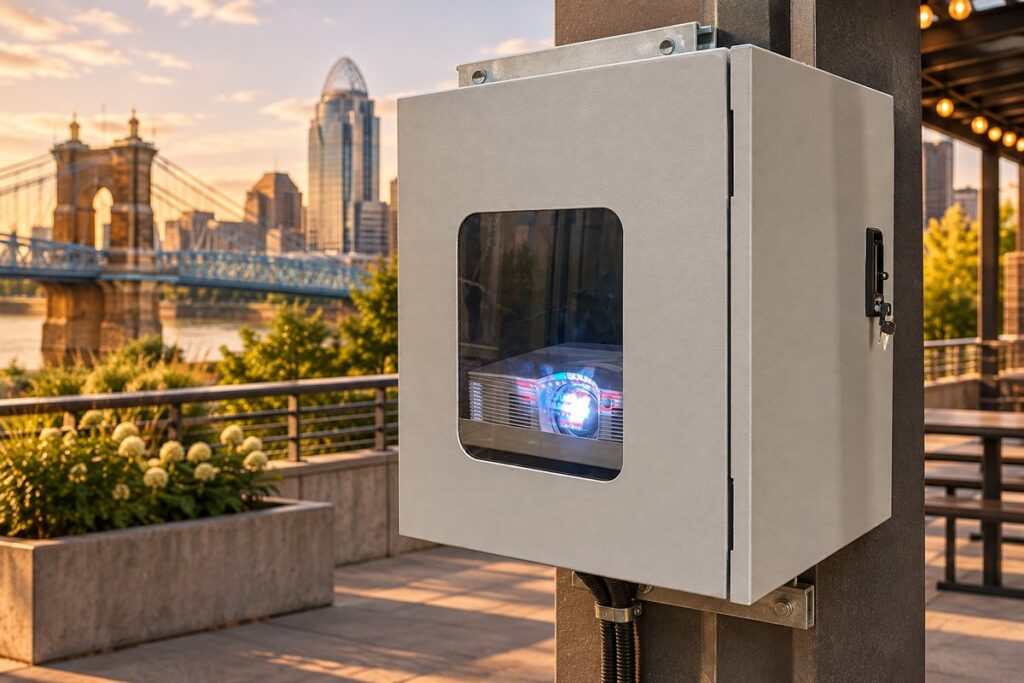
Featured supplies

Supplies mentioned in this guide

PROJECTORENCLOSURE.COM · Los Angeles, CA guide
Read more

Comparing Projector Enclosures for Projection Mapping in Hartford, CT

PROJECTORENCLOSURE.COM
Hartford, CT · Buyer comparison

Comparing Projector Enclosures for Projection Mapping in Hartford, CT

With Hartford’s unpredictable winter weather, choosing the right projector enclosure is key for safe, successful projection mapping—whether for a holiday home show or a building facade. Here’s how to weigh your outdoor enclosure options.

The Need for Specialized Projector Enclosures in Hartford’s Climate

The holiday season in Hartford, CT is a magical time that brings community projections and captivating house displays to neighborhoods and public spaces. Yet, as temperatures plunge and rain or snow loom, the risk of exposing sensitive projection equipment to moisture, dust, and freezing conditions is real. Hartford’s winter brings not only chilly evenings but also bursts of wind, rapidly shifting humidity, and frequent precipitation, all of which can spell disaster for unprotected projectors. For anyone planning an outdoor projection mapping event—be it for Halloween, the December holidays, or a major city festival—using a dedicated projector enclosure is crucial for equipment longevity and reliable spectacle.

ProjectorEnclosure.com offers purpose-built solutions that address these local weather challenges. Enclosures are not one-size-fits-all; there are clear differences between all-weather, fan-cooled, and ultra-short-throw (UST) designs. The range covers everything from robust protection for exposed building facades to compact options for home projection mapping. Understanding what each enclosure style offers is essential for achieving vibrant, uninterrupted displays—especially as Hartford gears up for another season of outdoor light shows and public projection art.

Below, you’ll find a comprehensive comparison of the leading enclosure options for Hartford-area projection mapping, with practical guidance for homes, businesses, and public venues.

Defender Series: All-Weather Outdoor Projection Protection

For most outdoor projection mapping in Hartford, the Defender Series Projector Enclosure stands out as the top choice. This enclosure delivers IP66-equivalent protection against dust and powerful water jets, making it ideal for open-air installations on building facades, church exteriors, or residential lawns. Its robust housing is designed to shield equipment from Hartford’s snow, driving rain, swirling dust, and surprise wind gusts—elements that can strike unexpectedly at any December or Halloween event.

Homeowners running outdoor holiday projection displays, AV integrators working on permanent installs, and businesses aiming for attention-grabbing window projections will appreciate the Defender’s balance of security and performance. Fan-cooled ventilation maintains optimal internal temperature, ensuring worry-free operation throughout New England’s variable conditions. For seasonal or year-round installations, the Defender Series combines adaptability with serious weather resistance.

Crucially, the Defender Series is right-sized to your specific projector model, offering a snug fit for large-venue projectors or smaller, high-brightness units—something to keep in mind when planning complex displays. To confirm compatibility, refer to the Projector Enclosure Fit Guide and consult the team at ProjectorEnclosure.com.

UST Defender: Ultra-Short-Throw Enclosures for Projection Mapping Closeups

Projection mapping artists and event planners increasingly utilize ultra-short-throw (UST) projectors for displays that require the projector to sit extremely close to the wall or facade being illuminated. The UST Defender Series Enclosure was designed with these demanding use cases in mind. Like the classic Defender, it delivers IP66-equivalent performance, but it’s engineered to fit comfortably in tight spaces and maintain ideal projection angles for UST lenses.

Hartford’s unpredictable fall and winter rainfalls, as reported regularly by the National Weather Service’s Hartford forecast, necessitate this level of protection even for temporary installations. UST projectors are especially vulnerable on low rooftops or garden beds beside historic homes—locations where snow drifts and pooled rainwater can build up. The UST Defender Enclosure ensures your projector remains free from moisture infiltration, dust, and accidental impact during high-traffic events and festivals.

For short-distance, precision projections where image quality and equipment lifespan matter, the UST Defender combines the best of field-proven weather protection with a compact, UST-friendly format. As always, it’s important to size the enclosure properly to your specific projector with help from the fit guide or by reaching out to ProjectorEnclosure.com.

HomeLine Series: For Home and Small-Scale Projection Mapping Displays

When setting up home holiday projection mapping—especially in a protected yard or on a covered porch—the HomeLine Projector Enclosure offers consumer-focused, practical protection. This enclosure meets the needs of homeowners who want to elevate their Christmas, Halloween, or birthday displays with digital projections, but don’t need the industrial-grade ruggedness of Defender Series models.

While not intended for fully open, exposed installations during a Hartford blizzard, the HomeLine delivers significant shelter from wind-driven rain, humidity, and falling leaves—common issues during Connecticut’s transitional seasons. Its design balances accessibility for setup and safe backyard operation, with options for integrating basic cooling and ventilation to keep your projector happy during multi-hour shows.

Enclosures like the HomeLine are ideally suited for smaller projectors and short-term holiday installations in residential neighborhoods. For those using entry-level or mid-range digital projectors for home mapping, this enclosure provides a cost-effective step-up in protection without the heft of a commercial model.

Fan-Cooled vs. Climate-Controlled Enclosures: What’s Best for Hartford?

One key difference amongst projector enclosures is their approach to temperature management. In Hartford’s climate, rapid temperature swings and surprise cold snaps can impact projector performance if not addressed. Fan-cooled outdoor enclosures, such as the Defender Series and HomeLine, draw in ambient air and exhaust heat generated by the projector—an approach that is both effective and energy-efficient during chilly New England evenings and brisk autumn setups.

Climate-controlled enclosures—such as those suited for conditioned indoor environments—are typically reserved for spaces where temperature, humidity, and air quality are regulated, like auditoriums, galleries, or schools. These are not intended for direct outdoor use during Hartford’s winter or rainy spells. As a rule, when projecting outdoors in Connecticut, opt for enclosures specifically described as all-weather or weather-resistant, not models meant for indoor fan or quiet-room operation.

To assess what’s needed, consider the planned location: fully outdoors (choose Defender or UST Defender), under a covered but not heated porch (HomeLine), or inside a climate-controlled room (researched as a separate category). If in doubt, check with ProjectorEnclosure.com to verify the right model for your site and projector.

Indoor vs. Outdoor Installation: Enclosure Selection in Real Context

Hartford’s holiday projection mapping events are not always in the open air—many take place under tents, in school gyms, or inside high-ceilinged places of worship. When displays occur outdoors, robust weather defense is non-negotiable, favoring the Defender Series or UST Defender. For home use in partially sheltered environments, the HomeLine Projector Enclosure is a sensible option.

If you are projecting indoors, your needs shift: climate and sound management become bigger concerns. While enclosure models like the Hush Series exist for acoustically sensitive spaces, these are not recommended for outdoor or exposed environments. For Hartford projects involving indoor mapping—such as in museums, school halls, or modern churches—options should be fit to the level of environmental control in the venue.

Remember, local regulations may also guide what’s permitted outside your building. Always consult the City of Hartford’s development services department for guidelines on outdoor installations at public or commercial sites.

Power, Permitting, and Weather: Local Factors for Enclosure Choice

Hartford’s electric utility providers, as listed by the Public Utilities Regulatory Authority, include Eversource and United Illuminating—key contacts if you’re planning a large-scale or semi-permanent installation requiring new outdoor circuits. Adequate power planning reduces the risk of outages and supports fan or heater operation in your enclosure when needed.

Local permitting may affect where and how you install your projector and enclosure, especially for outdoor events, business displays, or community art projects. The City of Hartford Development Services website is the best resource for up-to-date permit and zoning requirements for projection mapping setups in public or commercial spaces. Rules can affect not only electrical connections, but also where enclosures may be placed and how late they may operate during the holiday season.

Keep an eye on upcoming weather conditions via the National Weather Service’s Hartford forecast before leaving equipment set up overnight or during back-to-back events. Reliable enclosures protect your gear, but anticipation of harsh weather means fewer surprises and safer holiday shows.

How to Size and Select the Right Projector Enclosure

A step many overlook is ensuring the enclosure is specifically matched to the projector make and model. This is important not only for physical fit but also for cooling and lens placement. On ProjectorEnclosure.com, you’ll find detailed information and a Projector Enclosure Fit Guide to help you submit the correct dimensions for a custom order. The team encourages you to send your projector model for an accurate fit—a step that saves time and possible frustration down the line.

When comparing models: Use the Defender Series for unforgiving outdoor conditions, the UST Defender Series for close-proximity UST applications in exposed settings, and the HomeLine Projector Enclosure for home and light-duty mapping in semi-protected areas. The dedicated house projection mapping enclosure page provides a closer look at mapping for residential displays.

For any complex situations—unusual mounting locations, special airflow needs, or powering multiple projectors—contact the enclosure experts directly for best results.

Frequently Asked Questions: Projection Mapping Enclosures in Hartford

How do I know which enclosure is right for Hartford’s winter?

If your projection mapping project will be exposed to snow, rain, or strong winds, select an enclosure marketed as all-weather or with IP66-equivalent protection, such as the Defender Series or UST Defender. For home displays in semi-sheltered locations, the HomeLine may be sufficient.

Can my existing power supply handle a fan-cooled outdoor enclosure?

Most fan-cooled projector enclosures require minimal additional power beyond what is needed for the projector. When in doubt, check your supply setup and consult with Hartford’s electric providers listed on the public utilities resource for guidance on upgrades or safe outdoor circuit extensions.

Do I need a permit to install a projector enclosure for an event or holiday show?

Installation of outdoor displays may require permits, especially for installations on public property or visible commercial settings. Always check with the city development services office to ensure compliance with local rules.

Conclusion: Choosing with Confidence for Hartford’s Projection Mapping Season

For Hartford residents, businesses, schools, and projection mapping artists, the right projector enclosure is the difference between a dazzling, worry-free display and a costly equipment failure. Whether you need rugged, all-weather protection for a facade, precision UST compatibility, or a dependable home enclosure, ProjectorEnclosure.com offers a tailored solution sized to your projector and your environment. Be sure to consider Hartford’s variable climate, local permitting, and the specifics of your event when making your selection.

Ready to safeguard your projection mapping investment?

and connect with the experts today.

Featured supplies

Supplies mentioned in this guide

PROJECTORENCLOSURE.COM · Hartford, CT guide
Read more

Application-Focused Projection Mapping Projector Enclosures for Orlando, FL

PROJECTORENCLOSURE.COM
Orlando, FL · Ideas and uses

Application-Focused Projection Mapping Projector Enclosures for Orlando, FL

Discover how the right projection mapping projector enclosure from ProjectorEnclosure.com keeps Orlando’s projection mapping shows on track—even when rain and humidity strike.

Outdoor Projection Mapping in Orlando’s Active Event Season

With the holiday display season in full swing, Orlando, FL comes alive with dazzling projection mapping shows on homes, facades, and public landmarks. But as these high-impact visuals light up the night, the Central Florida weather can quickly threaten valuable projector equipment. Frequent rain, high humidity, and unpredictable cold snaps are common from fall to early spring—right when most outdoor events and house mapping displays take place.

Protecting your projector from these elements doesn’t just ensure a reliable show; it prevents costly downtime and equipment failures. From professional event producers to homeowners excited about Halloween or holiday house projections, using a weather-appropriate projection mapping projector enclosure is essential. This is especially true in Orlando, where the entertainment and event industries set a high standard for outdoor reliability and spectacle.

ProjectorEnclosure.com offers solutions specifically for projection mapping in these conditions, with models suited to the climate and unique local venues. Whether you’re planning a blockbuster theme park projection, a local stadium activation, or a neighborhood holiday display, there’s an enclosure sized to your projector and your needs.

Stadiums and Large Venues: Resilient Protection for Big-Scale Shows

Orlando’s stadiums and sprawling event venues often host projection mapping spectacles during festivals, concerts, and sporting events. These environments demand enclosures that can withstand unexpected downpours, gusty winds, and constant exposure to the elements. A Defender Series Projector Enclosure offers IP66-equivalent protection against dust and powerful water jets, making it ideal for safeguarding projectors during outdoor projection mapping on massive surfaces and building facades.

With city venues subject to public safety and permit requirements, consulting the Residential Permitting Requirements is necessary before installing high-powered projection systems, especially those with outdoor electrical connections. Reliable project power is also a priority, so regularly monitoring for service disruptions through OUC’s power outage reporting tool is a practical measure during events.

By combining robust protection with local compliance and utility monitoring, projection mapping artists and AV integrators can deliver stunning, uninterrupted visuals to Orlando crowds no matter the season or scale.

Theme Parks and Museums: Bringing Stories to Life—Rain or Shine

Orlando’s world-famous theme parks and vibrant museums use projection mapping to create immersive experiences and captivating storytelling. These attractions are exposed to Florida’s afternoon thunderstorms and sudden cold fronts, potentially damaging expensive projectors placed outdoors or near water features.

The Defender Series stands out for these locations, providing a rugged, all-weather shell that keeps projection systems safe and fully functional, even in highly trafficked settings or when exposed to spray and humidity. For setups with ultra-short-throw projectors positioned just a short distance from display surfaces, the UST Defender Series Enclosure combines the same IP66-equivalent environmental protection with a form factor suited for wall-hugging installations.

By selecting the right enclosure, theme park technicians and exhibit designers maximize the longevity and performance of their investments, ensuring exhibits and nightly projection shows captivate audiences season after season—even in Orlando’s rainy climate. To keep tabs on incoming weather, check the current Orlando weather forecast before each installation or live event.

Churches and Schools: Reliable Outdoor Displays for Community Engagement

From spreading holiday cheer on church facades to enhancing graduation ceremonies or school fundraisers, projection mapping turns schoolyards and worship spaces into lively gathering spots. However, open fields and parking lots come with exposure to wind, blowing dust, and Orlando’s sporadic rainfall, risking sensitive AV gear.

Churches, schools, and community groups can rely on the Defender Series to ensure their projectors keep working through the ups and downs of Florida’s fall and winter. Since electrical work and outdoor placement may require permits, always refer to the City of Orlando’s permitting checklist before beginning any installation.

For tighter spaces or installations where space is at a premium—such as along entryways or small courtyards—the UST Defender Series Enclosure provides the weather protection needed for close-range projection. These enclosures give peace of mind that equipment remains secure, events go forward as planned, and the community can count on inspiring displays no matter the weather.

Holiday House Projection: Dazzling Displays for Neighborhoods

Home projection mapping for holiday, Halloween, or birthday displays is rapidly growing in Orlando neighborhoods. Turning your house into a canvas for animated lights and festive effects is a show-stopper, but residential projectors remain vulnerable to moisture, cold, humidity, and even the occasional rogue basketball.

The HomeLine Projector Enclosure is designed for these smaller-scale yet ambitious home mapping projects. Sized to your projector model and built for dependable home use, it prevents weather and debris from derailing your big reveal. For advanced holiday house projection mapping setups, especially those requiring greater weather resilience, the Projection Enclosure for House Projection Mapping offers additional features for year-round displays.

Before tackling electrical connections outdoors, homeowners should review the local permitting requirements. Also, consider keeping an eye on the Orlando weather forecast to schedule your projections when clear nights are likely.

Projection Mapping Artists and Event Producers: Flexible Configurations

The creative spark behind Orlando’s projection mapping scene comes from artists and event organizers who envision vibrant storefronts, illuminated museum walls, and dynamic festival backdrops. Each project is unique, requiring different throw distances, projector models, and installation types.

ProjectorEnclosure.com offers a Projector Enclosure Fit Guide to help you find the optimal enclosure for your specific projector and mapping requirements. Whether you need the versatility of the Defender Series for unpredictable outdoor conditions or the tight footprint of the UST Defender for close-up mapping, every solution takes into account Orlando’s climate and event logistics.

Power reliability is often overlooked until the moment the show must go on. Use the OUC outage reporting tool to stay ahead of any disruptions and work with venues to ensure robust temporary power access for your installations.

Backyard Theaters and At-Home Projection Mapping

Transforming your own backyard into a personal theater or hosting birthday parties with immersive projection mapping is a trend gaining traction across Greater Orlando. But residential neighborhoods experience dust, wind, humidity, and the ever-present chance of sudden rain.

The HomeLine Projector Enclosure brings peace of mind for home users, keeping projectors protected while movies, games, and mapping shows go on through any season. It’s purpose-built for homeowner setups—compact, easy to use, and tailored to your technology.

If you’ve invested in a projector specifically for holiday mapping or permanent features, make sure to check your fit using the Projector Enclosure Fit Guide and review the city’s permits checklist for any exterior modifications.

Choosing and Sizing Your Enclosure for Any Venue

With dozens of projector models and configurations in use around Orlando, correct sizing is critical for safe, effective enclosure performance. The fit impacts cooling, cable routing, and overall system reliability, regardless of whether you’re mapping a stadium, storefront, or three-story home façade.

To ensure perfect fit, ProjectorEnclosure.com always recommends that you send your projector model details before ordering. The Projector Enclosure Fit Guide walks you through which information to submit so that your enclosure is matched for optimal protection and operation.

For specific challenges, such as unusual mounting angles for projection mapping or tight outdoor setups, both the Defender Series and UST Defender Series have options tailored to your installation scenario. Talking through your needs with the team ensures you get the right features—whether for rapid deployment during unpredictable Orlando weather, or for integrating with a sophisticated lighting sequence at your venue.

FAQ: Projection Mapping Projector Enclosures for Orlando

How do I determine which enclosure I need for my projector?

Start by consulting the Projector Enclosure Fit Guide to gather your projector specs. For outdoor projection mapping, the Defender Series is suited to most professional setups, and the UST Defender is ideal for short-throw projectors using close wall or façade projection. For home projection mapping, choose the HomeLine model. Always send your projector model to ensure the best fit.

What weather concerns do I need to address in Orlando?

Orlando’s holiday and event season overlaps with the region’s rainy, humid, and cool nights. Keep an eye on the local weather forecast and use enclosures that defend against unexpected moisture, dust, and wind. IP66-equivalent protection in the Defender and UST Defender series helps keep your projector operational through these conditions.

Do I need permits or special power considerations when installing outdoors?

Outdoor projection installations often require electrical permits or inspection. Check the Orlando permitting requirements and work with a licensed contractor where necessary. Use OUC outage resources to ensure reliable power, especially for larger or long-running shows.

Get ready for Orlando’s next outdoor projection mapping season with customized protection for your projector investment. Request an enclosure quote today—the team at ProjectorEnclosure.com will help you choose the right enclosure for your needs and make sure you’re ready for rain or shine!

Featured supplies

Supplies mentioned in this guide

PROJECTORENCLOSURE.COM · Orlando, FL guide
Read more

Outdoor Projector Enclosures in Raleigh: Weather, Power & Permits Guide

PROJECTORENCLOSURE.COM
Raleigh, NC · Planning guide

Outdoor Projector Enclosures in Raleigh: Weather, Power & Permits Guide

Protect your outdoor projector from Raleigh’s rain, heat, humidity, dust and salt air. This guide covers mounting, power, ventilation and permits for projection mapping shows using the right enclosure.

Planning for Raleigh’s Holiday & Event Projection Mapping Season

With the holiday season underway, Raleigh’s homes, churches and businesses are lighting up their exteriors with dazzling projection mapping displays. From Halloween house shows to building-facade projections downtown, outdoor projectors bring creativity to life—but Raleigh’s climate means extra care is essential. Rain, humidity, dust, salt air from nearby coastal influences, and dramatic winter temperature shifts all threaten sensitive electronics left outdoors. Well-designed protection is a must for your projector, whether you’re a homeowner creating a backyard light show or an AV integrator staging large-scale events. In this guide, you’ll learn how local weather and regulations affect your choice of outdoor projector enclosure, including tips for power, mounting, ventilation, and permitting.

ProjectorEnclosure.com provides solutions tailored to Raleigh’s environmental realities with the Defender Series, UST Defender Series, and HomeLine enclosures—each sized to your projector and chosen for its location and projection mapping style. Let’s walk through what you need to know before your first test pattern hits the wall.

Weather in Raleigh: Outdoor Projector Risks and Protections

Raleigh’s climate is marked by frequent showers, occasional downpours, humid summers, dust raised by storm winds, and winter cold spells that can swing to freezing overnight. During late fall and winter projection mapping shows—Halloween, Christmas, or New Year’s Eve—unexpected storms and wind-driven moisture can threaten your expensive projector. Humid air can condense inside electronics, while airborne pollen and dust settle on sensitive fans and optics. Even salt air from the coast, when the wind’s right, can corrode connections outside over time.

Using a purpose-built Defender Series Projector Enclosure is essential for year-round outdoor projection in Raleigh. It offers IP66-equivalent protection against dust and powerful water jets—meaning your projector stays safe during rain, sleet, or swirling dust. For tight setups where the projector sits close to the wall for short-throw mapping, the UST Defender Series Enclosure gives the same level of environmental protection in a compact design, ideal for mapping onto house facades or storefront windows.

Even for home holiday displays or backyard projection mapping, the HomeLine Projector Enclosure shields your projector from sudden weather changes, reducing downtime and protecting your investment through unpredictable Raleigh winters.

Humidity, Dust, Salt Air: The Raleigh Reality

Raleigh’s summer humidity and spring pollen season pose risks beyond simple rain. Projectors need continuous airflow for cooling, but that same airflow can draw in humid air, dust, and corrosive pollutants. Condensation forming on cold nights clings to electronics, amplifying the risk of short circuits or corrosion—especially with repeated exposure over the holiday display season.

ProjectorEnclosure.com’s Defender Series and UST Defender Series enclosures are engineered for outdoor airflow while keeping contaminants out. Their IP66-equivalent protection helps block fine dust and wind-driven salt spray, preventing clogs in projector air intakes and extending bulb and filter life. HomeLine is optimized for backyard and driveway setups where pollen and humidity still pose threats, without the ruggedness needed for full public installations.

For optimal performance, always match your enclosure capacity to the heat output of your projector. If you’re unsure, check the Projector Enclosure Fit Guide for help choosing the right size for both airflow and weather protection. Send your projector model to ProjectorEnclosure.com for tailored recommendations.

Planning Power and Placement in Raleigh’s Residential Areas

Powering a projection mapping setup outdoors in Raleigh brings its own planning considerations. Most projectors require grounded extension cords with heavy-duty insulation when run from a house outlet, and circuits must be protected by GFCI (ground-fault circuit interrupter) outlets according to local code. Avoid running long cords across walkways; not only can they trip guests, but local event regulations may set limits on cord placement or require protective covers.

For event-scale setups on building facades or church walls, temporary power often needs advance planning—sometimes with a generator or dedicated circuit. Check with the venue’s management, or consult the City of Raleigh’s Special Event Requests page for outdoor events using public rights-of-way, as power distribution may be regulated during high-attendance festivals and parades.

In all cases, place your Projector Enclosure for House Projection Mapping on a stable, elevated surface, away from standing water or roof runoff. Keep enclosures at least a few inches off the ground to reduce mud or leaf accumulation after storms.

Mounting and Security Tips for Enclosures

Securing your outdoor enclosure is just as important as weatherproofing. Fasten your projector enclosure to a permanent base, such as a concrete pad, brick wall, or beefy tripod—this protects against wind gusts common in Raleigh’s storm seasons. The Defender Series can be wall-mounted or pole-mounted, depending on your projection angle and site layout, while the UST Defender is designed for short, close-in mounting under eaves or balcony ledges.

Consider a padlock or tamper-resistant fasteners for extra peace of mind, especially for prolonged displays in visible outdoor locations. The HomeLine model is ideal for backyard installations where more moderate security measures may suffice, but it should always be leveled and anchored to prevent accidental tip-overs from animals or children.

For public-facing shows or commercial venues, consult Special Event Requests for potential restrictions on temporary structures and outdoor lighting. Early planning helps avoid last-minute compliance headaches.

Ventilation: Keeping Your Projector Cool (and Dry)

Good ventilation is critical in Raleigh’s climate, where day-to-night temperature swings create condensation risks. All ProjectorEnclosure.com models are engineered to keep air circulating while keeping weather, dust, and pollen out, but the right sizing ensures efficient heat removal without letting outside moisture in. Using an undersized enclosure can result in thermal shutdowns, while oversizing may waste energy and space.

Both the Defender Series and UST Defender Series are built for long-term outdoor mounting and ventilation in challenging, humid weather—letting you run bright projection mapping shows through multi-day events or holiday evenings. For lower-profile home displays, HomeLine provides efficient airflow and decent protection against erratic Raleigh weather without the full heft of a commercial unit.

Remember to provide some clearance on all sides of your enclosure, avoiding close placement to shrubs or under heavy drip edges. Adequate airflow around the outside helps ventilated models exchange air effectively—even on sticky, still North Carolina nights.

Permits, Approvals, and Local Regulations in Raleigh

Before setting up a public-facing holiday projection show, check for required permits, especially downtown or when projecting onto building facades, schools, or community centers. The City of Raleigh regulates use of public rights-of-way and major outdoor events—see the Special Event Requests page for details. For most private home holiday displays confined to your own property, formal permits are not usually needed, but always confirm before running large crowds, sound systems, or light shows visible from major thoroughfares.

Permanent or long-running installations (such as church, school or business facades) may require structural approvals, especially if mounting a heavy enclosure or power feed to a historic or commercial building. It’s best to contact city offices in advance, as review timelines vary with project size and location.

For event organizers hiring AV integrators, always coordinate with the venue and city—requirements can touch power, onsite inspectors, and even lighting hours. Using trusted enclosures with proven outdoor protection, like the Defender Series, makes it easier to check off code-compliance boxes and focus on your event’s creative impact.

Projector Sizing and Model Matching for Every Display

No two projection mapping setups are alike—differences in projector brightness, lens type, throw distance, and mounting height all dictate the ideal size and airflow for an enclosure. ProjectorEnclosure.com offers a full Projector Enclosure Fit Guide to help match your projector’s size, heat output and lensing, ensuring proper cooling and weather protection.

To get the best fit, send your projector’s model to ProjectorEnclosure.com for personalized sizing and advice. Enclosures for consumer-grade holiday projectors may differ from commercial or ultra-short-throw models used for edge-blending on building facades. A proper match means longer projector life and less troubleshooting—so measure twice before you install.

Whether you choose the rugged Defender Series, the close-up UST Defender, or the elegant HomeLine for residential décor, careful sizing and installation delivers crisp, reliable projection mapping under Raleigh’s ever-changing skies.

FAQ: Projection Mapping Enclosures in Raleigh, NC

What type of enclosure do I need for my projector?

The right enclosure depends on your projector type, mounting location, and season. For Raleigh’s outdoor projection mapping shows—holiday, church, storefront, or event—choose the Defender Series (for full-weather protection), UST Defender Series (for short-throw setups), or HomeLine (for home displays). Always verify size using the fit guide or by contacting ProjectorEnclosure.com with your projector model.

Do I need a permit for my outdoor projection display in Raleigh?

If your event uses public areas, sidewalks, or streets, or will attract large crowds, you may need city approval. Visit Special Event Requests for guidance. Private home displays usually do not require permits, but check city rules for noise and lighting hours, especially during holidays.

How do I protect my projector from humidity and dust?

Use an outdoor enclosure designed with dust and moisture barriers. The Defender Series and UST Defender Series offer IP66-equivalent defense against harsh weather, forced water spray, and airborne dirt. Mount enclosures off the ground in open air for best ventilation, and choose the enclosure size based on projector heat output and cooling needs.

Ready to protect your investment and ensure flawless holiday or event projection shows in Raleigh? Request an enclosure quote from ProjectorEnclosure.com—send your projector model for a right fit, or call 888-631-5880 or email ssisales@ssidisplays.com for expert help.

Featured supplies

Supplies mentioned in this guide

PROJECTORENCLOSURE.COM · Raleigh, NC guide
Read more

Planning Outdoor Projection Mapping in Cincinnati: Weather, Power, Permits & Projector Protection

PROJECTORENCLOSURE.COM
Cincinnati, OH · Planning guide

Planning Outdoor Projection Mapping in Cincinnati: Weather, Power, Permits & Projector Protection

A practical guide for Cincinnati’s holiday, house, and building facade projection mapping: beat the elements and local rules with the right projector enclosure and setup.

Why Planning Matters: Cincinnati’s Weather and Projection Mapping

Cincinnati’s holiday season is prime time for projection mapping—think festive storefronts, animated house displays for Halloween and the holidays, and wow-factor building facade shows downtown. Yet, before you set up your outdoor projector, Cincinnati’s distinct winter and rainy seasons demand forward-thinking protection. Local weather patterns cycle through rain, damp cold snaps, wind, and sometimes snow—all of which can quickly endanger unprotected AV equipment.

For anyone showcasing home displays, running projection art on a public building, or creating a temporary festival installation, it’s crucial to understand how local elements interact with your gear. Homeowners, event pros, and venue managers all encounter Cincinnati’s dual challenges: unpredictable precipitation and outdoor exposure. Your solution begins with the right projection mapping projector enclosure, but it should never end there—securing reliable power, understanding local permitting, and planning for safe mounting are equally essential.

Let’s break down Cincinnati-specific issues so you can plan and protect your next mapping event, large or small.

Key Environmental Challenges in Cincinnati, OH

Cincinnati’s location in the Ohio River Valley means classic Midwest unpredictability. Just as you’re ready to launch your projection mapping event, this region might throw a cold downpour, high humidity, a chilly windy night—sometimes all in the same weekend. NWS Point Forecast for KCVG is a valuable resource for checking up-to-the-minute weather that directly impacts installation days and gear decisions.

Dust may not be on everyone’s radar, but windblown particulates and pollen are an increasing concern during the spring renovation season and leaf-blowing autumn. In addition, if you’re working close to the Ohio River or busy roadways, salt and road grime (especially after winter snow treatments) can end up deposited on and around your equipment. These particles, combined with moisture, can damage sensitive electronics and optical components.

Your projector will also face hot, humid days followed by sudden cold fronts, which can cause condensation—a real threat if you’re running evening display shows in October through January. Protecting your projector against all of these is essential for a safe and successful show.

Choosing the Right Projector Enclosure for All-Weather Protection

Not every box is built for Cincinnati’s weather. ProjectorEnclosure.com’s Defender Series Projector Enclosure and UST Defender Series Enclosure are designed for demanding outdoor projection mapping shows, providing IP66-equivalent protection against dust and powerful water jets. This makes them ideal for downtown buildings, suburban holiday and Halloween house displays, or any setup facing the brunt of Cincinnati’s rain and wind.

For homeowners running imaginative holiday projection mapping on their own facades, the HomeLine Projector Enclosure offers a practical, robust choice. While it’s designed for consumer-grade projection mapping, it delivers reliable defense against dust and light rain—think animated Santa displays or spooktacular ghost shows visible from the street.

Short-throw, edge-blended, and ultra-short throw setups—typical for close-to-wall installations—are best served by the UST Defender. Enclosure size depends on your projector, so always use the Projector Enclosure Fit Guide or send your projector model to ProjectorEnclosure.com for optimal fit.

Power and Electrical Considerations for Outdoor Projection Mapping

Reliable power is essential for a hassle-free outdoor projection season. Cincinnati’s older neighborhoods often have exterior outlets that may not be rated for the continuous load of a high-lumen projector and its cooling system. Confirm the amp rating and test all outlets for ground fault protection before setup. Long extension cord runs—frequently needed for front yard holiday shows—can cause voltage drops, leading to flickering displays or power loss, so opt for heavy-duty, weatherproof cords and minimize distance wherever possible.

If your setup is semi-permanent or wired into building circuits, consult a licensed electrician to review capacity, outlet location, and code-compliance, especially where exposure to rain and snow is possible. For festival, church, or school events, coordinate with facilities staff to ensure circuits won’t be overloaded by holiday lights or other AV gear running simultaneously.

Some cities or neighborhoods regulate outdoor power installations. Always check permit requirements before running new outdoor lines. Up-to-date conditions from the NWS Point Forecast for KCVG can also alert you to severe weather, helping you plan for safe power routing and use.

Mounting and Placement: Cincinnati-Specific Best Practices

Whether you are mapping intricate animations onto your home for the holidays or projecting a festival mural downtown, proper mounting is vital for both stability and safety. In Cincinnati, wind gusts, quick weather changes, and freeze-thaw cycles can stress mounting points and degrade fasteners if the wrong hardware is used.

Choose structural elements on your home or venue that can handle sustained weight. For temporary home holiday or Halloween projection mapping setups, weighted bases or secure ground stakes can help—always check soil condition in the fall, as saturated ground after rain can undermine stability. For business or public installs, wall- or roof-mounting should use corrosion-resistant anchors designed for masonry or brick, typical of many Cincinnati buildings.

It’s wise to check surfaces for condensation before setup, especially in fall and winter. Never block the enclosure’s ventilation paths when mounting—whether you use a Defender Series, UST Defender, or HomeLine enclosure—to ensure optimal cooling in every season.

Ventilation and Condensation: Keeping Your Projector Cool and Dry

Cincinnati’s high humidity and rapid temperature swings are notorious for creating condensation—and electronics don’t mix well with moisture. The Defender Series and UST Defender enclosures excel here, offering active ventilation systems engineered to push out heat and resist dust and moisture intrusion.

Ventilation is especially important for projectors running long evening programs, such as holiday mapping shows or festival displays downtown. Bring in power for the enclosure’s fans whenever the projector is operating. Position the enclosure away from direct water runoff from roofs or landscaping, and ensure air intakes stay clear of leaves, snow, and dust.

Monitor the inside environment during setup—condensation on viewing windows or inside surfaces may be a sign that the enclosure needs additional drying time or that outside humidity is spiking. Bringing equipment to ambient temperature before use helps reduce fogging and protects your investment.

Permits and Local Regulations: What to Know Before You Install

Permits can vary significantly within Greater Cincinnati, depending on property type, jurisdiction, and display scope. For large-scale public installations—school buildings, churches, event venues, or business facades—reach out to the local building or zoning office, as some municipalities require notification, temporary structure permits, or review of outdoor power connections.

On private property, especially in neighborhoods with active homeowners’ associations or historic overlays, it’s best to check rules on exterior decorations and lighting. This is especially true for multi-night Halloween or holiday house projection mapping displays drawing crowds or using amplified sound. Simple displays often only need common sense placement and weather-safe wiring, but more elaborate setups may require additional paperwork or inspection.

Each building and site is different. Contact the office appropriate for your area or ask your event’s facilities manager for guidance. For power or weather planning, reference the NWS Point Forecast for KCVG for current conditions, which can also help you coordinate installation times around rain or freezing temperatures.

Sizing Your Projector Enclosure: Getting the Right Fit

Every projector and mapping project is unique. The correct enclosure size means reliable cooling, a snug fit for your model, and a clear path for projection—no blocked vents or overheating. ProjectorEnclosure.com supplies enclosures right-sized to your specific projector, avoiding pitfalls of one-size-fits-all boxes or DIY builds that can compromise performance.

Use the Projector Enclosure Fit Guide or send your projector model to ProjectorEnclosure.com for professional sizing. This ensures the Defender Series, UST Defender, or HomeLine enclosure matches exact dimensions—a crucial step for keeping your projector cool and protected all season.

Correct sizing also allows you to plan for accessories such as lens extenders or wireless controls, so your holiday house projection enclosure or commercial mapping setup runs smoothly from start to finish.

FAQ: Cincinnati Outdoor Projection Mapping Enclosures

How do rain and humidity affect an outdoor projector in Cincinnati?

Frequent rain, snow, and high humidity in Cincinnati can quickly damage unprotected projectors. Moisture may cause electrical shorts, lens fogging, or corrosion—especially true during the holiday and winter season’s damp nights. Using an enclosure with proven resistance, such as the Defender Series or UST Defender with IP66-equivalent protection, shields your projector from these local threats.

Do I need a permit for a holiday house projector setup?

Permit requirements in Cincinnati vary by location and display size. For home displays, many neighborhoods allow temporary, low-impact holiday projections without a permit, but multi-week, high-brightness or sound-equipped installations may need approval from your homeowners’ association or local city office. Always check before starting, especially for commercial events or non-residential buildings.

What’s the best enclosure for projection mapping onto my house?

The HomeLine Projector Enclosure is built for consumer holiday and Halloween house projection displays. For large area mapping or demanding sites, upgrade to the Defender Series or UST Defender for maximum all-weather protection, and use the fit guide to match your projector’s size.

Get Ready for a Stress-Free Projection Season

With smart planning—choosing the right enclosure, confirming your power and mounting approach, checking local requirements, and monitoring Cincinnati’s ever-changing weather—you’ll enjoy a hassle-free projection mapping season from Halloween through the holidays and beyond. ProjectorEnclosure.com has more than 20 years of experience helping customers safeguard their outdoor projection mapping events and home displays from the elements. For tailored advice, visit Request an enclosure quote and send your projector model for expert sizing. Protect your show and let Cincinnati enjoy your brightest visions, rain or shine.

Featured supplies

Supplies mentioned in this guide

PROJECTORENCLOSURE.COM · Cincinnati, OH guide
Read more

Outdoor Projector Enclosure Planning for Pasadena, CA: Local Weather Challenges & Practical Solutions

PROJECTORENCLOSURE.COM
Pasadena, CA · Planning guide

Outdoor Projector Enclosure Planning for Pasadena, CA: Local Weather Challenges & Practical Solutions

Discover how Pasadena’s summer heat, humidity, dust, rain, and salt air affect outdoor projectors—and learn to plan power, permits, and mounting for reliable performance.

Understanding Pasadena’s Outdoor Climate for Projector Protection

Installing an outdoor projector enclosure in Pasadena, CA, is a complete environmental challenge. The region’s unique blend of summer heat, sporadic rainstorms, persistent dust, and (in certain neighborhoods) salt-laden air requires robust projectors and, critically, housings designed to handle it all. For anyone planning a projector installation—be it school campuses, hotels, resorts, AV integrators, theme parks, churches, or homeowners—the local climate must be accounted for from the very start.

A single summer afternoon can see a projector enclosure battered by 100-degree direct sun, followed by sudden monsoonal rain or strong Santa Ana winds. Even if your site isn’t directly on the coast, Pasadena’s air often carries particulates, fine dust, and trace salt that accelerate corrosion. Before planning your projector display, review the official Pasadena weather forecast and consider the year-round demands placed on outdoor AV equipment.

The right weatherproof projector housing doesn’t just keep the projector dry. It must actively control temperature and humidity, block fine dust, and stand up to the full spectrum of Pasadena’s weather events. Strategic planning from the ground up saves equipment, time, and costly in-season repairs later.

How Heat, Humidity, and Sun Exposure Affect Outdoor Projectors

Pasadena is famous for its hot, often dry summers, with frequent spikes above 90°F and plenty of sunshine. Outdoor projector housings facing direct sun will absorb additional radiant heat, which can push internal temperatures well above safe limits—potentially leading to projector failures, color shifts, lamp life reduction, and even permanent damage. Plus, common humidity surges from summer thunderstorms can cause condensation risk, particularly at dusk and overnight.

A climate controlled projector enclosure—not just a basic box—ensures your hardware remains within optimal operating conditions throughout the season. ProjectorEnclosure.com’s Defender Series is engineered specifically for such outdoor environments, combining active fan cooling with sealed, filtered airflow to control both heat and humidity. This approach is essential for mitigating thermal spikes and keeping electronics moisture-free after storms or humid spells.

Because Pasadena installations can face huge sun exposure, mount your enclosure beneath partial shade, or with a light-colored finish to minimize solar gain. Always allow airflow around the housing, and avoid tucking it tightly under roofs or close to heat-retaining walls. Custom enclosure sizing, matched to your specific projector model, is the key to reliable cooling performance; send your projector details to ProjectorEnclosure.com for help selecting the right fit.

Addressing Pasadena’s Dust, Rain, and Salt Air Environments

While rain isn’t a daily threat in Pasadena, sudden storms do strike—particularly during monsoon season or when hurricanes off the Pacific send moisture inland. Wind-driven rain can penetrate standard housings, and high winds kick up fine dust particles that clog projectors and electronics over time. Periods of drought intensify dust risks, while sites closer to the Arroyo Seco or the foothills are exposed to even more grit and particulate debris.

For outdoor installations, the Defender Series Projector Enclosure from ProjectorEnclosure.com is designed for full weather and environmental exposure. Its weatherproof seals, high-performance air filters, and engineered drainage keep rain and airborne dust from entering the housing and damaging sensitive hardware. Units in residential or commercial neighborhoods that experience salt air—whether from frequent breezes or occasional marine layer events—benefit from corrosion-resistant materials and gasketed design.

If your Pasadena location is subject to especially high dust or salt air (for example, atop a parking structure or near heavy traffic routes), regular inspection and filter replacement will help maximize longevity. Check your local weather conditions during the critical summer and fall months, and work with your enclosure supplier for maintenance tips tailored to your environment.

Planning Power and Ventilation for Outdoor Projector Installations

Proper planning of power and ventilation is fundamental to a successful outdoor projector installation. In Pasadena, where installations are often retrofit into existing buildings, outdoor patios, or rooftop spaces, the available power supply can vary widely. Be sure to verify local electrical codes and have an electrician confirm that your circuit can handle both the projector and the active cooling system of your enclosure.

ProjectorEnclosure.com’s Defender Series incorporates smart fan cooling and air filtration, which means continuous airflow must be maintained whenever the projector is operating. Position the enclosure for unobstructed intake and exhaust, away from direct sources of dust or heated air. Avoid using extension cords outdoors, and never obstruct the enclosure’s vents or filters with landscaping or furniture.

If mounting your enclosure in a partially sheltered area (such as a covered patio or amphitheater), you may have the option to use a Integrator Series Projector Enclosure. However, this is only appropriate where the space provides reliable temperature and weather control—it is not sufficient for open-air exposure.

Mounting and Structural Considerations in Pasadena’s Varied Spaces

Pasadena offers a wide range of installation locations, from hillside homes and school courtyards to hotel pool decks and public parks. Each site brings unique mounting requirements. Enclosure weight, projector size, and clearance must all be calculated. In most cases, working with a structural engineer or experienced AV integrator is recommended to assess loads and anchoring for the chosen location.

Outdoor enclosures should always be securely mounted to withstand winds and rare seismic events. Use anti-corrosion fasteners and outdoor-rated hardware. Check clearance for full range of projector lens motion and access for cooling airflow. For projection mapping on historic buildings or sensitive venues, ProjectorEnclosure.com offers the HomeLine Projector Enclosure, which combines impact-resistant design with a discreet form factor—suitable for homeowner installations and special events.

Before installation, measure your projector’s exact dimensions and send them to ProjectorEnclosure.com or use the Projector Enclosure Fit Guide for expert sizing recommendations. Custom-matched enclosures reduce risk of overheating and fit issues, and assure you get the protection—and performance—your setup requires.

Permits, Code, and Local Regulations for Outdoor AV in Pasadena

Depending on installation site and building type, you may need to engage with city permitting and local code requirements. Especially for commercial venues, schools, and larger churches, Pasadena often requires electrical permits, and sometimes planning review for permanent structures. For temporary or mobile projection displays, requirements may be less stringent but always verify in advance.

The city’s planning department will consider factors such as visual impact, accessibility, and safety. Electrical permits may require certification that all outdoor installations use rated components and follow local electrical code. To ensure you have the most up-to-date guidance, check with the office linked in the official weather resource or consult with your licensed electrician or contractor for Pasadena-specific requirements.

Remember: the Defender Series is purpose-built for permanent outdoor environments and helps meet demanding site requirements. For all code-compliant projects, detailed drawings, mounting hardware specs, and accurate power requirements from your enclosure manufacturer will streamline permitting and inspection processes.

Special Considerations: UST and Projection Mapping Installations

Short-throw and ultra-short-throw (UST) projectors are increasingly popular for creative outdoor mapping and immersive displays. However, these units are often more sensitive to dust, direct sun, and even minor humidity fluctuations due to their compact optics and electronics. ProjectorEnclosure.com’s UST Defender Series Enclosure is engineered specifically for these unique requirements—combining robust weather protection with airflow strategies that keep optics crystal clear and free from condensation.

For home displays, outdoor movies, or holiday projection mapping, the HomeLine Projector Enclosure blends weather-resistant materials with home-friendly design. Always match enclosures precisely to projector dimensions—use the Projector Enclosure Fit Guide to start your design and consult ProjectorEnclosure.com specialists for technical guidance.

Consider local conditions such as garden sprinkler overspray, holiday lighting, or neighborhood animals when planning home or event installs. Proactive enclosure planning reduces troubleshooting during Pasadena’s busiest outdoor seasons.

FAQ: Outdoor Projector Enclosures in Pasadena, CA

What features should I look for in an outdoor projector enclosure?

Look for climate-controlled, fan-cooled enclosures with sealed designs, rated for dust and water ingress. Properly matched sizing, filtered ventilation, and robust mounting hardware are essential for Pasadena’s demanding outdoor climate.

Do I need permits to install a projector enclosure outdoors?

Permits may be required for permanent or commercial installations, especially for electrical work. Check with local offices or consult a licensed electrician for Pasadena-specific requirements before proceeding.

How do I choose the right enclosure size for my projector?

ProjectorEnclosure.com recommends sending your projector make and model for expert sizing or using their Projector Enclosure Fit Guide. Proper fit is vital for effective cooling and reliable operation.

Ready to protect your outdoor projector from Pasadena’s toughest weather? Request an enclosure quote from ProjectorEnclosure.com today—call 888-631-5880 or email ssisales@ssidisplays.com for expert consultation.

Featured supplies

Supplies mentioned in this guide

PROJECTORENCLOSURE.COM · Pasadena, CA guide
Read more

Practical Guide: Weatherproof Projector Enclosures for San Marcos, CA

PROJECTORENCLOSURE.COM
San Marcos, CA · Planning guide

Practical Guide: Weatherproof Projector Enclosures for San Marcos, CA

A step-by-step guide to installing climate controlled and weatherproof projector housings in San Marcos, CA’s unique climate conditions—power, mounting, ventilation, and permit tips for AV experts.

Understanding San Marcos, CA Outdoor Projection Challenges

Setting up projection equipment outdoors in San Marcos, CA is a rewarding way to elevate events, campuses, resort amenities, and backyard entertainment spaces. However, local weather conditions pose unique challenges for reliable outdoor projector installations. San Marcos experiences long, hot summers with extended periods of direct sunlight and occasional heat waves, especially from June through October. Humidity spikes during late summer, and in years of heightened hurricane activity, the region receives heavy rain and gusty winds. Coastal influences bring salt air and fog, especially in west San Marcos, while dry Santa Ana conditions occasionally carry dust from inland. Every one of these weather elements can challenge the performance and longevity of AV gear.

To safeguard your investment, the right outdoor projector enclosure is crucial. A standard projector is not designed for direct exposure to this demanding mix of heat, moisture, salt, and particulates. Properly fitted weatherproof projector housings from ProjectorEnclosure.com meet these needs by actively protecting technology from the harshest local elements.

This practical guide explains how climate, site power, mounting, ventilation, and permitting decisions affect your outdoor AV success in San Marcos, with tips on selecting and sizing enclosures for your projector model and installation goals.

How Local Weather Impacts Projector Installations

San Marcos’ Mediterranean climate brings high temperatures and intense sunlight for much of the year. Direct sun exposure can dramatically increase the internal temperature of a projector, potentially leading to overheating and color degradation. Climate controlled projector enclosures with advanced fan cooling technology, such as the Defender Series Projector Enclosure, are specifically designed to mitigate this, especially for units positioned in open, unshaded locations.

Humidity peaks during late summer, with occasional days above 80% relative humidity. This moisture, if able to condense inside an enclosure, can lead to corrosion and electrical issues. A weatherproof projector housing that incorporates moisture management components becomes vital in these conditions. Salt air, common in western San Marcos or elevated sites with breezy coastal views, can accelerate rust and electronic failure if protective measures are not taken.

Additionally, dust and fine debris associated with periodic Santa Ana winds can clog filters and optics, while seasonal storms bring the risk of sudden rain and windblown debris. Always check the National Weather Service extended forecast during installation planning and before outdoor events to anticipate and mitigate these risks.

Selecting the Correct Outdoor Projector Enclosure

Choosing the correct housing is essential for reliable performance in San Marcos’s dynamic environment. A residential backyard installation may face different risks than a public venue or resort—projector location, exposure, and audience size matter. For enclosures located entirely outdoors—on rooftops, pool decks, event lawns, or the sides of buildings—the recommended solution is the Defender Series Projector Enclosure. Engineered for direct exposure to sun, rain, humidity, salt, and dust, this is the choice for true all-weather protection.

Integrator Series Projector Enclosure models are intended for uses indoors or in covered, climate-controlled settings such as performance pavilions or open atriums—environments sheltered from rain and direct weather. The UST Defender Series Enclosure provides robust outdoor protection for ultra-short throw projectors and specialized mapping applications, which are becoming more popular in themed environments and interactive displays.

For home projection mapping, architectural lighting, and decoration, HomeLine Projector Enclosure units offer options sized for consumer projectors, but always double-check if your site is weather-exposed. To ensure perfect fit and safety, use the Projector Enclosure Fit Guide or send your projector model details to ProjectorEnclosure.com for custom advice.

Planning Power and Reliable Electrical Setup

Dependable power is fundamental to outdoor projector operation. San Marcos is served by the Clean Energy Alliance, which provides renewable energy to the community. Before beginning your AV project, verify that dedicated, outdoor-rated circuits are available at the mounting location. Surge protection is highly recommended—projectors and their fans are sensitive to voltage fluctuations and lightning events that can occur during storms or Santa Ana conditions.

If you’re running new electrical lines to the site, coordinate with a licensed electrician familiar with California and local codes. Ensure all wiring, outlet boxes, and conduit are rated for outdoor use and GFCI-protected for safety. ProjectorEnclosure.com recommends allowing sufficient current not only for the projector but also for internal fans and any network or control devices that will be housed in the enclosure.

Backup power is a consideration for larger venues, schools, or areas with frequent outages. For advanced planning, consult both your local electrical provider and AV integrator to assure uninterrupted performance for critical events and programming.

Mounting and Site Selection for Enclosure Longevity

Proper mounting is a critical consideration for both image quality and equipment lifespan. In San Marcos, select installation locations with an eye toward sun angle—excessive direct sun can raise internal enclosure temperatures. Where possible, locate your enclosure under an eave, awning, or shading element to reduce thermal load and extend service intervals for fans and filters.

Outdoor enclosures, such as the Defender Series, are designed to mount to trusses, walls, poles, or custom architectural features. Ensure structures are robust enough to handle both the enclosure’s weight and forces from wind or incidental bumps. Secure hardware and anti-vibration mounting kits can help protect alignment and stability during stormy periods.

For permanent outdoor displays, position the enclosure to avoid excessive dust exposure and prevailing winds, and allow room for service access to filters, lamps, and maintenance doors. Always follow installation recommendations provided by the enclosure manufacturer and your mounting specialist.

Ensuring Good Ventilation and Climate Control

Climate controlled projector enclosures protect your projector not just from weather, but from the damaging effects of trapped heat and moisture. In San Marcos, high outdoor temperatures mean that ventilation and cooling strategies become critically important, especially in months when outdoor readings can exceed 90°F for extended periods.

All-weather enclosures like the Defender Series include active fan cooling, airflow routing, and air filtration to keep the internal environment safe for sensitive electronics. In addition to cooling, filtered air intake helps block fine dust and salt particles that can accumulate on optics or electronics over time.

When planning your outdoor projector installation, consider the orientation of the enclosure’s vents relative to the prevailing winds, and avoid obstructing exhaust or intake paths. Schedule seasonal filter checks, especially after major wind events or pollen surges, to maintain peak performance and prevent overheating or contamination.

Permitting: Navigating Local Requirements

Even temporary outdoor projector setups may require consent from city officials, HOAs, or building management. For guidance on permitting and special event requirements, always start at the official San Marcos permit portal. Larger permanent installations—such as permanent event lawns, rooftop displays or public art—may require detailed site plans and electrical load calculations.

The permitting office can advise if your project’s scope involves factors such as new power drops, penetrating walls or roofs, or work near public pathways. For schools, churches, and institutional facilities, check with both city officials and your organization’s facilities department before work begins to ensure compliance and avoid later extra steps.

Many project approvals depend on specifics like mounting height, line-of-sight, ADA accessibility, and audible fan placement. For the most current city regulations, visit the permits resource above and consult with your AV integrator early in the project timeline.

Maintaining Your Outdoor Projector Enclosure

A climate controlled projector enclosure dramatically extends the usable life and reliability of your projector in harsh weather zones like San Marcos. However, routine maintenance still matters: plan to inspect filters, fans, and seals on a schedule based on how exposed your enclosure is, and how often it’s used. Following seasonal changes—such as after the Santa Anas or during heat waves—a quick check can prevent long-term issues.

ProjectorEnclosure.com units are engineered for straightforward access to all serviceable parts. Always disconnect the power before opening the enclosure and follow any maintenance steps provided in the product manual for your specific model. For heavily used public or commercial locations, consider a quarterly maintenance plan coordinated with your AV team.

Enclosures that experience heavy salt air exposure should be wiped down and checked for accelerated corrosion. Fine dust and pollen may require more frequent filter replacement. Reporting your projector model and details to ProjectorEnclosure.com ensures you receive ongoing guidance and the best maintenance schedule for your use case.

FAQ: Outdoor Projector Enclosure Planning

What climate threats affect outdoor projectors most in San Marcos?

Primary risks include prolonged direct sun and heat, seasonal humidity spikes, dusty Santa Ana winds, salt air from the coast, and fast-changing weather during storm season. Using a weatherproof projector housing sized for your projector and site is essential for long-term performance.

Do I need a permit to install an outdoor projector enclosure?

Permit requirements vary by project size and location. Always check with the San Marcos city permit portal for up-to-date rules on outdoor AV, electrical, and mounting work.

How do I ensure enough power for my outdoor projector?

Coordinate with an electrician to deliver a dedicated, outdoor-rated circuit. Consult the Clean Energy Alliance for local electrical service guidance, and consider surge protection and backups for mission-critical events.

Ready to protect your projector investment against San Marcos’s sun, storms, salt air, and dust? Request an enclosure quote today from ProjectorEnclosure.com—just send us your projector model for expert sizing and recommendations for your site conditions. For questions, call 888-631-5880 or email ssisales@ssidisplays.com.

Featured supplies

Supplies mentioned in this guide

PROJECTORENCLOSURE.COM · San Marcos, CA guide
Read more

How to Protect Outdoor Projectors in Stockton’s Unique Climate

PROJECTORENCLOSURE.COM
Stockton, CA · Planning guide

How to Protect Outdoor Projectors in Stockton’s Unique Climate

Stockton’s weather can be tough on outdoor projectors. This guide covers local climate risks, enclosure selection, installation, and power planning for AV professionals and property owners.

The Stockton Climate Challenge: Heat, Humidity, Salt Air and Dust

Stockton, California, presents a set of environmental factors that can put outdoor projectors at risk. Long, hot summers mean direct sun and daytime temperatures often well above 90°F. Humidity levels can swing from dry to muggy, especially during late summer monsoon surges or after rains. For waterfront sites or properties closer to the coast, airborne salt can corrode electronics and optics. And, like much of the Central Valley, Stockton contends with significant dust levels—especially in late summer or during windy delta outflows.

Any outdoor projector enclosure for Stockton needs to block heat and UV, manage internal temperature swings, exclude dust, and slow salt intrusion. This requires more than a standard weatherproof box — it takes a climate controlled projector enclosure that can respond to daily and seasonal extremes. Be sure to review the current forecast for Stockton to time installations and select features like sun shields, thermostatic fans, or dehumidifying options.

With more than 20 years in business, ProjectorEnclosure.com understands the way local climate can shorten projector lifespan and degrade picture quality. Planning starts with honestly assessing your climate exposure—direct sun, day-to-night temperature swings, salt and wind—so the right enclosure can do its job.

Projector Enclosure Selection: Which Series Fits Outdoor Use?

Enclosure selection starts with deciding on exposure and application. For fully outdoor sites in Stockton, the Defender Series Projector Enclosure is recommended. This all-weather unit is designed to cool projectors during extreme heat, shield from dust and storms, and resist salt air. It actively manages temperature fluctuations and has the ventilation capacity needed for summer peaks in the Central Valley.

Homes or businesses doing projection mapping or decorative outdoor displays may also want to look at the HomeLine Projector Enclosure, engineered for residential-scale protection. Ultra-short-throw installs have unique airflow and mounting needs, served by the UST Defender Series Enclosure. Indoors, or in climate-controlled or fully covered public spaces (like breezeways or cooled stadium pavilions), the Integrator Series Projector Enclosure can provide quiet, filtered protection. The Hush Series Projector Enclosure is for indoor quiet spaces only—never standard outdoor use in Stockton’s environment.

Proper fit is critical. Because enclosures are tailored for specific projector models, send your projector specs via the Projector Enclosure Fit Guide to determine the right solution for your climate, airflow and mounting needs.

Ventilation and Heat Management: Stockton’s Summer Necessity

The most frequent and damaging risk in Stockton is unmanaged projector heat under full sun. Inside an enclosure, heat can multiply quickly, so ventilation is essential. Climate controlled projector enclosures like the Defender Series use thermostatically controlled fans to exhaust hot air and keep components safe. Humidity is also managed to prevent internal condensation during Stockton’s occasional muggy spells.

Always position the enclosure away from direct sunlight whenever possible. If unavoidable, consider adding simple sun shields or shade structures to prevent solar load. For waterfront or parkside venues subject to both heat and salt moisture, the Defender Series’ corrosion-resistant design provides long-term performance. Review the local weather forecast regularly (link above) to anticipate upcoming heatwaves or high humidity that might require extra ventilation settings.

For advanced or critical applications, discuss custom airflow or dehumidification solutions with ProjectorEnclosure.com. Professional AV integrators and maintenance staff can consult with the team to address local Stockton concerns that basic weatherproof projector housing may not solve.

Dealing with Dust, Storms and Salt Air

From spring through fall, Stockton often deals with elevated dust—both valley agricultural dust and urban particulate. This is especially true around construction sites, parks, and unpaved lots. Quality outdoor projector enclosure models integrate dust filtration to keep fine particles away from optics and fans. Check and replace filters regularly, especially after dust storms or wildfire events.

Occasional rain, sudden wind gusts from Pacific systems or even hurricane remnants can threaten outdoor installs. All-weather enclosures like the Defender Series have sealing and drainage features needed for Stockton’s summer storms and rare heavy downpours. Waterfront or marina locations must also consider salt-laden air, which can cause corrosion over time. The Defender Series is engineered with materials and finishes suitable for these conditions.

Routine inspections after major weather events, and timely maintenance of seals and filters, are vital for projector longevity. Integrators and venue managers should keep a maintenance log and inspect both the enclosure and the projector after especially dusty or wet periods.

Power Planning: Ensuring Reliable Outdoor Supply

Powering an outdoor projector enclosure requires careful electrical planning. Stockton’s grid is maintained by Ava Community Energy and serviced by PG&E; check with both providers for local service options and to coordinate project-specific needs. AV integrators should specify dedicated, grounded circuit(s) sized for both the projector and enclosure’s ventilation system. Consider using surge protection and outdoor-rated wiring/conduit to handle Stockton’s storm surges and dust exposure.

For reliability, always assess how frequently power outages affect your site and what backup options (such as battery backup or portable generators) may be required for critical venues or events. Stock enclosure installations should never overload local building circuits. Engage a qualified electrician early, especially if trenching, high-amperage needs, or permanent infrastructure is involved.

Before installation, confirm the power supply’s proximity and accessibility to minimize the use of extension cords or exposed runs, which can degrade in Stockton’s climate and pose safety issues.

Mounting, Placement and Security for Reliable Performance

Install location matters. Structure-mounted enclosures (on buildings or steel poles) are usually best for ventilation and have less dust exposure than ground placements. Place the enclosure where it is shielded from direct wind, out of irrigation-facing spots, and, if possible, under partial cover. Securing the unit to prevent tampering or theft is critical, especially for public or school environments.

When selecting mounting hardware, ensure compatibility with Stockton’s likely maximum wind speeds. High-quality fasteners and rated anchors are necessary. For venues near public walkways or sports fields, consider ballistic shields or vandal-resistant features as project-dependent upgrades.

If you plan to mount the projector enclosure on a new structure or historic property, consult city building offices first (see below for suggestions on permits and procedures).

Permitting, Codes and Local Authority Approvals

Before installing a weatherproof projector housing on commercial, campus, or municipal property, verify requirements with local building officials. Outdoor AV projects in Stockton will often require electrical permits and sometimes sign/structure permits, particularly for venues open to the public. Code and review requirements can vary by district and project type.

Your integrator or contractor should check with the city office as soon as site location is identified. Permit-ready documentation may require mounting diagrams, power run specs, and equipment cut sheets. ProjectorEnclosure.com does not submit local permits, but will provide enclosure specs to help your team comply. Permitting timelines depend on project complexity and must factor in event or semester deadlines for schools.

Many Stockton venues coordinate with PG&E and Ava Community Energy (both linked above) for utility clearance and to schedule safe work windows, reducing weather-related delays.

FAQ: Outdoor Projector Enclosures for Stockton, CA

How do I determine what size enclosure I need for my projector?

Accurate sizing is essential for effective protection and airflow. Use the Projector Enclosure Fit Guide linked above and send your projector make and model to ProjectorEnclosure.com. Their team will recommend the right Defender, UST Defender or HomeLine enclosure configuration for your needs.

How does the enclosure keep my projector safe during Stockton’s hot summers?

The recommended Defender Series uses thermostat-controlled fans, reflective and resilient materials, and sealed access to block dust and manage both high temperatures and rapid cooling at night. Shade, regular filter checks, and a properly rated enclosure are key in Stockton’s summer heat.

Do I need a permit to install an outdoor projector enclosure?

In most cases, yes—especially for venues, schools, churches, and permanent residential installs. Check with local building departments for Stockton-specific code and submit plans before construction. Residential temporary displays may be exempt, but check before purchase to avoid delays.

Planning Your Project with Local Resources

  • Review the NWS Stockton Local Forecast for weather trends before and after installation.
  • For electricity and power reliability, consult service and outage information from PG&E and generation options from Ava Community Energy.
  • Identify local integration partners and the city permitting office before finalizing project plans.

Ready to weatherproof your outdoor projector and maximize reliability year-round? Request an enclosure quote from ProjectorEnclosure.com today, and start with a solution engineered for Stockton, CA’s challenging climate. For project sizing, email ssisales@ssidisplays.com or call 888-631-5880 with your projector model and installation details.

Featured supplies

Supplies mentioned in this guide

PROJECTORENCLOSURE.COM · Stockton, CA guide
Read more

Outdoor Projector Enclosure Planning in Rancho Cucamonga: Climate, Power, and Permits

PROJECTORENCLOSURE.COM
Rancho Cucamonga, CA · Planning guide

Outdoor Projector Enclosure Planning in Rancho Cucamonga: Climate, Power, and Permits

Learn how Rancho Cucamonga’s weather challenges—from heat to dust—affect outdoor projectors, and get practical tips for enclosures, power, installation, and local permits.

The Rancho Cucamonga Climate: Key Factors for Outdoor Projectors

Outdoor projection in Rancho Cucamonga faces a unique set of weather challenges. The city’s summers are known for intense, dry heat and direct sun exposure, often spiking above 100°F with little natural shade. Occasional bursts of humidity and infrequent rainstorms can appear, adding moisture risks to electronics. While Rancho Cucamonga is inland, salt air from the coast can still reach some areas, combining with fine dust and storm-driven debris, creating a persistent threat to exposed AV equipment. All these factors make it crucial to select an outdoor projector enclosure designed specifically for these demanding conditions.

Unprotected projectors in Rancho Cucamonga may overheat, suffer from lens fogging, or collect dust on vital components, which quickly leads to costly repairs and unreliable performance. Rushed installations sometimes ignore the microclimate created when enclosures are placed in full sun or against heat-reflective surfaces, intensifying the temperature inside. Smart planning begins by understanding local forecasts, and referencing the National Weather Service Forecast for Rancho Cucamonga to assess typical summer peaks, humidity surges, and storm patterns.

To ensure year-round reliability, it’s essential to choose a weatherproof projector housing that’s designed for both cooling and moisture control. With tailored options from ProjectorEnclosure.com, you can find a climate controlled projector enclosure that fits your exact projector needs—even in Rancho Cucamonga’s most challenging weather.

How Heat, Humidity, Dust, and Salt Air Impact Projector Performance

High ambient temperatures in Rancho Cucamonga rapidly raise enclosure temperatures, particularly during summer afternoons. Constant sun exposure can push the internal temperature of poorly vented housings far beyond the projector’s operating range, risking automatic shutdowns or permanent damage to sensitive electronics. Humidity spikes—common after a storm—can lead to condensation inside the projector, which causes electrical shorts or foggy images.

Fine dust is more than a nuisance; it can clog fans, coat optics, and degrade image clarity, especially if regular maintenance isn’t feasible. Additionally, even the remote effect of salt-laden air drifting inland from coastal regions can promote corrosion on internal components. For Rancho Cucamonga, it’s critical to select an enclosure that keeps out fine particles and has engineered airflow to protect your projector year-round.

The Defender Series Projector Enclosure is specifically designed for these outdoor hazards, offering robust protection against heat, humidity, dust, and storm-driven debris. If you operate in a microclimate with higher moisture or salt air, such as in the foothills, ProjectorEnclosure.com offers expert guidance for your unique location. Always check your weather forecast and plan accordingly before every install to keep sensitive AV gear protected.

Enclosure Sizing: Why Correct Fit Matters for Outdoor Installs

Fitting the enclosure to your projector model is a critical step that newcomers sometimes overlook. Too small and there’s inadequate airflow, which can accelerate overheating. Too large and the internal climate becomes erratic, with cold spots, dew, or unpredictable thermal cycling. When it comes to Rancho Cucamonga’s climate, precision sizing means improved reliability year-round.

ProjectorEnclosure.com provides a Projector Enclosure Fit Guide to simplify this step. Integrators, homeowners, and AV professionals are encouraged to send their projector make and model to ensure a right fit, avoiding generic boxes that may not match the projector’s specific cooling and ventilation needs. The right fit is about more than just physical space—it’s about consistent performance under local environmental stressors.

If you’re planning an installation at a school, church, resort, or event venue, always confirm that the enclosure’s internal volume matches your projector’s airflow requirements and mounting pattern. For ultra-short throw projectors, refer to the UST Defender Series Enclosure, which is sized for these specific optics and cooling needs.

Powering Outdoor Projector Enclosures: Local Guidance

Power planning is an essential element for outdoor AV projects. In Rancho Cucamonga, electric service may require coordination with the city’s provider. Before running extension cords or planning permanent wiring, check regulations and safety best practices through the Rancho Cucamonga Municipal Utility. Efficient, stable power is crucial for both the projector and any active cooling or heating features in your climate controlled projector enclosure.

Proper outdoor-rated wiring and weatherproof outlets are a must. GFCI protection helps safeguard users against electric shock, especially during rain events or high humidity days. Plan circuit loads carefully—outdoor projectors and their enclosures may draw significant current, particularly if the enclosure features active heating or fan-driven ventilation for temperature management.

Always consult with a licensed electrician familiar with local code requirements before installation, and consider future-proofing for additional AV equipment or lighting. The right electrical setup not only keeps your system safe but maximizes its functionality in demanding California conditions.

Mounting, Positioning, and Sun Protection for Your Projector Enclosure

Choosing the right mounting approach is as important as the enclosure itself. In Rancho Cucamonga’s sunny climate, avoid direct southern and western exposures wherever possible—these see the harshest afternoon sun, driving enclosure temperatures even higher. Opt for shaded locations or supplement with engineered sun shields to help keep both projector and enclosure operating within safe limits.

For permanent outdoor installations, sturdy wall or ceiling mounts rated for outdoor conditions provide stability during wind events or storms. Ground mounts may be used in designated areas but must be elevated and weatherproofed against puddling or splash-back during rain. Verify that all mounting hardware is corrosion-resistant, given occasional coastal breezes.

The Defender Series Projector Enclosure offers flexible mounting options and is engineered for outdoor reliability. For consumer-grade projection mapping or home displays on patios and facades, the HomeLine Projector Enclosure provides specific solutions for homeowner needs. In all applications, prioritize secure installation to prevent shifting or water ingress during inclement weather.

Ventilation and Climate Control: Keeping Cool in the Heat

Reliable ventilation is non-negotiable in Rancho Cucamonga, where interior enclosure temperatures can spike even on mild days. A passive enclosure isn’t enough for most professional installations—fan-cooled and climate controlled projector enclosures actively move air to remove heat, prevent condensation, and ensure electronic stability. This is essential whether you’re installing at a venue, school, or home.

All-weather models like the Defender Series Projector Enclosure use forced-air cooling and carefully engineered airflow paths to handle local heat loads and rapidly changing conditions. For spaces with partial outdoor exposure, such as covered pavilions or conditioned patios, the Integrator Series Projector Enclosure can be used, so long as the environment is protected from open weather.

Check your venting path for obstructions and keep intake/exhaust grilles clear of landscaping, structural overhangs, or nests. Regularly clean filters and perform maintenance, especially after wind events or during peak dust season to keep your enclosure operating at peak efficiency.

Permits and Local Codes: Planning Your Outdoor AV Installation

Before your installation begins, confirm if your outdoor projector enclosure will require a permit or is covered by local electrical, building, or fire codes. Project-specific rules in Rancho Cucamonga can vary, especially for installations in public spaces, schools, or commercial venues. It is best practice to check with the local jurisdiction or building department for guidance.

The Rancho Cucamonga Municipal Utility is a vital resource, not just for power service but also for understanding city regulations around outdoor AV installations and weatherproof projector housing. Permits ensure your system meets safety and operational standards, protecting both your equipment investment and public safety.

For custom projects—especially involving trenching, new wiring, or mounting to existing structures—engage a licensed contractor early and document your equipment, enclosure model, and proposed wiring plans. This ensures approvals are timely, and your outdoor projector setup is ready for any Rancho Cucamonga weather event.

FAQ: Outdoor Projector Enclosures for Rancho Cucamonga

How do I choose the right enclosure for Rancho Cucamonga’s climate?

Start by evaluating your installation location for direct sunlight exposure, temperature swings, and possible exposure to dust or coastal air. Use a climate controlled projector enclosure, such as the Defender Series, to manage these factors, and utilize the Projector Enclosure Fit Guide to ensure your projector model is properly protected.

What steps should I take to maintain my outdoor projector enclosure?

Regularly inspect and clean filters, check ventilation paths for obstruction, and monitor for signs of dust buildup or moisture. After storms or windy days—common in the region—schedule a maintenance check to keep your system in top condition.

Are there special power requirements for outdoor projector enclosures?

Yes. Outdoor installations need GFCI-protected, weather-rated outlets, and careful circuit planning to supply both the projector and all-weather enclosure. Consult the local utility and a licensed electrician to ensure your setup meets code and is reliable year-round.

Useful Local Links:

Ready to protect your projector with the right outdoor projector enclosure? Request an enclosure quote from ProjectorEnclosure.com today, or contact 888-631-5880 or email ssisales@ssidisplays.com for expert sizing and advice.

Featured supplies

Supplies mentioned in this guide

PROJECTORENCLOSURE.COM · Rancho Cucamonga, CA guide
Read more