
How Ontario, CA’s Climate Impacts Outdoor Projector Enclosures: A Practical Planning Guide

PROJECTORENCLOSURE.COM
Ontario, CA · Planning guide

How Ontario, CA’s Climate Impacts Outdoor Projector Enclosures: A Practical Planning Guide

A hands-on guide for AV integrators, venues, schools, and homeowners in Ontario, CA: learn to protect your outdoor projector from heat, humidity, dust, and salt air with the right climate-controlled enclosure and planning.

Understanding Ontario, CA Weather Challenges for Outdoor Projectors

Ontario, California’s distinctive climate directly influences the choice and installation of outdoor projector enclosures. With hot, dry summers, frequent periods of direct sun, surges of high humidity, and the occasional dust storm, protecting sensitive AV equipment goes beyond a simple box. Near the coast and further south, salt air from Pacific winds can cut through enclosures that aren’t properly sealed, making outdoor projector housing choices crucial for longevity and day-to-day reliability. Summer temperatures often climb well above 90°F, and during late summer and fall, storm and hurricane season can bring intense rain, wind, and dust, exposing projectors to sudden environmental extremes.

Every venue, from open-air event spaces to schoolyards, theme parks, and luxury residential installations, should start with a careful climate risk assessment. For a detailed view of local weather history and forecasts before installation, consult the National Weather Service Ontario CA Forecast. Recognizing the real risks posed by sun, storm, salt, and dust is the first step toward a successful and resilient outdoor AV experience.

Specifically, any enclosure used outdoors in Ontario must defend projectors against solar gain, support active cooling and humidity protection, and shelter against airborne salt and particulates. Passive covers or office-style cabinets simply cannot provide adequate protection—an engineered enclosure specifically rated for outdoor use is essential for defense against the area’s varied climate intrusions.

The Unique Impact of Heat and Sun on Outdoor Projector Enclosures

The summer sun in Ontario can rapidly elevate enclosure surface temperatures, affecting projectors and any heat-sensitive AV equipment inside. Relying on passive airflow or fans alone is risky during peak sun hours, as internal enclosure temperatures may climb far above ambient conditions without robust climate control. Projector models with high output often generate significant heat, requiring advanced airflow management and possibly active thermal regulation to prevent component damage or premature lamp failure.

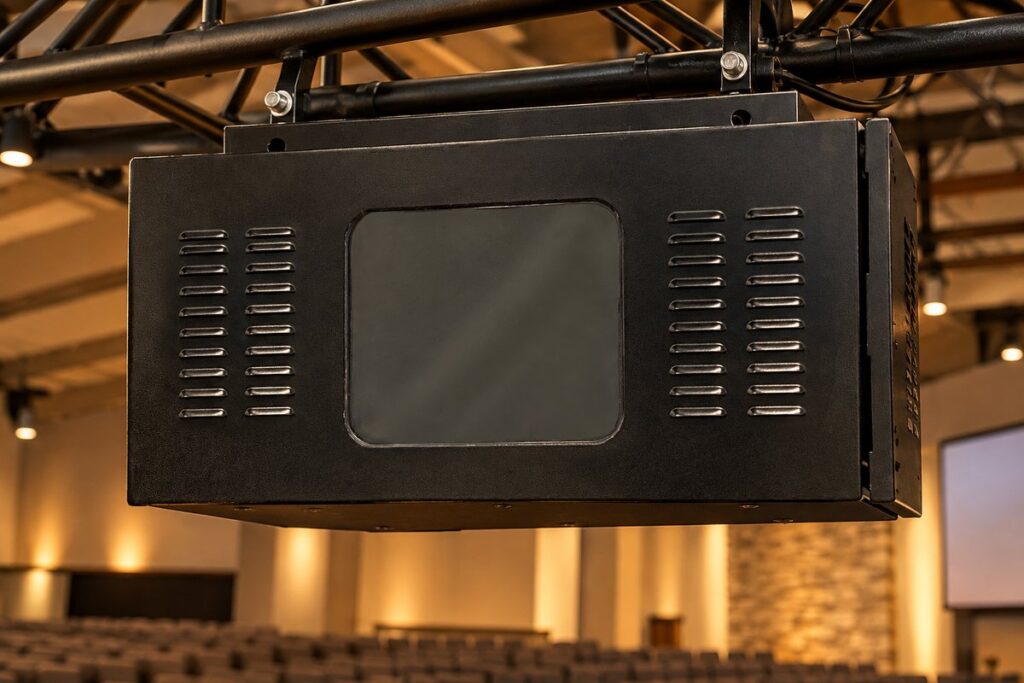
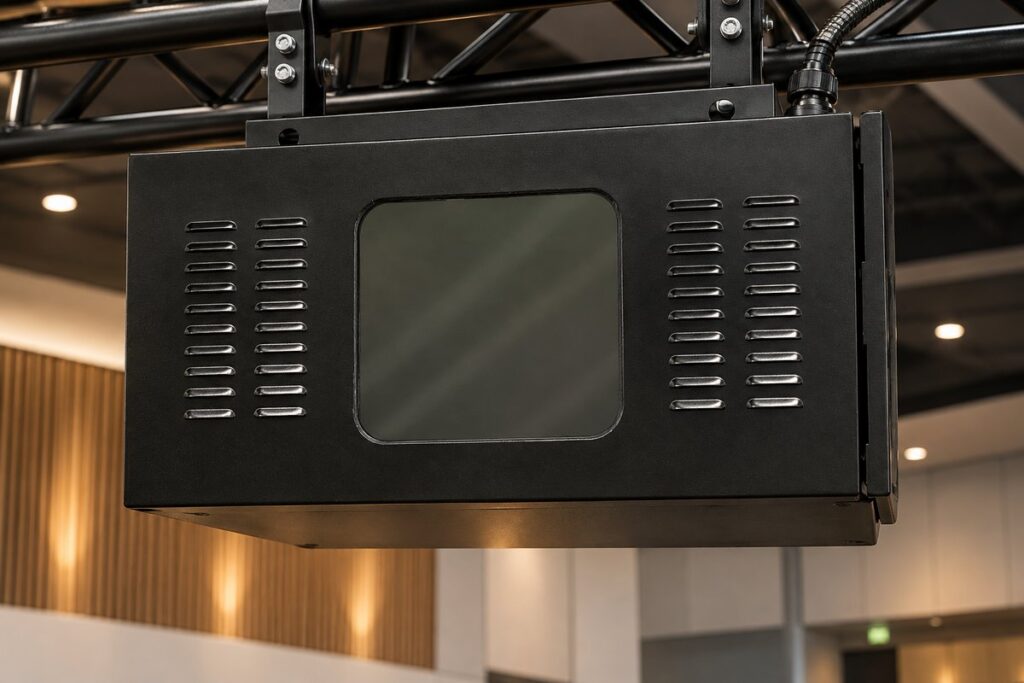
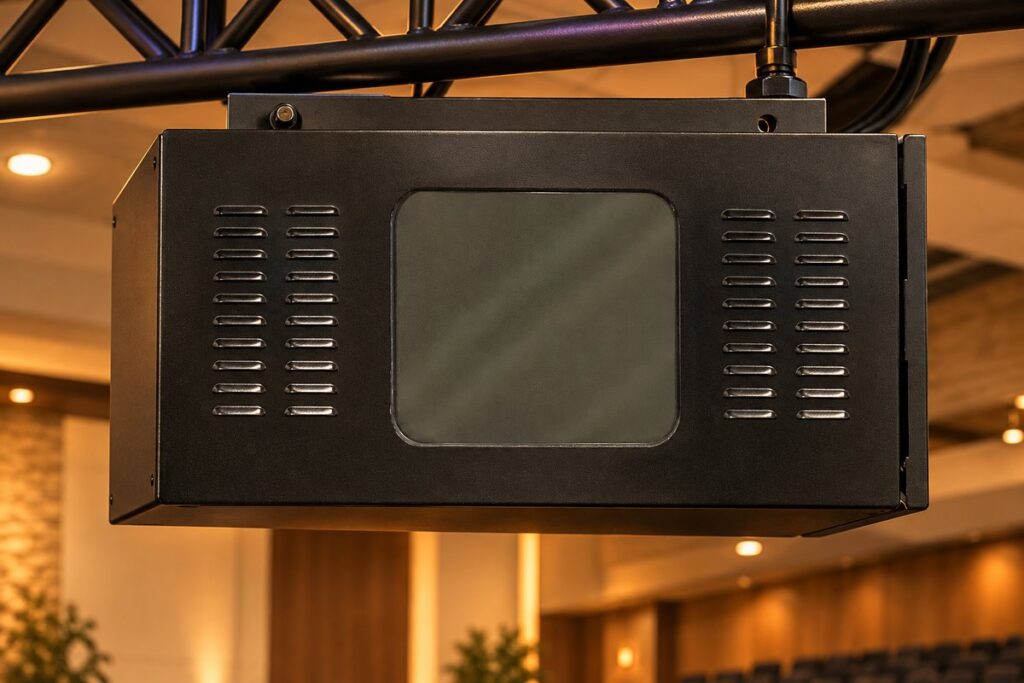
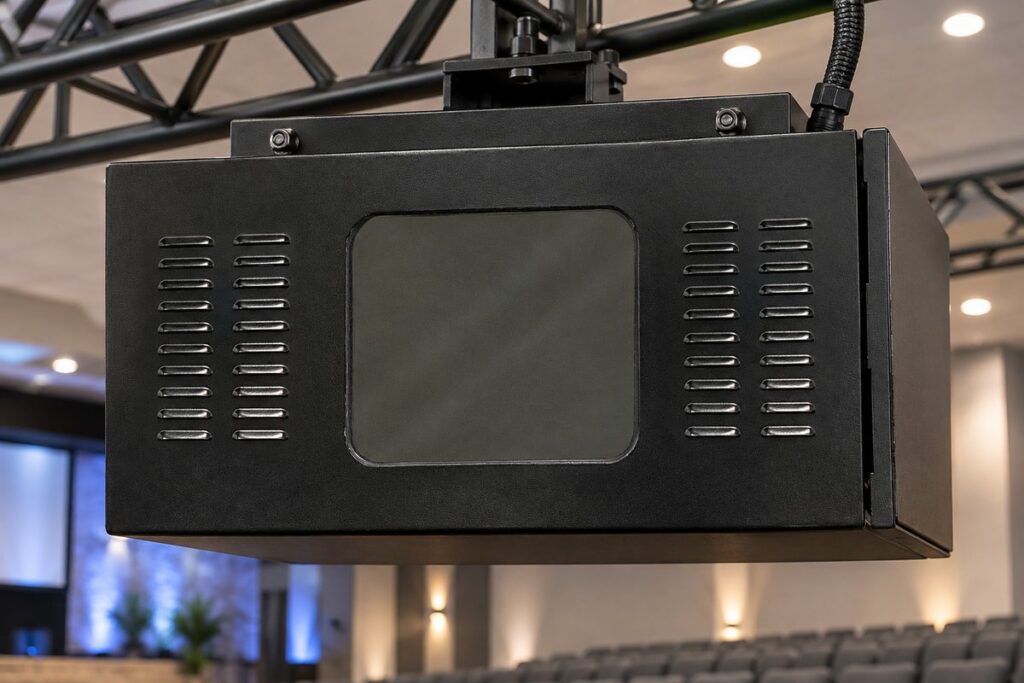
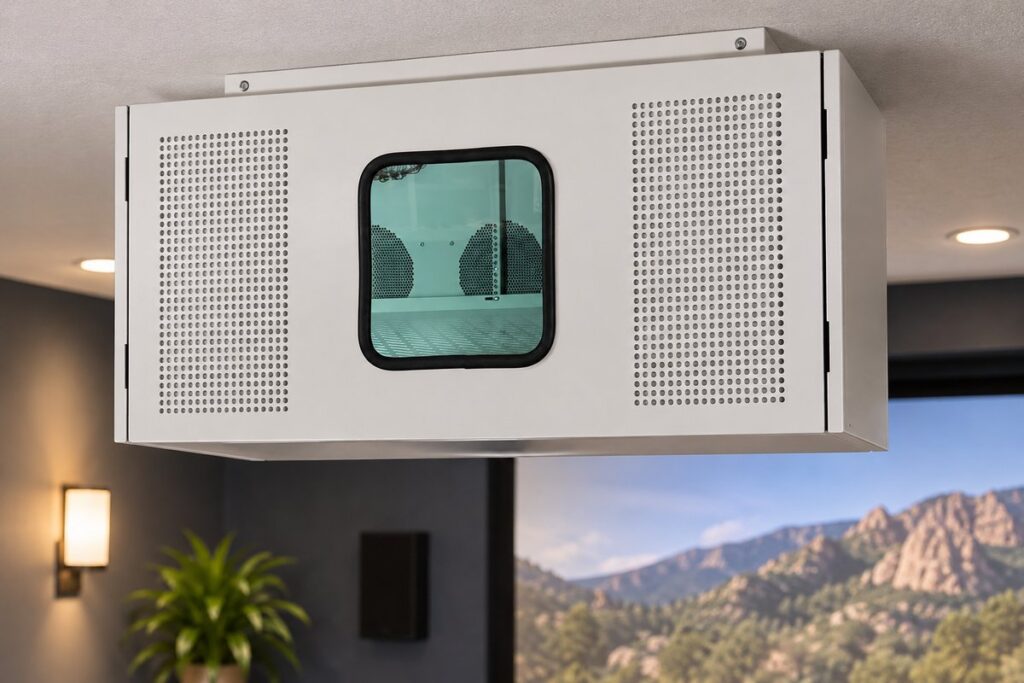
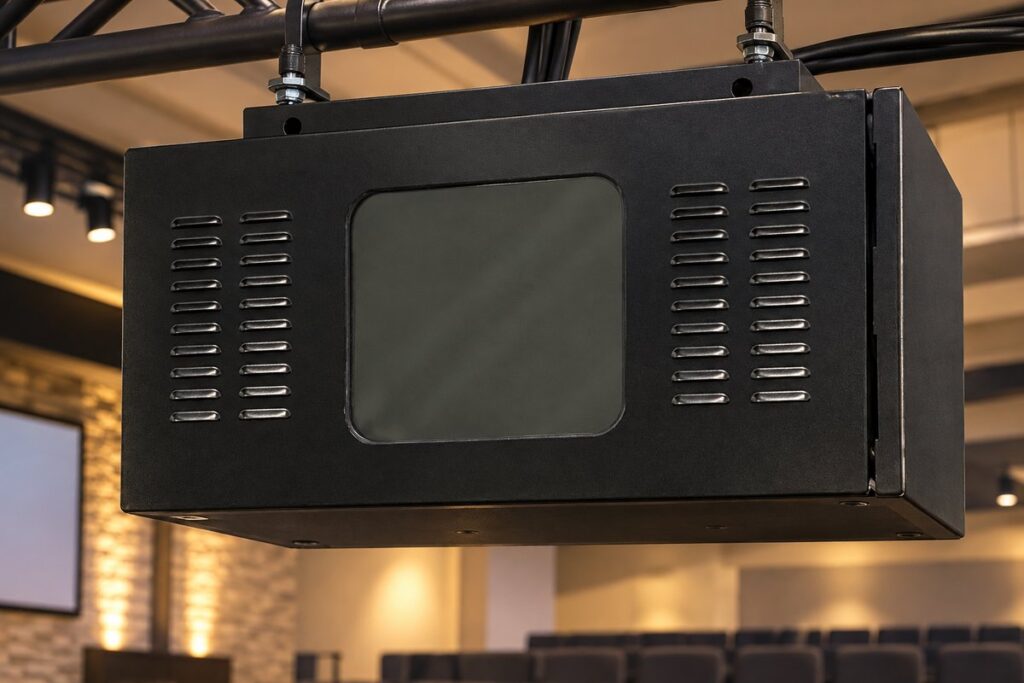
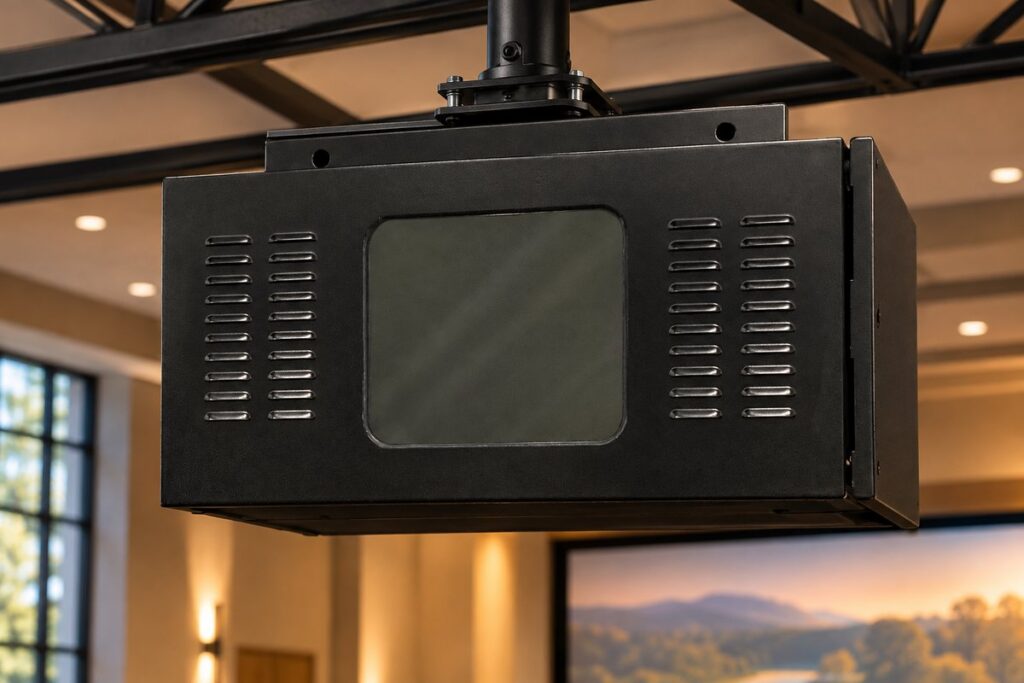
ProjectorEnclosure.com recommends the Defender Series Projector Enclosure for these tough conditions. Designed specifically for outdoor installations, it features all-weather sealing and fan-cooled airflow paths that can be further customized to fit the cooling requirements of your projector model. For ultimate control, pair the enclosure configuration with comprehensive site planning—consider the path of the sun, landscaping for shade, and avoiding direct heat reflection from pavement or nearby surfaces.

While choosing a weatherproof projector housing, it’s also wise to check the ongoing and forecasted high temperatures using the weather forecast, and to plan installations or maintenance during cooler morning hours. Local environmental awareness prevents costly downtime and helps ensure that every event or display runs seamlessly, no matter the season.

Managing Rain, Humidity, Storms, and Salt Air Alongside Dust

Although much of Ontario, CA sees limited annual rainfall, summer thunderstorms and storm season events can deliver short but intense bursts of rain, wind, and airborne debris. For venues near the I-10 corridor and further south, atmospheric salt and a layer of fine dust from the Inland Empire’s wind patterns are persistent risks. An effective outdoor projector enclosure must fully shield the projector and accessories from infiltration via door seams, cable glands, and venting points.

The Defender Series again stands out, with engineered weatherproofing and filtered, fan-driven intake/exhaust paths that block external water, dust, and salt air from entering. Regular preventive maintenance on these enclosures—such as cleaning intake filters and inspecting seals—greatly extends projector lifespan and image quality. Avoid using any enclosure not specifically designed for outdoor, all-weather protection; interior room models like the Hush Series or Integrator Series are reserved for indoor or strictly climate-controlled environments.

When planning, factor in upcoming season transitions and monitor local air quality reports to time installations between storm systems and dust events. Venues near construction or heightened dust activity benefit greatly from housing projector equipment in an enclosure tested for dust ingress and salt resistance, to prevent corrosion or optics issues over time.

Planning Power Supply and Electrical Safety for Outdoor AV Installations

Stable, protected power is as essential to outdoor projector operation as environmental defense. Ontario’s electrical grid, managed by Southern California Edison, is reliable but subject to loads influenced by summer peak demand and occasional maintenance outages. When planning a new projector location, confirm capacity and, if needed, request a site assessment from the utility’s local contacts linked above to determine the best approach for a dedicated AV circuit or additional panel capacity.

Run power circuits in conduit rated for outdoor and wet conditions, with all receptacles and junction boxes rated for outdoor use and equipped with weatherproof covers. Install ground fault circuit interrupters (GFCI) and surge protection on projector circuits to guard against the area’s thunderstorm surges and possible stray voltages during heavy rains or equipment cleaning. Coordinate both the power plan and any secondary AV/data cable runs to avoid overlapping high-heat scenarios or locations prone to standing water.

Never overlook the need for future access—both for service and for scaling AV capability. A well-planned power infrastructure paves the way for reliable projection through Ontario’s summer heat, winter rain, and every outdoor event in between.

Mounting, Ventilation, and Physical Security: Getting the Details Right

Outdoor mounting demands more than just bolting an enclosure to a wall or truss. Considerations relevant to Ontario, CA include resistance to thermal expansion, protection from wind-driven debris, and securing against opportunistic theft or vandalism. Ensure mounting brackets, anchors, and hardware are rated for exterior use and matched to regional seismic and wind load practices. Elevated installations protect against flood and splashing, while integrated cable management keeps power and signal lines shielded from rain and sun.

Ventilation is non-negotiable for outdoor use. Climate-controlled projector enclosures with actively managed airflow, such as the Defender Series, defend against heat buildup, condensation, and humidity. Each enclosure’s intake and exhaust ports should not only allow for natural movement of air but also block intrusion from water and particulates, especially when Ontario’s signature gusty winds kick up dust or rain.

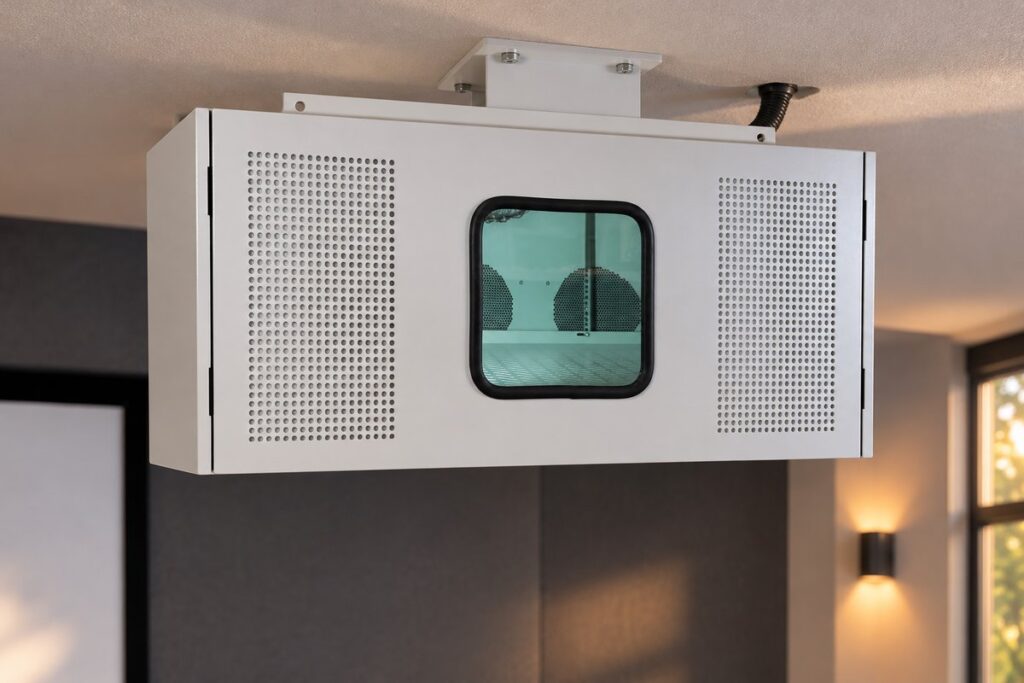
If you are planning to install a projector outdoors but under a covered patio or in a semi-enclosed space, the Integrator Series Projector Enclosure can be an effective option—provided the location remains protected from direct weather exposure. For events requiring ultra-short throw setups, consider the UST Defender Series Enclosure for similar all-weather resilience.

Navigating Permits and Local Regulations for Outdoor Installs

Outdoor projector enclosure installations in Ontario, CA are subject to local building codes and permitting requirements. Projects involving new electrical work, mounting to public buildings, or altering structures should always begin with a call or visit to the City of Ontario Building Department. While specific permit needs depend on the project scope, consulting this office ensures compliance with safety, electrical, and zoning standards. Failure to observe permitting can result in delays, fines, or future liabilities for venues and AV integrators alike.

Requirements for structural engineering sign-off, electrical compliance, and even enclosure placement often hinge on property or project type (municipal, school, resort, or residential), as well as total planned power draw. Documentation prepared for permit applications typically includes site diagrams, electrical load specs, and the manufacturer’s enclosure data sheet—ProjectorEnclosure.com provides these technical details upon request to help streamline the process.

Careful planning from the outset, involving both technical and regulatory experts, allows project timelines to stay on track and ensures that installations deliver a professional and safe AV experience regardless of Ontario’s changing weather.

Sizing the Right Weatherproof Projector Housing for Your Model

Not all enclosures fit every projector, and incorrect sizing can compromise cooling efficiency, access for maintenance, or even block proper lens alignment. Always select a climate controlled projector enclosure designed to the make and model of your projector, with additional allowances for cables and accessories. ProjectorEnclosure.com specializes in customized, fan-cooled outdoor enclosures—including options for consumer projection mapping with the HomeLine Projector Enclosure. This ensures optimal performance whether you are protecting a school auditorium projector, a theme park visual centerpiece, or a poolside home display.

To help ensure perfect fit, ProjectorEnclosure.com encourages all AV professionals, venue owners, and homeowners to send their projector model or use the Projector Enclosure Fit Guide prior to ordering. This helps match enclosure size, ventilation needs, and cable routing to your exact installation, avoiding costly missteps and downtime.

Enlist help from enclosure experts with more than 20 years of experience—the team at ProjectorEnclosure.com can provide technical recommendations for unique projector makes and challenging site layouts. Start this step early in the planning process to keep your schedule moving and installations simple.

Checklist: Outdoor Projector Enclosure Planning for Ontario, CA

  • Assess the installation site’s sun, rain, salt air, dust, and wind risks—consult local weather resources before install
  • Choose only an all-weather enclosure like the Defender Series or UST Defender Series Enclosure for outdoor use
  • Coordinate safe, reliable power with Southern California Edison; ensure GFCI and surge protection are used
  • Design mounting for wind, heat, and security—never install indoors-only models outdoors
  • Confirm enclosure cooling capacity matches projector BTU output and enclosure placement
  • Start the permitting process early via the Building Department
  • Submit your projector model or use the Fit Guide to ensure correct enclosure size
  • Schedule regular filter cleaning and enclosure checks, especially after storms or dust events

FAQ: Outdoor Projector Enclosure Concerns in Ontario, CA

Which projector enclosure model is best for Ontario’s outdoor climate?

The Defender Series Projector Enclosure is purpose-built for all-weather outdoor installations, suitable for Ontario’s heat, humidity, salt air, rain, and dust. For open-weather applications, avoid models intended solely for interior use.

How do I ensure my enclosed projector stays cool during extreme heat?

Choose a climate controlled projector enclosure with active ventilation, like the Defender Series or UST Defender Series. Proper sizing and fan configuration, based on your projector’s heat output, will help maintain safe internal temperatures even during peak summer conditions.

Do I need a permit to install an outdoor projector enclosure?

Many outdoor installations in Ontario, CA require a building permit, especially if structural mounting or new electrical is involved. Always check with the City of Ontario Building Department before starting your project.

Every climate, venue, and projector is unique—get tailored outdoor projection protection for your Ontario, CA project. Request an enclosure quote from the experts at ProjectorEnclosure.com, or call 888-631-5880 or email ssisales@ssidisplays.com to discuss your needs.
Featured supplies

Supplies mentioned in this guide

PROJECTORENCLOSURE.COM · Ontario, CA guide
Read more

Outdoor Projector Enclosure Planning for Pasadena, CA: Local Weather Challenges & Practical Solutions

PROJECTORENCLOSURE.COM
Pasadena, CA · Planning guide

Outdoor Projector Enclosure Planning for Pasadena, CA: Local Weather Challenges & Practical Solutions

Discover how Pasadena’s summer heat, humidity, dust, rain, and salt air affect outdoor projectors—and learn to plan power, permits, and mounting for reliable performance.

Understanding Pasadena’s Outdoor Climate for Projector Protection

Installing an outdoor projector enclosure in Pasadena, CA, is a complete environmental challenge. The region’s unique blend of summer heat, sporadic rainstorms, persistent dust, and (in certain neighborhoods) salt-laden air requires robust projectors and, critically, housings designed to handle it all. For anyone planning a projector installation—be it school campuses, hotels, resorts, AV integrators, theme parks, churches, or homeowners—the local climate must be accounted for from the very start.

A single summer afternoon can see a projector enclosure battered by 100-degree direct sun, followed by sudden monsoonal rain or strong Santa Ana winds. Even if your site isn’t directly on the coast, Pasadena’s air often carries particulates, fine dust, and trace salt that accelerate corrosion. Before planning your projector display, review the official Pasadena weather forecast and consider the year-round demands placed on outdoor AV equipment.

The right weatherproof projector housing doesn’t just keep the projector dry. It must actively control temperature and humidity, block fine dust, and stand up to the full spectrum of Pasadena’s weather events. Strategic planning from the ground up saves equipment, time, and costly in-season repairs later.

How Heat, Humidity, and Sun Exposure Affect Outdoor Projectors

Pasadena is famous for its hot, often dry summers, with frequent spikes above 90°F and plenty of sunshine. Outdoor projector housings facing direct sun will absorb additional radiant heat, which can push internal temperatures well above safe limits—potentially leading to projector failures, color shifts, lamp life reduction, and even permanent damage. Plus, common humidity surges from summer thunderstorms can cause condensation risk, particularly at dusk and overnight.

A climate controlled projector enclosure—not just a basic box—ensures your hardware remains within optimal operating conditions throughout the season. ProjectorEnclosure.com’s Defender Series is engineered specifically for such outdoor environments, combining active fan cooling with sealed, filtered airflow to control both heat and humidity. This approach is essential for mitigating thermal spikes and keeping electronics moisture-free after storms or humid spells.

Because Pasadena installations can face huge sun exposure, mount your enclosure beneath partial shade, or with a light-colored finish to minimize solar gain. Always allow airflow around the housing, and avoid tucking it tightly under roofs or close to heat-retaining walls. Custom enclosure sizing, matched to your specific projector model, is the key to reliable cooling performance; send your projector details to ProjectorEnclosure.com for help selecting the right fit.

Addressing Pasadena’s Dust, Rain, and Salt Air Environments

While rain isn’t a daily threat in Pasadena, sudden storms do strike—particularly during monsoon season or when hurricanes off the Pacific send moisture inland. Wind-driven rain can penetrate standard housings, and high winds kick up fine dust particles that clog projectors and electronics over time. Periods of drought intensify dust risks, while sites closer to the Arroyo Seco or the foothills are exposed to even more grit and particulate debris.

For outdoor installations, the Defender Series Projector Enclosure from ProjectorEnclosure.com is designed for full weather and environmental exposure. Its weatherproof seals, high-performance air filters, and engineered drainage keep rain and airborne dust from entering the housing and damaging sensitive hardware. Units in residential or commercial neighborhoods that experience salt air—whether from frequent breezes or occasional marine layer events—benefit from corrosion-resistant materials and gasketed design.

If your Pasadena location is subject to especially high dust or salt air (for example, atop a parking structure or near heavy traffic routes), regular inspection and filter replacement will help maximize longevity. Check your local weather conditions during the critical summer and fall months, and work with your enclosure supplier for maintenance tips tailored to your environment.

Planning Power and Ventilation for Outdoor Projector Installations

Proper planning of power and ventilation is fundamental to a successful outdoor projector installation. In Pasadena, where installations are often retrofit into existing buildings, outdoor patios, or rooftop spaces, the available power supply can vary widely. Be sure to verify local electrical codes and have an electrician confirm that your circuit can handle both the projector and the active cooling system of your enclosure.

ProjectorEnclosure.com’s Defender Series incorporates smart fan cooling and air filtration, which means continuous airflow must be maintained whenever the projector is operating. Position the enclosure for unobstructed intake and exhaust, away from direct sources of dust or heated air. Avoid using extension cords outdoors, and never obstruct the enclosure’s vents or filters with landscaping or furniture.

If mounting your enclosure in a partially sheltered area (such as a covered patio or amphitheater), you may have the option to use a Integrator Series Projector Enclosure. However, this is only appropriate where the space provides reliable temperature and weather control—it is not sufficient for open-air exposure.

Mounting and Structural Considerations in Pasadena’s Varied Spaces

Pasadena offers a wide range of installation locations, from hillside homes and school courtyards to hotel pool decks and public parks. Each site brings unique mounting requirements. Enclosure weight, projector size, and clearance must all be calculated. In most cases, working with a structural engineer or experienced AV integrator is recommended to assess loads and anchoring for the chosen location.

Outdoor enclosures should always be securely mounted to withstand winds and rare seismic events. Use anti-corrosion fasteners and outdoor-rated hardware. Check clearance for full range of projector lens motion and access for cooling airflow. For projection mapping on historic buildings or sensitive venues, ProjectorEnclosure.com offers the HomeLine Projector Enclosure, which combines impact-resistant design with a discreet form factor—suitable for homeowner installations and special events.

Before installation, measure your projector’s exact dimensions and send them to ProjectorEnclosure.com or use the Projector Enclosure Fit Guide for expert sizing recommendations. Custom-matched enclosures reduce risk of overheating and fit issues, and assure you get the protection—and performance—your setup requires.

Permits, Code, and Local Regulations for Outdoor AV in Pasadena

Depending on installation site and building type, you may need to engage with city permitting and local code requirements. Especially for commercial venues, schools, and larger churches, Pasadena often requires electrical permits, and sometimes planning review for permanent structures. For temporary or mobile projection displays, requirements may be less stringent but always verify in advance.

The city’s planning department will consider factors such as visual impact, accessibility, and safety. Electrical permits may require certification that all outdoor installations use rated components and follow local electrical code. To ensure you have the most up-to-date guidance, check with the office linked in the official weather resource or consult with your licensed electrician or contractor for Pasadena-specific requirements.

Remember: the Defender Series is purpose-built for permanent outdoor environments and helps meet demanding site requirements. For all code-compliant projects, detailed drawings, mounting hardware specs, and accurate power requirements from your enclosure manufacturer will streamline permitting and inspection processes.

Special Considerations: UST and Projection Mapping Installations

Short-throw and ultra-short-throw (UST) projectors are increasingly popular for creative outdoor mapping and immersive displays. However, these units are often more sensitive to dust, direct sun, and even minor humidity fluctuations due to their compact optics and electronics. ProjectorEnclosure.com’s UST Defender Series Enclosure is engineered specifically for these unique requirements—combining robust weather protection with airflow strategies that keep optics crystal clear and free from condensation.

For home displays, outdoor movies, or holiday projection mapping, the HomeLine Projector Enclosure blends weather-resistant materials with home-friendly design. Always match enclosures precisely to projector dimensions—use the Projector Enclosure Fit Guide to start your design and consult ProjectorEnclosure.com specialists for technical guidance.

Consider local conditions such as garden sprinkler overspray, holiday lighting, or neighborhood animals when planning home or event installs. Proactive enclosure planning reduces troubleshooting during Pasadena’s busiest outdoor seasons.

FAQ: Outdoor Projector Enclosures in Pasadena, CA

What features should I look for in an outdoor projector enclosure?

Look for climate-controlled, fan-cooled enclosures with sealed designs, rated for dust and water ingress. Properly matched sizing, filtered ventilation, and robust mounting hardware are essential for Pasadena’s demanding outdoor climate.

Do I need permits to install a projector enclosure outdoors?

Permits may be required for permanent or commercial installations, especially for electrical work. Check with local offices or consult a licensed electrician for Pasadena-specific requirements before proceeding.

How do I choose the right enclosure size for my projector?

ProjectorEnclosure.com recommends sending your projector make and model for expert sizing or using their Projector Enclosure Fit Guide. Proper fit is vital for effective cooling and reliable operation.

Ready to protect your outdoor projector from Pasadena’s toughest weather? Request an enclosure quote from ProjectorEnclosure.com today—call 888-631-5880 or email ssisales@ssidisplays.com for expert consultation.

Featured supplies

Supplies mentioned in this guide

PROJECTORENCLOSURE.COM · Pasadena, CA guide
Read more

Practical Guide: Weatherproof Projector Enclosures for San Marcos, CA

PROJECTORENCLOSURE.COM
San Marcos, CA · Planning guide

Practical Guide: Weatherproof Projector Enclosures for San Marcos, CA

A step-by-step guide to installing climate controlled and weatherproof projector housings in San Marcos, CA’s unique climate conditions—power, mounting, ventilation, and permit tips for AV experts.

Understanding San Marcos, CA Outdoor Projection Challenges

Setting up projection equipment outdoors in San Marcos, CA is a rewarding way to elevate events, campuses, resort amenities, and backyard entertainment spaces. However, local weather conditions pose unique challenges for reliable outdoor projector installations. San Marcos experiences long, hot summers with extended periods of direct sunlight and occasional heat waves, especially from June through October. Humidity spikes during late summer, and in years of heightened hurricane activity, the region receives heavy rain and gusty winds. Coastal influences bring salt air and fog, especially in west San Marcos, while dry Santa Ana conditions occasionally carry dust from inland. Every one of these weather elements can challenge the performance and longevity of AV gear.

To safeguard your investment, the right outdoor projector enclosure is crucial. A standard projector is not designed for direct exposure to this demanding mix of heat, moisture, salt, and particulates. Properly fitted weatherproof projector housings from ProjectorEnclosure.com meet these needs by actively protecting technology from the harshest local elements.

This practical guide explains how climate, site power, mounting, ventilation, and permitting decisions affect your outdoor AV success in San Marcos, with tips on selecting and sizing enclosures for your projector model and installation goals.

How Local Weather Impacts Projector Installations

San Marcos’ Mediterranean climate brings high temperatures and intense sunlight for much of the year. Direct sun exposure can dramatically increase the internal temperature of a projector, potentially leading to overheating and color degradation. Climate controlled projector enclosures with advanced fan cooling technology, such as the Defender Series Projector Enclosure, are specifically designed to mitigate this, especially for units positioned in open, unshaded locations.

Humidity peaks during late summer, with occasional days above 80% relative humidity. This moisture, if able to condense inside an enclosure, can lead to corrosion and electrical issues. A weatherproof projector housing that incorporates moisture management components becomes vital in these conditions. Salt air, common in western San Marcos or elevated sites with breezy coastal views, can accelerate rust and electronic failure if protective measures are not taken.

Additionally, dust and fine debris associated with periodic Santa Ana winds can clog filters and optics, while seasonal storms bring the risk of sudden rain and windblown debris. Always check the National Weather Service extended forecast during installation planning and before outdoor events to anticipate and mitigate these risks.

Selecting the Correct Outdoor Projector Enclosure

Choosing the correct housing is essential for reliable performance in San Marcos’s dynamic environment. A residential backyard installation may face different risks than a public venue or resort—projector location, exposure, and audience size matter. For enclosures located entirely outdoors—on rooftops, pool decks, event lawns, or the sides of buildings—the recommended solution is the Defender Series Projector Enclosure. Engineered for direct exposure to sun, rain, humidity, salt, and dust, this is the choice for true all-weather protection.

Integrator Series Projector Enclosure models are intended for uses indoors or in covered, climate-controlled settings such as performance pavilions or open atriums—environments sheltered from rain and direct weather. The UST Defender Series Enclosure provides robust outdoor protection for ultra-short throw projectors and specialized mapping applications, which are becoming more popular in themed environments and interactive displays.

For home projection mapping, architectural lighting, and decoration, HomeLine Projector Enclosure units offer options sized for consumer projectors, but always double-check if your site is weather-exposed. To ensure perfect fit and safety, use the Projector Enclosure Fit Guide or send your projector model details to ProjectorEnclosure.com for custom advice.

Planning Power and Reliable Electrical Setup

Dependable power is fundamental to outdoor projector operation. San Marcos is served by the Clean Energy Alliance, which provides renewable energy to the community. Before beginning your AV project, verify that dedicated, outdoor-rated circuits are available at the mounting location. Surge protection is highly recommended—projectors and their fans are sensitive to voltage fluctuations and lightning events that can occur during storms or Santa Ana conditions.

If you’re running new electrical lines to the site, coordinate with a licensed electrician familiar with California and local codes. Ensure all wiring, outlet boxes, and conduit are rated for outdoor use and GFCI-protected for safety. ProjectorEnclosure.com recommends allowing sufficient current not only for the projector but also for internal fans and any network or control devices that will be housed in the enclosure.

Backup power is a consideration for larger venues, schools, or areas with frequent outages. For advanced planning, consult both your local electrical provider and AV integrator to assure uninterrupted performance for critical events and programming.

Mounting and Site Selection for Enclosure Longevity

Proper mounting is a critical consideration for both image quality and equipment lifespan. In San Marcos, select installation locations with an eye toward sun angle—excessive direct sun can raise internal enclosure temperatures. Where possible, locate your enclosure under an eave, awning, or shading element to reduce thermal load and extend service intervals for fans and filters.

Outdoor enclosures, such as the Defender Series, are designed to mount to trusses, walls, poles, or custom architectural features. Ensure structures are robust enough to handle both the enclosure’s weight and forces from wind or incidental bumps. Secure hardware and anti-vibration mounting kits can help protect alignment and stability during stormy periods.

For permanent outdoor displays, position the enclosure to avoid excessive dust exposure and prevailing winds, and allow room for service access to filters, lamps, and maintenance doors. Always follow installation recommendations provided by the enclosure manufacturer and your mounting specialist.

Ensuring Good Ventilation and Climate Control

Climate controlled projector enclosures protect your projector not just from weather, but from the damaging effects of trapped heat and moisture. In San Marcos, high outdoor temperatures mean that ventilation and cooling strategies become critically important, especially in months when outdoor readings can exceed 90°F for extended periods.

All-weather enclosures like the Defender Series include active fan cooling, airflow routing, and air filtration to keep the internal environment safe for sensitive electronics. In addition to cooling, filtered air intake helps block fine dust and salt particles that can accumulate on optics or electronics over time.

When planning your outdoor projector installation, consider the orientation of the enclosure’s vents relative to the prevailing winds, and avoid obstructing exhaust or intake paths. Schedule seasonal filter checks, especially after major wind events or pollen surges, to maintain peak performance and prevent overheating or contamination.

Permitting: Navigating Local Requirements

Even temporary outdoor projector setups may require consent from city officials, HOAs, or building management. For guidance on permitting and special event requirements, always start at the official San Marcos permit portal. Larger permanent installations—such as permanent event lawns, rooftop displays or public art—may require detailed site plans and electrical load calculations.

The permitting office can advise if your project’s scope involves factors such as new power drops, penetrating walls or roofs, or work near public pathways. For schools, churches, and institutional facilities, check with both city officials and your organization’s facilities department before work begins to ensure compliance and avoid later extra steps.

Many project approvals depend on specifics like mounting height, line-of-sight, ADA accessibility, and audible fan placement. For the most current city regulations, visit the permits resource above and consult with your AV integrator early in the project timeline.

Maintaining Your Outdoor Projector Enclosure

A climate controlled projector enclosure dramatically extends the usable life and reliability of your projector in harsh weather zones like San Marcos. However, routine maintenance still matters: plan to inspect filters, fans, and seals on a schedule based on how exposed your enclosure is, and how often it’s used. Following seasonal changes—such as after the Santa Anas or during heat waves—a quick check can prevent long-term issues.

ProjectorEnclosure.com units are engineered for straightforward access to all serviceable parts. Always disconnect the power before opening the enclosure and follow any maintenance steps provided in the product manual for your specific model. For heavily used public or commercial locations, consider a quarterly maintenance plan coordinated with your AV team.

Enclosures that experience heavy salt air exposure should be wiped down and checked for accelerated corrosion. Fine dust and pollen may require more frequent filter replacement. Reporting your projector model and details to ProjectorEnclosure.com ensures you receive ongoing guidance and the best maintenance schedule for your use case.

FAQ: Outdoor Projector Enclosure Planning

What climate threats affect outdoor projectors most in San Marcos?

Primary risks include prolonged direct sun and heat, seasonal humidity spikes, dusty Santa Ana winds, salt air from the coast, and fast-changing weather during storm season. Using a weatherproof projector housing sized for your projector and site is essential for long-term performance.

Do I need a permit to install an outdoor projector enclosure?

Permit requirements vary by project size and location. Always check with the San Marcos city permit portal for up-to-date rules on outdoor AV, electrical, and mounting work.

How do I ensure enough power for my outdoor projector?

Coordinate with an electrician to deliver a dedicated, outdoor-rated circuit. Consult the Clean Energy Alliance for local electrical service guidance, and consider surge protection and backups for mission-critical events.

Ready to protect your projector investment against San Marcos’s sun, storms, salt air, and dust? Request an enclosure quote today from ProjectorEnclosure.com—just send us your projector model for expert sizing and recommendations for your site conditions. For questions, call 888-631-5880 or email ssisales@ssidisplays.com.

Featured supplies

Supplies mentioned in this guide

PROJECTORENCLOSURE.COM · San Marcos, CA guide
Read more

How to Protect Outdoor Projectors in Stockton’s Unique Climate

PROJECTORENCLOSURE.COM
Stockton, CA · Planning guide

How to Protect Outdoor Projectors in Stockton’s Unique Climate

Stockton’s weather can be tough on outdoor projectors. This guide covers local climate risks, enclosure selection, installation, and power planning for AV professionals and property owners.

The Stockton Climate Challenge: Heat, Humidity, Salt Air and Dust

Stockton, California, presents a set of environmental factors that can put outdoor projectors at risk. Long, hot summers mean direct sun and daytime temperatures often well above 90°F. Humidity levels can swing from dry to muggy, especially during late summer monsoon surges or after rains. For waterfront sites or properties closer to the coast, airborne salt can corrode electronics and optics. And, like much of the Central Valley, Stockton contends with significant dust levels—especially in late summer or during windy delta outflows.

Any outdoor projector enclosure for Stockton needs to block heat and UV, manage internal temperature swings, exclude dust, and slow salt intrusion. This requires more than a standard weatherproof box — it takes a climate controlled projector enclosure that can respond to daily and seasonal extremes. Be sure to review the current forecast for Stockton to time installations and select features like sun shields, thermostatic fans, or dehumidifying options.

With more than 20 years in business, ProjectorEnclosure.com understands the way local climate can shorten projector lifespan and degrade picture quality. Planning starts with honestly assessing your climate exposure—direct sun, day-to-night temperature swings, salt and wind—so the right enclosure can do its job.

Projector Enclosure Selection: Which Series Fits Outdoor Use?

Enclosure selection starts with deciding on exposure and application. For fully outdoor sites in Stockton, the Defender Series Projector Enclosure is recommended. This all-weather unit is designed to cool projectors during extreme heat, shield from dust and storms, and resist salt air. It actively manages temperature fluctuations and has the ventilation capacity needed for summer peaks in the Central Valley.

Homes or businesses doing projection mapping or decorative outdoor displays may also want to look at the HomeLine Projector Enclosure, engineered for residential-scale protection. Ultra-short-throw installs have unique airflow and mounting needs, served by the UST Defender Series Enclosure. Indoors, or in climate-controlled or fully covered public spaces (like breezeways or cooled stadium pavilions), the Integrator Series Projector Enclosure can provide quiet, filtered protection. The Hush Series Projector Enclosure is for indoor quiet spaces only—never standard outdoor use in Stockton’s environment.

Proper fit is critical. Because enclosures are tailored for specific projector models, send your projector specs via the Projector Enclosure Fit Guide to determine the right solution for your climate, airflow and mounting needs.

Ventilation and Heat Management: Stockton’s Summer Necessity

The most frequent and damaging risk in Stockton is unmanaged projector heat under full sun. Inside an enclosure, heat can multiply quickly, so ventilation is essential. Climate controlled projector enclosures like the Defender Series use thermostatically controlled fans to exhaust hot air and keep components safe. Humidity is also managed to prevent internal condensation during Stockton’s occasional muggy spells.

Always position the enclosure away from direct sunlight whenever possible. If unavoidable, consider adding simple sun shields or shade structures to prevent solar load. For waterfront or parkside venues subject to both heat and salt moisture, the Defender Series’ corrosion-resistant design provides long-term performance. Review the local weather forecast regularly (link above) to anticipate upcoming heatwaves or high humidity that might require extra ventilation settings.

For advanced or critical applications, discuss custom airflow or dehumidification solutions with ProjectorEnclosure.com. Professional AV integrators and maintenance staff can consult with the team to address local Stockton concerns that basic weatherproof projector housing may not solve.

Dealing with Dust, Storms and Salt Air

From spring through fall, Stockton often deals with elevated dust—both valley agricultural dust and urban particulate. This is especially true around construction sites, parks, and unpaved lots. Quality outdoor projector enclosure models integrate dust filtration to keep fine particles away from optics and fans. Check and replace filters regularly, especially after dust storms or wildfire events.

Occasional rain, sudden wind gusts from Pacific systems or even hurricane remnants can threaten outdoor installs. All-weather enclosures like the Defender Series have sealing and drainage features needed for Stockton’s summer storms and rare heavy downpours. Waterfront or marina locations must also consider salt-laden air, which can cause corrosion over time. The Defender Series is engineered with materials and finishes suitable for these conditions.

Routine inspections after major weather events, and timely maintenance of seals and filters, are vital for projector longevity. Integrators and venue managers should keep a maintenance log and inspect both the enclosure and the projector after especially dusty or wet periods.

Power Planning: Ensuring Reliable Outdoor Supply

Powering an outdoor projector enclosure requires careful electrical planning. Stockton’s grid is maintained by Ava Community Energy and serviced by PG&E; check with both providers for local service options and to coordinate project-specific needs. AV integrators should specify dedicated, grounded circuit(s) sized for both the projector and enclosure’s ventilation system. Consider using surge protection and outdoor-rated wiring/conduit to handle Stockton’s storm surges and dust exposure.

For reliability, always assess how frequently power outages affect your site and what backup options (such as battery backup or portable generators) may be required for critical venues or events. Stock enclosure installations should never overload local building circuits. Engage a qualified electrician early, especially if trenching, high-amperage needs, or permanent infrastructure is involved.

Before installation, confirm the power supply’s proximity and accessibility to minimize the use of extension cords or exposed runs, which can degrade in Stockton’s climate and pose safety issues.

Mounting, Placement and Security for Reliable Performance

Install location matters. Structure-mounted enclosures (on buildings or steel poles) are usually best for ventilation and have less dust exposure than ground placements. Place the enclosure where it is shielded from direct wind, out of irrigation-facing spots, and, if possible, under partial cover. Securing the unit to prevent tampering or theft is critical, especially for public or school environments.

When selecting mounting hardware, ensure compatibility with Stockton’s likely maximum wind speeds. High-quality fasteners and rated anchors are necessary. For venues near public walkways or sports fields, consider ballistic shields or vandal-resistant features as project-dependent upgrades.

If you plan to mount the projector enclosure on a new structure or historic property, consult city building offices first (see below for suggestions on permits and procedures).

Permitting, Codes and Local Authority Approvals

Before installing a weatherproof projector housing on commercial, campus, or municipal property, verify requirements with local building officials. Outdoor AV projects in Stockton will often require electrical permits and sometimes sign/structure permits, particularly for venues open to the public. Code and review requirements can vary by district and project type.

Your integrator or contractor should check with the city office as soon as site location is identified. Permit-ready documentation may require mounting diagrams, power run specs, and equipment cut sheets. ProjectorEnclosure.com does not submit local permits, but will provide enclosure specs to help your team comply. Permitting timelines depend on project complexity and must factor in event or semester deadlines for schools.

Many Stockton venues coordinate with PG&E and Ava Community Energy (both linked above) for utility clearance and to schedule safe work windows, reducing weather-related delays.

FAQ: Outdoor Projector Enclosures for Stockton, CA

How do I determine what size enclosure I need for my projector?

Accurate sizing is essential for effective protection and airflow. Use the Projector Enclosure Fit Guide linked above and send your projector make and model to ProjectorEnclosure.com. Their team will recommend the right Defender, UST Defender or HomeLine enclosure configuration for your needs.

How does the enclosure keep my projector safe during Stockton’s hot summers?

The recommended Defender Series uses thermostat-controlled fans, reflective and resilient materials, and sealed access to block dust and manage both high temperatures and rapid cooling at night. Shade, regular filter checks, and a properly rated enclosure are key in Stockton’s summer heat.

Do I need a permit to install an outdoor projector enclosure?

In most cases, yes—especially for venues, schools, churches, and permanent residential installs. Check with local building departments for Stockton-specific code and submit plans before construction. Residential temporary displays may be exempt, but check before purchase to avoid delays.

Planning Your Project with Local Resources

  • Review the NWS Stockton Local Forecast for weather trends before and after installation.
  • For electricity and power reliability, consult service and outage information from PG&E and generation options from Ava Community Energy.
  • Identify local integration partners and the city permitting office before finalizing project plans.

Ready to weatherproof your outdoor projector and maximize reliability year-round? Request an enclosure quote from ProjectorEnclosure.com today, and start with a solution engineered for Stockton, CA’s challenging climate. For project sizing, email ssisales@ssidisplays.com or call 888-631-5880 with your projector model and installation details.

Featured supplies

Supplies mentioned in this guide

PROJECTORENCLOSURE.COM · Stockton, CA guide
Read more

Outdoor Projector Enclosure Planning in Rancho Cucamonga: Climate, Power, and Permits

PROJECTORENCLOSURE.COM
Rancho Cucamonga, CA · Planning guide

Outdoor Projector Enclosure Planning in Rancho Cucamonga: Climate, Power, and Permits

Learn how Rancho Cucamonga’s weather challenges—from heat to dust—affect outdoor projectors, and get practical tips for enclosures, power, installation, and local permits.

The Rancho Cucamonga Climate: Key Factors for Outdoor Projectors

Outdoor projection in Rancho Cucamonga faces a unique set of weather challenges. The city’s summers are known for intense, dry heat and direct sun exposure, often spiking above 100°F with little natural shade. Occasional bursts of humidity and infrequent rainstorms can appear, adding moisture risks to electronics. While Rancho Cucamonga is inland, salt air from the coast can still reach some areas, combining with fine dust and storm-driven debris, creating a persistent threat to exposed AV equipment. All these factors make it crucial to select an outdoor projector enclosure designed specifically for these demanding conditions.

Unprotected projectors in Rancho Cucamonga may overheat, suffer from lens fogging, or collect dust on vital components, which quickly leads to costly repairs and unreliable performance. Rushed installations sometimes ignore the microclimate created when enclosures are placed in full sun or against heat-reflective surfaces, intensifying the temperature inside. Smart planning begins by understanding local forecasts, and referencing the National Weather Service Forecast for Rancho Cucamonga to assess typical summer peaks, humidity surges, and storm patterns.

To ensure year-round reliability, it’s essential to choose a weatherproof projector housing that’s designed for both cooling and moisture control. With tailored options from ProjectorEnclosure.com, you can find a climate controlled projector enclosure that fits your exact projector needs—even in Rancho Cucamonga’s most challenging weather.

How Heat, Humidity, Dust, and Salt Air Impact Projector Performance

High ambient temperatures in Rancho Cucamonga rapidly raise enclosure temperatures, particularly during summer afternoons. Constant sun exposure can push the internal temperature of poorly vented housings far beyond the projector’s operating range, risking automatic shutdowns or permanent damage to sensitive electronics. Humidity spikes—common after a storm—can lead to condensation inside the projector, which causes electrical shorts or foggy images.

Fine dust is more than a nuisance; it can clog fans, coat optics, and degrade image clarity, especially if regular maintenance isn’t feasible. Additionally, even the remote effect of salt-laden air drifting inland from coastal regions can promote corrosion on internal components. For Rancho Cucamonga, it’s critical to select an enclosure that keeps out fine particles and has engineered airflow to protect your projector year-round.

The Defender Series Projector Enclosure is specifically designed for these outdoor hazards, offering robust protection against heat, humidity, dust, and storm-driven debris. If you operate in a microclimate with higher moisture or salt air, such as in the foothills, ProjectorEnclosure.com offers expert guidance for your unique location. Always check your weather forecast and plan accordingly before every install to keep sensitive AV gear protected.

Enclosure Sizing: Why Correct Fit Matters for Outdoor Installs

Fitting the enclosure to your projector model is a critical step that newcomers sometimes overlook. Too small and there’s inadequate airflow, which can accelerate overheating. Too large and the internal climate becomes erratic, with cold spots, dew, or unpredictable thermal cycling. When it comes to Rancho Cucamonga’s climate, precision sizing means improved reliability year-round.

ProjectorEnclosure.com provides a Projector Enclosure Fit Guide to simplify this step. Integrators, homeowners, and AV professionals are encouraged to send their projector make and model to ensure a right fit, avoiding generic boxes that may not match the projector’s specific cooling and ventilation needs. The right fit is about more than just physical space—it’s about consistent performance under local environmental stressors.

If you’re planning an installation at a school, church, resort, or event venue, always confirm that the enclosure’s internal volume matches your projector’s airflow requirements and mounting pattern. For ultra-short throw projectors, refer to the UST Defender Series Enclosure, which is sized for these specific optics and cooling needs.

Powering Outdoor Projector Enclosures: Local Guidance

Power planning is an essential element for outdoor AV projects. In Rancho Cucamonga, electric service may require coordination with the city’s provider. Before running extension cords or planning permanent wiring, check regulations and safety best practices through the Rancho Cucamonga Municipal Utility. Efficient, stable power is crucial for both the projector and any active cooling or heating features in your climate controlled projector enclosure.

Proper outdoor-rated wiring and weatherproof outlets are a must. GFCI protection helps safeguard users against electric shock, especially during rain events or high humidity days. Plan circuit loads carefully—outdoor projectors and their enclosures may draw significant current, particularly if the enclosure features active heating or fan-driven ventilation for temperature management.

Always consult with a licensed electrician familiar with local code requirements before installation, and consider future-proofing for additional AV equipment or lighting. The right electrical setup not only keeps your system safe but maximizes its functionality in demanding California conditions.

Mounting, Positioning, and Sun Protection for Your Projector Enclosure

Choosing the right mounting approach is as important as the enclosure itself. In Rancho Cucamonga’s sunny climate, avoid direct southern and western exposures wherever possible—these see the harshest afternoon sun, driving enclosure temperatures even higher. Opt for shaded locations or supplement with engineered sun shields to help keep both projector and enclosure operating within safe limits.

For permanent outdoor installations, sturdy wall or ceiling mounts rated for outdoor conditions provide stability during wind events or storms. Ground mounts may be used in designated areas but must be elevated and weatherproofed against puddling or splash-back during rain. Verify that all mounting hardware is corrosion-resistant, given occasional coastal breezes.

The Defender Series Projector Enclosure offers flexible mounting options and is engineered for outdoor reliability. For consumer-grade projection mapping or home displays on patios and facades, the HomeLine Projector Enclosure provides specific solutions for homeowner needs. In all applications, prioritize secure installation to prevent shifting or water ingress during inclement weather.

Ventilation and Climate Control: Keeping Cool in the Heat

Reliable ventilation is non-negotiable in Rancho Cucamonga, where interior enclosure temperatures can spike even on mild days. A passive enclosure isn’t enough for most professional installations—fan-cooled and climate controlled projector enclosures actively move air to remove heat, prevent condensation, and ensure electronic stability. This is essential whether you’re installing at a venue, school, or home.

All-weather models like the Defender Series Projector Enclosure use forced-air cooling and carefully engineered airflow paths to handle local heat loads and rapidly changing conditions. For spaces with partial outdoor exposure, such as covered pavilions or conditioned patios, the Integrator Series Projector Enclosure can be used, so long as the environment is protected from open weather.

Check your venting path for obstructions and keep intake/exhaust grilles clear of landscaping, structural overhangs, or nests. Regularly clean filters and perform maintenance, especially after wind events or during peak dust season to keep your enclosure operating at peak efficiency.

Permits and Local Codes: Planning Your Outdoor AV Installation

Before your installation begins, confirm if your outdoor projector enclosure will require a permit or is covered by local electrical, building, or fire codes. Project-specific rules in Rancho Cucamonga can vary, especially for installations in public spaces, schools, or commercial venues. It is best practice to check with the local jurisdiction or building department for guidance.

The Rancho Cucamonga Municipal Utility is a vital resource, not just for power service but also for understanding city regulations around outdoor AV installations and weatherproof projector housing. Permits ensure your system meets safety and operational standards, protecting both your equipment investment and public safety.

For custom projects—especially involving trenching, new wiring, or mounting to existing structures—engage a licensed contractor early and document your equipment, enclosure model, and proposed wiring plans. This ensures approvals are timely, and your outdoor projector setup is ready for any Rancho Cucamonga weather event.

FAQ: Outdoor Projector Enclosures for Rancho Cucamonga

How do I choose the right enclosure for Rancho Cucamonga’s climate?

Start by evaluating your installation location for direct sunlight exposure, temperature swings, and possible exposure to dust or coastal air. Use a climate controlled projector enclosure, such as the Defender Series, to manage these factors, and utilize the Projector Enclosure Fit Guide to ensure your projector model is properly protected.

What steps should I take to maintain my outdoor projector enclosure?

Regularly inspect and clean filters, check ventilation paths for obstruction, and monitor for signs of dust buildup or moisture. After storms or windy days—common in the region—schedule a maintenance check to keep your system in top condition.

Are there special power requirements for outdoor projector enclosures?

Yes. Outdoor installations need GFCI-protected, weather-rated outlets, and careful circuit planning to supply both the projector and all-weather enclosure. Consult the local utility and a licensed electrician to ensure your setup meets code and is reliable year-round.

Useful Local Links:

Ready to protect your projector with the right outdoor projector enclosure? Request an enclosure quote from ProjectorEnclosure.com today, or contact 888-631-5880 or email ssisales@ssidisplays.com for expert sizing and advice.

Featured supplies

Supplies mentioned in this guide

PROJECTORENCLOSURE.COM · Rancho Cucamonga, CA guide
Read more

A Practical Guide to Outdoor Projector Enclosures in Visalia, CA

PROJECTORENCLOSURE.COM
Visalia, CA · Planning guide

A Practical Guide to Outdoor Projector Enclosures in Visalia, CA

Visalia’s unique climate shapes how to protect your outdoor projector investment. Explore practical tips for choosing enclosures, planning power, and installing AV gear that stands up to sun, humidity, dust, and storms.

Understanding Visalia’s Outdoor AV Climate Challenges

Outdoor projector installations in Visalia, CA face several climate-related hurdles. Hot summers often send temperatures soaring above 100°F, with long hours of direct sun putting both equipment and enclosures to the test. Humidity levels can spike with valley fog or summer moisture, while local agriculture and winds kick up dust that can infiltrate projector optics. Although Visalia isn’t right on the coast, Pacific storms can bring stretches of rain and even salt-laden air, especially during rare wind events. To ensure long-term reliability, planning for these conditions is essential when installing any outdoor projector system.

Projectors exposed to these elements risk overheating, internal condensation, and abrasion from airborne particulates. Poorly protected projectors may experience reduced image quality, shortened lifespan, and unexpected shutdowns during events. A thoughtfully designed weatherproof projector housing prevents these problems, delivering year-round performance even in Visalia’s demanding conditions.

For regularly updated weather insights relevant to outdoor AV in Visalia, consult the NWS Visalia weather forecast. This resource provides hourly and daily data to help time installations or schedule outdoor events.

Why a Weatherproof Projector Housing Matters in the San Joaquin Valley

The unique environment of Visalia requires more than basic projector protection. Long stretches of intense sunshine challenge even the toughest electronics, and enclosure surfaces in direct sun can become much hotter than ambient air temperature. Valley dust, pollen, and agricultural residue can block projector vents and optics, degrading the display and causing overheating.

Enclosures like the Defender Series Projector Enclosure are engineered specifically for outdoor protection. These models are designed to shield projectors from rain, drenched air, swirling dust, and intense heat—all of which are common in Visalia’s climate. For venues near fountains, seasonal creeks, or broad lawns, humidity is also a concern, and a climate controlled projector enclosure maintains consistent conditions inside the housing.

If you’re uncertain what model best fits your projector and location, Projector Enclosure Fit Guide helps specify enclosures by projector make and model, site exposure, and functional requirements.

Planning Power for Permanent Outdoor Projector Enclosures

Outdoor projectors and their enclosures typically require dedicated, stable power supply. The larger the projector and the more advanced the enclosure’s climate control, the greater the demand for clean, reliable electricity. Unexpected power drops or surges can create problems in midsummer when Visalia’s grid is under stress.

Work with your licensed electrician to ensure the chosen installation site has a dedicated outlet, preferably one protected by a ground fault circuit interrupter (GFCI) as is standard for outdoor install. For information about local electricity providers and best practices, reference the California Public Utilities Commission electricity provider list. In the Visalia area, Southern California Edison is the primary LSE (Load Serving Entity).

Additionally, consider the enclosure’s built-in fans or air conditioning. Power planning should account for all AV equipment plus ventilation systems. For event venues, schools, and parks, discuss future expansion with your installer, and verify your power plan before finalizing the enclosure order.

Choosing the Right Outdoor Projector Enclosure—Model Overview

Selecting the proper enclosure ensures your investment in an outdoor projection system pays dividends year-round. For fully outdoor, all-weather setups in Visalia, ProjectorEnclosure.com recommends the Defender Series Projector Enclosure. This model is purpose-built to handle water, heat, dust, and the unpredictable elements of California’s Central Valley.

Venues working with ultra short throw projectors on building exteriors or scenic surfaces should consider the UST Defender Series Enclosure, which is optimized for these specialized optics and lens positions.

For indoor or partially protected installations (such as gymnasiums, pavilions, or covered patios with HVAC), the Integrator Series Projector Enclosure is designed for climate-controlled spaces, not open weather. For creative projection mapping displays at home, the HomeLine Projector Enclosure delivers consumer-grade outdoor protection. Always provide your projector’s make and model for accurate fit recommendations using the Projector Enclosure Fit Guide.

Strategies for Mounting Outdoor Projector Housings Securely

A secure attachment is vital when installing outdoor projector housings to prevent theft, wobble, and damage from wind or accidental impact. Wall mounts, overhead brackets, or custom engineered poles should be rated for the finished weight, factoring in both projector and enclosure.

The mounting substrate needs to be structurally sound—masonry or reinforced metal, not just wood framing exposed to weather and sun. For temporary setups, portable bases may be adequate, but for any installation expected to last a season or more, permanent mounting on a concrete pad or building exterior is strongly advised.

Careful placement also helps shield the projector housing itself from direct hose spray, irrigation, and flying debris during wind events. Allow clearance for enclosure ventilation and cable management, and consider service access when positioning the enclosure. For mounting over public areas or walkways, always consult property owners or city permitting offices first.

Ventilation and Climate Control for Projectors in Visalia’s Weather

Projector heat build-up is a leading cause of system failure—especially in Visalia’s triple-digit summers. An effective outdoor projector enclosure must have active ventilation to expel warm air, manage humidity, and protect sensitive electronics from condensation and dust accumulation.

The Defender Series models feature integrated ventilation designed to handle both routine summer highs and the rapid temperature drops that follow a rare thunderstorm. For installations exposed to agricultural dust or nearby roads, filter maintenance becomes critical; frequently check and clean or replace filters to maintain performance.

If your site experiences nightly fog or seasonal humidity spikes, a climate controlled projector enclosure can help stabilize internal temperature and prevent dew from forming on lenses or electronics. Consult current and forecasted conditions using the NWS Visalia weather page when deciding if additional dehumidification or air conditioning is warranted.

Navigating Local Permits and Regulations

Permanently installed outdoor enclosures may need landlord or city building authority approval, especially if mounting on public property, attaching to commercial structures, or drawing new power. Local codes can govern fire safety, electrical work, wind resistance, and even the amount of light projection permitted in outdoor settings near residential areas.

For schools, churches, theme parks, and venues, obtaining the right permits before starting work ensures your installation stays legal and insurable. Your installer or AV integrator should coordinate with city officials. Since specific requirements may change, always check with the office linked above or with your property owner as project conditions dictate.

Fast-tracking your project means having all necessary projector and site details available, including projector specifications, enclosure selection, mounting plans, power source description, and a site map. ProjectorEnclosure.com can assist with documentation when you request sizing for your projector model.

Planning Ahead: Service and Long Term Operation in Visalia

Reliable AV installations begin with accessible maintenance. Locate your weatherproof projector housing where it can be easily accessed for filter changes, cleaning, and seasonal system checks. This is especially important in Visalia, where dust and pollen fluctuate with the seasons and heat waves can hasten filter clogging.

Schedule regular maintenance, especially before summer events or periods of heavy usage, to keep the projector and enclosure running efficiently. Venues should record installation diagrams and keep spare filters or service tools on hand for quick responses to dust-related or weather-related issues.

As AV technology evolves and projector models change, revisit the Projector Enclosure Fit Guide for future upgrades. For retrofit projects, reach out to ProjectorEnclosure.com for enclosure sizing—providing your projector make and model ensures the best match.

FAQ: Outdoor Projector Enclosures in Visalia

What features are most important for protecting a projector in Visalia’s hot summers?

A quality outdoor projector enclosure designed for high heat is essential. Look for models with active airflow, sun-resistant outer shells, and dust filtration. The Defender Series Projector Enclosure is purpose-built for direct sun and outdoor installation in the Central Valley.

How do I know if my projector model will fit inside an enclosure?

Use the Projector Enclosure Fit Guide to match your projector make and model with the right enclosure. Accurate sizing preserves airflow and ease of maintenance, whether you’re installing for a home, church, or venue.

Are special permits required for outdoor projector enclosures in Visalia?

Permit needs depend on your installation site, mounting method, and scale. Check with your local building office or property owner before you begin, especially for public-facing or commercial locations. Your AV installer can assist with documentation and planning.

Ready to protect your outdoor projection investment? Request an enclosure quote from ProjectorEnclosure.com, or email ssisales@ssidisplays.com or call 888-631-5880. Provide your projector make and model for the fastest fit and quote.

Featured supplies

Supplies mentioned in this guide

PROJECTORENCLOSURE.COM · Visalia, CA guide
Read more

Practical Guide: Outdoor Projector Enclosures in Kissimmee, FL

PROJECTORENCLOSURE.COM
Kissimmee, FL · Planning guide

Practical Guide: Outdoor Projector Enclosures in Kissimmee, FL

Explore Kissimmee-specific advice on selecting and installing a weatherproof outdoor projector enclosure. Learn how heat, humidity, dust, salt air, and storms impact projectors, and get practical pointers on power, enclosure sizing, mounting, ventilation, and permitting.

The Kissimmee Climate Challenge for Projector Installs

Kissimmee, FL offers plenty of opportunities for outdoor projection—from theme park attractions to church movie nights and backyard entertainment. However, its subtropical climate presents unique risks for AV integrators and anyone installing projectors outdoors. Summer brings intense heat and direct sun exposure, frequently pushing outside temperatures and enclosure surfaces well above comfortable operating ranges for sensitive electronics. Humidity remains high for much of the year, creating a condensation risk that can shorten the lifespan of any projector used outdoors without robust protection.

Kissimmee’s proximity to both lakes and the coast means salt air is a factor, especially for venues closer to water. Over time, salt can corrode metal components and electronics, threatening the longevity and reliability of your investment. Add to this the almost daily afternoon rain showers during the wet season and the serious threat posed by hurricanes or tropical storms—and it’s clear that a purpose-built, climate controlled outdoor projector enclosure isn’t a luxury, it’s a necessity for reliable, safe installations.

ProjectorEnclosure.com has addressed these local climate challenges for over 20 years, offering options sized to fit most major projector brands and models. Read on to plan your equipment choice, mounting, power, and installation from the ground up, tailored for Kissimmee’s demanding environment.

Understanding Heat, Humidity, Salt, and Dust

In Kissimmee, both daytime highs and humidity levels are relentless. Standard weatherproof projector housing may not deliver the cooling performance needed to safeguard against frequent spikes above 90°F, especially once projectors themselves add internal heat. Proper airflow and active cooling—features of a climate controlled projector enclosure—are essential to prevent overheating and image loss.

Humidity, combined with dust and pollen common throughout Osceola County, leads to residue and potential mold inside unprotected units. Enclosures equipped with filtered ventilation and internal temperature control help manage this threat. Near the Kissimmee lakes, salt air can also penetrate conventional housings, corroding lenses, mirrors, and fans unless each surface is properly isolated and sealed.

Continuous protection from airborne particles, salt, and humidity is only possible with an all-weather solution like the Defender Series Projector Enclosure, which includes forced-air cooling and filtration customized for challenging conditions like those found in Kissimmee.

Planning Power for Outdoor Projector Enclosures

Safe and reliable power is the backbone of any outdoor projection setup. Outdoor wiring must be weather-rated and installed per local electrical codes. In Kissimmee, consult current requirements through the Kissimmee Utility Authority for information on power connections, meter upgrades, and safe exterior installations for your enclosure.

Large venue projectors, especially those with high brightness specifications needed for clear images in Florida sun, may require dedicated circuits to supply both projector and enclosure fans or air conditioning. Plan for surge protection, considering Kissimmee’s frequent summer lightning storms, and route all cables through sealed, rain-resistant conduits to prevent water ingress.

It’s wise to position your weatherproof projector housing close to existing power sources when possible. Discuss your plans early with both your electrical contractor and AV supplier to ensure every element meets or exceeds local safety practice and utility rules.

Mounting and Structural Considerations Outdoors

The local combination of sun, storms, and high winds—especially during hurricane season—commands careful mounting of any outdoor projector enclosure. Lightweight, off-the-shelf mounts are rarely enough. Instead, evaluate the structure supporting the enclosure for weather resilience, accounting for not only typical storms but also wind-driven rain and debris.

For professional venues and theme parks, custom mounts anchored to concrete or steel are often chosen. Homeowners may opt for patio or wall placements, ensuring proper shielding from sprinkler spray or pooling water. Remember, mounting height affects both ventilation and the enclosure’s exposure to sun and salt spray, which influences cooling and lifecycle.

Whatever your solution, review requirements with your installation engineer and check building codes and permit guidance at the Permits & Inspections page to clarify what’s needed for your venue or property. ProjectorEnclosure.com can also recommend enclosure sizes to match your particular projector and mounting style—just send your model for a tailored fit recommendation.

Ventilation and Climate Control: Don’t Underestimate Florida’s Heat

Passive ventilation is rarely enough when faced with Kissimmee’s high summer temperatures and humidity. A robust climate controlled projector enclosure uses fan-cooling—often thermostatically activated—and filtered air intake to moderate interior temperatures while excluding dust, pollen, and salt. Some large-projector installations may require extra ventilation or even integrated air conditioning inside the enclosure to meet manufacturer temperature guidelines.

The Defender Series Projector Enclosure and the UST Defender Series Enclosure are both designed for the rigors of outdoor use. For installation in conditioned but non-climate-controlled structures (such as covered patios), the Integrator Series Projector Enclosure may be appropriate. For fully indoor, ultra-quiet spaces, explore the Hush Series Projector Enclosure—but never for outdoor use.

Proper airflow is essential, but so too is protecting the projector from sudden rain or wind-driven debris. Well-designed weatherproof projector housing ensures all vents are shielded from water entry, while allowing free airflow. For unique home installations, the HomeLine Projector Enclosure offers options for projection mapping and decorative displays.

Permits and Local Regulations: What to Expect

Most outdoor projector enclosure installations require at least a simple electrical permit, and more complex venues or permanent structures may need additional building approvals. Kissimmee’s building officials are accustomed to reviewing plans for attractions, schools, and businesses, but every site is unique. Use the Permits & Inspections portal to start your permitting research, whether you’re planning a temporary event or a permanent AV feature.

Permit review ensures your install meets standards for weather, wind load, electrical safety, and fire risk. Often, approved mounting details and proper outdoor wiring are the main focus. Factor in review time if you’re planning for a specific date, especially during permitting backlogs or peak event seasons.

ProjectorEnclosure.com is happy to help supply sizing specifications, product documentation, and guidance to streamline your permitting process. To ensure code compliance, always involve a licensed electrician or contractor, and clarify requirements with the appropriate city office linked above.

How to Size Your Projector Enclosure

The best weatherproof projector housing is tailored to your actual projector make and model. An oversized enclosure can lead to thermal stratification, while an undersized one can cause airflow restrictions and heat buildup. Before ordering, pull your projector’s model number and dimensions. Use the Projector Enclosure Fit Guide to submit your specs or contact ProjectorEnclosure.com’s team for direct assistance.

This step ensures internal space is optimized for airflow and that any additional accessories or cabling fit comfortably. For large-venue or nonstandard projectors—such as laser units or wide-angle throw models—special mounting and service access may be required. Providing your projector model also helps determine which enclosure (Defender, UST Defender, Integrator, or HomeLine) best matches your intended installation and location.

ProjectorEnclosure.com offers enclosure options for most commercial, professional, and consumer projection applications, adapting ventilation and size recommendations based on Kissimmee’s unique climate demands. Always confirm with your AV integrator or project engineer before finalizing your selection.

Monitoring Weather and Planning for Storms

One unique Kissimmee challenge is the unpredictability of afternoon cloudbursts and the real potential for hurricane-force winds. Projector installations must plan for quick shutdowns, storm preparedness, and ongoing weather monitoring. Use the Kissimmee local forecast from the National Weather Service to assess installation windows and day-to-day weather risks.

For larger projects—especially at venues, schools, or theme parks—consider integrating your outdoor projector enclosure with facility management systems to automate power-downs when severe weather is imminent. Modular enclosures allow maintenance teams to remove projectors for extended storm threats, reducing risk of water intrusion or flying debris damage.

Advance planning for storms is more than a convenience—it’s critical to maximizing uptime and protecting valuable AV assets. Keep emergency contact info handy for both your electrical provider and your enclosure supplier so you can react quickly if severe weather approaches.

FAQ: Outdoor Projector Enclosure Planning in Kissimmee

What enclosure is best for outdoor projector use in Kissimmee?

For any installation exposed to Kissimmee’s sun, heat, humidity, and weather, choose a robust outdoor-focused model such as the Defender Series Projector Enclosure. For ultra-short-throw projectors, use the UST Defender Series Enclosure. Never use indoor-only options like the Hush Series outdoors.

How do I get my projector enclosure sized correctly?

Have your projector’s model number and dimensions ready, and use the Projector Enclosure Fit Guide or contact ProjectorEnclosure.com for expert recommendations based on your equipment and site.

Do I need permits or special electrical connections?

Most outdoor installations require, at minimum, review and approval for electrical safety. Use the local permits and inspections portal to clarify requirements, and consult the Kissimmee Utility Authority for details on electrical service and upgrades if needed.

Ready to Plan Your Outdoor Projector Enclosure?

If you’re planning an outdoor projector installation for your school, venue, resort, church, theme park, or backyard in Kissimmee, it pays to work with experts. ProjectorEnclosure.com has provided industry-leading solutions for more than 20 years, tailoring each climate controlled projector enclosure for the rigors of Central Florida’s environment. Start by submitting your projector model and basic location details, and the team will help select and size the ideal housing for your needs.

Request an enclosure quote or reach out for technical advice today. For direct assistance, call 888-631-5880 or email ssisales@ssidisplays.com.

Featured supplies

Supplies mentioned in this guide

PROJECTORENCLOSURE.COM · Kissimmee, FL guide
Read more

Outdoor Projector Enclosure Planning for Escondido’s Demanding Climate

PROJECTORENCLOSURE.COM
Escondido, CA · Planning guide

Outdoor Projector Enclosure Planning for Escondido’s Demanding Climate

A detailed guide to selecting, powering, mounting, and permitting an outdoor projector enclosure in Escondido, CA—addressing crucial climate and installation challenges.

Understanding Escondido’s Outdoor Climate Challenges

Installing a projector outdoors in Escondido, CA is no small feat. The area is known for its hot, sunny summers, sporadic humidity spikes, and breezy conditions that blow in dust year-round. If your location is close to the coast, you’re also facing the corrosive effects of salt air. Additionally, when rare storms or hurricane winds sweep the county, rain can come in at unexpected angles, testing any equipment left exposed. The result? Outdoor electronics face a uniquely challenging mix of weather and environmental hazards that demand specialized protection.

Projectors are sensitive to temperature swings, moisture, particulates, and salt deposits, all of which can quickly cause damage, blurry images, and expensive downtime. Dust and pollen from Escondido’s foothills and seasonal Santa Ana winds can clog projector fans and optics, while direct sun exposure can push internal temperatures dangerously high—even if the air feels mild. Understanding these climate risks is the essential first step when selecting a weatherproof projector housing for your home, school, church, theme park, or business venue.

Regular weather checks are important to schedule maintenance and plan events. The National Weather Service San Diego County Forecast provides up-to-date local weather information, so you can anticipate temperature, rain, wind, and humidity conditions relevant to your projector installation.

How Heat, Humidity, Dust, and Salt Air Impact Outdoor Projectors

Uncontrolled heat is a major threat to projector performance and lifespan. In Escondido’s summer months, outdoor surfaces and enclosures under direct sun can reach temperatures far above the air temperature, risking overheating even when projectors are officially rated for warm environments. Humidity and salt air combine to corrode internal electronics and optical surfaces, especially near the California coast or during monsoon-influenced weather. Without an outdoor projector enclosure designed for these elements, condensation and salt residue can accumulate in critical areas.

Dust storms kicked up by wind or construction activity are also a year-round risk in both urban and rural parts of Escondido. Fine dust can block cooling vents and settle on projection lens surfaces, degrading image quality and causing projectors to overheat or shut down. When you add sudden downpours from seasonal storms, it’s clear that off-the-shelf projectors—even with wide operating ranges—are vulnerable unless protected by a climate controlled projector enclosure made for outdoor use.

ProjectorEnclosure.com’s Defender Series Projector Enclosure is specifically engineered to address these threats with active cooling and weatherproof construction tailored for demanding outdoor locations like Escondido.

Choosing the Right Outdoor Projector Enclosure

Selecting the best weatherproof projector housing for your environment starts with identifying your projector model and its dimensions, mounting needs, and cooling requirements. Not all enclosures offer adequate protection against Escondido’s heat, dust, or humidity. Consumer-grade or basic enclosures often cannot keep up with the harsh summer sun or the combination of rain and salt air found in some neighborhoods and venues.

For all-weather outdoor installations, the Defender Series Projector Enclosure is a go-to solution for AV integrators, schools, churches, resorts, and themed entertainment spaces. This model is built for full exposure and includes options for direct sun and dust-heavy environments—making it a smart investment for most of Escondido’s outdoor AV applications. For home displays or architectural projection mapping, the HomeLine Projector Enclosure adapts proven protection for creative and residential projects.

It is essential to avoid using indoor-only or “hush box” models outdoors. The Hush Series Projector Enclosure is strictly designed for quiet-room indoor use and cannot withstand outdoor conditions. If you need help deciding, use the Projector Enclosure Fit Guide or contact ProjectorEnclosure.com with your projector model and intended location for expert sizing support.

Power Considerations: Local Electrical Needs

Reliable, clean power is the foundation for any successful outdoor projection installation. Escondido’s commercial and residential areas are served by the Clean Energy Alliance, which helps power the city’s AV systems and events. When planning your projector site, ensure there is a dedicated outdoor-rated electrical outlet on a properly protected circuit, ideally waterproofed and safely accessible for maintenance.

Projector enclosures with integrated fans or active climate control (like those in the Defender Series) require not only enough amperage for the projector itself, but also stable supply for cooling components. Avoid sharing circuits with landscape lighting, pumps, or heavy equipment that might introduce voltage fluctuations or surges. It’s best to consult a licensed electrician to assess your specific installation’s needs, especially for schools, venues, or churches where code requirements and operational safety are critical.

If you’re working with larger projectors or advanced mapping applications, double-check that your outdoor power infrastructure can handle startup surges and ongoing loads. Uninterruptible power supplies and surge protectors are recommended for additional protection during summer thunderstorms or power interruptions.

Smart Mounting for Security and Serviceability

Mounting an outdoor projector enclosure involves both security and safety. Projectors installed at Escondido schools, parks, or venues must be firmly attached to withstand wind gusts as well as minimize theft or tampering. Select mounting hardware rated for outdoor use, and plan location so service access is safe and convenient. Ideally, a mounting spot provides some natural shade while avoiding risk of accidental bumps, flooding, or falling debris.

Consult the structural requirements for your venue or property, and if needed, bring in an AV integration specialist to develop a mounting plan that fits the enclosure weight and keeps wiring protected from sun, rain, and accidental damage. Remember that fan-cooled and climate controlled projector enclosures require air gaps around the housing for proper ventilation. Do not block air intakes or exhaust—otherwise, cooling and weatherproof functions may be compromised.

When viewing angles matter, such as for resort movie nights or church services, mounting height and throw distance must be carefully calculated. Use manufacturer technical drawings and the Projector Enclosure Fit Guide to align your projector, enclosure, and surface for optimal results.

Ventilation and Climate Control: Beyond Just a Box

To combat Escondido’s wide temperature swings and exposure to dust and salt, ventilation is more than an afterthought. High-performance weatherproof projector housing like the Defender Series includes engineered airflows, fan cooling, and optional heater packages to keep your projector within its safe operating range. Passive ventilation is rarely enough in direct sun or locations subject to fine dust or humidity.

If you’re hosting events in peak summer or plan to use your projector for extended periods, a climate controlled projector enclosure is essential. This technology actively cools and (when needed) dehumidifies the space around the projector, protecting delicate internal optics and electronics. These features deliver a significant advantage over generic all-weather boxes or DIY solutions, ensuring long-term equipment health and consistent image quality even during heat waves or coastal fog events.

Always select an enclosure that matches your specific projector’s heat output and cooling needs. For ultra-short throw installation, consider the UST Defender Series Enclosure, which addresses both space constraints and the unique cooling demands of new-generation UST projectors.

Permitting Outdoor Enclosures in Escondido

Any permanent outdoor AV installation typically requires approval from the City of Escondido. Permitting helps ensure safety, compliance with zoning rules, and coordination with utility providers. The first step is to consult the Building Division, which manages applications for new outdoor structures, mounts, and electrical work.

Permit requirements vary by project type—schools and event venues may have different standards than residential yards or commercial patios. Check with the office before starting work to determine submittal documents, engineering needs, and inspection timelines. Be prepared with technical specs and proposed site plans for your outdoor projector enclosure to speed the review process.

Some projects in coastal or environmentally sensitive areas may require additional reviews or neighbor notifications. Bringing in a qualified AV integrator or licensed contractor can simplify compliance and help avoid permitting delays that might impact tight event calendars or school schedules.

Frequently Asked Questions

What type of enclosure is best for Escondido’s weather?

The Defender Series Projector Enclosure is designed for all-weather, outdoor use in environments with intense sun, dust, humidity, and salt air—challenges common in Escondido. Avoid using hush boxes or indoor-only enclosures outdoors.

Will my outdoor projector enclosure need an electrical permit?

Most new outdoor electrical installations require a permit. Check with the City of Escondido Building Division to confirm exactly what’s needed for your specific project and location.

How can I make sure the enclosure I purchase will fit my projector?

Use the Projector Enclosure Fit Guide or contact ProjectorEnclosure.com with your projector model details for accurate sizing and configuration recommendations.

Plan Your Outdoor Projection for Escondido with Expert Help

Every Escondido location brings its own environmental and regulatory considerations for outdoor projection. From selecting a weatherproof projector housing with the right level of climate control, to securing clean power and obtaining proper permits, the details matter for long-term projector performance and safe, trouble-free enjoyment. ProjectorEnclosure.com’s team supports AV integrators, venues, and homeowners with project-specific advice and a range of configurable outdoor and indoor climate-controlled projector enclosures to fit almost any specification.

Ready to get started? Request an enclosure quote today—and don’t forget to share your projector model for the best fit and protection solution.

Featured supplies

Supplies mentioned in this guide

PROJECTORENCLOSURE.COM · Escondido, CA guide
Read more

A Practical Guide to Outdoor Projector Enclosures in Hesperia, CA

PROJECTORENCLOSURE.COM
Hesperia, CA · Planning guide

A Practical Guide to Outdoor Projector Enclosures in Hesperia, CA

Hesperia’s intense sun, dust, and changing weather demand careful planning when installing an outdoor projector enclosure. This guide walks you through local factors, from sizing to permits, to keep your outdoor AV projects safe and bright.

Understanding Hesperia’s Unique Outdoor Climate Challenges

Outdoor projector enclosures face special challenges in Hesperia, CA. Summers here bring relentless heat and long hours of direct sun, which can quickly overheat sensitive projector equipment if not actively managed. Unlike coastal regions where humidity and salt air are primary concerns, Hesperia’s high desert location introduces issues including dust infiltration and volatile weather swings—plus, occasional strong winds that kick up gritty particles. For sites closer to the Mojave River, bursts of humidity and rare, intense storms can also play a role, making it essential to understand the full climate picture before planning any outdoor AV setup.

AV integrators, school technology coordinators, venue managers, and motivated homeowners alike need to account for these factors. Misjudging local weather can lead to projector failures, unexpected shutdowns mid-event, and significant costs in repairs or replacements. Planning starts with knowing the extremes—when triple-digit temperatures meet swirling dust, the right weatherproof projector housing becomes more than just a feature. It’s a necessity for reliable outdoor projections that meet expectations, whether for movie nights or large-scale venue events.

ProjectorEnclosure.com has served clients for over two decades, providing proven solutions for these real-world challenges. For Hesperia and the inland High Desert, choosing a tailored, climate controlled projector enclosure is step one toward successful outdoor AV installations. Always send your projector model information to ensure accurate sizing and optimal protection.

How Heat, Dust, and Weather Affect Your Outdoor Projector

If you’re planning to mount a projector outdoors in Hesperia, protecting it from environmental threats is just as important as choosing the right projector model. Coarse, airborne dust not only gets into sensitive electronics, but can also settle on lens surfaces, dimming your image if not properly filtered out. The summer sun will elevate temperatures inside poorly ventilated enclosures well above manufacturer specs, even on mild days, while unfiltered enclosures can allow humidity and moisture from occasional storms to cause electrical damage and mildew.

This combination of heat, dust, and rare moisture events means traditional open housings or consumer-grade covers won’t cut it for most sites. Only an enclosure specifically engineered to block dust and provide active temperature management—such as the Defender Series Projector Enclosure—can keep your investment running day in, day out. This is especially vital for schools, resorts, and churches that rely on worry-free operation for scheduled events.

For installations nearer the coast or downwind of arroyos, occasional salt air or sudden thunderstorms should be considered too. These elements further justify the need for a purpose-built, sealed weatherproof projector housing. Carefully matching your enclosure’s features to Hesperia’s climate is the foundation for a resilient AV installation.

Power Planning for Outdoor Projector Installations

Projectors and their climate-controlled enclosures draw significant power—often more than many expect. In Hesperia, it’s common for installations to be sited on wall mounts or standalone poles well away from convenient outlets. Before breaking ground or planning a major event, make sure you have an up-to-date assessment of your electrical needs and load limits, including the extra capacity required for active cooling fans or heaters inside your enclosure.

Professional AV integrators should coordinate closely with a licensed electrician to safely deliver the necessary supply. Don’t overlook the impact of high temperatures: enclosures like the Defender Series use active cooling systems, which must be connected correctly for reliable 24/7 operation. Weather-resistant conduit, ground fault protection, and surge suppression are also best practices for Hesperia’s dry, occasionally storm-prone environment.

Always check building codes before finalizing your plan. The city’s Permit Process resource provides step-by-step guidance for securing permission to run power, mount equipment, or complete new construction for AV installations in Hesperia.

Mounting and Positioning for Maximum Protection

Proper mounting does more than simply hold your projector enclosure in place—it ensures consistent airflow, minimizes dust collection, and protects equipment from vandalism or accidental impacts. In Hesperia, positioning your enclosure under partial shade, when possible, helps reduce temperature swings and solar gain. If shade isn’t available, selecting an enclosure with robust sun-blocking capabilities remains critical.

Wall mounting is a popular option for schools and homes, especially if the structure can bear the added weight of a fully loaded, climate controlled projector enclosure. For commercial venues or large outdoor events, pole or steel structure mounts provide more flexibility and can help limit exposure to blowing dust by elevating the projector above the worst particulates. Custom brackets may be needed—this is where knowing your projector model helps ProjectorEnclosure.com recommend the perfect fit.

It’s also a good idea to secure mounting hardware using anti-theft fasteners when publicly accessible, and to verify that placements allow enough space for fan vents and maintenance access. For guidance on mounting, consult the official Permit Process information and work with your general contractor or facilities team as needed.

Ensuring Reliable Enclosure Ventilation in Harsh Conditions

The longevity of any projection setup in Hesperia hinges on effective ventilation. A climate controlled projector enclosure must circulate air efficiently to avoid heat buildup and condensation inside the housing. The Defender Series Projector Enclosure is designed for constant outdoor operation, featuring active fan-cooled systems that keep your projector within its ideal operating temperature range—even during heatwaves or dry wind events.

Installing the enclosure in an orientation that promotes airflow, while shielding vents from prevailing windblown dust, enhances performance and reduces cleaning intervals. Avoid placing the enclosure directly against walls or roof surfaces where heat can pool or air can become stagnant. Elevated or outward-facing mounts help maintain in/out air exchange.

Seasonal maintenance—such as checking fan operation and clearing intake/exhaust screens—is straightforward but important. ProjectorEnclosure.com includes guidance for routine care with each enclosure model, increasing long-term reliability no matter what Hesperia’s forecast brings.

Understanding Permit Requirements for Outdoor AV Projects

No two outdoor projector installations are alike, so it’s crucial to know when—and how—to obtain required permits. In Hesperia, the scope of your project, from minor residential upgrades to major commercial displays, will determine what paperwork and inspections are necessary. Everything from running new power lines to installing a permanent weatherproof projector housing has the potential to require formal approval.

Local authorities may ask for plans detailing mounting engineering, structural loads, and even fire safety considerations in sites such as schools or public venues. If your AV project involves a custom structure, covered area, or signage changes, additional permits may apply. Always check with the Permit Process resource early in your planning stage to avoid costly delays or code issues down the line.

Permitting isn’t just red tape—it helps ensure your installation is safe and liability-free, especially with the electrical and weather exposure that comes with outdoor AV in the High Desert. Bring these questions to your site engineer or AV contractor for early answers before purchasing equipment.

Finding the Ideal Outdoor Projector Enclosure for Your Needs

Every projector model brings its own set of cooling, space, and access requirements. Selecting the correct outdoor projector enclosure helps ensure not only weatherproof operation, but also that you’re not overpaying for size or underprotecting your investment. For Hesperia’s unique demands, ProjectorEnclosure.com recommends the Defender Series Projector Enclosure for all outdoor situations, and the UST Defender Series Enclosure if you’re using an ultra-short throw setup.

For open-air indoor/outdoor amphitheaters, gyms, or sites with durable roofing but open walls, the Integrator Series Projector Enclosure may be suitable if all-weather exposure is limited—always check actual site conditions. The Hush Series Projector Enclosure is strictly for sound-sensitive indoor environments and should not be used outside. Home projection mapping displays benefit from the HomeLine Projector Enclosure, perfect for seasonal home or fantasy light shows, but not for year-round outdoor commercial installs.

To make sizing easy and precise, ProjectorEnclosure.com provides a Projector Enclosure Fit Guide. Just send your projector brand and model for a tailored enclosure recommendation that matches your local needs.

FAQ: Outdoor Projector Installations in Hesperia, CA

What’s the best way to protect a projector from dust and wind in Hesperia?

The best option is a fully sealed, climate controlled projector enclosure such as the Defender Series. Its active fans and filtered vents keep dust and sand out, while cooling internal temperatures during hot, windy days.

Do I need a permit to install an outdoor projector enclosure?

Permit requirements depend on your mounting location, run of power, and venue type. Check the city’s Permit Process for AV projects, and consult your electrician or facilities team to stay compliant.

How do I know which enclosure model is right for my projector and site?

ProjectorEnclosure.com offers guidance based on your projector make and model, site exposure, and use case. Use the Projector Enclosure Fit Guide or send your details for a precise match.

Plan Ahead for Lasting Outdoor AV Success in Hesperia

Deploying a reliable outdoor projector in Hesperia requires matching enclosure performance to tough local conditions—heat, heavy sun, dust, humidity spikes, and the occasional wild storm. Taking the time to plan for power delivery, ventilation, mounting, and necessary permits will result in unforgettable AV displays that stand the test of time. Whether you represent a school, church, commercial venue, or private homeowner, ProjectorEnclosure.com’s seasoned expertise and broad line of climate controlled and weatherproof projector housings offer the protection your project needs.

Ready to get started? Request an enclosure quote or contact 888-631-5880 / ssisales@ssidisplays.com for expert help sizing your next outdoor projector enclosure.

Featured supplies

Supplies mentioned in this guide

PROJECTORENCLOSURE.COM · Hesperia, CA guide
Read more

Outdoor Projector Enclosures in Menifee: Planning for Weather & Power

PROJECTORENCLOSURE.COM
Menifee, CA · Planning guide

Outdoor Projector Enclosures in Menifee: Planning for Weather & Power

A step-by-step practical guide for AV pros and homeowners in Menifee, CA: understand local climate challenges to projectors, and how to spec, power and mount a weatherproof outdoor projector enclosure for heat, humidity, coastal air, dust, and storms.

Understanding Menifee’s Climate and Its Impact on Outdoor Projectors

Installing an outdoor projector in Menifee, CA requires careful consideration of the region’s challenging climate conditions. Summer temperatures frequently soar above 100°F, and direct sun exposure can quickly overheat electronic equipment, especially on a west-facing wall or roof. High humidity during parts of the year, occasional storms, and the influence of coastal salt air drifting inland all pose unique risks that demand a robust weatherproof projector housing.

Dust from Menifee’s arid surroundings can infiltrate and clog sensitive equipment, leading to reduced image quality and recurring maintenance headaches. Salt air, even miles inland, can accelerate corrosion of hardware and internal projector components. Adapting your setup to deal with storm events—including sudden rainfall or blowing debris—can be the difference between a lasting investment and repeated downtime.

Anyone planning an outdoor AV project in Menifee—whether at a local school, resort, outdoor church venue, or a private backyard—should start with a realistic climate assessment. This guide explores how to select and install a climate controlled projector enclosure tailored to these local conditions, with practical steps for maximizing the life and performance of your projector outdoors.

Choosing the Right Outdoor Projector Enclosure

The first defense against Menifee’s heat, humidity, dust, and storms is the correct enclosure. Not all solutions are engineered for outdoor extremes—indoor hush boxes and basic housings simply don’t compare to a true outdoor projector enclosure when it comes to weather protection and longevity. For fully exposed or semi-sheltered installs, the Defender Series Projector Enclosure from ProjectorEnclosure.com is specifically designed to tackle direct sun, high temperatures, salty air, and wind-driven dust.

Fan-cooled and climate-controlled enclosures like the Defender Series maintain a steady temperature range around your projector, greatly reducing the chance of thermal shutdown or long-term component damage. These weatherproof projector housings are constructed to resist intrusion from dust and moisture, making them suitable for Menifee’s seasonal storms and debris.

For ultra-short throw setups or projection mapping near the coast, the UST Defender Series Enclosure provides a tailored solution. Whichever model you choose, be sure to use the Projector Enclosure Fit Guide to ensure your projector is matched with the right-size enclosure. If uncertain, you can also email your projector model to ssisales@ssidisplays.com or call 888-631-5880 for expert sizing help.

Managing Heat, Sun, and Cooling Requirements

Direct exposure to Menifee’s intense sun drastically raises the internal temperature of any enclosure, especially in the late afternoon. Advanced fan-cooling and active ventilation are essential to protect projectors in these conditions. A climate controlled projector enclosure will circulate air, expel excess heat, and help keep internal components well below critical thermal thresholds—even during heat waves.

When positioning an enclosure, consider mounting it in shaded locations whenever possible, such as beneath awnings or purpose-built projector towers. This reduces the thermal load and improves long-term reliability. If permanent shading isn’t possible, select enclosure models with high reflectivity or heat-resistant housings to minimize temperature spikes.

Installers should also plan for adequate airflow around the enclosure, avoiding tight alcoves or poorly vented corners. If your site is prone to accumulating hot stagnant air (such as in courtyards or close-walled patios), discuss additional ventilation with your enclosure supplier. Always reference the Defender Series Projector Enclosure and UST Defender Series Enclosure product pages for model-specific cooling features.

Humidity, Salt Air, and Corrosion Protection

Even at a distance from the ocean, Menifee faces periodic humidity spikes and salt-laden breezes, especially during certain wind events. Standard equipment is often vulnerable to corrosion and electrical shorting, which can cause persistent reliability issues in projectors and mounts.

To address these hazards, climate controlled projector enclosures incorporate weather-sealed cable ports and gaskets, plus specialized finishes that stand up to aggressive environments. Choosing an all-weather housing, like the Defender Series Projector Enclosure, reduces rust formation and protects sensitive electronics from condensation and corrosion.

Routine maintenance—especially periodic checks on cable seals and internal filters—can further enhance protection throughout the rainy and humid seasons. If your outdoor AV project is close to the coast or near high-traffic roads (both common salt and dust sources), factor in these environmental threats at the planning stage for long-term peace of mind.

Dust and Storm Season: Keeping Projectors Operational

Menifee is no stranger to summer and early-fall wind events that bring blowing dust, pollen, and occasional storm debris. These conditions can quickly overwhelm basic enclosures or open-mount setups, risking premature projector failures or costly downtime for schools, churches, or corporate venues.

Weatherproof projector housings with positive pressure ventilation, high-grade air filtration, and sealed cable entries keep internal optics, fans, and electronics safe from clogging and contamination. For projects during hurricane or storm seasons, always verify that your chosen outdoor projector enclosure can withstand strong wind-driven rain and flying debris.

It’s also prudent to plan regular filter checks, especially after dust storms or high pollen events. Your local maintenance team or AV integrator should incorporate these checks into their regular outdoor AV inspections.

Power Planning: Outages, Safety and Backup Solutions

Reliable outdoor projector performance hinges on secure power. Menifee frequently sees planned or unplanned outages due to wildfire risk or storms. The SCE Public Safety Power Shutoff (PSPS) & Cooling Centers resource provides alerts and preparedness information you should review when planning any outdoor AV installation.

Install a dedicated outdoor-rated power circuit for your enclosure and projector, protected by GFCI where required. In venues where projector uptime is critical, such as theme parks or resort outdoor cinemas, consider integrating an uninterruptible power supply (UPS) or generator backup to minimize disruption during outages.

Always coordinate with a qualified electrician to assess load, circuit routing, and weatherproofing for any outdoor power drops. Check for local utility requirements and any preemptive shutdown policies that could affect your event scheduling or AV system availability.

Mounting, Placement and Structural Considerations

Projector enclosures are only as effective as their mounting. In Menifee, high wind, shifting soil, and thermal expansion all play a role in long-term security and projector alignment. Choose a mounting solution rated for the weight and projected wind load of the enclosure (plus projector), securely attached to a rigid surface like steel framing, concrete pad, or engineered beam.

Raised placements can assist ventilation and help avoid ground-level dust, but may require engineering review if the installation is particularly tall or subjected to constant winds. For public venues and schools, ensure that mounting hardware is tamper-resistant and shielded from inadvertent access.

Always verify with city or county offices if your planned structure requires a permit, especially for fixed poles, sheds, or above-roof installations. Requirements and reviews vary by project, so check with the office linked above before breaking ground.

Permits and Local Regulations: What You Need to Know

Installing an outdoor projector enclosure in Menifee may trigger permitting and inspection requirements, particularly for permanent or large-scale displays. Permits can cover aspects such as electrical work, structure additions, and neighborhood or school district approvals.

Venues should consult local building officials early in the planning process to identify which permits are necessary. The SCE PSPS information page also provides insights into resilience and safety measures that may affect your setup.

Always allow extra lead time for reviews and approvals, especially for outdoor events or projects with high community visibility. Permit office contacts can also help clarify any code considerations—such as setback, electrical, or fire rules—specific to your intended site.

FAQ: Outdoor Projector Enclosures in Menifee

Do I need a different enclosure for shaded vs. full sun areas?

For areas fully exposed to sun, select robust climate controlled projector enclosures like the Defender Series with active cooling and UV-resistant construction. Shaded or covered spots may allow for different mounting solutions, but in Menifee’s heat, always prioritize cooling and ventilation regardless of sun exposure.

How do I choose the right size for my projector?

Measure your projector’s height, width, and length, or simply use the Projector Enclosure Fit Guide. For expert sizing, send your projector model to ssisales@ssidisplays.com or call 888-631-5880; ProjectorEnclosure.com will help you select the right fit and climate features.

Which model should I use for residential projection mapping?

Homeowners interested in projection mapping or home holiday displays can explore the HomeLine Projector Enclosure, designed for consumer-grade setups. Be sure to match your model and setup style to the enclosure for lasting performance outdoors.

Conclusion: Expert Help for Menifee’s AV Installers and Homeowners

Planning an outdoor projector installation in Menifee, CA brings unique climate challenges, from high heat and humidity to dust, salt air, and storms. The most practical way to safeguard your projector investment is to select a fan-cooled, climate controlled outdoor projector enclosure matched to your environment. ProjectorEnclosure.com, with over 20 years in the business, offers solutions built for Menifee’s toughest conditions.

Request an enclosure quote and get expert assistance in sizing, power planning, mounting, and weather protection for your next project.
Featured supplies

Supplies mentioned in this guide

PROJECTORENCLOSURE.COM · Menifee, CA guide
Read more