
Practical Guide: Outdoor Projector Protection for Cleveland Projection Mapping
Practical Guide: Outdoor Projector Protection for Cleveland Projection Mapping
A practical guide for Cleveland, OH: learn how heat, humidity, rain, dust, and salt air impact outdoor projectors, and how to plan power, mounting, ventilation, and permitting for projection mapping shows.
Plan Your Outdoor Projection Mapping Show for Cleveland’s Unique Weather
With the holiday and Halloween projection season in full swing across Cleveland, many are setting up dazzling house displays or bold building facades that light up the neighborhood. However, the practical reality of Cleveland’s weather—icy rain, wet snow, gusty winds, temperature swings, and high humidity—means protecting your projector is not a simple task. For those planning outdoor projection mapping, reliable protection is essential to keep your investment working when it matters most.
Even a short outdoor season in Northeast Ohio demands careful consideration, as a typical Cleveland fall or winter night can involve sudden rain, heavy fog, or freezing temperatures. Beyond precipitation, salt used on city roads mixes with windblown dust, posing risks to exposed electronics. If you want your show to look its best all season, safeguarding your projector from Cleveland’s climate should be your first step.
Choosing a robust projection mapping projector enclosure keeps your setup running through wet weather, temperature shifts, and whatever Lake Erie brings next. Let’s explore how to protect your projector and make your holiday or event display a local sensation.
Understanding Cleveland’s Outdoor Hazards for Projectors
Before you select an outdoor projector enclosure for projection mapping, familiarize yourself with typical weather conditions your projector will face. According to the Cleveland, OH Climate Page, this region sees frequent rain, occasional high humidity, and harsh winter conditions from late October through March. For outdoor events, strong winds and urban dust are just as likely to affect sensitive electronics as more obvious threats like snow or ice.
Rain and snow expose your projector to direct water, while Cleveland’s humidity leads to internal condensation risks. On top of this, salt from de-icing roads can become airborne near streets and sidewalks, settling on equipment and corroding vital components. Even in spring or fall, a sudden cold snap or overnight frost can cause havoc for unprotected projectors installed outdoors.
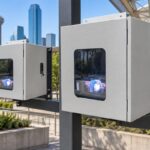
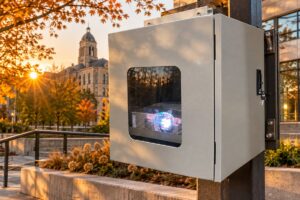
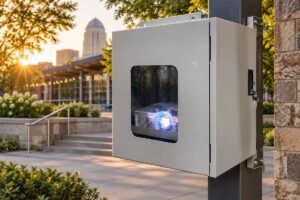
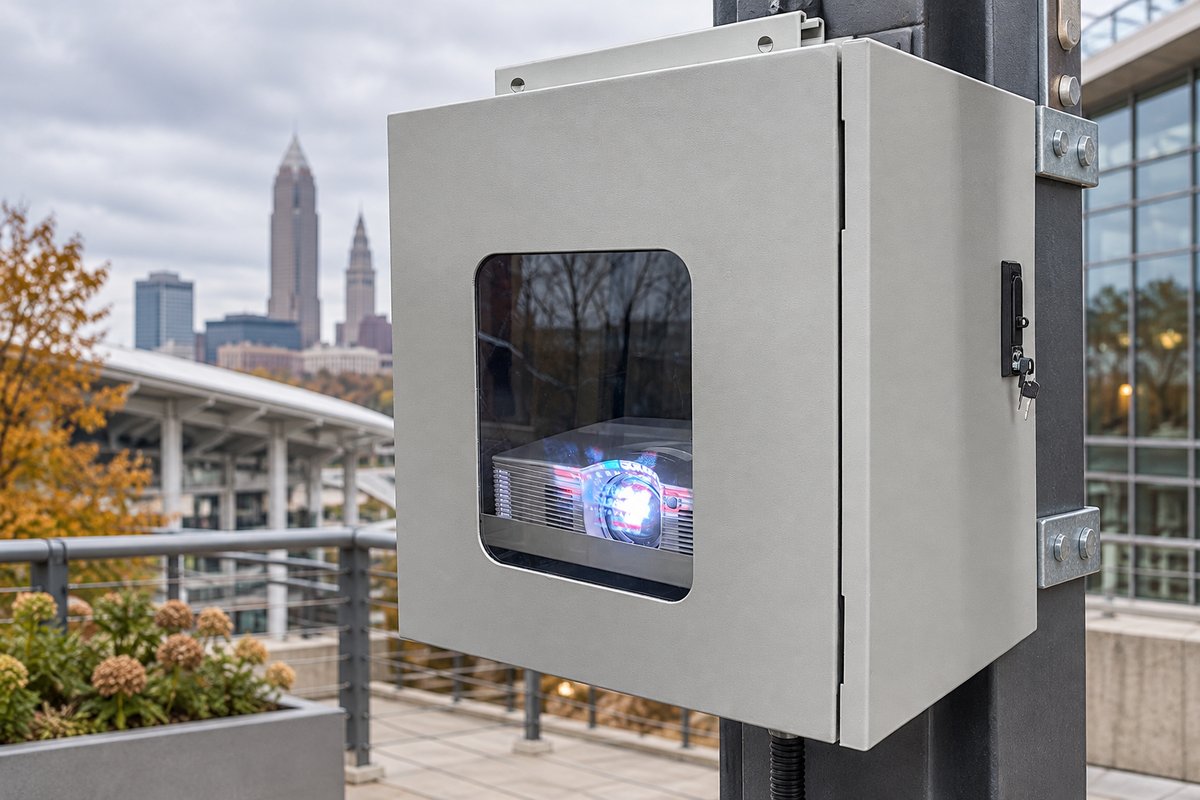
The best outdoor projector enclosure is engineered for these conditions—offering more than just waterproofing. It also protects against wind-driven dust, airborne salt, and temperature-related condensation. ProjectorEnclosure.com’s Defender Series Projector Enclosure is specifically designed for these environments and provides IP66-equivalent protection against dust and powerful water jets, making it ideal for unpredictable Cleveland weather.
Choosing the Right Projector Enclosure for Your Application
The decision on an enclosure depends on your projector model, how close the unit must sit to the building or display surface, and the type of projection mapping show you are planning. ProjectorEnclosure.com offers several options tailored to different needs:
- Defender Series: For long-throw installations on house facades, business buildings, or large event projections—features robust, all-weather protection for tough Cleveland conditions.
- UST Defender Series: Specifically for ultra-short-throw setups where the projector sits close to the wall, such as holiday house projections with a highly foreshortened image.
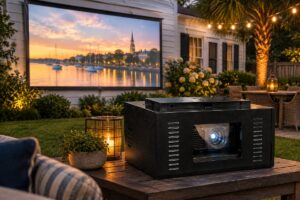
- HomeLine: An ideal pick for residential users creating home projection mapping displays, like window or garage-door mapping during Halloween or Christmas.
Enclosure size is matched to your projector, and homeowners running holiday house projection shows should consider the dedicated Projector Enclosure for House Projection Mapping for simple installation and unobtrusive home-use appearance. To ensure a perfect fit, always send your projector model in advance—use the handy Projector Enclosure Fit Guide.
Remember: while the Defender and UST Defender models deliver IP66-equivalent protection against Cleveland’s toughest weather, the HomeLine is designed for home use that balances weather protection with simplicity for residential displays.
Power Planning for Reliable Outdoor Projection
Any outdoor projection mapping display requires appropriate power access and safe connections. Before running cables outdoors, check with Cleveland Public Power about your neighborhood’s available electric service and protocols for adding temporary or permanent circuits. For events or building displays, confirm your power source supports your projector’s startup in cold weather, which can sometimes draw higher current.
When running extension cords outside, use weatherproof, outdoor-rated cables and junctions—nothing should be run unprotected across lawns or sidewalks. Keep all connections elevated off the ground to avoid flooding or accidental damage from snow shoveling or lawn equipment. For permanent installations, consult a licensed contractor familiar with local codes.
As a rule of thumb, always err on the side of caution: proper grounding, GFCI circuits, and planning for winter ice will ensure your display is safe for spectators as well as for the long life of your projector. ProjectorEnclosure.com enclosures have provisions for electrical cable entry—be sure these are routed with water-tight seals for best results in Cleveland’s rainy and slushy seasons.
Mounting Solutions and Structural Safety
How you mount your outdoor projector enclosure determines its safety and longevity. For house shows, most users secure the enclosure on or near the porch, driveway, or lawn using ground posts or temporary framing. For building-facade projections and public events, secure mounting is critical: vibrations from wind or passing traffic can affect image stability and projector lifespan.
Choose a location that is elevated to avoid standing water, but not in the path of heavy wind—Cleveland can experience strong winter gusts off Lake Erie that may tip or shake an unsecured enclosure. For larger building displays, roof or wall-mounted brackets engineered for outdoor use provide the most durability. If installing at a business, school, or public venue, a professional AV integrator can recommend approved mounting strategies.
Always use the mounting holes and hardware provided with your enclosure, following best practices for outdoor installation. Whenever in doubt, review requirements with local officials or professionals to ensure your enclosure stays secure throughout the season.
Ensuring Proper Ventilation and Temperature Management
Proper ventilation is key to avoiding overheating or condensation inside your enclosure, especially in a city with Cleveland’s unpredictable weather patterns. Heavy rain, sudden thaws, or shifts from cold to warm air overnight can all affect internal temperature and humidity. ProjectorEnclosure.com’s Defender Series is engineered to maintain optimal airflow while blocking dust and water jets, supporting stable operation all year long.
Strategically placed vents in the enclosure help circulate outside air without letting in water or debris. For home users running holiday shows, the HomeLine uses passive or active ventilation suited for moderate-duty residential use. For longer-running or higher-brightness projectors, the industrial Defender Series and UST Defender Series take it further with advanced airflow management.
If your show runs for extended periods—like all-night holiday displays or consecutive-day events—monitor the inside of your enclosure from time to time, or choose an enclosure model that offers thermal management matched to your projector type and Cleveland’s climate extremes. Sending your projector model in for sizing helps the team recommend the right solution for your environment.
Navigating Local Permits and Safety Codes
In Cleveland, securing the appropriate permits for installing an outdoor projection mapping projector enclosure helps ensure your display meets city codes and safety expectations. The Department of Building & Housing issues permits for certain types of permanent installations, particularly for commercial, school, or church projects involving electric circuits, building modifications, or structures visible to the public.
For temporary holiday house displays, a formal permit may not always be required, but always check with the city for specific rules related to electrical connections or large event displays. Property owners, businesses, and event producers should be especially diligent if planning to mount enclosures on roofs, facades, or within close proximity of public walkways or roads.
Safety codes can change from year to year, and requirements may differ between neighborhoods or building types. The permit office can advise on which installations qualify as temporary, if additional safety inspections are necessary, and whether professional installation is required. Begin your planning early to avoid last-minute surprises.
Care, Maintenance, and Seasonal Storage
Even with a robust enclosure, regular care and basic maintenance extend your projector and enclosure’s life through Cleveland’s harsh climate. Between shows or after a big event, inspect the enclosure for signs of debris, buildup of salt or dust, and interior condensation. Gently clean the enclosure’s viewing window, and confirm that ventilation paths remain unobstructed by leaves or snow.
For enclosures left out year-round, especially the Defender Series, periodic cleaning helps prevent corrosion from airborne salt or particulates. Before the onset of winter, double-check your mounting hardware and power connections for weathering.
If you plan to store your projector and enclosure between seasons, remove and wipe down all surfaces, and store in a dry, protected space. For those using the HomeLine, off-season storage in the garage or basement is usually sufficient. Always unplug and allow your projector to cool before removal and storage.
Frequently Asked Questions: Projection Mapping Projector Enclosures in Cleveland
How do Cleveland’s winters affect my outdoor projection mapping setup?
Winter in Cleveland means exposure to moisture, freezing temperatures, and corrosive salt air—all of which can damage unprotected projectors. Using a weather-sealed enclosure like the Defender Series with IP66-equivalent protection is key to keeping your setup operational throughout the season.
Can I get power for my projector in my front yard or business storefront?
Often, yes. For residential installations, consult Cleveland Public Power for advice on outdoor circuits and safe practices. For businesses or larger setups, a licensed electrician can ensure proper power supply, and you may need to check code requirements with the city.
Do I need a permit to install a projector enclosure outdoors in Cleveland?
Permit requirements depend on your installation type and location. Temporary holiday setups at home may not need a permit, but permanent, public-facing, or commercial projects often do. Check with the Department of Building & Housing for current regulations before proceeding.
Ready to protect your next projection mapping show from Cleveland’s challenging weather? Request an enclosure quote with ProjectorEnclosure.com, and don’t forget to send your projector model for custom sizing. Superior protection and expert guidance—call 888-631-5880 or email ssisales@ssidisplays.com today.
Supplies mentioned in this guide
Defender Series Projector Enclosure
UST Defender Series Enclosure
HomeLine Projector Enclosure
Projector Enclosure for House Projection Mapping
Projector Enclosure Fit Guide
A Practical Guide to Outdoor Projector Enclosures in New Orleans