
Protecting Outdoor Projectors in Columbus, OH: A Practical Projection Mapping Guide
Protecting Outdoor Projectors in Columbus, OH: A Practical Projection Mapping Guide
Get practical advice on choosing and installing projection mapping projector enclosures for Columbus, OH: manage rain, snow, dust, power, permits, and mounting with ease.
Outdoor Projection Mapping Kicks Off Holiday Season in Columbus
As the festive season approaches, homeowners, businesses, and event producers across Columbus, OH are preparing for dazzling displays using projection mapping. Holiday and Halloween house projection shows, building facade illumination, and creative storefront projects are more popular than ever. But as temperatures drop, rains increase, and nights grow longer, the risk to sensitive projectors left outdoors rises. Local weather means you need more than just a powerful projector—you need a rugged, purpose-built enclosure to keep your equipment safe and operational.
Columbus sits at the heart of Ohio’s transition seasons, with rapid changes in temperature, frequent rain events, and humidity swings that can wreak havoc on electronics. Whether you’re a homeowner coordinating a holiday show or an AV integrator planning a large-scale art installation, knowing how to protect your projector is crucial. This guide from ProjectorEnclosure.com walks you through what to expect from Columbus weather, what solutions exist, and how to plan your installation for reliability all season long.
Columbus Climate: Rain, Snow, Humidity and Why It Matters
Projection mapping is only as reliable as the equipment behind the scenes. Columbus experiences an annual average of about 40 inches of precipitation, spread across rain, thunderstorms, and even snow in winter. According to Columbus Climate Normals, local weather brings both damp, humid spells in summer and freezing temperatures in winter. Add in occasional high winds and the urban presence of dust, and exposing a projector to the open air is a recipe for trouble.
Moisture inside your projector can lead to electrical shorting, corrosion, and diminished performance. Dust and pollen—especially concerning during Columbus’s spring and fall—may block air intakes or coat optics, causing overheating or image degradation. For anyone planning a display from October to April, freezing nighttime temperatures and windblown rain emphasize the need for full protection. The more robust your outdoor projector enclosure, the more consistent your show—regardless of the weather outside.
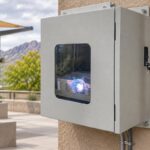
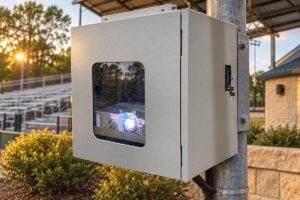
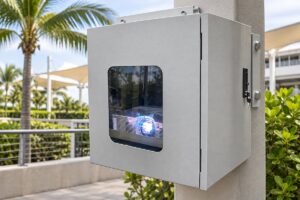
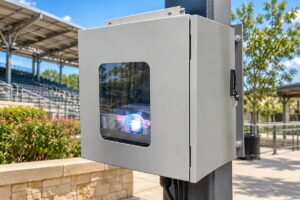
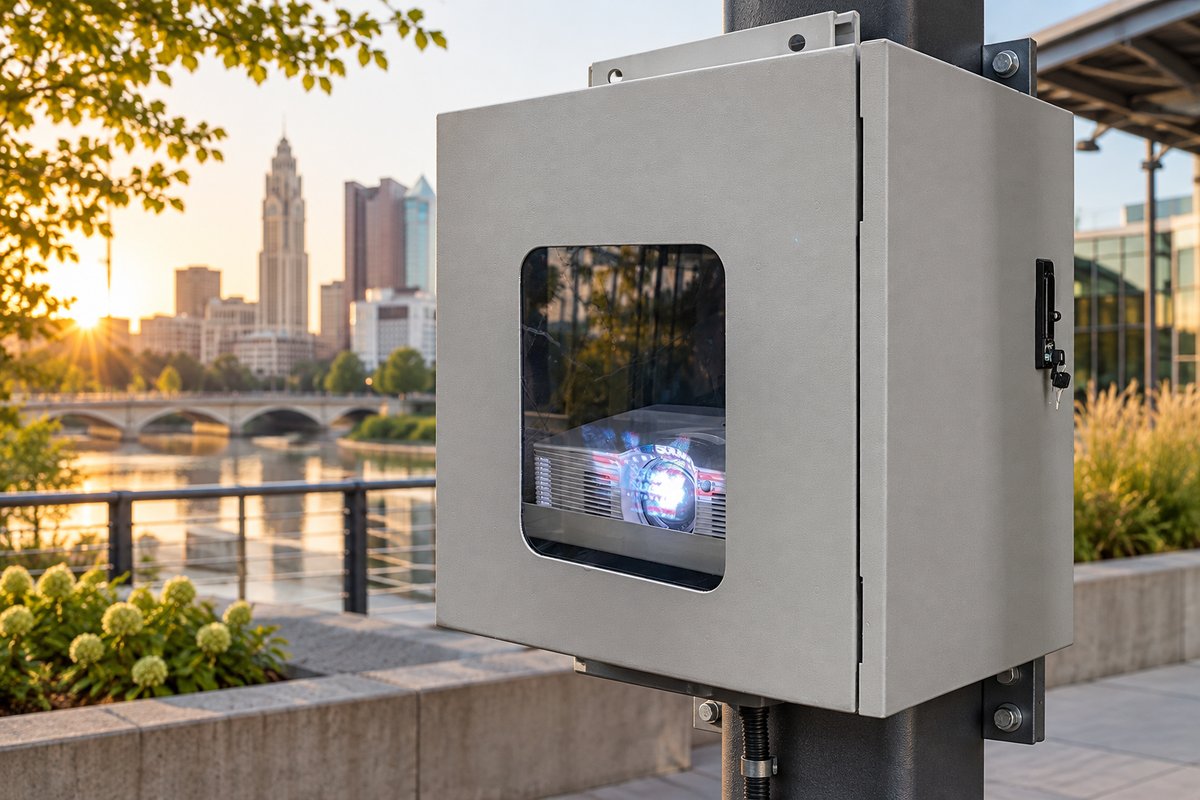
That’s where true all-weather solutions, offering IP66-equivalent protection (such as the Defender Series Projector Enclosure), stand out. They guard against powerful water jets, fine dust, and erratic conditions, letting your creative vision shine through all season.
Choosing the Right Outdoor Projector Enclosure
Not all projector enclosures are created equal. The model best-suited for Columbus conditions, and for your projection mapping project’s logistics, depends on several factors: the size and output of your projector, whether you’re working close to a surface or across a yard, and the local risk from rain, dust, or tampering. For large-scale, all-weather outdoor displays—including building facades and public art—the Defender Series Projector Enclosure offers IP66-equivalent protection against dust and powerful water jets.
If your projection mapping requires ultra-short-throw (UST) setups, where the projector sits close to the building surface or a garage door, the UST Defender Series Enclosure is designed to handle these installs with the same level of defense against Columbus weather. For homeowner displays, such as Halloween and holiday house projection—or for those looking for a model tailored to consumer setups—the HomeLine Projector Enclosure ensures your investment is protected without over-specifying the solution.
Need help finding the right fit? Check out the Projector Enclosure Fit Guide and send in your projector model for sizing. This way, you know your enclosure is built for your specific application.
Planning Power: Getting Reliable Electricity to Your Outdoor Projector
Reliable power is just as essential as weather protection for outdoor projection mapping. In Columbus, whether you’re setting up in your yard, on a facade, or at a local event space, outdoor circuits should be checked for both safety and code compliance. Outlets exposed to the elements must be weather-resistant and properly grounded. If you need a new line run out to your projector’s enclosure, or your site has experienced outages, consult the Division of Power for information on new service connections and reliable electric supply.
Avoid using extension cords as a permanent solution, and make sure GFCI protection is in place to reduce electrical shock risk—especially when ambient moisture is high after rain or snow. Power cables should be neatly routed, secured, and protected from foot traffic or lawn equipment. When mounting enclosures on buildings for longer-term or recurring seasonal displays, professional electrical installation is highly recommended for both safety and projection reliability.
Plan your power needs by considering the projector’s full power draw, plus any additional equipment inside the enclosure—like media players or wireless devices. It’s always a good practice to add a buffer for cold-weather inrush currents or heavy-duty extension requirements.
Smart Outdoor Mounting: Where and How to Install Safely
The success of any outdoor projection mapping show hinges on careful planning of your enclosure’s install location and mounting method. Aim to place the enclosure where it is protected from falling tree limbs, heavy runoff, or wayward traffic. Elevated, level, and secure mounting on concrete pads, sturdy brackets, or wall attachments is ideal. For ultra-short-throw displays, the enclosure might need to sit just a few inches from the wall, in which case the UST Defender Series offers a compact footprint with full protection.
Be mindful of the enclosure’s weight, center of gravity, and required clearances for ventilation. Always anchor enclosures solidly to resist Columbus’s winter winds and unpredictable storms. For building-mounted installations, confirm with property management regarding allowable attachment points—especially for multi-story shows, commercial facades, or historic structures. Check for any tree or shrubbery interference that could impact the projector’s throw distance or airflow around the enclosure.
For home holiday displays, the Projector Enclosure for House Projection Mapping makes it easy to mount in yards or landscaping areas and adjust as your needs evolve over several seasons.
Ventilation and Dust Management for Longer Equipment Life
Outdoor projectors generate heat in operation, making it critical that an enclosure balances weather defense with active ventilation. Without efficient airflow, components may overheat, image quality can be impaired, or the projector’s lifespan cut short. The Defender Series and HomeLine enclosures from ProjectorEnclosure.com are designed to maintain appropriate temperatures even during long winter nights or mild Columbus autumns.
Dust is a persistent local issue, particularly when projecting near busy streets or during pollen season. An effective projection mapping projector enclosure must filter out dust and particulates, while not impeding cooling fans or natural convection. The IP66-equivalent protection of the Defender Series addresses both needs—keeping out fine contaminants and allowing safe, reliable operation even during dry, windy spells.
Position enclosures to allow at least partial shelter from prevailing winds, and check that intakes remain clear of mulch or foliage. For best results, periodically inspect the unit (with the power disconnected) to remove debris and confirm that fans or filters are operating properly.
Permits, Codes, and Local Guidelines in Columbus
Depending on your project’s scale—especially for public events, commercial facades, or installations visible from the street—you may need to comply with building codes or obtain temporary permits from the city. Columbus may require documentation for both the mounting hardware and electrical work. Before finalizing your plan, check the latest requirements with the city or inquire with the offices connected through the Division of Power or your municipal permit office.
Installers should use professional-grade mounting solutions and adhere to any restrictions on lighting, electrical outlets, or display periods, especially in residential neighborhoods. Working with a reputable AV integrator can help you meet both code and aesthetic standards. For home displays limited to your own property, focus on safe, considerate installations that do not create glare hazards for neighbors or roadways.
When in doubt, always double-check permit needs before installing enclosures or running new power lines. Any enclosure model from ProjectorEnclosure.com can be discussed with inspectors, as enclosures are right-sized to your projector and installation site.
FAQ: Common Questions About Outdoor Projector Enclosures in Columbus
What size enclosure do I need for my projector?
The correct enclosure size depends on your projector’s physical dimensions, lens placement, and accessories. ProjectorEnclosure.com offers the Projector Enclosure Fit Guide, and encourages customers to send in their projector model for expert sizing.
Can I use my regular indoor projector outdoors with an enclosure?
Yes, many standard projectors are used outdoors when protected by a robust outdoor projector enclosure, like the Defender Series, UST Defender Series, or HomeLine, each tailored for Columbus weather and mounting conditions.
How do I protect my projector from sudden rain or storms?
For the unpredictable rain common in Columbus, an enclosure with IP66-equivalent protection ensures water does not reach internal electronics or optics, keeping your display safe and reliable throughout the season.
Next Steps: Quote Your Columbus Projection Mapping Enclosure
Planning your projection mapping display means considering Columbus’s unique climate challenges—from snow to downpours to dust. Whether for a house holiday show, storefront, or major event, a reliable projection mapping projector enclosure is your best investment in performance and peace of mind. ProjectorEnclosure.com has more than 20 years in business helping clients protect their displays in all weather conditions, offering solutions tailored to home, commercial, and artistic applications.
- Division of Power – for electrical service and outage support
- Columbus Climate Normals – for planning against average rain, snow, and temperature curves
Supplies mentioned in this guide
Defender Series Projector Enclosure
UST Defender Series Enclosure
HomeLine Projector Enclosure
Projector Enclosure for House Projection Mapping
Projector Enclosure Fit Guide
How Milwaukee’s Weather Impacts Outdoor Projection Mapping Enclosures