
A Practical Guide to Outdoor Projection Mapping Projector Enclosures in Dayton, OH
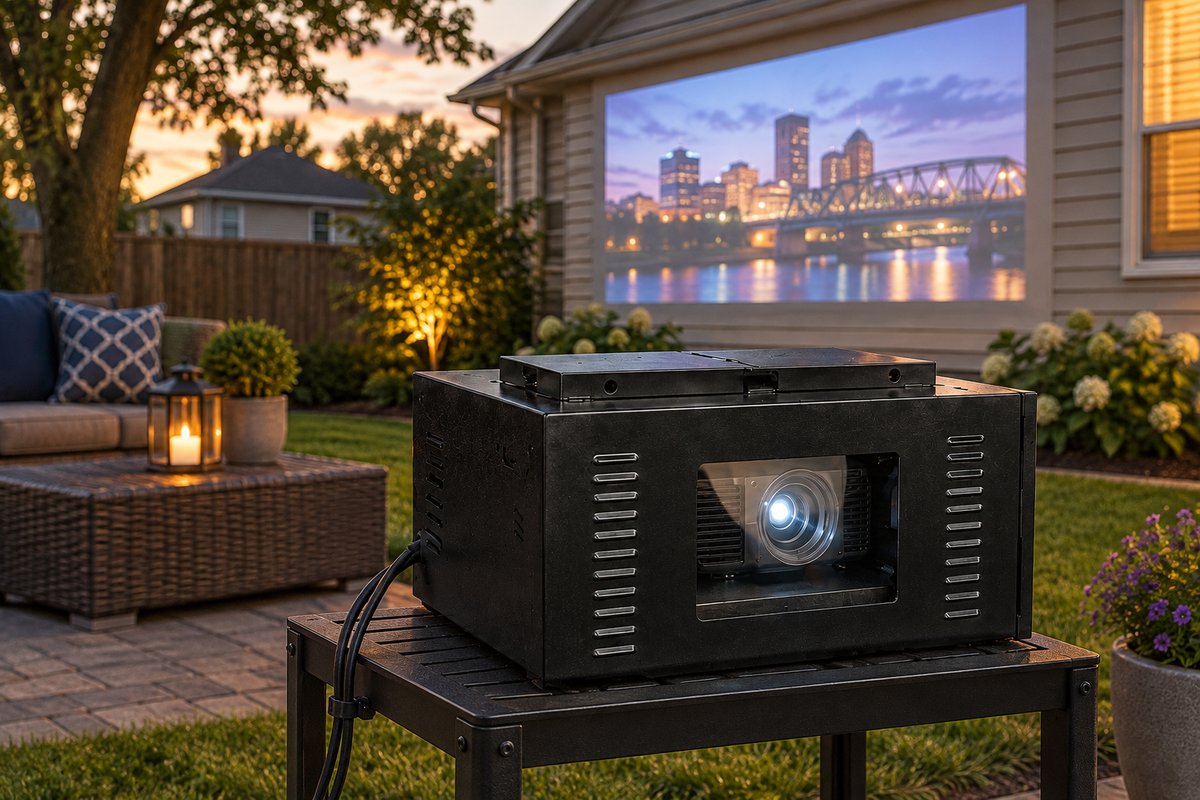
A Practical Guide to Outdoor Projection Mapping Projector Enclosures in Dayton, OH
Discover how Dayton’s climate impacts your projection mapping projector enclosure and learn practical steps for power, mounting, ventilation, and permits for stunning outdoor displays.
Preparing for Projection Mapping Season in Dayton, OH
With the holiday projection mapping season kicking off across Dayton, outdoor displays are popping up on homes, churches, storefronts, and building facades. Dayton’s winter brings moisture, cold snaps, and unpredictable rain, while summers and fall can be humid with high pollen and dust. Protecting your projector investment during these critical months is essential — especially as more residents and organizations create unforgettable projection shows for Halloween, Christmas, New Year’s, and year-round events. This guide from ProjectorEnclosure.com highlights the practical steps to successful outdoor projection shows in Dayton, reviewing how to handle heat, rain, dust, humidity, and even power and permits.
Whether you’re a homeowner dazzling your neighborhood, an AV integrator supporting a local business, or an artist staging a public show, it’s crucial to match your setup to the realities of Southwest Ohio’s climate and permitting landscape. Read on to learn how to select the right projection mapping projector enclosure, choose power and mounting solutions, provide good ventilation, and remain compliant with local codes.
How Dayton Weather Impacts Your Outdoor Projector
Dayton, OH, sees a full range of weather extremes. Winters are cloudy and damp, with frequent precipitation, while summers can be hot, muggy, and dusty. According to Dayton Climate Normals, average annual precipitation hovers near 40 inches with humid summers and a history of quick temperature swings. These conditions demand robust weather protection for any equipment you plan to use outdoors.
Humidity and persistent rainfall can damage sensitive electronics and optics if left unprotected, corroding components inside projectors. During springtime and summer, pollen and dust levels often rise, threatening to clog ventilation paths. Even homes near traffic corridors can suffer from gritty airborne dust, affecting projectors mounted outdoors for seasonal displays.
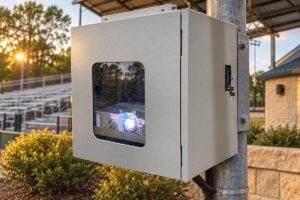
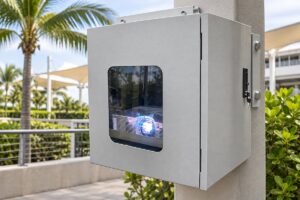
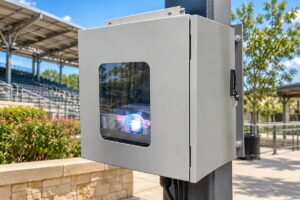
Choosing the correct enclosure is the only practical solution for year-round installation. The Defender Series Projector Enclosure, designed for IP66-equivalent protection against dust and powerful water jets, is purpose-built for Dayton’s demanding conditions. For home displays, the HomeLine Projector Enclosure also shields against local weather while supporting consumer projection mapping projects.
Choosing the Right Projector Enclosure for Your Project
Selecting the proper outdoor projector enclosure for projection mapping starts with the size and type of show you want to create. For large, public-facing projections on building facades or church walls, consider the Defender Series Projector Enclosure. Available in five sizes — from Small (500 W) to Extra Large (4,500 W) — each enclosure is sized first by matching your projector’s power draw to the enclosure’s cooling wattage. Once matched, confirm your projector’s physical dimensions will also fit comfortably inside. Unsure? Provide your projector model so ProjectorEnclosure.com can verify compatibility.
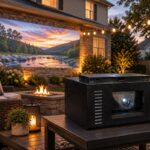
When your show calls for ultra-short-throw projection, such as setups close to a wall or house, the UST Defender Series Enclosure gives the same weather protection while optimizing airflow and lens clearance for tight placements. For most home-based projection mapping displays, including fun holiday and Halloween house projections, the HomeLine Projector Enclosure is sized for consumer projectors and ease of installation.
Use the Projector Enclosure Fit Guide to pick the right product for your projector make and model. Each Defender, UST Defender, and HomeLine enclosure from ProjectorEnclosure.com ships with a 1-year warranty to give peace of mind throughout your first show season and beyond.
Managing Power and Wiring for Outdoor Projection
Reliable power is fuel for your projection mapping display. Most projectors suitable for mapping house or building facades require 120V power, but higher-brightness units or multi-projector stacks can demand more current. Consider weather-resistant outdoor-rated extension cords only as a last resort, preferring permanent wiring installed by a licensed electrician to handle Dayton’s wet winters and temperature swings.
If you’re installing new circuits or outlets outside your residence or on public-facing spaces, local law may require an electrical permit. Reference Dayton’s Building Permit Forms for current documentation and always check with the city before beginning electrical work for a projection mapping enclosure. Safety and compliance help protect both your installation and the people who experience your display.
Plan pathways for cable runs that keep cords off walkways and protected from weather or tripping hazards. Weather-sealed cable glands, properly rated connectors, and GFCI protection are all best practices for operating in Dayton’s climate.
Best Practices for Mounting Outdoor Projector Enclosures
The success and longevity of your projection mapping show depend on how well your enclosure is mounted. In Dayton, strong winds, sudden storms, and freeze-thaw cycles all put stress on mounting hardware. All-weather enclosures such as the Defender Series include versatile mounting points, but always use secure anchors into masonry, pressure-treated framing, or approved roof or wall brackets rated for the enclosure’s weight.
Consider physical security if your enclosure will be left untended in public or high-traffic areas. While theft and tampering are rare for holiday house projection enclosure installs in most neighborhoods, commercial displays on storefronts or event venues often benefit from additional locking hardware or tamper-resistant screws.
Always check for building restrictions or historical overlays before drilling into masonry — and for business, church, and school installations, link up with the city using the permit office forms to be sure your mount complies with local codes and any insurance requirements. For masonry mounting, using corrosion-resistant hardware helps avoid the effects of Dayton’s rain and salt-laden winter air.
Ventilation and Heat Management for Projector Longevity
Even on a crisp Dayton evening, projectors generate substantial heat during operation. An enclosure without adequate ventilation can lead to overheating, causing premature lamp or LED failure and hardware breakdowns. The Defender Series is designed to manage heat efficiently, with each size handling projectors whose wattage is at or below its rated cooling power.
Enclosures with IP66-equivalent sealing, like the Defender and UST Defender, block dust and jets of water, but their internal airflow is engineered to shed heat while keeping contaminants out. Never defeat or alter the ventilation paths: use approved accessories and always check that air inlets remain unrestricted by decorations or snowfall.
When planning your install, avoid placing the enclosure’s exhaust against walls or in corners that could trap warm air. For best performance, locate the enclosure where air can circulate freely — and always match your cooling wattage to your projector’s draw using the guide provided by ProjectorEnclosure.com.
Permitting and Compliance: Staying Legal in Dayton
Some projection mapping displays are simple, temporary setups. Others require mounting permanent hardware or connecting to building wiring. For any installation on a commercial building, church, school, or rental property — or if your display will draw significant attention on a main street or public venue — always check with Dayton’s building office first using the forms at Building Permit Forms | Dayton, OH.
Common triggers for a permit can include new electrical work, large or permanent mounts, or displays likely to impact pedestrian or vehicle traffic. Dayton’s codes prioritize safety and may reference best practices for electrical grounding, egress, and fire codes in public spaces. Residential holiday house projection enclosure displays rarely require permits if you’re using self-contained enclosures and extension cords, but always double-check especially when hardwiring power or mounting larger enclosures outside of your home footprint.
If you’re unsure what’s allowed, take photos of the area, print your product specs, and contact the building department for specific advice. Local officers will guide you through simple forms and ensure your holiday show draws the right kind of attention.
What to Watch for: Dayton’s Weather Risks for Projection Mapping
Besides rain and humidity, several hidden factors could affect projector performance in Dayton:
- Freeze-thaw cycles: Rapid overnight temperature drops can cause condensation inside unprotected equipment. Use only sealed, purpose-built enclosures for winter setups.
- Wind-blown dust and pollen: Especially during spring blooms and fall harvests, airborne particles increase. IP66-equivalent enclosures like the Defender prevent these contaminants from entering and damaging your projector optics.
- Road salt and traffic grime: Homes and businesses near major roads may see salt spray and micro-abrasives in winter. Regularly inspect and clean your enclosure housing as needed to maintain performance.
By planning your outdoor setup around these challenges, your show will shine regardless of Dayton’s weather.
FAQ: Outdoor Projection Mapping in Dayton
How do I size a Defender Series enclosure for my projector?
First, match your projector’s maximum power draw (in watts) to the closest Defender enclosure that meets or exceeds that wattage (Small 500 W, Medium 1,500 W, Large 2,500 W, Large Plus 3,500 W, or Extra Large 4,500 W). Next, double-check your projector’s dimensions against the enclosure’s fit guide. You can use the Projector Enclosure Fit Guide, or contact ProjectorEnclosure.com with your projector model for confirmation.
Is an enclosure needed for short-throw projection setups?
Yes. For setups placing the projector close to a surface, such as with ultra-short-throw lenses on house facades, an enclosure like the UST Defender Series Enclosure is optimized to manage airflow, lens clearance, and physical protection in tight spaces while offering IP66-equivalent sealing against Dayton’s dust and moisture.
Does my installation need a permit?
Permitting depends on the complexity of the installation. If you’re running new electrical wiring, mounting hardware to exterior walls, or placing permanent or large-scale displays, you may need a permit. Check the city’s requirements through Dayton’s Building Permit Forms and consider a licensed electrician for all electrical work.
- Dayton Climate Normals: average temperature and humidity for enclosure planning
- Dayton Building Permit Forms: for outdoor mounting or electrical installs
Get Ready for Safe, Reliable Outdoor Projection Mapping
As projection mapping lights up Dayton’s homes and businesses this season, the right planning ensures your display thrills guests and keeps your projector safe, dry, and high-performing all year long. With more than 20 years in business, ProjectorEnclosure.com delivers proven weather protection with the Defender Series for large installs, UST Defender for short-throw projects, and HomeLine for home shows and seasonal fun. Each enclosure is sized for your projector, engineered for Dayton’s weather, and carries a 1-year warranty.
Ready to start your projection mapping display? Request an enclosure quote from the experts at ProjectorEnclosure.com, or call 888-631-5880 for personalized advice on your Dayton, OH project.
Supplies mentioned in this guide
Defender Series Projector Enclosure
UST Defender Series Enclosure
HomeLine Projector Enclosure
Projector Enclosure for House Projection Mapping
Projector Enclosure Fit Guide
Projection Mapping Projector Enclosures for Rochester’s Venues and Homes