
Planning Outdoor Projection in Cedar Key: A Practical Guide
Planning Outdoor Projection in Cedar Key: A Practical Guide
Get a practical, locally focused guide to outdoor projector installations in Cedar Key, FL. Learn how weather, site conditions and enclosure choices affect durability, power and performance.
Understanding Cedar Key’s Outdoor Projection Challenges
Cedar Key, FL is known for its picturesque Gulf Coast scenery, vibrant tourism, and active community calendar. Local schools, churches, restaurants and waterfront venues often seek to entertain guests and residents with outdoor projection—be it movie nights, art displays, or signage. However, the same marine breezes and subtropical climate that make Cedar Key unique introduce real engineering challenges for outdoor projector installations. High summer heat, persistent humidity, frequent rain, salt air, and dust from local roads all threaten sensitive electronics. Whether you plan to install at a coastal restaurant, community park, marina, or historic venue, addressing these environmental factors early is essential to ensure projection that is both impressive and reliable year-round.
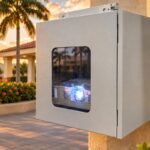
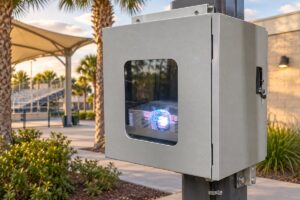
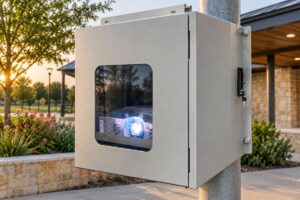
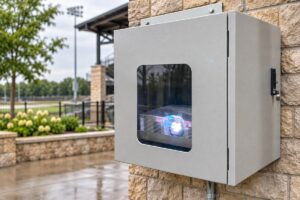
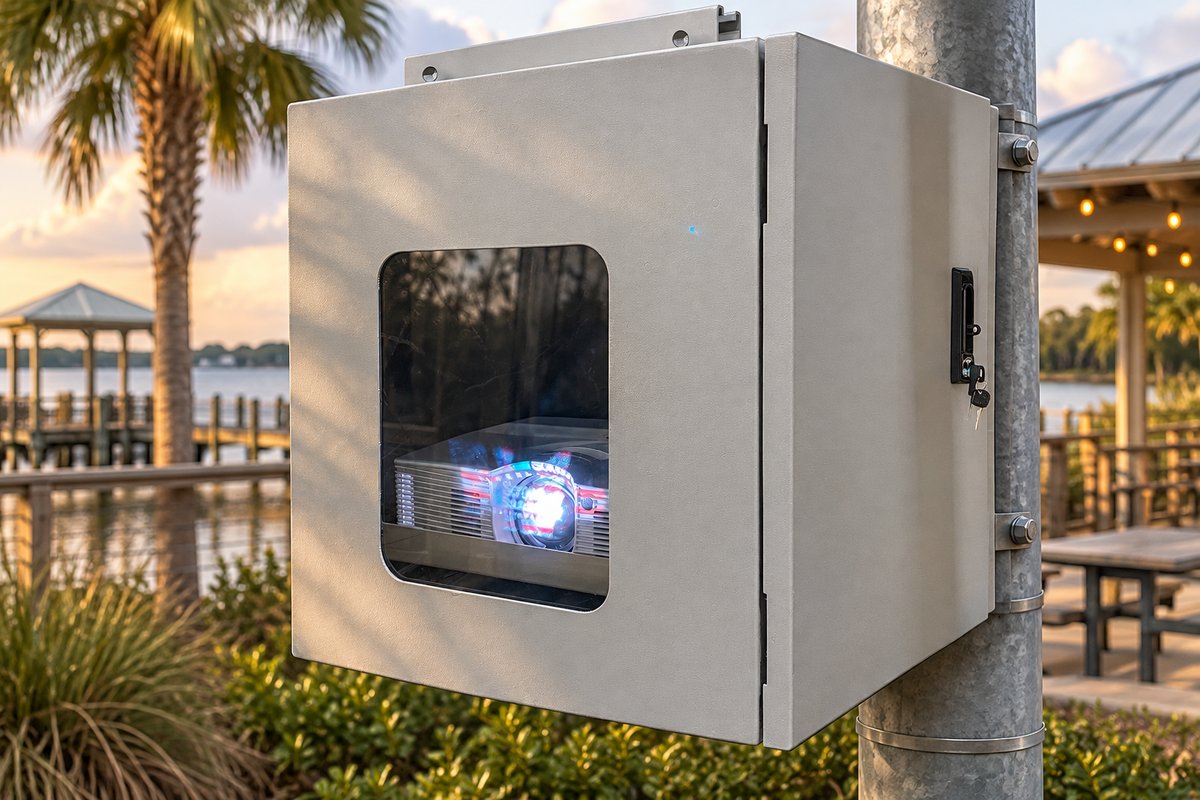
Choosing a durable, purpose-built Defender Series projector enclosure from ProjectorEnclosure.com is key to protecting your projector investment from these elements. This guide reviews practical considerations specific to Cedar Key, including weatherproofing, power planning, mounting, ventilation, and the importance of local permits for outdoor technology.
Cedar Key Climate: What Your Projector Faces Outdoors
Summer in Cedar Key consistently brings daytime highs in the upper 80s to mid-90s with intense sunlight, while relative humidity often exceeds 75%. Thunderstorms are frequent from June through September, delivering heavy rainfall and sudden wind gusts. The community’s position on the Gulf of Mexico means that salt-laden air is present year-round—accelerating corrosion and increasing the risk of dust and salt deposits on equipment.
Outdoor projection runs the gauntlet here. Electronics exposed directly to this climate—especially during hurricane season—face higher failure rates without robust protection. That’s why AV integrators and local venues increasingly rely on climate-controlled enclosures for projectors stationed at parks, resorts, themed events, or open-air bar patios.
For real-time weather details and forecast planning, reference the National Weather Service point forecast for Cedar Key before scheduling installation or outdoor showings.
Why Climate Controlled Projector Enclosures Matter
Unprotected projectors rarely survive long-term exposure in Cedar Key’s salty, humid, and storm-prone climate. Even splash-resistant gear cannot cope with the combined challenges of airborne salt, dust, intense UV, thermal cycling, and condensation. Enclosures designed for outdoor use—like the Defender Series—offer a sealed, actively managed environment that extends equipment life, ensures safe operation, and reduces maintenance cycles.
The Defender Series provides IP66-equivalent protection against dust and powerful water jets, forming the first line of defense against the elements that are common near Cedar Key’s coastline. Every Defender enclosure is climate-controlled: it regulates internal temperature and filters out airborne salt and dust. That means AV integrators, events crews, and facilities managers can plan permanent projection outdoors—even at highly exposed marinas or open event lawns—without risking downtime or premature failure from environmental stress.
When specifying an enclosure, matching the projector’s maximum power draw and size to the correct enclosure is essential. ProjectorEnclosure.com matches your projector to a right-sized standard enclosure, and only fabricates a custom enclosure if no standard size is suitable.
Defender Series Sizing: Getting the Right Fit for Your Projector
Cedar Key venues use a wide range of projector models, from compact classroom types to large-venue event models installed in permanent outdoor plazas or pavilions. For every installation, the enclosure must be properly sized so that the projector does not overheat or become restricted by airflow or space. The Defender Series comes in five standard sizes, each specified by cooling wattage: 500 W (Small), 1,500 W (Medium), 2,500 W (Large), 3,500 W (Large Plus), and 4,500 W (Extra Large). Each Defender enclosure is matched to projectors whose maximum power draw does not exceed the model’s cooling wattage.
The enclosure’s internal space must also be able to accommodate the projector’s full physical dimensions, including lens shift, cable clearance, and any required air gap. The right fit is critical—if the fit is too tight, cooling effectiveness and accessibility both suffer. For Cedar Key’s demanding conditions, supplying your projector’s make and model to ProjectorEnclosure.com ensures you receive a right-sized solution. For challenging setups or ultra-short-throw applications, UST Defender Series Enclosures are also available. Custom enclosures can be built on request if no standard size fits your needs.
To confirm the correct enclosure, check the Projector Enclosure Fit Guide and contact the enclosure experts at ProjectorEnclosure.com with your projector details.
Planning Power Supply for Outdoor Projection
Securing reliable, weatherproof power is essential for outdoor projection projects in Cedar Key—especially in older districts or near the waterfront. Salt air and high humidity can lead to rapid degradation of wiring and connectors, increasing the risk of electrical faults or fire if the installation isn’t carefully specified.
Plan for a dedicated, grounded outdoor outlet protected by a weatherproof cover and GFCI protection. Assess the total power requirements for both the projector and enclosure (including ventilation fans, heaters, and active electronics). Account for voltage drop if the run is long, especially at resort lots or parks where electrical service may be distant from your equipment’s location.
For sites prone to surge risks (such as near marinas or exposed tourist areas), consider an inline surge suppressor or UPS to improve equipment longevity and safety. Consult a qualified electrician and use the NOAA Cedar Key forecast to plan around wet weather or surge events during installation.
Mounting and Orienting Your Enclosure
Mountings in Cedar Key face special stresses: hurricane-driven winds, vegetation debris, and airborne salt can shake, abrade, and corrode supports. Use marine-grade hardware wherever possible and select a mounting point with shelter from direct spray, strong winds, and vandalism. Stainless steel or heavy-duty powder-coated brackets are recommended for any site within a mile of the Gulf shore.
The enclosure should be positioned to allow for safe cable routing, maintenance access, and clear projection. For public parks, schoolyards, or open-air amphitheaters, pay special attention to sightlines and inadvertent audience hazards—keeping the enclosure high enough to avoid tampering, but not so exposed that maintenance becomes difficult.
Check with your venue management or facilities director before mounting the enclosure, especially for historic buildings or protected properties. For guidance on site-specific requirements, consult the relevant city or property office. Mounting details can affect both permitting and insurance, so early planning saves time and prevents costly mistakes.
Ventilation and Weatherproofing in Humid, Salty Air
Ventilation is critical for outdoor projector enclosures in Cedar Key because thermal buildup accelerates in the humid subtropical climate, particularly during the summer. The Defender Series is engineered to actively manage temperature and airflow regardless of local conditions, with features that keep salt, dust, and rain outside where they belong. Its sealed design and air filtration system offer real resilience to coastal conditions.
While the Defender enclosure is designed to stay dry and dust-free inside, the external components (such as filters, vents, and hinges) may require periodic inspection and cleaning. Preventing salt and debris buildup ensures optimal airflow and helps preserve the enclosure’s weatherproof seal for years to come.
If your project calls for ultra-short-throw projection or unusual mounting, consider the UST Defender Series Enclosure, which shares the same IP66-equivalent protection. For all other outdoor uses, the standard Defender Series meets Cedar Key’s toughest weather, storm, and salt exposure challenges.
Permitting and Compliance for Outdoor AV Installs
Some outdoor projector installations in Cedar Key require city or county permits—especially for mounts on public property, larger venues, or any installation altering building exteriors. Historical districts and coastal zones often have additional design standards or review steps to protect local heritage and safety. Electrical upgrades typically require inspection.
Each site’s permitting needs can differ. For park, resort and school installations, check with the local property office or city staff before you begin work to avoid unnecessary delays or rework. Details may depend on projection height, structure type, and compliance with wind-resistance codes following recent storm seasons.
Always coordinate with your AV integrator, venue, and relevant city departments before finalizing your enclosure selection. Reference the National Weather Service Cedar Key resources to ensure your project plan is informed by the latest local climate and regulatory updates.
FAQ: Outdoor Projector Enclosures for Cedar Key
How do I select the correct enclosure size for my projector?
First, match your projector’s maximum power draw to one of the Defender Series’ five sizes (Small—500 W, Medium—1,500 W, Large—2,500 W, Large Plus—3,500 W, Extra Large—4,500 W). Then confirm the projector’s complete dimensions fit the internal space. For precise sizing, contact ProjectorEnclosure.com with your projector’s make and model—the team will match you to the optimal enclosure or advise on a custom option if needed.
What maintenance does a climate controlled outdoor projector enclosure need?
Periodic checks of external seals, filters, and vents are recommended, especially in Cedar Key’s salt air environment. Removing accumulated debris and confirming the enclosure remains fully sealed and ventilated ensures long-term performance. Internal maintenance requirements are minimal; most dust and contaminants are kept out by the enclosure’s filtered airflow.
Do I need a permit for my outdoor projector installation?
Permitting requirements differ by project type, site ownership, and structure. Installations on public property, in protected coastal zones, or involving major electrical upgrades are most likely to require permits or inspections. Check with the responsible office or project manager before mounting or wiring your enclosure in Cedar Key.
Getting Started: Support for Your Cedar Key Project
Cedar Key’s natural beauty and year-round events calendar make it a fantastic location for outdoor projection—but its challenging climate demands thoughtful planning. Choosing a properly matched Defender projector enclosure provides climate control and IP66-equivalent protection for your valuable projector at parks, resorts, marinas and more. Custom enclosures can be built if needed for specialty sites or unusual requirements—call 888-631-5880 or request a quote by contacting ProjectorEnclosure.com with your projector’s make and model.
Supplies mentioned in this guide
Defender Series Projector Enclosure
UST Defender Series Enclosure
Projector Enclosure Fit Guide
Practical Guide: Planning Outdoor Projector Enclosures in Huntsville, TX