
Protecting Outdoor Projectors in Peoria, AZ: A Climate-Smart Planning Guide
Protecting Outdoor Projectors in Peoria, AZ: A Climate-Smart Planning Guide
Tackling outdoor projector projects in Peoria, AZ calls for practical planning. This guide details how to protect against local climate threats—heat, sun, dust, rain, and humidity—with the right outdoor projector enclosure and smart site preparation.
Understanding Peoria’s Climate—and Projector Risks
Outdoor projection can transform events and venues, but Peoria, AZ’s climate demands specific planning to protect your equipment. With summer temperatures often topping 110°F, intense direct sunlight, occasional summer monsoons, and frequent dust events, a standard projector setup won’t survive for long outdoors. Humidity can spike after a storm, and while Peoria isn’t directly on the coast, some parts experience mild salt air exposure due to regional dust-dispersed salts and microclimates. Each of these factors increases the risk of moisture ingress, corrosion, overheating, and dust infiltration.
Choosing the right outdoor projector enclosure is essential. Peoria’s combination of high heat and unpredictable weather events means projectors need both robust cooling and weatherproofing year-round, whether for schools, churches, homeowners, or large venues. To ensure uninterrupted performance, it’s worth consulting the official National Weather Service forecast for Peoria before outdoor installations and ongoing operation. Major events, seasonal peaks, and even day-to-night temperature swings all affect your enclosure choice.
Local dust storms (haboobs) bring another layer of concern. Even small gaps or poorly sealed housings can let fine dust particles damage sensitive projector optics or electronics. It’s not just about rain or humidity—dust must be kept at bay with a tight, sealed, and actively ventilated enclosure system.
Choosing the Best Outdoor Projector Enclosure
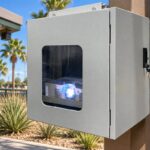
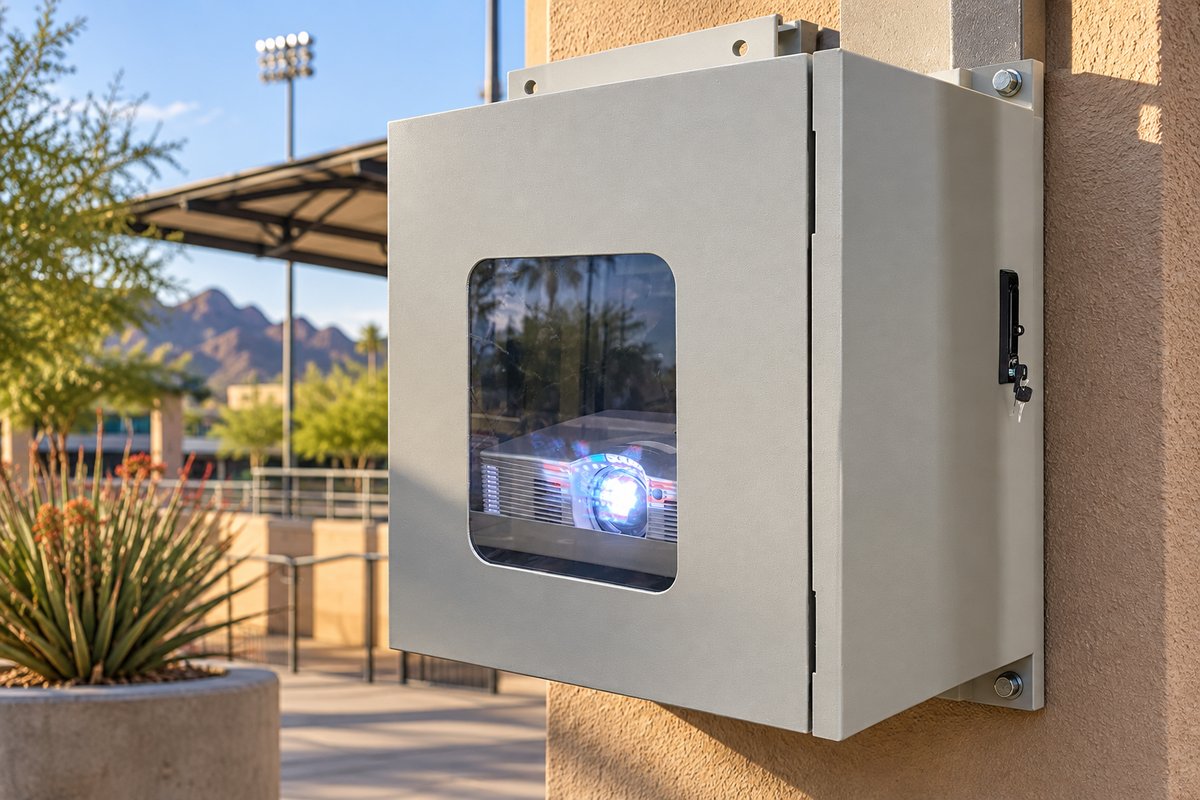
At ProjectorEnclosure.com, choosing an outdoor projector enclosure starts with your projector model and size. Outdoor installations in Peoria, AZ almost always require weatherproof protection with active cooling. The Defender Series Projector Enclosure is engineered specifically for open-air use in harsh environments like Peoria, featuring robust construction, powerful fan cooling, and protection against dust, heat, and storms.
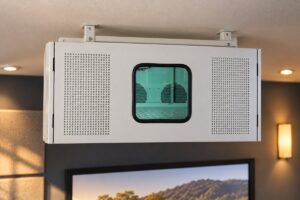
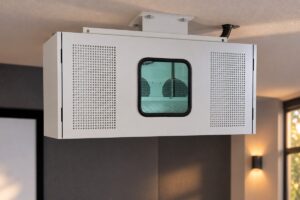
For uniquely short-throw projection needs, the UST Defender Series Enclosure is built for today’s ultra-short-throw projectors, offering similar all-weather benefits in a custom form factor. These models go beyond a basic box—they use climate control and specialized airflow to counter both radiant heat and high humidity, safeguarding electronics even as Peoria’s weather swings from dry to monsoon-damp quickly.
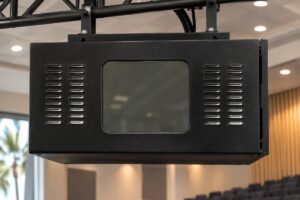
Do not use the Hush Series (indoor only) or the Integrator Series (for covered, conditioned spaces) for fully exposed outdoor installs in Peoria. For residential projection mapping or home entertainment displays that are outdoors, the HomeLine Projector Enclosure provides an accessible, weather-resistant solution for protected outdoor spaces. Always start by sending your projector make and model to ensure a correct fit.
Planning Power and Electrical Access
Reliable power is non-negotiable for outdoor projectors and their enclosures in Peoria’s climate. Fluctuations and surges, especially during storm season, can damage equipment or interfere with fan-cooling systems. Check your job site’s electricity service area; most of Peoria is in the Salt River Project (SRP) service territory, which is a helpful resource for confirming reliable power arrangements, available connections, and electrical upgrades if needed.
Plan wiring for both the projector and the climate-cooling fans within the housing. It’s best to use dedicated, weather-rated outlets, and consider surge protection to shield sensitive equipment from the power variations that can happen during summer lightning. For permanent installations, a licensed electrician should install outlets to code and help you route power for control wiring, automation, or network access.
Don’t overlook backup power—during summer, grid interruptions are more frequent, and even a brief outage can lead to overheating if active enclosure cooling fails. Battery backups or smart UPS devices supplying the enclosure can prevent thermal stress during emergencies or power blips.
Mounting and Location: Addressing Sun, Heat, and Weather
The right mounting location can boost both projector performance and enclosure lifespan. In Peoria, shaded placement is always preferred—direct sun on the enclosure increases internal heat, straining cooling fans and raising the risk of overheating. If shading isn’t possible, make sure your outdoor projector enclosure uses high-efficiency fans and is located to encourage airflow around the housing itself.
Solid mounting is crucial to resist wind loads, monsoon gusts, or accidental impacts. Weatherproof projector housings like the Defender Series are designed for pole, truss, ceiling, or wall-mounts, but always anchor securely using hardware rated for outdoor use. Avoid placing enclosures under roof edges or trees that might drip or shed debris during storms—wind-blown rain can easily find lateral entry points.
For security and maintenance, plan a mounting height that discourages unintended access but allows safe service. Consider sightlines if projecting onto public spaces: glare, street lighting, and trees can affect your picture quality and, in Peoria, airborne dust can further complicate line of sight if not appropriately managed.
Ventilation and Climate Control: Keeping Projectors Alive in Summer
Heat is the single biggest threat to projector longevity in Peoria’s summers. Standard projector fans are not built for the near-constant 100°F+ outdoor air temperatures, much less the oven-like heat of direct sun. That’s where climate controlled projector enclosure technology excels—integrated fans, optional cooling modules, and intentional airflow paths keep hardware within operating temperatures, even as ambient air soars.
Both the Defender Series and UST Defender Series feature high-efficiency cooling, allowing them to cycle out hot air, block dust, and maintain internal conditions suitable for sensitive AV electronics. Adjustable vents and replaceable dust filters are critical during haboob season when fine particulates are everywhere—simple mesh screens are not enough in this environment.
Humidity—while not always present in Peoria—will jump after storms. Select enclosures with gasketed doors and weather-sealed connections to block both liquid and vapor ingress. Maintain and inspect cooling systems regularly, especially filters, as dust or insect buildup can quickly restrict airflow and create hot spots.
Permitting and Code Considerations
Before ordering your enclosure or finalizing your outdoor installation, review local permitting requirements. Outdoor AV installations can fall under electrical or low-voltage regulations, especially for commercial venues, schools, and churches. Check with your city’s permit office, as permit requirements can vary by zone and are often project-dependent.
For permanent or semi-permanent installs, enclosures commonly require an exterior alteration or utility permit, as well as adherence to local fire and electrical codes. It’s also wise to consult the SRP service territory office about any power supply or trenching plans connecting to their grid. Their knowledge of local code and experience with exterior-powered devices can be a practical resource.
Homeowners will generally have a simpler permit process if the projector is for personal use—but always confirm with your local building office. For new construction or major renovations at venues, involve your architect or project engineer to ensure all mounting and power elements are up to code, safe, and durable in Peoria’s weather extremes.
Maintenance and Ongoing Protection
Maintaining your outdoor projector enclosure is essential for long-term performance, especially with Peoria’s dynamic climate. Schedule quarterly inspections to check fasteners, weather seals, and filtration systems. Dust and insect intrusion are the two most common issues—both degrade cooling efficiency and projector image clarity over time.
During monsoon season, check for water pooling around mounts, inspect for corrosion, and verify that all enclosure fans are operational. In the dry season, prioritize cleaning dust filters and making sure mice or insects haven’t entered through wiring runouts. Keep records of filter replacement and cleaning cycles.
If you are integrating automation or remote monitoring, make sure sensors and alert systems are shielded from environmental extremes, just like the projector. For larger venues or recurring events, assemble a quick-access kit for minor field repairs or filter swaps, especially around major Peoria festival periods.
Projector Enclosure Sizing and Fit: Why It Matters
No two projector models are the same size, and selecting the right enclosure is more than just ‘box bigger than projector.’ Too tight, and cooling airflow is restricted. Too loose, and dust or condensation can linger, threatening electronics. At ProjectorEnclosure.com, every outdoor projector enclosure is sized to your specific hardware to ensure both easy installation and reliable performance.
Use the detailed Projector Enclosure Fit Guide to submit your projector make and model, or reach out for expert selection help. Providing accurate dimensions, lens requirements, and expected environmental exposure allows enclosure experts to recommend the appropriate Defender Series, UST Defender, or HomeLine model. It’s always smart to consider future projector upgrades when selecting your enclosure, to avoid outgrowing it early.
Right-sized enclosures ensure that airflow, filter access, and cable management all align with your projector and installation type—avoiding service headaches and ensuring long-term outdoor survival in Peoria’s tough conditions.
FAQ: Peoria, AZ Outdoor Projector Enclosures
How does Peoria’s climate compare to other regions for outdoor projection?
Peoria’s major challenges are extreme summer heat, powerful sun, sporadic humidity spikes due to monsoon storms, and frequent, fine dust from desert winds. Compared to more temperate or less windy locations, protecting projection equipment here requires more robust weatherproof projector housing and advanced fan cooling to counteract intense daytime temperatures and airborne dust.
What’s the best way to ensure projector longevity outdoors in Peoria?
Choose a climate controlled projector enclosure like the Defender Series, mount it in a shaded, secure location, and maintain regular inspections—especially replacing dust filters and checking for insect buildup. Always match the enclosure to your projector model and plan for reliable, surge-protected power as offered in the SRP service area.
Do I need a permit to install an outdoor projector enclosure in Peoria?
Permit needs depend on installation type and project location. Permanent, powered, or commercial projects usually require local permits and compliance with building and electrical codes. For details on your specific site, check with the city permit office or consult local resources—regulations are project-dependent, and code guidelines may change.
Ready to protect your projector investment in Peoria’s challenging climate? Request an enclosure quote today or send your projector model for expert sizing help by phone at 888-631-5880 or email at ssisales@ssidisplays.com. Every solution is custom matched to your needs.
Supplies mentioned in this guide
Defender Series Projector Enclosure
Integrator Series Projector Enclosure
Hush Series Projector Enclosure
UST Defender Series Enclosure
HomeLine Projector Enclosure
Projector Enclosure Fit Guide
Outdoor Projector Enclosures in Gilbert, AZ: A Practical Local Guide