
A Practical Pittsburgh Guide: Protecting Outdoor Projectors for Projection Mapping Displays
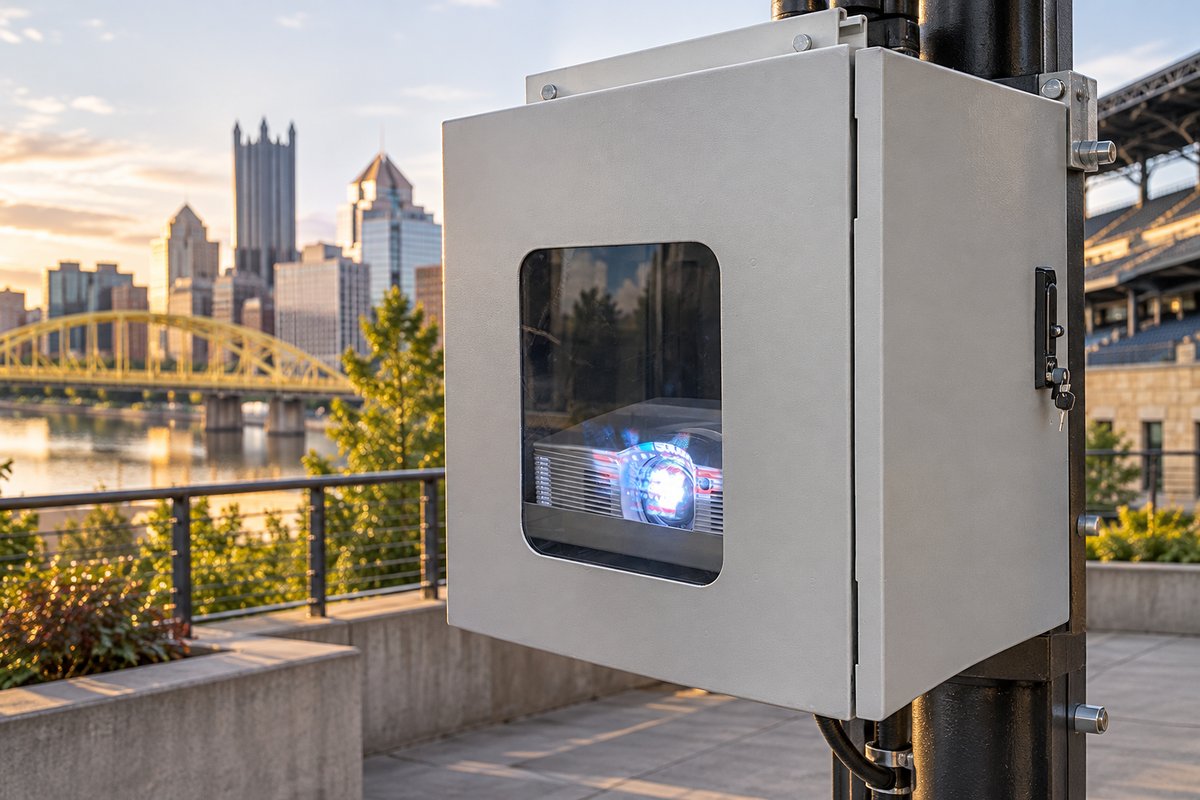
A Practical Pittsburgh Guide: Protecting Outdoor Projectors for Projection Mapping Displays
With projection mapping shows lighting up Pittsburgh homes and buildings this season, be prepared for the region’s weather—learn how to select and install the right outdoor projector enclosure and keep your display safe and stunning.
The Season for Projection Mapping in Pittsburgh
Pittsburgh’s fall and winter holiday season brings a growing trend—homes, churches, schools, and businesses across the city and suburbs are transforming with dazzling projection mapping displays. From Halloween animations on house facades to elaborate Christmas light shows and interactive storefronts, outdoor projection mapping has taken off. But Pittsburgh’s weather is famously unpredictable, with wet falls, cold winters, humidity, and more than a few surprise storms. For homeowners and event producers planning a show, protecting your projection mapping projector against heat, moisture, dust, and salty winter air is just the first step for a smooth display season—and it’s especially important now as holiday setups get underway.
To help, this guide brings together local expertise on Pittsburgh’s environment, practical installation tips, and the right way to size, specify, and protect your outdoor projector. Whether you’re illuminating a house for the holidays, mapping a church facade, or organizing community events, planning ahead is key to hassle-free operation.
Pittsburgh’s Climate: Challenges for Outdoor Projection Mapping
Outdoor projectors in Pittsburgh face unique threats year-round: warm, humid summers; brisk, damp falls; icy, snowy winters; and plenty of rain in between. Summertime heat and humidity can stress electronics and optics, while fall brings unpredictable rainstorms that threaten exposed gear. Come winter, wind-driven snow, ice, road salt mist, and temperature swings present even more risks. The National Weather Service Pittsburgh, PA forecast (link) is invaluable for monitoring conditions before and during your outdoor projection mapping event.
Urban areas, especially neighborhoods close to rivers or roadways, see additional dust and airborne salt in the air—especially after road salting operations. These contaminants can damage unprotected projectors, fans, and circuits. It’s essential to choose an outdoor projector enclosure designed to keep out not just rain and snow but airborne grit and water jets from every direction.
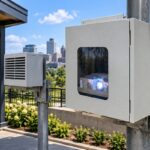
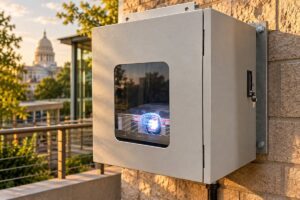
Unlike an improvised ‘weatherproof box,’ a purpose-built Defender Series Projector Enclosure offers IP66-equivalent protection against dust and powerful water jets, while the UST Defender Series Enclosure supports ultra-short-throw museum and storefront installs. Both are sized to your projector and engineered for real outdoor exposures.
Understanding Enclosure Options: Defender, UST Defender, HomeLine
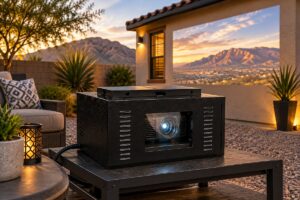
Choosing the right projector enclosure starts with your application. For open-air projection mapping—holiday house shows, business displays, church facades, and permanent outdoor setups—the Defender Series is the standard choice, offering robust all-weather defense for most common projectors. If your projector is a short-throw or UST model and needs to sit very close to the wall, the UST Defender is purpose-built for these tight installations common in retail window and home mapping setups.
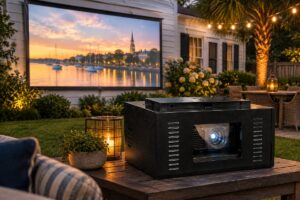
Homeowners looking for a solution tailored to home projection mapping (for example, projecting onto the front of their house for Halloween or holiday animations) will find the HomeLine Projector Enclosure ideal. It’s designed for home use while retaining professional-grade features to keep your projector safe from the weather and dust that Pittsburgh’s winter and spring winds can bring.
Importantly, always size your enclosure to your projector model for proper fit, thermal management, and serviceability. Use the Projector Enclosure Fit Guide and be ready to send your projector’s make and model to ensure a perfect match.
Weather, Rain, Humidity, and Salt: The Enclosure’s Role
The elements are relentless in Pittsburgh. A successful outdoor display means controlling all the ways rain, condensation, frost, and salty air might reach your projector. Even a brief crack in a DIY housing can admit moisture, leading to electrical shorts, corrosion, or mold growth. Commercial enclosures like the Defender Series boast IP66-equivalent protection—effectively sealing out both fine dust and pressurized water jets that accompany stormy nights and winter thaws.
High humidity can build inside any sealed box if it’s not properly ventilated. Purpose-built enclosures integrate heat management, active airflow, and anti-condensation measures to keep optics crisp and electronics dry. Pittsburgh’s dense fogs and wet winters demand more than just a rain cover—ventilation, hydrophobic filters, and thermostatic controls are critical features that protect your projector’s performance year after year.
For permanent installations near busy streets or bridges, an all-weather outdoor projector enclosure for projection mapping helps combat not just moisture but corrosive salt, soot, and particulates swirling through seasonal winds. This is especially important in late-fall and winter when salting trucks are active across Allegheny County.
Power Planning: Safe and Reliable Connections
Supplying stable power to your outdoor projector is mission-critical. Route electricity from a reliable source with proper weatherproofing on all external connections. For new circuits, or when in doubt, check with your electrician and consult the Duquesne Light Company (link) for guidance regarding service, outages, or upgrades in your Pittsburgh neighborhood.
Outdoor installations should always use GFCI (Ground Fault Circuit Interrupter) outlets and weather-tight covers. Extension cords rated for outdoor use and protected cable runs minimize trip hazards and exposure risks. For high-powered building-facade setups or commercial venues, factor in total current draw, and always allow headroom for the projector and enclosure fans or heaters.
Make a checklist: Is the installation location near a safe, accessible power source? Will water pool around outdoor outlets or cables? Is the enclosure’s power cord properly shielded from foot and vehicle traffic? Addressing these questions in advance makes for a hassle-free projection mapping experience.
Enclosure Mounting: Structural Considerations in Pittsburgh
Mounting your projector enclosure is about more than picking a stable surface—it’s about anticipating the structural loads from vibration, storms, and even snow or ice buildup during Pittsburgh’s winters. Always mount to a secure, load-bearing structure (such as sturdy exterior walls, soffits, or custom posts anchored in concrete). Avoid shaky decks or temporary surfaces.
Permanent installations in commercial zones, churches, or public spaces may require additional engineering review. Factors like wind exposure, risk of falling ice, and anti-theft security must be weighed against aesthetics and projection angle. Especially in historic neighborhoods or storefront districts, use discreet bracketing and ensure no interference with pedestrian flows or emergency egresses.
Most importantly, never block or restrict the enclosure’s ventilation or service panels during installation. Consult the mounting instructions provided with your chosen enclosure—whether you’re using the Defender Series, UST Defender, or HomeLine—and reference the Projector Enclosure for House Projection Mapping page for installation tips specific to residential setups.
Ventilation: Keeping Cool During the Show
Projectors generate substantial heat during operation—especially during long holiday shows or multi-day festivals. Pittsburgh’s cool nights can encourage users to overlook the importance of active enclosure ventilation, but trapped heat (or, in summer, ambient air) can still overheat sensitive electronics. That’s why every outdoor projector enclosure for projection mapping needs forced-air fans, clever airflow patterns, and condensation management strategies.
Proper ventilation also helps prevent fogging of the enclosure’s glass or acrylic window, protecting image clarity in foggy or humid Pittsburgh evenings. Hydrophobic vent filters further guard against water ingress while allowing air exchange. Always check for clear, unobstructed vents after installation and before each use, and avoid stuffing cabling or external elements near intake or exhaust openings.
Choosing the right enclosure size—matched by model using the fit guide—ensures there’s enough space for airflow around your projector. If your display runs for many hours or is mounted in direct sun, note this during sizing, as additional ventilation measures may be recommended.
Permits and Local Rules for Outdoor Installs
In Pittsburgh, most permanent outdoor electrical or AV installations—including those for projection mapping displays on homes or commercial buildings—fall under the city’s permitting and inspection requirements. Before you drill, mount, or run power, check the City of Pittsburgh’s permit tracker (link) for your project’s status or to see which permits may be necessary for outdoor electrical, supports, or structural additions.
Permitting can depend on your building’s age, location (especially in historic districts), the size and brightness of your projector, and whether your installation is temporary or permanent. Consult with a local AV integrator or contractor experienced in Pittsburgh codes, and don’t forget to update your neighbors or local businesses if you’re producing a public display or festival mapping event.
Permitting reviews can take several weeks, so plan ahead—especially during busy holiday seasons. Always follow up with local officials using the permit status page, and retain all paperwork for future expansion or removal.
- Duquesne Light Company — electric supply and service for safe projector operation
- National Weather Service Pittsburgh, PA forecast — real-time weather alerts
- Pittsburgh permit tracker — check your outdoor AV installation permit status
FAQ: Pittsburgh Outdoor Projection Mapping Setups
How do I keep my projector safe during Pittsburgh’s winter?
The best defense is a properly sized outdoor enclosure such as the Defender Series or UST Defender, which keep out freezing rain, snow, dust, and airborne salt thanks to their IP66-equivalent protection. Smart ventilation prevents condensation and maintains optimal temperature, even on the coldest nights. For seasonal displays, always unplug and store your projector and enclosure indoors after the holiday season to extend their life.
Do I need a permit for a holiday house projection display?
Permit requirements vary. Temporary seasonal setups at home may not require a permit, but permanent wiring, large-scale projection mapping on commercial properties, or anything mounted on public-facing areas typically does. Use the Pittsburgh permit status tracker linked above to check or apply, or contact local officials if unsure.
What’s the best enclosure for a home projection mapping display?
The HomeLine Projector Enclosure was developed for homeowners creating holiday, Halloween, and special event displays. It protects against Pittsburgh’s rain, snow, and dust, and it’s sized by your specific projector model. For UST (ultra-short-throw) projectors, select the UST Defender for close-to-wall applications.
Get Your Pittsburgh Projector Enclosure
This season, don’t let Pittsburgh’s climate put your projection mapping display at risk. A well-chosen, properly installed enclosure ensures your projector performs brilliantly regardless of the weather. ProjectorEnclosure.com offers real-world solutions for every application—from home holiday shows to storefront displays. Use the projector enclosure fit guide to start sizing your display, and be sure to send your projector model for a tailored recommendation.
Supplies mentioned in this guide
Defender Series Projector Enclosure
UST Defender Series Enclosure
HomeLine Projector Enclosure
Projector Enclosure for House Projection Mapping
Projector Enclosure Fit Guide
Planning an Outdoor Projector Enclosure for Oklahoma City Projection Mapping Shows