
Planning Outdoor Projector Installs in Georgia: A Practical Guide
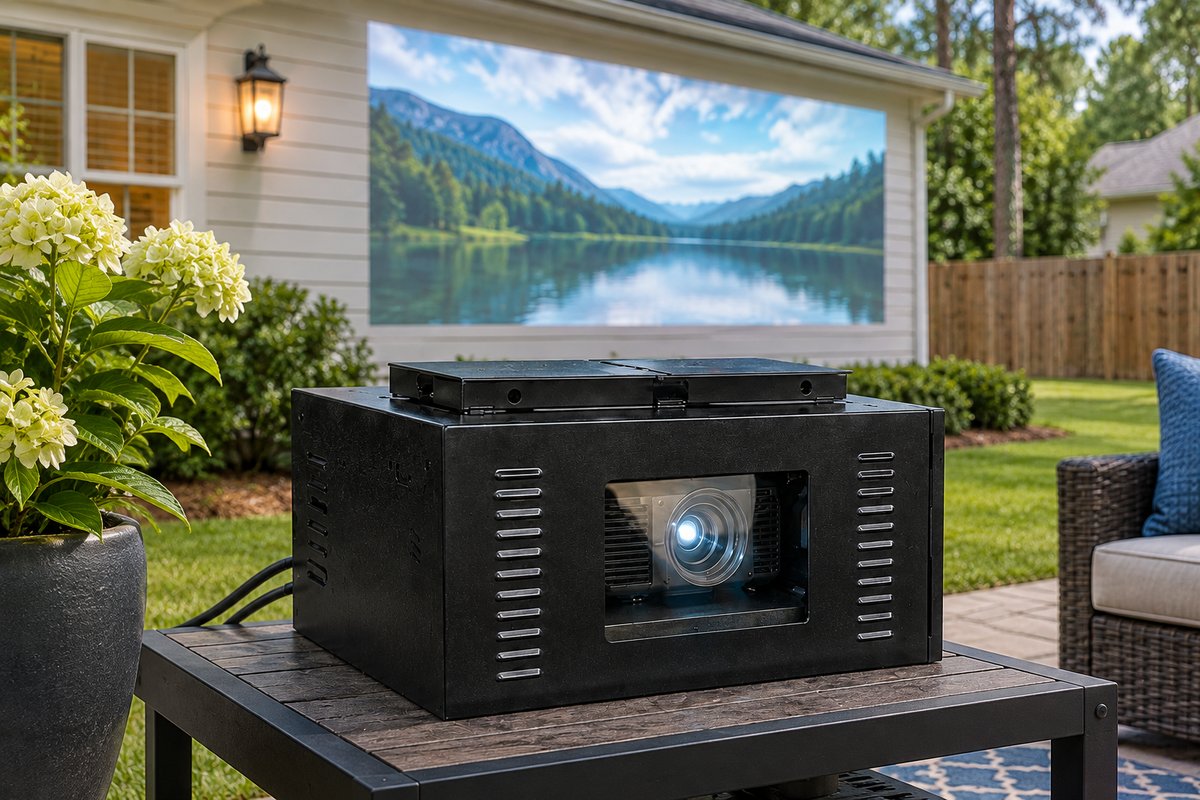
Planning Outdoor Projector Installs in Georgia: A Practical Guide
Georgia’s unique combination of heat, humidity, storms, and coastal air demands careful planning for any outdoor projector. This guide covers enclosure choices, mounting, power, and permitting for reliable year-round installations.
Why Georgia’s Climate Demands Smart Outdoor Projector Enclosures
Installing an outdoor projector in Georgia presents unique challenges. The state’s long, hot summers bring direct sunlight, which heats enclosure surfaces well above the ambient air temperature. This heat, coupled with persistent high humidity, can drastically degrade projector components unless they are adequately protected. Along the coast—including popular event spots from Savannah to St. Simons—salt air accelerates corrosion, while dust and sand are ever-present concerns around construction and heavily landscaped sites.
These threats mean not just any enclosure will do. ProjectorEnclosure.com recommends climate-controlled or fan-cooled weatherproof projector housing engineered to handle extreme conditions. For large venues, churches, schools, resorts, or backyard projection mapping, understanding how projections interact with Georgia’s environment is the first step to long-term performance and a reliable guest experience—even during the South’s unpredictable weather swings.
From summer pop-up cinemas in Atlanta to waterfront resorts, keeping your projector investment safe and your content clear hinges on matching the right enclosure to the local climate. Read on for site-specific guidance on projector enclosure selection, placement, ventilation, power, and required approvals.
Heat, Humidity, Dust and Salt Air: The Local Threats
The primary enemy of outdoor projectors in Georgia is heat. Enclosures exposed to the midday sun can experience internal temperatures that exceed manufacturer guidelines, quickly leading to thermal shutdown or irreversible damage. Fan cooling and active climate control are crucial, especially if your installation faces southern or western exposures where the sun is intense for long stretches.
Humidity is a year-round concern, with muggy summer air and frequent thunderstorms. High moisture speeds up component wear and can lead to electrical shorts or mold inside the enclosure. Near the coastline, salt air compounds these issues: it is highly corrosive, especially to hardware and electronics. Choosing a climate controlled projector enclosure specifically built for open weather is vital for long-term reliability.
Dust and pollen enter every season in Georgia, either blown in by storms or kicked up by nearby landscaping. These contaminants can cloud lenses or clog ventilation systems. ProjectorEnclosure.com’s Defender Series tackles dust and moisture together with sealed, active airflow paths and easy service access. For homeowners using projection mapping or backyard movies, the HomeLine Projector Enclosure offers scaled-down protection with robust construction to help avoid costly replacements after a single stormy weekend.
Planning Power: Reliable Supply for Outdoor Projectors
Outdoor projection setups have special electrical needs. A stable, dedicated power supply prevents voltage dips that can damage sensitive projectors or cause untimely shutdowns during events. Georgia’s summer storm season also brings frequent outages and lightning, adding further risk to equipment if not properly managed.
Wherever you are in the state, start by confirming the local grid’s capacity with resources like the Georgia Power Company. They provide important information on available service, outage histories, and safe installation tips for exterior AV equipment. You may need a licensed electrician to install weatherproof outlets, grounded circuits, or surge protection tailored to the projector’s voltage and amperage needs.
If you plan frequent moves or seasonal setups, build quick-disconnect power access points into your site plan. Always review the projector manufacturer’s requirements and discuss with your enclosure supplier—projector model details affect both electrical sizing and enclosure cooling needs. When in doubt, contact ProjectorEnclosure.com for a fit and power consultation.
Enclosure Selection: Matching Model and Mount to the Site
The proper outdoor projector enclosure depends not just on your climate, but on where and how you plan to use the projector. Barn rafters, poolside cabanas, and venue rooflines each require different mounting hardware, cooling power, and access for maintenance or lamp replacement. Precise sizing is crucial, and ProjectorEnclosure.com offers a straightforward Projector Enclosure Fit Guide to ensure your enclosure matches your device’s length, width, and height—with space for ventilation, brackets, and cabling.
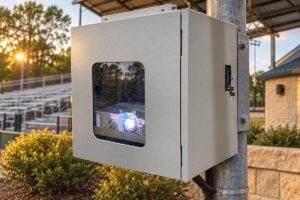
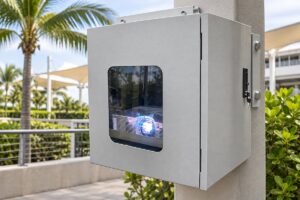
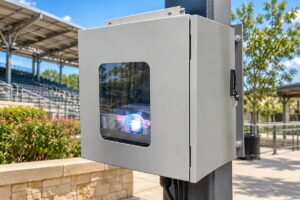
For nearly all open-air sites or semi-enclosed pavilions in Georgia, the Defender Series Projector Enclosure is the recommended solution. It offers robust weatherproofing and active cooling options that combat the state’s sun, humidity, and salt air. Home users and seasonal attractions may also explore the lightweight HomeLine for simpler jobs. If your projector will be in a partially conditioned space (like an enclosed but ventilated patio), the Integrator Series can be considered—but it is not intended for truly outdoor, unsheltered locations.
Ultra short throw projectors, popular for high-impact mapping or close-up displays, also need purpose-designed housing; the UST Defender Series Enclosure addresses this specific form factor. Because each projector model has unique cooling and clearance needs, always send your model info to ProjectorEnclosure.com for detailed sizing before finalizing your mount or order.
Proper Mounting and Placement in Georgia’s Outdoor Spaces
Mounting your enclosure securely is as important as selecting the right model, especially in environments prone to high winds and sudden storms. Heavy rain and strong gusts—particularly during Georgia’s hurricane season—demand mounting solutions that keep the enclosure rigid and vibration-free, even under stress.
Consider the structural materials at your install site: wooden beams expand and contract with humidity, while metal poles require rust-resistant hardware near the coast. Mount higher than local flood lines and always aim for shaded placement where feasible, which reduces solar gain and eases cooling demands. A well-sited mount can add years to your projector’s reliable life while minimizing service calls during peak seasons.
For mobile projection or venues with changing orientations, use adjustable mounts that allow for quick projection alignment. Never block cooling airflow, and keep all intake and exhaust vents clear of seasonal debris or overgrown landscaping. Consult ProjectorEnclosure.com for recommended mounting accessories compatible with your chosen enclosure series.
Ventilation: Keeping Cool During Georgia Summers
Effective ventilation is critical in Georgia, where noon temperatures and high humidity often combine for a sweltering heat index. Passive vents may be overwhelmed by the needs of higher-output projectors or by enclosures in direct sunlight, causing potentially damaging heat buildup.
Choose a climate controlled projector enclosure with fan-assisted cooling and airflow directed across both the projector intake and exhaust. The Defender Series and UST Defender Series Enclosure both feature robust, active cooling options—keeping projectors safely within operational parameters no matter the outside temperature. For partial indoor placements, the Integrator Series provides quieter, controlled airflow suitable for spaces protected from the elements.
Periodic maintenance is just as important: clear out leaves, pollen, and dust from external louvers, and schedule regular filter inspections. In coastal applications, rinse salt deposits from exposed drainage or vent grilles to prevent corrosion. For sizing and system design support, always contact ProjectorEnclosure.com with your full site description and projector model.
Permits, Zoning, and Local Approval: What You Need to Know
Most permanent outdoor projector enclosures in Georgia will require some level of permitting, just like any AV infrastructure or outdoor signage. Local rules govern not only electrical hookups but also mounting, sightlines, and sometimes even lighting or noise levels at night. Failing to check these regulations can cause costly rework or removal after installation.
The best starting point is your county’s building and planning authority—for the Atlanta region, review Inspection Codes to clarify project requirements and typical documents. City-specific rules, such as those maintained by the Atlanta Office of City Planning, should also be reviewed to confirm your structure meets neighborhood restrictions and is located safely away from utilities or pedestrian walkways.
Permit complexity can vary from site to site, so bring detailed enclosure information and electrical plans to early consultations. For event organizers or integrators, clarify if temporary installations need separate event permits from local code. When in doubt, work with a licensed electrician and check your enclosure selection with ProjectorEnclosure.com’s support team.
Weather Planning and Project Scheduling
Outdoor projection is all about timing and readiness. Throughout Georgia, sudden thunderstorms or high winds can disrupt an event—or damage unprotected AV gear. Always use regional weather resources such as the NWS Decision Support Services for accurate site-specific forecasts and planning hazard briefings for your schedule.
If your installation is near the coast, be especially mindful during hurricane season. Even inland events can be affected by storm surges or extended wet periods. Protect your projector’s lens and outputs with weather shrouds when not in use, and consider rapid-deployment covers for last-minute weather threats if the enclosure must be opened for service or adjustment during an event.
ProjectorEnclosure.com support can help plan off-season storage or scheduled maintenance protocols for seasonal venues. For large or institutional installations, maintain a log of site checks, enclosure cleaning, and power tests to avoid surprises during critical event dates.
FAQ: Common Outdoor Projector Enclosure Questions
What enclosure is best for both heat and salt air in Georgia?
The Defender Series is purpose-built for open weather, providing robust protection against both high temperatures and corrosive salt air. Always provide your projector model and site details to ProjectorEnclosure.com for tailored sizing.
How do I determine power needs for an outdoor installation?
Review your projector’s voltage and amperage specifications, and consult Georgia Power Company or a licensed electrician for site-specific guidance. Permanent installs usually require dedicated, grounded circuits and surge protection.
Do I have to get a building permit for installing an outdoor projector enclosure?
Most permanent or electrical outdoor installs need a permit. Check with your county or city—such as the Fulton County inspection office or Atlanta City Planning—for up-to-date regulations based on your project scope.
Supplies mentioned in this guide
Defender Series Projector Enclosure
Integrator Series Projector Enclosure
Hush Series Projector Enclosure
UST Defender Series Enclosure
HomeLine Projector Enclosure
Projector Enclosure Fit Guide
Your Practical Guide to Outdoor Projector Enclosures in Phoenix, AZ