
Projection Mapping in St. Louis: How to Protect Your Outdoor Projector
Projection Mapping in St. Louis: How to Protect Your Outdoor Projector
Planning a projection mapping display in St. Louis? Learn how local weather, power, and site factors shape your choice of outdoor projector enclosure—for everything from holiday house shows to grand building facades.
St. Louis Weather and Outdoor Projector Protection
Holiday and event projection mapping season is in full swing across St. Louis, drawing curious visitors to illuminated house fronts, school buildings, and storefront displays. Yet the city’s famously unpredictable weather—ranging from sudden downpours and scattered dust to cold snaps and chilly winds—poses real risks for equipment set outside for days or weeks. Whether you’re planning a Halloween yard show, a winter holiday display, or a festival-facade projection, a robust projection mapping projector enclosure is essential to keep your projector investment safe through the season.
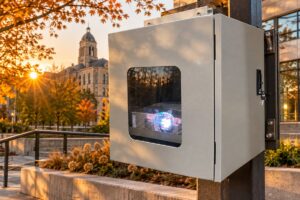
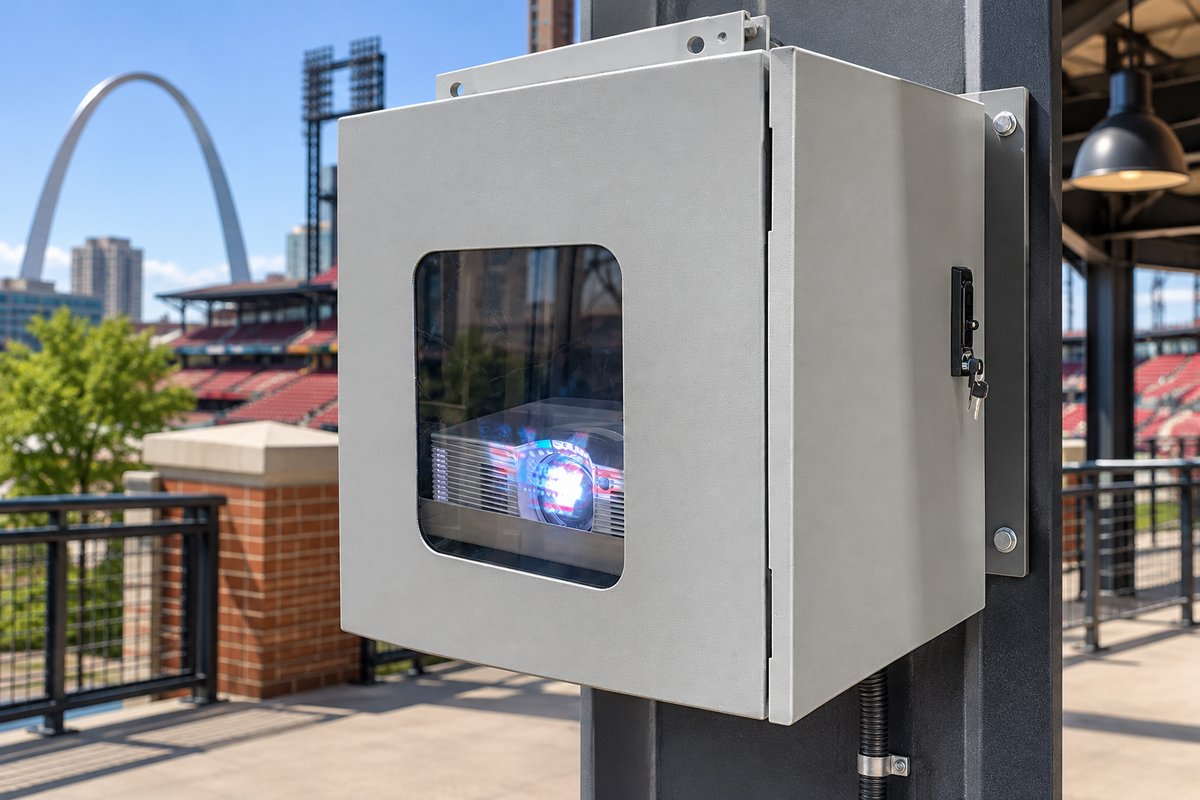
St. Louis is no stranger to heavy autumn rains, snow and ice from November onward, and humid summers that can persist into fall. For such challenging conditions, many local projection artists and AV integrators turn to solutions designed specifically for the climate. The Defender Series Projector Enclosure offers IP66-equivalent protection against heavy wind-driven rain, dust, and even powerful water jets—precisely the level of defense needed when outdoor displays face the elements for days at a time.
Before you schedule your first outdoor show, consult the National Weather Service St. Louis for up-to-date forecasts and to identify hazard windows. Planning around St. Louis’ capricious weather is critical for scheduling installations and minimizing risk, especially for multi-day events or business displays open to the public.
Understanding Local Hazards: Rain, Humidity, Dust, and Salt Air
St. Louis’ climate introduces four key hazards for outdoor electronics: rain, humidity, dust, and salt carried by seasonal winds. While heavy rainfall is most common from spring through late fall, sudden showers can cut across the metro area without warning. High humidity—especially during September events—can cause condensation and internal fogging even when skies are clear. The region’s strong winds kick up dust and debris that can infiltrate poorly sealed cases, impacting image clarity and projector cooling.
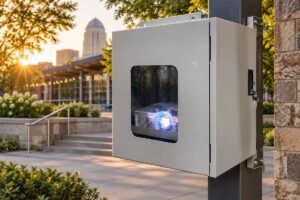
Along the Mississippi River, periodic breezes carry salt and grit that accelerate corrosion of exposed components and lenses. For installations near the river or on prominent city-facing facades, these factors must shape your enclosure choice. Opt for enclosures like the Defender Series Projector Enclosure or UST Defender Series Enclosure, engineered for IP66-equivalent protection—the industry’s best defense against wind-driven rain, blowing dust, and airborne contaminants.
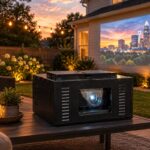
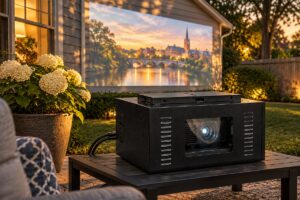
For home displays in quieter residential neighborhoods, the HomeLine Projector Enclosure is tailored to shield consumer projectors from moisture and dust for reliable performance throughout the holiday season. Always match the enclosure to your actual projector for a sealed fit; see the Projector Enclosure Fit Guide for model-based sizing.
Power Planning: Reliable Energy for All-Weather Shows
A successful projection mapping display in St. Louis starts with reliable power. Temporary setups for holiday or event shows often rely on outdoor outlets, extension cords, or even generators—but local outages and surges are common during seasonal storms and utility work. Before kicking off your event, inspect your intended power sources and map out contingency plans, such as battery backup for short interruptions.
For real-time updates on potential outages or grid stress in your area, use the Ameren Outage Map. This helps organizers time their events and installations around likely service interruptions and avoid projectors shutting off mid-show. Projects hosted at schools, churches, or businesses should coordinate with facility managers to access weather-protected, grounded circuits.
For larger-scale or commercial projection mapping, consult a local licensed electrician to verify your site’s electrical panel capacity and outdoor cable routing. GFCI outlets and IP-rated connectors are recommended for safety. Finally, always use power surge protection—especially in autumn, when lightning and grid flickers are most common.
Mounting: Secure Your Investment and Your Image
Whether you’re setting up a holiday house projection enclosure or a stunning building mapping display, sturdy and flexible mounting is non-negotiable. St. Louis winds can be unpredictable, with spring and fall gusts sometimes toppling makeshift setups. For home shows, select a mounting site protected from traffic, pets, and lawn equipment, ideally raised from standing water or drifts of leaf litter. Mount enclosures like the Projector Enclosure for House Projection Mapping on a stable flat base, with all fasteners and brackets designed for outdoor use.
Larger installations for businesses, schools, or churches often require custom trusses or building-side mounts. Wherever practical, anchor all mounting points securely into masonry or structural framing as opposed to siding or fencing. For short-throw and ultra-short-throw applications with the projector close to the projection surface, the UST Defender Series Enclosure helps align lenses precisely while guarding against water and dust at the street-front edge.
Always plan for accessibility—final alignment, bulb replacement, and post-event removal are all easier when your projector enclosure is safely reached. Double check all mounting as windstorms roll through, and inspect after each major rain or snow event.
Ventilation: Keep Projectors Cool in All Seasons
Effective projector cooling is as important in December as in July, especially for continuous projection mapping. Heat builds up inside enclosed spaces, while electronics generate warmth even in freezing weather. Modern projector enclosures for outdoor use must combine weatherproofing with active ventilation, ensuring that sensitive optics do not overheat or fog during multi-hour shows.
The Defender Series Projector Enclosure integrates forced-air movement and internal baffles to balance warmth and moisture, maintaining optimal projector function through chilly winter nights or high-humidity fall evenings. For home setups, the HomeLine Projector Enclosure provides the same consideration in a more compact package tailored to consumer projectors.
If you’re running your show outdoors during a sudden cold snap, consider timing projection windows to avoid peak chill, and check ventilation fans and filters before each event. With St. Louis’ variable humidity, these steps help prevent internal condensation that can cloud your image or damage electronics.
Permits and Local Code Considerations
While many home holiday displays fall under general residential allowances, larger projection mapping installations on commercial buildings or public spaces in St. Louis may require temporary event permits, neighborhood approvals, or reviews by city code departments. Rules vary between city and county, and may hinge on factors such as display brightness, sound, temporary structures, or power supply routing.
Start permit inquiries early—some neighborhoods have specific holiday display sign-offs, while public or school events may require fire safety inspections or insurance documentation. Always check with your local city or county office for what is required for your property type and display plans. For the most current contact links and local guidance, use the city government resources and double-check requirements as event season approaches.
Commercial venues or churches projecting onto facades or rooftops may need further engineering analyses or certified plans. Many areas focus especially on electrical safety and wiring methods. Consulting your building’s facilities team, and, where required, a structural engineer, helps minimize the risk of costly delays or removals after setup.
Sizing Your Enclosure: Fit and Model Guidance
To ensure proper environmental protection and ventilation, your enclosure should be sized specifically to your projector make and model. Gaps or overly large enclosures can admit dust and moisture, while too-tight fits hamper airflow and may over-stress projector cooling fans. ProjectorEnclosure.com offers model-based sizing for every enclosure—so whether you are investing in the all-weather Defender Series, the UST Defender for short-throw setups, or the HomeLine for home displays, send your projector model details with your quote request.
For owners and integrators who aren’t sure about best sizing, the Projector Enclosure Fit Guide offers step-by-step instructions for specifying the right enclosure dimensions for heat management and cable routing in challenging St. Louis environments.
A tailored fit maximizes both protection and projector lifespan, and ensures your holiday house projection enclosure or commercial mapping show delivers the finest possible image—no matter the weather.
FAQ: Outdoor Projector Enclosures in St. Louis
What is “IP66-equivalent” protection and why does it matter?
IP66-equivalent protection means the enclosure defends the projector from dust and from powerful water jets—exactly what matters during St. Louis rainstorms and dust-laden winds. Both the Defender Series and UST Defender enclosures provide this level of all-weather protection.
Do I need to check the weather or power status before my event?
Absolutely. Using real-time local resources helps plan your show around outages or hazardous weather. The National Weather Service St. Louis gives up-to-date forecasts, while the Ameren Outage Map highlights outages and grid status so you’re not caught off guard.
Can I use the same enclosure for any projector?
No. Projectors vary in size, heat output, and lens requirements. Always provide your specific model to ProjectorEnclosure.com so your enclosure delivers a perfect fit and proper protection. Check the Projector Enclosure Fit Guide for model-matching guidance.
Final Steps: Get Your Projector Ready for the Season
Ready to dazzle St. Louis with a stunning outdoor projection display? From holiday house projection enclosures to business and festival installations, the right enclosure keeps your expensive projector safe against local weather, dust, and humidity all season long. Whether you’re planning a home display, managing a multi-day event, or lighting up a storefront, your first step is matching your projector to a weather-protected, ventilated enclosure specifically designed for outdoor use.
Request an enclosure quote from ProjectorEnclosure.com and include your projector model for tailored sizing recommendations. For project-specific questions or to discuss options, call 888-631-5880 or email ssisales@ssidisplays.com.
- National Weather Service St. Louis, MO – Plan around local weather risks
- Ameren Outage Map – Check electrical supply reliability for your site
Supplies mentioned in this guide
Defender Series Projector Enclosure
UST Defender Series Enclosure
HomeLine Projector Enclosure
Projector Enclosure for House Projection Mapping
Projector Enclosure Fit Guide
Practical Uses for Projection Mapping Projector Enclosures in Kansas City