
Outdoor Projector Enclosure Planning for Mesa, AZ: A Practical Local Guide
Outdoor Projector Enclosure Planning for Mesa, AZ: A Practical Local Guide
Mesa’s unique heat, dust, and summer storms present serious challenges for any outdoor projector install. Explore practical steps for enclosure selection, mounting, power, ventilation, and local permits—ensuring your system thrives in Arizona’s demanding outdoor conditions.
Understanding Mesa’s Outdoor Climate: Projector Risks and Realities
Mesa, Arizona’s climate is a unique blend of searing heat, strong sunlight, monsoon rainstorms, and blowing desert dust. These factors require thoughtful planning when selecting an outdoor projector enclosure for AV installations at venues, schools, resorts, houses of worship, or even private homes. During summer, daytime temperatures often exceed 105°F, and direct sun can push surfaces even hotter, threatening sensitive projector electronics and optics. Monsoon humidity occasionally spikes, and the rare rains can be heavy—exactly the conditions where robust weatherproof projector housing is critical.
Dust is a frequent concern across Maricopa County, especially during late summer haboobs or high winds. Tiny grit can damage lenses, fans, and circuitry if not properly kept out. Moreover, while Mesa sits inland, some projects closer to Phoenix’s Salt River or areas subject to salt carried in the air will want to consider extra corrosion protection. Understanding, and regularly monitoring, the environment your projector is exposed to is the first step to planning for long-term outdoor reliability. Consult the National Weather Service Mesa forecast before installation to align with seasonal trends and current weather risks.
If you’re not sure how these local conditions affect your projector model, the experts at ProjectorEnclosure.com can help you assess the challenges of your specific application and recommend the right solution to safeguard your investment.
Choosing the Right Outdoor Projector Enclosure: Mesa’s Essential Features
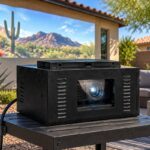
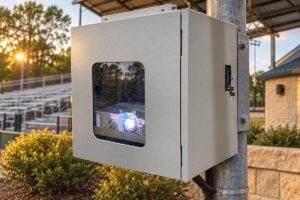
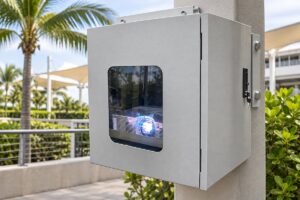
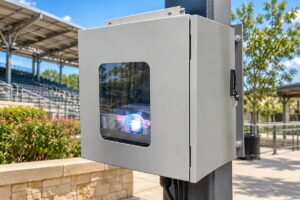
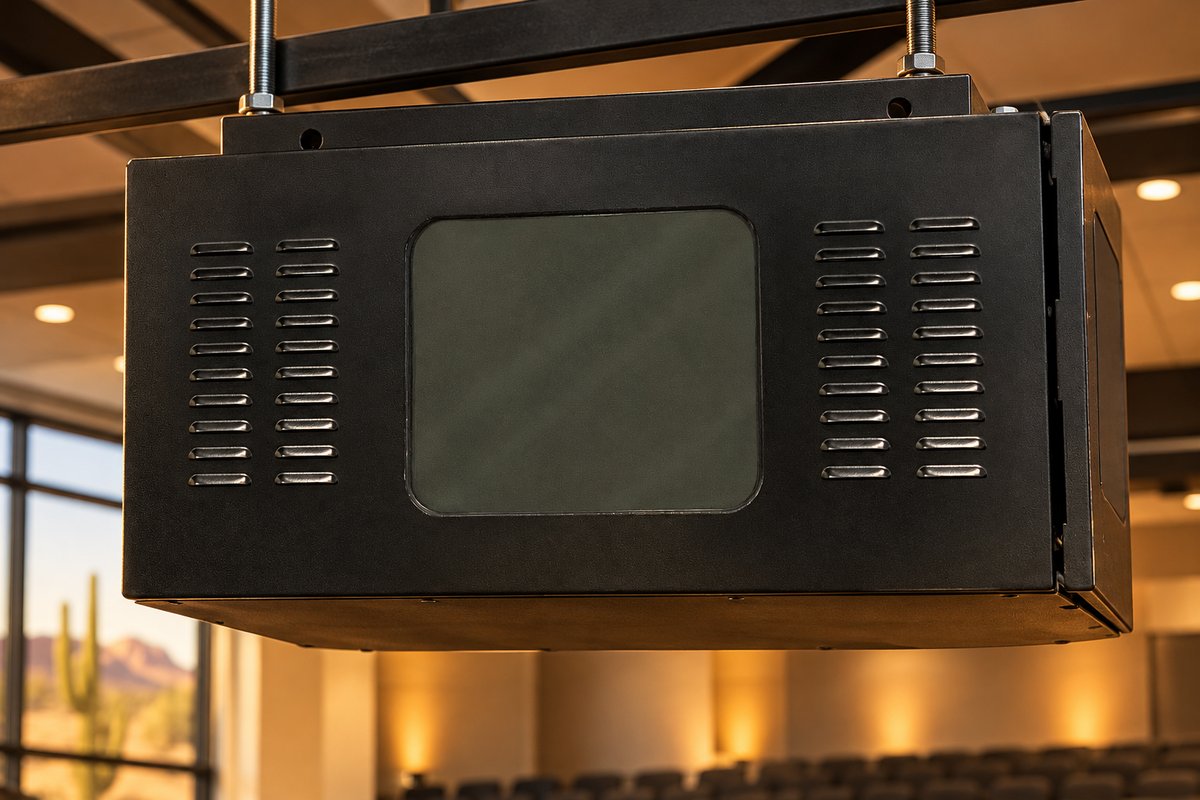
Not all projector housings are built to face the Arizona outdoors. When selecting an outdoor projector enclosure for Mesa, prioritize models engineered to protect optics and electronics from extreme heat, unexpected rain, dust storms, and even salt air micro-environments. The Defender Series Projector Enclosure is designed specifically for these all-weather, high-risk settings. Its active cooling capabilities and sealed construction offer a strong defense against local environmental threats.
Fan-cooled designs are particularly useful in the desert heat of Mesa. Passive (unpowered) vents may draw in hot or dusty air, but a climate controlled projector enclosure creates a stable, safe microclimate for your projector to run—helping maintain temperature and humidity below damaging levels. Be wary of bringing indoor-only models outside: the Hush Series serves quiet rooms like studios or home theaters, not open Arizona weather, while the Integrator Series is for climate-controlled or protected settings only. Double-check your application before purchasing, and always consult a Projector Enclosure Fit Guide to size your enclosure to your projector model.
For venues exploring outdoor projection for ultra short throw setups or specialty displays, the UST Defender Series Enclosure offers tailored protection. Residential clients interested in consumer-level mapping and displays should consider the HomeLine Projector Enclosure. Always send your projector model details to ProjectorEnclosure.com for personalized fit and feature recommendations.
Planning Power for Outdoor Projector Installations in Mesa
Providing reliable power is fundamental for projector longevity and enclosure performance, especially under Mesa’s harsh summer sun. Heat dramatically raises the current demands of projector lamps and cooling systems. Work with a qualified electrician and start by reviewing your available service via the Utilities – City of Mesa resource to ensure the local circuit can handle both the projector and any active enclosure’s fans, heaters, or other climate control components.
It’s best to provide dedicated circuits for outdoor AV equipment to help mitigate voltage drops and power surges caused by high air conditioner or irrigation pump use on the same line. Weatherproof junction boxes and GFCI outlets should be mandatory for safety and code compliance. All outdoor power runs should be installed in conduit rated for direct sunlight and wet locations, routed with thoughtful cable management to protect against trip hazards and animals.
Consider backup or surge protection, particularly in areas prone to lightning or where seasonal storm events can cause momentary outages. This step not only safeguards your technology investment, but also helps ensure seamless operation for events and scheduled displays even during peak local demand or changing weather conditions.
Optimized Mounting and Placement: Shade, Access, and Security
Where and how you mount your enclosure in Mesa can dramatically affect system life and ease of use. Seek shaded locations, either natural or built, to minimize enclosure heat gain and reduce the cooling burden, particularly during the midday sun. Overhead installations, such as under permanent awnings or purpose-built shades, offer both UV protection and improved airflow. Avoid orienting vents or access panels toward prevailing winds to help keep dust ingress minimal during storms.
Solid, vibration-free mounts are critical for projection image stability and enclosure longevity. Use secure fasteners appropriate for masonry, steel, or wood structures common in Mesa construction. Position the enclosure for easy lamp or filter access, as routine maintenance will be required more frequently in dusty or high-pollen seasons.
Security also deserves attention—especially in public parks, school yards, and resort venues. Tamper-resistant locks and obscured mounting hardware help prevent unauthorized access and tampering. Always coordinate with site management and, for commercial properties, ensure your installation does not block egress paths or create hazards by checking with operational staff or referencing local permit offices.
Managing Ventilation and Climate Control in the Desert Southwest
Effective ventilation and active climate control are vital in Mesa where outside air soars well past safe operating temperatures for electronics. A climate controlled projector enclosure like the Defender Series deploys internal fans and specialized airflow channels to move air efficiently over the projector’s heat-producing components, driving temperatures lower than simple pass-through vented designs could achieve.
For outdoor units, filter maintenance is especially important due to windborne dust and pollen, both of which are common in early summer and after monsoon downbursts. Regular checks and cleaning schedules are a must. In some rare environments—such as near the Salt River or in irrigated greenery—high humidity may also be a factor, so ensure the enclosure selected is properly sealed and has a suitable active or passive humidity balancing option.
Remember, enclosed projectors generate considerable heat even while the sun is down, so never rely solely on nighttime operation to reduce system strain. Always verify your enclosure’s suitability with a product selection tool like the Projector Enclosure Fit Guide and stay in contact with experts familiar with high-performance AV deployments in Arizona conditions.
Understanding Local Regulations and Outdoor AV Permits in Mesa
Any permanent outdoor projector and enclosure installation—especially in public or commercial spaces—may be subject to Mesa’s permitting, zoning, and safety regulations. Requirements can differ based on installation type, enclosure size, property zoning, and proximity to rights-of-way or neighboring buildings. Before committing to a plan, consult the city’s official resources and check with your venue’s facilities office or property manager.
Some projects may need electrical permits, structural reviews for large mounting frames, or even approvals from fire authorities if the system will be used during large gatherings. Begin by referencing the Utilities – City of Mesa site to understand what permits may be involved in conjunction with new power runs or electrical modifications.
Keep in mind that regulations evolve and can be subject to site-specific interpretation—there is no one-size-fits-all answer. For event-driven installs, temporary permits may suffice, but for year-round operations (like school or resort venues), more rigorous compliance is usually required. Always check with the office linked above before you proceed to avoid costly modifications or delays.
Projector Enclosure Sizing: Why Every Model Matters
An enclosure that is too large wastes power, mounting resources, and may even compromise dust or rain protection. Too small, and your projector may overheat or risk restricted airflow. The single most important detail to get right is matching your projector’s make and model to a properly engineered housing.
Unlike mass-market options, solutions from ProjectorEnclosure.com are sized to the actual dimensions and thermal output of your projector, optimizing not only fit but also airflow and cooling performance. Always provide your projector model and planned installation details for a precise recommendation—use the Projector Enclosure Fit Guide for a quick start or reach out directly for expert support.
Right-sized enclosures are available for unusual shapes, high-brightness outdoor projectors, and specialty short-throw models. Sizing matters as much for security, maintenance access, and future expansion as it does for day-one protection from Mesa’s unpredictable climate.
FAQ: Common Questions for Mesa Outdoor Projector Installs
How do I maintain my enclosure during dust season in Mesa?
Mesa’s dust storms can quickly clog filters and cooling vents. Check and clean your enclosure’s filters after any major wind event and inspect all seals to ensure protection is uncompromised. Make maintenance a normal part of your setup routine, especially during summer and early fall.
What happens if my outdoor projector enclosure gets direct sun all day?
Direct sun can raise internal temperatures far above safe limits. Choose a fan-cooled or climate controlled projector enclosure such as the Defender Series, provide as much shade as feasible, and set up a schedule for extra filter inspections during the hottest months.
Who do I contact if I need help planning power or permits for my enclosure?
Begin with your property manager or facility operations team and check the Utilities – City of Mesa site for support with power and regulatory questions. The team at ProjectorEnclosure.com can also assist with technical questions on enclosure selection and installation best practices.
With proactive planning, expert sizing, and robust equipment selection, you can deliver reliable, long-life outdoor projection even in Mesa’s demanding climate. For tailored recommendations and enclosure quotes, Request an enclosure quote from ProjectorEnclosure.com today.
- Utilities – City of Mesa: Electric service & permitting guidance
- National Weather Service Mesa forecast: Local weather outlook
Supplies mentioned in this guide
Defender Series Projector Enclosure
Integrator Series Projector Enclosure
Hush Series Projector Enclosure
UST Defender Series Enclosure
HomeLine Projector Enclosure
Projector Enclosure Fit Guide
Practical Guide: Protecting Your Outdoor Projector in Buckeye, AZ