
Practical Guide: Protecting Your Outdoor Projector in Buckeye, AZ
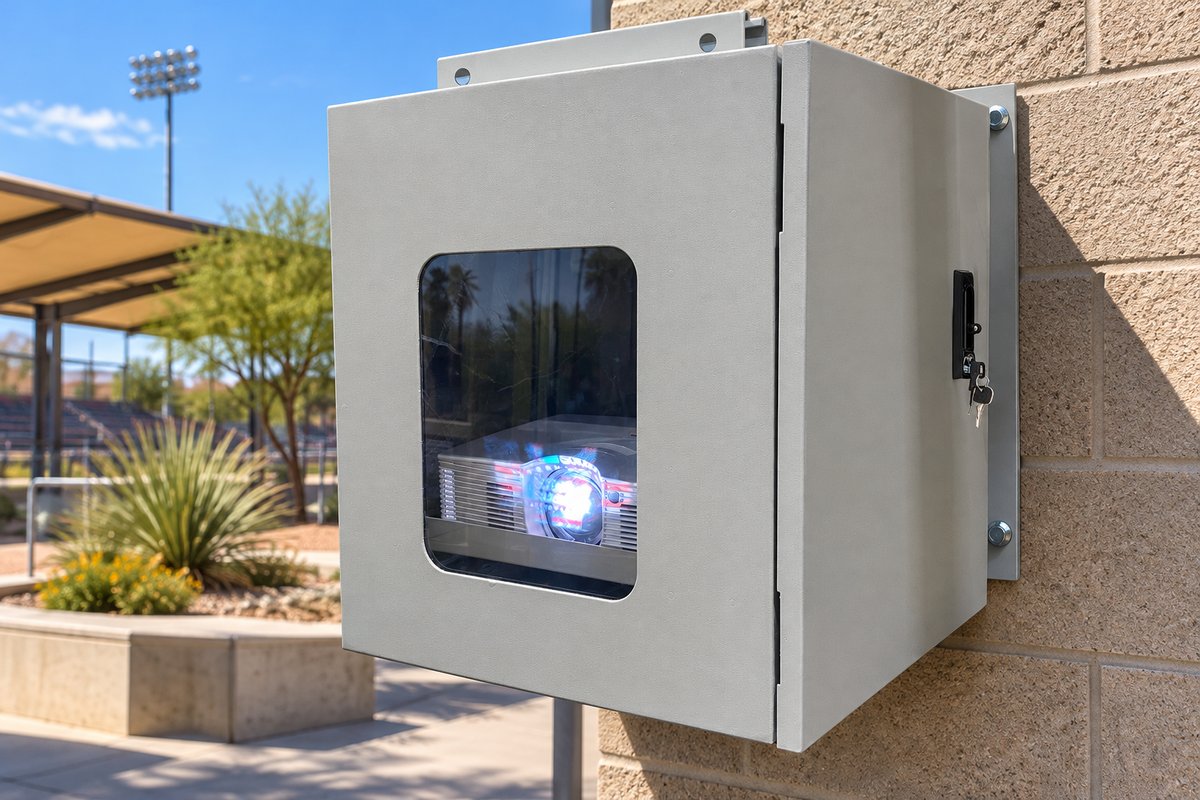
Practical Guide: Protecting Your Outdoor Projector in Buckeye, AZ
Planning an outdoor projector in Buckeye, AZ? Understand how summer heat, dust storms, rain, and local permitting affect projector enclosure choices—plus tips for ventilation, mounting, salt air protection, and more.
Understanding Buckeye, AZ’s Demanding Climate
Buckeye, AZ is known for its scorching summers, frequent dust events, and unpredictable monsoon rain. Any outdoor AV installation here faces serious environmental challenges. High temperatures routinely push past 110°F in the shade—enclosures exposed to direct sun can get even hotter. Combine that with occasional high humidity, heavy dust from desert winds, sudden downpours, and potential seasonal storms—the risks to sensitive projector equipment are considerable.
Choosing the right outdoor projector enclosure is more than a simple gear decision; it’s about protecting your investment against severe, local conditions. The heat alone can quickly degrade electronics, but humidity spikes during the monsoon can lead to moisture ingress or corrosion, especially for venues near irrigation facilities or landscape water features. While Buckeye is inland, operators close to Lake Pleasant or other large water sources should consider additional protection against moisture and even trace salt air.
If you’re planning for a public or high-value installation—at a school, theme park, place of worship, resort, or your own backyard—it pays to understand these climate risks during the early planning stages. Keeping up-to-date by checking the National Weather Service Phoenix AZ Forecast helps time your site work and stay aware of emerging climatic threats during install and operation.
Heat, Sun, and Humidity: The Triple Threat
The most persistent challenge for Buckeye outdoor AV projects is relentless heat. Electronics inside projectors are often rated to around 90–95°F operational max—well below ambient summer highs here. Unprotected, your projector is exposed to not just ambient air temperature but also radiant energy from the sun, which can create oven-like conditions inside uninsulated housings.
Humidity and the occasional monsoon downpour add more complexity. Summer storms can push local dew points up and drive moisture into any crevice. Add in the occasional dust storm or “haboob”—common in Maricopa County—and the conditions for equipment failure multiply.
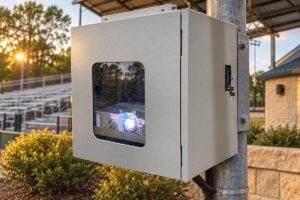
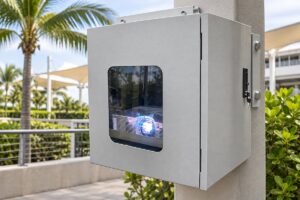
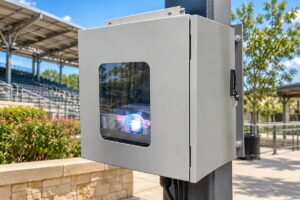
That’s why Buckeye installations benefit most from climate controlled projector enclosure designs with active cooling and airflow. ProjectorEnclosure.com’s Defender Series Projector Enclosure leverages fan-cooling and smart ventilation to keep projector optics and housings within a safe temperature band, even when desert sun or humidity peak. For projection mapping or home display projects, the HomeLine Projector Enclosure brings these same principles to residential-scale solutions.
Dust, Rain, and Salt Air: Planning for Every Element
Buckeye’s desert location means dust is ever-present, whether from construction, seasonal monsoon storms, or just strong winds. Without proper sealing and ventilation, particulate matter can quickly coat projector lenses and internals, reducing image quality and triggering thermal shutdowns. Enclosures need not just cooling, but also air filtration features that manage airflow without letting dust and debris inside.
Meanwhile, sudden cloudbursts can result in localized flooding or powerful rain, so weatherproof projector housing is essential. The Defender Series is designed to provide all-weather protection from wind-driven rain and moisture—and if your site is closer to water features or in areas exposed to rare salty air (near lakes, resorts, or artificial lagoons), an enclosure designed to withstand exposure to corrosive elements is vital for long-term protection.
Prolonging projector life and preserving image clarity begins with these environmental controls. For any commercial venue, school, or multi-projector mapping display, ask ProjectorEnclosure.com how an appropriately sized enclosure can be configured to handle Buckeye’s mix of heat, moisture, and dust challenges.
Power Planning and Safe Installation
Securing safe and robust power is fundamental. Outdoor installations typically require their own grounded circuit, sometimes with a dedicated disconnect. Running cables outdoors brings increased risk of exposure to UV, heat, and moisture; using appropriate conduits and weather-rated extenders is a must. ProjectorEnclosure.com recommends consulting an electrician familiar with local conditions and code requirements for outdoor low-voltage device installations.
Allow for extra amperage when configuring your circuit—projector enclosures with active fan-cooling or climate control units will need more current than the projector alone. For multi-unit installations or sites with significant lighting, power conditioners or surge protection devices are strongly advised to prevent spikes from local storms or utility surges. Be sure to confirm grounding for both the equipment and the enclosure, as static and lightning in dry climates can pose hidden risks.
For more complex installs, referencing the city’s Permit Center will guide you on city planning, power requirements, and safe distances from utilities or other structures. Whenever possible, plan power and data runs before mounting, and always check weather patterns in advance with the most up-to-date forecasts from the National Weather Service.
Mounting and Structural Considerations
Buckeye’s sun and wind mean enclosures must be rigidly mounted and well-shielded. Mounting hardware and bolts should be rated for outdoor use (preferably stainless or similarly corrosion-resistant materials), especially for systems close to water features or exposed to any salt air.
Consider shading options when siting your enclosure; indirect sunlight not only reduces internal temperatures but improves projector longevity and image stability. For critical venues—stadiums, outdoor classrooms, and entertainment spaces—enclosures should be installed above flood lines, away from roof runoff, and shielded from direct wind where possible. Installers should refer to documentation provided with the Projector Enclosure Fit Guide to ensure mounting points and clearances suit both projector and space.
If in doubt, consult structural specialists or an AV integrator with experience in local climate challenges. Each ProjectorEnclosure.com product can be professionally installed to maximize both weather resistance and accessibility for technical staff during maintenance.
Ventilation: Keeping Cool Without Inviting Trouble
Active ventilation is essential in Buckeye’s punishing climate, but improper venting simply pulls dust and hot air directly into your equipment. The Defender Series enclosure uses managed fan cooling with filtered airflow to reject outside dust while actively controlling internal temperature, making it the preferred platform for outdoor and public-facing installations across the Valley.
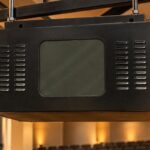
For indoor spaces or climate-controlled areas—like auditoriums or covered patios—the Integrator Series Projector Enclosure supports AV integrators who need a sleek but robust housing without fully weatherproof features. Each enclosure should be ordered based on your specific projector model, so fans and filtration match your brightness, heat load, and site needs.
Consultation with the ProjectorEnclosure.com team ensures your enclosure fit, cooling capacity, and airflow are tailored, and protects against Buckeye’s often unpredictable weather spikes. For environments that mix extreme temperature with crowd-sensitive locations, ask about options for reducing noise without compromising cooling. Remember, the Hush Series is for indoor-only, sound-sensitive rooms—not for outdoor use in Buckeye.
Permits, Approvals, and Compliance in Buckeye
Most outdoor electrical or enclosure installations in Buckeye require approvals through city channels. Your first stop for project review and paperwork should be the official Permit Center. Here, property owners and integrators can verify setback, mounting, wiring, and site-specific requirements for AV projects—rules may differ for public parks, schools, and private venues. Zoning and code requirements often dictate enclosure placement and allowed modifications to buildings or outdoor structures.
Approvals may depend not just on the enclosure and electric service, but also the overall size of your installation, roof loading, and proximity to pedestrian areas. Some projects may require coordination with utility providers or city engineers to ensure safe, compliant hookups—especially for permanent outdoor setups in hurricane or high-wind season.
The process and reviews are project-dependent and can change as local ordinances update. Always check with Buckeye’s office before work begins to avoid costly delays or rework. ProjectorEnclosure.com staff can provide typical mounting specifications and drawings to support your application.
Getting the Best Fit: Model-Specific Enclosure Selection
All the climate controls in the world will only work effectively if your projector enclosure is sized precisely for your equipment. Airflow, cooling, and dust protection depend on the right balance of space, tightness, and proper fittings. That’s why it’s critical to provide your exact projector model—brand, lens configuration, and mounting orientation—when requesting options.
An enclosure too big can waste cooling resources and allow dust migration; too small, and heat buildup—or even physical incompatibility—can threaten both the projector and the mounting process. For unique configurations, short-throw or ultra-short-throw models, dedicated options like the UST Defender Series Enclosure offer solutions tailored to these optics and form factors.
ProjectorEnclosure.com’s Projector Enclosure Fit Guide streamlines sizing for all major brands, and their team provides advice for unusual or high-value installs. Always send your configuration to ssisales@ssidisplays.com or call 888-631-5880 for dedicated support.
FAQ: Buckeye Outdoor Projector Enclosure Essentials
Do I need a specialized enclosure for projector mapping or home displays?
Yes—outdoor projection mapping or residential displays in Buckeye face the same heat, storm, and dust hazards. The HomeLine Projector Enclosure is built for these applications, pairing weather protection and active cooling with residential-friendly design.
How do I determine local permit requirements for my enclosure?
Buckeye permit policies vary by project and site type. Always check directly with the city’s Permit Center for the most current AV, electrical, or mounting guidelines before installation begins.
What should I know about weather risks for seasonal or semi-permanent use?
Buckeye installations must be prepared for sudden weather changes: extreme heat, dust storms, heavy downpours, and occasional wind. Stay informed using the National Weather Service Phoenix AZ Forecast and ensure your enclosure, projector, and mount are all rated for the local environment.
Ready to safeguard your projection investment? Request an enclosure quote from ProjectorEnclosure.com—just send your projector model and site details. With more than 20 years in the business, their team knows Arizona climates—and how to keep your AV technology running reliably outdoors.
- Buckeye Permit Center — permits, codes, and approvals
- National Weather Service Phoenix AZ Forecast — real-time Buckeye weather
- Projector Enclosure Fit Guide — for model-specific sizing
Supplies mentioned in this guide
Defender Series Projector Enclosure
Integrator Series Projector Enclosure
Hush Series Projector Enclosure
UST Defender Series Enclosure
HomeLine Projector Enclosure
Projector Enclosure Fit Guide
A Practical Guide: Protecting Outdoor Projectors in North Carolina