
Charleston’s Coastal Climate: Protecting Outdoor Projectors with Smart Enclosure Planning
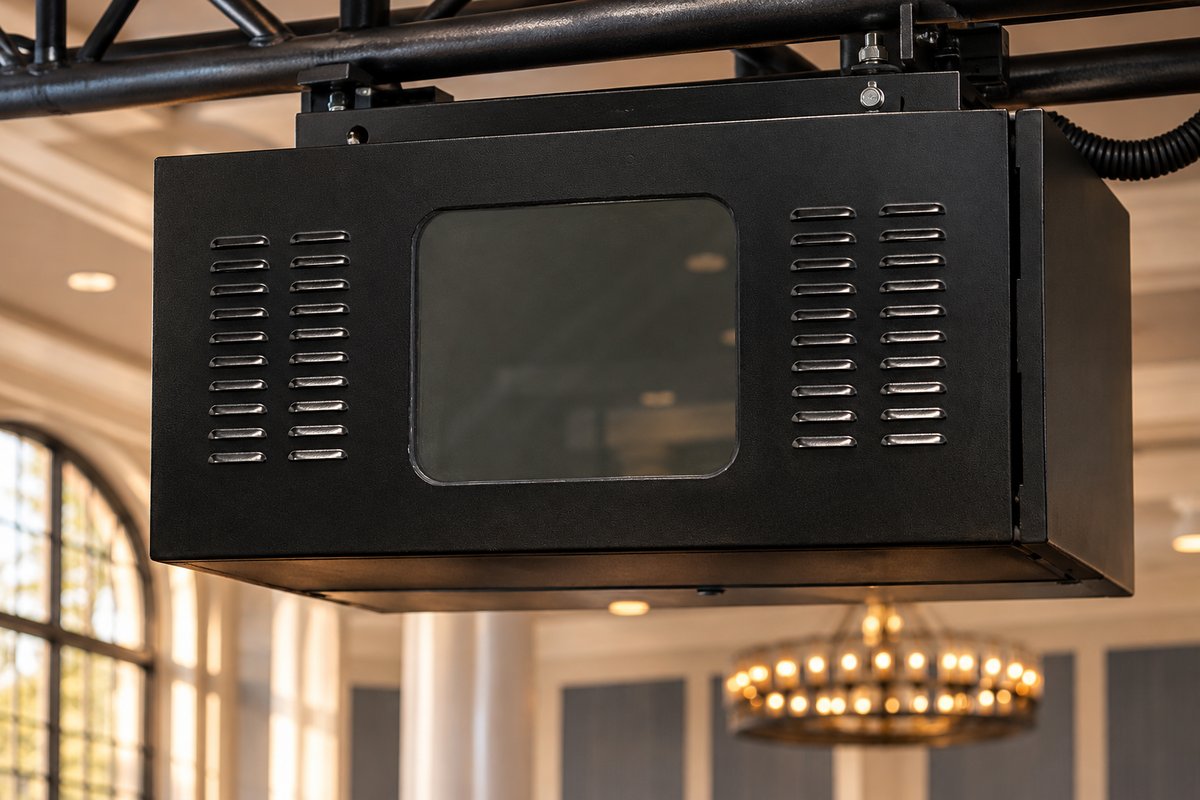
Charleston’s Coastal Climate: Protecting Outdoor Projectors with Smart Enclosure Planning
Charleston’s combination of heat, humidity, rain, storms, and salt air presents unique challenges for outdoor AV. Learn how to select and install the right outdoor projector enclosure to protect your investment.
Why Charleston’s Coastal Climate Demands a Tough Outdoor Projector Enclosure
Charleston, SC sits at the heart of the Lowcountry coastline, where AV equipment faces summer temperatures consistently in the 80s and 90s, year-round humidity, and a steady barrage of salt-laden breezes from the Atlantic. Projectors installed outdoors on patios, pool decks, school courtyards, or public venues need protection not just from a passing shower, but prolonged exposure to extreme conditions. Here, heat and direct UV sunlight can quickly overheat sensitive electronics, humidity can lead to corrosion, and wind-blown sand or dust can infiltrate delicate optics. The solution is a purpose-built outdoor projector enclosure engineered specifically for these environmental demands.
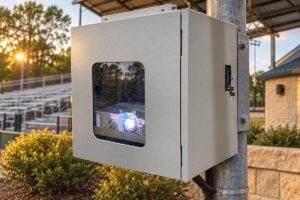
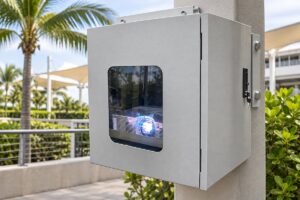
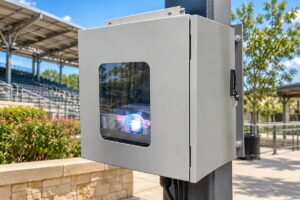
When choosing an outdoor projector enclosure, local factors in Charleston—like the potential for tropical storms and hurricane season—also come into play. Your investment must withstand sudden wind-driven rain and airborne debris in addition to constant daily exposure. Right fit and climate control features help ensure the projector’s performance isn’t compromised. That’s why the Defender Series Projector Enclosure from ProjectorEnclosure.com is designed for outdoor, all-weather use, safeguarding valuable AV equipment from the region’s most unpredictable weather.
Ultimately, proactive planning and the right weatherproof projector housing are essential for reliable projector installations anywhere in Charleston’s humid, coastal environment—whether you’re upgrading a resort, launching a theme park attraction, or setting up an outdoor classroom.
Managing Heat, Humidity, and Sun Exposure for Outdoor Projectors
Charleston’s biggest threats to projection equipment come from heat and moisture. Even under an awning, peak summer temperatures and high humidity create a microclimate inside any enclosure unless it’s engineered for controlled airflow and cooling. Simple “weatherproof boxes” can trap heat, leading to equipment shutdowns or premature failure. Instead, look for a climate controlled projector enclosure such as the Defender Series, which actively manages temperature and moisture to preserve performance and optics clarity.
Direct sun exposure can easily push projector surfaces above 100°F. To counteract this, fan-cooled housings are crucial. ProjectorEnclosure.com’s Defender Series incorporates robust fan-cooling to regulate internal climate, ensuring temperature-sensitive projectors remain within operational limits. This is essential for Charleston’s intense sunshine, especially for installations that must be visible during the day or left outside year-round.
Humidity presents a hidden challenge, as it can invade unsealed housings. The Defender Series features sealed cable ports and drainage designs that actively defend against humid salt air, reducing the long-term risk of corrosion or lens fogging. This level of protection is vital for any deployment near beaches, rivers, or parks throughout the Lowcountry.
Protecting Against Salt, Dust, and Storms Near the Coast
The Charleston area’s proximity to tidal creeks and the ocean means salt air and airborne sand present unique challenges. Even on a clear day, salt spray can settle onto projectors and lenses, creating a persistent threat of corrosion. Dust from construction sites or blowing sand after a nor’easter can further degrade sensitive electronics. Standard enclosures fall short in this harsh coastal setting.
For these conditions, a solid weatherproof projector housing with positive pressure ventilation and fine-mesh filtration is critical. Quality all-weather models like the Defender Series intercept airborne salt and particulates before they can enter, preserving not just electronics but also imaging quality over time. Custom gasketed seals and strategic airflow design provide an active defense unique to purpose-built climate-controlled housings.
During storm season, heavy rain and hurricane-force winds can drive moisture or debris into almost any structure. For any outdoor projector, check mounting methods and install the enclosure in a way that shields all cable penetrations and ports. Custom sizing and a flush fit are important—if you need help finding the right enclosure dimensions for your projector model, use the Projector Enclosure Fit Guide or contact ProjectorEnclosure.com directly for expert advice.
Integrating Power: Local Utility Planning and Backup Preparations
No outdoor projector system is reliable without safe, weatherproofed power. In Charleston, summer thunderstorms and occasional outages are common, making utility planning essential for any outdoor media installation. Always coordinate power drops with licensed electricians and explore local regulations. If your application is mission-critical—such as outdoor church services or resort displays—investigate backup options like generators or battery backups suitable for your AV load.
The City of Charleston Emergency Preparedness – Utility Companies resource offers official contact and power outage reporting for all major utilities serving the area. Check here before finalizing your enclosure’s location, and always confirm that all components—especially the climate control fans—are on circuits protected from water ingress and properly grounded for coastal conditions.
Use tamper-resistant, weatherproof covers and ensure cabling is routed to prevent standing water or saltwater intrusion, especially in flood-prone zones. ProjectorEnclosure.com’s Defender Series is specifically designed for reliable, uninterrupted ventilation and easy integration with local power infrastructure—an essential first step in planning for Charleston’s unpredictable outages and surges.
Mounting, Ventilation, and Engineering for Outdoor Reliability
Mounting hardware for enclosures in Charleston must withstand not only the weight of the projector but also sudden wind gusts and the long-term effects of saline air. For rooftop or wall-mounted units, use stainless steel hardware where practical and avoid mounting in areas where standing rainwater or tidal flooding might occur. Periodic inspections before and after storm season can help prevent unexpected failures.
Ventilation is as crucial as weather resistance. Unlike generic cabinets or sealed boxes, the Defender Series Projector Enclosure is engineered with forced air flow and filtered intake/exhaust to maintain cool operation and clear optics even under harsh Lowcountry sun. This means less maintenance and a longer life for your projector, especially for high-usage venues like theme parks and schools near the water.
Finally, consider how mounting affects local permitting and engineering requirements. For permanent installs or particularly exposed sites, check with city building officials to confirm what’s allowed and whether engineering or wind-load calculations are needed. The projects that last are those where planning for nature’s extremes becomes part of the enclosure—and mounting—strategy from day one.
Understanding Permitting and Local Regulations in Charleston
Before installing any outdoor projector enclosure, it’s essential to check Charleston’s codes regarding electrical, structural, and AV deployments outdoors. Requirements can vary widely depending on your property type (commercial, residential, public, or historic), the enclosure’s mounting height, and its location near the water or in regional wind zones.
The City of Charleston Emergency Preparedness portal is a vital reference for permit questions tied to electrical upgrades, weatherproofing, and hurricane readiness. Engaging with your local building office early in the planning process helps ensure proper documentation and prevents delays or rework later.
If your projector system will be used for public gatherings, performances, or large venue applications, you may have to provide detailed site plans or submit for inspections. Many integrators find it helpful to contact ProjectorEnclosure.com for product-specific cut sheets and sizing documentation as part of the permitting process. Whatever your application, take the time to confirm allowable electrical work and mounting protocols—especially in proximity to historic or floodplain zones.
How to Choose the Right Projector Enclosure for Your Application
Every projector model differs in size and thermal output, and every installation is unique. At ProjectorEnclosure.com, enclosures are sized to each customer’s exact projector model to ensure a snug and effective fit—crucial for maintaining ventilation and weather resistance. Always send your projector’s model number when requesting a quote or compatibility check.
For outdoor installs in Charleston’s weather, the go-to is the Defender Series Projector Enclosure. For ultra-short-throw or specialty applications, the UST Defender Series Enclosure offers a tailored answer for challenging projection angles and compact spaces. If your install is under a covered, climate-controlled porch or glass pavilion, consider the Integrator Series Projector Enclosure—but never use this or the Hush Series for direct outdoor exposure. For home projection mapping, art, or temporary backyard displays, the HomeLine Projector Enclosure balances protection with easy use around the home.
If you’re unsure which enclosure is optimal for your specific projector or site, leverage the Projector Enclosure Fit Guide online. You can also call ProjectorEnclosure.com at 888-631-5880 or email ssisales@ssidisplays.com for personalized assistance, especially for unique or high-risk Charleston locations.
Frequently Asked Questions: Outdoor Projector Enclosures in Charleston
How should I prepare my projector enclosure for hurricane season?
First, ensure your enclosure—like the Defender Series—uses heavy-duty fasteners rated for coastal conditions and wind, with all cables sealed and water-protected. Consider a post-storm inspection and follow city emergency guidelines before each season to mitigate risk from flying debris and power interruptions.
Can I use any enclosure for covered patios or glass-walled spaces?
Not every enclosure is suitable for every setting. For covered but non-conditioned spaces, use the Integrator Series. For fully weather-exposed applications, always select the Defender Series. The Hush Series is strictly for sound-sensitive indoor rooms and should never be used outdoors.
How do I prevent salt air and humidity from damaging my projector?
Use a climate controlled outdoor projector enclosure with active ventilation and sealed ports, such as the Defender Series. Regularly inspect your installation for corrosion or salt residue—especially if it’s located near the coast—and schedule servicing as recommended.
Ready to weatherproof your AV investment in Charleston’s coastal climate? Request an enclosure quote from the experts at ProjectorEnclosure.com—and remember to include your projector model for precise sizing.
- City of Charleston Emergency Preparedness – Utility Companies: Official resource for regional electricity, power planning, and weather readiness.
- Projector Enclosure Fit Guide: Find the right-sized enclosure for your exact projector model.
Supplies mentioned in this guide
Defender Series Projector Enclosure
Integrator Series Projector Enclosure
Hush Series Projector Enclosure
UST Defender Series Enclosure
HomeLine Projector Enclosure
Projector Enclosure Fit Guide
Outdoor Projector Enclosures: A Practical Guide for North Las Vegas Climate