
Arizona Guide: Outdoor Projector Enclosures & Local Planning
Arizona Guide: Outdoor Projector Enclosures & Local Planning
Learn how Arizona’s heat, storms, and dust impact outdoor projector setups, and get guidance on enclosures, power, ventilation, and permits for long-term success.
Managing Arizona Heat for Outdoor Projector Installations
Arizona’s summer temperatures can soar past 110°F, making heat management the top concern for any outdoor projector enclosure. Direct sun exposure can quickly raise internal enclosure temperatures, potentially shortening projector life or causing random shutdowns. When planning your site, choose a location that’s shaded during the hottest parts of the day, or install an overhead canopy for extra protection. Even in these conditions, the right enclosure technology is essential.
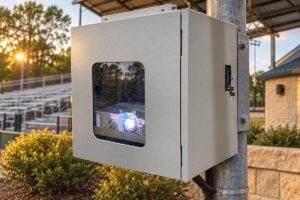
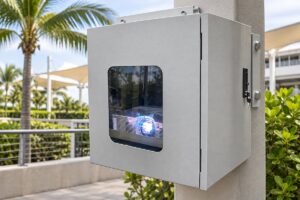
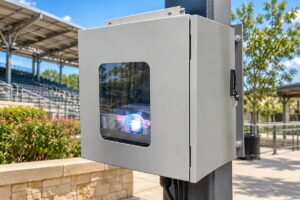
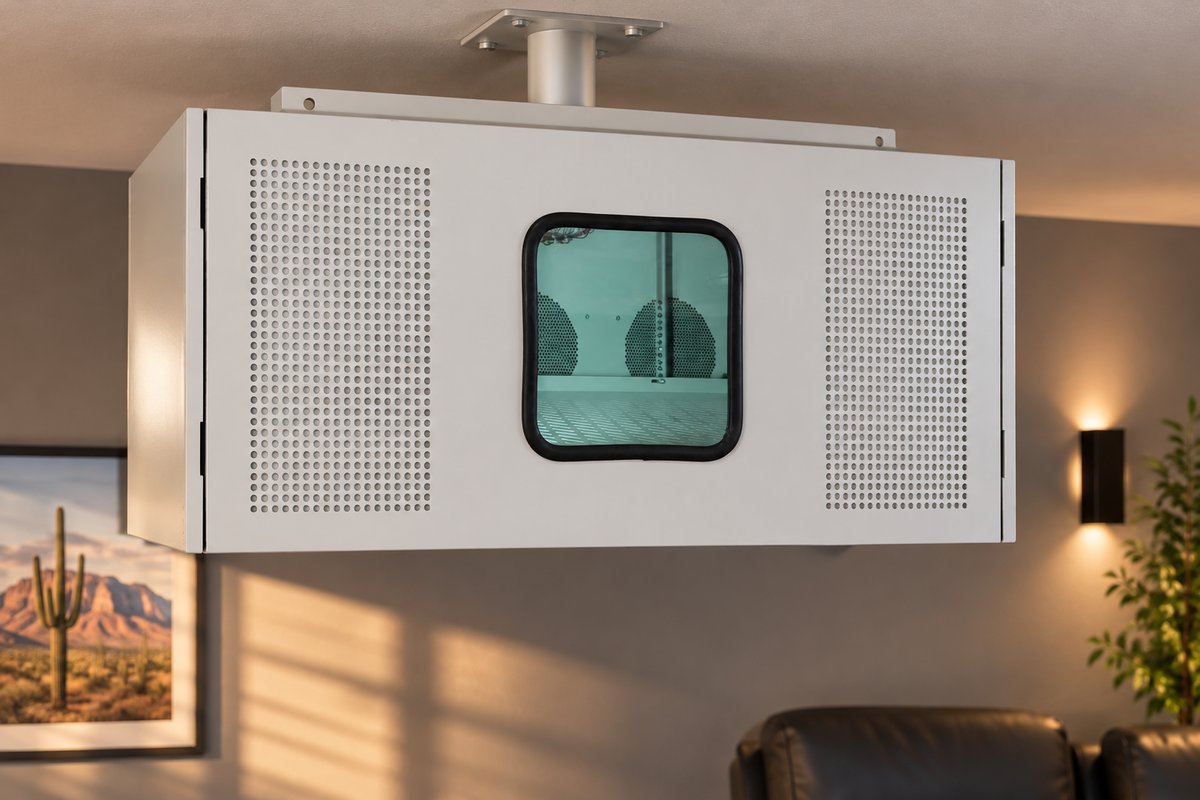
Climate-controlled projector enclosure systems, such as the Defender Series Projector Enclosure, use active cooling and airflow to keep projectors operating within safe temperature limits—regardless of desert extremes. These enclosures are engineered for direct exposure to Arizona heat and sunlight, safeguarding your equipment from thermal stress. Be sure to send your projector model to size your enclosure accurately, since cooling performance needs to match your projector’s specific demands.
Ventilation is equally important for maintaining climate control. Check vent clearances around the enclosure to ensure unrestricted airflow. Avoid hiding the enclosure behind dense landscaping or masonry where heat can build up, and confirm that there is open space for intake and exhaust as recommended by your enclosure vendor.
Protecting Against Monsoon Storms, Dust, and Salt Air
Monsoon season in Arizona brings dust storms, torrential rain, and wind gusts capable of dislodging poorly mounted housings. Unlike indoor models such as the Hush Series, the Defender Series from ProjectorEnclosure.com is built for true weatherproof projector housing, sealing out dust and moisture while promoting effective cooling. This is essential during monsoons and haboobs, as fine dust particles can penetrate typical casings, leading to lens haze and cooling fan blockages.
Avoid positioning enclosures where splashback from hard surfaces or building overflows could drench the electronics. Opt for a mounting height and wall location that shields the projector from both wind-driven debris and rain fade. If your installation is within reach of either high-dust zones or areas prone to airborne salts (such as near ornamental ponds or resorts with saltwater pools), be sure to communicate those conditions to your installer for customized enclosure recommendations.
Routine maintenance is also simpler if your outdoor projector enclosure is easy to access after storms. Swift access allows for dust and filter service, helping to extend projector performance across Arizona’s unpredictable weather changes.
Planning Power for Outdoor AV Installations
Dependable power is critical for outdoor projection, especially in the desert environment. Voltage drops, surges, and outages are more common outdoors, so always work with a trusted licensed electrician. Start by assessing your available power resources—connections must safely support the combined load of both your projector and enclosure fans or climate control. Using a dedicated line prevents overloads or nuisance tripping during monsoon season.
Before commencing installation, verify your electrical service and reliability for the chosen location. Resources like Tucson Electric Power are invaluable for checking available service, panel limits, and best practices in local outdoor projects. Consider adding a surge protector or uninterruptible power supply, particularly for mission-critical or high-value projector installations, to insulate valuable electronics from sudden power fluctuations.
For longer cable runs to outdoor enclosures, confirm the wire gauge and distance with your electrician—this keeps voltage steady and your AV system running reliably, even during peak local energy demand.
Mounting and Structural Considerations
An outdoor projector enclosure is only as impact-resistant as its installation method. Wind, accidental contact, or vandalism risk can be mitigated by working with mounting hardware rated for exterior use and Arizona’s gust loads. Secure wall, ceiling, or post mounts are all possible, provided the supporting structure can bear the combined weight of the enclosure and projector.
Consult a qualified installer to review the wall or superstructure for strength, and avoid mounting to lightly framed or deteriorated surfaces. Outside the urban core or on soft desert soils, pole-mounts may need deeper footings to counter strong monsoon winds. ProjectorEnclosure.com’s Defender Series supports multiple mounting styles, but always verify your site’s needs before proceeding.
If you’re unsure whether your intended position is structurally sound, ask your installer for options tailored to your enclosure model and expected local weather patterns. Planning ahead reduces risks and ensures a long service life for your projector setup.
Ventilation Strategies for Projector Longevity
Cooled and ventilated projector enclosures ensure your AV investment is protected through the hottest times of year. Arizona’s dry air makes evaporative cooling feasible, but it also increases dust ingress in poorly designed systems. True weatherproof projector housing, like the Defender Series, is engineered with sealed yet actively ventilated designs, blending air movement with protection against airborne debris.
For especially heat-sensitive projectors, climate controlled projector enclosure options are recommended over basic vented boxes. Incorrectly specified ventilation, or using a hush box (intended for quiet indoor use), can accelerate damage due to heat buildup. Always match your enclosure feature set (fans, filters, active cooling) to the conditions you expect in your region’s sunniest and driest months.
Send your projector details for a tailored sizing and feature consultation to maximize cooling, airflow, and environmental protection.
Permits and Local Regulatory Considerations
Before installing an outdoor projector housing, always determine if local codes or permits apply. Some Arizona municipalities may require electrical permits, while mounting substantial structures could trigger additional review by city building departments. For Tucson area projects, the City of Tucson’s permit exemptions page is a valuable first stop for understanding your obligations.
Project requirements can shift depending on site type (e.g., school, place of worship, public venue, or private residence), so consult project-specific resources and confirm with the municipal office linked above. Expect that larger AV installations or commercial venues will often require more documentation than simple home projects. If your location is outside Tucson, most Arizona cities maintain similar permitting procedures and resources online.
Always confirm regulations for power, mounting, and weatherproofing before work begins. Having permitting in order streamlines approval and ensures no unpleasant surprises down the line.
Sizing the Right Outdoor Projector Enclosure
Correct enclosure sizing is crucial for Arizona conditions; too small, and your projector may overheat, too large, and you risk ventilation inefficiency. The team at ProjectorEnclosure.com tailors each Defender Series enclosure to fit your projector precisely, optimizing both cooling and environmental sealing. Start the process by sending in your projector model details for expert sizing advice.
If your application shifts from open exposure (requiring the Defender Series) to a climate-controlled or covered space, options like the Integrator Series Projector Enclosure may be suitable. For home-based projection mapping, consult the HomeLine Projector Enclosure. Verify outdoor use compatibility before selecting your model, as indoor-focused products such as the Hush Series are never suited for exposed weather conditions.
Don’t overlook specialty needs—ultra-short-throw projectors often require specific mounting geometries. For this, review the UST Defender Series Enclosure as a purpose-built solution for Arizona’s unique projection landscapes.
Frequently Asked Questions
How do I protect my projector from Arizona dust and storms?
Select a weatherproof projector housing designed specifically for Arizona’s high dust, heat, and monsoon conditions. The Defender Series features environmental seals and active ventilation to keep dust and moisture out while keeping projectors cool.
Do I need a permit to install my outdoor projector enclosure?
Permitting requirements depend on your project location and installation method. Many Arizona municipalities post permitting rules online. Check the City of Tucson permit exemptions as a reference or consult your local authority for site-specific advice.
Can I use any enclosure for my outdoor install?
No. Only select enclosures engineered for outdoor and extreme environments, such as the Defender Series. Hush or Integrator models are designed for indoor, covered, or conditioned spaces and should never be used in direct exposure to weather.
Get Expert Help for Arizona Outdoor Projection
Whether you manage a resort, school, theme park, or backyard projector installation, Arizona’s climate demands a deliberate approach to AV planning. By choosing a climate controlled projector enclosure sized to your projector—and addressing power, ventilation, mounting, and local permits—you can deliver reliable, long-lasting outdoor experiences. If you have a specific projector in mind or want to ensure the best possible protection for your environment, Request an enclosure quote today or call 888-631-5880 for expert assistance tailored to Arizona conditions.
- Tucson Electric Power: Confirm local outdoor power options and reliability
- City of Tucson permit exemptions: Reference local permitting requirements
Supplies mentioned in this guide
Defender Series Projector Enclosure
Integrator Series Projector Enclosure
Hush Series Projector Enclosure
UST Defender Series Enclosure
HomeLine Projector Enclosure
Projector Enclosure Fit Guide
Charleston’s Coastal Climate: Protecting Outdoor Projectors with Smart Enclosure Planning