
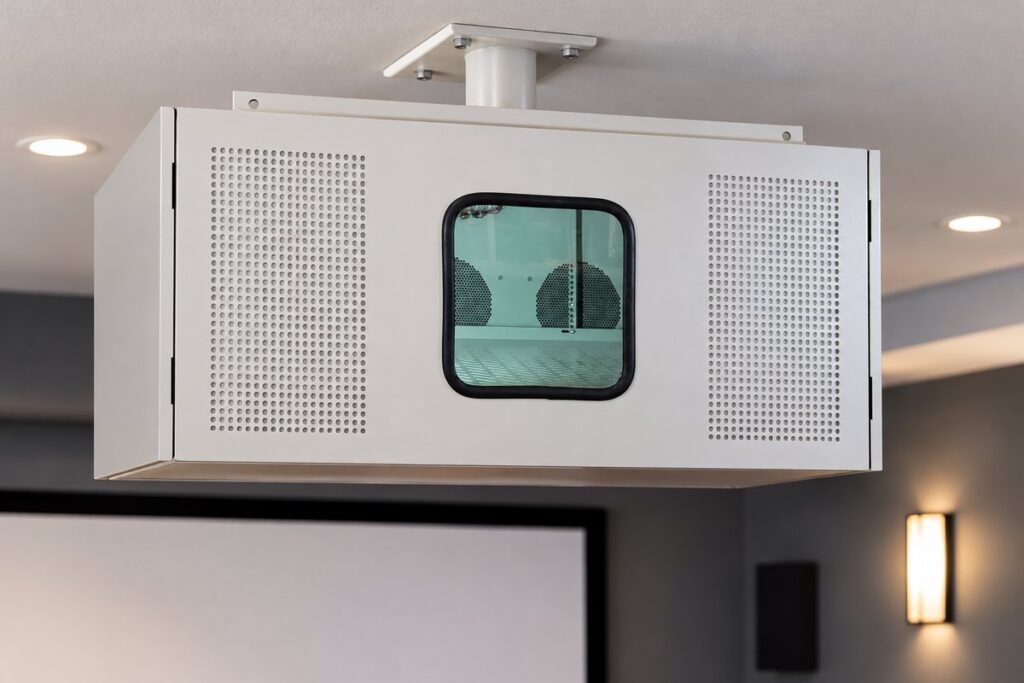
Outdoor Projector Enclosures in Clovis, CA: A Practical Planning Guide

PROJECTORENCLOSURE.COM
Clovis, CA · Planning guide

Outdoor Projector Enclosures in Clovis, CA: A Practical Planning Guide

Discover how to select and install the right climate controlled projector enclosure in Clovis, CA. Practical tips to protect against heat, humidity, rain, dust, and more.

Local Climate Challenges for Outdoor Projectors in Clovis, CA

Installing an outdoor projector enclosure in Clovis, CA means planning for a climate that can be tough on sensitive electronics. Summer temperatures in the San Joaquin Valley often reach well into the 90s and above, with direct sun exposure raising surface temperatures even higher. Humidity is typically moderate, but seasonal storms can bring sudden spikes in moisture, increasing the risk of condensation inside an enclosure if not properly managed. While Clovis is inland, regional agriculture and wind can stir up dust, which threatens sensitive projector optics and cooling fans. For venues closer to the coast (such as resorts or event spaces serving visitors from Pismo Beach or Monterey), even trace amounts of salt air can corrode circuits over time.

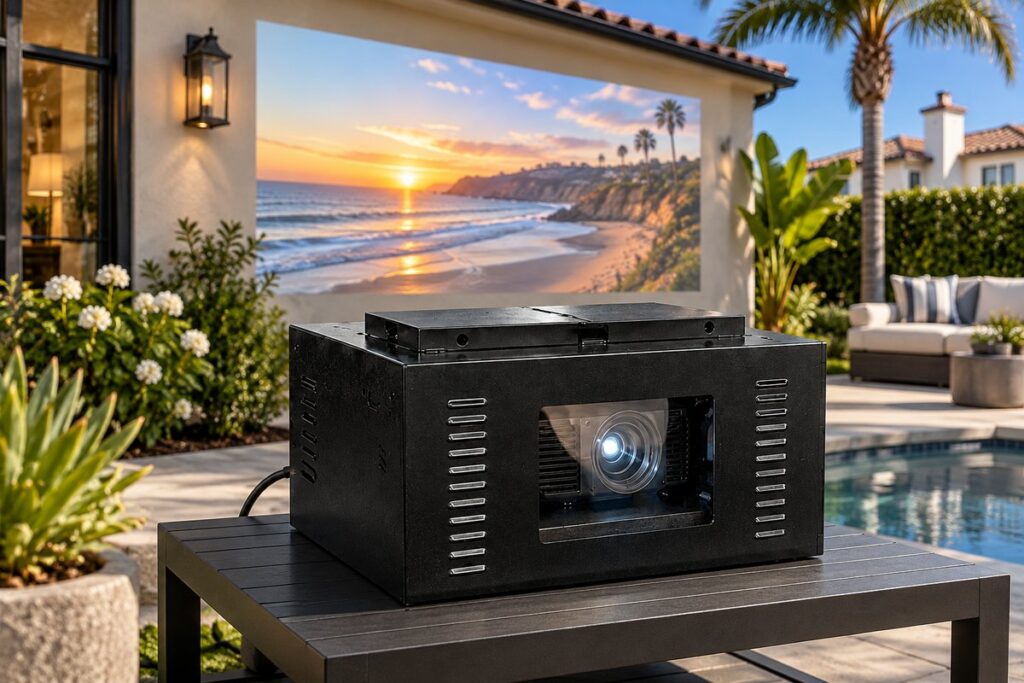
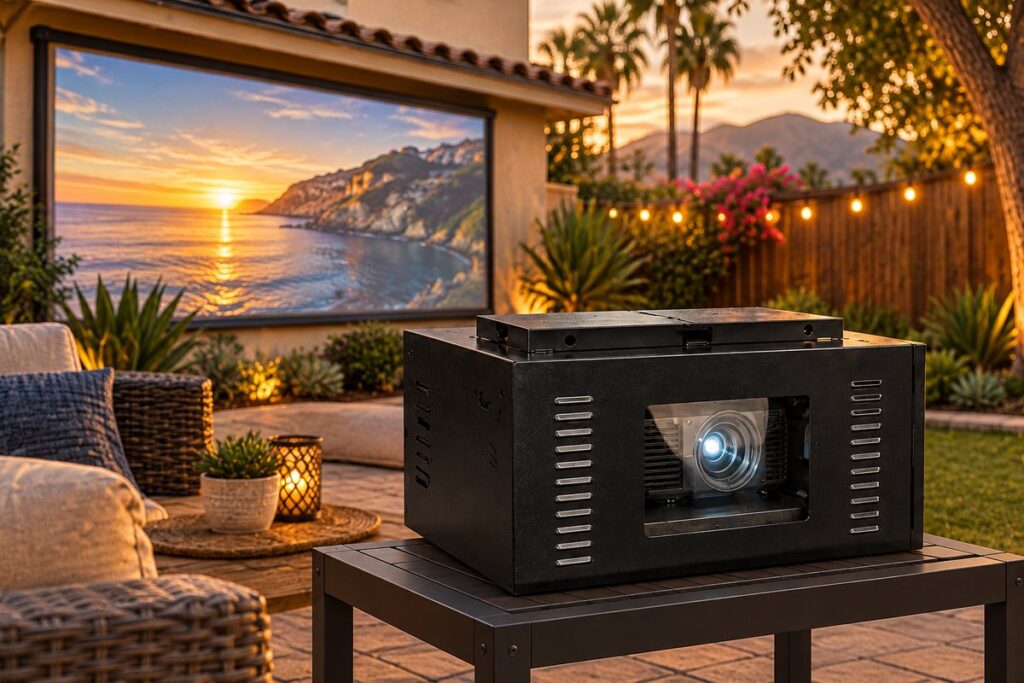
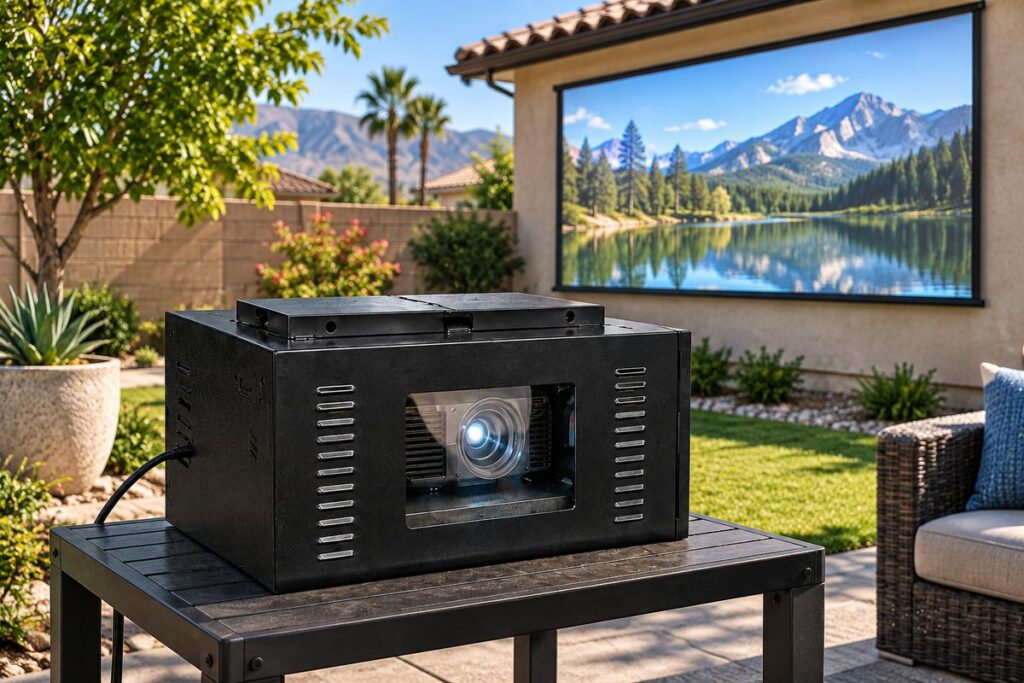
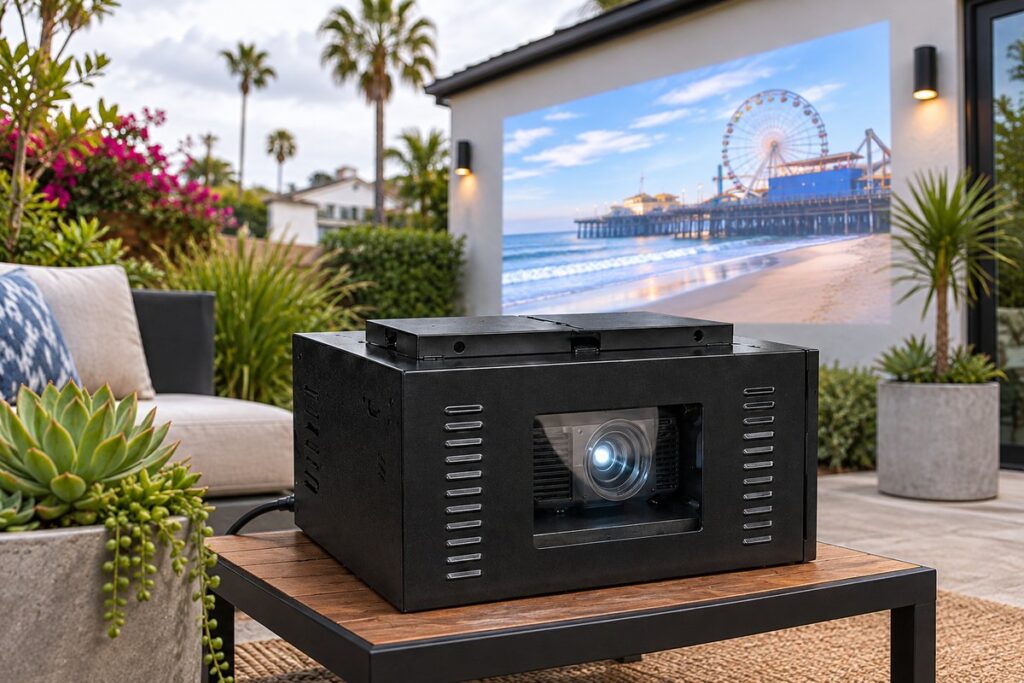
To plan a reliable installation, it’s important to match your equipment with the right weatherproof projector housing. ProjectorEnclosure.com’s Defender Series Projector Enclosure is purpose-built for all-weather outdoor use, offering climate and air filtration support for harsh regional conditions. Start your planning by checking the local weather forecast for Clovis to understand when and how the environment might challenge your setup.

Whether you’re running a summer movie night at a school, a drive-in at a local church, or a hospitality installation, never underestimate what dust, heat, rain, or infrequent storms can do to unprotected AV equipment. Early planning, and sending your projector model for correct enclosure sizing, makes a big difference.

Planning Power and Electrical Needs

Supplying reliable power to an outdoor projector enclosure requires careful consideration. In Clovis, you’ll want a dedicated circuit and high-quality outdoor rated cabling to handle both your projector and the enclosure’s fan or climate control components. Most modern enclosures built for outdoor AV, including the Defender Series, are compatible with standard electric service, but power demands can be higher for large venue projectors or units with active cooling or heaters. Always evaluate the total load to avoid tripping circuits.

Clovis area projects should coordinate with local energy suppliers when adding new circuits or upgraded service. Use PG&E’s service request portal for any start, stop, or transfer of electric service when integrating an outdoor projector enclosure into your site. Connecting with utilities during the design phase ensures compliance and helps locate safe outdoor connections.

Don’t overlook surge protection, especially during thunderstorm season, as well as ground fault circuit interruption (GFCI) outlets to protect both users and equipment. Consult a licensed local electrician to confirm your setup meets code before proceeding with installation.

Mounting Strategies for Clovis Environments

Proper mounting is one of the most critical steps in a successful outdoor projector install. The San Joaquin Valley’s afternoon sun can raise surface and enclosure temperatures quickly, so prioritize shaded mounting when possible. Consider wall- or ceiling-mounting brackets rated for the load and size of your chosen enclosure model. ProjectorEnclosure.com’s Defender Series Projector Enclosure and UST Defender Series Enclosure both feature robust designs that work with multiple mounting orientations, whether under an eave, on a custom pole, or suspended from a deck structure.

Pay special attention to wind—Clovis can experience occasional gusts, especially ahead of summer storms. Rigid, vibration-isolating mounts will keep your enclosure stable and prevent potential alignment drift. Make sure to factor in the added weight of the enclosure and use through-bolting, anchors, or certified supports as needed for safety and reliability.

Dust is a reality in Clovis, particularly during dry fall winds. Position enclosures out of direct dust flow and avoid mounting too close to the ground. If mounting near the coast or exposed to salt air, clean surfaces often to prevent long-term corrosion. For accurate sizing and mounting recommendations, share your projector dimensions with ProjectorEnclosure.com for fitting guidance.

Ventilation and Climate Control

Clovis summers are hot, meaning ventilation and active cooling are essential features in any weatherproof enclosure. Excessive heat within an enclosure can shorten projector lamp life, cause electronics to throttle, or even result in shutdowns. The Defender Series Projector Enclosure includes built-in fan-cooled and climate-controlled options, and should be matched to your specific projector’s thermal needs.

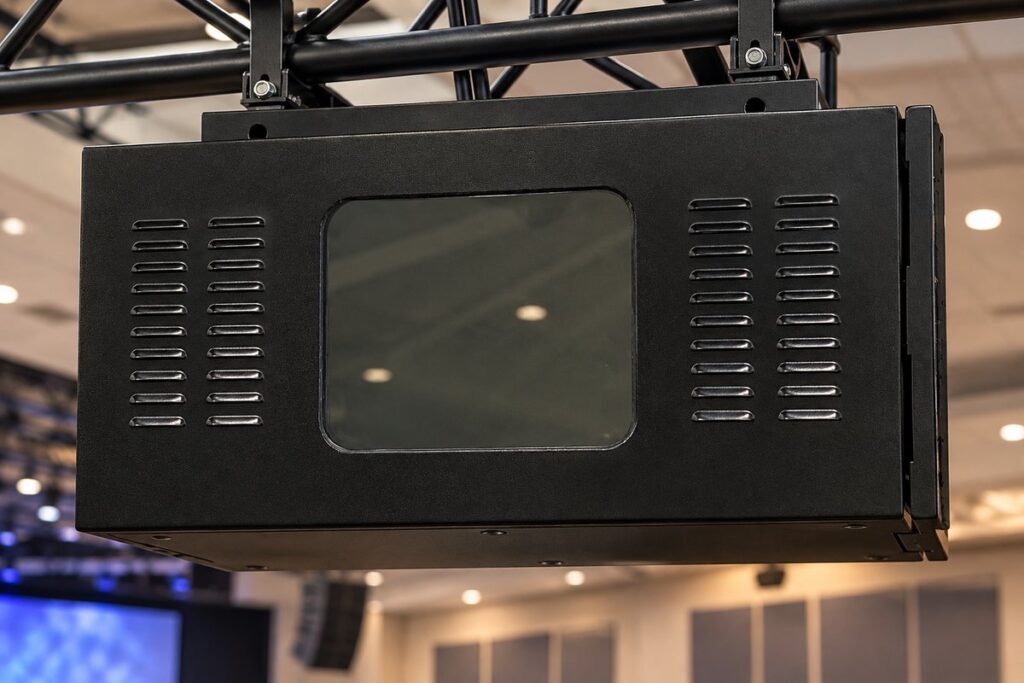
Ensure intake and exhaust vents remain free from blockages—dust screens and replaceable filters are available, but will require periodic inspection and cleaning, especially during the region’s agricultural harvest. If you plan to operate your projector for hours at a time in direct sun, opt for an enclosure model with enhanced cooling or consult ProjectorEnclosure.com for custom climate control recommendations. For specialty applications like outdoor ultra-short-throw setups, the UST Defender Series Enclosure supports dedicated ventilation solutions.

Moisture control is another frequent concern, especially following storms or sudden drops in evening temperature. Climate-controlled projector enclosures can manage humidity and prevent condensation buildup on sensitive surfaces. If your site faces consistent moisture, consider pairing your enclosure with dehumidification strategies or investigating further with ProjectorEnclosure.com’s Projector Enclosure Fit Guide.

Humidity, Dust, and Salt Air: Regional Considerations

While Clovis is naturally drier than the coast, the combination of irrigation, fog, and occasional rain can fluctuate local humidity. Over time, even moderate humidity can affect lens assemblies, fans, and internal projector electronics if exposed through substandard housing. Make sure your outdoor projector enclosure features weatherproof gaskets, lockable panels, and proven sealing practices—qualities standard in the Defender Series Projector Enclosure for outdoor installations.

Dust storms driven by agricultural activity can be severe, especially during harvest. Fine particulates can clog fans or leave residues inside enclosures that degrade optics. Operators should check enclosures regularly, especially after windy periods. ProjectorEnclosure.com recommends choosing enclosures with replaceable dust filters and performing scheduled maintenance for best results.

Salt air is less frequent in Clovis itself, but regional venues that serve the Central Coast must be especially vigilant. If your application may ever encounter marine breezes, consult ProjectorEnclosure.com for enclosure options that include anti-corrosion finishes and dedicated salt filtration accessories.

Permit Planning and Local Approvals

Many outdoor AV projects, especially for schools, parks, religious venues, or large residential gatherings in Clovis, must satisfy city and county permitting. This includes both electrical and structural considerations for mounting weatherproof projector housings. The type and scope of permit may differ between small private installs and large commercial venues, so always check with your local building office for requirements specific to your address.

Additional attention should be paid to mounting locations and connection points. If you plan to mount an enclosure on a permanent structure or add new circuits, early engagement with permitting agencies is advised. Use resources like PG&E’s service portal to clarify the utility company’s installation requirements, especially if you’re adding capacity or upgrading service for your enclosure.

Large or public venues may need to show plans for safe enclosure ventilation and access. Work with experienced AV professionals and consult with ProjectorEnclosure.com to document your installation for local review. Permit approval can take time—plan your installation schedule with seasonal demand and weather in mind.

Choosing the Right Enclosure for Your Projector and Application

Matching your projector to the correct climate controlled projector enclosure is key to maximizing lifespan and performance. For fully outdoor, all-weather Clovis installations, the Defender Series Projector Enclosure is designed to protect against sun, heat, dust, and storms. Ultra-short-throw projectors, often used for modern large-format displays, benefit from the tailored features of the UST Defender Series Enclosure. For protected, conditioned environments like screened patios or partially covered spaces, the Integrator Series Projector Enclosure may be appropriate—though it’s not intended for open weather conditions.

Homeowners interested in projection mapping or festive displays should explore the HomeLine Projector Enclosure, which offers options for residential presentation and mapping without the industrial scale of commercial enclosures. Accurate sizing impacts airflow, mounting needs, and maintenance: use the Projector Enclosure Fit Guide or send your model details to ProjectorEnclosure.com for expert recommendations.

Never use indoor-only enclosures such as the Hush Series for outdoor applications—even in mild weather, this can expose sensitive AV to dust or water damage. Each location and projector model requires a unique approach for best results—an experienced partner helps avoid costly mistakes.

Maintenance and Lifecycle Best Practices

Once installed, periodic inspection and maintenance are essential to ensuring the reliability of your weatherproof projector housing. Especially in Clovis, where temperature swings and dust can put stress on outdoor AV, it’s wise to check ventilation inlets, filters, and mounting hardware at least every season. Clear any debris from cooling fans and replace filters as recommended by ProjectorEnclosure.com.

During intense heat or following storms, inspect for signs of water ingress or corrosion around access panels. Remove and clean projector lenses to prevent image degradation from dust buildup. If your enclosure includes remote climate controls, periodically test all electronics to preempt any failures before major events.

Keep a schedule for all routine tasks and document findings. For professional venues or multi-projector sites, assign a responsible staff member or AV contractor for regular maintenance. This investment pays off in extended equipment life and fewer emergency repairs.

FAQ: Outdoor Projector Enclosures in Clovis, CA

How do I choose the right outdoor projector enclosure for my device?

First, confirm that the enclosure is designed for all-weather outdoor use—such as the Defender Series Projector Enclosure. Share your projector model and installation plans with ProjectorEnclosure.com to ensure proper sizing, ventilation, and mounting features for your unique needs.

What should I do to protect my enclosure from dust and heat in Clovis?

Choose an enclosure with replaceable dust filters and active cooling, and locate it in a shaded area whenever possible. Regularly inspect and clean vent screens or filters, especially during dry, windy months, for best reliability.

Are permits or utility upgrades required for outdoor installations?

Large or permanent installs may require permits or updated electric service. Check with your local building department and use the PG&E portal for power needs. Each site is unique—it’s best to consult local authorities before building.

Ready to protect your outdoor projector investment? Request an enclosure quote directly from ProjectorEnclosure.com, or discuss your project and model sizing by calling 888-631-5880 or emailing ssisales@ssidisplays.com.

For Clovis area power requirements, start/stop service, or metering: PG&E account services.

Local weather planning: Clovis, CA forecast – use before any outdoor AV install.
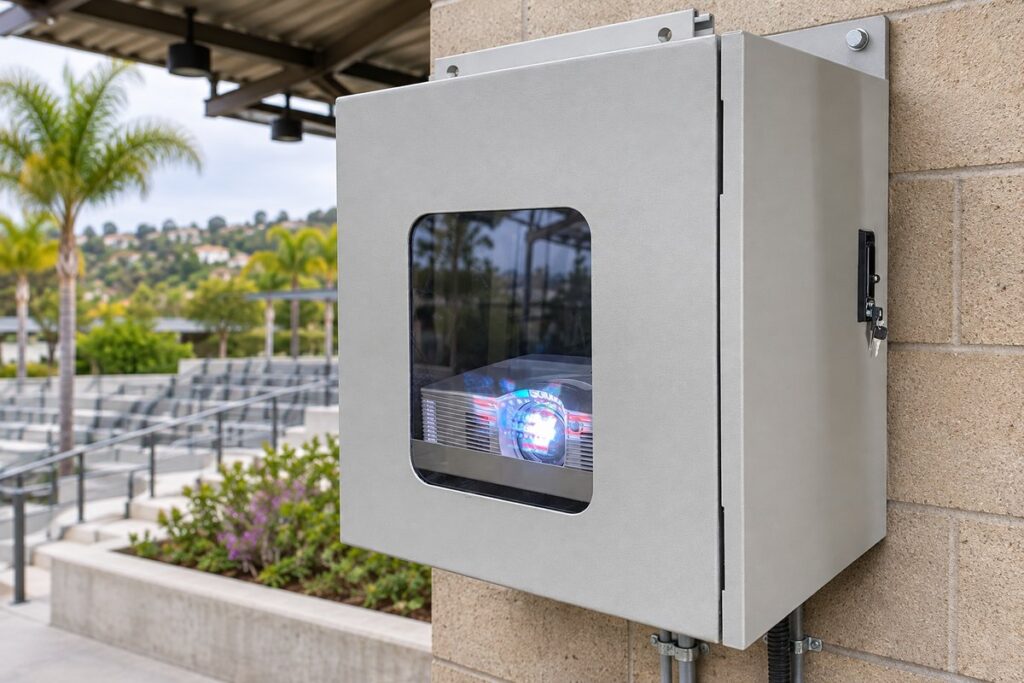
Featured supplies

Supplies mentioned in this guide

PROJECTORENCLOSURE.COM · Clovis, CA guide
Read more

A Practical Guide: Outdoor Projector Enclosures for Vista, CA

PROJECTORENCLOSURE.COM
Vista, CA · Planning guide

A Practical Guide: Outdoor Projector Enclosures for Vista, CA

Discover how Vista’s heat, humidity, salt air, and weather affect projection bays. Get practical advice on outdoor projector enclosures, climate-control, power, permits, and installation in Vista, CA.

Understanding Vista’s Climate and Its Impact on Outdoor Projectors

Vista, CA’s inviting climate comes with unique considerations for any outdoor AV installation. Summers routinely bring high heat and strong sun, which can quickly push projector housings to their thermal limits if not properly protected. Even shaded installations face spikes in radiant heat. The region’s coastal influence introduces humidity and salt air, which accelerate corrosion inside unprotected electronics, while inland winds stir up dust that infiltrates poorly sealed enclosures.

Choosing a high-quality outdoor projector enclosure is essential to shield your projector from these harsh elements. The combination of intense UV, high local humidity, and airborne salinity makes a standard weatherproof projector housing insufficient for long-term success in Vista. This is where climate-controlled and fan-cooled options, like those from ProjectorEnclosure.com, become crucial.

Before specifying an outdoor projection system, it’s essential to review local weather patterns for projected temperature highs, rainfall, and storm likelihood. For current conditions and seasonal climate data, visit the National Weather Service page for Vista. Incorporate this information into your enclosure selection and installation approach.

Heat, Humidity, Salt, and Dust: Threats to Projectors in Vista

Each environmental factor poses a different threat to your AV investment. Extreme heat and direct sunlight, prevalent during Vista summers, raise internal temperatures and shorten the lifespan of electronic components. Humid marine air can condense inside projectors, while micro-salt particles corrode contacts over time. Dust from dry inland bursts settles on lens surfaces, leading to image degradation and fan failure if not properly managed.

Conventional outdoor enclosures may claim weather resistance but often lack the advanced thermal management, filtration, and corrosion protection dictated by Vista’s mixed climate. Projectors run cooler—and last longer—inside a purpose-built, actively ventilated climate controlled projector enclosure. Models like the Defender Series Projector Enclosure are specifically engineered for challenging outdoor settings, helping to control temperature swings, humidity, and pollutant intrusion.

To ensure your projector enclosure performs optimally, always share your projector’s exact make and model with your supplier. A right-sized solution ensures internal airflow, filter positioning, and cable access points are right for your installation.

Power Planning: Getting Reliable Electricity in Vista

Supplying power to an outdoor projector enclosure starts with understanding Vista’s local infrastructure. Whether your project is at a resort, school field, church, or residential property, reliable access to electricity is a foundational step. Check with San Diego Gas & Electric to identify your service provider and determine available supply at your location.

Outdoor installations benefit from dedicated, weatherproof, GFCI-protected electrical circuits. Consider surge protection and voltage stabilization, especially for areas subject to brownouts or nearby heavy equipment. For higher-wattage projectors or enclosures with climate control, confirm adequate amperage—upgrade your circuit if needed.

Factor in cable routing, safety shutoff accessibility, and code compliance for Vista. Electrical needs may also impact permit requirements, so document load calculations and specifications for your submittal to the city.

Mounting Solutions: Safety, Accessibility, and Exposure

The physical installation of your enclosure in Vista warrants careful planning, starting with sun exposure. Mount enclosures away from direct afternoon sun or under purpose-built shade structures whenever possible to minimize local heat buildup. Secure mounting to building facades, sturdy posts, or overhead frames is essential for wind resistance and safety.

Choose mounting hardware rated for the structure (masonry, wood, or engineered framing) and design your hardware layout to withstand gusts and seismic activity, especially if your site is exposed to regional storms. Accessibility for servicing—such as cleaning filters or swapping projectors—should be considered upfront. Avoid installations too high for safe ladder use or where foot traffic is heavy beneath the enclosure.

If projecting onto a screen at a fixed distance is essential, verify your enclosure model’s depth and lens alignment options. Use the Projector Enclosure Fit Guide from ProjectorEnclosure.com to select the right size and mounting orientation.

Ventilation and Climate Control: Ensuring Projector Longevity

Ventilation is not an accessory, but a necessity in Vista’s fluctuating climate. Passive air vents rarely suffice when temperatures or humidity spike. Actively fan-cooled enclosures remove heated air and bring in filtered, cooler outside air, preserving optimal operating conditions for your projector. The most robust outdoor installations use climate-controlled cabinets that condition interior conditions regardless of outside swings.

Depending on site exposure and projector heat output, you might need a system with advanced air movement, multi-stage filters, or even dehumidification. Defender Series enclosures provide the engineered ventilation necessary to protect against both coastal corrosion and inland dust.

If you’re working under canopies or in semi-conditioned environments (such as partially open amphitheaters), the Integrator Series Projector Enclosure accommodates projects where the projector is not fully exposed to outside weather, but still requires protection from ambient air contaminants and temperature swings.

Permits and Local Code Considerations

Nearly every outdoor enclosure project in Vista will require coordination with the city’s building or community development office. Permitting processes confirm your installation is safe, meets code, and won’t disrupt public access or create electrical hazards. Large venues and permanent mounting may also trigger plan review or engineering assessment.

The Community Development office for the City of Vista is your central resource for permit requirements, submittal forms, and inspection scheduling. Requirements can vary by property type, enclosure size, electrical load, and mounting method—so confirm your responsibility before work begins.

Document your projector and enclosure specifications, mounting details, and any electrical upgrades. Allow time in your project timeline for review and approval, especially during busy seasons or when coordinating with AV integrators or contractors.

Selecting the Right Projector Enclosure for Vista, CA

Because climate conditions vary even within Vista, selecting the best projector enclosure depends on your exact site and application. Flagship products like the Defender Series Projector Enclosure are designed for open, outdoor sites, protecting high-lumen projectors from the city’s toughest weather and air quality conditions.

If your project is for a climate-controlled or semi-protected environment (covered patios, multipurpose rooms, or auditoriums), the Integrator Series Projector Enclosure balances quiet operation with enhanced air filtration. For home displays and projection mapping, consider the consumer-focused HomeLine Projector Enclosure for ease of installation and neighborhood-friendly aesthetics.

Ultra-short-throw (UST) projectors are increasingly popular in Vista schools and venues where space is tight; the UST Defender Series Enclosure delivers the same protection in a form factor tailored for these specialized projectors.

Planning for the Future: Maintenance and Upgrades

Outdoor projector installations in Vista are an investment in visual impact—protecting that investment over time calls for ongoing attention. Regularly inspect your enclosure’s filters, door seals, and cable grommets for wear, especially after Santa Ana winds or heavy rains. These simple steps extend the lifespan of both enclosure and projector asset.

Seasonal cleaning is critical for dust and salt removal. Schedule interior and exterior cleaning as part of your venue’s routine A/V maintenance. If you upgrade your projector, revisit the fit and airflow requirements; a new projector may require a differently-sized or enhanced-feature enclosure.

Your team can use the step-by-step Projector Enclosure Fit Guide as a checklist during replacement or redesign projects, and reach out to ProjectorEnclosure.com’s technical staff to confirm sizing and feature compatibility.

Local Resources for Vista, CA Outdoor AV Projects

FAQ: Outdoor Projector Enclosure Planning in Vista, CA

What makes climate controlled projector enclosures necessary in Vista?

Vista’s heat, humidity, dust, and occasional salt air require active cooling and advanced filtration to keep projectors performing reliably. Climate-controlled housings regulate interior temperature and moisture, preventing damage from local weather extremes.

Is a weatherproof projector housing enough for coastal Vista?

Standard weatherproof enclosures may lack protection against the specific risks present in Vista, including fine dust and sea-salt mist. Purpose-built housings like the Defender Series provide corrosion and particle filtration engineered for harsh, mixed climates near the coast.

How do I size the right enclosure for my projector?

Submit your projector make and model to ProjectorEnclosure.com, or use their Projector Enclosure Fit Guide to verify internal clearance, airflow, and mounting needs. This ensures you get the right enclosure solution, tailored for your equipment.

Every site’s climate and equipment needs are different. For personal advice and a tailored solution, Request an enclosure quote or contact ProjectorEnclosure.com at 888-631-5880 or ssisales@ssidisplays.com. Their team brings more than 20 years’ experience to every AV installation.

Featured supplies

Supplies mentioned in this guide

PROJECTORENCLOSURE.COM · Vista, CA guide
Read more

Outdoor Projector Enclosure Planning for Escondido’s Demanding Climate

PROJECTORENCLOSURE.COM
Escondido, CA · Planning guide

Outdoor Projector Enclosure Planning for Escondido’s Demanding Climate

A detailed guide to selecting, powering, mounting, and permitting an outdoor projector enclosure in Escondido, CA—addressing crucial climate and installation challenges.

Understanding Escondido’s Outdoor Climate Challenges

Installing a projector outdoors in Escondido, CA is no small feat. The area is known for its hot, sunny summers, sporadic humidity spikes, and breezy conditions that blow in dust year-round. If your location is close to the coast, you’re also facing the corrosive effects of salt air. Additionally, when rare storms or hurricane winds sweep the county, rain can come in at unexpected angles, testing any equipment left exposed. The result? Outdoor electronics face a uniquely challenging mix of weather and environmental hazards that demand specialized protection.

Projectors are sensitive to temperature swings, moisture, particulates, and salt deposits, all of which can quickly cause damage, blurry images, and expensive downtime. Dust and pollen from Escondido’s foothills and seasonal Santa Ana winds can clog projector fans and optics, while direct sun exposure can push internal temperatures dangerously high—even if the air feels mild. Understanding these climate risks is the essential first step when selecting a weatherproof projector housing for your home, school, church, theme park, or business venue.

Regular weather checks are important to schedule maintenance and plan events. The National Weather Service San Diego County Forecast provides up-to-date local weather information, so you can anticipate temperature, rain, wind, and humidity conditions relevant to your projector installation.

How Heat, Humidity, Dust, and Salt Air Impact Outdoor Projectors

Uncontrolled heat is a major threat to projector performance and lifespan. In Escondido’s summer months, outdoor surfaces and enclosures under direct sun can reach temperatures far above the air temperature, risking overheating even when projectors are officially rated for warm environments. Humidity and salt air combine to corrode internal electronics and optical surfaces, especially near the California coast or during monsoon-influenced weather. Without an outdoor projector enclosure designed for these elements, condensation and salt residue can accumulate in critical areas.

Dust storms kicked up by wind or construction activity are also a year-round risk in both urban and rural parts of Escondido. Fine dust can block cooling vents and settle on projection lens surfaces, degrading image quality and causing projectors to overheat or shut down. When you add sudden downpours from seasonal storms, it’s clear that off-the-shelf projectors—even with wide operating ranges—are vulnerable unless protected by a climate controlled projector enclosure made for outdoor use.

ProjectorEnclosure.com’s Defender Series Projector Enclosure is specifically engineered to address these threats with active cooling and weatherproof construction tailored for demanding outdoor locations like Escondido.

Choosing the Right Outdoor Projector Enclosure

Selecting the best weatherproof projector housing for your environment starts with identifying your projector model and its dimensions, mounting needs, and cooling requirements. Not all enclosures offer adequate protection against Escondido’s heat, dust, or humidity. Consumer-grade or basic enclosures often cannot keep up with the harsh summer sun or the combination of rain and salt air found in some neighborhoods and venues.

For all-weather outdoor installations, the Defender Series Projector Enclosure is a go-to solution for AV integrators, schools, churches, resorts, and themed entertainment spaces. This model is built for full exposure and includes options for direct sun and dust-heavy environments—making it a smart investment for most of Escondido’s outdoor AV applications. For home displays or architectural projection mapping, the HomeLine Projector Enclosure adapts proven protection for creative and residential projects.

It is essential to avoid using indoor-only or “hush box” models outdoors. The Hush Series Projector Enclosure is strictly designed for quiet-room indoor use and cannot withstand outdoor conditions. If you need help deciding, use the Projector Enclosure Fit Guide or contact ProjectorEnclosure.com with your projector model and intended location for expert sizing support.

Power Considerations: Local Electrical Needs

Reliable, clean power is the foundation for any successful outdoor projection installation. Escondido’s commercial and residential areas are served by the Clean Energy Alliance, which helps power the city’s AV systems and events. When planning your projector site, ensure there is a dedicated outdoor-rated electrical outlet on a properly protected circuit, ideally waterproofed and safely accessible for maintenance.

Projector enclosures with integrated fans or active climate control (like those in the Defender Series) require not only enough amperage for the projector itself, but also stable supply for cooling components. Avoid sharing circuits with landscape lighting, pumps, or heavy equipment that might introduce voltage fluctuations or surges. It’s best to consult a licensed electrician to assess your specific installation’s needs, especially for schools, venues, or churches where code requirements and operational safety are critical.

If you’re working with larger projectors or advanced mapping applications, double-check that your outdoor power infrastructure can handle startup surges and ongoing loads. Uninterruptible power supplies and surge protectors are recommended for additional protection during summer thunderstorms or power interruptions.

Smart Mounting for Security and Serviceability

Mounting an outdoor projector enclosure involves both security and safety. Projectors installed at Escondido schools, parks, or venues must be firmly attached to withstand wind gusts as well as minimize theft or tampering. Select mounting hardware rated for outdoor use, and plan location so service access is safe and convenient. Ideally, a mounting spot provides some natural shade while avoiding risk of accidental bumps, flooding, or falling debris.

Consult the structural requirements for your venue or property, and if needed, bring in an AV integration specialist to develop a mounting plan that fits the enclosure weight and keeps wiring protected from sun, rain, and accidental damage. Remember that fan-cooled and climate controlled projector enclosures require air gaps around the housing for proper ventilation. Do not block air intakes or exhaust—otherwise, cooling and weatherproof functions may be compromised.

When viewing angles matter, such as for resort movie nights or church services, mounting height and throw distance must be carefully calculated. Use manufacturer technical drawings and the Projector Enclosure Fit Guide to align your projector, enclosure, and surface for optimal results.

Ventilation and Climate Control: Beyond Just a Box

To combat Escondido’s wide temperature swings and exposure to dust and salt, ventilation is more than an afterthought. High-performance weatherproof projector housing like the Defender Series includes engineered airflows, fan cooling, and optional heater packages to keep your projector within its safe operating range. Passive ventilation is rarely enough in direct sun or locations subject to fine dust or humidity.

If you’re hosting events in peak summer or plan to use your projector for extended periods, a climate controlled projector enclosure is essential. This technology actively cools and (when needed) dehumidifies the space around the projector, protecting delicate internal optics and electronics. These features deliver a significant advantage over generic all-weather boxes or DIY solutions, ensuring long-term equipment health and consistent image quality even during heat waves or coastal fog events.

Always select an enclosure that matches your specific projector’s heat output and cooling needs. For ultra-short throw installation, consider the UST Defender Series Enclosure, which addresses both space constraints and the unique cooling demands of new-generation UST projectors.

Permitting Outdoor Enclosures in Escondido

Any permanent outdoor AV installation typically requires approval from the City of Escondido. Permitting helps ensure safety, compliance with zoning rules, and coordination with utility providers. The first step is to consult the Building Division, which manages applications for new outdoor structures, mounts, and electrical work.

Permit requirements vary by project type—schools and event venues may have different standards than residential yards or commercial patios. Check with the office before starting work to determine submittal documents, engineering needs, and inspection timelines. Be prepared with technical specs and proposed site plans for your outdoor projector enclosure to speed the review process.

Some projects in coastal or environmentally sensitive areas may require additional reviews or neighbor notifications. Bringing in a qualified AV integrator or licensed contractor can simplify compliance and help avoid permitting delays that might impact tight event calendars or school schedules.

Frequently Asked Questions

What type of enclosure is best for Escondido’s weather?

The Defender Series Projector Enclosure is designed for all-weather, outdoor use in environments with intense sun, dust, humidity, and salt air—challenges common in Escondido. Avoid using hush boxes or indoor-only enclosures outdoors.

Will my outdoor projector enclosure need an electrical permit?

Most new outdoor electrical installations require a permit. Check with the City of Escondido Building Division to confirm exactly what’s needed for your specific project and location.

How can I make sure the enclosure I purchase will fit my projector?

Use the Projector Enclosure Fit Guide or contact ProjectorEnclosure.com with your projector model details for accurate sizing and configuration recommendations.

Plan Your Outdoor Projection for Escondido with Expert Help

Every Escondido location brings its own environmental and regulatory considerations for outdoor projection. From selecting a weatherproof projector housing with the right level of climate control, to securing clean power and obtaining proper permits, the details matter for long-term projector performance and safe, trouble-free enjoyment. ProjectorEnclosure.com’s team supports AV integrators, venues, and homeowners with project-specific advice and a range of configurable outdoor and indoor climate-controlled projector enclosures to fit almost any specification.

Ready to get started? Request an enclosure quote today—and don’t forget to share your projector model for the best fit and protection solution.

Featured supplies

Supplies mentioned in this guide

PROJECTORENCLOSURE.COM · Escondido, CA guide
Read more

A Practical Guide to Outdoor Projector Enclosures in Hesperia, CA

PROJECTORENCLOSURE.COM
Hesperia, CA · Planning guide

A Practical Guide to Outdoor Projector Enclosures in Hesperia, CA

Hesperia’s intense sun, dust, and changing weather demand careful planning when installing an outdoor projector enclosure. This guide walks you through local factors, from sizing to permits, to keep your outdoor AV projects safe and bright.

Understanding Hesperia’s Unique Outdoor Climate Challenges

Outdoor projector enclosures face special challenges in Hesperia, CA. Summers here bring relentless heat and long hours of direct sun, which can quickly overheat sensitive projector equipment if not actively managed. Unlike coastal regions where humidity and salt air are primary concerns, Hesperia’s high desert location introduces issues including dust infiltration and volatile weather swings—plus, occasional strong winds that kick up gritty particles. For sites closer to the Mojave River, bursts of humidity and rare, intense storms can also play a role, making it essential to understand the full climate picture before planning any outdoor AV setup.

AV integrators, school technology coordinators, venue managers, and motivated homeowners alike need to account for these factors. Misjudging local weather can lead to projector failures, unexpected shutdowns mid-event, and significant costs in repairs or replacements. Planning starts with knowing the extremes—when triple-digit temperatures meet swirling dust, the right weatherproof projector housing becomes more than just a feature. It’s a necessity for reliable outdoor projections that meet expectations, whether for movie nights or large-scale venue events.

ProjectorEnclosure.com has served clients for over two decades, providing proven solutions for these real-world challenges. For Hesperia and the inland High Desert, choosing a tailored, climate controlled projector enclosure is step one toward successful outdoor AV installations. Always send your projector model information to ensure accurate sizing and optimal protection.

How Heat, Dust, and Weather Affect Your Outdoor Projector

If you’re planning to mount a projector outdoors in Hesperia, protecting it from environmental threats is just as important as choosing the right projector model. Coarse, airborne dust not only gets into sensitive electronics, but can also settle on lens surfaces, dimming your image if not properly filtered out. The summer sun will elevate temperatures inside poorly ventilated enclosures well above manufacturer specs, even on mild days, while unfiltered enclosures can allow humidity and moisture from occasional storms to cause electrical damage and mildew.

This combination of heat, dust, and rare moisture events means traditional open housings or consumer-grade covers won’t cut it for most sites. Only an enclosure specifically engineered to block dust and provide active temperature management—such as the Defender Series Projector Enclosure—can keep your investment running day in, day out. This is especially vital for schools, resorts, and churches that rely on worry-free operation for scheduled events.

For installations nearer the coast or downwind of arroyos, occasional salt air or sudden thunderstorms should be considered too. These elements further justify the need for a purpose-built, sealed weatherproof projector housing. Carefully matching your enclosure’s features to Hesperia’s climate is the foundation for a resilient AV installation.

Power Planning for Outdoor Projector Installations

Projectors and their climate-controlled enclosures draw significant power—often more than many expect. In Hesperia, it’s common for installations to be sited on wall mounts or standalone poles well away from convenient outlets. Before breaking ground or planning a major event, make sure you have an up-to-date assessment of your electrical needs and load limits, including the extra capacity required for active cooling fans or heaters inside your enclosure.

Professional AV integrators should coordinate closely with a licensed electrician to safely deliver the necessary supply. Don’t overlook the impact of high temperatures: enclosures like the Defender Series use active cooling systems, which must be connected correctly for reliable 24/7 operation. Weather-resistant conduit, ground fault protection, and surge suppression are also best practices for Hesperia’s dry, occasionally storm-prone environment.

Always check building codes before finalizing your plan. The city’s Permit Process resource provides step-by-step guidance for securing permission to run power, mount equipment, or complete new construction for AV installations in Hesperia.

Mounting and Positioning for Maximum Protection

Proper mounting does more than simply hold your projector enclosure in place—it ensures consistent airflow, minimizes dust collection, and protects equipment from vandalism or accidental impacts. In Hesperia, positioning your enclosure under partial shade, when possible, helps reduce temperature swings and solar gain. If shade isn’t available, selecting an enclosure with robust sun-blocking capabilities remains critical.

Wall mounting is a popular option for schools and homes, especially if the structure can bear the added weight of a fully loaded, climate controlled projector enclosure. For commercial venues or large outdoor events, pole or steel structure mounts provide more flexibility and can help limit exposure to blowing dust by elevating the projector above the worst particulates. Custom brackets may be needed—this is where knowing your projector model helps ProjectorEnclosure.com recommend the perfect fit.

It’s also a good idea to secure mounting hardware using anti-theft fasteners when publicly accessible, and to verify that placements allow enough space for fan vents and maintenance access. For guidance on mounting, consult the official Permit Process information and work with your general contractor or facilities team as needed.

Ensuring Reliable Enclosure Ventilation in Harsh Conditions

The longevity of any projection setup in Hesperia hinges on effective ventilation. A climate controlled projector enclosure must circulate air efficiently to avoid heat buildup and condensation inside the housing. The Defender Series Projector Enclosure is designed for constant outdoor operation, featuring active fan-cooled systems that keep your projector within its ideal operating temperature range—even during heatwaves or dry wind events.

Installing the enclosure in an orientation that promotes airflow, while shielding vents from prevailing windblown dust, enhances performance and reduces cleaning intervals. Avoid placing the enclosure directly against walls or roof surfaces where heat can pool or air can become stagnant. Elevated or outward-facing mounts help maintain in/out air exchange.

Seasonal maintenance—such as checking fan operation and clearing intake/exhaust screens—is straightforward but important. ProjectorEnclosure.com includes guidance for routine care with each enclosure model, increasing long-term reliability no matter what Hesperia’s forecast brings.

Understanding Permit Requirements for Outdoor AV Projects

No two outdoor projector installations are alike, so it’s crucial to know when—and how—to obtain required permits. In Hesperia, the scope of your project, from minor residential upgrades to major commercial displays, will determine what paperwork and inspections are necessary. Everything from running new power lines to installing a permanent weatherproof projector housing has the potential to require formal approval.

Local authorities may ask for plans detailing mounting engineering, structural loads, and even fire safety considerations in sites such as schools or public venues. If your AV project involves a custom structure, covered area, or signage changes, additional permits may apply. Always check with the Permit Process resource early in your planning stage to avoid costly delays or code issues down the line.

Permitting isn’t just red tape—it helps ensure your installation is safe and liability-free, especially with the electrical and weather exposure that comes with outdoor AV in the High Desert. Bring these questions to your site engineer or AV contractor for early answers before purchasing equipment.

Finding the Ideal Outdoor Projector Enclosure for Your Needs

Every projector model brings its own set of cooling, space, and access requirements. Selecting the correct outdoor projector enclosure helps ensure not only weatherproof operation, but also that you’re not overpaying for size or underprotecting your investment. For Hesperia’s unique demands, ProjectorEnclosure.com recommends the Defender Series Projector Enclosure for all outdoor situations, and the UST Defender Series Enclosure if you’re using an ultra-short throw setup.

For open-air indoor/outdoor amphitheaters, gyms, or sites with durable roofing but open walls, the Integrator Series Projector Enclosure may be suitable if all-weather exposure is limited—always check actual site conditions. The Hush Series Projector Enclosure is strictly for sound-sensitive indoor environments and should not be used outside. Home projection mapping displays benefit from the HomeLine Projector Enclosure, perfect for seasonal home or fantasy light shows, but not for year-round outdoor commercial installs.

To make sizing easy and precise, ProjectorEnclosure.com provides a Projector Enclosure Fit Guide. Just send your projector brand and model for a tailored enclosure recommendation that matches your local needs.

FAQ: Outdoor Projector Installations in Hesperia, CA

What’s the best way to protect a projector from dust and wind in Hesperia?

The best option is a fully sealed, climate controlled projector enclosure such as the Defender Series. Its active fans and filtered vents keep dust and sand out, while cooling internal temperatures during hot, windy days.

Do I need a permit to install an outdoor projector enclosure?

Permit requirements depend on your mounting location, run of power, and venue type. Check the city’s Permit Process for AV projects, and consult your electrician or facilities team to stay compliant.

How do I know which enclosure model is right for my projector and site?

ProjectorEnclosure.com offers guidance based on your projector make and model, site exposure, and use case. Use the Projector Enclosure Fit Guide or send your details for a precise match.

Plan Ahead for Lasting Outdoor AV Success in Hesperia

Deploying a reliable outdoor projector in Hesperia requires matching enclosure performance to tough local conditions—heat, heavy sun, dust, humidity spikes, and the occasional wild storm. Taking the time to plan for power delivery, ventilation, mounting, and necessary permits will result in unforgettable AV displays that stand the test of time. Whether you represent a school, church, commercial venue, or private homeowner, ProjectorEnclosure.com’s seasoned expertise and broad line of climate controlled and weatherproof projector housings offer the protection your project needs.

Ready to get started? Request an enclosure quote or contact 888-631-5880 / ssisales@ssidisplays.com for expert help sizing your next outdoor projector enclosure.

Featured supplies

Supplies mentioned in this guide

PROJECTORENCLOSURE.COM · Hesperia, CA guide
Read more

Outdoor Projector Enclosures in Menifee: Planning for Weather & Power

PROJECTORENCLOSURE.COM
Menifee, CA · Planning guide

Outdoor Projector Enclosures in Menifee: Planning for Weather & Power

A step-by-step practical guide for AV pros and homeowners in Menifee, CA: understand local climate challenges to projectors, and how to spec, power and mount a weatherproof outdoor projector enclosure for heat, humidity, coastal air, dust, and storms.

Understanding Menifee’s Climate and Its Impact on Outdoor Projectors

Installing an outdoor projector in Menifee, CA requires careful consideration of the region’s challenging climate conditions. Summer temperatures frequently soar above 100°F, and direct sun exposure can quickly overheat electronic equipment, especially on a west-facing wall or roof. High humidity during parts of the year, occasional storms, and the influence of coastal salt air drifting inland all pose unique risks that demand a robust weatherproof projector housing.

Dust from Menifee’s arid surroundings can infiltrate and clog sensitive equipment, leading to reduced image quality and recurring maintenance headaches. Salt air, even miles inland, can accelerate corrosion of hardware and internal projector components. Adapting your setup to deal with storm events—including sudden rainfall or blowing debris—can be the difference between a lasting investment and repeated downtime.

Anyone planning an outdoor AV project in Menifee—whether at a local school, resort, outdoor church venue, or a private backyard—should start with a realistic climate assessment. This guide explores how to select and install a climate controlled projector enclosure tailored to these local conditions, with practical steps for maximizing the life and performance of your projector outdoors.

Choosing the Right Outdoor Projector Enclosure

The first defense against Menifee’s heat, humidity, dust, and storms is the correct enclosure. Not all solutions are engineered for outdoor extremes—indoor hush boxes and basic housings simply don’t compare to a true outdoor projector enclosure when it comes to weather protection and longevity. For fully exposed or semi-sheltered installs, the Defender Series Projector Enclosure from ProjectorEnclosure.com is specifically designed to tackle direct sun, high temperatures, salty air, and wind-driven dust.

Fan-cooled and climate-controlled enclosures like the Defender Series maintain a steady temperature range around your projector, greatly reducing the chance of thermal shutdown or long-term component damage. These weatherproof projector housings are constructed to resist intrusion from dust and moisture, making them suitable for Menifee’s seasonal storms and debris.

For ultra-short throw setups or projection mapping near the coast, the UST Defender Series Enclosure provides a tailored solution. Whichever model you choose, be sure to use the Projector Enclosure Fit Guide to ensure your projector is matched with the right-size enclosure. If uncertain, you can also email your projector model to ssisales@ssidisplays.com or call 888-631-5880 for expert sizing help.

Managing Heat, Sun, and Cooling Requirements

Direct exposure to Menifee’s intense sun drastically raises the internal temperature of any enclosure, especially in the late afternoon. Advanced fan-cooling and active ventilation are essential to protect projectors in these conditions. A climate controlled projector enclosure will circulate air, expel excess heat, and help keep internal components well below critical thermal thresholds—even during heat waves.

When positioning an enclosure, consider mounting it in shaded locations whenever possible, such as beneath awnings or purpose-built projector towers. This reduces the thermal load and improves long-term reliability. If permanent shading isn’t possible, select enclosure models with high reflectivity or heat-resistant housings to minimize temperature spikes.

Installers should also plan for adequate airflow around the enclosure, avoiding tight alcoves or poorly vented corners. If your site is prone to accumulating hot stagnant air (such as in courtyards or close-walled patios), discuss additional ventilation with your enclosure supplier. Always reference the Defender Series Projector Enclosure and UST Defender Series Enclosure product pages for model-specific cooling features.

Humidity, Salt Air, and Corrosion Protection

Even at a distance from the ocean, Menifee faces periodic humidity spikes and salt-laden breezes, especially during certain wind events. Standard equipment is often vulnerable to corrosion and electrical shorting, which can cause persistent reliability issues in projectors and mounts.

To address these hazards, climate controlled projector enclosures incorporate weather-sealed cable ports and gaskets, plus specialized finishes that stand up to aggressive environments. Choosing an all-weather housing, like the Defender Series Projector Enclosure, reduces rust formation and protects sensitive electronics from condensation and corrosion.

Routine maintenance—especially periodic checks on cable seals and internal filters—can further enhance protection throughout the rainy and humid seasons. If your outdoor AV project is close to the coast or near high-traffic roads (both common salt and dust sources), factor in these environmental threats at the planning stage for long-term peace of mind.

Dust and Storm Season: Keeping Projectors Operational

Menifee is no stranger to summer and early-fall wind events that bring blowing dust, pollen, and occasional storm debris. These conditions can quickly overwhelm basic enclosures or open-mount setups, risking premature projector failures or costly downtime for schools, churches, or corporate venues.

Weatherproof projector housings with positive pressure ventilation, high-grade air filtration, and sealed cable entries keep internal optics, fans, and electronics safe from clogging and contamination. For projects during hurricane or storm seasons, always verify that your chosen outdoor projector enclosure can withstand strong wind-driven rain and flying debris.

It’s also prudent to plan regular filter checks, especially after dust storms or high pollen events. Your local maintenance team or AV integrator should incorporate these checks into their regular outdoor AV inspections.

Power Planning: Outages, Safety and Backup Solutions

Reliable outdoor projector performance hinges on secure power. Menifee frequently sees planned or unplanned outages due to wildfire risk or storms. The SCE Public Safety Power Shutoff (PSPS) & Cooling Centers resource provides alerts and preparedness information you should review when planning any outdoor AV installation.

Install a dedicated outdoor-rated power circuit for your enclosure and projector, protected by GFCI where required. In venues where projector uptime is critical, such as theme parks or resort outdoor cinemas, consider integrating an uninterruptible power supply (UPS) or generator backup to minimize disruption during outages.

Always coordinate with a qualified electrician to assess load, circuit routing, and weatherproofing for any outdoor power drops. Check for local utility requirements and any preemptive shutdown policies that could affect your event scheduling or AV system availability.

Mounting, Placement and Structural Considerations

Projector enclosures are only as effective as their mounting. In Menifee, high wind, shifting soil, and thermal expansion all play a role in long-term security and projector alignment. Choose a mounting solution rated for the weight and projected wind load of the enclosure (plus projector), securely attached to a rigid surface like steel framing, concrete pad, or engineered beam.

Raised placements can assist ventilation and help avoid ground-level dust, but may require engineering review if the installation is particularly tall or subjected to constant winds. For public venues and schools, ensure that mounting hardware is tamper-resistant and shielded from inadvertent access.

Always verify with city or county offices if your planned structure requires a permit, especially for fixed poles, sheds, or above-roof installations. Requirements and reviews vary by project, so check with the office linked above before breaking ground.

Permits and Local Regulations: What You Need to Know

Installing an outdoor projector enclosure in Menifee may trigger permitting and inspection requirements, particularly for permanent or large-scale displays. Permits can cover aspects such as electrical work, structure additions, and neighborhood or school district approvals.

Venues should consult local building officials early in the planning process to identify which permits are necessary. The SCE PSPS information page also provides insights into resilience and safety measures that may affect your setup.

Always allow extra lead time for reviews and approvals, especially for outdoor events or projects with high community visibility. Permit office contacts can also help clarify any code considerations—such as setback, electrical, or fire rules—specific to your intended site.

FAQ: Outdoor Projector Enclosures in Menifee

Do I need a different enclosure for shaded vs. full sun areas?

For areas fully exposed to sun, select robust climate controlled projector enclosures like the Defender Series with active cooling and UV-resistant construction. Shaded or covered spots may allow for different mounting solutions, but in Menifee’s heat, always prioritize cooling and ventilation regardless of sun exposure.

How do I choose the right size for my projector?

Measure your projector’s height, width, and length, or simply use the Projector Enclosure Fit Guide. For expert sizing, send your projector model to ssisales@ssidisplays.com or call 888-631-5880; ProjectorEnclosure.com will help you select the right fit and climate features.

Which model should I use for residential projection mapping?

Homeowners interested in projection mapping or home holiday displays can explore the HomeLine Projector Enclosure, designed for consumer-grade setups. Be sure to match your model and setup style to the enclosure for lasting performance outdoors.

Conclusion: Expert Help for Menifee’s AV Installers and Homeowners

Planning an outdoor projector installation in Menifee, CA brings unique climate challenges, from high heat and humidity to dust, salt air, and storms. The most practical way to safeguard your projector investment is to select a fan-cooled, climate controlled outdoor projector enclosure matched to your environment. ProjectorEnclosure.com, with over 20 years in the business, offers solutions built for Menifee’s toughest conditions.

Request an enclosure quote and get expert assistance in sizing, power planning, mounting, and weather protection for your next project.
Featured supplies

Supplies mentioned in this guide

PROJECTORENCLOSURE.COM · Menifee, CA guide
Read more

Planning Outdoor Projector Enclosures in Newport Beach, CA

PROJECTORENCLOSURE.COM
Newport Beach, CA · Planning guide

Planning Outdoor Projector Enclosures in Newport Beach, CA

Discover how Newport Beach’s unique climate affects outdoor projector installations. Learn about power, ventilation, and enclosures matched to your projector and location.

Understanding Newport Beach’s Outdoor Climate Challenges

The beautiful coastal setting of Newport Beach, CA brings stunning views and comfortable living, but it also presents unique environmental factors for outdoor projector installations. Summers are often marked by high temperatures and strong, direct sunlight. Combine this with periods of elevated humidity, frequent marine layer moisture, fine dust from beach winds, and salt-laden air coming off the ocean, and you have demanding conditions for any sensitive AV equipment. Occasional storms and rare but intense winds during hurricane season add to the complexity. These local factors make it essential to approach your outdoor projector enclosure project with careful planning for environmental protection, cooling, and site logistics.

Direct sun exposure is a critical concern, as temperatures inside a projector enclosure can rise rapidly, potentially exceeding the safe operational range for most projectors. Salt air accelerates corrosion of metal surfaces and electronic contacts, while humidity can lead to condensation and mold if not controlled. Coastal dust and sand entering enclosures may impair optical clarity and mechanical operation. With these climatic influences in mind, anyone installing outdoor projectors in Newport Beach—from AV integrators and venues to homeowners—needs to address protection, maintenance and local weather forecasting from the start.

Before getting started, always check the current weather outlook using the Newport Beach, CA Forecast from the National Weather Service. This helps in scheduling install days and preparing for sudden weather changes during the most vulnerable stages of setup.

Choosing the Right Outdoor Projector Enclosure

Given Newport Beach’s climate, an outdoor projector enclosure designed to handle sun, humidity, salt air, dust, and occasional rain is non-negotiable. ProjectorEnclosure.com offers the Defender Series Projector Enclosure, engineered for all-weather, climate-challenging environments like the Newport coast. This model features robust protection, active cooling, and weatherproof design elements to defend sensitive AV gear year-round. Do not use indoor models, such as the Hush Series Projector Enclosure, in outdoor settings—these are intended solely for quiet interior spaces.

For anyone using ultra-short-throw projectors outdoors for signage or mapping, ProjectorEnclosure.com’s UST Defender Series Enclosure provides specialized protection and mounting options. If your installation is under permanent cover, in a conditioned space, or not exposed directly to Newport’s elements, the Integrator Series Projector Enclosure can be considered. Those aiming for projection mapping on homes or consumer night displays (under covered patios, for instance) may want to explore the HomeLine Projector Enclosure.

To ensure a correct fit and optimal cooling, use the Projector Enclosure Fit Guide or send your projector model directly to the ProjectorEnclosure.com team. Exact sizing matters for performance, airflow, and long-term reliability.

Power Requirements and Safety Planning

Securing reliable power is fundamental for any outdoor AV installation. Newport Beach is served by Southern California Edison, and power stability can influence your projector’s runtime and enclosure cooling. Before work begins, consult the Southern California Edison local outage and utility guide for up-to-date resource planning and backup power procedures.

Outdoor installations require dedicated circuits, ideally with surge protection and GFCI outlets rated for the enclosure’s and projector’s combined electrical draw. Weather-proof conduit and junction boxes are essential to guard against moisture ingress—especially important in coastal air with its ever-present humidity and salt content. Work with a licensed electrician to assess load capacities and ensure code compliance.

If your venue or home has plans for emergency power or generator backup, consider integrating power sources with auto-transfer capability. This protects your projector and enclosure’s cooling fans from abrupt outages or surges, particularly relevant in Newport Beach during stormy conditions. Permitting and local code requirements may dictate additional measures, so always check with the municipal office before finalizing electrical plans.

Projector Enclosure Mounting and Positioning

Correct mounting of a weatherproof projector housing in Newport Beach takes more than just security. Structural soundness is vital—bracing may be needed to withstand high coastal winds or rare but severe storm events. Think carefully about exposure to direct sunlight, as it raises enclosure temperatures and may require active ventilation or shading to maintain projector performance.

For public venues, schools or churches, mounting must also account for safety, vandal resistance, and cable management. Consider the line of sight for projectors and avoid positioning where beach sand, dust, or tree debris may quickly accumulate. Non-corrosive mounting hardware and stainless fixings help extend system life in a salty air environment.

For rooftop installations or homes near the beach, elevation helps with air flow and minimizing ground dust intrusion. Secure mounting also reduces vibration and shifting during Newport Beach’s gusty afternoons. Where possible, provide partial shading, but never block the enclosure’s ventilation ports or air intakes.

Ventilation and Climate Control for Newport Beach Conditions

Ventilation is a non-negotiable in Newport Beach, especially through the hottest summer days or wet, humid nights. An outdoor projector enclosure with fan-cooling or active climate management, such as the Defender Series, can keep temperatures within safe ranges even when direct sun beats down. Maintaining airflow guards against both heat build-up and internal condensation that could affect sensitive projector optics.

Salt air and humidity are major concerns along Newport’s waterfront. Enclosures that feature filtered air intakes and positive pressure fans can help prevent moisture and salt particles from accumulating inside. It is vital to maintain filter systems and check airflow tunnels regularly, especially during high humidity periods or after storms.

Consider using real-time weather from the National Weather Service Newport Beach Forecast to schedule enclosure servicing and anticipate extreme temperature or moisture events. Automated control systems that respond to ambient temperature, humidity or weather triggers can further protect your investment during Newport’s most challenging days and nights.

Permitting, Codes, and Local Approvals

Depending on your location and project size, Newport Beach regulations may govern how and where you install outdoor projector enclosures. For commercial venues, schools, or resort spaces, permits may be required not just for electrical work but also for mounting structures, outdoor displays, and weatherproof equipment. Homeowners’ associations (HOAs) in Newport’s residential areas may have further restrictions, particularly related to exterior modifications and visibility from public spaces.

Before installation, reach out to the local permitting office (referenced in the Southern California Edison resource above) to verify application procedures and inspection requirements. Requirements may differ based on whether your enclosure and projector are mounted on an existing structure, post, or rooftop—and if the installation is part of a broader outdoor event or commercial venue redesign.

Collaborating with an experienced local AV integrator or contractor familiar with Newport Beach codes can help smooth the process. Be ready with specs and product details from your selected model, as authorities may ask about safety features and wind or weather design. All planning should include electrical code adherence and clarity on who maintains or accesses the equipment.

Maintenance, Monitoring and Long-Term Protection

Protecting your climate controlled projector enclosure over time is as important as selecting the right one up front. Newport Beach’s salt air, in particular, creates an environment that can accelerate wear. Schedule regular inspections for corrosion, filter clogging, and damage from wind-blown debris. The frequency will depend on proximity to the coastline and seasonal weather patterns, with heightened vigilance after storms or marine layer intrusions.

Monitor fans and internal climate controls, cleaning or replacing intake filters as needed. Digital temperature and humidity monitors inside the enclosure give early warning for potential problems, especially during warm, muggy spells. A proactive approach pays off in projector longevity and consistent performance for public venues, churches, resorts, and homeowners alike.

Despite robust weatherproofing, no installation is maintenance-free in a demanding climate. If the equipment isn’t working as expected, refer to the manufacturer’s troubleshooting resources or reach out to ProjectorEnclosure.com for guidance. Reporting your projector model ensures tailored support and parts recommendations.

FAQ: Outdoor Projector Enclosures in Newport Beach

How does Newport Beach weather affect projector enclosures?

Coastal heat, humidity, blowing dust, and salt air mean projectors require weatherproof housing with climate control for durability. Enclosures such as the Defender Series are specifically built to resist these challenges, maintaining airflow and protection against salt and moisture. Always consider the intensity of summer sun and periodic storms when planning your system.

Can I use any projector enclosure outdoors in Newport Beach?

No. Only projector enclosures engineered for outdoor and all-weather use, like the Defender Series, should be installed outside in Newport. Indoor-only models, such as the Hush Series or Integrator Series, are not designed to withstand moisture, temperature swings, and salt exposure. Using the right model protects your investment and ensures reliable performance.

Do I need a permit for installing my projector enclosure?

Permit needs depend on your installation location and type. Most commercial venues and many residential projects in Newport Beach will require some form of city or HOA approval, especially for permanent outdoor electrical work or mounting new structures. Check with local offices for up-to-date permit guidance before scheduling installation.

Get Started with ProjectorEnclosure.com

Newport Beach’s climate offers endless possibilities for outdoor projection—if you plan carefully for protection, cooling, and long-term durability. ProjectorEnclosure.com has more than 20 years’ experience in building rugged, weatherproof solutions for every application. Start by sending your projector model or using the Fit Guide for precise sizing. For dedicated support on your project, call 888-631-5880 or email ssisales@ssidisplays.com. Ready to take the next step?

Featured supplies

Supplies mentioned in this guide

PROJECTORENCLOSURE.COM · Newport Beach, CA guide
Read more

A Practical Guide to Outdoor Projector Enclosures in Pomona, CA

PROJECTORENCLOSURE.COM
Pomona, CA · Planning guide

A Practical Guide to Outdoor Projector Enclosures in Pomona, CA

Understand how Pomona’s summer heat, humidity, salt air, and dust affect outdoor projector enclosures. Learn how to plan for power, mounting, ventilation, and permits.

How Pomona’s Local Climate Impacts Outdoor Projector Enclosures

Pomona, CA boasts a diverse climate, often characterized by warm summers, bursts of humidity, the rare rainstorm, and the periodic influence of inland and coastal air. For venues and homeowners planning an outdoor projector setup, these factors directly impact performance and lifespan. High temperatures and direct sunlight on any projector enclosure can lead to rapid heat build-up, stressing sensitive electronics and optics. Even if you’re not right on the coast, salt air occasionally drifts in with prevailing winds, leading to corrosion risks, while summer brings increased airborne dust. Additionally, late-season storms can dump significant rainfall, with the potential for short-term pooling or flooding near unprotected tech. Installing a robust outdoor projector enclosure in Pomona isn’t just about sun and rain — it’s about addressing all these local challenges.

To predict these conditions, monitor the National Weather Service forecast for Pomona. Planning your installation in the shoulder seasons helps minimize logistical hiccups, but year-round operation demands hardware that guards projectors from every environmental angle Pomona can deliver.

Choosing the right projector enclosure means understanding the interplay between Pomona’s unique weather profile and your installation location. Each site — be it a school, resort, theme park, or backyard patio — may face unique exposures and should be planned accordingly.

Projector Threats: Heat, Humidity, Dust, and Salt Air

The summer sun in Pomona produces extreme enclosure surface temperatures. Heat rapidly accumulates in unprotected housings, risking thermal damage. Higher humidity, often overlooked, can lead to condensation inside the enclosure, threatening sensitive projectors with corrosion and lens fogging — especially after a cool evening followed by direct morning sun. Unexpected rain or the infrequent coastal salt air only add to the risk, pitting metal surfaces and degrading wiring or filters over time.

Dust is another persistent threat in Pomona, especially during dry spells and Santa Ana winds. Fine particulates can infiltrate inadequately sealed or poorly ventilated enclosures, quickly clogging fans and optics. This worsens image quality, increases cleaning needs, and can shorten projector life. The mix of fine dust and humidity creates even more troublesome internal residue for sensitive electronics.

It’s why modern outdoor projector installations in Pomona turn to weatherproof projector housing solutions that actively expel heat, manage humidity, and shield projectors from all airborne threats, not just water. Ask ProjectorEnclosure.com for guidance on technician-accessible designs and to discuss local risks.

Defender Series: Reliable Protection for Pomona’s Outdoors

For fully outdoor installations in Pomona and throughout Southern California, the Defender Series Projector Enclosure is the professional standard. Engineered for open weather, this enclosure shields projectors from harsh sun, airborne dust, heavy humidity, rainfall, and intermittent salt air. Its active fan-cooling system circulates air efficiently, minimizing heat build-up even in the warmest Pomona months.

The Defender Series is specifically recommended for AV integrators, venues, churches, schools, and theme parks needing to protect projectors in uncovered installations or any area exposed to the elements. Whether you’re illuminating a college amphitheater, a hotel event space, or a residential poolside wall, the Defender efficiently manages air flow, keeps electronics cool, and prevents dust infiltration.

Every enclosure from ProjectorEnclosure.com is sized to your projector model for optimal fit and airflow. For ultra-short throw applications, the UST Defender Series Enclosure offers all-weather performance tailored to that class of projector, ensuring the right protection no matter the lens type or throw distance.

Climate-Controlled Options for Covered Outdoor Spaces

Some Pomona installations — such as enclosed patios or conditioned pool houses — enjoy partial protection from direct weather. For these, a climate controlled projector enclosure delivers added environmental assurance. The Integrator Series Projector Enclosure is designed for indoor or conditioned, sheltered spaces, including partially open plan venues or covered event pavilions. While not for direct weather exposures, it manages stray dust and fluctuating humidity in semi-protected environments.

Matching the enclosure to your surroundings ensures long-term projector performance. If you’re considering indoor projection mapping, classroom AV upgrades, or home theater hush applications, learn more about the Hush Series Projector Enclosure, but remember it is not suited for outdoor or open installations in Pomona. For creative outdoor displays at home or on small venues, the HomeLine Projector Enclosure delivers flexible protection for consumer projection mapping.

For sizing help, use the Projector Enclosure Fit Guide. To ensure your model receives the precise protection it needs, ProjectorEnclosure.com encourages you to send your projector make and model for tailored enclosure suggestions.

Planning Power and Electrical Safety

No projector enclosure can perform in Pomona’s climate without dependable electrical service. Start by reviewing supply options through Pomona Choice Energy, the city’s electricity generation program. Whether integrating with Southern California Edison’s delivery or coordinating new service for your site, it’s critical to account for both projector and enclosure ventilation fan loads in your electrical design.

Weatherproof outlets, proper ground fault protection, and dedicated circuits for higher-lumen projectors are recommended to maximize reliability and minimize nuisance trips. Consider surge suppression and power conditioning to protect your system from voltage spikes, especially during Pomona’s rare but intense storms. Experienced AV integrators will work with certified electricians to ensure that all wiring, conduit, and switching meet regional safety codes.

When installing enclosures in schools, event venues, or public spaces, plan for regular electrical inspections and check that all connections are safely accessible for maintenance. Safe and reliable power is foundational to long-term projector health in any Pomona outdoor installation.

Mounting and Ventilation: Ensuring Safe, Lasting Installations

Proper mounting of outdoor projector enclosures is essential to withstand Pomona’s gusty winds and weight loads from seasonal storms. Sturdy, weather-resistant hardware and anchored fastenings prevent shifting or vibration that could misalign images or damage equipment. Locations exposed to frequent Santa Ana winds require extra engineering to secure mounts and enclosure supports.

Ventilation is equally critical. Even the finest enclosure cannot protect against the local heat and dust if air cannot circulate properly. Designs like the Defender Series employ active fan cooling to manage internal temperatures well below harmful limits, but only if installed clear of obstructions. Verify clearance around vents and avoid placing enclosures in recessed alcoves or against walls that block airflow.

In addition to supporting long cable runs for power and video, mounting should provide for easy enclosure access during service intervals. Many venues plan for articulation or quick-release hardware to simplify cleaning and filter replacement — an important consideration given Pomona’s inevitable dust buildup.

Permits and Building Safety for Outdoor Enclosures

Most outdoor projector enclosure installations in Pomona require appropriate permitting, particularly when mounted on structures or in public view. It’s vital to confirm all building, electrical, and site-specific requirements with the City of Pomona Building Safety Division, which serves as your central resource for permits and compliance guidance.

Permit regulations may address mounting impacts, weatherproofing standards, visual impact, and electrical integration. Requirements vary by venue type and neighborhood; even home installations may be subject to inspection if electrical systems or exterior modifications are involved. Start the process early to avoid project delays.

For venues or districts with additional oversight — such as schools, resorts, or municipal sites — extra coordination may be required. Always check with the office linked above for the latest submission checklists and safety provisions tailored to tech installations in Pomona’s outdoor spaces.

Maintenance Strategies for Long-Term Protection

Even with the best outdoors-ready weatherproof projector housing, periodic maintenance is necessary due to Pomona’s unique environmental mix. Schedule regular inspections to clear dust from filters, check for insect ingress, and verify that fan cooling remains unobstructed. After heavy storms or dusty Santa Ana wind events, a brief visual check can ward off premature equipment failure.

Cleaning exposed glass or polycarbonate windows will help maintain projection clarity. For coastal-facing properties, periodic checks for corrosion build-up — even inside the enclosure — are important, especially after spells of increased salt air. ProjectorEnclosure.com can advise on simple maintenance best practices that keep systems running reliably season after season.

Good practice includes documenting maintenance intervals and keeping spare filters or fans on hand. For venues or high-traffic attractions, schedule maintenance windows off-hours to minimize operational impact, especially during Pomona’s busy event months or outdoor movie nights.

Frequently Asked Questions

How do I know which projector enclosure fits my model?

ProjectorEnclosure.com recommends providing your specific projector make and model. Their team uses this information, along with the Projector Enclosure Fit Guide, to ensure a perfect fit and reliable operation for your installation.

Do I need a permit for my outdoor projector enclosure in Pomona?

Most outdoor installations, especially when modifying structure exteriors or adding new electrical service, require permits. Consult the City of Pomona Building Safety Division for details specific to your property type and project scope.

What’s the difference between the Defender and Integrator Series?

The Defender Series is engineered for fully outdoor, open-weather protection, ideal for Pomona’s exposed installations. The Integrator Series suits indoor or semi-conditioned venues not subject to rain, direct sun, or heavy dust. Choose based on your site’s exposure.

For climate-savvy guidance and right-sized, all-weather projector protection in Pomona, contact ProjectorEnclosure.com. Request an enclosure quote or discuss your project by phone at 888-631-5880 or email at ssisales@ssidisplays.com.

Featured supplies

Supplies mentioned in this guide

PROJECTORENCLOSURE.COM · Pomona, CA guide
Read more

Outdoor Projector Enclosures in San Bernardino: A Practical Guide

PROJECTORENCLOSURE.COM
San Bernardino, CA · Planning guide

Outdoor Projector Enclosures in San Bernardino: A Practical Guide

San Bernardino’s climate presents unique challenges for outdoor projectors. This guide covers local conditions and practical planning for weatherproof projector enclosures.

Understanding San Bernardino’s Outdoor Climate for Projectors

San Bernardino, CA is well-known for its intense summer heat, direct sun, and bouts of humidity—all of which can compromise sensitive electronics like projectors used for outdoor displays. Whether you are planning an outdoor classroom, a digital signage installation, or entertainment in a backyard or venue, understanding the local environment is the first step to a reliable projector setup. The area experiences not only hot, dry stretches but also monsoon storms, occasional dust intrusion, and, closer to the coast, salt-laden air that can accelerate corrosion.

This combination of conditions makes it imperative that you choose the right outdoor projector enclosure. Prolonged exposure to heat, dust, or salt can quickly reduce the lifespan of your projector and degrade image quality. By recognizing the specific climate challenges in San Bernardino—including periods of high UV, fast-moving winds, and heavy downpours during storm season—you’ll be better prepared to protect your AV investment from local threats.

ProjectorEnclosure.com has over 20 years of experience helping customers address exactly these types of environments. Their solutions offer protection against the gamut of regional issues, keeping equipment cool, dry, and secure when mother nature is at her worst.

Choosing the Right Outdoor Projector Enclosure

When selecting an enclosure, it’s vital to match your projector’s needs with the local conditions. For most outdoor applications in San Bernardino, the Defender Series Projector Enclosure is the recommended choice. This model is specifically designed for permanent or semi-permanent outdoor use, and is engineered to withstand heat, dust, driving rain, and even salt air for those on the coastal edge of the county.

Other series from ProjectorEnclosure.com offer benefits in the right environments: the Integrator Series is best for climate-controlled or covered installations, while the HomeLine Projector Enclosure fits seasonal home displays or projection mapping in residential settings.

To ensure a proper fit and adequate cooling, always send your projector’s model to ProjectorEnclosure.com for expert sizing. You can also reference their Projector Enclosure Fit Guide for help gathering the right measurements.

Managing Heat and Direct Sun on Outdoor Installations

High summer temperatures in San Bernardino frequently reach into the triple digits, posing a risk to unprotected electronics. Outdoor projectors exposed to direct sun need robust, climate controlled projector enclosures with active cooling. The Defender Series, for example, incorporates fan-cooling to maintain a safe internal temperature even during peak heatwaves.

Mounting your projector enclosure in a shaded location, if possible, can add an extra layer of defense, but enclosures designed for outdoor conditions remain critical. Without active cooling, thermal buildup inside standard weatherproof projector housing can cause projectors to overheat and shut down or sustain permanent damage.

Be sure to monitor the official San Bernardino County weather forecast before installation to plan for the safest installation window. If your project is located in a microclimate or exposed area, additional cooling may be required, so communicate all site details when seeking a quote.

Addressing Humidity, Salt Air, and Dust

While San Bernardino is often dry, humidity can spike seasonally, and venues closer to the coast are at risk for salt air infiltration. Salt and moisture accelerate the corrosion of exposed metal surfaces and internal projector parts. The right weatherproof projector enclosure features tight-sealing gaskets, filtered air intakes, and rust-resistant hardware to mitigate these threats.

Dust is another notable concern in the valley. Santa Ana winds and dry periods mean fine particles can find their way into electrical components, leading to overheating and mechanical failures. Outdoor enclosures from ProjectorEnclosure.com are engineered to keep dust out, maintain clear airflow, and protect filters from clogging. Choose designs like the Defender Series, which are made for environments subject to windblown dust and frequent cleaning needs.

When specifying your enclosure, mention if your installation is near the mountains, open lots, or coastline, as this will impact filter choice and maintenance intervals. Regular inspections and filter cleaning, along with a sealed design, will maximize the lifespan of your projector in all San Bernardino neighborhoods.

Storm and Hurricane Preparedness for Outdoor Projectors

Summer into fall brings the southeast monsoon season to inland California, with occasional heavy rain, thunderstorms, and strong winds. Even rare but impactful hurricane remnants can cause sudden, severe weather. Ensuring your projector remains dry and operational requires an enclosure designed for direct rain and storm-driven spray.

Weatherproof projector housings like the Defender Series are constructed with sloped roofs and gasketed doors to shed water and prevent leaks. Secure mounting is equally important to prevent damage or dislodgement during gusty conditions. For installations in exposed locations or elevated mounts, use heavy-duty brackets verified to support both the enclosure and dynamic wind loads.

Check the forecast regularly on the San Bernardino County, CA Forecast website, especially before outdoor shows or permanent installations. Planning for the worst means less downtime and more consistent performance, no matter what the weather brings.

Planning Power and Electrical Protection

Reliable power is a must for outdoor AV systems. In San Bernardino, summer heat and wildfire conditions can sometimes yield unplanned outages or power surges. Before installation, review your local options for service or outage status via Southern California Edison.

Use outdoor-rated, weatherproof outlets and consider adding surge protection or an uninterruptible power supply (UPS) tailored to AV requirements. All wiring must comply with safety codes and, for permanent installations, should be completed by a licensed electrician familiar with local ordinances.

Power requirements for enclosures—especially those with active climate control features—can be project-dependent. Include your enclosure’s cooling method, projector wattage, and any accessory loads when consulting with your chosen electrical contractor or utility provider.

Mounting, Ventilation, and Cooling

Proper mounting and ventilation are essential for safe, reliable operation. Outdoor enclosures must be affixed to stable structures—such as steel poles, building faces, or custom trusses—engineered to handle the weight and resist wind forces unique to Southern California.

Climate controlled projector enclosures, like the Defender Series, use automated temperature management and filtered forced air. Ensure there’s enough clearance for air inlets and outlets, as blocking vents or crowding the projector can compromise performance. Regularly check ventilation paths for accumulated debris, especially after Santa Ana wind events or rare storms.

If your installation requires rear projection, short throw, or UST capability, ProjectorEnclosure.com offers the UST Defender Series Enclosure purpose-built for these projector types. Always specify your projector’s throw and orientation to get the right enclosure ventilation and access options.

Permitting and Local Codes

Permanent outdoor equipment installations often need city or county permits in San Bernardino. The Building & Safety Division manages permits for the city, while broader projects may use the county’s Accela Citizen Access portal. Requirements, inspections, and review processes can vary, so check with officials before breaking ground.

Typical factors reviewed include the proposed mounting method, electrical connections, and site plans—often requiring evidence of weatherproofing and code-compliance for all outdoor AV gear. Working with a contractor who has experience in commercial AV or outdoor installations is highly recommended.

If your installation is temporary (e.g., for an event or festival), permitting may be simpler but still necessary, depending on size and duration. Always retain documentation and approval before starting work to avoid costly delays or required modifications later.

Frequently Asked Questions

How do I find the right size enclosure for my projector?

Every projector model is different. For the most accurate sizing, provide your projector’s make and model to ProjectorEnclosure.com. Their experts will recommend the ideal enclosure, or you can use their Projector Enclosure Fit Guide for step-by-step instructions.

Which enclosures are approved for outdoor use?

ProjectorEnclosure.com’s Defender Series and UST Defender Series are designed for outdoor, all-weather protection. For climate-controlled indoor or covered spaces, consider the Integrator Series. The Hush Series is strictly for indoor environments and should never be used outdoors.

Are permits required to install an outdoor projector in San Bernardino?

Many outdoor installs—especially permanent, powered, or structurally mounted systems—require a permit. Check with the Building & Safety Division for city projects or use the county portal for unincorporated areas. Requirements are project-dependent, so always consult regulatory offices before starting work.

Next Steps for Reliable Outdoor AV in San Bernardino

Planning a successful outdoor projector installation in San Bernardino starts with understanding local climate risks and selecting the right climate controlled or weatherproof projector housing. ProjectorEnclosure.com’s Defender Series offers proven protection for AV integrators, schools, venues, and homeowners throughout Southern California. Don’t leave your projector exposed to San Bernardino’s sun, storms, or dust—reach out for tailored advice before you build.

Request an enclosure quote or call 888-631-5880 to get started. For project-specific advice, email ssisales@ssidisplays.com and send your projector model for a fast, accurate recommendation.
Featured supplies

Supplies mentioned in this guide

PROJECTORENCLOSURE.COM · San Bernardino, CA guide
Read more

Guide: Planning Outdoor Projector Enclosures in Santa Monica, CA

PROJECTORENCLOSURE.COM
Santa Monica, CA · Planning guide

Guide: Planning Outdoor Projector Enclosures in Santa Monica, CA

A practical guide for AV integrators, schools, venues, and homeowners in Santa Monica, CA, addressing heat, humidity, salt air, dust, and storm risks for outdoor projector enclosures, with essential planning tips.

Understanding Santa Monica’s Outdoor Climate: Projector Enclosure Challenges

Santa Monica, CA, offers plenty of sunshine and ocean breezes, but these benefits bring unique environmental pressures for outdoor electronics. The city’s climate combines summer heat waves, intense UV radiation, dense coastal humidity, salt-laden air, and, at times, heavy dust and storm conditions, especially during the fall and late summer storm seasons. For venues, schools, houses of worship, theme parks, homeowners, and AV integrators, these factors make it essential to carefully select a weatherproof projector housing that can ensure both projector performance and long service life.

Prolonged heat exposure, especially under direct sun, can overheat projector components unless protected by a climate controlled projector enclosure. Equally, high humidity and salt air accelerate corrosion, threatening internal electronics and optics. Santa Monica’s proximity to the beach means even outdoor areas away from direct spray are subject to salt and fine dust carried by offshore winds. These realities highlight why simply sheltering a projector under a patio or awning is not enough for long-term reliability.

When planning an outdoor AV install, it’s important to match your projector with an enclosure designed for these harsh conditions. At ProjectorEnclosure.com, more than two decades of experience informs enclosure selection that stands up to the local environment. Proper equipment starts with an understanding of what Santa Monica can throw at your tech.

Choosing the Right Outdoor Projector Enclosure

The type of projector enclosure you choose should be dictated by your installation’s exposure and the importance of climate control. In open, unconditioned outdoor locations, a fully weatherproof projector housing is critical. The Defender Series Projector Enclosure is purpose-built to address the heat, rain, wind-blown dust, and corrosive salty air common to the Santa Monica coastline and nearby neighborhoods. With fan-cooled and climate-controlled design options, this enclosure shields projectors from both daily sun and sudden weather events.

For ultra-short-throw outdoor experiences such as mapping or close-in displays, the UST Defender Series Enclosure gives the same robust, all-weather protection engineered for floor or wall-mount projection near the elements. If your installation is in a conditioned indoor or semi-conditioned space, but with some dust or humidity risk, the Integrator Series Projector Enclosure may be suitable, but it should never be used in open outdoor weather. Likewise, the HomeLine Projector Enclosure serves home projection mapping and family display needs, but for true weatherproofing near the ocean, always specify a Defender model.

To ensure a proper fit and function, ProjectorEnclosure.com recommends referencing the Projector Enclosure Fit Guide and sending your projector model. An enclosure sized to your projector’s airflow, heat load, and footprint delivers the best protection in challenging coastal climates. For help with sizing, reach out by phone at 888-631-5880 or email at ssisales@ssidisplays.com.

Managing Heat, Humidity, and Salt Air

Outdoor projectors in Santa Monica must survive not only hot afternoons but regular humidity surges and airborne salts. Summer and early autumn often bring protracted periods of high temperatures, which can build up under an enclosure if not actively ventilated. Salt in the air, especially within several miles of the ocean, settles on every surface and draws in moisture, accelerating corrosion.

The Defender Series from ProjectorEnclosure.com incorporates fan-cooled air circulation and design options that offer extra climate control, combating both heat accumulation and persistent airborne salt. These features ensure that sensitive projector electronics don’t reach critical temperatures or suffer from electrolytic damage over time. Pro-AV clients should plan the enclosure location to minimize direct sun and optimize ventilation, while still prioritizing equipment safety and ease of service.

Venues closer to the coast should consider regular checks of both enclosure seals and projector filter status. For further peace of mind, monitor daily and long-range weather using the National Weather Service Santa Monica Forecast to anticipate outdoor environmental swings and plan protective measures.

Rain, Dust, and Storm Protection: Planning for the Unexpected

While coastal fog and light marine drizzle are commonplace, Santa Monica’s outdoor electronics also face challenges from rare but intense rainstorms, dust events, and the residual effects of Hurricane Season. Heavy rainfall or wind-driven debris can intrude on outdoor projector setups without properly sealed, all-weather enclosures. Certain summer winds, combined with regional construction dust, make fine filtration equally important.

Enclosures like the Defender Series are engineered for these impulses, featuring filtered, forced airflow and gasketed seals. These elements are essential for keeping internal projector optics dust-free and dry—even when the rest of your property weathers a torrential downpour or a sudden change in wind direction. If your outdoor AV system is critical for events or the venue’s business, robust weather resistance goes beyond just “water-resistant”—it’s about full protection from all the city’s environmental extremes.

Before setup, check for forecast warnings using the National Weather Service Santa Monica Forecast. This can help you proactively schedule maintenance, postpone events, or temporarily cover projector enclosures during major weather events. Planning for these “what ifs” keeps your projection investment ready, season after season.

Power Planning and Outdoor Electrical Considerations

Reliable and safe electrical supply is vital for any outdoor AV installation. In Santa Monica, a mix of traditional and renewable energy supplies, plus localized service interruptions, requires diligence in planning power for projector enclosures. Venues, homeowners, and integrators should consult with licensed electricians for code-compliant outdoor outlets and capacity checks.

Before installation, use the Southern California Edison Outage Center to confirm there are no scheduled maintenance outages or area service interruptions. For projects prioritizing green energy or requiring new service, the City of Santa Monica Green Building explainer details options from Clean Power Alliance and energy source planning for sustainable venues. Safe mounting locations should always be close to code-approved and GFCI-protected outlets.

Because projector enclosures draw power for fans and (in some models) active cooling, run a dedicated power line where possible. Avoid sharing circuits with lighting or heavy AV loads that might introduce voltage fluctuations. This minimizes the risk of mid-show failures and keeps your equipment running efficiently over the long haul.

Mounting, Ventilation, and Site Safety

Where and how you mount your outdoor projector enclosure in Santa Monica can make all the difference in longevity and user satisfaction. Secure mounting to proper structures (concrete walls, engineered steel posts, or heavy-duty ceiling hardware) is especially important given wind and seismic risks in the region. Avoid mounting enclosures under overhanging trees or in direct sprinkler lines, and select a location with good clearance for airflow.

Enclosures should be positioned to reduce sun exposure during peak afternoon hours, not only cutting down on heat load but extending projector lamp life. Allow for at least 18” of unobstructed space at the enclosure’s ventilation ports (consult the Projector Enclosure Fit Guide for the recommended clearances by model). This ensures that forced air cooling keeps pace with Santa Monica’s warmest, most humid days.

For safety and performance, secure all cabling with weather-resistant raceway or conduit, and provide lockable access if installing in a public-facing or school environment. Consider visibility of the enclosure and projector both for security and optimal viewing. If unsure, contact ProjectorEnclosure.com for model-specific mounting advice.

Permitting and Local Regulations

Santa Monica regulates outdoor electrical and equipment installations to protect neighborhoods, parks, and business districts. Power upgrades, new outlets, and certain structural mounts may all require city review or permit approval, especially for schools, venues, or commercial properties. Requirements can vary based on installation location, visibility, proximity to the sidewalk, and planned electrical loads.

Before starting your installation, consult with local building or planning offices through the links on the City of Santa Monica Green Building portal. They can identify what reviews or inspections may be involved and point to application forms or recommended electricians. For large projects—like theme parks, houses of worship, or large-scale outdoor theaters—requirements may include engineer signoff or a site plan that shows the enclosure’s placement and routing for cabling.

Proper permitting avoids delays, protects your investment, and keeps the installation safe and up to city code. Always confirm project-specific requirements before purchasing and installing an outdoor projector enclosure.

FAQ: Outdoor Projector Housing for Santa Monica

How do I know which enclosure fits my projector model?

Use the Projector Enclosure Fit Guide or send your make and model to ProjectorEnclosure.com for an exact size recommendation. This ensures your enclosure supports proper airflow, mounting, and service access.

Can I use an indoor enclosure outdoors if it’s under a roof?

No. Only dedicated outdoor-rated models like the Defender Series provide the weather and corrosion resistance needed in Santa Monica’s outdoor settings. Indoor models such as the Hush Series are not designed for any exterior use, even in covered areas.

What local resources can help if I have a power or weather issue?

Check the Southern California Edison Outage Center for outage status and use the National Weather Service Santa Monica Forecast for upcoming weather. Both are helpful in planning and troubleshooting your AV system’s reliability.

Ready to protect your outdoor projector from Santa Monica’s unique climate risks? Request an enclosure quote from ProjectorEnclosure.com today and get expert sizing for your exact projector model. For questions, call 888-631-5880 or email ssisales@ssidisplays.com.

Featured supplies

Supplies mentioned in this guide

PROJECTORENCLOSURE.COM · Santa Monica, CA guide
Read more

Outdoor Projector Enclosure Planning for Goodyear, AZ: A Climate-Smart Guide

PROJECTORENCLOSURE.COM
Goodyear, AZ · Planning guide

Outdoor Projector Enclosure Planning for Goodyear, AZ: A Climate-Smart Guide

Learn how Goodyear, AZ’s unique heat, humidity, dust, and sun impact outdoor projector installs, and discover smart planning steps for weatherproof projector enclosures.

Understanding Goodyear’s Climate Risks for Outdoor AV

Installing projection outdoors in Goodyear, AZ requires more than just a bright projector. With soaring summer temperatures, high UV from direct sun, occasional monsoon rains, dust storms, and the corrosive effect of salt air (especially closer to coastal influence), this region’s climate poses unique risks to AV investments. Without proper protection, even premium projectors quickly succumb to overheating, internal condensation, dust buildup, and corrosion. Choosing the right outdoor projector enclosure is essential for sustained performance and reduced downtime in venues, resorts, churches, or educational spaces across the Goodyear area.

Late spring through early fall brings daytime highs often over 105°F. Direct sunlight on an unshaded enclosure amplifies the internal heat and may lead to electronics shutdowns or permanent damage. Humidity spikes during the monsoon season can force moisture into unsealed housings. Dust from the desert, along with storm-driven debris, infiltrates unprotected equipment. If your installation is near any source of salt air—even periodic—salt will accelerate corrosion far beyond what’s typical in drier inland sites. Each of these elements must be factored into your enclosure planning.

Fortunately, with thoughtful preparation and the right Defender Series Projector Enclosure or climate-controlled enclosure, ProjectorEnclosure.com helps hundreds of Goodyear area clients guard against all these local threats. Let’s break down the planning steps to ensure a weatherproof, reliable result.

Why Heat, Sun, and Humidity Demand Climate Control

Projectors generate considerable heat themselves, but in Goodyear’s summer climate, the enclosure’s ability to reject additional solar gain and vent waste heat becomes absolutely mission-critical. Even a shaded setup will feel the persistent effects of ambient desert heat, with internal conditions possibly rising above safe operating ranges if not correctly managed. Overheated bulbs or laser units, warped optics, and throttled electronics are common symptoms when enclosure cooling is inadequate.

Direct sun also increases UV exposure, degrading plastics and seals over time. Meanwhile, humidity spikes—especially during monsoon season—can drive condensation inside poorly ventilated or improperly cooled housings, promoting corrosion on electronic components and projector optics alike. It’s not just about rain; it’s the fluctuating moisture after storms, which also gets trapped unless the enclosure actively manages the internal climate.

This is where a properly-sized, fan-cooled, or actively climate-controlled enclosure comes into its own. The Defender Series is engineered for all-weather use, with active circulation to keep projectors within safe thermal and humidity limits for Goodyear’s toughest weeks. For more specialized ultrashort throw needs, see the UST Defender Series Enclosure. If you’re working within a covered but conditioned patio or hall, the Integrator Series Projector Enclosure provides the ideal solution for climate-controlled (yet not fully outdoor) spaces.

Dust, Storms, and Salt Air: Extra Layers of Protection

Arizona’s notorious haboobs—intense summer dust storms—send fine particles everywhere, coating surfaces and infiltrating any opening in outdoor equipment. Without a properly sealed weatherproof projector housing, dust can accumulate on internal fans, optics, and circuit boards, reducing image clarity and eventually causing overheating or failure. Similarly, high wind and rain from monsoon events pose risks of internal water ingress and debris impact.

For installations near the Salt River or sources of airborne salt—whether from regional industry, irrigation, or distant coastal influence—salt particles can begin corroding electronic contacts and even fixtures in a matter of weeks, not years. That’s why it’s essential to specify an enclosure with true all-weather properties and proven protection against airborne particulates and moisture.

The Defender Series and UST Defender Series are built specifically for dusty, storm-prone, or salt-exposed environments—unlike indoor-focused hush-boxes or office-grade designs. Construction features include robust exterior bodywork and multiple layers of filtration, creating enduring defense for schools, event venues, and resorts in the Goodyear area.

Powering Your Projector Enclosure: Safe, Stable, and Reliable

Consistent, safe power is crucial when planning any outdoor AV, and Goodyear’s electrical grid can be challenged during peak summer loads or monsoon storms. Interruptions can damage equipment or lead to unexpected shutoffs that compromise shows and presentations. Planning should account not just for the projector’s draw, but for the enclosure’s climate management systems—cooling fans, heaters, and (on certain models) active humidity controls.

Check with your licensed electrician to ensure dedicated circuits, weatherproof outdoor-rated cabling, and code-compliant GFCI outlets are supplied. It’s helpful to register new AV loads with your utility to anticipate demand spikes. For real-time updates or to report an outage, use the Arizona Public Service Outage Center. This is also the right resource for questions about starting/stopping service for a new installation.

Many AV integrators opt for surge protection and uninterruptible power supplies (UPS) to guard both projector and enclosure electronics from sudden drops or surges. Incorporating regular power-loss drills is especially valuable in venues that can’t afford missed cues or dark screens during live events. With careful planning, even Goodyear’s toughest weather won’t leave your system in the dark.

Smart Mounting and Enclosure Placement

The right mounting location dramatically improves your projector’s longevity and performance. In Goodyear, outdoor projector housings should be installed to avoid direct midday sun wherever possible—north or north-east exposure is best, with overhangs or shading preferred. Avoid placing the enclosure under or near trees prone to dropping sap or heavy debris in storms. Elevated mounting on strong poles or masonry walls helps with airflow and keeps the enclosure away from dust kicked up by foot traffic or landscaping.

Vibration from nearby HVAC units, footfall, or machinery can affect image stability and enclosure seals over time. Choose solid foundations and use anti-vibration mounts for optimal results. Enclosure weight—especially with larger models like the Defender Series—also necessitates strong brackets and, in many cases, structural or engineering review depending on wind loads and elevation.

Carefully plan not just for today’s needs but for future projector upgrades. ProjectorEnclosure.com’s Projector Enclosure Fit Guide helps ensure the enclosure offers both the cooling power and the physical clearance required for your installation, both now and in the years ahead.

Ventilation: The Key to All-Weather Performance

Ventilation isn’t just about temperature. In Goodyear’s wide-ranging outdoor conditions, newly installed projectors can suffer both from trapped heat and from the buildup of interior humidity, which condenses overnight or after strong monsoon storms. The best climate controlled projector enclosure combines efficient air exchange—often with multiple fans or active cooling elements—and watertight pathways that steer moisture and dust away from vulnerable components.

Fan selection, placement, and the use of specialized filters are all determined by the enclosure’s size, projector heat output, and local site conditions. ProjectorEnclosure.com evaluates these details using both the projector model and anticipated ambient climate. Always leave room for adequate airflow around vents and avoid blocking exhaust points with plants or fencing. For complex sites, reach out with your projector model and site constraints for a tailored airflow recommendation.

If your site is fully exposed to weather or extreme temperature swings, models such as the Defender Series offer the right mix of protection and performance. The Integrator Series is best used for covered, climate-controlled patios—not open outdoor areas, while the HomeLine Projector Enclosure meets residential display and projection mapping needs.

Permits and Approvals: Plan Ahead for Installation

Before beginning any outdoor AV installation in Goodyear, check with local building authorities for possible permits covering electrical, structural, or weatherproof AV enclosures. Certain larger venues or those in historic or regulated districts may also require additional municipal or fire department review of exterior-mounted electronics.

The scope and type of permit can vary greatly, based on mounting height, weight, wind load, and utility connections. It’s wise to bring your enclosure specs—sourced directly from ProjectorEnclosure.com’s product guidance—and consult your project’s general contractor or a licensed electrician. ProjectorEnclosure.com can provide enclosure drawings and product data sheets for permitting support if requested.

The most up-to-date details are available from the relevant local office; check with the official contacts listed through utility providers or city departments. Also, track upcoming weather events (helpful for scheduling work and post-installation inspection) via the National Weather Service Goodyear AZ Forecast.

Accurate Sizing: Send Your Projector Model

Not all projectors—or their cooling, airflow, and mounting needs—are alike. To ensure your Goodyear installation receives the right protection, it’s essential to use the most accurate measurements and specifications. Every enclosure from ProjectorEnclosure.com is sized for your projector model, and the fit matters: too small and you risk heat buildup, too large and you lose climate efficiency.

If you need assistance determining the correct product family for your setting—outdoor open air, covered climate-controlled, or residential mapping—the Projector Enclosure Fit Guide walks you through every step. The fastest way to get sizing guidance is to email your projector’s make and model (along with a description of your planned site and operating hours) to ssisales@ssidisplays.com or fill out the simple inquiry form on ProjectorEnclosure.com.

With more than 20 years of experience, the team at ProjectorEnclosure.com equips you with the configuration best matched to Goodyear’s specific environments, venue traffic, and futureproofing concerns.

FAQ: Outdoor Projector Enclosures for Goodyear, AZ

How do I know if my projector needs a climate-controlled enclosure?

If your projector will be outdoors, exposed to direct sun, temperature extremes, rain, humidity, or dust, a climate-controlled outdoor enclosure is strongly advised. This is particularly important for Goodyear’s hot summers, dust storms, and variable humidity. When in doubt, consult the Projector Enclosure Fit Guide for personalized recommendations.

Which ProjectorEnclosure.com model should I choose for an outdoor Goodyear install?

The Defender Series Projector Enclosure is recommended for all open-air, fully exposed, or weather-prone locations. For ultra-short throw projections outdoors, use the UST Defender Series Enclosure. The Integrator Series and Hush Series are intended for indoor or controlled environments only.

What steps do I take if there’s a power outage or upcoming storm?

To prepare for power interruptions or severe weather, it’s best to regularly monitor the APS Outage Center and stay alert with localized forecasts from the National Weather Service Goodyear AZ Forecast. Secure or cover your equipment if a major weather system or power loss is predicted, and follow local guidelines for equipment safety.

Ready to safeguard your AV investment in Goodyear’s challenging climate? Request an enclosure quote from ProjectorEnclosure.com, and be sure to include your projector model for a precise fit and local climate assessment. Your outdoor projection deserves expert, weather-resistant protection.

Featured supplies

Supplies mentioned in this guide

PROJECTORENCLOSURE.COM · Goodyear, AZ guide
Read more