
California’s Outdoor Projector Enclosure Guide: Climate, Power & Permits

PROJECTORENCLOSURE.COM
California · Planning guide

California’s Outdoor Projector Enclosure Guide: Climate, Power & Permits

A practical guide for AV pros and venues in California. Learn how the state’s unique climate challenges affect outdoor projector enclosures, and how to plan power, mounting, weatherproof housing, ventilation, and permits for reliable operation.

Understanding California’s Outdoor Environment for Projectors

California’s climate is as diverse as its landscapes, with AV professionals, venue managers, and homeowners facing everything from sizzling inland heat to coastal humidity, dust storms, and unexpected rain. When planning an outdoor projection installation, accounting for local weather is critical to protecting your projector and ensuring reliable operation year-round. Whether you’re installing at a school near the Central Valley, a coastal resort, or a theme park in Southern California, the right outdoor projector enclosure is your first defense against the elements.

Direct sunlight and high summer temperatures can quickly turn an unprotected projector into an expensive repair project. Meanwhile, coastal communities must contend with salt air, which is highly corrosive to sensitive electronics. Elsewhere, dust and seasonal rain present their own risks. For each region, planning power, enclosure mounting, ventilation, and permitting is just as important as selecting the right weatherproof projector housing.

This guide from ProjectorEnclosure.com walks you through the environmental challenges unique to California, with practical steps for site evaluation, enclosure selection, mounting, power planning, and working with local codes and resources.

Heat, Sun, Rain, Dust, and Salt: What Projectors Face Outdoors

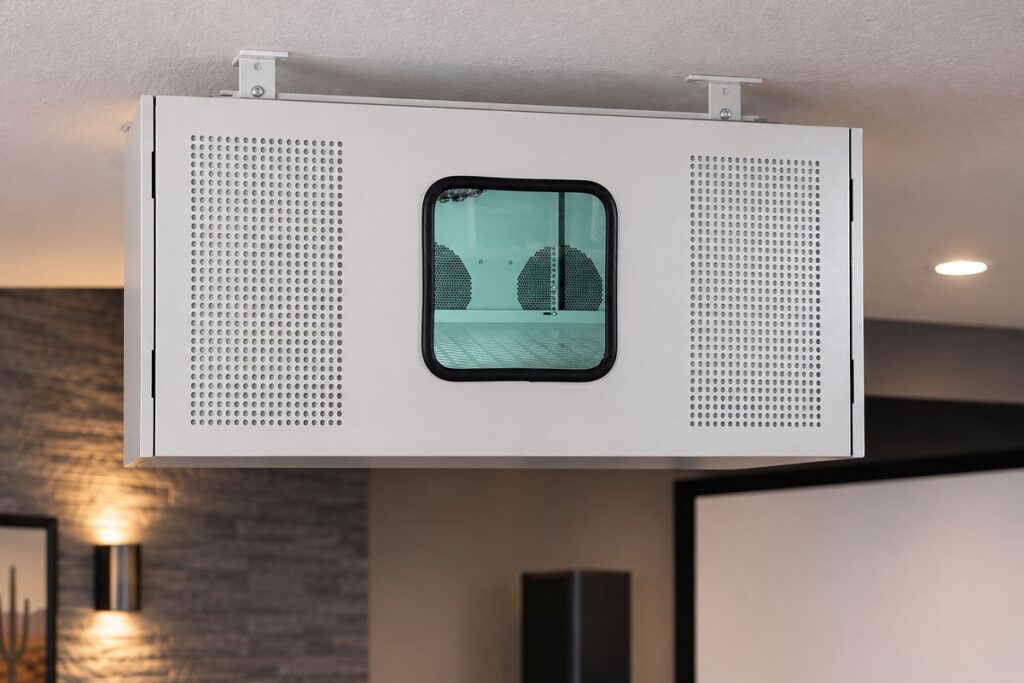
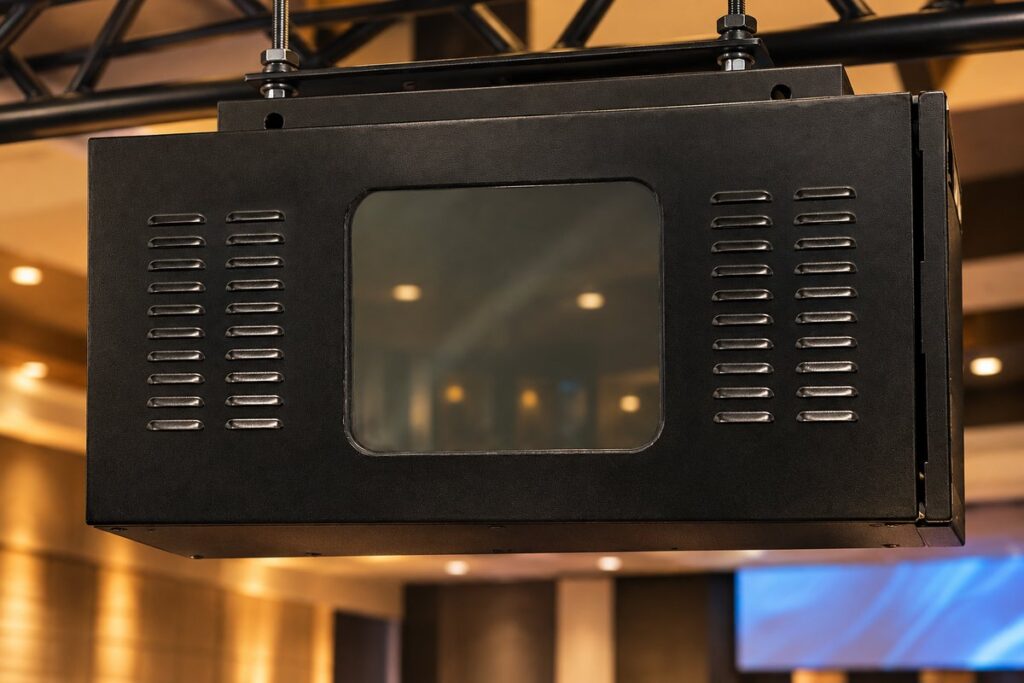
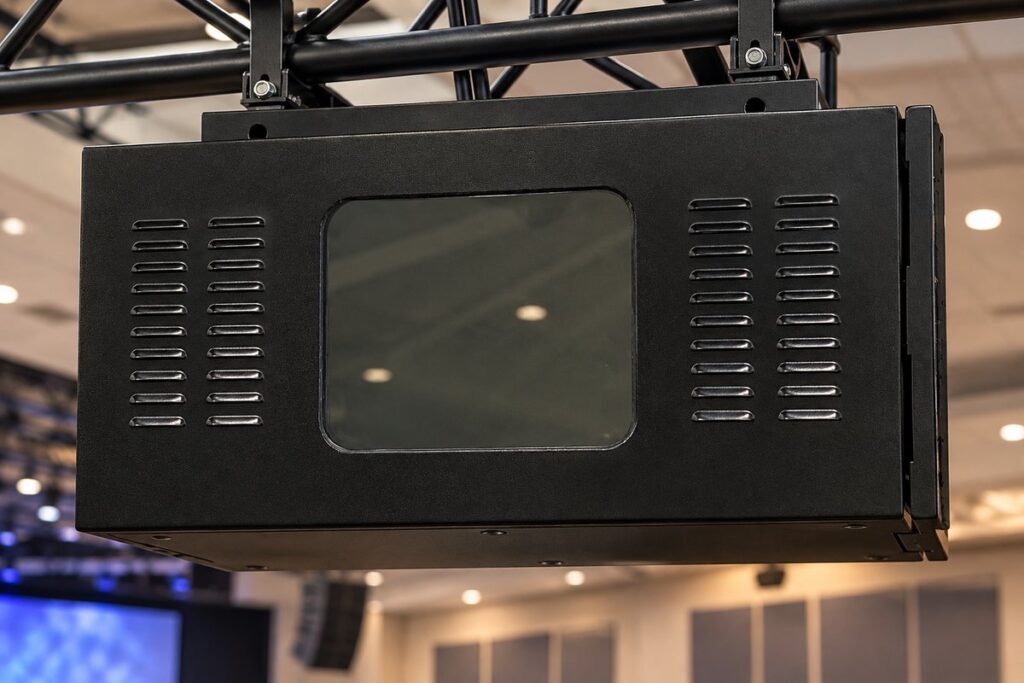
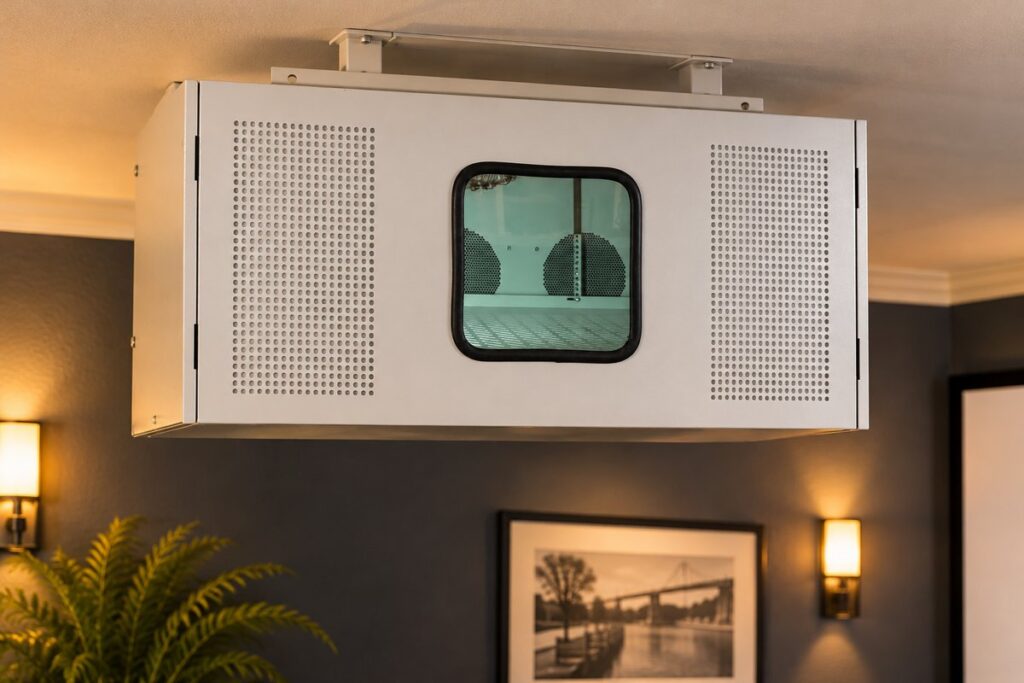
Sunny California means projectors outdoors are at constant risk of overheating—especially in regions like Los Angeles, the Inland Empire, or the Central Valley, where summer temps easily top 100°F. Direct sun on an enclosure can cause rapid internal heat buildup. Without active cooling, delicate projector electronics can shut down or be damaged. The Defender Series Projector Enclosure is specifically engineered to offer climate-controlled and fan-cooled protection, maintaining ideal conditions inside the enclosure even in peak heat.

Near the coastline, humidity and airborne salt can corrode unprotected metal, short out circuit boards, and degrade optics. Coastal fog in the Bay Area or salt air in Orange County make a robust, weatherproof projector enclosure essential. Inland, dust presents a silent risk—clogging filters and settling inside units, especially when Santa Ana winds kick up. Fast-moving storms can flood enclosures not designed for weather resistance, and in some parts of the state, strong winds or even the tail end of hurricane season introduce further unpredictability.

California’s climate requires not just any enclosure, but one designed for its diverse extremes. Always start with a climate-controlled, fan-cooled, and fully weatherproof solution matched to your projector and conditions.

Choosing the Right Outdoor Projector Enclosure for California

With so many environmental threats, choosing the correct enclosure is vital. ProjectorEnclosure.com recommends the Defender Series Projector Enclosure for any outdoor California installation—this model is purpose-built to withstand heat, sun, humidity, salt, dust, and rain, and can be sized to fit any projector model.

For ultra-short-throw (UST) outdoor applications, the UST Defender Series Enclosure provides specialized geometry and all-environment protection. On the other hand, indoor spaces with air conditioning or those sheltered from direct weather may consider the Integrator Series Projector Enclosure. Consumer-grade home mapping or backyard display projects may fit the HomeLine Projector Enclosure, ideal for non-commercial use.

Never attempt to use the Hush Series in an outdoor or exposed setting; it is engineered exclusively for quiet indoor spaces. To ensure a perfect fit, send your projector’s make and model to the ProjectorEnclosure.com team, or use the Projector Enclosure Fit Guide to start the sizing process. A correctly sized enclosure ensures optimal airflow, security, and thermal management.

Power Planning: Outdoor Projector Enclosures and Reliable Electricity

A reliable power supply is vital, especially when weather can turn unpredictable. Outdoor projectors draw significant power—not just for light output, but also for enclosure cooling fans and climate-control systems. Installing dedicated, outdoor-rated circuits with surge protection is a best practice, and consulting utility outage maps before project planning is strongly advised.

California experiences rolling outages, Public Safety Power Shutoffs (PSPS), and maintenance periods, often announced with little warning. For critical installations, consult the California Public Utilities Commission Power Outage Maps to anticipate disruptions and strategically decide on backup power or uninterruptible power supplies (UPS) for your projector and enclosure.

Routing weatherproof conduit, selecting weather-resistant outlets, and allowing for the additional draw of enclosure fans are steps not to neglect. Power sources should be carefully distanced from major irrigation, flood zones, or stormwater run-off paths to avoid electrical shorts.

Mounting for Security, Ventilation, and Weather Protection

Enclosure mounting is more than placement; it’s about securing your investment against theft, wind, and water ingress. Outdoor projector enclosures should always be mounted on sturdy, vibration-minimized structures such as steel poles, concrete pads, or architectural features built for exposure. Always check for compatibility between the enclosure and your proposed mount location.

For climate-controlled and fan-cooled housings like the Defender Series, positioning for optimal airflow around intake and exhaust vents is essential. Avoid installing enclosures tight against walls or in spaces where landscaping or event equipment blocks ventilation channels, as this impedes cooling efficiency and may stress your projector.

Shielding the enclosure from direct sun—by positioning under eaves, canopies, or by orienting east-west—can lower heat load dramatically. Ensure any rain shields or overhangs don’t interfere with vent airflow. Locking mechanisms and tamper-resistant fasteners add a layer of physical security, important at public venues or unmonitored sites.

Ventilation and Climate Control: Keeping Your Projector Safe

California’s weather shifts mean humidity or heat can build up fast inside a sealed case. Always select an outdoor projector enclosure with active ventilation and, if required by geography, integrated cooling and heating. The all-weather Defender Series comes equipped for these challenges, offering robust fan-forced airflow and thermal regulation within the housing.

Poor ventilation can reduce bulb life, degrade electronics, and compromise image quality. Even inland, nighttime temperature drops may cause condensation inside poorly designed housings. Always keep air filters clean—especially after high-wind or dust events—and make maintenance accessible in your mounting plan.

Projectors installed near the coast may require extra salt air resistance; here, consult the product documentation for care intervals and reach out for California-specific environmental advice. Some larger AV projects may need custom ventilation strategies, so engaging early with enclosure specialists is always recommended.

Permits, Inspections, and Weather Readiness: California Requirements

Before putting your projector outdoors, check for any required street, event, or right-of-way permits in your city. For example, commercial or temporary outdoor AV projects in Los Angeles must often apply via the Los Angeles Bureau of Street Services Permits portal. Requirements can vary by municipality and project type, so discuss your plans with the local office well before your installation date.

State and city inspectors may check for secure electrical work, UL-listed outlets, weather-sealed conduit, safe mounting, and appropriate weatherproof projector housing. Some events or installations may not proceed if there are weather advisories or safety alerts in effect. Monitor relevant local projections and alerts regularly through the National Weather Service Sacramento Office Forecast—especially during storm or heat advisory periods.

Document all enclosure specs and installation steps. Having this information on hand makes the permit inspection process smoother and reduces surprises. For school grounds, government facilities, or other regulated sites, permit lead times may vary considerably depending on scope and seasonality.

Local Resources for Outdoor Projector Install Success

FAQ: Outdoor Projector Enclosures in California

How do I determine the right size for my outdoor projector enclosure?

Each projector model varies in footprint and thermal output. Use the Projector Enclosure Fit Guide or send your projector brand and model to ProjectorEnclosure.com for fast, expert sizing. Proper sizing ensures airflow, climate control performance, and secure mounting for California’s dynamic weather.

Which enclosure should I choose for coastal or humid California locations?

For outdoor sites facing salt air or high humidity, the Defender Series Projector Enclosure is purpose-built to withstand these conditions with advanced weatherproofing and climate control options. Avoid using indoor-only models like the Hush Series or Integrator Series in any location exposed to humidity or weather.

Do I need a permit for every outdoor projector installation in California?

Permit needs vary by city and project. Check with local authorities directly—like the Los Angeles Bureau of Street Services Permits office—for project-dependent requirements, especially for commercial, public, or large-scale installations. Residential projects may also require inspection if new circuits or exterior electrical are installed.

Next Steps: Get Expert Guidance for Your California Project

From Central Valley heat to coastal fog and storm season, California demands specialized enclosures, smart planning, and a local knowledge approach for outdoor projector success. ProjectorEnclosure.com brings more than two decades of experience in protecting AV investments against the full range of the state’s climate conditions. Ready to safeguard your next project?

—or call 888-631-5880 or email ssisales@ssidisplays.com for sizing, configuration, and site-specific advice.
Featured supplies

Supplies mentioned in this guide

PROJECTORENCLOSURE.COM · California guide
Read more

A Practical Guide: Outdoor Projector Enclosures in Palm Bay, FL

PROJECTORENCLOSURE.COM
Palm Bay, FL · Planning guide

A Practical Guide: Outdoor Projector Enclosures in Palm Bay, FL

Discover how Palm Bay, FL’s climate challenges outdoor projection. Learn to select, size, and safely install a weatherproof projector housing with expert tips.

Palm Bay’s Climate: Why Your Outdoor Projector Needs Protection

The local environment in Palm Bay, Florida presents some unique challenges for anyone installing an outdoor projector. Hot, sunny summers, persistent humidity, salt air from the coast, and seasonal storms all pose threats to delicate electronics. For venues, schools, AV integrators, or homeowners aiming for reliable outdoor audio-visual displays, planning for protection is critical. Without a properly sized outdoor projector enclosure, costly failures and system downtime become real risks.

Direct UV exposure and high daytime temperatures can rapidly overheat a projector in Palm Bay. Persistent humidity and airborne salt from Atlantic breezes lead to accelerated corrosion and degraded performance, even far inland. Dust and debris agitation – whether from nearby construction or sandy soils – make it imperative to have a weatherproof projector housing that can filter and circulate air. Planning with these climate factors in mind improves longevity and performance.

Proactive steps begin with choosing the right enclosure and understanding how local weather, especially during the hurricane season, can impact your installation. Consult the National Weather Service Brevard County forecast for live alerts and to plan around weather windows for installation and maintenance.

Defender Series: The Outdoor Enclosure Built for Palm Bay

When it comes to true outdoor protection, the Defender Series Projector Enclosure from ProjectorEnclosure.com stands out as the recommended system for Palm Bay’s outdoors. Its climate-controlled, fan-cooled design is robustly engineered for the area’s intense summer heat, humidity spikes, and rainstorms. Air filtration inside the Defender Series enclosure ensures that dust, salt, and debris are kept away from your projector’s vital components.

Unlike standard consumer cases or improvised DIY boxes, the Defender Series offers purpose-built, all-season protection for expensive projection equipment. Venues along the coastal corridor – from riverfront restaurants to theme parks and school campuses – can benefit from knowing the Defender Series has been designed with situations like Palm Bay’s in mind.

For ultra-short-throw setups, the UST Defender Series Enclosure addresses the unique mounting and airflow needs of these projector types, giving AV integrators flexible options without compromise.

Humidity, Salt Air, and Dust: Key Local Risks for AV Installations

Palm Bay’s humid subtropical climate means it is not enough for an enclosure to only repel rain. Continuous high humidity causes condensation – a threat to projector optics and electronics. Salt in the coastal air speed up corrosion, while persistent dust can clog fans or coat lenses, reducing image quality. Each of these can compromise expensive AV investments when ignored.

That’s why climate-controlled enclosures that both seal out airborne intrusions and actively circulate and condition air are essential. ProjectorEnclosure.com’s outdoor projector enclosures are supplied with robust gaskets and integrated climate management. By filtering and controlling internal conditions, these enclosures keep humidity, salt, and dust at bay so your projector lasts.

Routine visual inspections and filter changes—timed to local dust events or the rainy season—are recommended. Monitoring local weather conditions via the Brevard County weather forecast can help you establish a seasonal maintenance routine and avoid unplanned outages.

Sizing and Fit: Send Your Model for a Custom Solution

No two projector installations are alike, especially in environments as dynamic as Palm Bay’s. An enclosure that is too big wastes energy and costs more to run, while one that is too small puts your projector at immediate risk of overheating or poor airflow. Exact sizing ensures optimal climate control and gives your hardware breathing room for service and cable access.

ProjectorEnclosure.com encourages all customers to use the Projector Enclosure Fit Guide or send their projector model for an accurate enclosure match. This sizing process accounts for unique dimensions, port access, and any oversized lenses or mount needs. AV integrators who share installation plans in advance can avoid costly reorders or retrofits.

The result is a long-term installation that supports future maintenance while maximizing protection and thermal management. For help with custom requirements, the team at ProjectorEnclosure.com is ready to help via phone (888-631-5880) or email (ssisales@ssidisplays.com).

Power Planning and Reliable Operation in Palm Bay

Outdoor installations in Florida must account for the realities of coastal storms and the risk of power fluctuations or outages. ProjectorEnclosure.com recommends planning dedicated power circuits with surge protection and uninterruptible power supplies (UPS) for all fixed projector enclosures. This is especially important for venues serving large gatherings or events that cannot afford interruptions.

Outage-prone seasons coincide with high usage for churches, schools, and outdoor attractions. Stay informed using the official Florida Power & Light Company outage map and coordinate with your electrical contractor regarding best practices for grounding, surge protection, and weatherproof exterior outlets. Reliable power is part of reliable projection.

When planning new installations, always specify additional capacity for enclosure fans, air conditioning modules, and any lighting or control equipment housed together. This ensures your outdoor projector enclosure can do its job regardless of changing weather or seasonal surges.

Mounting, Ventilation, and Location Decisions

The mounting site for your projector enclosure impacts both longevity and viewing performance. For Palm Bay, select shaded locations if possible or orient the enclosure to minimize direct sun exposure during peak hours. Raised mounts keep enclosures above flood-prone surfaces, while wall or ceiling options can optimize viewing angles for large audiences.

Ventilation is just as important as protection from rain. The Defender Series and UST Defender Series are engineered for robust airflow that maintains internal temperatures despite the thickest Florida heat. Avoid enclosing projectors so tightly that ventilation becomes blocked or that fans cannot exchange air efficiently.

If installing in a covered, conditioned space such as amphitheaters or outdoor lobbies, ProjectorEnclosure.com’s Integrator Series Projector Enclosure provides an ideal fit. For strictly indoor, quiet environments, consider the Hush Series projector enclosure, but never use it outside. Integrators should always communicate site-specific needs in advance for best results.

Permitting and Local Regulations: What Palm Bay Requires

Building codes and permitting requirements in Palm Bay help ensure your installation is safe and up to local standards—especially for permanent mounts or high-wattage power runs. Most outdoor projector enclosure installations will require at least an electrical permit, and potentially a building permit if mounting to structural features.

Visit the official City of Palm Bay Building Permits and Inspections page for up-to-date requirements, forms, and inspection scheduling. AV integrators and commercial venues often work with licensed contractors familiar with local codes to streamline approval and avoid costly delays. Homeowners and venue operators should not skip this step.

Planning for hurricane season? Confirm with the permitting office if special mounting or anchoring is required for wind resistance. Documentation from ProjectorEnclosure.com about mounting methods and weights can help with the permit review process.

Product Selection: Which Enclosure for Which Space?

Choosing the right enclosure depends on both the local climate and your specific environment. For direct outdoor exposure, the Defender Series is purpose-built for Palm Bay’s rain, wind, dust, heat, and salt air. For outdoor ultra-short-throw setups, the UST Defender Series Enclosure provides specialized mounting and airflow support.

Installations in covered but climate-controlled spaces—like open-air theaters or school atriums—will benefit from the Integrator Series. Consumer-grade projection mapping or seasonal home displays can be protected with the HomeLine Projector Enclosure, ensuring protection against incidental moisture and dust, but these should never be used in open weather without climate control systems.

Whatever your need, sizing is essential. Start by consulting the Projector Enclosure Fit Guide and reach out for tailored recommendations. ProjectorEnclosure.com brings over 20 years of experience to every project, ensuring your outdoor projection experience is built to last.

FAQ: Outdoor Projector Enclosure Planning in Palm Bay

How does Palm Bay’s climate impact outdoor projectors?

Palm Bay’s high heat, humidity, and salty coastal air can quickly degrade projectors left outdoors unprotected. These factors promote overheating, corrosion, and internal condensation, leading to equipment failure. A climate-controlled outdoor projector enclosure with active ventilation is essential for reliable operation year-round in this region.

What local permits are needed for outdoor projector enclosures?

Most installations in Palm Bay require electrical permits, and possibly building permits for permanent or large-mount systems. Check with the City of Palm Bay Building Permits and Inspections for requirements based on your site and installation type. Working with an experienced AV contractor familiar with local codes can simplify this process.

Can I use a home or indoor enclosure outdoors?

No, indoor enclosures like the Hush Series are for quiet, climate-controlled rooms only. For Palm Bay’s outdoors, only use a weatherproof projector housing rated for outdoor use, such as the Defender Series or UST Defender Series. Using indoor models outdoors will not protect equipment from humidity, storms, or daily temperature swings.

Ready to safeguard your investment for Florida’s challenging climate? Request an enclosure quote from ProjectorEnclosure.com and specify your projector model for expert sizing and protection recommendations.

Featured supplies

Supplies mentioned in this guide

PROJECTORENCLOSURE.COM · Palm Bay, FL guide
Read more

Nevada Outdoor Projector Enclosures: A Practical Installation Guide

PROJECTORENCLOSURE.COM
Nevada · Planning guide

Nevada Outdoor Projector Enclosures: A Practical Installation Guide

Planning an outdoor projector install in Nevada? Discover practical steps to protect your projector from heat, dust, salt air, rain, and storms—plus how to plan power, ventilation, mounting, and permits.

Nevada Climate and Your Outdoor Projector Enclosure

Nevada’s unique climate presents a blend of environmental challenges for outdoor projection. Extended summer heat, direct sunlight, low humidity inland, and the rare but consequential influxes of humidity or rain in certain regions all affect projector reliability. Along the western edge, occasional salt air wafting in from California poses an added threat, while dust storms and seasonal winds are a statewide concern. For any AV integration team or venue operator, protecting expensive projection equipment in these conditions is paramount.

Rapid temperature swings between daytime highs and cooler desert nights can cause condensation, threatening sensitive projector components. Accumulated dust and sand, particularly near highways and open lands, can clog filters, overheat electronics, or mar projection clarity. Rain, though infrequent, can be powerful when it arrives—making watertight and weatherproof projector housing a must.

Climate-controlled projector enclosure solutions, like those from ProjectorEnclosure.com, are built to handle intense Nevada conditions. For true outdoor applications, especially where there is direct exposure to sun, dust, and storms, opt for a purpose-designed solution such as the Defender Series Projector Enclosure.

Heat, Direct Sun and Ventilation Strategies

Managing thermal load is the most critical enclosure design factor in Nevada. Not only must the enclosure keep rain and dust out, it must shed heat even when temperatures soar above 110°F and the box sits under direct sun. Properly designed weatherproof projector housing uses active and passive ventilation systems, sometimes incorporating climate control such as fans or air conditioning, to keep internal temperatures in the projector’s safe operating range.

Outdoor venues, schools, theme parks or homes should never use indoor-rated enclosures outside. Only outdoor-specific products like the Defender Series or UST Defender Series Enclosure are engineered for Nevada’s true temperature, dust, and storm loads. Always double-check that your installation plan includes enough shade, forced-air movement, and clearances recommended by the enclosure provider for ventilation.

If your application involves a partially protected or semi-conditioned space (such as a covered patio), a product like the Integrator Series Projector Enclosure may be advisable. For advice on proper sizing and cooling, share your projector make and model with ProjectorEnclosure.com for a tailored recommendation.

Humidity, Rain, Dust, and Salt Air Considerations

Though Nevada is often thought of as arid, microclimates with higher humidity or even windborne moisture (particularly near coasts or lakes) are not uncommon. Salt air, while rare, can affect venues near the western border or high-traffic transportation corridors. Storm-driven rain, flash floods, or localized weather events can cause moisture to penetrate inadequately sealed or incorrectly vented projector enclosures.

Weatherproof projector housing must have gasketing, filtered air paths, and materials that withstand both particulate intrusion and corrosive atmospheres. The Defender Series from ProjectorEnclosure.com is specifically constructed for these conditions, keeping out blowing sand and moisture while allowing the necessary airflow. For occasional coastal or highly humid locales, choose options designed to resist corrosion and condensation buildup.

Projectors for outdoor home displays or less demanding locations can use specialized enclosures like the HomeLine Projector Enclosure, provided they are away from open weather and elevated humidity. To address Nevada’s unpredictable patterns, monitor weather using resources like Contact Your Local NWS Office for planning and maintenance scheduling.

Power Planning and Electrical Service in Nevada

Outdoor projector enclosures require robust, stable power to support both the projector and the cooling systems. In Nevada’s summer heat, undervoltage or brownouts can cause equipment failures or reduce lamp and electronics lifespan. Ensure power is routed from reliable, code-compliant sources with grounded, weatherproof outlets rated for outdoor use.

Consult your site engineer or local electrical service provider before installation. NV Energy offers guidance on service upgrades, outage reporting, and energy management, which are especially important for commercial venues with multiple outdoor AV installations. For larger events or venue upgrades, consider future power expansion needs when locating your projector enclosure.

Plan for surge protection and emergency shutdown capability, both for safety and to meet local requirements. Cooling systems—especially climate-controlled projector enclosure models—may require dedicated circuits. Always size your enclosure and power provision to accommodate your projector by referencing the Projector Enclosure Fit Guide and consulting ProjectorEnclosure.com.

Enclosure Mounting, Access, and Security

Mounting a weatherproof projector housing outdoors involves key engineering decisions. Secure attachment to existing structures or custom mounts is essential, both for wind resistance and for tamper deterrence. In addition to the load requirements of the enclosure and projector, installers must account for Nevada’s gusty conditions and the potential for impact from wind-blown debris.

Accessibility for maintenance and filter cleaning should be planned into your mounting strategy. If the enclosure is placed overhead or in a high-traffic area, consider hinged fronts, quick-release latches, and lockability. The Defender Series includes options for securing the enclosure against unauthorized access.

For the best results, work with specialty AV installers or your in-house engineering team to ensure that mounting points and hardware are weather-rated and meet building codes. Regularly schedule inspections before and after major storm or dust events to prevent operational issues.

Ventilation, Airflow, and Preventing Heat Buildup

A key difference between purpose-built outdoor projector enclosures and basic weather shields is engineered airflow. In Nevada, hot stagnant air can rapidly exceed safe operating ranges unless forced ventilation cycles it out. ProjectorEnclosure.com’s Defender Series and UST Defender Series provide fan-cooling and variable airflow paths matched to your projector’s size and heat output.

Always follow manufacturer guidance on clearances for all air inlet and outlet points. Obstructed airflow is a primary cause of heat failure and system shutoff in outdoor environments. Where possible, keep enclosure inlets free of vegetation, fabric, sunshade materials, or accidental blockages.

Venues should check vents and replace filters on a regular schedule, particularly during storm season or local construction periods when dust is prevalent. For installations in climate-controlled or partially covered spaces, the Integrator Series is designed to balance airflow and environmental sealing without overcooling.

Permitting and Regulatory Steps for Nevada Locations

Outdoor projector installations almost always require a review of local permitting procedures, especially for permanent or event-based applications in public or commercial spaces. For venues in unincorporated Clark County, refer to Temporary Events for event permitting guidelines. In the City of Las Vegas, the Special Event Permits page lays out necessary applications for other localities.

Permitting requirements may include electrical inspections, fire safety clearances, or structural reviews, depending on your installation’s scope. Larger projector enclosures, high-mount installations, or those requiring power from the public grid may trigger additional inspections. Review the full scope with your local office well in advance of your intended installation date to minimize surprise delays.

For residential installations, permitting may be simpler, but always check before beginning any permanent outdoor AV project. Plan for lead times, especially during event seasons or peak times for construction projects in Nevada’s resort markets.

Choosing the Right Enclosure: Sizing and Selection

ProjectorEnclosure.com offers a comprehensive line of enclosures to meet the varied Nevada climate and usage cases, but correct sizing is essential to performance. Selecting too small a unit reduces airflow and cooling potential, while too large a box creates inefficient or uneven air distribution. The Projector Enclosure Fit Guide provides a starting point, but users are encouraged to send their projector model and outdoor site details to the ProjectorEnclosure.com team for individualized recommendations.

For any fully outdoor Nevada installation, including event venues, hotel outdoor spaces, and home patios exposed to the weather, choose the Defender Series. For ultra short-throw projector setups at resorts or theme park attractions, the UST Defender Series Enclosure is purpose engineered.

Installers specifying climate-controlled or partially protected locations may select the Integrator Series. For home projection mapping displays not fully exposed to weather, the HomeLine Projector Enclosure can provide effective dust and debris protection. For quiet indoor environments, such as galleries or boardrooms, only the Hush Series Projector Enclosure is recommended—but never outdoors.

FAQ: Nevada Outdoor Projector Enclosure Installations

Does the enclosure need to be climate-controlled or just weatherproof?

For fully outdoor, sun-exposed, or dust-prone Nevada sites, a climate-controlled projector enclosure is best for managing heat buildup, humidity, and dust. Weatherproof projector housing is sufficient only in locations with milder ambient temperatures or extra shade, but for Nevada summers, active cooling is advised.

How do I get power for my projector enclosure?

Coordinate with your electrician to supply a dedicated, weather-rated outlet with clean, consistent power. NV Energy offers information on safe outdoor circuits and upgrades. Plan for the combined draw of the projector and cooling system, including surge protection.

What permits do I need to install an outdoor projector in Nevada?

Your permitting requirements depend on your venue location and installation type. For most public and event venues, check with relevant authorities such as Clark County Temporary Events or the City of Las Vegas Special Event Permits office.

Conclusion: Protecting Your Outdoor Projection Investment

Integrating a projector outdoors in Nevada means planning for more than just image quality—the right enclosure safeguards the investment, ensures reliable operation, and meets the legal and engineering requirements of your site. Rely on expert products from ProjectorEnclosure.com. Their team is ready to assist AV integrators, event hosts, venues, and homeowners in selecting and sizing the ideal climate controlled projector enclosure or weatherproof projector housing for any Nevada environment.

Ready to get started? Request an enclosure quote and send your projector model for tailored fit recommendations.
Featured supplies

Supplies mentioned in this guide

PROJECTORENCLOSURE.COM · Nevada guide
Read more

Outdoor Projector Enclosures in Pompano Beach: Practical Planning Guide

PROJECTORENCLOSURE.COM
Pompano Beach, FL · Planning guide

Outdoor Projector Enclosures in Pompano Beach: Practical Planning Guide

Learn how Pompano Beach’s heat, humidity, and storms affect outdoor projectors, and get practical tips on choosing the best enclosure, planning power, ventilation, and permits for your installation.

Understanding Pompano Beach’s Outdoor Climate Challenges

Pompano Beach’s blend of sun, humidity, and coastal exposure presents unique challenges for anyone looking to install an outdoor projector. Throughout the long summer months, daily highs often spike well into the upper 80s and 90s, with direct sunlight turning outdoor surfaces even hotter. The region’s year-round humidity brings the risk of moisture creeping into sensitive electronics, while frequent showers and storms—especially during hurricane season—make water ingress a constant concern. For those near the coastline, salt air can corrode exposed metal, reduce the lifespan of AV equipment, and accelerate the appearance of dust, both indoors and out.

When planning an installation, it’s essential to consider these environmental factors. Outdoor projector setups in Pompano Beach must guard against all the elements: heat, direct sun, rain, humidity, salt, and airborne debris. A well-chosen outdoor projector enclosure can mean the difference between reliable performance and premature equipment failure.

Throughout this guide, we’ll walk you through practical steps—choosing the right enclosure and accessories, understanding local permit requirements, and optimizing your installation—to ensure your outdoor projection investment thrives in the South Florida climate.

Choosing the Right Outdoor Projector Enclosure

Not every projector enclosure is built for open-air exposure like you’ll find in Pompano Beach. The Defender Series Projector Enclosure from ProjectorEnclosure.com is specifically designed for all-weather use—making it ideal for AV integrators, venues, resorts, schools, and homeowners handling outdoor installations. This enclosure protects against high heat, relentless sun, blowing rain, humidity spikes, and corrosive salt air.

Some spaces, such as covered patios or air-conditioned poolside bars, may allow for a climate-controlled projector enclosure instead. For these needs, the Integrator Series Projector Enclosure is suitable—just remember it must remain in a protected, conditioned space and is not intended for open, weather-exposed settings. Homeowners planning projection mapping or seasonal displays may choose the HomeLine Projector Enclosure, again ensuring their use matches the recommendations. The UST Defender Series Enclosure protects ultra-short throw projectors outdoors with the same robust design as the Defender Series.

Proper enclosure sizing is essential: send your projector’s exact model number to ProjectorEnclosure.com so they can recommend a solution tailored to your gear. You can also use the Projector Enclosure Fit Guide to start your selection.

Heat, Ventilation, and Climate Control for Outdoor Projectors

Projectors generate substantial internal heat—add Pompano Beach’s summer sun, and the temperature inside an enclosure can quickly become an issue. Direct sunlight can magnify internal temperatures, accelerating failure without proper ventilation.

Look for outdoor projector housings equipped with active fan cooling and thermostat controls, like those available from ProjectorEnclosure.com. The Defender Series utilizes weather-resistant fans and climate controls to keep your projector well within operating range, even on sweltering days. For long-term reliability, it’s wise to locate your enclosure in a shaded area or at least ensure airflow is not blocked by walls, signage, or foliage.

Don’t underestimate the need for regular maintenance and inspection, especially in humid climates. Pompano Beach’s high moisture content can create condensation either from temperature swings or power cycles, which good enclosure design combats through positive airflow and desiccant features. Always ensure vent paths remain clear and that your chosen unit matches your projector’s BTU output for safe operation.

Managing Humidity, Rain, and Salt Air Exposure

Coastal proximity means many installations in Pompano Beach face salt-laden air, high humidity, and storms that bring driving rain. These environmental pressures break down sensitive AV gear, both electronically and mechanically, if not countered by robust weatherproofing.

Defender Series Enclosures provide sealed, gasketed barriers, locking out rain and airborne salt before they can reach your projector. Corrosion-resistant finishes on both enclosure hardware and fastenings are crucial in this environment. If your location is exposed or within a mile of the Atlantic, extra vigilance against salt air is a smart investment—regular inspections post-storm and after seasonal changes can extend the life of the enclosure and equipment inside.

Humidity management also means ensuring any enclosure is installed above expected flood or splash zones and has proper cable seals. For current, forecast, and seasonal environment information as you plan, view local climate details via the National Weather Service – Pompano Beach Forecast.

Power, Mounting, and Site Considerations for Outdoor Projectors

Reliable, weather-resistant electrical supply is essential for outdoor projector enclosures. In Pompano Beach, storms and outages are common—consider a dedicated, GFCI-protected circuit for each projector and its cooling system, and consult an electrician for both power and grounding in salt-exposed environments.

Mounting requires strong, corrosion-resistant hardware. Wall or ceiling mounts should be anchored into solid masonry or properly-reinforced framing to endure both everyday use and hurricane-force winds. Ground-based installations must remain elevated to prevent water pooling around base plates or cable terminations.

Evaluate site lighting, plant growth, and proximity to walkways or beach pathways. Avoid locations directly exposed to road dust or blowing sand—both can clog ventilation filters or settle inside ports over time. And remember: each bracket, cable gland, or fastener is a potential weak point. Source hardware designed for year-round Florida conditions wherever possible.

Permitting and Code Compliance in Pompano Beach

Outdoor projector installations often require proper permitting in Pompano Beach, especially if permanent electrical or structural changes are planned. This can include mounting enclosures to existing buildings, installing new power, or building dedicated structures for projection setups.

Start by reviewing requirements on the official Building Permits & Inspections portal. It’s essential to involve either the venue’s facilities team or a licensed contractor early in the process—projector housings may need to meet minimum wind ratings, flood resistance, or specific mounting regulations per local code.

Permitting times and requirements may vary with the scale of your installation, whether it’s at a public venue or within a coastal floodplain. Even small residential or hospitality projects might need basic electrical inspection. Always verify your specific scenario with the city office and your installer before starting work on your enclosure.

Projector Enclosure Sizing and Customization

Every projector is different: differences in size, heat output, and lens configuration mean a one-size-fits-all approach rarely works for outdoor AV. At ProjectorEnclosure.com, sizing is matched to your projector model and the enclosure series that matches your site conditions and usage.

Accurately measuring your projector—including lens, connections, and vents—is important, but sending your model number or name to the ProjectorEnclosure.com team ensures they can quickly provide best-fit recommendations. This avoids over-sizing, which can introduce cooling issues, or under-sizing, which can make upgrades or maintenance difficult.

For advanced projects—like projection mapping onto architecture, pool decks, or large outdoor screens—customization options can include mounting orientation, special cable entry points, or shrouds for additional glare or light spill. Begin with the Projector Enclosure Fit Guide or direct staff consultation to optimize your install.

Frequently Asked Questions

How do I choose the right weatherproof projector housing?

To choose the best weatherproof projector housing for Pompano Beach, first confirm your projector’s make and model, then detail your planned installation site—exposure, proximity to salt air, and ventilation conditions. The Defender Series is specifically designed for outdoor use, while other enclosures serve climate-controlled or indoor roles. Contact ProjectorEnclosure.com for model-specific recommendations or use their online fit guide.

Do I need a permit for my outdoor projector installation?

Many outdoor installations—especially those with permanent mounts or new electrical supply—require city permits. Review the process at Building Permits & Inspections and consult a licensed installer to confirm what’s required for your property.

What maintenance does an outdoor projector enclosure require?

Regular inspection is crucial in Pompano Beach due to humidity and salt air. Clear dust from intake filters, check gaskets after storms, and look for external corrosion or water marks. Keep vent paths free and contact ProjectorEnclosure.com for advice on ongoing care.

Pompano Beach Planning Resources

If you’re planning to protect your projector in Pompano Beach, consult ProjectorEnclosure.com’s team for enclosure selection, sizing, and site advice. Request an enclosure quote today, or reach out at 888-631-5880 or ssisales@ssidisplays.com for tailored recommendations.

Featured supplies

Supplies mentioned in this guide

PROJECTORENCLOSURE.COM · Pompano Beach, FL guide
Read more

Outdoor Projector Enclosure Planning for Chandler, AZ: A Practical Guide

PROJECTORENCLOSURE.COM
Chandler, AZ · Planning guide

Outdoor Projector Enclosure Planning for Chandler, AZ: A Practical Guide

Chandler’s unique mix of intense sun, heat, and the occasional storm poses challenges for outdoor projector installations. Explore practical strategies for selecting and planning a climate controlled, weatherproof projector enclosure that fits your needs, protects your investment, and meets local requirements.

Understanding the Chandler, AZ Climate: Key Risks for Outdoor Projection

Chandler, AZ is famous for its sunshine, but the local weather can be tough on outdoor electronics—especially projectors. Summer temperatures commonly soar over 110°F. Intense direct sun, high humidity following seasonal storms, desert dust, and even occasional rain can put your projector at risk. If your location is closer to the Gila River or exposed to breezes from the Salt River basin, airborne salt and sand can further complicate outdoor installs.

These environmental hazards not only threaten the projector, but can also compromise image quality, shorten equipment lifespans, and increase maintenance needs. Choosing a suitable outdoor projector enclosure is the first step to ensuring your display stays bright, reliable, and clear year-round. Addressing Chandler’s specific weather risks at the planning stage helps integrators, venues, and homeowners avoid costly headaches later.

In the following sections, we’ll walk through how to protect your projector, plan power and mounting, ensure proper ventilation, and navigate Chandler’s permitting process—step by step.

Selecting a Weatherproof Projector Housing: Match the Enclosure to the Climate

Not all enclosures are built for full exposure to the elements. In Chandler, select an all-weather, climate controlled model designed to perform through extreme heat, UV, dust, rain, and wind. For outdoor installs, the Defender Series Projector Enclosure from ProjectorEnclosure.com offers advanced weatherproofing and active cooling to protect both professional and residential projectors in harsh desert environments.

If your projector will be in a covered but still exposed area—like an open-air patio or pavilion that doesn’t have air conditioning—still opt for an outdoor-rated enclosure. Completely indoor hush box models (like the Hush Series) should not be used outside. ProjectorEnclosure.com also offers climate-controlled options such as the UST Defender Series Enclosure for ultra-short-throw applications, and the HomeLine Projector Enclosure for projection mapping and consumer-grade displays at home.

Each enclosure should be properly sized to your specific projector model to ensure correct airflow and thermal management. Not sure what enclosure fits your device? Use the Projector Enclosure Fit Guide or contact ProjectorEnclosure.com with your projector details for fast, expert recommendations.

Managing Heat and Sun: Protecting Projectors in Arizona Summers

Direct summer sun can bake unprotected electronics, even under a canopy or shade structure. Projectors generate heat on their own, and the combination of desert air and sun exposure can quickly cause overheating. A high-quality, climate controlled projector enclosure uses thermostatically managed fan cooling or active ventilation to keep temperatures in the safe range for both the bulb and onboard electronics.

Mount your enclosure with consideration for sun path and shade whenever possible. Placement under architecturally permanent overhangs or north-facing walls can help, but do not rely solely on passive shade. Always ensure the enclosure features a reflective, UV-resistant finish and internal cooling mechanisms designed for outdoor extremes—especially if you’re running long hours or high-brightness projectors.

Fan-cooled weatherproof enclosures don’t just prevent thermal failure; they also minimize image degradation caused by heat haze and dust buildup on optics. Sizing is critical, so provide your projector make and model to ProjectorEnclosure.com for accurate recommendations.

Ventilation and Humidity: Designing for Monsoon and Storm Season

While Chandler is dry most of the year, monsoon season can bring sudden spikes in humidity and the threat of water ingress. A weatherproof projector housing must have a well-engineered ventilation system that actively exchanges air but blocks out rain, dust, and pests. Specialized intake and exhaust vents, combined with replaceable filters, help maintain airflow while keeping the elements out.

Climate controlled projector enclosures from ProjectorEnclosure.com include options for advanced airflow management, with fans and filtration units adapted to the specific risks of desert and monsoonal swings. This is crucial for venues, schools, and theme parks that can’t afford downtime during summer events or special displays.

Salt air is less of an issue in Chandler than in coastal Arizona, but exposure is possible closer to irrigation zones or during rare dust storms. Consider filter maintenance as part of your ongoing AV care routine—especially before and after storm season.

Planning Power for Outdoor Projector Installs in Chandler

Choosing the right enclosure is just the beginning—you’ll also need reliable and safe power. Nearly all Chandler locations are served by Salt River Project (SRP), which provides electrical service throughout the region. Before scheduling your installation, verify that your location has sufficient electrical capacity to handle both projector and enclosure cooling fans, as well as any auxiliary AV equipment.

Plan for weather-resistant outdoor outlets, protected with GFCI (Ground Fault Circuit Interrupter) safety devices, as required by current electrical codes. Running new electrical service? Contact SRP for guidance on capacity, connection options, and any site-specific restrictions, especially for commercial or high-power projection events.

If you’re integrating into a facility-wide AV system or adding lighting, digital signage, or sound, coordinate with your electrician and your AV team early. Unstable or undersized power supply is one of the most avoidable causes of projector failure or premature wear in tough environments.

Safe Mounting and Structural Considerations

Where and how you mount your enclosure directly affects both projector performance and safety. In Chandler, high winds during storms and the cumulative effect of dust abrasion make strong, stable mounting essential. Always choose weather-rated mounting hardware appropriate for the site’s construction material—masonry, metal, or wood framing.

Mounting methods will differ between public venues, schools, and residential settings. Evaluate options such as truss, wall, ceiling, or custom freestanding posts—each should support the enclosure’s full weight plus additional safety margin for weather-related loads. Locking hardware and tamper-resistant fasteners add protection in public or high-traffic spaces.

Consult your facilities manager or licensed contractor to ensure that vibration, movement, and potential vandalism risks are addressed. Never install an enclosure where water can pool or where run-off from roofs can directly hit the housing. For exact structural and engineering guidance, check with Chandler’s permitting resources listed below.

Permitting and Local Code Compliance in Chandler

Almost any permanent electrical or structural installation outdoors in Chandler will require plan review and permitting, whether at a resort, church, commercial venue, or home. Permits help ensure compliance with safety, accessibility, and fire regulations—protecting both property and visitors. Start with the city’s official resource for Building Safety: Plan Review, Permits and Inspections, which outlines the local process and forms required for AV and outdoor electrical projects.

Requirements vary by the scale of the installation and property type. Discuss early with your contractor or project manager, as you may need to submit structural plans, electrical load calculations, and enclosure specifications for review. Factors such as weatherproofing, fan cooling, and mounting details are often expected in your application.

Don’t forget about HOA guidelines or neighborhood covenants if you’re a homeowner. Always keep records of your permit approval and have your installation inspected as required to avoid future compliance issues.

Product Selection for Every Outdoor Application

ProjectorEnclosure.com offers a range of enclosures engineered for different environments:

The team at ProjectorEnclosure.com has more than 20 years of experience solving outdoor AV challenges—from large venues and theme parks to schools and homes. Email ssisales@ssidisplays.com or call 888-631-5880 for support or a quote.

FAQ: Outdoor Projector Enclosures in Chandler, AZ

How do I know what size outdoor projector enclosure I need?

The best method is to provide the make and model of your projector. The Projector Enclosure Fit Guide helps ensure a right fit for optimal cooling and protection. You can also email or call ProjectorEnclosure.com for personalized sizing assistance.

Do I need a permit to install an outdoor projector enclosure in Chandler?

Most fixed outdoor installations—especially those involving electrical work—require permits. Visit the Chandler Building Safety page for official processes and current requirements. Your contractor or installer should help with applications and inspections.

Can I use an indoor hush box enclosure for outdoor projection?

No; indoor hush boxes like the Hush Series are for quiet indoor spaces only. Only weatherproof, outdoor-rated enclosures such as the Defender Series are appropriate for Chandler’s climate and outdoor exposure.

Ready to protect your outdoor projector investment in Chandler? Request an enclosure quote from ProjectorEnclosure.com today—designed for your climate and projector, with expert support from start to finish.

Featured supplies

Supplies mentioned in this guide

PROJECTORENCLOSURE.COM · Chandler, AZ guide
Read more

Outdoor Projector Enclosures in Tampa: A Practical Installation Guide

PROJECTORENCLOSURE.COM
Tampa, FL · Planning guide

Outdoor Projector Enclosures in Tampa: A Practical Installation Guide

Protecting your projector in Tampa’s hot, humid climate requires more than a standard housing. Discover tips from ProjectorEnclosure.com on choosing and installing weatherproof projector enclosures for reliable outdoor AV, tailored to local needs.

How Tampa’s Climate Impacts Outdoor Projector Installations

Tampa’s climate is both an attraction and a challenge for outdoor AV projects. With summer highs regularly exceeding 90°F and direct sun beating down on outdoor equipment, heat is a constant concern for anyone installing projection systems. Tampa’s average humidity rarely dips below 70% for most of the year, while afternoon thunderstorms and occasional hurricanes can bring wind-driven rain and flying debris. Salt air is also a factor for venues near the bay or gulf, accelerating corrosion inside vulnerable components.

Projector enclosures are essential for shielding sensitive electronics against Tampa’s weather extremes. Without a weatherproof projector housing, dust, salt, and moisture can degrade image quality or shorten equipment life. AV integrators, schools, resorts, and homeowners all need to factor these climatic hazards into their planning. The Defender Series Projector Enclosure from ProjectorEnclosure.com is specifically designed for these harsh outdoor conditions, providing robust, climate-controlled protection year-round.

When considering an outdoor projector installation in Tampa, allow for possible spikes in temperature and prepare for sudden storms. Always monitor detailed conditions using the Hillsborough County, FL Forecast – National Weather Service to guide installation timing and product selection.

Choosing the Right Projector Enclosure for Tampa

The right enclosure keeps your investment safe from Tampa’s relentless sun and humidity, as well as coastal salt and airborne debris. Outdoor enclosures vary widely in their protective features, so select a model built for the local weather and your projector’s heat output. Climate controlled projector enclosures feature active cooling and airflow management, critical in Tampa’s steamy conditions. Fan-cooled outdoor projector enclosures continuously cycle fresh air to avoid overheating, even in direct sun.

Never use indoor-only models outside: for example, the Hush Series from ProjectorEnclosure.com is made strictly for quiet, indoor spaces and won’t protect from rain, humidity, or storms. Similarly, the Integrator Series Projector Enclosure is suited only for climate-controlled or well-covered outdoor areas but not fully exposed locations. For Tampa’s outdoor installs—especially where sun, storms, or pools are nearby—the Defender Series Projector Enclosure offers the best defense.

If your display uses a short-throw unit, consider the dedicated UST Defender Series Enclosure, engineered to shield ultra-short-throw projectors in the toughest environments. For consumer projection mapping or backyard displays at home, the HomeLine Projector Enclosure balances protection and value for do-it-yourself installations.

Managing Heat and Ventilation: Practical Considerations

Florida’s daytime heat can stress any electronic device, but projectors generate considerable internal heat even at night. Enclosure ventilation and cooling are therefore essential. Climate controlled projector enclosures from ProjectorEnclosure.com use thermostatic controls and forced air to maintain a stable internal temperature, preventing thermal shutdowns or long-term damage. Fan-cooled systems also help clear accumulated moisture after a rainy day.

When selecting an enclosure, consider both the heat produced by your projector and Tampa’s summertime temperatures. ProjectorEnclosure.com’s Projector Enclosure Fit Guide provides a streamlined way to match your projector model to the correct enclosure size and cooling setup. You’ll want to give project details, projector specifications, and the precise installation location—out in full sun, under an awning, or along a coastal patio. This ensures the enclosure can sustain optimal temperature and ventilation in any season.

Installers should also check the forecast using the Hillsborough County weather resource before major installs or scheduled events, ensuring doors and access points are weather-sealed when necessary.

Salt Air, Dust, and Storm Protection for Tampa Bay Locations

Salt-laden breezes can reach venues dozens of miles inland, especially during summer storm surges or onshore winds. Salt air is corrosive to metal, circuit boards, and lens mechanisms, reducing equipment life and causing unseen damage until something fails. Fine dust and pollen are present year-round and can clog cooling fans or cloud optics. Outdoor projector enclosures must resist these aggressive elements, not just rain or heat.

The Defender Series Projector Enclosure is constructed to survive Tampa’s stormy seasons and resist corrosive coastal air. Its sealed and actively ventilated design keeps dust and salt out, maintaining clear airflow so expensive optics never fog or foul. ProjectorEnclosure.com has been protecting technology for over 20 years, so designs address the realities of Tampa Bay weather.

If your event, resort, or worship venue is near shore areas, ask your enclosure provider about additional treatments or settings for the most exposed locations. Always use the Projector Enclosure Fit Guide to ensure proper sizing, as larger projectors may require further allowances for airflow or salt management.

Planning Power and Electrical Safety Outdoors

Outdoor AV installations need reliable, weather-protected power. Tampa’s summer thunderstorms increase the risk of outages and voltage spikes, which can threaten sensitive electronics if not properly managed. All wiring for outdoor projector housings should be routed through waterproof conduit and protected by properly rated circuit breakers. Make sure any outlet near the enclosure is GFCI-protected and consult with your electrician well in advance of installation.

Coordinate with your energy provider for new outdoor circuits or additional capacity needs. Tampa Electric offers account management and outage resources that AV integrators and facilities teams will find helpful. Before finalizing the installation, double-check power availability at the mount location and plan for future access or maintenance requirements.

Power planning should also include physical security: choose a location visible to staff but shielded from public tampering. Run conduits along secure and covered pathways to avoid accidental cuts or exposure during storm clean-ups. If installing in publicly accessible or high-traffic areas, lockable Defender Series enclosures add another layer of safety and control.

Permits and Local Regulations: What Tampa Installers Need to Know

Outdoor projector housings, mounts, and associated AV racks are typically subject to local permitting. Tampa’s regulations may cover electrical work, building codes, right-of-way use, and even wind/load rating if the structure is to be roof- or pole-mounted. Begin your project planning with a consultation or review using the Construction Permits – City of Tampa portal to determine what’s needed for your property type and display goals.

Venues and organizations should plan for permit lead times and may need to submit enclosure specifications, mounting diagrams, or engineering details for review. For installations in historic districts, parks, or waterfront areas, additional review by local agencies may apply. These requirements exist to ensure that permanent AV installations remain safe during hurricane season and do not disrupt nearby properties or utilities.

For troubleshooting compliance issues, it helps to work with specialists at ProjectorEnclosure.com, who are familiar with sizing, recommended clearances, and pathways for legal installation. Remember to provide your projector model for personalized guidance on enclosure and mounting compatibility.

Mounting: Securing Your Enclosure Against Wind and Weather

Proper mounting is crucial in Tampa, where severe storms or hurricanes can produce high winds and flying debris. Outdoor projector enclosures should always be securely fixed to a stable structure—whether a concrete wall, sturdy post, or steel framework. The style of mount (flush, pole, ceiling, or custom bracket) will depend on the site plan and viewing requirements.

For best results, consult the enclosure instructions and consider local topography and wind exposure. The Defender Series Projector Enclosure supports a range of mounting options to suit permanent or semi-permanent installs. Outdoor mounting hardware should be corrosion-resistant and chosen for compatibility with both the enclosure and the host structure. Avoid placing the enclosure where water can pool or flow, and allow for easy service access.

If your installation is located in a hurricane-prone corridor or coastal site, ask your local authority (using the City of Tampa permits portal) about additional requirements for anchoring or wind-load resistance. These steps add time but ensure your investment survives Tampa’s most challenging weather.

FAQ: Outdoor Projector Enclosures in Tampa

How do I choose the right enclosure for my projector?

Submit your projector make and model using the Projector Enclosure Fit Guide for expert sizing. This step ensures your enclosure includes the right cooling and dimensions for your specific unit and intended installation site.

What kind of maintenance does an outdoor projector housing require?

Maintenance mainly involves periodic inspection for debris, cleaning of intake and exhaust panels, and checking seals for signs of wear after heavy storms or hurricane season. Always disconnect power before servicing and schedule regular assessments during humid months.

Can I install an outdoor enclosure on my own property in Tampa?

Most Tampa homeowners can install outdoor AV equipment on their property, but larger or permanent setups may require permits. Check the City of Tampa permits page for project-specific requirements and consult an electrician for all power connections.

Conclusion: Protect Your AV Investment Year-Round

Tampa’s unique climate demands thoughtful planning and the right equipment for any outdoor projection setup. From the blazing sun to humidity, salt air, and seasonal storms, a weatherproof projector housing is a must-have to keep your AV systems running smoothly. ProjectorEnclosure.com offers solutions built for Tampa’s toughest weather—select the Defender Series for full outdoor exposure or use the HomeLine for backyard displays. Start your planning with their Projector Enclosure Fit Guide and local resources for power, weather updates, and permits.

Ready to protect your outdoor projector? Request an enclosure quote or get expert help by calling 888-631-5880 or emailing ssisales@ssidisplays.com.
Featured supplies

Supplies mentioned in this guide

PROJECTORENCLOSURE.COM · Tampa, FL guide
Read more

Outdoor Projector Enclosure Planning for Goodyear, AZ: A Climate-Smart Guide

PROJECTORENCLOSURE.COM
Goodyear, AZ · Planning guide

Outdoor Projector Enclosure Planning for Goodyear, AZ: A Climate-Smart Guide

Learn how Goodyear, AZ’s unique heat, humidity, dust, and sun impact outdoor projector installs, and discover smart planning steps for weatherproof projector enclosures.

Understanding Goodyear’s Climate Risks for Outdoor AV

Installing projection outdoors in Goodyear, AZ requires more than just a bright projector. With soaring summer temperatures, high UV from direct sun, occasional monsoon rains, dust storms, and the corrosive effect of salt air (especially closer to coastal influence), this region’s climate poses unique risks to AV investments. Without proper protection, even premium projectors quickly succumb to overheating, internal condensation, dust buildup, and corrosion. Choosing the right outdoor projector enclosure is essential for sustained performance and reduced downtime in venues, resorts, churches, or educational spaces across the Goodyear area.

Late spring through early fall brings daytime highs often over 105°F. Direct sunlight on an unshaded enclosure amplifies the internal heat and may lead to electronics shutdowns or permanent damage. Humidity spikes during the monsoon season can force moisture into unsealed housings. Dust from the desert, along with storm-driven debris, infiltrates unprotected equipment. If your installation is near any source of salt air—even periodic—salt will accelerate corrosion far beyond what’s typical in drier inland sites. Each of these elements must be factored into your enclosure planning.

Fortunately, with thoughtful preparation and the right Defender Series Projector Enclosure or climate-controlled enclosure, ProjectorEnclosure.com helps hundreds of Goodyear area clients guard against all these local threats. Let’s break down the planning steps to ensure a weatherproof, reliable result.

Why Heat, Sun, and Humidity Demand Climate Control

Projectors generate considerable heat themselves, but in Goodyear’s summer climate, the enclosure’s ability to reject additional solar gain and vent waste heat becomes absolutely mission-critical. Even a shaded setup will feel the persistent effects of ambient desert heat, with internal conditions possibly rising above safe operating ranges if not correctly managed. Overheated bulbs or laser units, warped optics, and throttled electronics are common symptoms when enclosure cooling is inadequate.

Direct sun also increases UV exposure, degrading plastics and seals over time. Meanwhile, humidity spikes—especially during monsoon season—can drive condensation inside poorly ventilated or improperly cooled housings, promoting corrosion on electronic components and projector optics alike. It’s not just about rain; it’s the fluctuating moisture after storms, which also gets trapped unless the enclosure actively manages the internal climate.

This is where a properly-sized, fan-cooled, or actively climate-controlled enclosure comes into its own. The Defender Series is engineered for all-weather use, with active circulation to keep projectors within safe thermal and humidity limits for Goodyear’s toughest weeks. For more specialized ultrashort throw needs, see the UST Defender Series Enclosure. If you’re working within a covered but conditioned patio or hall, the Integrator Series Projector Enclosure provides the ideal solution for climate-controlled (yet not fully outdoor) spaces.

Dust, Storms, and Salt Air: Extra Layers of Protection

Arizona’s notorious haboobs—intense summer dust storms—send fine particles everywhere, coating surfaces and infiltrating any opening in outdoor equipment. Without a properly sealed weatherproof projector housing, dust can accumulate on internal fans, optics, and circuit boards, reducing image clarity and eventually causing overheating or failure. Similarly, high wind and rain from monsoon events pose risks of internal water ingress and debris impact.

For installations near the Salt River or sources of airborne salt—whether from regional industry, irrigation, or distant coastal influence—salt particles can begin corroding electronic contacts and even fixtures in a matter of weeks, not years. That’s why it’s essential to specify an enclosure with true all-weather properties and proven protection against airborne particulates and moisture.

The Defender Series and UST Defender Series are built specifically for dusty, storm-prone, or salt-exposed environments—unlike indoor-focused hush-boxes or office-grade designs. Construction features include robust exterior bodywork and multiple layers of filtration, creating enduring defense for schools, event venues, and resorts in the Goodyear area.

Powering Your Projector Enclosure: Safe, Stable, and Reliable

Consistent, safe power is crucial when planning any outdoor AV, and Goodyear’s electrical grid can be challenged during peak summer loads or monsoon storms. Interruptions can damage equipment or lead to unexpected shutoffs that compromise shows and presentations. Planning should account not just for the projector’s draw, but for the enclosure’s climate management systems—cooling fans, heaters, and (on certain models) active humidity controls.

Check with your licensed electrician to ensure dedicated circuits, weatherproof outdoor-rated cabling, and code-compliant GFCI outlets are supplied. It’s helpful to register new AV loads with your utility to anticipate demand spikes. For real-time updates or to report an outage, use the Arizona Public Service Outage Center. This is also the right resource for questions about starting/stopping service for a new installation.

Many AV integrators opt for surge protection and uninterruptible power supplies (UPS) to guard both projector and enclosure electronics from sudden drops or surges. Incorporating regular power-loss drills is especially valuable in venues that can’t afford missed cues or dark screens during live events. With careful planning, even Goodyear’s toughest weather won’t leave your system in the dark.

Smart Mounting and Enclosure Placement

The right mounting location dramatically improves your projector’s longevity and performance. In Goodyear, outdoor projector housings should be installed to avoid direct midday sun wherever possible—north or north-east exposure is best, with overhangs or shading preferred. Avoid placing the enclosure under or near trees prone to dropping sap or heavy debris in storms. Elevated mounting on strong poles or masonry walls helps with airflow and keeps the enclosure away from dust kicked up by foot traffic or landscaping.

Vibration from nearby HVAC units, footfall, or machinery can affect image stability and enclosure seals over time. Choose solid foundations and use anti-vibration mounts for optimal results. Enclosure weight—especially with larger models like the Defender Series—also necessitates strong brackets and, in many cases, structural or engineering review depending on wind loads and elevation.

Carefully plan not just for today’s needs but for future projector upgrades. ProjectorEnclosure.com’s Projector Enclosure Fit Guide helps ensure the enclosure offers both the cooling power and the physical clearance required for your installation, both now and in the years ahead.

Ventilation: The Key to All-Weather Performance

Ventilation isn’t just about temperature. In Goodyear’s wide-ranging outdoor conditions, newly installed projectors can suffer both from trapped heat and from the buildup of interior humidity, which condenses overnight or after strong monsoon storms. The best climate controlled projector enclosure combines efficient air exchange—often with multiple fans or active cooling elements—and watertight pathways that steer moisture and dust away from vulnerable components.

Fan selection, placement, and the use of specialized filters are all determined by the enclosure’s size, projector heat output, and local site conditions. ProjectorEnclosure.com evaluates these details using both the projector model and anticipated ambient climate. Always leave room for adequate airflow around vents and avoid blocking exhaust points with plants or fencing. For complex sites, reach out with your projector model and site constraints for a tailored airflow recommendation.

If your site is fully exposed to weather or extreme temperature swings, models such as the Defender Series offer the right mix of protection and performance. The Integrator Series is best used for covered, climate-controlled patios—not open outdoor areas, while the HomeLine Projector Enclosure meets residential display and projection mapping needs.

Permits and Approvals: Plan Ahead for Installation

Before beginning any outdoor AV installation in Goodyear, check with local building authorities for possible permits covering electrical, structural, or weatherproof AV enclosures. Certain larger venues or those in historic or regulated districts may also require additional municipal or fire department review of exterior-mounted electronics.

The scope and type of permit can vary greatly, based on mounting height, weight, wind load, and utility connections. It’s wise to bring your enclosure specs—sourced directly from ProjectorEnclosure.com’s product guidance—and consult your project’s general contractor or a licensed electrician. ProjectorEnclosure.com can provide enclosure drawings and product data sheets for permitting support if requested.

The most up-to-date details are available from the relevant local office; check with the official contacts listed through utility providers or city departments. Also, track upcoming weather events (helpful for scheduling work and post-installation inspection) via the National Weather Service Goodyear AZ Forecast.

Accurate Sizing: Send Your Projector Model

Not all projectors—or their cooling, airflow, and mounting needs—are alike. To ensure your Goodyear installation receives the right protection, it’s essential to use the most accurate measurements and specifications. Every enclosure from ProjectorEnclosure.com is sized for your projector model, and the fit matters: too small and you risk heat buildup, too large and you lose climate efficiency.

If you need assistance determining the correct product family for your setting—outdoor open air, covered climate-controlled, or residential mapping—the Projector Enclosure Fit Guide walks you through every step. The fastest way to get sizing guidance is to email your projector’s make and model (along with a description of your planned site and operating hours) to ssisales@ssidisplays.com or fill out the simple inquiry form on ProjectorEnclosure.com.

With more than 20 years of experience, the team at ProjectorEnclosure.com equips you with the configuration best matched to Goodyear’s specific environments, venue traffic, and futureproofing concerns.

FAQ: Outdoor Projector Enclosures for Goodyear, AZ

How do I know if my projector needs a climate-controlled enclosure?

If your projector will be outdoors, exposed to direct sun, temperature extremes, rain, humidity, or dust, a climate-controlled outdoor enclosure is strongly advised. This is particularly important for Goodyear’s hot summers, dust storms, and variable humidity. When in doubt, consult the Projector Enclosure Fit Guide for personalized recommendations.

Which ProjectorEnclosure.com model should I choose for an outdoor Goodyear install?

The Defender Series Projector Enclosure is recommended for all open-air, fully exposed, or weather-prone locations. For ultra-short throw projections outdoors, use the UST Defender Series Enclosure. The Integrator Series and Hush Series are intended for indoor or controlled environments only.

What steps do I take if there’s a power outage or upcoming storm?

To prepare for power interruptions or severe weather, it’s best to regularly monitor the APS Outage Center and stay alert with localized forecasts from the National Weather Service Goodyear AZ Forecast. Secure or cover your equipment if a major weather system or power loss is predicted, and follow local guidelines for equipment safety.

Ready to safeguard your AV investment in Goodyear’s challenging climate? Request an enclosure quote from ProjectorEnclosure.com, and be sure to include your projector model for a precise fit and local climate assessment. Your outdoor projection deserves expert, weather-resistant protection.

Featured supplies

Supplies mentioned in this guide

PROJECTORENCLOSURE.COM · Goodyear, AZ guide
Read more

Practical Guide: Outdoor Projector Enclosures for Lake Charles Climate

PROJECTORENCLOSURE.COM
Lake Charles, LA · Planning guide

Practical Guide: Outdoor Projector Enclosures for Lake Charles Climate

Lake Charles’ heat, storms, humidity, and salt air can challenge any outdoor projector setup. Learn local best practices for all-weather projector housing, power, mounting, ventilation, and permits.

Understanding Lake Charles Climate and Its Impact on Outdoor Projectors

Lake Charles, LA, presents a unique climate for anyone planning an outdoor projection system. With summer temperatures frequently soaring and direct sunlight often striking exterior surfaces, managing heat is essential for electronics longevity. Add to this the region’s persistent humidity, routine rainfall, dust kicked up by coastal breezes, and the presence of salt air near the Calcasieu estuary — and outdoor AV equipment faces a gauntlet of hazards.

These environmental factors accelerate projector wear, can short-circuit sensitive components, and even cause image distortion. Humidity and salt foster corrosion, while dust and debris infiltrate projector vents, clogging cooling fans. Rain and severe storm events, especially during hurricane season, increase the risk of acute damage. By understanding these forces, you can plan an installation that minimizes downtime and onsite emergencies.

Whether you’re a local AV integrator, property manager, or homeowner, planning for Lake Charles’ distinctive weather is the foundation of a reliable and long-lasting outdoor projector setup. Tailoring your installation to these realities matters as much as choosing the projector itself.

The Critical Role of a Weatherproof Projector Housing

Given the environmental pressures in Lake Charles, a purpose-built outdoor projector enclosure is essential to safeguard your investment. Traditional AV cabinets or generic housings usually fail when faced with intense sun, high humidity, and driving rain. That’s where climate controlled projector enclosure technology from ProjectorEnclosure.com comes into play.

The Defender Series Projector Enclosure is engineered specifically for outdoor and all-weather use. With features designed to combat direct sun, humidity, frequent rainfall, salt spray, and flying debris, the enclosure maintains a stable microclimate for your projector. Internal electronics remain shielded from the elements, while adjustable fan-cooling units control internal temperature and humidity. For ultra-short throw models, the UST Defender Series Enclosure offers specialized protection.

This weatherproof projector housing approach ensures AV integrators, schools, resorts, and even homeowners can achieve year-round outdoor projection without constant troubleshooting or repairs. Always provide your specific projector make and model so the enclosure can be sized for optimal airflow and protection.

Managing Heat, Ventilation, and Direct Sunlight

Summer heat and unyielding sunlight are among the greatest challenges in Lake Charles. When the sun beats directly on an enclosure’s surface, internal temperatures can surge, risking component failure. The right climate controlled projector enclosure incorporates fan-cooling or conditioning elements that actively manage internal temperatures, ventilate hot air, and resist heat buildup—even in peak afternoon swelter.

Careful placement of your enclosure helps, too. Whenever possible, locate the enclosure in a shaded area or provide a rain-and-sun shield over the installation. This reduces direct solar exposure and prolongs the life of both projector and enclosure components. For permanent setups, include sun studies or consult a local architect if available.

Ventilation is just as important as temperature control. Dust and pollen are frequent in Lake Charles, especially during dry or windy spells. The Defender Series features filtered, directional airflow to keep airborne particles out while cooling electronics. Always check that intake and exhaust routes won’t recirculate hot or dusty air from nearby HVAC outlets or ground sources.

Combating Humidity, Salt Air, and Corrosion

Humidity in Lake Charles regularly hovers well above the national average. This, coupled with airborne salt closer to the coastline, makes corrosion one of the chief hazards for anything with metal parts or sensitive electronics. Over time, even “sealed” projector housings may allow entry of moisture or fine salt crystals, accelerating rust and electrical failures.

Climate controlled projector enclosures from ProjectorEnclosure.com are designed to resist ingress and efficiently vent internal moisture. For added assurance near the lake or marshes, locating your enclosure upwind of salt spray and several feet above grade can also help. Inspect and wipe down exterior surfaces routinely, particularly following major storms or high-humidity weeks.

Ensure all cable entry points into the enclosure are secured and sealed according to product guidelines; this minimizes points where moist air and salt might sneak in. Ask about recommended service intervals based on your exact location for additional corrosion management tips.

Planning for Power and Outage Management

Reliable outdoor projector performance relies on stable, secure power. Lake Charles is no stranger to weather-related outages and surges — particularly during heavy rains and storms. Before you install an outdoor projector enclosure, verify circuit capacity and consult with a licensed electrician for suitable weather-rated conduit and ground fault protection.

For venues or schools, consider a dedicated circuit to avoid nuisance tripping or overloading shared lines. Surge protectors and power conditioners provide a further layer of protection against storm-related voltage spikes. For any critical installation, monitoring real-time grid status using the Entergy Outage Map can help with contingency planning, such as an automatic shutdown protocol for sensitive equipment.

Be sure all exterior outlets and wiring enclosures meet local code for outdoor use. For cable runs between buildings and enclosures, weatherproof rated fittings are a must. A backup plan for major events, such as generator or battery backup, should be considered during hurricane season or for high-importance events.

Mounting Best Practices and Secure Installation

Once you lock in enclosure sizing, mounting becomes the next crucial step. With Lake Charles’ periodic storms and high winds, outdoor projector enclosures must be securely anchored to resist both lateral and upward wind forces. Consider partnering with an experienced integrator or general contractor familiar with local wind engineering requirements for outdoor AV structures.

Wall mounts, ceiling hardware, and pole-mount kits must be rated for the weight of the fully loaded enclosure and account for vibration or possible impact from debris. ProjectorEnclosure.com systems can support a range of mounting options, which should be matched to your site and anticipated weather loads.

Allow for at least several inches of clearance on all sides of the enclosure for airflow and future maintenance. Never block ventilation grills or filters. Review every anchor point after major storms, especially during hurricane season, for signs of shifting, water intrusion, or hardware loosening.

Local Permitting, Codes, and Safety Regulations

Permitting requirements in Lake Charles for permanent outdoor electronics can be complex, depending on your property type and installation height. Before beginning installation, check with the local code office for rules around exterior AV devices, including structure-mounted and freestanding projector enclosures. Requirements for electrical supply, wind anchorage, and weatherproofing can vary.

Engage any necessary project stakeholders — from general contractors to IT staff for data runs — during the planning stage. For schools, venues, or faith organizations, integrating with existing emergency management and facility maintenance procedures is recommended.

Permit review may require engineered plans for large or permanent structures, especially near the lakeshore or within storm zone overlays. Check with the office linked above for the latest protocols so your projector system remains compliant and insurable.

Choosing and Sizing the Right Projector Enclosure

The centerpiece of a reliable system is a properly sized enclosure tailored for your specific projector model. This step ensures safe operating clearances, optimal airflow, and seamless fit for mounting and maintenance access. The quickest way to size your enclosure is to use the Projector Enclosure Fit Guide and provide ProjectorEnclosure.com with your projector’s make and model.

For general outdoor and all-weather protection, the Defender Series is the solution of choice. If your installation is in a covered or indoor but air-conditioned outdoor space, the Integrator Series is ideal for climate-controlled locations not exposed to direct weather. Residential and consumer projection mapping projects can take advantage of the HomeLine Projector Enclosure.

Remember: the Hush Series is for indoor (quiet room) settings and not suitable for outdoor or exposed use. If planning an ultra-short throw display outdoors, specify the UST Defender Series Enclosure. Each model is built to the same principles — reliable, long-lasting protection suited to the climate and application.

FAQ: Outdoor Projector Enclosures for Lake Charles

How often should I inspect my outdoor projector enclosure?

During peak heat, humidity, or just after storm events, check your outdoor enclosure for water or dust intrusion, corrosion on latches or connectors, and that all ventilation grills are clear. Monthly inspections and post-storm checks will help catch minor issues before they become major problems in Lake Charles’ variable weather.

What’s the best way to protect against storm-related power outages?

Work with your electrician to install surge protectors and battery backup for critical installs. Check the Entergy Outage Map regularly during storm season to anticipate and respond to power interruptions that could affect your projector system.

Can I use any enclosure outdoors, or do I need a specific model?

Not all enclosures can withstand Lake Charles’ climate. For true outdoor and all-weather use, only the Defender Series and UST Defender Series are suitable. Never use indoor-only models, like the Hush Series, in exposed locations.

Need help selecting the right weatherproof projector housing for your AV project? Request an enclosure quote from ProjectorEnclosure.com, or call 888-631-5880 / email ssisales@ssidisplays.com with your projector make and model for expert advice.

Featured supplies

Supplies mentioned in this guide

PROJECTORENCLOSURE.COM · Lake Charles, LA guide
Read more

Outdoor Projector Enclosures: A Practical Guide for Surprise, AZ Installs

PROJECTORENCLOSURE.COM
Surprise, AZ · Planning guide

Outdoor Projector Enclosures: A Practical Guide for Surprise, AZ Installs

A practical, locally-focused guide to selecting and installing outdoor projector enclosures in Surprise, AZ. Learn about climate impacts, enclosure sizing, power, permitting, and weather protection—plus resources for AV pros and homeowners.

Understanding Surprise, AZ’s Outdoor Climate Challenges

Surprise, AZ offers vibrant outdoor venues, but the local climate brings unique demands when planning outdoor AV installations. During summer, direct sun and soaring desert temperatures can push equipment beyond safe operating limits. Humidity levels climb during monsoon season, and intense rainstorms can arrive suddenly, threatening sensitive electronics. Even though Surprise is inland, occasional salt-laden air from the nearby coast, as well as swirling desert dust, can infiltrate equipment over time. All these factors mean a standard projector setup won’t survive long outdoors without robust, well-planned protection.

Outdoor projector enclosures play a critical role in defending valuable projectors from Surprise’s challenging weather. A properly selected climate controlled projector enclosure manages temperature fluctuations, keeps humidity out, and shields against airborne contaminants. Choosing the right weatherproof projector housing helps prevent costly downtime and extends the life of your AV investment. For those planning an event, educational series, or ambitious residential display, understanding how each climate factor can impact your system is the foundation of a reliable outdoor projector install.

Staying on top of the forecast is also essential. Before your outdoor event, check the official National Weather Service forecast for Surprise, AZ for up-to-date conditions. This helps you time your installation and maintenance for maximum equipment safety.

The Impact of Heat, Humidity, Dust, and Salt Air on Projectors

High temperatures can quickly damage projector electronics, warp components, and undermine lamp life. In Surprise, projectors exposed to the sun or unventilated spaces risk overheating within minutes, so proper enclosure selection is key. Humidity presents a different hazard — condensation inside projector housings can fog lenses, corrode contacts, or encourage mold. Especially during monsoon season, even brief moisture exposure can reduce performance or cause permanent failure.

Dust is a year-round issue in Arizona. Fine particles can clog cooling fans, settle inside optics, and diminish image quality. If your projector is placed outdoors for a festival, school event, or long-term resort installation, protecting against ongoing dust infiltration is critical. And for venues not far from the coast or locations open to salt-laden winds, salt air can accelerate corrosion unless shielded by a weatherproof projector housing.

ProjectorEnclosure.com recommends climate controlled projector enclosures for Surprise, AZ installs due to these combined risks. The Defender Series Projector Enclosure is specifically engineered for all-weather outdoor environments, including the high heat, dust, storms, and even salt exposure common in this region.

How to Plan Power for Your Outdoor Projector Enclosure

Reliable, safe power is the backbone of every outdoor projection install. Assess your venue’s available circuits and capacity, and consult your electrician or AV contractor early in the planning process. Outdoor projector enclosures—especially climate controlled and fan-cooled models—require consistent mains power for both the projector and the enclosure’s cooling or heating systems.

Local code may mandate that outdoor outlets be GFCI-protected and weatherproofed, and some projects require dedicated circuits. Always consult Arizona Public Service (APS), the electric utility for Surprise, if you’re unsure about your existing setup or need to plan a significant upgrade.

When estimating total power needs, include not just the projector, but all other AV or lighting equipment, plus the active ventilation or climate management inside the enclosure. The more robust the enclosure, like the Defender Series, the greater the assurance your projector remains safe during power surges, brownouts, or weather extremes common in Arizona.

Mounting and Locating Your Projector Enclosure for Best Results

Physical mounting is just as important as climate protection when it comes to outdoor projector enclosure installs. The enclosure should be positioned to minimize direct sun exposure, shield the projector lens from windblown debris, and allow for secure electrical connection. Consider both audience sightlines and safe access for periodic maintenance. Pole, wall, or ceiling mounts may be suitable depending on your site—always use weather-rated, commercial hardware rated for the weight and size of your chosen enclosure. Check that your mounting surface can handle wind uplift during storm season.

Enclosure orientation matters in the desert sun. Facing the projector north or under natural shade can help prevent heat buildup during peak afternoon temperatures. If shade isn’t available, select an enclosure with robust cooling and reflective surfaces. For custom installations, the Projector Enclosure Fit Guide allows you to match enclosure selection to your projector’s dimensions and your unique location constraints—simply send in your projector model for personalized sizing recommendations.

Don’t overlook accessibility. Plan for at least annual inspections and filter changes, with clear access for any emergency repairs or upgrades. Surprise’s weather can change rapidly, so the easier it is to maintain your setup, the more reliable your projection experience will be over the long haul.

Ventilation and Cooling: Keeping Your Projector Safe

Effective ventilation is a non-negotiable for outdoor projector enclosures in Surprise, AZ. While passive enclosures can offer basic debris protection, they may not withstand sustained high temperatures. For reliable operation, active ventilation—fan-cooled or air-conditioned solutions—are strongly recommended. The Defender Series from ProjectorEnclosure.com is equipped for the all-weather climate extremes seen in Arizona, offering both robust airflow and filtration against dust and humidity infiltration.

Pay attention to the airflow paths around and within the enclosure: intake and exhaust must remain clear of obstructions such as landscaping, decorative fences, or event setups. Regular filter changes help keep dust out and airflow strong, especially during the windy season. For projects in partially enclosed or covered, but still climate-controlled areas, the Integrator Series Projector Enclosure offers an excellent solution—however, it is not for direct outdoor use.

It’s also important to match ventilation intensity to your projector model’s output and heat production. ProjectorEnclosure.com assists AV professionals and homeowners by sizing their enclosure’s cooling performance to the particular projector in use. If you’re not certain what size you need, send your projector model via the Fit Guide for a tailored recommendation.

Permitting for Outdoor Projector Installations in Surprise, AZ

Permits are often required for new outdoor projector installations—especially for permanent mounts or public events. Surprise, AZ has clear requirements for electrical, structural, and sometimes even temporary use permits if projectors are used at festivals, schools, or special events. Before breaking ground, always check the city’s Permits & Applications portal to confirm which permits you need for your site type and installation style.

Permanent installations may necessitate building and electrical permits, as well as inspections to ensure both safety and code compliance. Temporary or event installations might require only a temporary use permit, but this can vary depending on projection scale and anticipated audience size. Coordinating early with the city can help prevent last-minute delays or equipment removal.

If your setup involves changes to power, permanent structures, or substantial sound emissions, be prepared for the review process. Read all guidance on the linked office page, and communicate with your AV contractor or electrician to ensure paperwork aligns with city timelines. Taking these steps up front results in safer, code-compliant AV installations for both commercial operators and homeowners.

Choosing the Right Outdoor Projector Housing: Product Recommendations

With more than 20 years in business, ProjectorEnclosure.com offers a wide range of projector enclosure solutions tailored to location and projector type. For Surprise, AZ outdoor or all-weather applications, the Defender Series Projector Enclosure is the gold standard—offering all-weather fan-cooled protection against heat, humidity, dust, and storms. For ultra-short-throw setups commonly used in digital mapping or immersive displays, the UST Defender Series Enclosure brings the same robust weatherproofing to UST projectors.

If your location benefits from climate control—such as open but conditioned pavilions or breezeways in schools, resorts, or churches—the Integrator Series Projector Enclosure offers outstanding fan-cooled performance for indoor or semi-enclosed, sheltered environments. For home display and consumer-level projection mapping, ProjectorEnclosure.com’s HomeLine Projector Enclosure combines durability and performance for creative, weather-protected home projection projects. Always match your enclosure choice to your site’s specific exposure risks: the Defender Series is the only recommended option for outdoor and mixed-weather use.

Accurate sizing is essential for proper cooling and dust protection. Use the Projector Enclosure Fit Guide and send your projector make and model to ProjectorEnclosure.com’s specialists for advice—custom recommendations ensure your enclosure fits both your projector and your Surprise, AZ installation environment.

Integrating Outdoor Projection Into Local Venues and Events

Schools, churches, hotels, resorts, and theme parks in Surprise all feature outdoor spaces that can benefit from high-quality projection—if the system is protected the right way. For event organizers and AV integrators, installing an outdoor projection system can set your venue apart, but it requires thoughtful planning: blending reliable power supply, expert mounting, and weatherproof projector housing.

Consider long-term convenience as well as immediate visual impact. Enclosures sized specifically for your projector, professionally vented and mounted, and planned with local weather and maintenance needs in mind, will deliver vivid images and long-lasting service. The best installations blend into venue architecture and workflow, requiring minimal intervention from staff while standing up to Surprise’s desert storms or sudden showers.

If you’re a homeowner interested in projection mapping or seasonal displays, ProjectorEnclosure.com’s HomeLine makes secure, weather-protected home use simple. However, every user’s needs are different—whether you’re running a themed attraction or a community event, reach out for expert guidance to make your project a success.

Frequently Asked Questions

What size outdoor projector enclosure do I need for my projector?

Enclosure sizing depends entirely on your projector’s make and model, along with environmental factors like exposure to heat and dust. Use the Projector Enclosure Fit Guide or send your projector info to ProjectorEnclosure.com for a tailored sizing recommendation for your Surprise, AZ installation.

Do I need a permit for my outdoor projector setup in Surprise, AZ?

Most permanent installations—and some temporary event setups—require permitting from the city. Check detailed permit requirements using the city’s Permits & Applications portal and consult with your AV professional or electrician for guidance specific to your project site.

How do I power my outdoor projector enclosure safely?

Outdoor AV equipment should only be powered via weatherproof, code-compliant electrical circuits. For planning, expansion, or upgrade advice, consult Arizona Public Service for utility guidance, and always work with a licensed electrician to safeguard your installation during Surprise’s heat and storm season.

If you’re planning an outdoor projection installation in Surprise, AZ, expert guidance and robust weather protection are key. For custom enclosure advice, product recommendations, or technical support, Request an enclosure quote from ProjectorEnclosure.com’s specialists today.

Featured supplies

Supplies mentioned in this guide

PROJECTORENCLOSURE.COM · Surprise, AZ guide
Read more

Planning Outdoor Projector Enclosures in Reno: A Practical Guide

PROJECTORENCLOSURE.COM
Reno, NV · Planning guide

Planning Outdoor Projector Enclosures in Reno: A Practical Guide

Understand how Reno’s heat, humidity, dust, and storms affect your outdoor projector install. This guide covers power, mounting, ventilation, and local permitting tips.

Understanding Reno’s Climate and Its Impact on Outdoor Projectors

Installing an outdoor projector in Reno, NV comes with unique environmental challenges. Reno’s high-desert climate includes intense sun, low humidity, seasonal storms, and frequent dust. In summer, daytime highs often reach into the 90s or beyond, while winter can bring freezing temperatures and higher humidity after rainfall. These factors influence how AV integrators, venues, schools, and homeowners select and protect their projection equipment.

Prolonged exposure to direct sunlight warms any surface, and a projector enclosure in the sun may reach temperatures far above ambient levels. Reno’s afternoons bring low humidity, while storms can deliver wind-driven dust and rain in sudden bursts. Areas near the Truckee River or with landscape irrigation may also see periodic dampness. Planning for these realities is crucial for preserving image quality and equipment reliability across all seasons.

Those near the coast of California, or who transport equipment out of Reno to events, should also consider the effects of salt air. Even a short-term move to a salt-influenced area can expose electronics to corrosion risk. Whether for resorts, schools, or backyard movie nights, understanding these climate factors is the first step toward a resilient projection setup.

Selecting the Right Outdoor Projector Enclosure for Reno

Projector protection starts with a suitable enclosure. For fully exposed outdoor installs in Reno’s sunlight, wind, and dust, the Defender Series Projector Enclosure at ProjectorEnclosure.com is engineered for challenging weather conditions. It’s designed specifically for open environments – handling heat, rain, blowing grit, and sudden storm surges common to Northern Nevada. Fan cooling and climate controls inside create a stable microclimate around your projector, extending service life and maintaining performance even in high summer heat.

The UST Defender Series Enclosure is an alternative for those using ultra-short throw projectors or unique projection mapping configurations. Both the Defender and UST Defender are constructed for exterior use and offer the best protection for year-round and event installations.

For environments that aren’t exposed to full weather—like open-air, roofed patios, or protected pool cabanas—the Integrator Series Projector Enclosure is suitable. It provides climate control in covered but ventilated spaces where equipment is shielded from direct rain and dust. Keep in mind: The Hush Series is strictly for indoor, quiet-area applications and should never be used outdoors.

Heat, Sunlight and Projector Enclosures: What You Need to Know

With sunlight intensity and temperature extremes in Reno, projector enclosures must manage thermal load. Dark-colored enclosures heat up faster, and any enclosure left in direct sun must mitigate interior temperatures to prevent projector shutdowns or pixel degradation. Weatherproof projector housing with thermostatically controlled fans and optional active cooling work to exhaust excess heat and maintain optimal internal conditions.

A climate controlled projector enclosure such as those from ProjectorEnclosure.com helps prevent thermal cycling, which can cause condensation and internal fogging. Both the Defender Series and UST Defender Series can regulate temperatures inside the enclosure to protect sensitive electronics and optics, regardless of whether the day starts cold and ends with a desert heatwave.

For best results, consider the path of the sun relative to your installation location. Mount enclosures on the north or east sides of structures if possible, use shade whenever feasible, and avoid positioning below reflective materials that increase radiant heat. Planning for airflow—both natural and forced—will maximize equipment longevity, especially during Reno’s hottest summer afternoons.

Dealing with Dust, Rain, and Storms in the High Desert

Reno’s wind events and dry periods lead to airborne dust that infiltrates electronics and optics, reducing image quality and causing long-term damage. Even brief summer storms bring heavy rain at the surface, often accompanied by swirling grit and debris. Proper weatherproof projector housing creates a sealed environment that keeps these intrusions at bay.

The Defender Series excels at protecting projectors from both wind-driven dust and unexpected rainfall. Gasketing, filtration, and louvered intakes combine to block particulate intrusion while ensuring air exchange for cooling. In addition to dust, protections against sudden downpours or melting snow are essential to avoid costly repairs or downtime.

Seasonal monitoring from the National Weather Service makes a difference. Check local forecasts before scheduling outdoor projector events and maintain the enclosure’s integrity after major storms. After dust events, inspecting and cleaning filters will keep the system running optimally all year.

Planning Power and Mounting for Your Outdoor Projector Setup

Reliable, code-compliant power is fundamental to any outdoor audio/visual install. Reno’s power grid is robust, but summer thunderstorms and winter ice can cause brief outages or voltage fluctuations. Use surge-protected circuits and, for permanent installs, consult a licensed electrician for weatherproof outdoor wiring solutions.

Mounting hardware must accommodate both enclosure and projector weight, plus wind loads and thermal expansion. Many operators in Reno opt for reinforced metal mounting plates, UV-resistant fasteners, and anti-vibration pads to cope with both summer heat and winter freeze/thaw cycles. Overbuilding for local wind gusts—especially in exposed, open spaces—is good practice.

Placement details matter: avoid mounting above open soil where dust gets kicked up, and make sure there’s enough clearance around the enclosure for ventilation. For an exact fit, use the Projector Enclosure Fit Guide to help ProjectorEnclosure.com size a housing that matches your specific projector model. This ensures both thermal management and proper lens alignment without wasting space or introducing unnecessary airflow dead zones.

Ventilation and Climate Control: Keeping Your Projector Cool

Proper ventilation is vital to outdoor AV performance and equipment lifespan. In Reno’s high summer and cold winter extremes, the difference between a functioning projector and downtime often comes down to enclosure airflow and environmental control. Choose an enclosure with tailored airflow features—fans, climate control, and internal baffles—to match the type of projector and environmental exposure at your installation site.

The Defender Series Projector Enclosure and UST Defender Series Enclosure provide directed airflow, variable speed fans, and advanced temperature management options. These enclosures can actively remove heat generated by both sunlight and projector operation, reducing hot spots and enabling safe operation during Reno’s notorious heatwaves.

For climate-controlled patios or partially protected locations, the Integrator Series supports ventilated operation in covered spaces. Homeowners who want projection mapping displays can use the HomeLine Projector Enclosure on patios where weather exposure is minimal. For full outdoor or mixed installations, always select the option rated for open-weather use and have your enclosure configured to your projector’s heat output and airflow requirements.

Permit and Inspection Considerations in Washoe County

Permanent outdoor projector installations in Reno typically require attention to city or county building codes, especially if running new electrical circuits or mounting to structural elements. Each project may have different requirements: check with the local building office before beginning work. Temporary event setups often have fewer restrictions, but permanent mounts, wiring, or visibility from public rights-of-way may trigger inspection requirements or permits.

Since Reno is prone to sudden weather shifts, plan your installation around both safety and code compliance. Securely fastened mounting, tamper-resistant hardware, and properly labeled disconnects reduce both long-term liability and the risk of unplanned downtime. Where in doubt, review forecasts from the National Weather Service and allow for weather delays to ensure a safe and up-to-code build.

If you’re planning a large commercial AV project, consulting with local building authorities well before your scheduled opening can prevent setbacks. For homeowner projects, certain HOA guidelines or historic district rules may also apply. Every scenario in Reno—or the greater Truckee Meadows area—benefits from verifying power supplies, drainage, and mounting hardware with both your AV integrator and the community office linked above.

Local Outdoor Projector Enclosure FAQ

What enclosure is right for full exposure to Reno’s sun, wind, and dust?

For open-air, fully exposed installations in Reno, the Defender Series Projector Enclosure is specifically designed to protect projectors from extreme heat, storm-driven rain, and airborne dust.

How do I size an enclosure for my projector model?

ProjectorEnclosure.com provides a Projector Enclosure Fit Guide so you can send your projector model and get expert help with sizing. This ensures optimal airflow and equipment fit, preventing overheating and installation issues.

Do I need a permit to install a weatherproof projector housing in Reno?

The need for a permit depends on your installation type (permanent vs. temporary, commercial vs. residential). It’s always wise to check with local building authorities. See above for local permitting office resources.

Getting Started: Customize Your Reno Projector Enclosure

Every outdoor projector installation in Reno has unique challenges, from heat loads to dust storms and code compliance. Whether you’re setting up for a casino event, a community school, or a backyard movie night, begin by assessing your projector’s size, cooling needs, and site-specific climate risks. ProjectorEnclosure.com has been supporting AV integrators, resorts, and property owners for over 20 years, offering robust, climate-controlled protection customized to your projector model.

If you have questions or want a tailored solution, reach out with your projector model details for personalized assistance. Their experts can guide you through enclosure choices, mounting best practices, compliance, and ongoing maintenance in Reno’s demanding environment.

Ready to protect your projector investment? Request an enclosure quote today to get started with a custom outdoor projector enclosure for your Reno site.
Featured supplies

Supplies mentioned in this guide

PROJECTORENCLOSURE.COM · Reno, NV guide
Read more