
A Practical Guide: Protecting Outdoor Projectors in North Carolina
A Practical Guide: Protecting Outdoor Projectors in North Carolina
Discover how North Carolina’s climate—heat, humidity, salt air, dust, and storms—affects outdoor projectors, and how to select and plan your weatherproof projector housing, including power, mounting, ventilation, and local permits.
Understanding North Carolina’s Outdoor Projector Challenges
North Carolina’s climate brings unique challenges to anyone planning to install an outdoor projector. Sweltering summer temperatures, powerful direct sunlight, high humidity, airborne dust, and, along the coast, ever-present salt air can all threaten the longevity and performance of electronic equipment left outdoors. Storm and hurricane seasons ramp up risks with heavy rain and wind-driven debris. Whether you’re an AV integrator, venue operator, school, church, theme park, or homeowner, ensuring your projector is protected is not just about improving its lifespan—it’s about uninterrupted, high-quality performance year-round.
Outdoor projector enclosures address these concerns directly, providing weatherproof projector housing that shields sensitive electronics from environmental threats. But not all enclosures are built alike, and local conditions in cities like Charlotte, Raleigh, Wilmington, and Asheville can require different strategies for successful installation and protection. Considering both regular weather patterns and regional extremes is fundamental to an effective solution.
ProjectorEnclosure.com has worked with North Carolina clients for decades, offering climate controlled projector enclosure options sized for your specific projector model. The insights below will help you plan your installation from start to finish, so you can enjoy reliable outdoor video with peace of mind.
Protecting Against Heat, Sun, and Humidity
North Carolina summers frequently bring daytime highs in the 90s and intense sun exposure. When a projector enclosure sits in full sunlight, ambient temperature spikes inside—potentially surpassing safe operating levels for both consumer and professional projectors. High humidity compounds the problem, introducing risk of condensation and corrosion, especially in coastal or riverfront settings where sticky air prevails even at night.
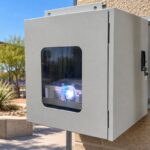
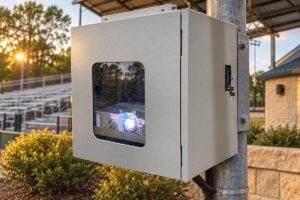
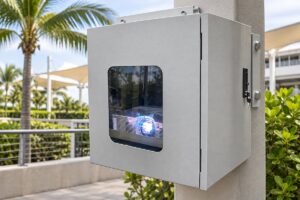
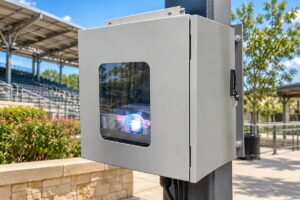
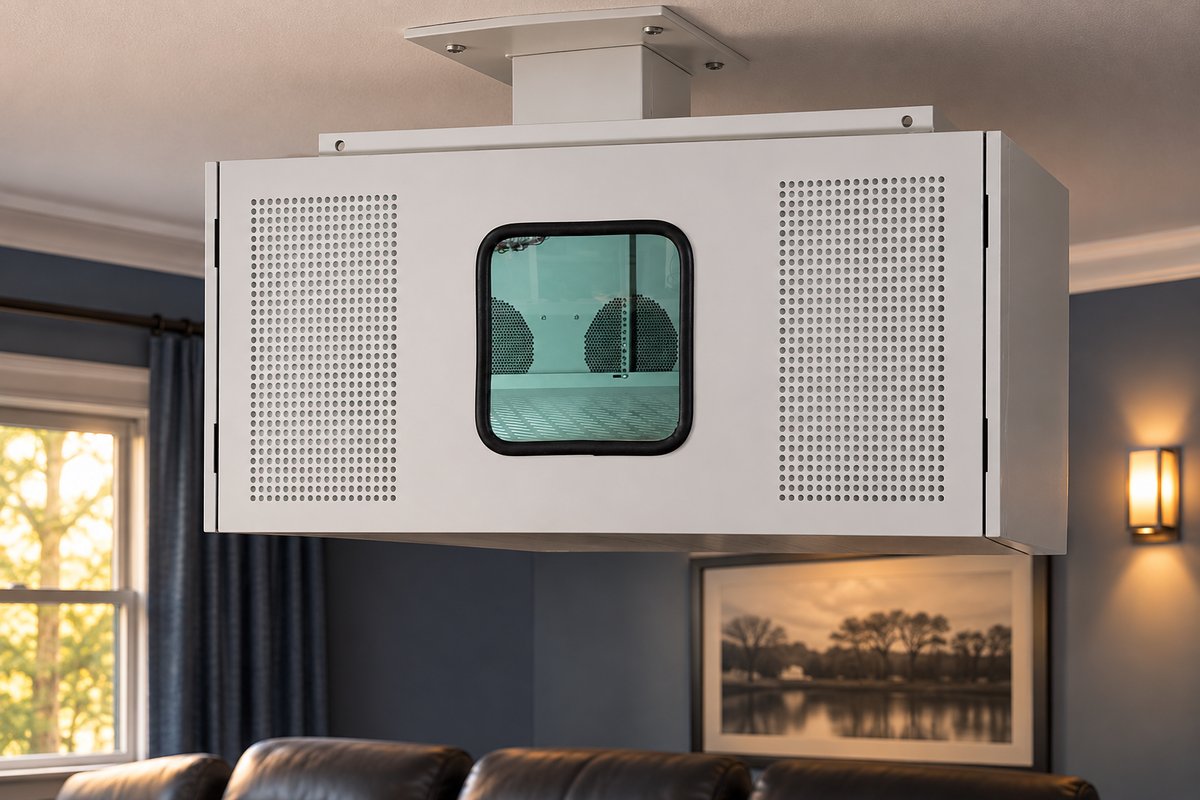
The Defender Series Projector Enclosure is designed to combat these conditions. Its fan-cooled and climate-controlled design actively manages heat and internal humidity, maintaining a safe environment for your projector even during heatwaves or muggy nights. For ultra-short-throw (UST) units, the UST Defender Series Enclosure offers the same all-weather resilience with form factor flexibility.
To ensure optimal protection, it’s essential to select an enclosure matched to your projector’s size and heat output. Send your projector model details to ProjectorEnclosure.com for personalized sizing advice. And before you plan your installation, check the NWS Raleigh Forecast Office for up-to-date forecasts that can influence your enclosure’s needs, especially if storms or heat advisories are in effect.
Defending Against Rain, Dust, and Salt Air
Rain is a year-round consideration anywhere in North Carolina, but the state’s coastal and eastern regions add the extra hazard of salt air exposure. Salt encourages rapid corrosion, particularly for steel fixtures and electronics. Inland, agricultural activity and periodic droughts can generate dust that infiltrates outdoor cabinets and shortens projector life.
A weatherproof projector housing from the Defender Series delivers multi-layered protection—from gasketed access points to filtered ventilation. This approach not only stops water, dust, and salt infiltration, but prolongs projector and lamp performance during the wettest months. The enclosure’s climate control prevents salt-laden humidity from condensing inside, which could cause internal damage even if the enclosure never leaks.
ProjectorEnclosure.com’s team has extensive experience guiding clients on enclosure placement and vent orientation. For particularly dusty or salt-prone sites, extra caution may include site-specific installation tweaks—so be sure to share your location or concerns during the planning phase.
Planning Power and Wiring for Outdoor Installations
Proper electrical planning is fundamental for outdoor projector deployments. Power and signal cables must not only be weatherproof but also code-compliant. This means using conduit or commercial-grade outdoor-rated cabling, as required by North Carolina’s electrical code and local municipal standards. Ground fault circuit interrupter (GFCI) outlets are generally required for outdoor outlets to reduce shock risk.
For commercial applications, consult the City of Charlotte Building Permits page to check if your project scope requires plan review or electrical permits. Homeowners should confirm requirements with their local municipality, as standards and inspection processes can differ from county to county.
Be mindful of distance, voltage drop, and interference when running cables outdoors. ProjectorEnclosure.com can advise on the right grommeted enclosure pass-throughs and recommendations for ensuring both a sealed environment and safe cable routing.
Mounting and Placement Best Practices
Choosing the right mounting solution is key. Projector placement must not only achieve your desired throw distance and angle, but also ensure the enclosure is securely fastened to withstand high winds—an important factor during hurricane season or strong summer thunderstorms. Ceiling or pole mounts, wall brackets, or custom structural pads may be needed depending on the site and projector weight.
ProjectorEnclosure.com supports a variety of mounting methods for its Defender Series and HomeLine enclosures. In all cases, it’s critical to anchor mounts into solid structure—not thin wood or old fencing. For venues and public spaces, permanent mounts may also need to support security requirements or be tamper-resistant.
Enclosure orientation matters: avoid having vent openings face prevailing winds, salt spray, or up-sloping rain. Site-specific advice is available through the Projector Enclosure Fit Guide. Take advantage of this resource to get tailored advice for your projector and site.
Ensuring Ventilation Without Compromising Protection
Projectors generate significant heat during operation, which must be dissipated efficiently to maintain both performance and lifespan. However, typical air vents are an entry point for moisture and dust, so a balance must be struck between airflow and environmental isolation. The Defender Series—recommended for all outdoor installs—solves this challenge with filtered, fan-powered ventilation designed to protect even high-lumen projectors in hot or humid weather.
If your installation is in a semi-protected, climate-controlled environment—such as a covered pavilion or a patio with temperature regulation—the Integrator Series Projector Enclosure may be suitable. For consumer projection mapping or seasonal home displays, the HomeLine Projector Enclosure provides weatherproofing with accessible features.
Remember to assess airflow needs for both the projector and the enclosure’s internal fans. If you’re unsure, contact ProjectorEnclosure.com with your projector model and installation plans for expert input.
Planning for Permits and Regulatory Compliance
Outdoor projector installations in North Carolina may require permits, especially for commercial venues or where electrical work is involved. The City of Charlotte Building Permits resource has details on commercial plan review requirements, but other counties and cities will have their own protocols. Checking with the proper office early in your project timeline helps you avoid costly rework or delay.
For lighting, Durham’s outdoor lighting requirements at UDO §7.4 are an example of how light spill and glare can be regulated—important for venues, schools, and theme parks. Regulations may affect your projector’s orientation, brightness settings, or enclosure choice if your install is near property lines or residential areas.
Permitting requirements may change based on mounting method, electrical run, and the presence of permanent structures. Consulting local regulatory offices and ProjectorEnclosure.com before proceeding ensures your installation meets all safety and zoning expectations.
Meeting Local Lighting Codes and Minimizing Light Pollution
Outdoor projection can easily cross from spectacular to problematic if it results in unnecessary light spill into neighboring properties or public spaces. North Carolina municipalities, especially in urban or suburban areas, may enforce rules for outdoor lighting regarding fixture shielding and beam direction, such as those outlined in Durham’s outdoor lighting standards.
To comply, carefully plan the projection angle, screen placement, and consider the brightness of both the projector and any exit or status lights on your enclosure. The team at ProjectorEnclosure.com can recommend strategies and enclosures that help you comply with these codes, ensuring your installation enhances rather than detracts from your surroundings.
Review lighting codes before purchase, especially if your site is close to residential neighborhoods. This due diligence helps you avoid fines and ensures community goodwill, whether you’re hosting community movie nights or immersive outdoor advertising.
FAQ: Outdoor Projector Enclosure Planning in North Carolina
How do I choose the right outdoor projector enclosure for my model?
It’s crucial to match the enclosure to both projector dimensions and the site’s specific climate risks. Use the Projector Enclosure Fit Guide or contact ProjectorEnclosure.com with your model details for personalized recommendations.
Can I use an indoor hush box outdoors?
No—the Hush Series Projector Enclosure is engineered for controlled, quiet indoor spaces only, such as boardrooms, galleries, or home theaters. For any outdoor install, select an all-weather enclosure like the Defender Series.
What should I do before installing an outdoor enclosure?
Check local permit requirements through your municipality or the Charlotte Building Permits portal for your jurisdiction. Then, review projected weather conditions at the NWS Raleigh Forecast Office, and assess site-specific lighting restrictions if relevant to your area.
Next Steps: Get the Perfect Enclosure for Your North Carolina Project
Choosing the right outdoor projector enclosure safeguards your investment and delivers reliable, brilliant outdoor video despite North Carolina’s heat, humidity, storms, and salt air. ProjectorEnclosure.com’s Defender Series and UST Defender Series stand ready for true outdoor conditions, while the Integrator Series and HomeLine address climate-controlled or home use. Start your project by submitting your projector model and installation details for precise sizing and expert advice.
Supplies mentioned in this guide
Defender Series Projector Enclosure
Integrator Series Projector Enclosure
Hush Series Projector Enclosure
UST Defender Series Enclosure
HomeLine Projector Enclosure
Projector Enclosure Fit Guide
Outdoor Projector Enclosure Planning: An Alabama Guide