
Permanent Outdoor Home Theatres Need More Than a Projector Cover

Climate Controlled Projector Enclosures for Permanent Outdoor Home Theatres
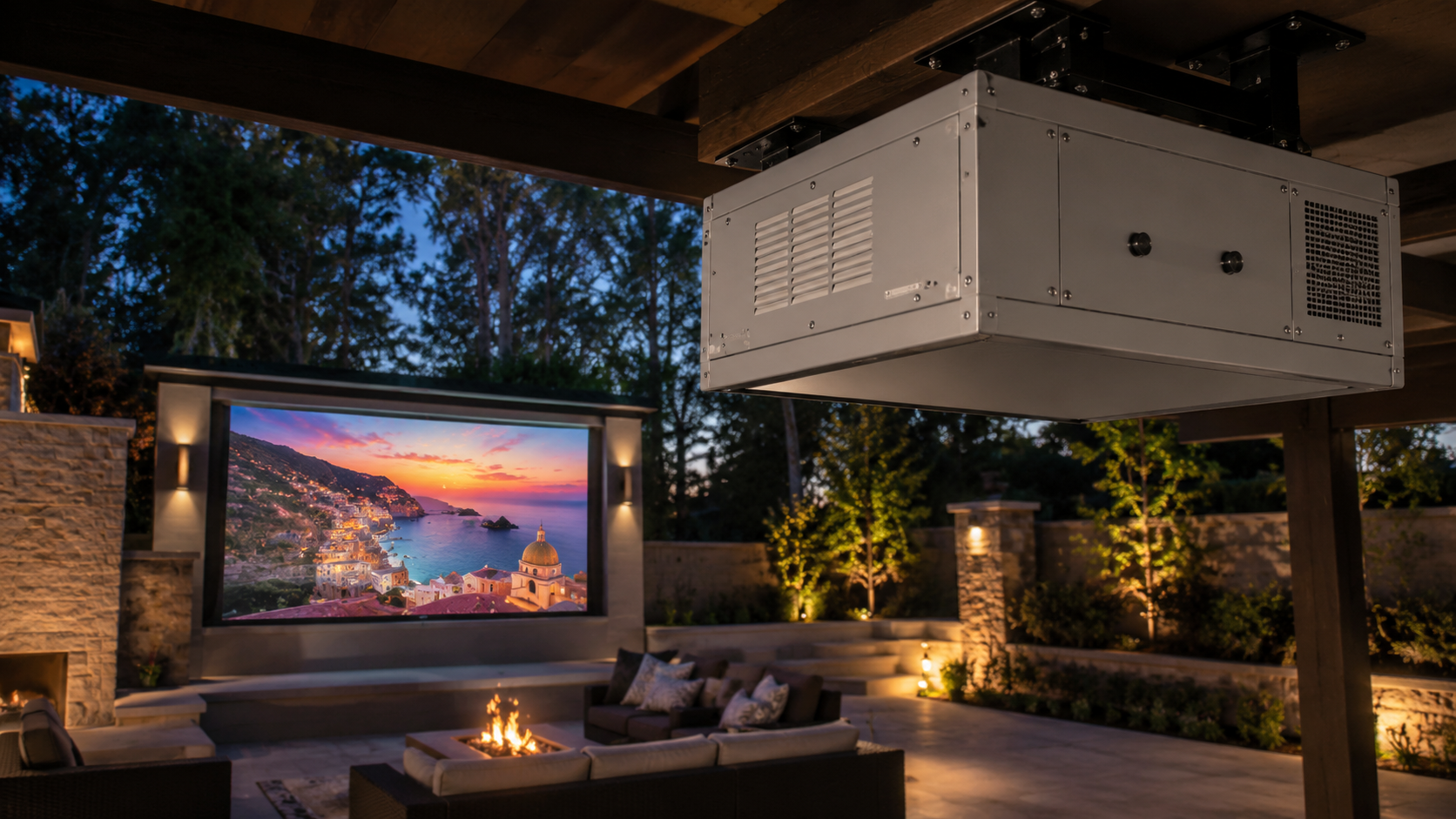
Permanent outdoor home theatre with a Defender Series style climate controlled projector enclosure aimed toward the backyard screen.

Climate controlled projector enclosures for outdoor home theatres help turn a backyard movie setup into a true permanent entertainment system. A portable projector on a table may work for a casual weekend movie night. However, homeowners who want a polished outdoor cinema need a better plan.

Permanent outdoor theatres face constant exposure. Heat builds during the day. Humidity rises at night. Dust moves through the yard. Rain can blow in from the side. Insects, pollen, wind, and temperature swings also create problems over time.

Because of that, a basic projector cover is not enough for a serious outdoor installation. The projector needs a protected, climate managed space that supports long-term operation.


Why Permanent Outdoor Theatre Setups Are Different

A temporary setup gets packed away after use. A permanent setup stays outside. That single difference changes everything.

For example, a projector installed under a patio cover may sit outdoors for months or years. Even when nobody watches a movie, the projector still faces heat, moisture, dust, and airborne debris. As a result, the enclosure has to protect the equipment during both active use and downtime.

In addition, permanent outdoor theatres often use higher-value projectors. Homeowners may install brighter laser projectors, larger screens, upgraded audio, outdoor seating, lighting control, and custom mounting hardware. Therefore, the projector enclosure should match the quality of the full system.

A premium backyard theatre deserves more than a temporary weather shield.


The Problem With Simple Covers and DIY Boxes

Simple covers can block dust or light rain. Still, they usually do not manage temperature, humidity, airflow, security, or service access.

DIY boxes can create even more problems. A sealed box may trap heat around the projector. Meanwhile, an open box may allow dust, moisture, insects, and wind-driven rain to reach the equipment. Poor cable routing can also make the installation look messy.

Common issues include:

  • Restricted projector airflow
  • Heat buildup inside the housing
  • Limited access for service
  • Poor lens alignment
  • Water intrusion risks
  • Dust and pollen buildup
  • Insects inside the enclosure
  • Weak mounting points
  • No security or locking access

Because projectors generate heat while operating, the enclosure needs to support airflow and environmental control instead of simply hiding the unit.


What Climate Controlled Projector Enclosures Add

A climate controlled projector enclosure protects the projector while helping create a safer operating environment. Instead of relying on a loose cover, the enclosure becomes part of the AV system.

ProjectorEnclosure.com describes its Defender Series as a climate controlled projector enclosure system built for outdoor and harsh-environment installations. The Defender Series combines weather-resistant construction, insulation, secure access, active climate control, and service-friendly design.

That combination matters for permanent outdoor home theatres. The projector needs protection from the weather, but it also needs enough environmental support to operate reliably.

For homeowners, this means the theatre can remain installed, cleaner, and ready to use.


Why Climate Control Matters Year-Round

Outdoor theatres do not only face summer heat. Many regions also deal with cold mornings, damp evenings, spring pollen, fall leaves, and winter moisture.

Even in mild climates, outdoor equipment experiences temperature swings. Those changes can increase condensation risk, especially when warm daytime air cools quickly after sunset. In humid areas, that moisture can become a long-term concern.

The U.S. EPA notes that moisture control matters because moisture can affect materials and systems when it is not managed properly.
https://www.epa.gov/sites/default/files/2014-08/documents/moisture-control.pdf

For outdoor electronics, that same logic applies. Moisture, heat, and poor ventilation can shorten the life of sensitive equipment. Therefore, permanent projector installs need a real environmental strategy.


A Better Fit for Patio, Pergola, and Poolside Theatres

Backyard theatres are often built into beautiful outdoor spaces. Patios, pergolas, pool decks, outdoor kitchens, and lounge areas all create great viewing environments. However, each location also creates specific enclosure challenges.

A patio may trap heat under the roof. A pergola may leave equipment exposed to wind and humidity. A poolside setup may introduce extra moisture. An outdoor kitchen may place the projector near heat, grease, or smoke. Meanwhile, coastal or lakeside properties may face higher humidity and corrosion concerns.

For these reasons, enclosure selection should consider the full environment, not just the projector size.

ProjectorEnclosure.com recommends reviewing installation location, exposure level, temperature range, humidity concerns, mounting method, access direction, and clearance limits before sizing a climate controlled enclosure.

That process helps avoid the “one-size-fits-all box” mistake.


Built-In Theatres Need Clean Mounting and Service Access

A permanent outdoor theatre should look intentional from every angle. The enclosure should mount cleanly, aim correctly, and allow service access without tearing apart the patio structure.

Before installation, confirm:

  • The projector aims directly at the screen
  • The enclosure has enough clearance around vents
  • Access panels can open fully
  • Power and cables route cleanly
  • Mounting hardware supports the enclosure and projector
  • The back of the enclosure remains reachable
  • Service teams can remove or adjust the projector if needed

In addition, the enclosure should match the design of the outdoor space. A powder-coated finish, clean mounting brackets, and organized cable routing can make the installation feel built into the home.

Small planning details make the difference between “projector mounted outside” and “finished outdoor theatre.”


Why Defender Series Makes Sense for Permanent Installs

The Defender Series is designed for outdoor projector protection where standard housings are not enough. ProjectorEnclosure.com states that the Defender Series helps protect valuable projection equipment from changing temperatures, humidity, rain, snow, dust, and public-facing installation risks.

That makes Defender-style climate controlled enclosures a strong fit for:

  • Permanent backyard cinemas
  • Outdoor sports viewing patios
  • Poolside theatre systems
  • Luxury outdoor living spaces
  • Pergola-mounted projector installs
  • Home projection mapping setups
  • Covered but humid patios
  • Homes in hot or cold climates
  • Vacation properties and rental homes

Additionally, secure access helps protect expensive equipment from tampering, impact, and theft concerns.

For a permanent system, that protection is not optional. It is part of the investment.


The Convenience Factor Homeowners Actually Feel

A permanent theatre should be easy to use. Nobody wants to carry a projector outside, run extension cords, find the right angle, adjust focus, and pack everything up after every movie.

With the right enclosure, the projector can stay installed. As a result, homeowners can use the theatre more often for movies, sports, gaming, parties, holidays, and backyard events.

That convenience increases the value of the whole space. Instead of being a special setup, the outdoor theatre becomes part of the home.

In many cases, this is the real win. Better protection leads to easier use, and easier use leads to more nights outside.


When to Choose Climate Controlled Over Fan-Cooled

Fan-cooled enclosures can work well in indoor or mild environments. However, outdoor home theatres often need stronger protection.

ProjectorEnclosure.com recommends climate controlled projector enclosures for outdoor, harsh, humid, cold, hot, or permanent commercial installations. Fan-cooled options are better suited for indoor or mild-environment applications.

For residential outdoor theatres, use that same logic. If the projector will remain outside full-time, climate control is usually the safer choice.

Covered patios can still get hot. Humid nights can still create moisture concerns. Wind can still drive dust into equipment. Therefore, the enclosure should match the real conditions, not just the ideal ones.


Final Takeaway

Permanent outdoor home theatres need permanent projector protection. A basic cover may help for casual use, but it does not solve heat, humidity, airflow, weather, security, or service access.

Climate controlled projector enclosures for outdoor home theatres create a better path. They help protect the projector, support cleaner installation, and make the backyard theatre easier to use year-round.

For serious outdoor cinema builds, start with the projector, review the environment, and choose a Defender Series climate controlled enclosure that fits the real installation.

Call 888-631-5880 or visit ProjectorEnclosure.com to review your projector model, lens, mounting location, and backyard theatre layout.


Sources

ProjectorEnclosure.com — Climate Controlled Projector Enclosures
https://projectorenclosure.com/climate-controlled-projector-enclosures/

ProjectorEnclosure.com — Projector Enclosures Overview
https://projectorenclosure.com/projector-enclosures/

SSI Displays — Projector Enclosures
https://ssidisplays.com/projector-enclosures/

U.S. EPA — Moisture Control Guidance
https://www.epa.gov/sites/default/files/2014-08/documents/moisture-control.pdf

ProjectorEnclosure.com — 5 Questions to Ask Before Choosing a Projector Enclosure
https://projectorenclosure.com/choosing-outdoor-enclosure/

Element14 — How Sunlight, Humidity, and Moisture Affect Electronics
https://community.element14.com/learn/learning-center/the-tech-connection/b/blog/posts/how-do-sunlight-humidity-and-moisture-affect-electronics

ProjectorEnclosure.com — The Defender Series Enclosures
https://projectorenclosure.com/store/the-defender-series-enclosures/

BenQ — Protecting Projectors From Dust
https://www.benq.com/en-us/knowledge-center/knowledge/what-can-you-do-to-protect-your-school-projectors-from-dust.html
Read more

Fan-Cooled Projector Enclosure for Outdoor Movie Setups

Fan-Cooled Projector Enclosure for Outdoor Movie Setups

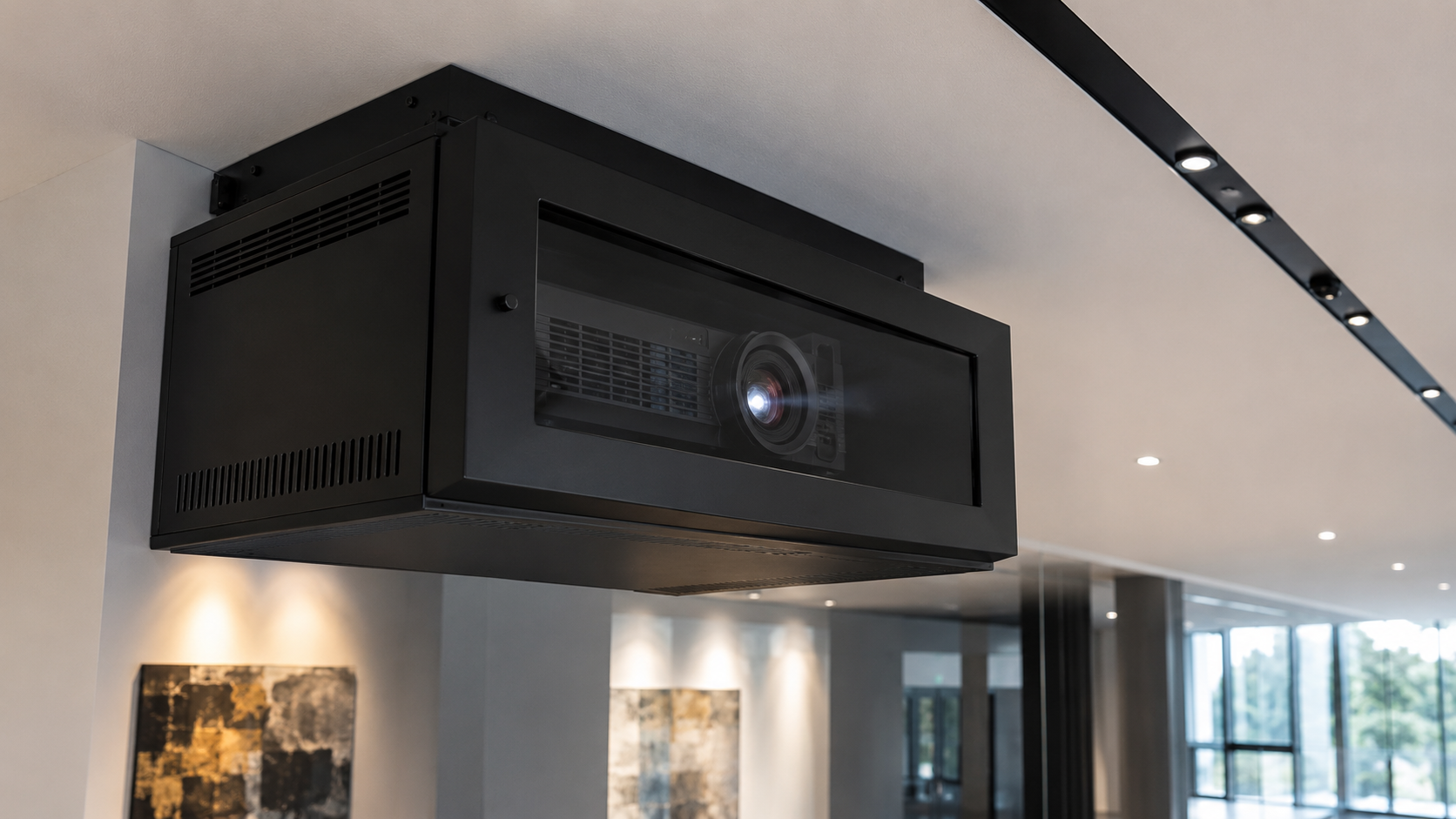
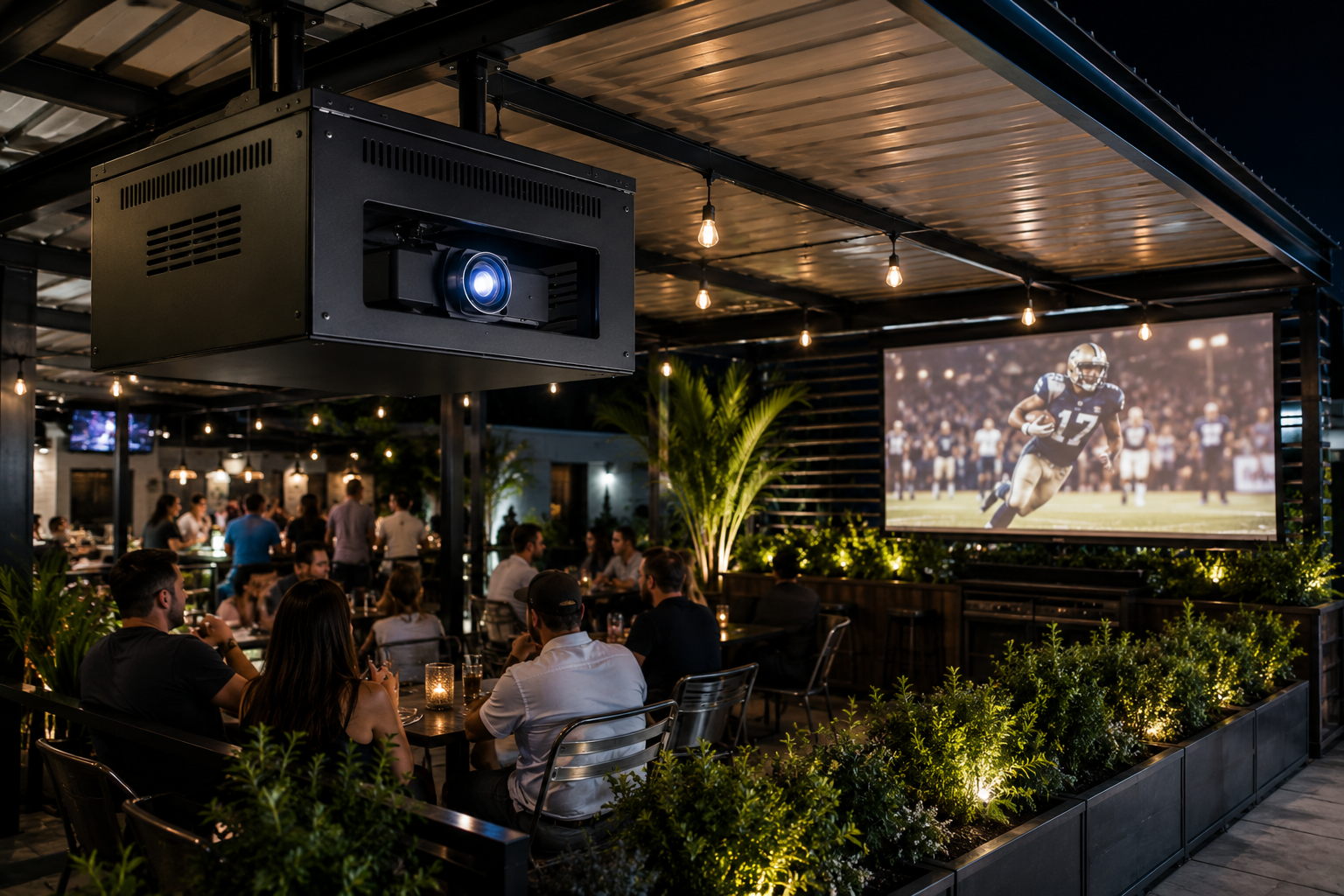
Fan-cooled projector enclosure mounted in a covered outdoor movie patio setup

A fan-cooled projector enclosure is a practical solution for outdoor movie nights, backyard entertainment areas, covered patios, pool houses, restaurants, event spaces, and semi-protected projection setups. These spaces often do not need a full climate-controlled outdoor enclosure. However, they still need projector protection.

That is the sweet spot.

A fan-cooled enclosure helps protect the projector from dust, debris, heat buildup, accidental contact, and installation clutter. As a result, the projector can stay cleaner, look more professional, and operate in a more controlled environment.


Why Outdoor Movie Setups Need More Than a Projector Mount

Outdoor projection is fun, flexible, and highly visual. However, projectors are sensitive pieces of equipment. Even when a projector is installed under a patio cover, pergola, pavilion, balcony, or event structure, it can still face dust, insects, airflow restrictions, humidity, fingerprints, and accidental bumps.

In addition, outdoor entertainment spaces are usually more exposed than indoor rooms. People move around. Tables get shifted. Kids play nearby. Events run late. Because of this, leaving a projector fully exposed can create unnecessary risk.

A fan-cooled projector enclosure adds a protective layer around the projector while still allowing air to move through the enclosure. Therefore, it is a clean middle-ground solution for mild, covered, or semi-protected areas.


What a Fan-Cooled Projector Enclosure Does

A fan-cooled projector enclosure is a ventilated housing designed to protect the projector and help manage heat. ProjectorEnclosure.com describes fan-cooled enclosures as a strong fit for indoor installs or short-term outdoor events in mild conditions. Their Integrator Series uses active fan systems to help manage heat while keeping the projector protected.

In addition, ProjectorEnclosure.com’s fan-cooled Integrator enclosures are positioned as sleek, slim enclosures for mild environments. They do not require external ducting, which makes them easier to use in many indoor and covered outdoor applications.

That matters because many outdoor movie setups need something better than an open shelf, but simpler than a full weather-controlled box.


Best Places to Use Fan-Cooled Projector Enclosures

Fan-cooled enclosures work best in mild environments where the projector is protected from direct rain, harsh weather, and major temperature swings. For example, they are a strong fit for:

1. Covered Backyard Theaters

Backyard theaters are becoming more polished. Instead of pulling out a projector every weekend, many homeowners want a cleaner permanent or semi-permanent setup.

A fan-cooled enclosure can be mounted under a covered patio or outdoor structure. As a result, the projector stays protected and ready to use.

2. Pool Houses and Outdoor Lounges

Poolside areas create a great setting for sports, movies, music videos, and events. However, projectors near pools should be protected from splashes, dust, and guest traffic.

A fan-cooled enclosure helps keep the projector housed and secured. However, if the projector will be exposed to moisture or direct weather, a climate-controlled outdoor enclosure should be considered instead.

3. Restaurants and Rooftop Bars

Restaurants, breweries, rooftop bars, and hotel patios often use projection for sports nights, branded visuals, private events, and seasonal entertainment. Because these spaces are public-facing, security matters.

A locking fan-cooled projector enclosure helps prevent tampering while keeping the installation clean and professional.

4. Wedding Venues and Event Pavilions

Event venues often use projectors for slideshows, branded visuals, ceremony graphics, and reception entertainment. Since these spaces may be open-air but covered, fan-cooled enclosures can be a strong fit.

They help protect the projector during setup, operation, and event turnover.

5. Seasonal Attractions and Pop-Up Events

Outdoor cinema nights, Halloween projection setups, holiday displays, food festivals, and temporary brand activations can all benefit from projector protection. Because these installs are often temporary, a fan-cooled enclosure can simplify setup while adding protection.


Real-World Locations Where This Makes Sense

Fan-cooled projector enclosures can be especially useful in entertainment-heavy destinations where outdoor patios, covered venues, and pop-up projection experiences are common.

Los Angeles, California

Outdoor screenings, rooftop venues, brand activations, and entertainment spaces are everywhere in Los Angeles. Because many setups are seasonal or semi-protected, fan-cooled enclosures can help protect projectors without overbuilding the system.

Austin, Texas

Austin’s restaurant patios, music venues, and event spaces often use screens and projection for entertainment. In covered spaces with mild operating conditions, fan-cooled enclosures can help keep projector installations cleaner and safer.

Orlando, Florida

Theme-adjacent venues, hotels, resorts, and restaurants often use projection for guest entertainment. However, humidity and weather exposure must be considered carefully. In covered, protected areas, fan-cooled may work. For exposed outdoor installs, climate-controlled protection is usually the better route.

Las Vegas, Nevada

Rooftop lounges, pool decks, entertainment venues, and brand events often need clean AV installations. A fan-cooled projector enclosure can work well in covered or temporary setups. However, because Las Vegas can experience extreme heat, climate-controlled enclosures may be required for long-term outdoor exposure.

San Diego, California

San Diego is a strong fit for covered outdoor entertainment spaces, hotel patios, breweries, and event venues. Since the climate is generally more moderate, fan-cooled enclosures may be a practical choice for many semi-protected applications.


Why Airflow Still Matters

Projectors need ventilation. This is not optional. Epson’s safety guidance states that projector slots and openings should not be blocked because they provide ventilation and help prevent overheating.

In addition, Epson’s maintenance guidance explains that air filters and vents may need cleaning to prevent overheating caused by blocked ventilation.

Therefore, a projector should never be placed inside a random sealed box. A proper fan-cooled projector enclosure is designed around airflow. That is the major difference.

It protects the projector without choking it.


Fan-Cooled vs. Climate-Controlled for Outdoor Spaces

A fan-cooled projector enclosure is not the same as a full outdoor climate-controlled enclosure. That distinction matters.

A fan-cooled enclosure is best for indoor, covered, mild, or short-term outdoor setups. It uses ventilation and fans to help manage heat.

A climate-controlled enclosure is better for harsh outdoor conditions, long-term exposure, rain, major heat, cold, or humidity. ProjectorEnclosure.com describes its Defender Series as fully climate-controlled projector enclosures built to protect projectors in demanding outdoor environments.

So, for a covered patio movie setup, fan-cooled may be the right choice. However, for a projector installed year-round in direct weather, the Defender climate-controlled enclosure line is the safer solution.


Key Benefits for Outdoor Movie and Entertainment Spaces

Cleaner Installations

First, the enclosure makes the system look finished. Instead of cables, brackets, and an exposed projector, the space gets a more professional AV setup.

Better Projector Protection

Next, the enclosure helps reduce exposure to dust, debris, insects, accidental contact, and public tampering.

Easier Event Operation

Also, a protected projector can stay mounted and ready for use, which reduces setup time for repeated events.

Improved Security

Because many outdoor entertainment spaces are shared or public-facing, locking access is valuable.

Smarter Heat Management

Finally, active fan cooling helps move air through the enclosure instead of trapping hot air around the projector.


What to Check Before Choosing an Enclosure

Before selecting a fan-cooled projector enclosure, confirm the projector model, lens length, total projector depth, airflow direction, wattage, mounting location, and expected weather exposure.

Also, ask these questions:

  • Will the projector be protected from direct rain?
  • Will it be used temporarily or permanently?
  • Is the space covered or fully exposed?
  • Will the projector run for long periods?
  • Can guests or staff reach the projector?
  • Does the area get extreme heat, cold, or humidity?

If the area is covered and mild, fan-cooled may be the right fit. However, if the projector will face harsh outdoor conditions, climate-controlled protection is the smarter move.


Final Takeaway

A fan-cooled projector enclosure is a smart solution for outdoor movie nights, covered patios, restaurants, rooftop bars, pool houses, event pavilions, and seasonal entertainment spaces. It protects the projector, improves the look of the installation, supports airflow, and helps reduce risk in mild environments.

Most importantly, it gives the projector a proper home.

For help choosing the right enclosure size for your projector and outdoor setup, contact ProjectorEnclosure.com at 888-631-5880.


Sources

  1. ProjectorEnclosure.com — Fan-Cooled Integrator Projection Enclosures
    Website: https://projectorenclosure.com/fan-cooled-projector-enclosures/
    Used for fan-cooled Integrator enclosure features, mild-environment positioning, slim body style, color options, quick shipping, and no external ducting.
  2. ProjectorEnclosure.com — Fan-Cooled vs. Climate-Controlled
    Website: https://projectorenclosure.com/fan-cooled-vs-climate-controlled/
    Used for comparing fan-cooled enclosures with climate-controlled enclosures and identifying mild-condition applications.
  3. ProjectorEnclosure.com — Climate-Controlled Projector Enclosures
    Website: https://projectorenclosure.com/climate-controlled-projector-enclosures/
    Used for Defender Series climate-controlled enclosure positioning for harsh outdoor environments.
  4. ProjectorEnclosure.com — Home Page
    Website: https://projectorenclosure.com/
    Used for the general product positioning that enclosures are available as fan-cooled or full climate-controlled systems to keep projectors clean and cool.
  5. Epson — Important Safety Instructions
    Website: https://files.support.epson.com/docid/cpd5/cpd50650/source/notices/reference/important_safety_instructions.html
    Used for projector ventilation guidance and overheating prevention.
  6. Epson — Projector Maintenance
    Website: https://files.support.epson.com/docid/cpd4/cpd41026/source/maintenance/concepts/maint_projector_pl470_bl485wi.html
    Used for air filter, vent cleaning, blocked ventilation, and overheating support.
Read more

Choosing the Right Climate Controlled Enclosure for a Backyard Outdoor Home Theatre

Climate Controlled Enclosure for Outdoor Home Theatre Projectors

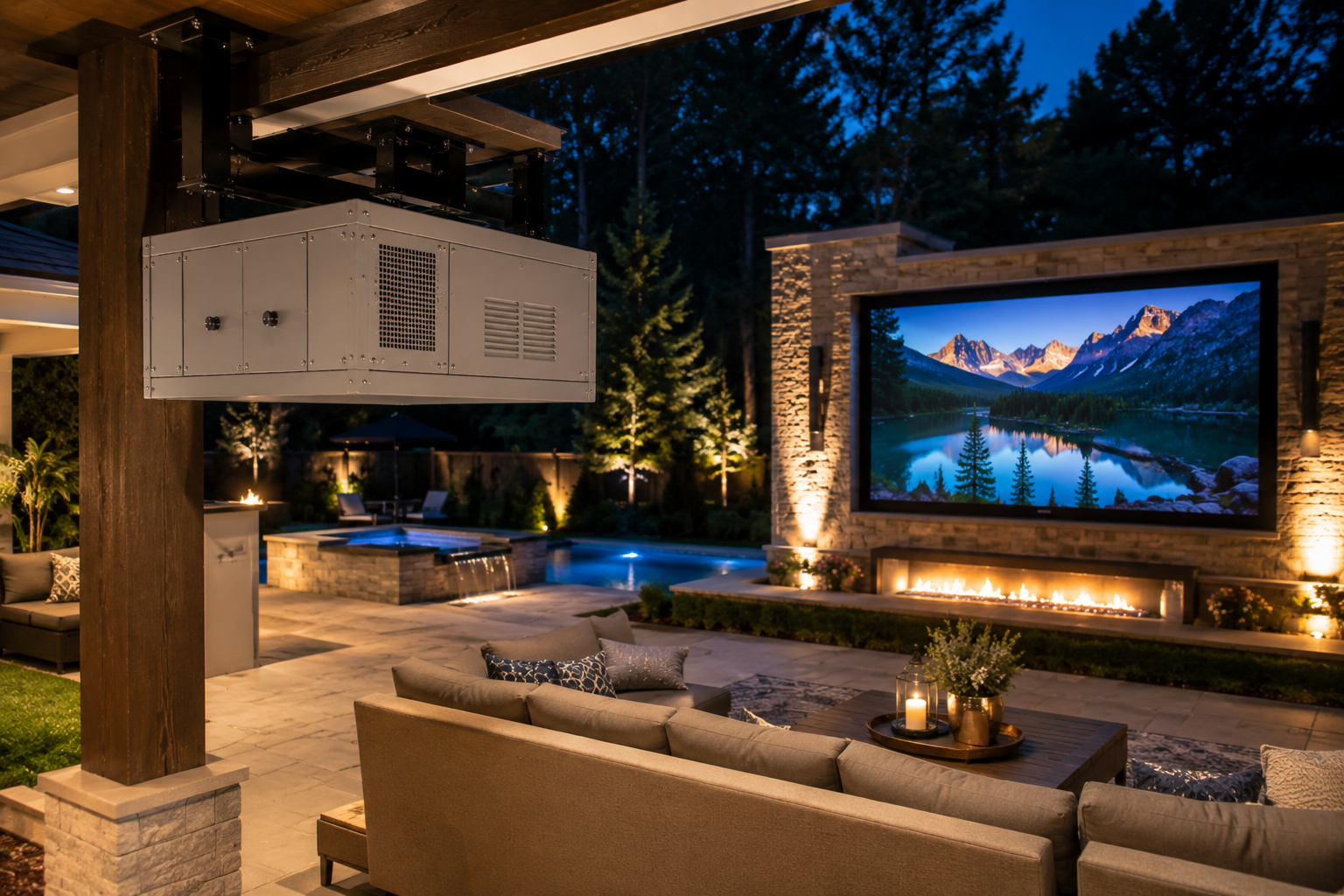
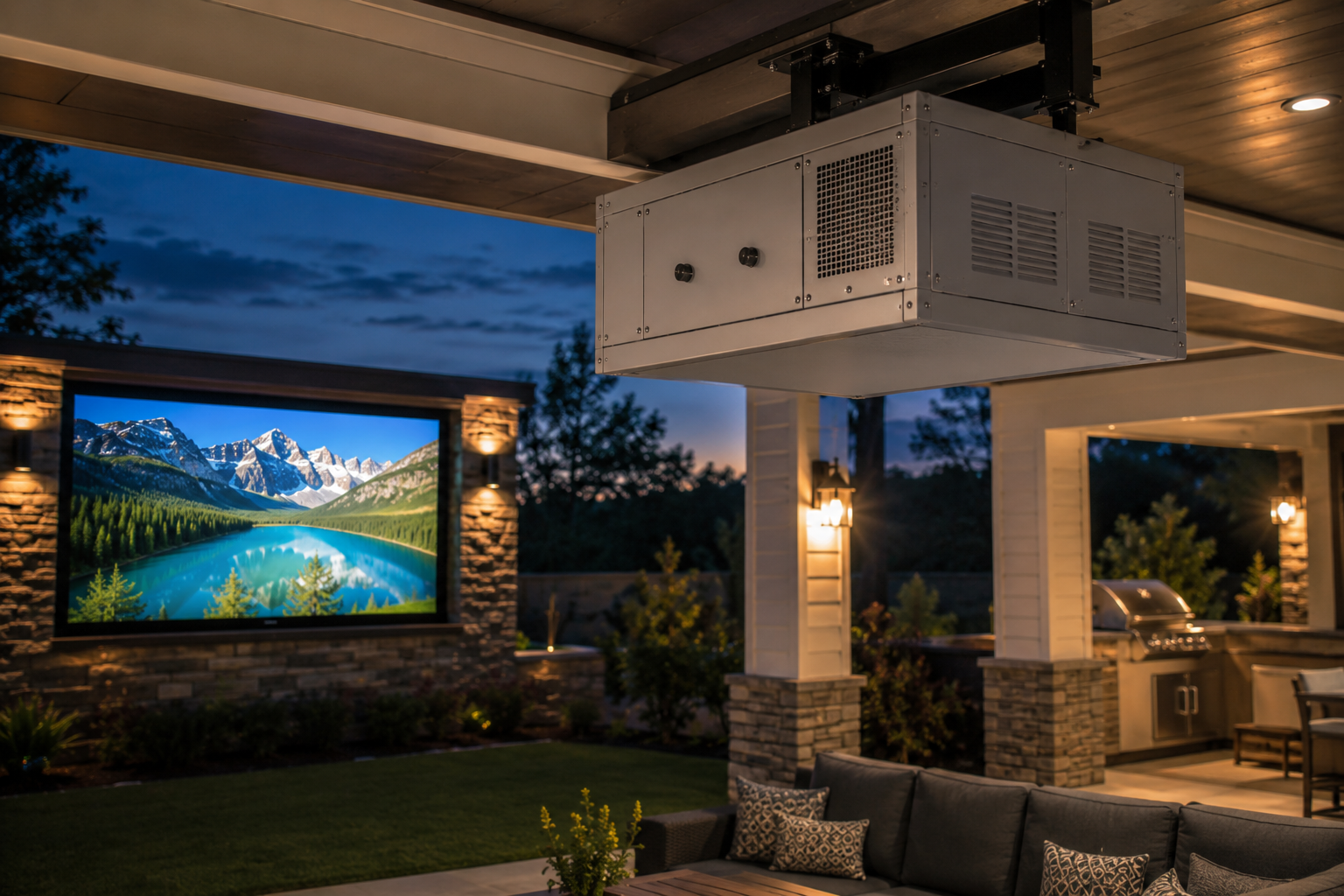
Climate controlled Defender Series style projector enclosure mounted behind an outdoor home theatre with the projector aimed toward the screen.

A climate-controlled enclosure for outdoor home theatre installations helps protect the projector before, during, and after every movie night. Backyard theatres may look simple from the seating area, but behind the scenes, the projector has to deal with heat, humidity, dust, rain, insects, temperature swings, and long idle hours outside.

Because of that, choosing the right enclosure matters just as much as choosing the projector.

A projector may have enough brightness for a backyard screen. However, it still needs the right housing to survive outdoor conditions. The wrong enclosure can trap heat, limit airflow, block service access, or create fitment problems with the lens. A properly selected enclosure, on the other hand, helps the entire outdoor theatre feel cleaner, safer, and more permanent.


Start With the Projector, Not the Enclosure

Every enclosure decision should begin with the projector model. Dimensions, power draw, airflow path, lens length, mounting position, and service access all affect enclosure sizing.

Before requesting a recommendation, gather these details:

  • Projector make and model
  • Lens model
  • Projector body dimensions
  • Total depth with the lens installed
  • Power consumption
  • Intake and exhaust vent locations
  • Mounting style
  • Required throw distance
  • Screen size and location
  • Installation environment

ProjectorEnclosure.com recommends sending the projector model, lens model, dimensions, location, exposure level, temperature range, humidity concerns, mounting method, access direction, finish preference, and clearance limits before sizing a Defender Series enclosure.

With that information, the enclosure recommendation becomes practical instead of generic. In addition, it helps confirm lens clearance, airflow, service access, and mounting direction before the project gets too far along.


Confirm the Lens Direction and Projection Path

The projector must aim cleanly at the screen. That sounds obvious, yet it becomes a common issue when the enclosure gets mounted under a patio cover, pergola beam, balcony, soffit, or outdoor structure.

For most backyard theatre layouts, the enclosure should sit behind or above the seating area with the projector aimed toward the screen. Even when the enclosure is shown from the rear, the lens side should still face the projection surface.

Good planning helps avoid:

  • Lens obstruction
  • Poor projector alignment
  • Awkward mounting angles
  • Unwanted keystone correction
  • Service doors blocked by beams or walls
  • Cable exits on the wrong side
  • Airflow paths aimed into tight spaces

As a result, the installation looks cleaner and performs better. Homeowners want the theatre to feel built-in, not improvised.


Match Climate Control to the Outdoor Environment

Outdoor home theatres do not all face the same conditions. A covered patio in a mild climate may need different protection than a fully exposed poolside install in a hot, humid region.

Still, many residential outdoor theatre spaces face enough environmental stress to justify climate control. Heat, cold, rain, humidity, dust, and weather exposure can all affect projector performance and lifespan.

The Defender Series is described by ProjectorEnclosure.com as a climate controlled projector enclosure system built for outdoor and harsh-environment installations. It combines weather-resistant construction, insulation, secure access, active climate control, and service-friendly design.

Therefore, backyard theatres that remain installed full-time need more than a cover. They need an enclosure that supports the projector’s operating environment.


Covered Patio Does Not Always Mean Protected

Many homeowners assume a roof or pergola provides enough protection. Unfortunately, covered does not mean controlled.

Wind can drive rain sideways. Dust and pollen can still enter the projector. At the same time, humidity can rise overnight. Heat can also build under patio covers, especially during summer afternoons.

Outdoor AV equipment often sits unused for long stretches as well. During those idle periods, the projector still faces moisture, insects, temperature swings, and airborne debris.

For that reason, a climate controlled enclosure helps solve the full-time exposure problem. Instead of only shielding the projector during operation, it helps protect the system while it waits for the next event.


Choose Defender Series for Harsh or Permanent Installs

For backyard home theatres that need a serious long-term solution, the Defender Series is the strongest fit. ProjectorEnclosure.com positions Defender enclosures for outdoor projector protection where standard housing is not enough. The site also states that these enclosures help protect valuable projection equipment from changing temperatures, humidity, rain, snow, dust, and public-facing installation risks.

That makes Defender-style climate controlled enclosures a smart choice for:

  • Permanent backyard theatres
  • Poolside projection systems
  • Outdoor kitchens and lounge areas
  • Pergola-mounted projectors
  • Coastal or lakeside homes
  • Hot-weather patios
  • Humid climates
  • High-value laser projectors
  • Large-format backyard screens
  • Projection mapping on homes or walls

A basic cover may work for temporary setups. However, permanent outdoor home theatres need a real enclosure strategy.


Look at Service Access Before Installation

A great enclosure should protect the projector without making future service difficult. Eventually, someone may need to clean the lens area, check cables, inspect power, access controls, or remove the projector.

Therefore, service access should be planned before mounting.

Check these points early:

  • Can the access door open fully?
  • Is there enough room to remove the projector?
  • Can power be reached safely?
  • Are filters, vents, or panels accessible?
  • Will the mount block the service side?
  • Can a technician work without removing the whole enclosure?

ProjectorEnclosure.com describes the Defender Series as service-friendly, which matters for outdoor installations where access can become awkward after construction finishes.

Smart access planning saves time later. More importantly, it keeps routine inspection from turning into a major teardown.


Consider Security and Tamper Protection

Outdoor home theatres often place expensive equipment in semi-public or visible areas. Even in residential backyards, a projector can still be exposed to guests, renters, service workers, children, pets, or accidental impact.

A climate controlled enclosure adds another layer of protection. The Defender Series includes secure access and durable housing designed to help protect equipment from tampering, impact, and theft concerns.

For high-end residential projects, that matters. The enclosure protects the projector from both the weather and the real world.


Plan the Finish Around the Backyard Design

Outdoor theatres should look intentional. A bulky box in the wrong color can distract from the patio design. In contrast, a well-finished enclosure can blend into the structure.

Depending on the project, custom options may include:

  • Custom enclosure dimensions
  • Custom color or powder coat finish
  • Modified climate-control layout
  • Projector and lens clearance adjustments
  • Custom mounting support
  • Locking access panel changes
  • Branding, vinyl wrap, or camouflage finishes
  • Project-specific cable and power routing

ProjectorEnclosure.com lists these types of custom options for climate controlled projector enclosure projects.

Because of that, homeowners, AV integrators, and builders can treat the enclosure as part of the architecture rather than an afterthought.


Avoid These Common Buying Mistakes

Several mistakes can turn a good projector into a frustrating outdoor system.

One major mistake is choosing an enclosure based only on projector width, height, and depth. That approach ignores lens clearance, airflow, cable exits, service access, heat output, and mounting direction.

Another common problem is using an indoor box outdoors. Indoor hush boxes and fan-cooled housings may work beautifully in controlled environments. However, harsh outdoor spaces need stronger protection.

Humidity also gets underestimated. Rain grabs attention, yet moisture in the air can create long-term issues. The U.S. EPA’s moisture control guidance explains that moisture management matters because uncontrolled moisture can affect materials, systems, and indoor environments over time.

Outdoor electronics deserve that same level of planning.


Best Recommendation for Homeowners

For a permanent outdoor home theatre, start with the projector specs and the installation environment. Then, choose a climate controlled enclosure that supports the projector’s heat load, airflow needs, lens direction, service access, and outdoor exposure level.

A Defender Series climate controlled enclosure is the right direction when the projector will face heat, cold, humidity, dust, rain, snow, or full-time outdoor installation risk.

Call 888-631-5880 or visit ProjectorEnclosure.com before ordering. SSI can help confirm fitment and recommend the correct enclosure style for the projector, lens, and backyard layout.


Final Takeaway

The right enclosure protects more than the projector. It protects the entire outdoor theatre experience. A climate controlled enclosure for outdoor home theatre installations helps homeowners build a cleaner, more reliable, more permanent backyard cinema system.

Choose the enclosure around the projector, the environment, the lens direction, and the service plan. That is how a backyard projector setup becomes a true outdoor theatre.


Sources

ProjectorEnclosure.com — Climate Controlled Projector Enclosures
https://projectorenclosure.com/climate-controlled-projector-enclosures/

ProjectorEnclosure.com — The Defender Series Enclosures
https://projectorenclosure.com/store/the-defender-series-enclosures/

SSI Displays — Projector Enclosures
https://ssidisplays.com/projector-enclosures/

ProjectorEnclosure.com — 5 Questions to Ask Before Choosing a Projector Enclosure
https://projectorenclosure.com/choosing-outdoor-enclosure/

U.S. EPA — Moisture Control Guidance
https://www.epa.gov/sites/default/files/2014-08/documents/moisture-control.pdf

ProjectorEnclosure.com — Projector Enclosures Overview
https://projectorenclosure.com/projector-enclosures/

Element14 — How Sunlight, Humidity, and Moisture Affect Electronics
https://community.element14.com/learn/learning-center/the-tech-connection/b/blog/posts/how-do-sunlight-humidity-and-moisture-affect-electronics

BenQ — Protecting Projectors From Dust
https://www.benq.com/en-us/knowledge-center/knowledge/what-can-you-do-to-protect-your-school-projectors-from-dust.html
Read more

Fan-Cooled Projector Enclosures for Museums, Exhibits, and Immersive Projection Rooms

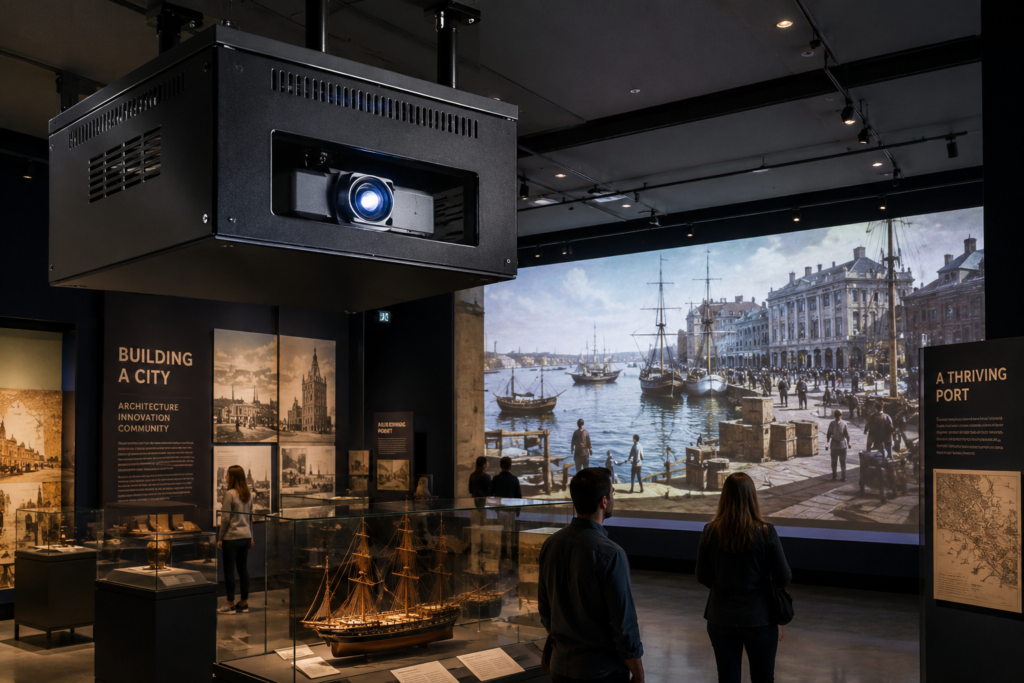
Fan-Cooled Projector Enclosures for Museums and Immersive ExhibitsFan-cooled projector enclosure installed in a museum exhibit projection room

Fan-cooled projector enclosures are a smart choice for museums, exhibit halls, visitor centers, galleries, and immersive projection rooms. These spaces often rely on projectors for storytelling, digital art, historical displays, interactive exhibits, and branded visitor experiences. However, projectors in these environments are not always installed in perfect conditions.

They may be mounted above crowds. They may run for long hours. They may sit near HVAC airflow, ceiling dust, exhibit lighting, or public traffic. Therefore, the projector needs more than a ceiling mount. It needs protection.

That is where a fan-cooled projector enclosure becomes valuable. It helps keep the projector cleaner, cooler, more secure, and easier to integrate into the overall exhibit design.


Why Museums Need Projector Protection

Museums and exhibit spaces are designed around experience. Visitors are not supposed to notice the projector first. Instead, they should notice the story, the visuals, the artifact, or the environment.

However, behind every clean projection display is a piece of equipment doing real work. Projectors create heat, move air, and rely on proper ventilation. Epson’s projector maintenance guidance explains that projector air filters and vents need to stay clean to help prevent overheating caused by blocked ventilation.

As a result, exposed projectors can create problems in busy museum spaces. Dust can collect. Visitors may be able to reach the equipment. Maintenance teams may struggle with access. In addition, open mounting can make the installation look unfinished.

A fan-cooled enclosure helps solve these issues by placing the projector inside a dedicated protective housing while still allowing controlled airflow.


What a Fan-Cooled Projector Enclosure Does

A fan-cooled projector enclosure protects the projector while using filtered ambient air and active fan ventilation to reduce heat buildup. ProjectorEnclosure.com describes its fan-cooled Integrator enclosures as a sleek, slim solution for mild environments, with no external ducting required.

This matters because many museum installations do not need a full outdoor climate-controlled enclosure. Instead, they need something cleaner and simpler. They need protection from dust, heat buildup, tampering, and installation clutter.

In other words, a fan-cooled enclosure gives the projector a professional home.


Best Museum Applications for Fan-Cooled Enclosures

Fan-cooled projector enclosures work especially well in controlled indoor or semi-protected museum environments. For example, they are a strong fit for:

1. Immersive History Rooms

Many museums use projection to recreate historic environments, timelines, battlefields, cityscapes, or cultural stories. Because these rooms often run all day, the projector needs steady airflow and physical protection.

A fan-cooled enclosure helps support long runtimes while keeping the equipment visually contained.

2. Digital Art Galleries

Digital art spaces depend on clean visuals and minimal equipment distraction. Therefore, exposed projectors can hurt the look of the room.

With a sleek black or white enclosure, the projector becomes part of the architectural system instead of a loose piece of AV gear.

3. Visitor Centers and Tourism Exhibits

National parks, science centers, aquariums, zoos, and city visitor centers often use projection for orientation films, animated maps, and educational displays. These spaces usually have high visitor traffic, so equipment security matters.

A locking fan-cooled enclosure helps protect the projector from accidental contact and unauthorized access.

4. Projection Mapping Exhibits

Projection mapping is frequently used on sculptures, walls, architectural models, artifacts, and themed environments. However, projection alignment matters. If the projector is bumped, the mapping can shift.

Therefore, placing the projector inside a secured enclosure can help preserve alignment and reduce risk.

5. Temporary Traveling Exhibits

Traveling exhibits often move between cities and venues. Since each location may have different mounting conditions, a fan-cooled enclosure can make projector deployment cleaner and more repeatable.

ProjectorEnclosure.com also notes that fan-cooled enclosures can simplify mobile AV setups by reducing the bulk and complexity of fully climate-controlled systems.


Real-World Places Where This Makes Sense

Fan-cooled projector enclosures are especially useful in museums and exhibit spaces located in major visitor destinations. For example, they would be a strong fit for indoor or covered projection installations in cities such as:

Orlando, Florida
Theme parks, museums, branded attractions, and visitor centers often use projection-heavy storytelling.

Las Vegas, Nevada
Casinos, immersive attractions, retail exhibits, and entertainment venues frequently need durable projector protection in high-traffic interiors.

New York City, New York
Museums, galleries, corporate experience centers, and flagship retail locations often require clean, secure AV installations.

London, United Kingdom
Heritage museums, cultural exhibitions, and visitor attractions commonly rely on projection for historical and educational storytelling.

Dubai, UAE
Luxury retail, museums, tourism centers, and immersive brand environments often demand premium-looking AV systems.

Toronto, Canada
Aquariums, science centers, corporate exhibits, and public attractions can benefit from protected projector installations.

In each of these locations, the enclosure is not just protecting hardware. It is helping protect the visitor experience.


Fan-Cooled vs. Climate-Controlled for Museums

Not every projector installation needs the same enclosure. Therefore, choosing the right style matters.

A fan-cooled projector enclosure is usually the better choice when the projector is installed indoors, in a covered space, or in a mild environment. It is simpler, lighter, and easier to integrate.

A climate-controlled projector enclosure is the better choice when the projector faces heat, cold, rain, humidity, or outdoor exposure. ProjectorEnclosure.com separates its Integrator fan-cooled enclosures from its Defender climate-controlled enclosures, which are built for more demanding outdoor conditions.

So, for an indoor museum gallery, fan-cooled usually makes sense. However, for an outdoor nighttime projection show, a climate-controlled Defender enclosure may be the safer choice.


Key Benefits for Museum and Exhibit Teams

Cleaner Visual Presentation

First, the enclosure makes the installation look intentional. Instead of an exposed projector, the room gets a finished AV system.

Better Equipment Protection

Next, the enclosure helps protect the projector from dust, debris, accidental contact, and public tampering.

Improved Airflow Control

Also, the fans help move air through the enclosure, which helps manage heat in mild environments.

Easier Long-Term Maintenance

Because the projector is housed in a dedicated enclosure, maintenance teams can better manage access, cleaning, and inspection.

Stronger Installation Consistency

Finally, a secured enclosure helps reduce the chance of projector movement, which is especially useful for projection mapping and fixed exhibit alignment.


What to Look for in a Museum Projector Enclosure

Before selecting an enclosure, confirm the projector size, lens length, airflow path, power requirements, and mounting method. Also, consider whether the projector will run all day, whether the public can access it, and whether the room has heavy dust or restricted ventilation.

A strong fan-cooled projector enclosure should include:

  • Active fan cooling
  • Filtered airflow
  • Locking access
  • Internal power outlets
  • Breaker protection
  • AV cable passthroughs
  • Durable powder-coated metal construction
  • A clear projection window
  • Service access for maintenance

ProjectorEnclosure.com’s fan-cooled Integrator line includes standard sizes and color options, which helps simplify specification for AV integrators, museums, and exhibit designers.


Final Takeaway

Fan-cooled projector enclosures are an excellent fit for museums, galleries, visitor centers, immersive exhibits, and projection mapping rooms. They protect the projector, improve the appearance of the installation, and help support long daily operation in mild environments.

Most importantly, they help keep the focus where it belongs: on the experience.

For help choosing the right fan-cooled projector enclosure for a museum, exhibit, or visitor attraction, contact ProjectorEnclosure.com at 888-631-5880.

Sources

  1. ProjectorEnclosure.com — Fan-Cooled Integrator Projection Enclosures
    Website: https://projectorenclosure.com/fan-cooled-projector-enclosures/
    Used for fan-cooled Integrator enclosure features, mild-environment positioning, slim design, no external ducting, standard sizes, and color options.
  2. ProjectorEnclosure.com — Home Page
    Website: https://projectorenclosure.com/
    Used for the general product lineup, including indoor fan-cooled and outdoor climate-controlled projector enclosures.
  3. ProjectorEnclosure.com — Choosing the Right Projector Enclosure for Indoor vs. Outdoor Jobs
    Website: https://projectorenclosure.com/choosing-the-right-projector-enclosure/
    Used for enclosure selection guidance based on indoor vs. outdoor installation conditions.
  4. ProjectorEnclosure.com — Fan-Cooled vs. Climate-Controlled
    Website: https://projectorenclosure.com/fan-cooled-vs-climate-controlled/
    Used for comparing fan-cooled and climate-controlled projector enclosure applications.
  5. ProjectorEnclosure.com — Climate-Controlled Projector Enclosures
    Website: https://projectorenclosure.com/climate-controlled-projector-enclosures/
    Used for Defender Series climate-controlled enclosure positioning for more demanding outdoor environments.
  6. ProjectorEnclosure.com — How Fan-Cooled Enclosures Simplify AV Setup
    Website: https://projectorenclosure.com/fan-cooled-enclosures/
    Used for mobile AV, active cooling, quick mounting, and reduced system complexity claims.
  7. Epson — Projector Maintenance
    Website: https://files.support.epson.com/docid/cpd5/cpd59255/source/maintenance/concepts/maint_projector_laser.html
    Used for projector ventilation, air filter cleaning, blocked ventilation, dust buildup, and overheating support.
Read more

How Climate Controlled Projector Enclosures Protect Backyard Projectors From Heat and Humidity

Climate Controlled Projector Enclosures for Outdoor Heat and Humidity Protection

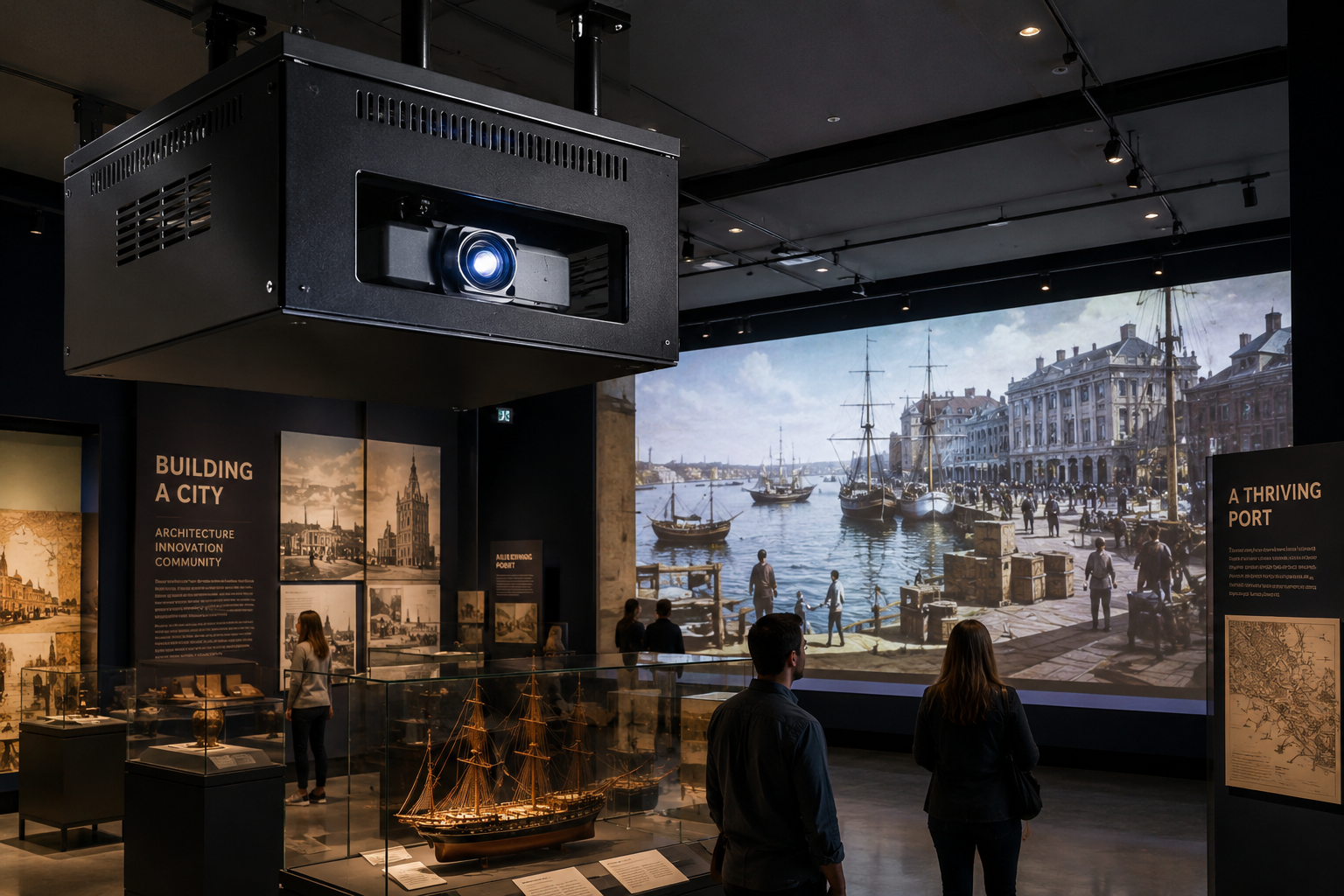
SSI Defender Series style climate controlled projector enclosure protecting an outdoor home theatre projector from heat and humidity.

Climate controlled projector enclosures help outdoor home theatre projectors survive two of the biggest backyard enemies: heat and humidity. A projector can produce a beautiful image on an outdoor screen, but it still depends on stable airflow, clean internal components, and safe electronics.

That becomes a challenge outside.

During the day, a patio or pergola can trap heat. Then, after sunset, the air cools quickly and moisture can collect around exposed surfaces. Meanwhile, humidity, dust, insects, pollen, and rain can all work their way into an unprotected projector setup.

Because of that, homeowners who want a permanent outdoor theatre should treat projector protection as part of the system, not as an accessory.


Why Heat Is a Serious Problem for Outdoor Projectors

Projectors generate heat while they operate. In a normal indoor room, the projector uses its internal fans to move that heat away from the lamp, laser engine, imaging components, and electronics.

However, outdoor installations add another layer of stress.

A projector may sit under a patio roof, inside a cabinet, near a hot wall, or above an outdoor kitchen area. As a result, the surrounding air can already be warm before the projector even turns on. If the projector does not get enough airflow, the system has to work harder to stay cool.

Over time, excess heat can reduce performance, shorten component life, and increase shutdown risk. Therefore, a projector enclosure should not simply “hide” the projector. It needs to help manage the environment around it.


Why Humidity Creates Long-Term Risk

Humidity can be just as damaging as heat. Outdoor home theatres often operate at night, which is exactly when moisture levels can rise. In addition, poolside patios, coastal homes, lakeside properties, and shaded backyards can create damp conditions around AV equipment.

Humidity can contribute to several problems:

  • Moisture exposure near electronics
  • Corrosion risk over time
  • Lens fogging or optical clarity issues
  • Internal dust sticking to damp surfaces
  • Mold or mildew concerns in poorly ventilated spaces
  • Condensation during temperature swings

So, while rain may look like the obvious problem, humidity often creates the quieter long-term issue.


How Climate Controlled Enclosures Help

A climate controlled projector enclosure creates a protected operating zone around the projector. Instead of leaving the projector exposed to the backyard environment, the enclosure adds a purpose-built barrier with environmental management.

The Defender Series from ProjectorEnclosure.com is designed for outdoor and harsh-environment installations. The current ProjectorEnclosure.com climate controlled enclosure page describes the Defender Series as combining weather-resistant construction, insulation, secure access, active climate control, and service-friendly design for demanding projector locations.

That matters because a backyard theatre is not always “mild” just because it is residential. A luxury patio may still see high heat, rain, humidity, dust, insects, and seasonal temperature swings.


Climate Control vs. Basic Ventilation

Basic ventilation moves air. Climate control goes further.

For some mild covered installs, a fan-cooled enclosure may provide enough airflow and equipment protection. However, when the projector faces real outdoor exposure, heat, humidity, cold, or changing weather, climate control becomes the stronger choice.

ProjectorEnclosure.com specifically recommends climate controlled projector enclosures for outdoor, harsh, humid, cold, hot, or permanent installations, while fan-cooled enclosures are better suited for indoor or mild-environment applications.

In other words, if the projector will live outside, climate control usually makes more sense than a simple vented box.


The Backyard Home Theatre Problem: Day Heat, Night Moisture

Outdoor theatres face a unique cycle.

During the day, the enclosure may sit in hot air, indirect sun, or a covered patio where heat builds up. Then, at night, the projector turns on for movies, sports, or gaming. Finally, as the system cools after use, moisture can collect in the surrounding environment.

This cycle repeats again and again.

Because of that, homeowners should choose an enclosure based on total environmental exposure, not just movie-night conditions. The projector needs protection when it runs and when it sits idle.

A climate controlled enclosure helps solve that problem by supporting a more stable equipment environment throughout the full day.


Ideal Outdoor Home Theatre Locations for Climate Controlled Enclosures

Climate controlled projector enclosures work especially well in outdoor theatre setups such as:

  • Poolside projection systems
  • Covered patios
  • Pergola-mounted projector installs
  • Outdoor kitchens with viewing areas
  • Lakeside or coastal homes
  • Hot-weather backyard cinemas
  • Humid climates
  • Permanent sports viewing patios
  • Seasonal projection mapping setups
  • Luxury outdoor living spaces

Additionally, these enclosures help homeowners keep the projector installed and ready instead of setting it up and taking it down every time.

That convenience becomes a big deal. A backyard theatre gets used more often when it is easy to turn on.


What Homeowners Should Check Before Buying

Before choosing a climate controlled enclosure, collect the projector and site information first. This step helps avoid fitment issues and ensures the enclosure can support the installation properly.

Send these details when requesting a recommendation:

  • Projector make and model
  • Lens model
  • Projector body dimensions
  • Total projector depth with lens
  • Power draw
  • Mounting location
  • Screen location
  • Throw distance
  • Expected heat and humidity conditions
  • Exposure level: covered, semi-covered, or fully exposed
  • Access direction for service
  • Preferred finish or color

ProjectorEnclosure.com requests this type of information so SSI can review fitment, airflow, climate requirements, lens clearance, service access, and enclosure direction before quoting.


Why This Matters for Premium Outdoor Theatres

A premium outdoor theatre should feel effortless. Guests should see a clean screen, strong image, comfortable seating, and a reliable system. They should not see someone dragging a projector out of storage, fighting cables, wiping moisture off equipment, or hoping the weather behaves.

A climate controlled enclosure helps turn the projector into part of the architecture.

It can mount under a patio, on a structure, near a projection wall, or in a custom location that fits the backyard design. As a result, the theatre feels intentional, clean, and ready to use.

More importantly, it protects the investment behind the image.


Final Takeaway

Heat and humidity can quietly damage an outdoor projector setup. However, the right enclosure can help protect the projector, support stable operation, and make a permanent backyard theatre far more practical.

For outdoor home theatres, climate controlled projector enclosures offer a smarter path than basic covers or DIY boxes. They protect against the real environmental problems that happen before, during, and after movie night.

Call 888-631-5880 or visit ProjectorEnclosure.com to review the right Defender Series enclosure for your projector and outdoor theatre layout.


Sources

ProjectorEnclosure.com — Climate Controlled Projector Enclosures
https://projectorenclosure.com/climate-controlled-projector-enclosures/

ProjectorEnclosure.com — The Defender Series Enclosures
https://projectorenclosure.com/store/the-defender-series-enclosures/

ProjectorEnclosure.com — Projector Enclosures Overview
https://projectorenclosure.com/projector-enclosures/

ProjectorEnclosure.com — 5 Questions to Ask Before Choosing a Projector Enclosure
https://projectorenclosure.com/choosing-outdoor-enclosure/

ProjectorEnclosure.com — Climate Controlled Enclosures Blog
https://projectorenclosure.com/climate-controlled-enclosures/

U.S. EPA — Moisture Control Guidance
https://www.epa.gov/sites/default/files/2014-08/documents/moisture-control.pdf

Element14 — How Sunlight, Humidity, and Moisture Affect Electronics
https://community.element14.com/learn/learning-center/the-tech-connection/b/blog/posts/how-do-sunlight-humidity-and-moisture-affect-electronics

BenQ — Projector Guidance on Dust and Humidity
https://www.benq.com/en-us/knowledge-center/knowledge/what-can-you-do-to-protect-your-school-projectors-from-dust.html
Read more

Fan-Cooled vs. Climate-Controlled Projector Enclosure

Fan-Cooled vs. Climate-Controlled Projector Enclosures

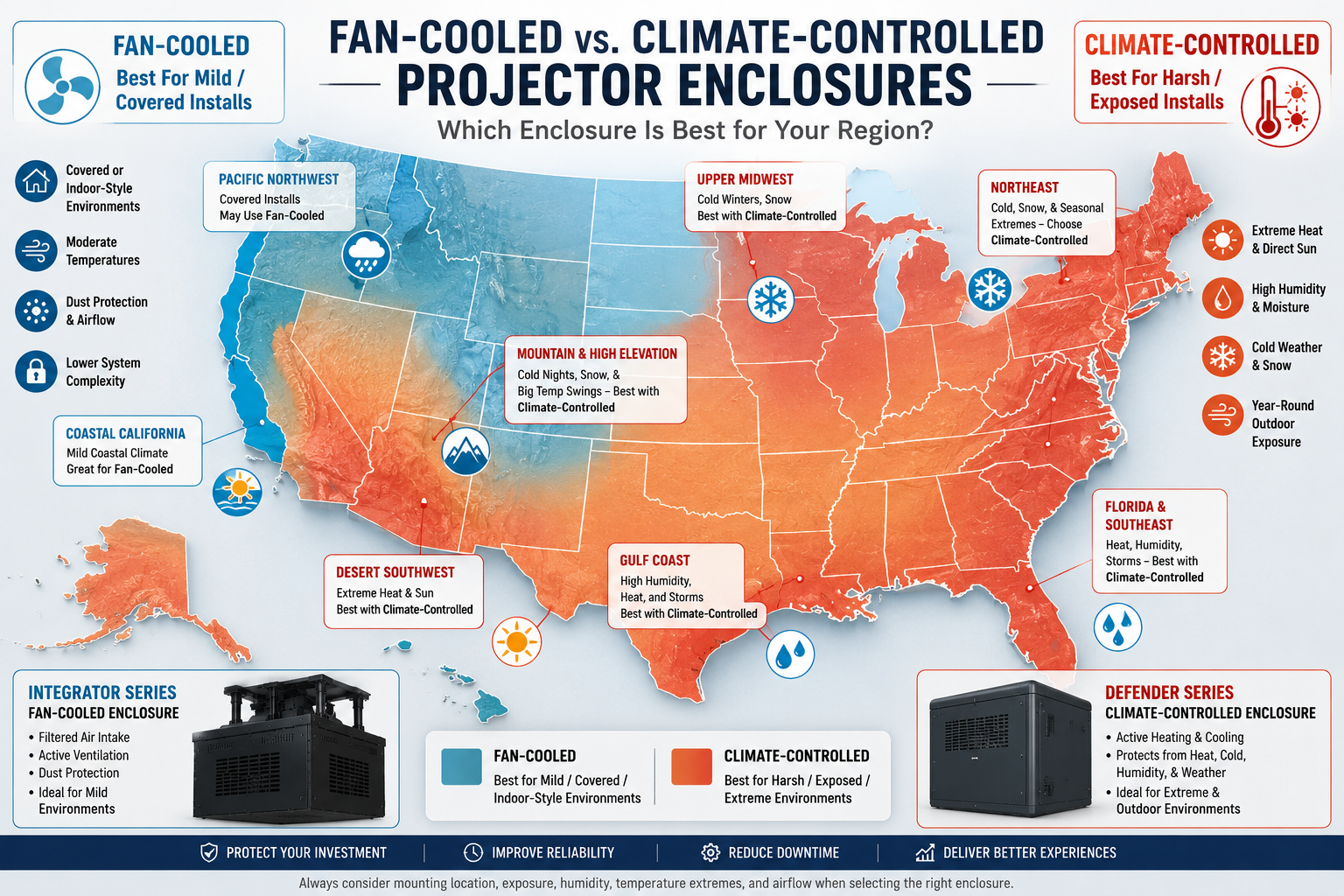
U.S. map showing where fan-cooled and climate-controlled projector enclosures are best suited by region.

Fan-Cooled vs. Climate-Controlled Projector Enclosures

Choosing between fan-cooled vs climate-controlled projector enclosures depends on where the projector will be installed, how much weather exposure it will face, and what climate conditions are common in that region. A fan-cooled enclosure works best in mild, covered, or indoor-style environments. A climate-controlled enclosure works better in harsh, humid, hot, cold, or fully exposed outdoor locations.

At first glance, the choice may seem simple. However, the right enclosure depends on both the region and the installation conditions. Some parts of the country deal with heat. Others deal with humidity, snow, salt air, or large temperature swings. Because of that, the same projector may need different protection in California, Florida, Arizona, Minnesota, or New York.

Some parts of the country deal with heat. Others deal with humidity. Some regions face snow, freezing nights, or wind-driven dust. Meanwhile, a few areas stay mild enough that a simpler fan-cooled design may be the better fit.

So, if you are trying to decide which type of enclosure makes the most sense, this guide breaks it down clearly.


What Is a Fan-Cooled Projector Enclosure?

A fan-cooled projector enclosure protects the projector while using filtered ambient air and active ventilation to help remove heat.

In simple terms, it gives the projector a protective housing without adding full internal heating and cooling control.

ProjectorEnclosure.com positions fan-cooled enclosures as a strong fit for mild environments and explains that the Integrator Series brings in filtered air and exhausts hot air from the enclosure. Screen Solutions International also positions the Integrator Series as its fan-cooled enclosure line.
URL: https://projectorenclosure.com/fan-cooled-projector-enclosures/
URL: https://projectorenclosure.com/
URL: https://ssidisplays.com/product/integrator-series-2/

Because of that, fan-cooled enclosures usually make the most sense when the projector is in a covered, semi-protected, or indoor-style environment where the main goals are:

  • Dust protection
  • Airflow support
  • Basic security
  • Cleaner installation
  • Lower complexity than a full climate-controlled system

What Is a Climate-Controlled Projector Enclosure?

A climate-controlled projector enclosure does more than protect the projector from dust and contact. It also helps actively manage the environment inside the enclosure.

That matters when the projector faces heat, cold, humidity, rain, snow, or year-round outdoor exposure.

ProjectorEnclosure.com explains that climate-controlled enclosures are built for more demanding environments, while Screen Solutions International positions the Defender Series as its climate-controlled enclosure line for hot, cold, and humid conditions.
URL: https://projectorenclosure.com/climate-controlled-projector-enclosures/
URL: https://projectorenclosure.com/fan-cooled-vs-climate-controlled/
URL: https://ssidisplays.com/product/defender-series/

As a result, climate-controlled enclosures usually make more sense when the projector is in a true outdoor environment or in a location with weather extremes.


The Core Difference

The easiest way to understand the difference is this:

Fan-Cooled Enclosures

Best for mild, covered, or controlled environments where the projector mainly needs airflow, dust protection, and security.

Climate-Controlled Enclosures

Best for harsh, exposed, or extreme environments where the projector needs help dealing with heat, cold, humidity, or full outdoor weather.

That said, geography matters. However, installation conditions matter just as much.

For example, a fan-cooled enclosure may work well in a covered patio in California. On the other hand, the same enclosure may not be the right choice for an exposed rooftop in Arizona or a year-round outdoor install in Minnesota.


Why Climate and Weather Matter

Projectors create heat. They also depend on airflow and ventilation.

Epson explains that blocked ventilation and clogged air filters can contribute to overheating. In addition, the National Weather Service explains that heat index combines air temperature and humidity, which means outdoor conditions can feel hotter than the actual temperature. NOAA’s U.S. Climate Normals also provide long-term climate averages that help illustrate how different U.S. regions experience very different conditions over time.
URL: https://epson.com/faq/SPT_V11H335120~faq-150403
URL: https://www.weather.gov/safety/heat-tools
URL: https://www.ncei.noaa.gov/products/land-based-station/us-climate-normals

That matters because a projector enclosure does not live in a vacuum. It lives in the real world.

So, if the enclosure sits in a location with:

  • long summer heat,
  • high humidity,
  • freezing winters,
  • wind-blown dust, or
  • direct outdoor exposure,

then a climate-controlled enclosure often becomes the safer long-term choice.


Best U.S. Regions for Fan-Cooled Enclosures

A fan-cooled projector enclosure is usually best in milder regions or in protected locations within those regions.

1. Coastal Southern California

Cities like San Diego, Santa Barbara, Irvine, Newport Beach, and many coastal Los Angeles areas often benefit from relatively mild coastal weather.

Therefore, fan-cooled enclosures can work well in:

  • covered patios
  • outdoor home theaters under cover
  • restaurant patios with roof structures
  • indoor golf simulators
  • covered church or event spaces
  • showrooms and experience centers

However, inland desert-adjacent zones in California can become much hotter. So, location still matters.

2. Coastal Northern California

The Bay Area, Marin, Monterey, and other coastal Northern California regions often see more moderate temperatures than inland California.

As a result, fan-cooled enclosures can work well in covered or semi-protected installations, especially when the projector is not exposed to direct rain or harsh sun.

3. Pacific Northwest Mild Covered Installs

Parts of western Washington and western Oregon can support fan-cooled enclosures when the install is under cover and protected from direct moisture.

For example, a projector in a covered outdoor hospitality space in Seattle or Portland may still be a fan-cooled candidate if the enclosure is shielded well from rain.

However, because the region sees frequent moisture, many year-round outdoor installs may still need climate control.

4. Temperate Indoor/Outdoor Hybrid Spaces in the Mid-Atlantic

Parts of the Mid-Atlantic, especially in covered hospitality, retail, or residential applications, can still work with fan-cooled systems when the projector is shielded from direct weather.

This can apply in areas like:

  • Northern Virginia
  • Maryland
  • parts of North Carolina
  • parts of Tennessee

Still, once humidity or outdoor exposure increases, climate-controlled becomes more attractive.

5. Indoor Applications Nationwide

This is important: fan-cooled enclosures are not limited to mild coastal states.

In fact, many indoor or covered indoor-style installations anywhere in the U.S. can use fan-cooled enclosures, including:

  • museums
  • classrooms
  • churches
  • corporate rooms
  • retail spaces
  • golf simulators
  • fitness studios
  • event venues

So, even in a hot or cold state, a fan-cooled enclosure may still work indoors or in a protected environment.


Best U.S. Regions for Climate-Controlled Enclosures

A climate-controlled projector enclosure is usually the better choice in regions with significant environmental stress or in fully exposed outdoor installations.

1. Florida and the Southeast

Florida, coastal Georgia, coastal South Carolina, Alabama, Mississippi, Louisiana, and much of the Gulf Coast often deal with high humidity, heat, storms, and moisture.

Because of that, climate-controlled enclosures are often the safer option for:

  • outdoor attractions
  • church courtyards
  • exposed patios
  • poolside installs
  • theme park environments
  • open-air hospitality spaces

Humidity is a major reason. EPA moisture guidance also reinforces how damp environments can create problems for enclosed spaces and materials.
URL: https://www.epa.gov/mold/mold-course-chapter-2

2. Desert Southwest

Arizona, Nevada, inland Southern California, New Mexico, and west Texas often face extreme heat and intense sun exposure.

Therefore, if the enclosure is outside or even semi-exposed, climate-controlled usually makes more sense.

This is especially true in places like:

  • Phoenix
  • Scottsdale
  • Las Vegas
  • Palm Springs
  • Tucson

A covered install may still allow a fan-cooled option in some cases. However, year-round outdoor exposure in these climates often pushes the project toward climate control.

3. Upper Midwest and Northern Plains

Minnesota, Wisconsin, North Dakota, South Dakota, Michigan, and parts of Illinois often face freezing winters, snow, wind, and major seasonal swings.

Because of that, a climate-controlled enclosure is often the safer choice for any projector that stays outside or in a non-conditioned space.

4. Northeast

New York, New Jersey, Pennsylvania, Massachusetts, Connecticut, Rhode Island, Vermont, New Hampshire, and Maine often deal with cold winters, snow, and strong seasonal changes.

As a result, an exposed outdoor projector in the Northeast usually needs climate control rather than basic fan cooling.

5. Mountain and High-Elevation Regions

Colorado, Utah, Idaho, Montana, Wyoming, and mountain resort regions often bring cold nights, snow, elevation-related temperature swings, and strong weather variation.

Therefore, outdoor projection in these areas often benefits from a climate-controlled enclosure.


A Simple Rule of Thumb by Region

Here is the easiest way to think about it:

Fan-Cooled Usually Fits Best In:

  • Mild coastal California
  • Some covered Pacific Northwest installs
  • Covered Mid-Atlantic installs
  • Covered hospitality and residential spaces in temperate areas
  • Indoor installations almost anywhere

Climate-Controlled Usually Fits Best In:

  • Florida and the Gulf Coast
  • The humid Southeast
  • The Desert Southwest
  • The Upper Midwest
  • The Northeast
  • Mountain and snow-prone regions
  • Any exposed year-round outdoor install almost anywhere

Exposure Matters More Than Zip Code

This point is worth repeating.

A projector’s exact mounting condition can matter more than the city name.

For example:

  • A covered patio projector in San Diego may work well with fan cooling.
  • An exposed rooftop projector in San Diego may still need climate control.
  • An indoor museum projector in Phoenix may work fine with fan cooling.
  • An outdoor façade projector in Phoenix may absolutely need climate control.

So, geography gives you a starting point. However, the final decision should also consider:

  • direct weather exposure
  • sun exposure
  • humidity
  • daily operating hours
  • indoor vs. outdoor mounting
  • airflow around the enclosure
  • whether the install is seasonal or year-round

Fan-Cooled Advantages

When the application fits, fan-cooled enclosures offer real advantages.

Simpler System

First, they are typically simpler than full climate-controlled units.

Great for Mild Environments

Next, they work very well in mild, covered, or indoor-style installations.

Clean and Professional Look

Also, they still provide a clean, secure, and professional enclosure appearance.

Good Fit for Many Common Projects

Finally, they work well for many common installs such as:

  • covered patios
  • indoor golf simulators
  • retail displays
  • schools
  • churches
  • corporate AV spaces
  • museums
  • event venues

Climate-Controlled Advantages

Climate-controlled enclosures also offer clear advantages when the environment demands more protection.

Better for Harsh Weather

First, they are better suited to heat, humidity, cold, rain, and snow.

Stronger Year-Round Outdoor Protection

Next, they make more sense for true outdoor installations that stay in place all year.

More Confidence in Difficult Climates

Also, they provide better peace of mind in regions where weather changes quickly or becomes extreme.

Better Fit for Exposed Installs

Finally, they are usually the safer choice for exposed:

  • rooftops
  • outdoor attractions
  • open courtyards
  • pool areas
  • façade projection systems
  • exterior hospitality installs

Which One Should You Choose?

If your projector will live in a mild, covered, or indoor-style environment, a fan-cooled projector enclosure is often the right choice.

If your projector will live in a harsh, humid, hot, cold, or exposed outdoor environment, a climate-controlled projector enclosure is usually the better long-term move.

In short:

  • Choose fan-cooled when the space is protected and the weather is manageable.
  • Choose climate-controlled when the space is exposed or the climate is demanding.

Final Takeaway

A fan-cooled projector enclosure and a climate-controlled projector enclosure both protect projector equipment, but they do different jobs.

Fan-cooled enclosures are usually best for mild regions, covered installs, and indoor-style environments. Climate-controlled enclosures are usually best for harsh climates, humid areas, hot desert zones, cold northern regions, and exposed year-round outdoor installations.

Most importantly, the best enclosure choice depends on both the region and the exact installation conditions.

If you want help choosing between a fan-cooled Integrator enclosure and a climate-controlled Defender enclosure for your location, contact ProjectorEnclosure.com or Screen Solutions International at 888-631-5880.


Sources

  1. ProjectorEnclosure.com — Fan-Cooled vs. Climate-Controlled
    URL: https://projectorenclosure.com/fan-cooled-vs-climate-controlled/
    Used for comparing fan-cooled and climate-controlled enclosure applications.
  2. ProjectorEnclosure.com — Fan-Cooled Projector Enclosures
    URL: https://projectorenclosure.com/fan-cooled-projector-enclosures/
    Used for fan-cooled enclosure positioning in mild environments.
  3. ProjectorEnclosure.com — Climate-Controlled Projector Enclosures
    URL: https://projectorenclosure.com/climate-controlled-projector-enclosures/
    Used for climate-controlled enclosure positioning in more demanding environments.
  4. ProjectorEnclosure.com — Home Page
    URL: https://projectorenclosure.com/
    Used for fan-cooled filtered air intake and hot-air exhaust positioning.
  5. Screen Solutions International — Projector Enclosures
    URL: https://ssidisplays.com/projector-enclosures/
    Used for SSI’s enclosure lineup, including Integrator fan-cooled and Defender climate-controlled models.
  6. Screen Solutions International — Integrator Series
    URL: https://ssidisplays.com/product/integrator-series-2/
    Used for fan-cooled Integrator Series product positioning.
  7. Screen Solutions International — Defender Series
    URL: https://ssidisplays.com/product/defender-series/
    Used for climate-controlled Defender Series product positioning.
  8. 2025 Updated Enclosure Price Sheet — Screen Solutions International
    Uploaded PDF in this chat.
    Used for visual reference of the Integrator Series fan-cooled enclosure likeness and the overall enclosure family context.
  9. Epson — Air Filter and Vent Cleaning FAQ
    URL: https://epson.com/faq/SPT_V11H335120~faq-150403
    Used for ventilation, air filter, and overheating guidance.
  10. National Weather Service — Heat Forecast Tools
    URL: https://www.weather.gov/safety/heat-tools
    Used for heat index guidance and heat/humidity context by region.
  11. NOAA NCEI — U.S. Climate Normals
    URL: https://www.ncei.noaa.gov/products/land-based-station/us-climate-normals
    Used for long-term climate context across U.S. regions.
  12. EPA — Mold Course, Chapter 2
    URL: https://www.epa.gov/mold/mold-course-chapter-2
    Used for moisture and damp-environment context relevant to humid regions.
Read more

Fan Cooled Projector Enclosure for Reliable Projector Protection

Fan Cooled Projector Enclosure for Reliable Projector Protection

Fan cooled projector enclosure protecting a commercial projector in a professional indoor installation

A fan cooled projector enclosure is one of the most practical ways to protect a projector when the installation does not require full air conditioning or heating. For indoor spaces, covered outdoor areas, mild environments, schools, churches, museums, retail displays, corporate lobbies, and event venues, fan-cooled enclosures offer a clean, simple, and cost-effective protection solution.

Instead of leaving a projector exposed to dust, heat buildup, accidental damage, or unwanted access, the enclosure creates a dedicated housing around the projector while still allowing the system to breathe. The goal is simple: keep the projector cooler, cleaner, safer, and easier to install.

Why Fan Cooled Projector Enclosures Matter

Projectors generate heat. They also pull in air, which means they can collect dust, debris, and contaminants over time. In a clean office or controlled indoor room, that may not seem like a major issue at first. But in real-world installations, projectors are often installed in spaces with foot traffic, event activity, HVAC airflow, airborne dust, or limited service access.

A fan cooled projector enclosure helps solve these problems by using filtered ambient air to help cool the projector while exhausting warm air out of the enclosure. This helps reduce heat buildup and keeps the projector operating in a cleaner, more controlled environment.

ProjectorEnclosure.com’s fan-cooled Integrator Series is built around this exact use case, with features such as thermostatic cooling, built-in air filters, internal outlets, integrated dual breakers, AV cable passthroughs, security locks, powder-coated metal construction, and a large projection window.

Best Applications for Fan Cooled Projector Enclosures

Fan-cooled enclosures are ideal for locations where the projector needs protection, but the environment is not extreme enough to require a fully climate-controlled enclosure.

Common applications include:

1. Churches and Worship Spaces

Many churches use projectors for lyrics, announcements, sermon visuals, and livestream support. A fan cooled projector enclosure helps protect the projector from dust, ceiling debris, and accidental access while keeping the install clean and professional.

2. Schools and Universities

Classrooms, auditoriums, gyms, and lecture halls can be tough on AV equipment. A projector mounted in an exposed location can be vulnerable to dust, tampering, sports balls, or general wear. A fan-cooled enclosure adds a layer of protection without overcomplicating the installation.

3. Museums and Exhibits

Museums often use projection for immersive exhibits, storytelling rooms, historical displays, and interactive environments. A fan cooled projector enclosure is especially useful when the projector needs to run for long hours while staying hidden, protected, and serviceable.

4. Retail and Brand Displays

Retail projection can be used for window displays, seasonal promotions, product launches, and branded environments. Fan-cooled enclosures help protect the projector in public-facing areas where security and clean presentation matter.

5. Corporate Lobbies and Experience Centers

Projection is increasingly used in corporate lobbies, innovation centers, and branded presentation rooms. A fan-cooled enclosure allows the projector to be integrated into the space without leaving expensive equipment exposed.

When to Choose Fan Cooled vs. Climate Controlled

A fan-cooled projector enclosure is best for mild environments where filtered airflow is enough to manage heat. If the projector will be exposed to harsh weather, extreme heat, freezing temperatures, moisture, or major outdoor temperature swings, a climate-controlled enclosure is usually the better choice.

ProjectorEnclosure.com separates these categories clearly: fan-cooled enclosures are designed to bring in filtered ambient air and exhaust hot air, while Defender climate-controlled enclosures are designed for harsher outdoor conditions with insulation, air conditioning, heating, and weather-focused protection.

In plain English:

Choose fan cooled when the space is indoor, semi-protected, mild, or covered.
Choose climate controlled when the projector is exposed to serious outdoor conditions.

Key Features to Look For

A good fan cooled projector enclosure should not just be a metal box with a fan. It should be designed as a real AV installation product.

Important features include:

Thermostatic Cooling
The enclosure should help control airflow based on heat conditions inside the unit.

Built-In Air Filters
Filters help reduce dust and debris entering the projector area.

Security Locking
Public and commercial installs need protection from tampering or unauthorized access.

Internal Power Access
Built-in outlets and breakers make the installation cleaner and easier to manage.

Cable Passthroughs
AV and power cables should pass through the enclosure cleanly without leaving the projector exposed.

Optically Clear Projection Window
The projector needs a clear projection path without degrading the image.

Powder-Coated Metal Construction
A durable metal body helps the enclosure stand up to commercial use.

The Integrator Series fan-cooled enclosure line includes multiple standard sizes, with small, medium, and large options listed on ProjectorEnclosure.com. Standard colors include black and white, with custom colors available.

Why This Matters for Long-Term Projector Performance

A projector is not just a display device. It is an investment. For commercial spaces, it may also be part of a larger visitor experience, presentation system, exhibit, worship service, or branded environment. If the projector overheats, collects too much dust, or becomes damaged, the entire experience suffers.

A fan cooled projector enclosure helps reduce risk by giving the projector a dedicated protective housing. It improves the installation visually, adds security, supports airflow, and helps keep the system cleaner over time.

That means fewer headaches, fewer exposed components, and a more professional finished install.

Final Takeaway

A fan cooled projector enclosure is the right choice for many indoor and mild outdoor projection projects. It gives your projector the protection it needs without the added complexity of full climate control. For schools, churches, museums, retail spaces, event venues, corporate lobbies, and other commercial environments, it is a smart way to protect the equipment and improve the overall installation.

Need help choosing the right enclosure size for your projector? Contact ProjectorEnclosure.com at 888-631-5880 and our team can help match your projector, lens, environment, and mounting requirements to the right enclosure solution.

<h2>Sources</h2>
<ul>
<li><a href="https://projectorenclosure.com/fan-cooled-projector-enclosures/">ProjectorEnclosure.com — Fan-Cooled Integrator Projection Enclosures</a></li>
<li><a href="https://projectorenclosure.com/">ProjectorEnclosure.com — Projector Enclosures Home Page</a></li>
<li><a href="https://projectorenclosure.com/projector-enclosures/">ProjectorEnclosure.com — Projector Enclosures Overview</a></li>
<li><a href="https://projectorenclosure.com/climate-controlled-projector-enclosures/">ProjectorEnclosure.com — Climate-Controlled Projector Enclosures</a></li>
<li><a href="https://projectorenclosure.com/choosing-the-right-projector-enclosure/">ProjectorEnclosure.com — Choosing the Right Projector Enclosure for Indoor vs. Outdoor Jobs</a></li>
<li><a href="https://projectorenclosure.com/fan-cooled-vs-climate-controlled/">ProjectorEnclosure.com — Fan-Cooled vs. Climate-Controlled</a></li>
<li><a href="https://files.support.epson.com/docid/cpd5/cpd59255/source/maintenance/concepts/maint_projector_laser.html">Epson — Projector Maintenance</a></li>
<li><a href="https://epson.com/faq/SPT_V11H119020~faq-34723">Epson — How Should I Clean the Air Filter and Vents?</a></li>
<li><a href="https://www.epson.eu/en_EU/faq/KA-01509/contents">Epson Europe — Projector Air Filter Cleaning FAQ</a></li>
</ul>
Read more

⚖️ Fan-Cooled vs. Climate-Controlled: Which Projector Enclosure Is Right for Your Project?

Meta Description:
Not sure whether to choose a fan-cooled or climate-controlled projector enclosure? This guide compares both to help you select the right one for your next AV job.


🎯 Introduction: The Right Protection = Reliable Projection

Every projector enclosure has a job to do—protect valuable AV gear from environmental damage.

But should you go with a fan-cooled system or invest in a full climate-controlled solution?

The answer depends on your environment, duration, projector specs, and budget. Below, we’ll break it all down so you can make the right call for your install—whether it’s a mobile rig or a permanent outdoor display.


🔄 Quick Definitions

🔹 Fan-Cooled Enclosure

A rugged, ventilated projector housing with active fan systems to manage heat. Ideal for indoor installs or short-term outdoor events in mild conditions.

🔹 Climate-Controlled Enclosure

A sealed, all-weather projector box with integrated heating, cooling, and humidity regulation. Designed for long-term outdoor exposure and extreme climates.


📊 Side-by-Side Comparison

FeatureFan-Cooled EnclosureClimate-Controlled Enclosure
Best Use CaseIndoor & short-term outdoor setupsLong-term, permanent outdoor installs
Cooling MethodHigh-CFM fansAC units + fans + thermostat control
Heater Included?❌ No✅ Yes (standard or optional)
Humidity Control❌ No✅ Yes
Weight & Size✅ Lightweight & portable❌ Larger & heavier
Installation Type✅ Mobile / rental-friendly⚠️ Fixed or semi-permanent
Budget Level💲 More affordable💲💲 Premium pricing
Common UsersIntegrators, staging/rental crewsTheme parks, stadiums, architectural installs

✅ Choose Fan-Cooled If:

  • You’re working indoors (gyms, auditoriums, conference halls)
  • The event is short-term (hours or a few days)
  • Weather is mild and the enclosure is shaded or protected
  • You need lightweight, fast deployment
  • You want budget-friendly protection for mid-range gear

Recommended Product:
👉 Integrator Fan-Cooled Enclosures – SSIDisplays.com


✅ Choose Climate-Controlled If:

  • You’re installing outdoors for more than a few days
  • There’s exposure to heat, cold, or moisture
  • You’re using high-lumen, high-value projectors
  • Equipment failure could cost thousands in downtime or rework
  • The site has no controlled climate

Recommended Product:
👉 Defender Climate-Controlled Enclosures – SSIDisplays.com


🎤 Real-World Scenarios

SituationRecommended Enclosure
3-day outdoor concert with fair weather✅ Fan-Cooled
Museum projection mapping in winter❄️ Climate-Controlled
Convention stage in a hotel ballroom✅ Fan-Cooled
Rooftop projection for a summer-long public art installation☀️ Climate-Controlled
Touring mobile brand activation✅ Fan-Cooled

💡 Final Thought: Match the Protection to the Project

Just like choosing the right projector, enclosure selection should fit the environment. Over-spec and you burn budget. Under-spec and you risk failure.

With SSI’s lineup, you can mix and match solutions across your installs—and always deliver confident results.


🔗 Call to Action: Get the Perfect Fit for Your Next AV Job

Still not sure which enclosure to choose?
Our AV specialists can help you spec the right gear based on your projector model, climate, and usage.

👉 Reach out now or explore both enclosure lines at SSIDisplays.com

Read more

✅ AV Integrator’s Checklist: Choosing the Right Projector Enclosure for Indoor vs. Outdoor Jobs

Meta Description:
Indoor or outdoor projection? Use this 5-point checklist to choose between fan-cooled and climate-controlled projector enclosures for your next AV install.


🎯 The Right Gear Starts with the Right Protection

As an AV integrator, your job is to make tech seamless—and that starts by keeping expensive projectors safe in whatever environment they’re deployed in.

But not all enclosures are created equal.

The big question:
👉 Fan-cooled or climate-controlled?

This quick checklist will help you figure out when a lightweight fan-cooled enclosure (like SSI’s Integrator Series) is all you need—and when a Defender climate-controlled enclosure is essential.


📋 5 Questions to Guide Your Enclosure Choice


❓ 1. Is the Install Indoors or Outdoors?

Indoor installs (even in dusty or high-traffic areas) typically don’t require full HVAC control.

🟢 Go Fan-Cooled for:

  • Gyms
  • Arenas
  • Convention centers
  • Church auditoriums

🔴 Go Climate-Controlled if outdoors and exposed to:

  • Rain
  • Snow
  • High heat or freezing cold
  • Coastal salt air

❓ 2. How Long Will the Projector Stay On-Site?

🟢 Fan-Cooled is Best for:

  • Events lasting hours or days
  • Temporary rentals or staging setups

🔴 Climate-Controlled is Better for:

  • Permanent installs
  • Any project running year-round outdoors

❓ 3. What Are the Expected Temperatures?

🟢 Use Fan-Cooled in:

  • Controlled environments (65–85°F)
  • Covered areas with shade and airflow

🔴 Use Climate-Controlled if:

  • You’re dealing with extreme heat (90°F+)
  • Freezing temperatures are likely
  • There’s high humidity causing lens fogging or condensation

❓ 4. Will You Need to Relocate or Transport It?

🟢 Fan-Cooled Wins Here:

  • Lighter and easier to transport
  • Ideal for flypacks, touring rigs, and pop-up events

🔴 Climate-Controlled:

  • Heavier, more rugged, designed for fixed installs or long-term deployments

❓ 5. What’s the Value of the Equipment Inside?

If you’re protecting a $3K–$10K projector, it’s worth assessing the cost-risk ratio.

🟢 Fan-Cooled is Great for:

  • Mid-range gear
  • Short-term protection from dust and heat buildup

🔴 Climate-Controlled is Essential when:

  • You’re protecting high-lumen ($15K+) projectors
  • Your gear is irreplaceable during an active event

📊 Quick Comparison: Fan-Cooled vs. Climate-Controlled

FeatureFan-Cooled EnclosureClimate-Controlled Enclosure
Weight✅ Lightweight❌ Heavy-duty
Setup Speed✅ Quick⚠️ Slower
Heat Protection⚠️ Moderate✅ Full HVAC
Cold Protection❌ Not suitable✅ Heated interior
Cost✅ Budget-friendly💲 Premium
Best ForMobile, short-term, indoor/mild outdoorPermanent, all-weather, extreme conditions

🧠 Pro Tip: Use Both in Your Fleet

Smart integrators keep both options on hand:

  • ✅ Fan-cooled for flexibility and fast deployment
  • ✅ Defender for mission-critical installs and outdoor permanence

Let the jobsite decide the gear—not the other way around.


🔗 Call to Action: Build the Right Rig for the Right Environment

Looking for lightweight projector protection for your next AV install?
👉 Browse Integrator Fan-Cooled Enclosures at SSIDisplays.com
Or get a side-by-side quote for both enclosure types.

Read more

🎭 Silence in the Spotlight: Why Every Theater Projection Booth Needs a Hush Enclosure

Learn how Hush Projector Enclosures enhance theatrical performances by eliminating projector noise, ensuring full audience immersion.

Distraction is the Enemy of Drama

In performance venues, silence supports the story. The faint hum of a projector fan in a quiet scene can break immersion and ruin the audience’s connection to a performance. And for tech crews, loud gear can compromise communication and backstage coordination.

Real Risks of Standard Projector Noise:

  • 15–30 dBA projectors are common—but can be heard clearly in dead-quiet theaters
  • According to NASA’s Acoustic Research, humans can detect continuous tones at low frequencies (like fan hums) more easily in silent environments
  • Over time, even low-frequency sound increases perceived “listener fatigue”

Benefits of SSI Hush Enclosures in Theatrical Settings:

  • Silent Operation: Maintains audio purity and audience immersion
  • Thermal & Power Control: Internal power distribution ensures safe operation over long performances
  • Modular Installation: Wall, ceiling, or booth mounts for pro AV integration

Use Case: Black Box Theater AV Upgrade

A small arts venue switched from open-mounted projection to an SSI hush enclosure system. Result: audience complaints about background noise dropped to zero, and actors reported improved concentration during monologues.

CTA:
Make your venue theater-ready with Hush Enclosures. Learn more: projectorenclosure.com/hush-projector-enclosures

Read more