
Understanding Projector Enclosure Total Cost Of Ownership: How to Protect Your AV Investment
For commercial AV installations, the Projector Enclosure Total Cost Of Ownership is a crucial consideration that goes well beyond the sticker price. Whether you’re planning outdoor projection mapping, digital signage, or immersive experiences, choosing the right weatherproof projector housing will have a lasting impact on your bottom line. In this article, we’ll break down the cost components, compare enclosure options, share common mistakes, and explore future trends—helping you make the most informed decision possible with expert guidance from ProjectorEnclosure.com.
The True Components of Projector Enclosure Total Cost Of Ownership
When budgeting for commercial projector enclosures, it’s easy to focus only on the upfront purchase price. Yet, several additional factors determine the true cost over the lifetime of your AV investment:
- Initial Cost: Purchase price of the enclosure and accessories.
- Installation: Labor, mounting systems, and electrical needs may all affect your total.
- Ongoing Maintenance: Filter changes, cooling system upkeep, cleaning, and weather sealing.
- Energy Consumption: Especially for fan-cooled projector enclosures and air-conditioned models.
- Downtime Risk: Poorly protected projectors may suffer from weather, dust, vandalism, or overheating.
- Replacement Schedule: How often will you need to repair or replace equipment?
By investing in professional projector enclosure products, you can save money in the long run while ensuring equipment reliability, image quality, and customer satisfaction.
Comparison of Common Projector Enclosure Types
| Type | Initial Cost | Maintenance | Weather Protection | Expected Lifespan |
|---|---|---|---|---|
| Basic Metal Cage | Low | High | Minimal | 2-3 years |
| Fan-Cooled Projector Enclosure | Moderate | Low | Good | 5-7 years |
| Climate-Controlled Projector Enclosure | High | Very Low | Excellent | 7-10 years |
Choosing models like climate-controlled projector enclosures from ProjectorEnclosure.com may require a higher initial outlay but offer the lowest long-term maintenance and risk.
How ProjectorEnclosure.com Reduces Total Cost Of Ownership
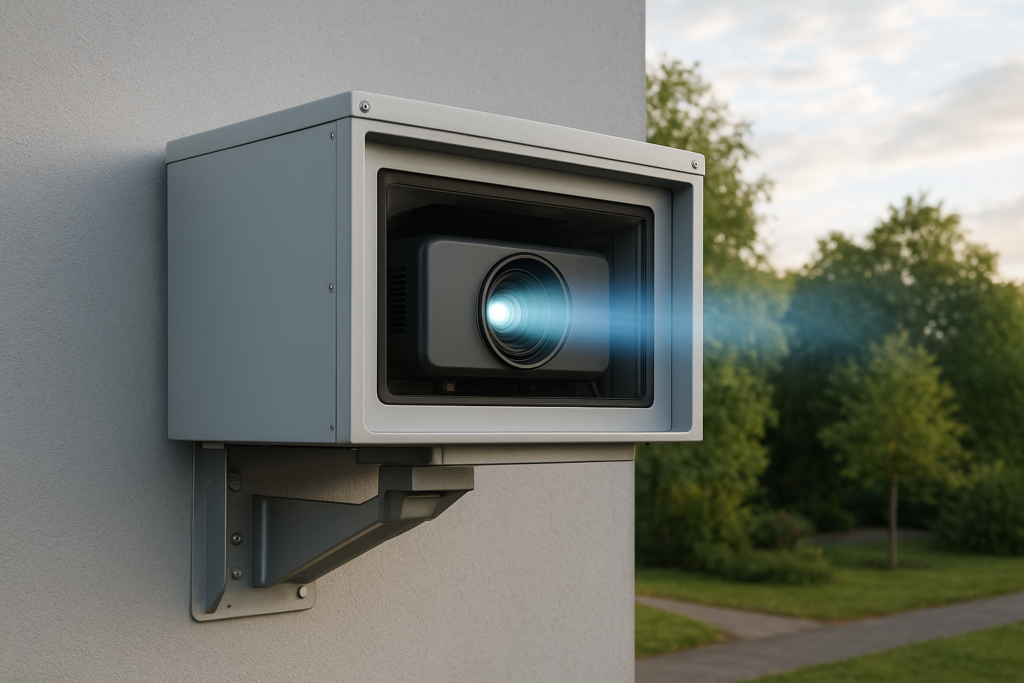
Our team at ProjectorEnclosure.com understands that reliability, service access, and robust protection drive savings over time. By specifying enclosures built for your specific climate and application—whether for outdoor projector enclosures, projection mapping enclosures, or indoor projector enclosures—you ensure maximum projector lifespan and minimal downtime. Features like filtered fan cooling, vandal resistance, and modular maintenance panels further lower operational disruptions.
Additionally, our custom projector enclosures and protective projector cages are designed with the input of AV professionals, providing a perfect fit for even the most challenging environments.
Common Mistakes When Calculating Projector Enclosure Total Cost Of Ownership
- Ignoring Environmental Risk: Underestimating rain, dust, UV, and temperature exposes your projector to early failure.
- Overlooking Maintenance Needs: Skimping on filter replacements or not using filtered systems increases costs later.
- Choosing Only by Price: Low-cost enclosures may lack true weatherproofing, causing expensive repairs.
- Not Factoring Installation: Complicated setups can increase labor costs and the risk of mistakes.
- Missing Support & Warranty: Choosing manufacturers without a proven track record or service support.
For reliable projections and a clear understanding of ownership costs, rely on the projector enclosure experts at ProjectorEnclosure.com for guidance.
Future Trends in Projector Enclosure Design and Cost Efficiency
As AV technology evolves, so too do projector enclosure solutions. Key trends to watch include:
- IoT Remote Monitoring: Integrated sensors will minimize on-site visits and enable predictive maintenance.
- Advanced Modular Designs: Easier upgrades and service access reduce service costs and downtime.
- Improved Energy Efficiency: Smart cooling and climate control lower operational expenses.
- Sustainable Materials: Eco-friendly enclosures help meet green building targets.
- Proliferation of Custom Solutions: More projects will demand custom enclosure designs for unique architectural needs and advanced projection mapping.
To stay at the leading edge, many AV integrators partner with enclosure manufacturers that invest in research and collaborate with industry innovators like SSi Displays.
FAQ: Projector Enclosure Total Cost Of Ownership
- How does a high-quality projector enclosure save money over time?
- By preventing weather, vandalism, and dust-related failures, premium enclosures reduce costly repairs and extend projector lifespan.
- Is a fan-cooled or air-conditioned enclosure right for my project?
- Fan-cooled projector enclosures are best for mild to moderate climates; air-conditioned units are optimal for extremely hot or humid environments.
- What ongoing maintenance is required?
- Regular inspection, filter changes for filtered projector enclosure systems, and cleaning, depending on environmental exposure.
- Can enclosures be customized for unique installations?
- Yes. ProjectorEnclosure.com offers custom enclosure solutions tailored to any installation requirement.
- Where can I get more details or request a quote?
- You can request a projector enclosure quote or call 888-631-5880 to speak with our experienced team directly.
Conclusion: Choose ProjectorEnclosure.com for Proven Value
The Projector Enclosure Total Cost Of Ownership depends on smart choices: robust weatherproof designs, professional installation, and reliable ongoing support. By investing wisely up front, you protect your AV project from hidden costs and maximize return over the enclosure’s entire service life. To learn more about projector enclosure systems, explore our range of professional projector enclosures, or contact our enclosure team today—or call 888-631-5880 for immediate advice from the projector enclosure manufacturer trusted worldwide.