
Planning Outdoor Projector Installations in Miramar, FL: A Practical Guide

PROJECTORENCLOSURE.COM
Miramar, FL · Planning guide

Planning Outdoor Projector Installations in Miramar, FL: A Practical Guide

Discover how Miramar’s heat, humidity, and storms impact outdoor projector installation. This guide covers enclosure selection, mounting, ventilation, and permitting tips.

Understanding Miramar’s Climate and Its Impact on Outdoor Projection

When installing an outdoor projector in Miramar, FL, understanding the local environment is the first step to a sustainable AV setup. With hot summers, soaring humidity, and the looming possibility of hurricanes, outdoor electronics face a unique set of challenges. Projectors, with their delicate optics and sensitive electronics, are especially at risk from weather extremes common in this region.

Direct sun and high summer temperatures can raise the internal temperatures of standard housings far above projector operating limits. Meanwhile, heavy rainfall and storm conditions, especially during hurricane season, subject equipment to water intrusion, wind-blown debris, and extended periods of salt air exposure near the coast. Even if your installation is inland, Miramar’s frequent showers, humidity, and dust accumulation remain ongoing concerns for maintaining image quality and system longevity.

Proactively addressing these environmental stressors is crucial. The right outdoor projector enclosure shields your projector from these extremes. ProjectorEnclosure.com offers several solutions engineered for exactly these local issues, ensuring your technology investment is protected year-round in Miramar’s unique climate.

Choosing the Right Weatherproof Projector Housing

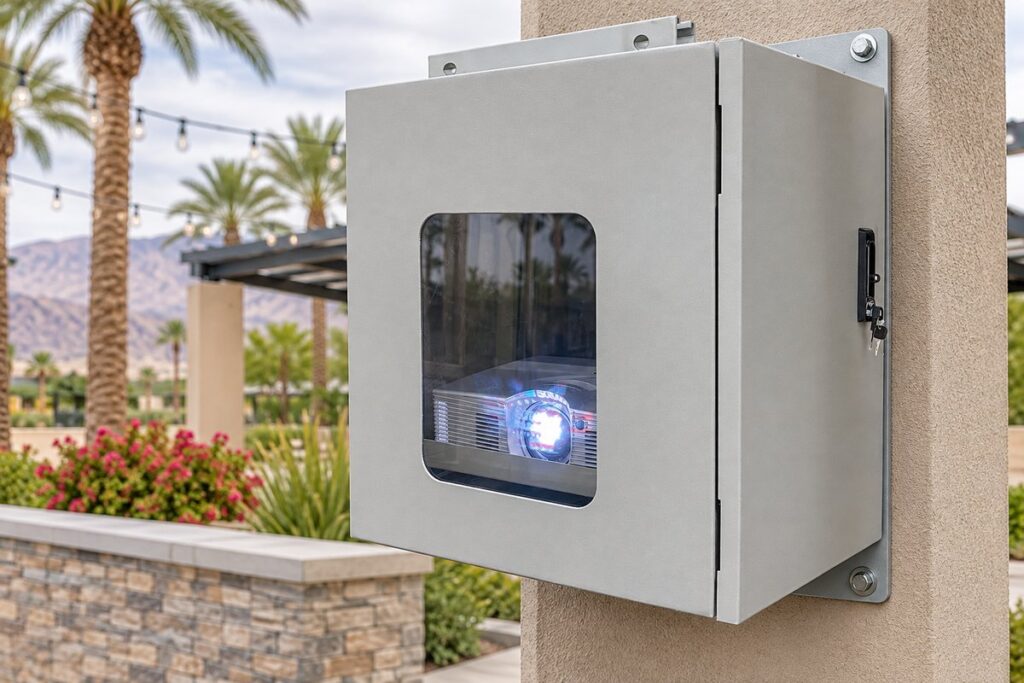
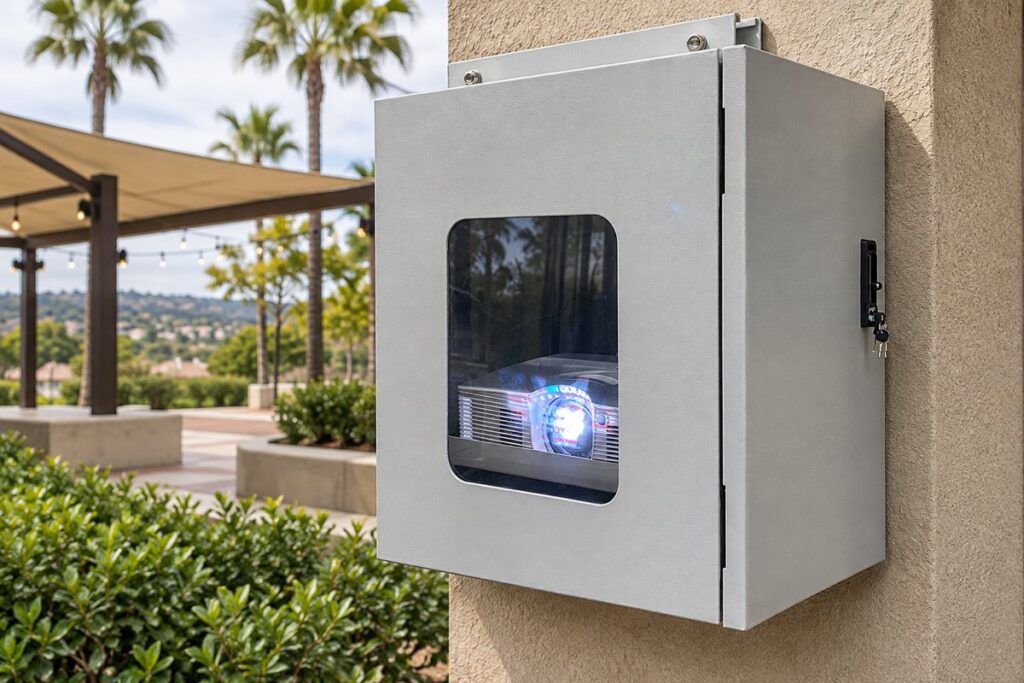
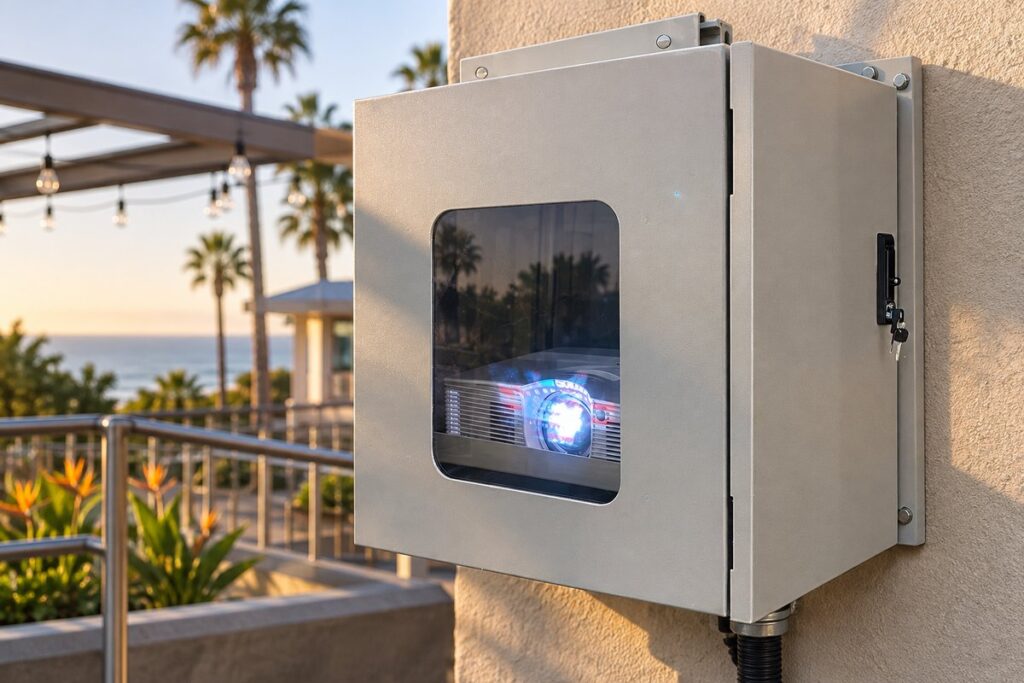
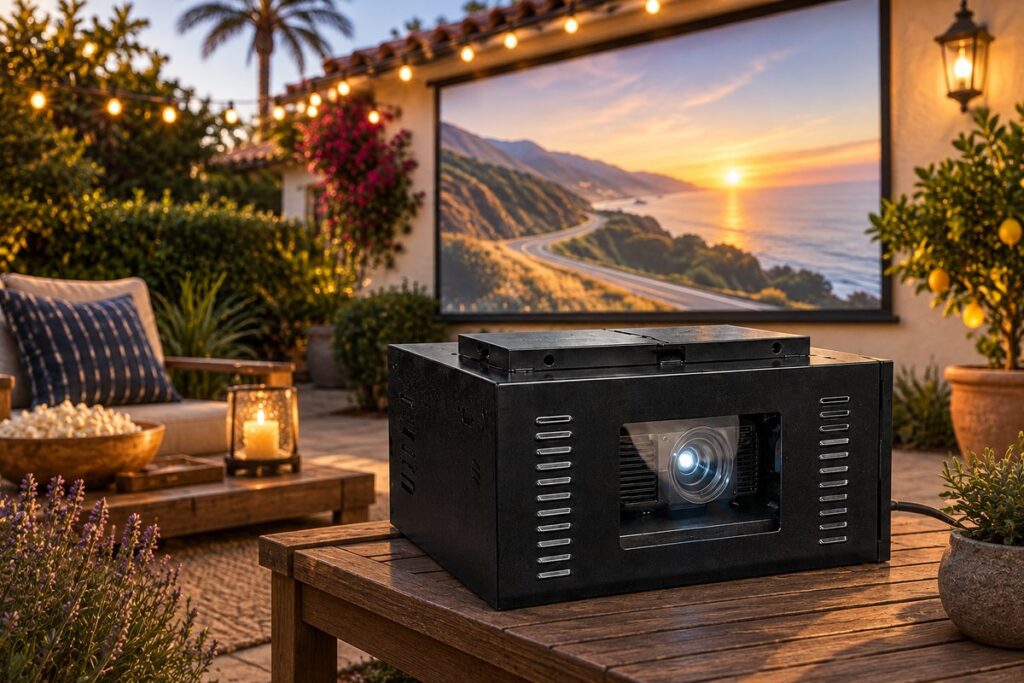
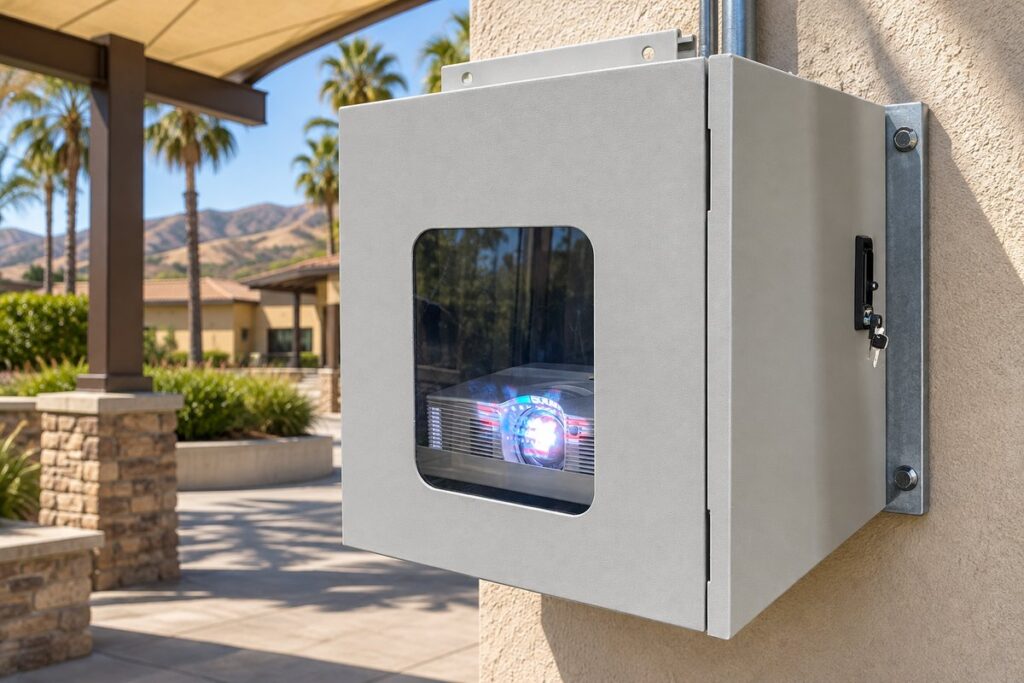
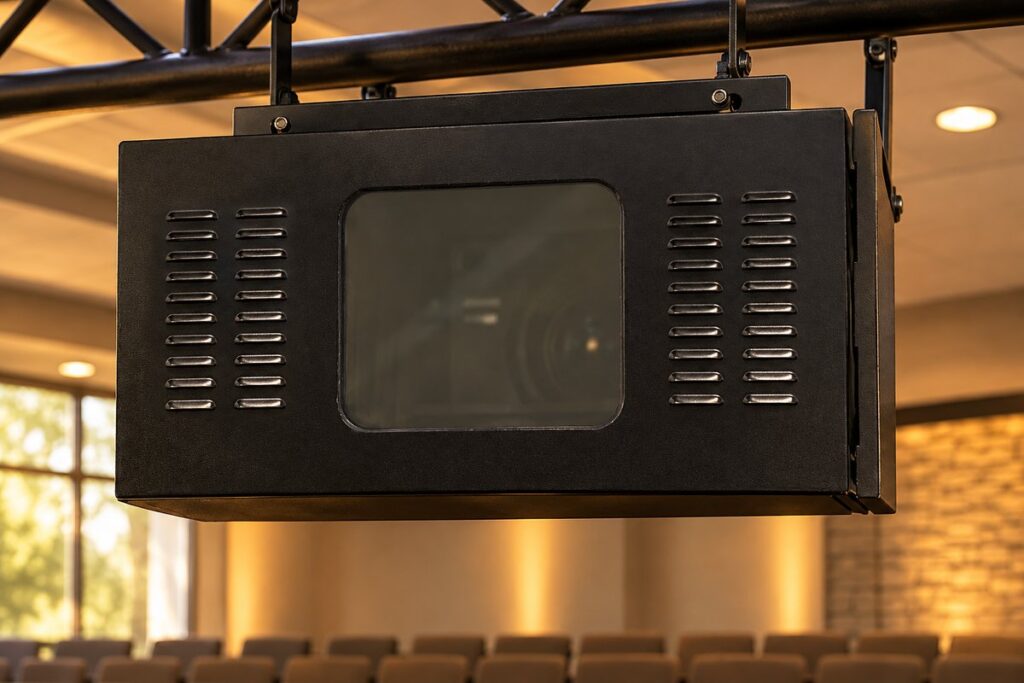
Not all enclosures are created equal, and selecting the proper model starts with understanding your installation environment. For outdoor installations exposed to Miramar’s direct sun, rain, humidity, and salt air, the Defender Series Projector Enclosure is purpose-built to address all forms of weather and environmental risk. This all-weather enclosure was designed with cooling, filtration, and water-resistant features to handle Florida’s sweltering heat and powerful storms.

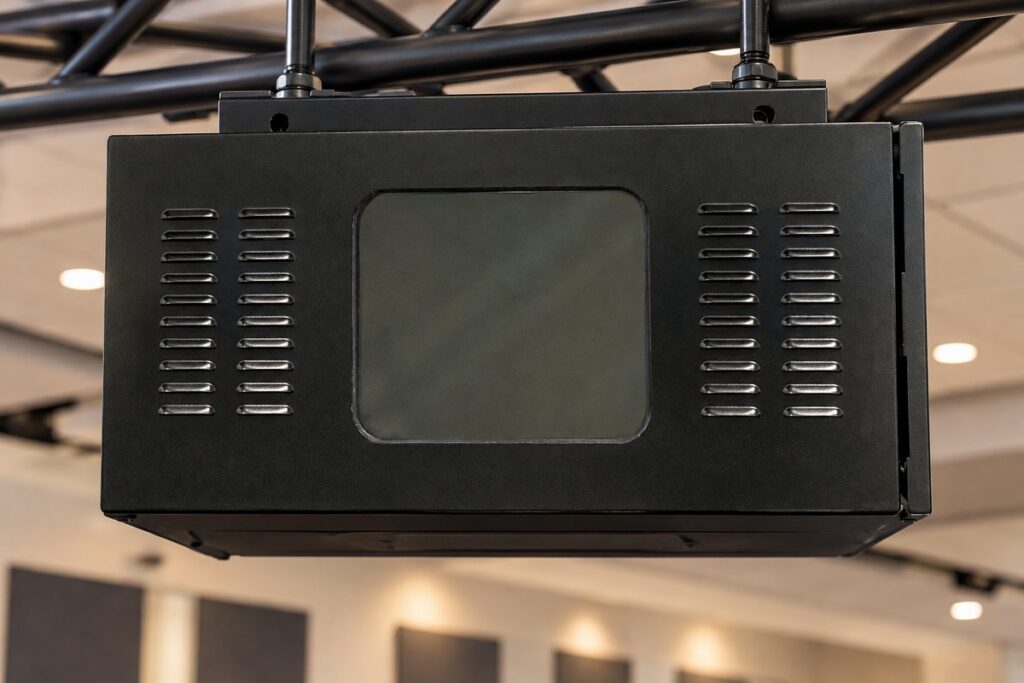
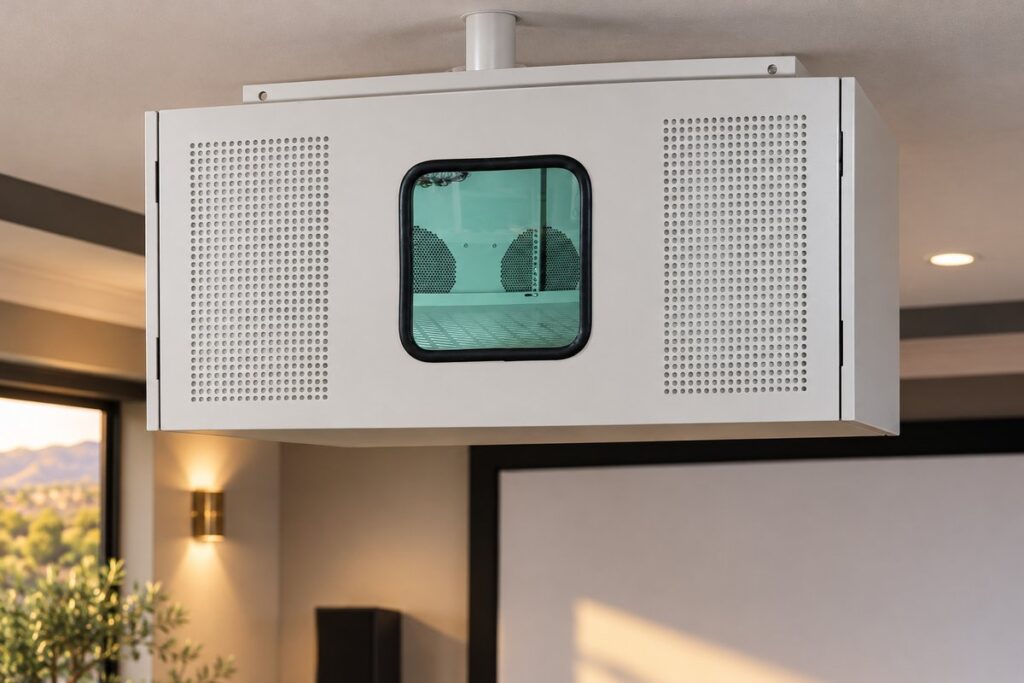
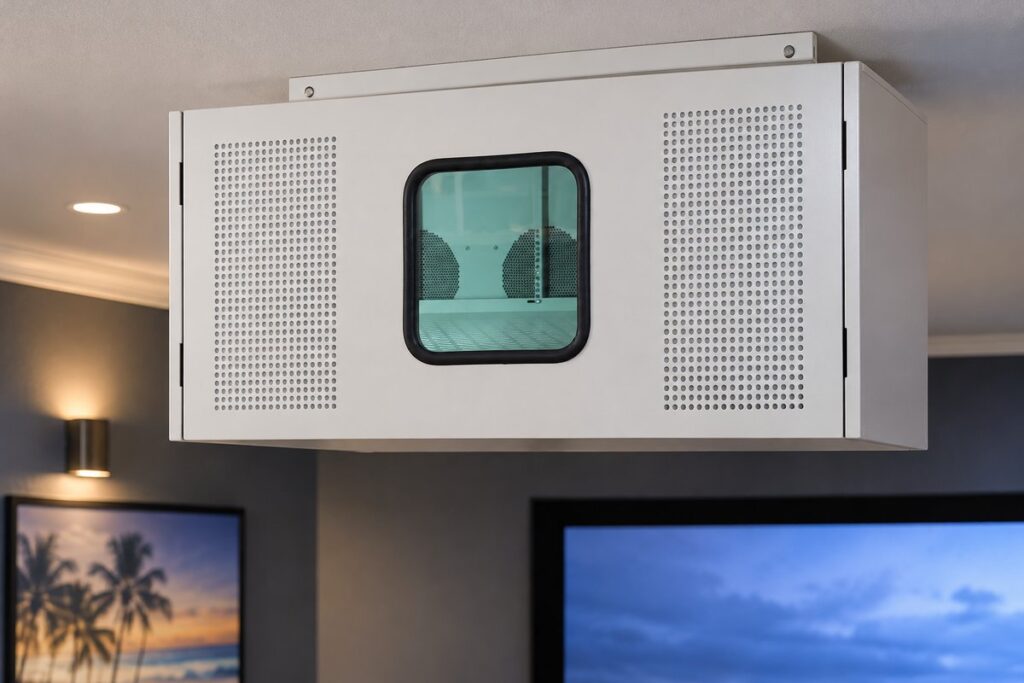
If your projector will be located in a covered space such as a cabana, screened porch, or open-air performance pavilion with reliable climate control, the Integrator Series Projector Enclosure may meet your needs. It is designed for installations outside direct weather but within climate-controlled or conditioned air spaces. For those working with ultra short throw projectors in demanding locations, the UST Defender Series Enclosure adapts proven outdoor protection to specialized mounting requirements.

Homeowners interested in seasonal, mapped, or holiday displays should explore the HomeLine Projector Enclosure, which balances robust protection with approachable consumer features. Note: The Hush Series is designed exclusively for indoor, quiet-room environments — never use it outdoors.

Planning Power and Mounting for Outdoor Projector Installations

Stable and safe power is essential for any outdoor AV project in Miramar. Florida storms are notorious for sudden lightning, power surges, and short-term outages, all of which can damage projector equipment. Work with a licensed electrician to provide a dedicated, weather-protected power circuit. Surge protection and GFCI outlets are strongly recommended when installing any weatherproof projector housing outdoors.

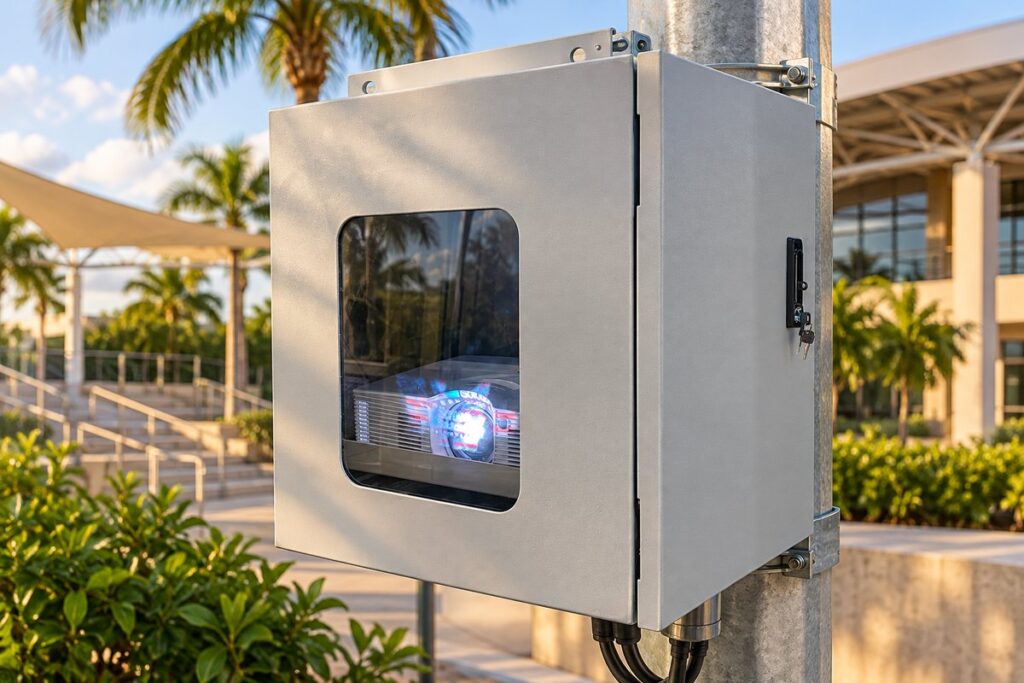
Outdoor mount selection must also address wind loads and potential coastal exposure. ProjectorEnclosure.com’s Defender Series enclosures are designed to be compatible with a wide range of robust ceiling or pole mounts rated for outdoor use. Ensure that the structural supports and hardware can handle tropical storm wind pressures — for commercial venues, consult a structural engineer when mounting to significant heights or unfamiliar structures.

During planning, determine the optimal viewing angle and sight lines by evaluating your outdoor space at different times of day, keeping potential sunlight glare and viewing comfort in mind. For detailed enclosure sizing, always send your projector’s make and model to ProjectorEnclosure.com for personalized guidance. Their Projector Enclosure Fit Guide makes it easy to get started.

Ensuring Proper Ventilation in Florida’s Humidity

Ventilation is a top concern for projectors operating outdoors in Miramar, as excess heat and humidity can quickly shorten equipment life or trigger thermal failures. ProjectorEnclosure.com’s Defender Series features engineered airflow pathways and active cooling to maintain stable internal temperatures no matter how hot or humid the day.

Each enclosure integrates fan-cooled modules that help exchange heat while keeping out dust, salt, and insects. Air filtration is particularly valuable after storms or during dusty inland periods, preventing buildup that can degrade image crispness and electronics reliability. To maximize effectiveness, enclosures should never be placed flush against walls or dense foliage. Instead, allow several inches of clearance around intakes and exhausts to promote proper airflow.

For installations in partially enclosed or climate-controlled spaces, the Integrator Series provides excellent ventilation without the full weatherproofing of the Defender models. No matter the application, proper placement and installation ensure your climate controlled projector enclosure delivers long-term reliability in Miramar’s tricky climate.

Protecting Equipment from Salt Air, Dust, and Storms

The proximity to the coast in Miramar means protection from salt-laden air isn’t just for beachside venues—it matters miles inland. Salt mist accelerates corrosion of metal projector components and mounting hardware, causing premature failures. Defender Series enclosures include specialized seals and finishes developed for marine-grade environments, controlling exposure to both salt and moisture.

Dust is a secondary but significant concern, often overlooked until symptoms arise. Florida’s seasonal dryness, landscaping, and construction can send fine dust particles airborne, which then accumulate inside exposed projector housings. Active fans and dust filters in ProjectorEnclosure.com’s Defender and UST Defender enclosures minimize infiltration, reducing maintenance without sacrificing cooling performance.

When storm season approaches, take the time to secure or temporarily shield all outdoor equipment. Weather alerts specific to Miramar can be tracked via the NWS Miami‑Dade County Forecast, which includes severe weather advisories and coastal flood risks. Removable covers can provide extra security ahead of extreme events, but the best line of defense remains a fully sealed, properly installed weatherproof enclosure from the outset.

Understanding Permitting Requirements in Miramar

Before beginning any outdoor projector project, check local regulations to ensure compliance with Miramar’s building and electrical codes. This is especially important for commercial venues, schools, religious institutions, and installations connected to permanent power or structural supports. Permitting requirements can differ based on projector size, location, and the complexity of mounting hardware.

Your first resource should be the city’s Building Permits & Inspections office, which provides information on application procedures, safety guidelines, and inspections. Failure to secure proper permits can result in project delays or forced removal of unapproved installations. Plan ahead and consult the city office early to streamline your schedule.

If your installation is part of a larger renovation or new building project, coordinate all AV work with the general contractor and city inspectors. Accurate plans and proof of equipment protection with an approved outdoor projector enclosure can greatly assist in smooth permitting and sign-off.

Step-by-Step Outdoor Projector Planning Process

  1. Assess Your Location: Note shaded and sun-exposed areas, salt air exposure, prevailing winds, and dust sources. Use the local weather forecast to plan for seasonal changes.
  2. Select the Right Enclosure: Match your site conditions and projector model to the appropriate Defender Series or HomeLine enclosure using the Projector Enclosure Fit Guide and ProjectorEnclosure.com’s expert recommendations.
  3. Prepare Mounting and Power: Engage qualified professionals for electrical wiring and secure, outdoor-rated mounting. Review Miramar’s permit requirements before finalizing installation.
  4. Install and Test: Allow for unrestricted ventilation, confirm weather sealing, and conduct full operational tests under various conditions.
  5. Monitor and Maintain: Regularly inspect air filters, hardware, and seals, especially after storms or during high-dust periods.

Frequently Asked Questions: Outdoor Projector Enclosure Basics

How do I size my enclosure to fit my projector model?

Accurate sizing protects performance and ensures optimal cooling. Send your projector’s make and model to ProjectorEnclosure.com, or use their Projector Enclosure Fit Guide for tailored recommendations before you buy.

Which enclosure series can I use outside in Miramar?

Only the Defender Series and UST Defender Series Enclosure are suitable for true outdoor and all-weather installations. The Integrator and Hush Series serve indoor or climate-controlled covered spaces; never install Hush Series outdoors.

Do I need permits for my outdoor projector install?

Most permanent outdoor projector installations in Miramar will require a permit, especially when tied to structural or electrical work. Always start with the city’s Building Permits & Inspections portal to check current requirements for your site and project type.

Planning Support for AV Pros and Property Owners

Whether planning an outdoor movie night, a school event, or a permanent resort installation, preparation is key to success in Miramar’s climate. ProjectorEnclosure.com has more than 20 years serving AV pros, venue operators, and homeowners with durable, climate-controlled projector protection. From initial site planning and local permit coordination to mounting guidance and model-specific enclosure selection, their team is here to help.
Request an enclosure quote for your Miramar, FL outdoor projector installation. For direct assistance, call 888-631-5880 or email ssisales@ssidisplays.com with your projector model and site details to begin your project today.
Featured supplies

Supplies mentioned in this guide

PROJECTORENCLOSURE.COM · Miramar, FL guide
Read more

Planning Outdoor Projector Installations in Mississippi: Weather, Heat & Housing

PROJECTORENCLOSURE.COM
Mississippi · Planning guide

Planning Outdoor Projector Installations in Mississippi: Weather, Heat & Housing

Mississippi’s weather can challenge any outdoor projector install: discover how to select the right enclosure—plus steps for power, ventilation, mounting and local codes.

Understanding Mississippi’s Weather Challenges for Outdoor Projectors

Mississippi’s climate delivers a unique set of challenges for outdoor technology. Summer temperatures regularly climb above 90°F, with intense sun exposure beating down on outdoor equipment for hours each day. High humidity levels, often above 75%, are a constant in both coastal and inland regions. Along the Gulf Coast, salty air and corrosive moisture add to the risk profile, while the widespread presence of dust and pollen, especially in rural or construction-proximate zones, threatens the longevity of sensitive electronics. Add frequent rainfall, storms, and even hurricane season into the mix, and it’s clear that an outdoor projector installation in Mississippi needs thorough planning. The combination of heat, humidity, water and airborne contaminants can cause rapid failures in unprotected projectors. That’s why choosing the right kind of outdoor projector enclosure is essential for venues, schools, and homeowners alike.

Simply mounting a projector beneath an awning or roof does not provide adequate protection against the region’s tough conditions. Projectors left exposed—even in covered areas—can fall victim to sudden rain, wind-driven dust or salt, and unrelenting humidity. For permanent or semi-permanent setups at venues, resorts, theme parks, and school campuses, only a weatherproof and climate-controlled solution ensures uptime, safety, and performance. For an in-depth look at local climate data—including historical rainfall, heat extremes, and humidity trends—review resources from NWS Jackson, MS Climate Products before finalizing your projector and enclosure placement.

With stakes this high, starting with a tailored enclosure is not just a best practice—it’s a necessity for protecting your projector investment.

How Heat, Sun, Humidity, Salt Air and Dust Threaten Your Projector

The high temperatures found in a typical Mississippi summer can quickly overheat projectors when left in direct sun, causing image degradation or even electronic failure. UV exposure also shortens the lifespan of plastics and wiring. Humidity can lead to condensation inside both the projector and the enclosure, raising the risk of corrosion—particularly for AV installations close to the Gulf Coast, where salty air accelerates rust and breakdown in unprotected parts. In the delta and rural areas, windborne dust and pollen gather inside projectors, interfering with lenses, fans, and electronic circuits. This impacts image quality and can result in shorter service intervals or even total loss.

Vigilance during storm season is particularly important. Mississippi experiences heavy rains, occasional flooding, and hurricane-driven winds. Projectors must be protected from windblown water as well as debris. In all scenarios, a suitable weatherproof projector housing prevents direct exposure to these hazards, dramatically reducing maintenance and potential downtime.

ProjectorEnclosure.com’s Defender Series Projector Enclosure is engineered specifically for these demanding outdoor conditions, with options sized for your projector model. For ultimate protection near the coast or in fields, fan-cooled and climate-controlled models help mitigate humidity and salt air issues, keeping your investment safe year-round.

Choosing the Right Outdoor Projector Enclosure for Mississippi

The critical first step for any outdoor AV project is selecting an enclosure designed for true Mississippi weather. Most indoor or “weather-resistant” boxes fall short. The Defender Series Projector Enclosure from ProjectorEnclosure.com was developed specifically for outdoor use: it handles high heat, humidity, sudden rainfall, and salt air alike. Climate-controlled and fan-cooled models offer active regulation of internal temperature and humidity levels, preventing heat buildup and condensation even during peak summer or after a rainstorm.

If your setup uses an ultra-short throw projector for outdoor signage or mapping displays, the UST Defender Series Enclosure provides all-weather shielding tailored to UST models. For homeowners interested in home displays or projection mapping during holidays and events, the HomeLine Projector Enclosure brings weatherproof performance to family projects. Remember: Hush Series is strictly for indoor quiet settings, and Integrator Series is intended for indoor or conditioned non-exposed spaces, not for use in Mississippi’s open weather conditions.

Proper sizing is crucial for airflow and protection. To ensure a perfect fit and optimal thermal management, always send your projector model to ProjectorEnclosure.com via the Projector Enclosure Fit Guide before purchase.

Powering Your Outdoor Projector Installation

Providing safe, reliable power in an outdoor environment calls for thoughtful planning. In Mississippi’s rural areas and many smaller towns, AV integrators and homeowners draw electricity from local co-ops or city grids. Find your utility’s requirements and options at Cooperative Energy, which coordinates power for much of the state. You may need to run dedicated circuits from a breaker panel to the location of the projector enclosure.

Outdoor-rated wiring, weatherproof outlets and connections, and ground fault circuit interrupters (GFCIs) are baseline requirements for safe operation in Mississippi humidity and storm-prone conditions. If your site is near a body of water or receives salt air, use corrosion-resistant conduit and fittings to extend the lifespan of your electrical work. Always check with a licensed electrician and consult your local electrical authority before starting the installation.

Planning for backup power, such as UPS (uninterrupted power supply) units or surge protection, is especially wise if projectors will operate during storm season—both for the sake of audience experience and equipment safety.

Mounting, Ventilation, and Locating the Enclosure

Enclosure placement is key to maximizing utility and minimizing maintenance. Install your outdoor projector enclosure out of direct southern sun when possible, or add exterior shading to reduce thermal load. Ensure at least 12–24 inches of clearance on all sides to allow airflow and technician access. Mount securely on a stable, vibration-free platform (concrete pad, steel structure, or building wall, as project-dependent).

For optimal cooling in Mississippi’s climate, use a fan-cooled or climate-controlled enclosure, and never obstruct vent paths. Orient ventilation ports away from prevailing wind and dust sources—often upwind from common dust advisories in late summer. Check all seals and fasteners after the first big downpour or windstorm to confirm continued protection.

If you are operating in a flood-prone or hurricane-affected area, consider elevated or reinforced mounting for your enclosure, keeping sensitive components above expected water levels. For churches, schools, resorts and venues operating year-round, a periodic check of all supports and anchors ensures long-term safe operation.

Permits and Local Building Code Considerations

Before installing any permanent outdoor projector enclosure in Mississippi, contact your local building department for current requirements. Urban installations—including those in Jackson and other cities—typically require inspection and permitting for electrical connections, exterior mounting, and sometimes zoning approval for permanent equipment structures. Major venues and schools may also face district-level standards.

The City of Jackson Building Permits office is a useful example for reviewing what paperwork, plans, and inspections you might need; always check with your own local office for precise requirements and lead times specific to your location and project type. Some installations—especially those close to roadways or water—may call for stamped engineering, wind load analysis, or supplementary signage permits.

Get ahead of seasonal bottlenecks: begin your permitting process early, and coordinate with contractors and inspection agencies for a predictable installation timeline.

Ensuring Reliable Operation: Projector Sizing and Climate Control

Maximizing projector life depends on matching your equipment with the right enclosure size and controls. Mississippi’s climate means temperature swings and humidity spikes can happen fast. Selecting a climate-controlled projector enclosure is vital: fan-cooled models actively remove heat and moisture, while robust filtration reduces dust and pollen inside the housing. This is especially important for high-value projectors used at schools, theme parks, and corporate venues where downtime is costly.

To help ensure the enclosure matches your projector model for ventilation, cable routing, and mounting, submit your projector details via the Projector Enclosure Fit Guide. The team at ProjectorEnclosure.com will ensure your enclosure is manufactured to precise dimensions, optimizing air flow and protection. It’s equally important to consider service access for periodic maintenance, filter changes, and lens cleaning.

Climate-controlled enclosures not only help prevent thermal shutdowns but also extend projector life by minimizing temperature-induced strain and corrosion risk caused by Mississippi’s humid, salty, or dusty conditions.

Local Resources for Planning Your Outdoor Projector Project

FAQ: Outdoor Projector Enclosures in Mississippi

What’s the single most important feature for an outdoor projector in Mississippi?

Weatherproofing and active ventilation. Only a true outdoor projector enclosure with fan-cooled or climate control will protect against Mississippi’s mix of heat, humidity, storm rain, dust, and salt air. Passive enclosures or indoor models leave your projector exposed to rapid temperature swings and water damage.

How do I size the enclosure for my projector?

Submit your projector make and model using the Projector Enclosure Fit Guide. ProjectorEnclosure.com will ensure the enclosure matches your projector’s dimensions, ventilation needs, and cabling configurations for optimal protection and performance.

Do I need a permit for installing an outdoor projector enclosure?

Most permanent outdoor installations—especially those wired with new electrical service or mounted on buildings—require permits and inspection from your local city or county. Guidance is available via the City of Jackson Building Permits office, but always consult your specific authority for requirements.

Mississippi’s climate demands robust, climate-controlled outdoor projector enclosures for every outdoor venue, school, church, theme park and home project. Let ProjectorEnclosure.com size the perfect weatherproof projector housing for your model—Request an enclosure quote today.

Featured supplies

Supplies mentioned in this guide

PROJECTORENCLOSURE.COM · Mississippi guide
Read more

Outdoor Projector Enclosure Planning for Plantation, FL: Local Guide

PROJECTORENCLOSURE.COM
Plantation, FL · Planning guide

Outdoor Projector Enclosure Planning for Plantation, FL: Local Guide

A practical, local guide for AV teams, hospitality, schools, churches, and homeowners in Plantation, FL: how to select, site, and protect your outdoor projector in the face of local climate, power, and permitting requirements.

Understanding Plantation, FL’s Outdoor Projection Climate

Planning an outdoor projector installation in Plantation, FL means accounting for more than just the AV requirements. While outdoor video brings venues, schools, churches, and hospitality experiences to life, the region’s tropical climate requires careful consideration when choosing and installing an outdoor projector enclosure. With summer temperatures commonly reaching the 90s, direct sun exposure, intense humidity, frequent afternoon thunderstorms, and proximity to coastal salt air, every aspect of the enclosure—power, mounting, ventilation, and permitting—demands attention to detail.

Summer heat in Plantation doesn’t just affect people; it poses a risk to sensitive electronics like projectors. Direct sunlight can bake an enclosure, while high humidity and salt air can accelerate corrosion and damage. From spring through fall, dust from landscaping activity and windblown debris add another layer of concern. During storm and hurricane season, sudden power outages and wind-driven rain require robust weatherproof solutions to keep your system running safely and reliably.

For all these reasons, the first step is understanding how local climate will affect your outdoor projector housing, and then matching your enclosure choice and site plan to those unique regional hazards. ProjectorEnclosure.com recommends beginning every project with a careful assessment—and your specific projector model details—for best results.

Choosing the Right Outdoor Projector Enclosure

ProjectorEnclosure.com offers several weatherproof and climate-controlled solutions, each designed for particular environments. For the open Florida outdoors, the Defender Series Projector Enclosure is purpose-built for demanding all-weather installs. Its climate management options protect against both high heat and humidity while offering robust defense against dust, salt air, and driving rain. It’s the standard choice for resorts, public venues, churches, schools, theme parks, and any permanent outdoor AV setup in Plantation.

For projects using ultra short throw projectors, consider the UST Defender Series Enclosure, which offers the same rugged exterior defense with geometry designed for short-throw optics. Residential mapping displays and home events may benefit from the HomeLine Projector Enclosure, which is sized for consumer-grade projectors and provides reliable protection from humid Florida nights.

If your site is covered or semi-conditioned, as in a vented pavilion or an open-sided but roofed structure, the Integrator Series Projector Enclosure is a fit. However, for open outdoor locations exposed to direct weather, always specify the Defender Series line. Never use a Hush Series enclosure outdoors: it’s designed strictly for quiet indoor environments like classrooms or studios.

Mounting and Placement for the Florida Environment

The durability of your outdoor projection setup starts with careful mounting and placement. Direct sunlight on an enclosure any time of day can raise internal temperatures far above the air temperature. In Plantation’s climate, choose an installation location with maximum natural shading or, if possible, provide eave or canopy cover overhead. This reduces the exposure to both UV and rain.

Wall- or ceiling-mounts are favored where building structure allows. For schools, churches, or venues, consider positioning the enclosure under the edge of a roof overhang. If ground- or pole-mounting is necessary, ensure that the mounting hardware is both rust-resistant and strong enough to withstand hurricane wind loads. You will likely need to consult a local structural engineer for permanent installations in public places.

Always check local structural codes and permitting needs before finalizing placement. Shared spaces—like parks or schoolyards—may have extra safety and accessibility requirements. Each enclosure is sized to the projector, so provide your projector’s make and model to ProjectorEnclosure.com for best fit guidance; their Projector Enclosure Fit Guide streamlines this process.

Power Planning and Outage Considerations

Reliable power is vital for both the projector and climate control features of your enclosure. Fluctuating supply, rolling outages, or storm-driven loss of mains can all disrupt your installation. Before running dedicated power lines or deploying battery backup, consult the Florida Power & Light Power Tracker to review outage histories and restoration expectations for your site.

Outdoor installations should include surge protection and weatherproof outlets. Circuit quality in older structures around Plantation may vary, so a pre-installation inspection is wise. Where extreme weather is expected, consider options like remote power-off capability, or talk with your AV integrator about surge and lightning protection strategies.

When running new electrical to an exterior location, work with a licensed electrician and confirm that trenching, conduit, and junction specs meet Broward County’s building codes. Permit requirements for outdoor power upgrades are specific to site and scope; details are available from the city’s permitting office, which you may find through local resources.

Ventilation, Airflow, and Cooling in Hot Humid Weather

Florida summers mean high heat and humidity—two factors that stress both projector components and enclosure electronics. Any weatherproof projector housing should be equipped with active cooling fans, thermostatic controls, and (where needed) humidity management to keep sensitive gear within safe operating limits.

The Defender Series design includes options for high-efficiency fan cooling and internal temperature management, engineered for the challenges of direct sun, muggy nights, and heavy rainfall. Scheduled maintenance is also important: inspect air filters and venting at the beginning of every summer and after major storms, as mold and dust can accumulate quickly in the subtropical air.

For critical installations, place enclosures in areas with natural cross-ventilation or work with your AV designer to maximize airflow. Avoid enclosing the product within secondary housings or adding coverings not designed for projector cooling, as this can reduce effectiveness and void safety precautions.

Permitting, Compliance, and Codes in Plantation

Outdoor projector installations in Plantation, FL almost always require some form of city or county approval—especially for venues, schools, and churches. Permitting requirements may concern electrical work, structural mounting, or both, depending on whether the setup is temporary or permanent. Permit applications may entail diagrams, structural review, and sometimes site inspections.

Broward County and Plantation each maintain specific codes for exterior electrical wiring, weatherproof fixture mounting, and hurricane wind load resistance for permanently installed AV equipment. Reach out to the applicable city permit office early in your planning to clarify the process. ProjectorEnclosure.com does not file permits, but can collaborate with your local contractors to provide spec sheets and details on enclosure models.

Keep a record of all as-builts and approvals for insurance purposes and future upgrade work. If you are unsure about what’s needed, check with the permitting office linked above to learn about the latest outdoor AV requirements for your site type and project size.

Maintenance for Long-Term Outdoor Use

Even the best climate-controlled projector enclosure requires basic upkeep in Plantation’s challenging environment. Humidity and salt air can cause corrosion over time, while dust accumulation and insect intrusion—more prevalent after rain—can trigger cooling issues. Check and clean enclosure filters and vent screens quarterly, and always after severe weather.

Schedule a full inspection each spring and fall to assess seals, hardware, and anchor points—especially for ocean-facing or wind-exposed sites. Plan for bulb replacement, lens cleaning, and projector recalibration as needed. ProjectorEnclosure.com has supported outdoor AV teams and property operators for more than 20 years; their technical support is available to help with questions or troubleshooting by phone or email.

As technology evolves, remember to reevaluate your enclosure’s fit and controls when swapping in a new projector. The Projector Enclosure Fit Guide lets you specify any brand or model to verify enclosure sizing and compatibility with existing systems.

FAQ: Outdoor Projector Enclosures in Plantation, FL

What’s the best enclosure model for fully exposed outdoor areas?

The Defender Series Projector Enclosure is engineered for open outdoor applications in hot, humid, and storm-exposed locations like those in Plantation, FL. It protects projectors from sun, rain, dust, salt air, and seasonal wind.

How do I get the right size enclosure for my projector?

Supply your projector’s make and model to ProjectorEnclosure.com or use the interactive Projector Enclosure Fit Guide. Their specialists will recommend an enclosure with proper cooling and space.

What if I lose power during a storm?

It’s smart to monitor local outage reports—use the FPL Power Tracker—and consider battery backup or surge protection for your setup. The enclosure’s cooling features operate as long as outage duration is brief and backup power is provided.

Ready to protect your projector from the Plantation, FL elements? Request an enclosure quote or call 888-631-5880. For personal support, email ssisales@ssidisplays.com with your projector model and site questions.

Featured supplies

Supplies mentioned in this guide

PROJECTORENCLOSURE.COM · Plantation, FL guide
Read more

Planning Outdoor Projector Enclosures in Indio, CA: Climate & Setup Guide

PROJECTORENCLOSURE.COM
Indio, CA · Planning guide

Planning Outdoor Projector Enclosures in Indio, CA: Climate & Setup Guide

Installing projectors outdoors in Indio, CA demands weatherproof enclosures. Learn how heat, sun, dust, humidity and storms affect projectors—and how to plan for power, mounting, permits, and more.

Understanding Indio, CA’s Outdoor Projection Challenges

The unique climate of Indio, CA makes planning for any outdoor projector installation a special challenge. With its long, extremely hot summers, frequent direct sunlight, low but sometimes fluctuating humidity, and the presence of wind-blown dust, your projector is exposed to hazards that can quickly compromise its lifespan and performance. If you’re closer to the Salton Sea or exposed to Pacific breezes, salt air can also factor in. Planning the right outdoor projector enclosure is essential for AV integrators, venues, resorts, schools, churches, and even homeowners hoping to create an unforgettable outdoor viewing experience.

Outdoor projectors not only need weatherproof housing, but they must also be protected from temperature swings, air debris, and electrical risks typical of Indio’s weather. Before choosing an enclosure, it’s critical to understand which elements threaten your hardware and what practical solutions are available. ProjectorEnclosure.com offers the specialized expertise to help you navigate these challenges and protect your investment, with over 20 years in business.

Long-term projection in Indio requires a holistic plan covering environmental protection, power supply, ventilation, mounting, and local permits. This practical guide outlines a step-by-step approach tailored to Indio’s demanding climate, with hands-on tips for both commercial and residential installations.

The Effects of Indio’s Heat and Sun on Projector Enclosures

High temperatures are a daily reality in Indio, especially through the summer months, regularly topping 100°F. Projectors generate significant internal heat on their own, and direct sunlight on the enclosure can push temperatures even higher inside. Without the right protection, thermal overload and component failure are real risks.

Choosing a climate controlled projector enclosure that actively manages both external and internal heat is essential. ProjectorEnclosure.com’s Defender Series Projector Enclosure uses active cooling and sun-resistant construction, making it well-suited for Indio’s harshest summer days. When planning your install, consider adding shading or strategic placement to reduce direct solar gain.

Always size your enclosure to the exact projector model to ensure optimal airflow and cooling. Send your projector details to ProjectorEnclosure.com before ordering for a tailored recommendation, or use their Projector Enclosure Fit Guide for self-selection. This step is vital in Indio’s unforgiving heat.

Dust, Storms and Desert Winds: Mitigating Airborne Threats

Indio’s dry climate and frequent winds mean dust and sand are constant outdoor hazards. Large storm systems or even routine gusts drive particulates into projector housings, potentially coating optics, forcing fans and electronic components to work harder, and reducing overall system life.

To combat this, select a weatherproof projector housing designed with multilayered filtration and sealed access points. The Defender Series provides heavy-duty dust and rain protection for installations directly exposed to weather or aggressive conditions. For covered but unconditioned spaces, consider the Integrator Series Projector Enclosure—never for open weather, but suited to semi-protected areas.

Keep a regular maintenance plan that includes checks after major Indio wind events or storms. For upcoming weather risks or to plan installation schedules, consult the National Weather Service Forecast for Indio.

Humidity, Salt Air and Sudden Rain: Extra Environmental Concerns

While Indio is known for dryness, sudden bursts of humidity from storms, flash rains, or nearby irrigation can occur. If you’re near the Salton Sea or exposed to salt air, corrosion becomes an additional concern. Condensation on electronics is a common cause of projector failures in such environments.

Only use enclosures with built-in humidity control or dehumidification features when these risks exist. The Defender Series is engineered for just these scenarios, and should be selected for most outdoor installations in Indio and the surrounding Coachella Valley.

If projection is for seasonal holiday mapping or temporary outdoor setups, the HomeLine Projector Enclosure is a purpose-built option for consumer-focused displays. For ultra-short-throw installs, the UST Defender Series Enclosure provides similar protection in specialty mounting situations.

Power Planning and Utility Coordination

Outdoor AV gear is only as reliable as its power source. Indio’s storms and summer demand-driven load sometimes cause outages or fluctuations, so planning dedicated, grounded power circuits is fundamental. For larger venues or new builds, coordinate early with the local utility—the Imperial Irrigation District (IID)—to confirm available supply, safe routing, and continuity plans for your site.

Outdoor-rated outlets, in-use weatherproof covers, and circuit protection (such as surge suppressors or battery backup) are all recommended. Consider wiring the projector and enclosure together on the same circuit for consistent operation. Work with a licensed electrician and always cross-check site power plans with the utility’s requirements to avoid last-minute surprises.

For ongoing operational planning, stay updated on outage alerts and forecasted extreme weather via IID’s online resources or the Indio weather forecast page.

Mounting and Structural Considerations for Indio Installations

Indio’s wind and weather patterns mean mounting hardware must be extra robust. Outdoor projector enclosures can be ceiling-mounted, wall-mounted, or pole-mounted, but must always be anchored to materials that can withstand both the weight of the enclosure and occasional high winds.

When choosing mounts, select products rated for exterior use, with corrosion resistance and vibration isolation features. Ensure the mounting location is free from direct sprinkler spray, falling debris, or excessive vibration from traffic or activities. Size the mount not only for the enclosure’s weight, but also with future serviceability in mind—ProjectorEnclosure.com provides guidance for each enclosure model and can recommend mounting options as part of your quote request.

If you plan to permanently install an outdoor projector, consider integrating shade elements or partial enclosure within landscaping for further sun and weather mitigation without interfering with ventilation.

Ventilation and Airflow in Outdoor Projector Enclosures

Proper airflow is at the heart of every reliable outdoor projector setup, especially in climates like Indio’s. Both the enclosure and projector generate heat, and without active management, internal temperature can reach damaging levels even on mild days. Dust and humidity make the ventilation solution more challenging.

The Defender Series Projector Enclosure and other climate-controlled models from ProjectorEnclosure.com incorporate powerful, filtered ventilation fans and optional heaters or dehumidifiers as required by your environment. These active cooling measures are essential for year-round operation.

Installers are reminded: never block ventilation inlets or outlets, and place enclosures where airflow will not be restricted by nearby objects or landscaping. ProjectorEnclosure.com’s technical team can size the correct airflow system for your specific projector—just share your model number for expert recommendations.

Permitting, Local Codes, and Outdoor AV Regulations

Most permanent outdoor AV installations in the Indio area will require some level of permitting and must comply with city or county building codes—especially for electrical, structural, or visibility concerns. This is also true for venues, schools, churches, and homeowner associations, where additional governance may apply.

Begin your project by consulting your local planning department—rules differ for residential vs. commercial installations and depend on mounting types and electrical upgrades. While ProjectorEnclosure.com cannot provide legal advice or stamps for code, their solutions are engineered to ease inspections and typical code compliance steps. For electrical plans and power approval, coordinate with the Imperial Irrigation District (IID) as early as possible to anticipate utility requirements or seasonal power moratoriums.

Outdoor AV permits can extend timelines, so build in approval lead times and check with all applicable authorities—especially before breaking ground or running new power lines. Existing venues may need only minor adjustments, but new builds should always start with code research.

FAQ: Outdoor Projector Enclosures for Indio, CA

What is the right enclosure for a summer-long outdoor projector in Indio?

The Defender Series Projector Enclosure is engineered for all-weather outdoor installations in hot, dusty, and storm-prone climates—ideal for Indio’s long summers and changing weather. For ultra-short throw setups, use the UST Defender Series Enclosure.

How do I size an enclosure to my specific projector?

Every projector model is different, so accurate enclosure sizing is critical for ventilation and fit. Share your projector’s make and model with ProjectorEnclosure.com or use their Projector Enclosure Fit Guide to get the right recommendation before ordering.

Who should I contact about power and installation permits?

Contact the Imperial Irrigation District (IID) for electric service coordination and your local city or county offices for installation permits and local code requirements. Check the linked authorities before starting installation.

Ready to Start Your Outdoor Projector Installation?

Outdoor projector installations in Indio, CA come with unique climate and regulatory challenges—but with careful planning and the right weatherproof projector housing, your venue, school, or backyard can enjoy high-performance visuals all season long. Protect your investment by choosing the right enclosure for your model, planning power with IID, and preparing for the desert’s heat, sun, and storms.

Ready for personalized advice? Request an enclosure quote from ProjectorEnclosure.com today, or call 888-631-5880 or email ssisales@ssidisplays.com for expert support.

Featured supplies

Supplies mentioned in this guide

PROJECTORENCLOSURE.COM · Indio, CA guide
Read more

How Mission Viejo’s Climate Shapes Outdoor Projector Enclosures: A Practical Guide

PROJECTORENCLOSURE.COM
Mission Viejo, CA · Planning guide

How Mission Viejo’s Climate Shapes Outdoor Projector Enclosures: A Practical Guide

A practical guide for Mission Viejo AV pros and venue operators: how heat, salt, humidity, dust, and rain impact outdoor projector enclosures, and how to plan for safe, successful installations.

Understanding Mission Viejo’s Climate for Outdoor Projectors

Mission Viejo’s location in Orange County, California, brings a decisive mix of sunshine, heat, coastal humidity, and occasional rainstorms—a climate that challenges any sensitive AV equipment placed outdoors. Summer highs can soar well above 90°F, and outdoor projector enclosures often face direct afternoon sun. When seasonal weather shifts, sudden humidity and occasional coastal fog can carry salt air inland, while strong Santa Ana winds whip up dust. Rainfall, although modest compared to other parts of California, is often intense during winter storms. Each of these environmental factors demands careful planning to protect valuable projectors year-round.

Whether you’re outfitting an outdoor venue, installing displays for a school, or planning immersive outdoor experiences at home, it’s essential to address these local climate variables up front. Modern advancements in weatherproof projector housing, such as climate-controlled and fan-cooled models from ProjectorEnclosure.com, are specifically engineered for these conditions. Choosing the right enclosure and location will directly impact your projector’s long-term performance and reliability in Mission Viejo’s unique weather patterns.

Stay updated by checking the National Weather Service Mission Viejo forecast. This resource delivers timely warnings about heat waves, storms, and humidity—key details when scheduling installation or maintenance.

How Heat, Humidity, Salt Air, and Dust Affect Outdoor Projectors

Mission Viejo’s climate places AV equipment under significant environmental stress. Extended sun exposure heats enclosure surfaces well beyond ambient temperatures, which can shorten projector lamp life or cause thermal shutdowns without proper cooling. Humidity, particularly in coastal neighborhoods or after rain, can foster condensation, threatening sensitive electronics and optical components. Areas closer to the Pacific are also at risk from salt-laden air, which accelerates corrosion on exposed metal fasteners and electronics when not properly protected.

Next, consider seasonal air quality. Santa Ana winds can push dust and pollen into even small enclosure gaps, leading to clogged filters and dust spots on lens or DLP surfaces. An enclosure that’s not fully sealed, fan-cooled, and properly ventilated is especially vulnerable to these micro-intrusions. Reliable outdoor projector enclosures, like the Defender Series Projector Enclosure, are designed to block dust, humidity, and salt, and keep internal temperatures steady regardless of swings outdoors.

Understanding these risks ensures you can specify the right climate controlled projector enclosure from the outset—reducing maintenance headaches, downtime, and costly repairs through every Mission Viejo season.

Sizing and Selecting the Right Projector Enclosure

Proper sizing ensures both fit and function. An enclosure that’s too small may restrict vital airflow, while one that’s oversized reduces thermal efficiency and can complicate mounting. Critical measurements—projector length, width, height, lens position, and cable exits—should be confirmed using the Projector Enclosure Fit Guide. For Mission Viejo installs, don’t forget that heat buildup is a real risk, so always select enclosures that offer active fan cooling and enough space for airflow around the projector model you plan to use.

Send your projector make and model to ssisales@ssidisplays.com or call 888-631-5880 to have the team at ProjectorEnclosure.com recommend the optimal size. For true outdoor use, only the Defender Series or UST Defender Series Enclosure protect against Mission Viejo’s diverse weather conditions. The Integrator Series Projector Enclosure is best reserved for climate-controlled or covered spaces, while the Hush Series Projector Enclosure is only for quiet, indoor rooms. For creative home projection mapping, the HomeLine Projector Enclosure offers an accessible solution when weatherproofing is required.

Matching your enclosure model and size to the projector and the exact installation environment is essential for reliability and safety.

Planning Power for Outdoor Projector Enclosures

Reliable and safe electrical service is critical for any outdoor AV installation in Mission Viejo. Outdoor projector enclosures—especially fan-cooled, climate-controlled types—require consistent power for active ventilation and heater modules. Begin planning by evaluating the power sources available at your site. It’s important to check with local utility providers, including San Diego Gas & Electric and Southern California Edison, which serve the Mission Viejo area. Confirm circuit capacity for both the projector and the enclosure’s ventilation system to avoid overload and nuisance tripping.

For venues, schools, or residential installations several factors come into play: outdoor-rated cabling, GFCI protection to prevent shock risks, and weather-sealed outlets or junctions. If temporary cords or extension leads are used for events, ensure all connections are elevated above potential pooling water and shielded from dust or garden debris. A licensed electrician can help configure wiring that accommodates both peak load and seasonal weather risks.

Planning ahead for the dedicated electrical needs of your outdoor projector enclosure ensures uninterrupted performance and supports health and safety requirements, particularly where humidity and rain are present.

Mounting and Positioning in Mission Viejo’s Outdoor Spaces

Orientation and structural mounting of your projector enclosure matter as much as the technology inside. In Mission Viejo, direct sun exposure can rapidly increase the surface temperature of an enclosure, so install in shaded locations when possible, or orient away from intense southern or western sun. Overhangs, arbors, or patio covers offer simple shading to reduce enclosure surface temperatures. In completely exposed spaces, select an enclosure with robust internal cooling to combat radiant heat.

For mounting, use corrosion-resistant hardware—especially important closer to the coast, where even a hint of salt in the air accelerates rust on standard steel fasteners. Always ensure the mounting structure (walls, truss, or poles) can support the combined weight of the enclosure and projector, and use anti-vibration pads if equipment will be exposed to wind or music vibration at events. Safety cables or secondary reinforcements are a smart precaution for both permanent and temporary installs.

Position the enclosure to allow easy access for filter cleaning and maintenance. Clearance around intake and exhaust vents, plus access to controls and lens, makes seasonal upkeep more efficient and reduces downtime during Mission Viejo’s busy events calendar.

Ventilation Strategies for Year-Round Protection

Effective ventilation is the heart of climate controlled projector enclosure design, especially with Mission Viejo’s high summer temperatures and winter humidity swings. Passive venting may suffice for mild, dry climates, but in Mission Viejo, choose forced-air fan systems that actively move hot air out and bring cooler air in. Filtered intake vents keep dust, salt, and pollen away from sensitive optics and electronics—an essential benefit as outdoor air quality fluctuates throughout the year.

The Defender Series Projector Enclosure comes standard with multi-speed fan cooling to regulate internal temperatures regardless of the day’s highs and lows. This is especially useful for installations near parks or schools, where projectors may operate for long hours. For ultra-short-throw setups, the UST Defender Series Enclosure offers the same protective engineering but sized to fit ultra-short projector bodies.

Regularly inspect vents and filters for clogging, particularly during Santa Ana wind events or after heavy rains, and clean or replace as needed. This simple maintenance step protects internal electronics and lengthens projector life no matter how variable Mission Viejo’s weather becomes.

Permitting and Local Codes for Outdoor Installations

Mission Viejo, like most California cities, regulates exterior electrical and structural installations. Before mounting any outdoor projector enclosure, it’s wise to check in with the city’s planning or permitting office. Requirements vary but may include electrical permits for new circuits, or structural permits if new poles, trusses, or wall penetrations are required. Review the municipality’s utilities and service providers page to connect with the right department for questions on electrical and low-voltage permits.

For SLAs, commercial installations, churches, or schools, coordination with facilities departments ensures your installation meets both code and institutional requirements. Special zoning or ADA clearances could also apply if your outdoor projector housing is intended for public spaces or high-traffic areas. Temporary event setups may have different rules but should still ensure safe power routing and mounting.

Approval processes and inspections keep your installation safe, insurable, and durable—including withstanding severe weather when it matters most. Always confirm local rules before beginning work, as requirements can change between seasons or as equipment types evolve.

Short FAQ: Mission Viejo Outdoor Projector Enclosures

How does Mission Viejo’s summer sun affect projector enclosures?

Direct summer sun can heat the surface of an outdoor projector enclosure well past the air temperature. This can risk internal overheating unless you choose an enclosure with active cooling and consider shading or careful orientation away from all-day sun.

What steps should I take for dust and salt protection near the coast?

Use a weatherproof projector housing that’s fully sealed with filtered fan intake, designed to block dust, pollen, and salt air. These features are especially critical during high-wind and coastal fog days in neighborhoods closer to the ocean or natural areas.

Who can help with power planning for outdoor installations in this area?

Always consult a licensed electrician familiar with outdoor work. Mission Viejo is served by both San Diego Gas & Electric and Southern California Edison—confirmed via the city’s utilities guide—who can answer questions about service restrictions and upgrades prior to installation.

Get the Right Outdoor Projector Enclosure for Mission Viejo

Mission Viejo’s unique blend of heat, humidity, dust, and salt air calls for professional planning when installing projectors outdoors. From choosing the right Defender Series or UST Defender Series Projector Enclosure for all-weather protection, to understanding mounting and ventilation strategies for year-round reliability, the right preparation makes all the difference. Don’t forget to measure your projector and use the Projector Enclosure Fit Guide for perfect sizing, or reach out directly for expert advice.

Ready to protect your projector in Mission Viejo’s challenging climate? Request an enclosure quote today, or contact ProjectorEnclosure.com at 888-631-5880 or ssisales@ssidisplays.com for personalized assistance.

Featured supplies

Supplies mentioned in this guide

PROJECTORENCLOSURE.COM · Mission Viejo, CA guide
Read more

A Practical Guide to Outdoor Projector Enclosures in Oceanside, CA

PROJECTORENCLOSURE.COM
Oceanside, CA · Planning guide

A Practical Guide to Outdoor Projector Enclosures in Oceanside, CA

If you’re planning an outdoor projector setup in Oceanside, CA, understanding local climate challenges—heat, salt air, humidity, dust, and storms—is essential. Here’s a practical guide to choosing, sizing, and installing the right weatherproof enclosure.

Understanding Oceanside’s Outdoor Projection Climate Challenges

Oceanside, CA offers the perfect coastal setting for outdoor entertainment, worship, education, or venue events, but the local environment poses unique challenges for projector installations. Summer daytime highs often reach well above 80°F, particularly in direct sun, which can easily overheat sensitive audio-visual equipment. Nights may bring humidity that accumulates inside electronics, while the salty coastal air accelerates corrosion and dust can clog filters or coat internal components.

Planning for these factors is essential to ensure lasting protection and reliable operation. Thunderstorms and rare hurricane effects can bring both heavy rain and windborne debris, making simple DIY housings or tarps inadequate. A purpose-built outdoor projector enclosure shields equipment from the full range of local conditions. Checking the latest weather forecasts for Oceanside can help time installations and maintenance for the most stable conditions.

Whether you manage a resort, run a school, set up community movie nights, or simply want backyard outdoor movies at home, understanding the demands of the coastal environment is step one. Properly addressing local heat, sun, humidity, rain, dust and salt air is the foundation of a successful installation.

Protecting Your Projector: The Defender Series Solution

The next step in planning an outdoor AV installation in Oceanside is choosing an enclosure that’s engineered for all-weather coastal use. The Defender Series Projector Enclosure from ProjectorEnclosure.com is designed specifically for outdoor environments, handling the heat, humidity, rain, and corrosive salt air commonly experienced in Southern California.

These enclosures use active climate control—fan-cooling and optional heating elements are tailored to keep your projector at a safe operating temperature range year round. Marine-grade materials and weatherproofed ventilation protect against airborne dust and salt, while sealed construction blocks wind-driven rain and flying debris during sudden storms.

No two projectors are exactly alike in size, cooling needs or mounting options. That’s why ProjectorEnclosure.com customizes sizing for the precise make and model you use; simply send your projector details for exact fit guidance. This ensures optimal airflow and reliable operation, regardless of whether you’re installing on the coast or further inland.

Humidity, Salt Air, and Dust: Oceanside’s Coastal Factors

Many newcomers underestimate the persistent effects of ocean air. Even several miles inland, salt particles are carried by sea breezes and can settle inside ordinary equipment enclosures, leading to premature corrosion or intermittent faults. Humidity—especially after sundown—can condense inside electronics, risking damage and reduced projector lifespan.

An effective climate controlled projector enclosure is essential to protect projectors from these risks. The Defender Series features advanced vapor management, fan-forced airflow, and sealing methods specifically engineered for coastal regions. Routine checkups and cleaning schedules—timed alongside seasonal pollen or dust events—help ensure nothing impedes cooling or illuminance.

Dust is also a consideration during Santa Ana wind conditions or nearby construction. With a weatherproof projector housing, you reduce maintenance frequency and avoid costly downtime due to environmental build-up. Always keep the enclosure’s filter schedule aligned with Oceanside’s local conditions for best results.

Planning Reliable Power for Outdoor Projectors

Outdoor AV systems are only as reliable as their power supply. Oceanside receives its electricity primarily through Clean Energy Alliance, which provides stable service for homes and venues alike. Still, outdoor circuits may be exposed to humidity, corrosion, or even accidental contact with water during storms or irrigation cycles.

Before planning a projector installation, consult Clean Energy Alliance FAQs regarding electric service capabilities and best practices for outdoor power use in the area. A qualified electrician can recommend GFCI-protected outlets, weatherproof conduit, and surge protection for AV setups—especially for long-term or venue installations where reliability is critical.

For permanent installations, ensure the power cable route is protected and connections are properly housed. Temporary setups—such as those for events or mobile screens—should still use water-resistant extension cords and exterior-rated power accessories. Enclosure heaters or cooling fans may also require dedicated circuits based on your projector’s draw.

Mounting and Orienting Your Projector Enclosure

Proper mounting not only ensures stability, but also makes the most of Oceanside’s outdoor spaces. Whether installing on a rooftop, wall, truss, or custom frame, support structures must withstand local winds, potential earthquakes, and corrosion from salty air. Choose marine-grade or powder-coated materials, and plan for regular inspection and upkeep.

Sun exposure is a special consideration in Southern California—installing the enclosure in direct sunlight may demand additional cooling capacity. Positioning your weatherproof projector housing so intake vents face away from prevailing winds or ocean spray offers the best protection. The Defender Series is designed to handle year-round direct exposure, but placement still affects cooling efficiency and lamp longevity.

If your installation requires soffit, ceiling, or custom mounting solutions, use ProjectorEnclosure.com’s projector enclosure fit guide for detailed mount compatibility info. Insist on vibration-resistant fixings, especially for high-traffic or event spaces.

Ventilation and Climate Control for Reliable Performance

Maintaining optimal internal temperature and humidity is crucial, especially in Oceanside’s fluctuating climate. Fan-cooled enclosures prevent the hot summer sun from overheating sensitive optics or electronics, while advanced filtration blocks salt and airborne particles. Select climate controlled projector enclosure options with active airflow and thermostatic control for best performance.

The Defender Series utilizes smart airflow design, ensuring projectors stay at their ideal operating temperature—no matter how long your event or screening runs. In cooler months, optional heating modules keep condensation at bay, reducing the risk of lens fogging or circuit failures caused by temperature swings from nightfall or ocean breezes.

For open-air covered patios or semi-conditioned breezeways, the Integrator Series Projector Enclosure is another option—best for installations shielded from direct rain and sun but still needing dust and salt protection. For open-weather installs, always specify the Defender Series model appropriate for your projector setup.

Permitting: What Oceanside Installers Need to Know

Outdoor projector enclosures are a significant installation for any venue, resort, or public use space. Most permanent mounting, electrical, or weather-protection projects require a building permit from the City of Oceanside. Their process ensures safety and compliance with local code—especially where power, egress, or mounting onto structures is involved.

The best place to start research is the official Oceanside Building Permits page. Requirements may depend on enclosure type, mounting method, and property use (e.g., school, commercial venue, or residential). Engage a licensed local contractor with AV experience to help prepare plans and paperwork, and be ready to supply enclosure specs and mounting details on request.

Checking the full process in advance helps avoid delays or unnecessary rework. Always allow for inspection of both power supply and mounting hardware as required by the city’s permit conditions before starting any major installation.

Choosing the Right Enclosure: Sizing, Types, and Applications

ProjectorEnclosure.com offers several enclosure lines to fit different applications. For fully outdoor, weather-exposed sites typical of Oceanside’s parks, pool decks, patios or schools, the Defender Series is recommended. Ultra-short-throw applications (like large outdoor screens in tight spaces) are best matched with the UST Defender Series Enclosure for optimal orientation and protection.

For home mapping and seasonal displays, the HomeLine Projector Enclosure offers a balance of weatherproofing and ease-of-use for residential environments. Covered, climate-managed interiors like classrooms or boardrooms may use the Integrator Series (not for true outdoor use), while the Hush Series is strictly for indoor-only quiet rooms and should never be used outdoors.

The most important step is proper sizing—send your projector model using the fit guide to get the right enclosure match. This ensures that your projector, lens, and any needed accessories fit comfortably with appropriate airflow, climate control, and mounting options.

FAQ: Outdoor Projector Enclosures in Oceanside

How does the local weather impact projector enclosures?

Oceanside’s weather brings intense summer heat, humidity, salt air, and periodic storms—all of which require an enclosure to shield electronics from moisture, temperature swings, corrosion, and dust. Checking the Oceanside forecast before installing or servicing enclosures can prevent surprises.

What power considerations are needed for outdoor setups?

Outdoor projector installations must utilize outdoor-rated, GFCI-protected power, and often require surge protection due to weather risks. Refer to Clean Energy Alliance guidance and consult a qualified electrician to ensure safe and consistent supply for enclosures—and their cooling/heating systems.

Is a building permit required for outdoor projector enclosures?

Most permanent outdoor installations, especially with new wiring or mounting, require a city permit. Visit the Oceanside building permits page to review the process as it applies to your property type and project scale before beginning work.

Choose Oceanside’s trusted professionals for your next outdoor AV installation. For tailored guidance, enclosure sizing, and expert recommendations, Request an enclosure quote from ProjectorEnclosure.com today. With more than 20 years in the business, solutions are available for any venue, school, resort, church, or home.

Contact ProjectorEnclosure.com at 888-631-5880 or email ssisales@ssidisplays.com for further assistance.

Featured supplies

Supplies mentioned in this guide

PROJECTORENCLOSURE.COM · Oceanside, CA guide
Read more

Roseville, CA Outdoor Projector Enclosures: Climate Practicalities & Planning

PROJECTORENCLOSURE.COM
Roseville, CA · Planning guide

Roseville, CA Outdoor Projector Enclosures: Climate Practicalities & Planning

Practical advice for Roseville, CA: how the area’s climate impacts outdoor projector enclosures, what to plan for heat, storms, dust, and local utility outages.

Roseville’s Unique Outdoor Projector Challenges

Roseville, CA, is known for its sunny days, high summer heat, and occasional dusty winds—a climate profile that presents real challenges to anyone installing an outdoor projector. Temperatures often climb well above 90°F in the summer, and a dry period can bring dust that invades sensitive electronics. But it’s not just the heat: proximity to the Delta and periodic humidity spikes, surprise rain events, and even rare gusty storms are all considerations for safeguarding your AV investment. Whether you’re managing a sports bar patio, a school amphitheater, or a backyard movie wall, these local conditions demand an outdoor projector enclosure engineered for the region’s extremes.

Choosing the right level of protection isn’t just about fighting the sun—direct summer sun can quickly cause a projector’s internal temperature to soar, while late-season rain or unanticipated humidity can create condensation risks. For venues closer to the Delta, or where landscape mist and irrigation add moisture, salt air and persistent humidity can become very real threats. The combination underscores why a standard plastic slipcover or makeshift weather-resistant box often falls short in Roseville’s variable weather.

This guide covers how to evaluate your site’s microclimate, what hazards are most pressing throughout the year, and how a climate controlled projector enclosure from ProjectorEnclosure.com helps you get reliable, all-season projection outdoors.

How Heat, Sun and Humidity Affect Outdoor Projectors

The relentless Roseville sun is both a benefit and a hazard for outdoor projection. High ambient temperatures, especially in direct sunlight, will quickly overwhelm most electronics, degrading picture quality and shortening the lifespan of your projector. Glass and plastic optical components may also warp if air circulation isn’t managed. This all means robust ventilation and cooling are not just nice-to-haves, but absolute requirements for reliable operation during summer events.

The solution for many Roseville venues is a climate controlled projector enclosure with advanced fan-cooling or active climate control. The Defender Series Projector Enclosure is specifically engineered for all-weather use and offers the durability and airflow required for local heat extremes. Where your projector is shaded or installed indoors in a conditioned but public space, the Integrator Series Projector Enclosure may offer optimal climate-cooled protection without outdoor weatherproofing.

Humidity surges, particularly during late summer thunderstorms or after landscape watering, can produce condensation on exposed electronics. A properly sealed weatherproof projector housing with high airflow offers the best safeguard—ensuring temperature surges and moisture swings don’t endanger your investment or degrade picture clarity.

Dealing with Dust, Storms, and Salt Air

Dust is a year-round concern for outdoor AV in central California. Summer winds can carry fine particles that clog filters and fans. Over time, this impacts fan performance, risks overheating, and leads to costly repairs. Many Roseville homes and venues near major roads or open land need more than just coarse filters. Full-sealed outdoor projector enclosures keep out intrusive dust, as well as pests and insects that can invade vents in more basic solutions.

For installations nearer the Sacramento River Delta, or those subject to irrigation mist, low levels of salt air or persistent humidity can also promote corrosion of metal parts inside projectors. That’s why weatherproof models like the Defender Series or UST Defender Series Enclosure are designed with tight gasketed seals and specialized coatings. This level of detail helps prevent environmental ingress—not just for outdoor events, but also for permanent installations in semi-exposed, salt-air influenced settings.

Seasonal storms in Roseville, though rare, can bring heavy winds and occasional driving rain. Be sure to tune into the local weather forecast ahead of major events. Proper enclosure selection is a critical insurance policy against both predictable and surprise damaging weather.

Essential Planning for Power and Backup

Consistent power is crucial for projector performance and longevity, whether you’re projecting for a school event or creating commercial ambiance. Outages, surges, and brownouts occasionally occur with Roseville’s heatwaves and rare storms. For any installation, planning for stable power—including battery backups or surge suppressors—should be part of your design checklist.

The Roseville Electric Utility Outage Map & Notifications is a practical resource: it provides real-time outage updates, so you can plan maintenance and anticipate risks when leaving units running overnight or during extended events. Connecting your enclosure’s power supply to a GFCI outlet (and, for venues, a backup generator) ensures safety and continuity.

Enclosures from ProjectorEnclosure.com feature pass-throughs for power and signal, so be sure to have a qualified electrician plan for outdoor-rated plugs and weather-tight cable routing. If you need to add additional AV equipment—like networked control or audio sources—certain enclosure models also offer extended pass-through or integrated power components; consult the Projector Enclosure Fit Guide for model-specific details.

Mounting and Site Considerations for Roseville Projects

Proper mounting not only maximizes projector image geometry but protects your investment from weather and vandalism. In Roseville, ceiling mounts are popular for permanent installations at schools and entertainment venues, while pole or wall mounts are used for residential patios and commercial courtyards. However, every installation must account for sun angles: mounting under an eave or custom shade generally reduces enclosure temperatures, extending projector life.

Location is also pivotal in defending against dust and debris. Position your enclosure upwind of prevailing summer breezes and away from dusty parking areas or landscaping. For complex jobs, especially in public or multi-use venues, using professional AV integrators who understand structural loads and proper seal placement is strongly recommended.

Importantly, every mount should enable enclosure ventilation as designed—never block fan intakes or exhausts. Secure all hardware with tamper-resistant fittings for safety. Detailed instructions for each enclosure series, including outdoor-specific Defender Series units, help tailor your approach whether the project is at home or at a busy commercial property.

Ventilation and Climate Control: What to Specify

Ventilation is arguably the most critical variable for maintaining both performance and reliability in an outdoor projector setup. In Roseville, where summer temperatures can be extreme, fan-cooled enclosures are the only practical solution for most outdoor installs. Hush Series enclosures are for use in quiet, indoor spaces only, such as home theaters or studios, and are not suitable for Roseville’s summer heat and direct sun. For covered patios and conditioned indoor installations, the Integrator Series is engineered for optimal airflow in temperate climates—never open weather.

If your projector is outside in unconditioned air, only the all-weather Defender Series or the UST Defender Series Enclosure should be considered. These models provide fan-forced air movement, retaining cool internal temperatures even when Roseville’s daytime highs soar. For families using consumer projectors for holiday mapping, the HomeLine Projector Enclosure offers home-focused design and protection for short-term outdoor use, but is not intended for intensive public or commercial installation.

Always check the projected size and output of your projector; fan cooling is sized to the model. Send your projector details to ProjectorEnclosure.com for right-sized results: oversizing or undercooling an enclosure can shorten hardware life and reduce picture clarity. Reliable, conditioned airflow in a weatherproof enclosure is your frontline defense against damage in the Roseville climate.

Permit and Compliance Guidance for Outdoor Installs

Every outdoor AV installation in Roseville, whether at a school, theme park, or private residence, may require a local permit depending on the enclosure’s mounting, electrical, and size. Because rules can vary with neighborhood associations or business type, check with the city office or your venue’s facility manager before starting any installation. This is especially critical for more visible or permanent installs at commercial properties, schools, or churches.

Most basic patio or yard installations will need to comply at least with electrical safe practices: running new conduit, adding GFCI outlets, and outdoor-rated wiring are best handled by a licensed electrician. Structural mounting, especially overhead or on poles, may trigger additional requirements around weight and wind resistance. For large venues, local permitting will likely demand an engineer’s plan—consult early to avoid rework or inspection delays.

Plan to document your equipment selection and location, referencing both the enclosure model and projector, when submitting any required paperwork. If in doubt, always work with an AV integrator or contractor familiar with Roseville codes for the smoothest path to compliance.

Projector Enclosure Sizing: Why Your Model Matters

Not all projectors are sized alike, and an enclosure that is too small restricts airflow and cooling, while one that is too large may be less efficient or more conspicuous than needed. That’s why ProjectorEnclosure.com recommends sending your projector make and model for proper fit guidance before purchasing. This sizing service ensures your selected outdoor projector enclosure performs efficiently and delivers maximum lamp and hardware life.

For commercial and residential installs alike, using the Projector Enclosure Fit Guide helps quickly match your exact projector to the optimal enclosure, considering both climate control and cable routing requirements. Accurate measurements and expected maximum heat output are critical variables when building a reliable AV system for Roseville’s demanding summer and off-season weather.

If you’re working with multiple projectors for multi-screen mapping or large venue coverage, be sure each model is individually sized. ProjectorEnclosure.com’s team can help you with bulk or unique fit needs, especially for seasonal festival or theme park deployments.

FAQ: Outdoor AV and Projector Enclosures in Roseville

How do I protect my projector from heat and dust in Roseville?

To safeguard your projector from intense local heat and dust, you need a fan-cooled, sealed weatherproof projector housing like the Defender Series. Right-sized ventilation keeps electronics cool, while tight gaskets block dust and insects common in the area. Strategic mounting away from direct sun and regular filter checks further optimize equipment life.

Does Roseville’s power grid require any special backup planning?

Given occasional utility outages, a battery backup or surge protector is suggested, especially for public venues or mission-critical installs. Track planned and active outages via the outage notification system to anticipate disruptions, and talk with an electrician about best practices for safe, redundant wiring in outdoor environments.

What kind of enclosure do I need for my location?

If your projector is fully outside or exposed to weather, choose the Defender Series for all-weather protection. Covered patios and indoor venues should consider the Integrator Series, while ultra-quiet indoor spaces require the Hush Series. For consumer-level home displays and seasonal mapping, look at the HomeLine Projector Enclosure.

Local Resources for Roseville Projector Enclosures:

Ready to protect your projector year-round? Request an enclosure quote from ProjectorEnclosure.com or contact 888-631-5880 / ssisales@ssidisplays.com with your projector model for expert sizing and selection.

Featured supplies

Supplies mentioned in this guide

PROJECTORENCLOSURE.COM · Roseville, CA guide
Read more

Practical Planning for Outdoor Projector Enclosures in Santa Barbara, CA

PROJECTORENCLOSURE.COM
Santa Barbara, CA · Planning guide

Practical Planning for Outdoor Projector Enclosures in Santa Barbara, CA

Santa Barbara’s climate—sun, humidity, salt air, storms—poses unique outdoor challenges for projector installations. This guide covers local weatherproofing, power planning, and permits for outdoor projector enclosures.

Why Santa Barbara’s Climate Demands Extra Protection

Santa Barbara’s beautiful coastal location brings unique weather challenges for anyone installing an outdoor projector. The area experiences intense summer sun, which can quickly heat up any enclosure exposed to direct rays. Add to that the year-round humidity and the ever-present salt air near the coast, and there’s a recipe for both electronic malfunctions and rapid corrosion. Dust from seasonal winds, along with occasional rainstorms—sometimes brief, sometimes intense—further increases the need for thorough planning when protecting outdoor AV systems.

Outdoor projector systems in Santa Barbara aren’t just threatened by the obvious elements. Even on seemingly clear and pleasant days, fluctuations in humidity and wind-driven salt particles can impact projector longevity and image quality. For homeowners, schools, venues, and resorts, this means that proper enclosure selection and installation are critical steps to ensuring uninterrupted projection—as well as safety for both equipment and public spaces.

ProjectorEnclosure.com has provided solutions for AV integrators and venue operators for over two decades, and their experience shows that a weatherproof projector housing tailored to the Santa Barbara environment is a necessity, not a luxury. Planning with local climate in mind leads to longer service life and better performance year-round.

The Key Environmental Threats: Heat, Humidity, Dust, and Salt Air

Summer in Santa Barbara often means days of direct sunshine and warm temperatures. Projectors are sensitive to heat—without a climate controlled projector enclosure, running these devices outdoors or under partial cover can trigger overheating and automatic shutdowns, shortening their usable lifespan. Direct sun exposure on the enclosure itself significantly raises internal temperatures, so shading and ventilation strategies should always be part of the mounting plan.

Humidity levels in coastal Santa Barbara rarely fall far below 60%, encouraging mold, corrosion, and internal condensation in any poorly protected electronics. The ubiquitous salt air, especially within a few miles of the Pacific, accelerates rust and deterioration of all metal components. It isn’t enough to simply keep the rain out; active airflow and corrosion-resistant construction are essential in a weatherproof projector housing designed for Santa Barbara.

Dust also plays a role, with dry periods and onshore breezes bringing fine particles that can coat projector lenses, fans, and circuit boards. Ensuring the enclosure is sealed against microparticles—while still allowing for proper ventilation—is a balancing act where purpose-built products stand apart from DIY efforts.

Selecting the Right Outdoor Projector Enclosure for Your Location

Not all projector enclosures are created for open-air environments. To withstand Santa Barbara’s weather, a robust, climate controlled projector enclosure is required. ProjectorEnclosure.com recommends the Defender Series Projector Enclosure for outdoor use. This all-weather model is engineered to maintain safe operating conditions by actively cooling and ventilating projectors, even when exposed to the elements. For ultra-short-throw applications, the UST Defender Series Enclosure offers specific protection for installations requiring close screen positioning.

Enclosures meant for indoor or semi-conditioned environments—such as the Integrator Series Projector Enclosure and Hush Series Projector Enclosure—are not appropriate for exposure to weather or outdoor humidity. For projection mapping projects and home displays, the HomeLine Projector Enclosure provides extra flexibility while maintaining critical environmental safeguards for consumer installations.

To select the right enclosure size, consult the Projector Enclosure Fit Guide or provide your projector model to ProjectorEnclosure.com. Custom sizing ensures efficient cooling and optimal airflow, addressing both the mild days and the hot summer afternoons common in Santa Barbara.

Planning Power and Electrical Access for Outdoor Installs

Reliable and well-managed electrical supply is central to any successful outdoor projector enclosure installation. Santa Barbara site owners need to account for accessible, weatherproof outlets and safe wiring practices. The best first stop for understanding your property’s power infrastructure is Southern California Edison, which provides detailed information on electric service, capacity, and the process for adding new outdoor circuits.

Ensure that all cables are rated for outdoor use and that circuit loads are sufficient not just for your projector, but also for enclosure fans, heaters, and any additional AV gear. Ground-fault circuit interrupter (GFCI) outlets and weatherproof covers are a must in Santa Barbara’s humid, sometimes wet coast-side environment.

If your install will be permanent, plan for conduit and mounting hardware that withstands both corrosion and seismic shift. Professional AV integrators often coordinate electrical planning with a licensed electrician and local authorities to meet safety and code requirements—this is especially important in locations open to the public, such as schools, houses of worship, and resort venues.

Mounting and Enclosure Positioning: Best Practices for Santa Barbara

Proper mounting is more than finding a secure spot—it directly impacts projector longevity and performance. In Santa Barbara, choose locations with at least partial shade to minimize direct sun on the enclosure, reducing the thermal load that the cooling system must handle. Whenever possible, position the enclosure so that prevailing coastal winds help carry heat away from vents, rather than blowing sand, salt, or ocean spray directly into intake ports.

Sturdy, corrosion-resistant mounting brackets are recommended, especially for installations within several miles of the ocean. Regular inspection and maintenance of both the mounting hardware and the enclosure seals keep out unwanted moisture and dust. For areas with high foot traffic or in venues where protection from accidental impacts is a concern, additional protective screening or security hardware may be wise.

Professional AV integrators should factor projection angles, throw distance, and potential obstructions (like foliage or seasonal decorations) into the mounting plan. A well-chosen location simplifies cabling, protects from Santa Barbara’s harshest wind-blown rain, and makes changing filters and inspecting the unit safer and easier.

Ensuring Adequate Ventilation and Temperature Control

Santa Barbara’s combination of heat, humidity, and salt air presents a unique ventilation challenge for outdoor projectors. Unlike typical indoor solutions, a weatherproof projector housing used outdoors must simultaneously stop water ingress and allow for robust airflow. The Defender Series and UST Defender Series from ProjectorEnclosure.com are designed precisely for these conditions, featuring multi-stage fan-cooled systems that activate only when cooling is required.

Active thermal management controls the enclosure’s internal temperature, ensuring the projector doesn’t overheat on the hottest summer afternoons, while also preventing condensation on cool, humid nights. These enclosures also utilize air filtration layers to catch fine dust and salt particles commonly driven by Santa Barbara’s breezes.

For consumer installations such as exterior home theaters and holiday mapping, the HomeLine series uses similar strategies scaled for residential needs. Always ensure that exhaust vents remain unobstructed and that filters are periodically inspected and replaced to maintain system performance in Santa Barbara’s changeable climate.

Permitting Processes and Local Compliance Considerations

Any permanent structure mounted outdoors in Santa Barbara, especially those requiring new wiring or attached to public or commercial buildings, may require local permits. Permitting processes are often project-dependent, but local authorities check for code-compliant installation, electrical safety, and sometimes even noise emissions. Consulting the National Weather Service Office – Oxnard CA can assist in assessing weather risks for proposed locations.

Permits are particularly relevant for larger venues, schools, places of worship, and theme parks, which may have their own internal review processes in addition to city or county requirements. Cabling, mounting points, and enclosure construction should follow guidelines for outdoor installations in seismic and high-humidity environments. Always check with the appropriate office referenced above before purchasing any enclosure or beginning major installations.

Working with a reputable AV integrator and manufacturer such as ProjectorEnclosure.com ensures that the environmental and regulatory challenges specific to Santa Barbara are addressed from the initial planning phase. This attention saves time and helps avoid costly modifications after-the-fact if code compliance issues arise.

Santa Barbara Outdoor Projector Enclosures: Quick FAQ

How does Santa Barbara’s salt air affect projector enclosures?

Salt air rapidly accelerates corrosion of both enclosures and internal projector components, particularly near the coastline. Only a climate controlled projector enclosure with sealed construction, active ventilation, and corrosion-resistant hardware can reliably protect AV investments in these settings over the long term.

What power considerations are needed for outdoor installations?

Outdoor projector enclosures require safe, weatherproof power supply. Contact Southern California Edison to plan adequate electrical capacity and safe installations using outdoor-rated, GFCI-protected circuits. This ensures safety in rain, humidity, and all-weather conditions typical in Santa Barbara.

Why is enclosure sizing important?

Enclosure sizing affects airflow, temperature control, and projector fit. Providing your specific projector model using the Projector Enclosure Fit Guide enables ProjectorEnclosure.com to recommend a housing that ensures both protection and performance in Santa Barbara’s climate.

Conclusion: Protect Your Outdoor Projector Investment

Installing an outdoor projector in Santa Barbara means preparing for persistent sun, salt, and humidity—plus the surprise of seasonal storms or wind-driven dust. With careful planning, the right climate controlled projector enclosure, and attention to local power and permit requirements, you can effortlessly combine performance and peace of mind. ProjectorEnclosure.com’s Defender Series, UST Defender Series, and HomeLine options are built for these very challenges. Be sure to use the Projector Enclosure Fit Guide or contact ProjectorEnclosure.com with your projector model for expert sizing and configuration advice.

Request an enclosure quote designed for your Santa Barbara outdoor projector needs, or reach the experts at 888-631-5880 or ssisales@ssidisplays.com for more information.

Featured supplies

Supplies mentioned in this guide

PROJECTORENCLOSURE.COM · Santa Barbara, CA guide
Read more

A Practical Guide to Outdoor Projector Enclosures in Simi Valley, CA

PROJECTORENCLOSURE.COM
Simi Valley, CA · Planning guide

A Practical Guide to Outdoor Projector Enclosures in Simi Valley, CA

Simi Valley’s sun, heat, and weather demand special care for outdoor projector installations. Learn how to select, install, and protect projectors with climate-controlled, weatherproof enclosures.

Why Local Climate Shapes Your Outdoor Projector Enclosure Plan

Outdoor projection in Simi Valley, CA brings unique challenges. Summer temperatures regularly push into triple digits, and projectors left in direct sun can overheat within minutes. Humidity spikes and occasionally persistent marine layers create moisture risks even beyond typical rainstorms. If your venue is closer to the coast or an area known for Santa Ana winds, you also have to factor in salt air and fine dust contamination. Sudden showers in late spring or fall, as well as storm season, can catch any AV operator off guard. Selecting a weatherproof projector housing designed to handle all these factors is essential to both performance and equipment life.

Many projectors are designed for climate-controlled, indoor environments—not to withstand temperature swings, dust, or salty air. A Defender Series Projector Enclosure is built for exactly these conditions. For home displays and projection mapping events, the HomeLine Projector Enclosure provides a weather-shielded solution tailored for consumers. Whatever your project size, understanding Simi Valley’s environment is the first step in safeguarding your outdoor AV investment.

To make the right choice, always send your projector model to sizing support at ProjectorEnclosure.com. This ensures your enclosure is properly matched—no guesswork, no overheating.

Heat, Sun, and Humidity: Simi Valley’s Biggest Threats

Simi Valley experiences hot summers, with average high temperatures from June through September in the mid-90s—and extreme heat waves can bring even higher readings. Projector lamps and LEDs already generate significant heat, so the combination with local weather means thermal overload is a real risk. Sun exposure also causes enclosures to heat up rapidly, even if the projector isn’t in use, and can damage components inside less robust housings.

Humidity is often overlooked. While Simi Valley isn’t as muggy as the coast, early morning fog and periodic humid spells (especially during rain or in spring and fall) can trigger condensation inside electronics. The right climate-controlled projector enclosure actively manages internal temperature and humidity, keeping optics clear and electronics safe. This is especially crucial for AV installations where reliability is essential—such as school campuses, churches, or resort patios.

If your projector will operate during notably hot periods, or is mounted in a location with little shade, use weather resources like the National Weather Service Los Angeles / Oxnard Forecast to identify extreme heat windows. Plan for these by selecting a fan-cooled, climate controlled solution from ProjectorEnclosure.com and never rely on passive ventilation alone.

Salt Air and Dust: Environmental Hazards in Simi Valley

While Simi Valley is inland, salt air does occasionally affect installations, especially west of the city or in canyons with wind exposure. Coastal fog can carry salt particles as far inland as the Simi Hills, corroding projector optics and electronics over time. Similarly, dry seasons bring fine dust, especially with seasonal Santa Ana winds. Dust intrusion can cause overheating, lens pitting, and reduced image quality.

Both salt and dust demand a sealed weatherproof projector housing with staged filtration and active airflow management. The Projector Enclosure Fit Guide helps you determine the best enclosure sizing and design options for these hazards. For venues that must run projectors through windy or dusty weeks—like outdoor amphitheaters, schools, or event parks—choosing the right enclosure will minimize cleaning, downtime, and costly repairs.

Always specify your projector model when reaching out to ProjectorEnclosure.com. Customized sizing improves dust and salt protection by eliminating air gaps and ensuring efficient airflow through protected, filtered paths.

Planning Power: Reliability and Safety for Outdoor Setups

Success begins with reliable power. Simi Valley’s growing neighborhoods and frequent heat waves sometimes stress the local electrical grid, resulting in unpredictable interruptions. Before any major installation, check for possible utility work or outages with Check Outage Status to avoid project delays or unnecessary risk to your projector equipment.

When installing an outdoor projector enclosure, always use a dedicated, grounded outdoor-rated circuit. Avoid sharing outlets with lighting or irrigation systems that could introduce power surges. If your region is prone to surges or brownouts (especially during summer demand), consider adding a high-quality surge protector and uninterruptible power supply (UPS) within the enclosure’s power path.

Proper cable management is critical. Use weather-resistant junctions and securely conduit all runs to prevent moisture ingress. Ask your licensed electrician if local codes require specialized GFCI outlets or additional disconnects for outdoor AV equipment. Each venue may have different requirements—start with a clear, documented plan and confirm all power work meets applicable safety codes.

Mounting and Placement: Smart Choices for Outdoor Reliability

Enclosure mounting deserves careful attention. Whether you’re working with a permanent installation at a church patio, a temporary event rig at a school, or a homeowner’s backyard theater, local winds, sun direction, and accessibility must be factored in. For Simi Valley, mounting under partial shade is ideal, as this reduces internal enclosure heat from direct sun and prolongs overall component life.

High wind events are another consideration; enclosures must be securely anchored to withstand gusts, especially in areas exposed to Santa Ana winds. Structural mounting hardware is typically project-specific—use through-bolted supports on beams or masonry, and always follow the enclosure manufacturer’s recommendations (and local engineering guidance) for load rating and seismic requirements.

For best results, avoid placing projector enclosures under trees prone to dropping leaves, sap, or nuts, as this can block ventilation and accelerate wear. When the install must be exposed, ensure your enclosure—such as the UST Defender Series Enclosure—has robust sealing, pest-proofing, and screened ventilation. Always send the exact projector model to ProjectorEnclosure.com’s team for personalized fit recommendations.

Ventilation and Cooling: Keeping Projectors Safe and Efficient

Effective ventilation and cooling make the difference between long-term projector performance and early replacement. Simi Valley’s heat and dust strain cooling systems, so a standard indoor-rated enclosure will not provide the protection your projector requires outside or in semi-conditioned areas. The Defender Series Projector Enclosure is designed specifically for outdoor use, with active fan cooling and filtered airflow to block particles.

Passive vents are not enough for Simi Valley’s climate. Instead, select an enclosure with thermostatically controlled fans, directional louvers, and user-maintainable filters. Excessive heat buildup is the #1 risk, leading to auto-shutdowns or even failure during your most critical events. For installations under large canopies, in partially enclosed patios, or where outdoor air is somewhat conditioned, the Integrator Series Projector Enclosure offers an optimal balance for covered but not weather-exposed zones.

Regularly inspect and clean external filters, particularly during peak dust or pollen seasons. For any installation designed to run through high temperatures, double-check with National Weather Service Los Angeles / Oxnard Forecast so you can anticipate when extra cooling cycles may be needed or implement shade solutions before peak temperature events.

Permitting: Codes, Approvals, and Local Requirements

Before installation, check with Simi Valley’s building office for permit requirements on exterior projector mounting and weatherproof projector housing installations. Requirements will vary depending on facility type, mounting height, wiring plan, and whether the structure is public or residential. Permits may be required for permanent power connections, structural mounts, and outdoor-rated enclosures.

Often, documentation will be needed showing enclosure specifications. You can use the Projector Enclosure Fit Guide to document the enclosure size and fit to your projector model—essential for ensuring proposal approval in schools or public venues. Local officials may also check that you’re using an appropriate enclosure: remember, Hush Series enclosures are for quiet room interiors, never for outdoor exposure.

If your installation involves new wiring, check with the local code office (linked above) and your licensed electrical contractor. Requirements for weatherproof covers, tamper-proof locks, or additional outdoor circuit protection will be project-specific. Carefully following local procedure keeps your project on schedule and avoids last-minute inspection challenges.

Product Selection: Matching Enclosure to Your Projector and Venue

The right projector enclosure is always the one properly fitted to your specific projector model and install location. ProjectorEnclosure.com offers several purpose-built options: the Defender Series is for all-weather, fully exposed installations; the UST Defender Series protects ultra-short-throw projectors outdoors; and the Integrator Series suits climate-controlled or covered settings (not open to the elements). For consumer home projection or display mapping, the HomeLine model is sized for home AV and DYI creative uses.

Never risk using an indoor-only enclosure like the Hush Series outdoors, regardless of shade or partial protection—a lesson learned too often after damage occurs. If you’re in doubt about which enclosure to choose, consult the Projector Enclosure Fit Guide and submit your projector model and installation details to ProjectorEnclosure.com’s support team. Right fit ensures proper airflow, cooling, and long-term protection.

As a company with more than 20 years in the business, ProjectorEnclosure.com brings extensive experience with both standard and complex outdoor AV environments in California and beyond. Use their expertise to size your enclosure right the first time—before summer heat, dust, or a sudden storm put your investment at risk.

FAQ: Outdoor Projector Enclosures in Simi Valley, CA

What size enclosure do I need for my outdoor projector?

Enclosure sizing depends on your specific projector model and installation site. Measure the dimensions and cooling requirements of your projector, then use the Projector Enclosure Fit Guide or contact ProjectorEnclosure.com for personalized support. This ensures right fit and climate protection.

Can I install a projector enclosure myself, or do I need a permit?

Some basic installations—such as temporary home displays—may not require permits, but permanent and power-connected installations almost always do. Always check with your local building office in Simi Valley for requirements and use the documentation provided by ProjectorEnclosure.com to support your permit application.

How do I deal with Simi Valley’s power outages or utility interruptions?

Before scheduling installation or major events, use Check Outage Status to determine if your location is affected. For critical installations, include a surge protector or consider temporary power backup options. Arrange enclosures and power feed for safe, reliable operation during worst-case local conditions.

Get Professional Guidance for Your Outdoor Projector Enclosure

Protecting your outdoor projector in Simi Valley requires planning for sun, heat, dust, moisture, and reliable power. From selecting a climate controlled projector enclosure to ensuring strong mounting, correct ventilation, and compliance with local codes, each step determines long-term projector performance.

Request an enclosure quote or send your projector model to the ProjectorEnclosure.com team for expert sizing and recommendations. For direct support, call 888-631-5880 or email ssisales@ssidisplays.com to ensure your outdoor AV is protected and ready for every season.
Featured supplies

Supplies mentioned in this guide

PROJECTORENCLOSURE.COM · Simi Valley, CA guide
Read more

A Practical Guide to Outdoor Projector Enclosures in Temecula, CA

PROJECTORENCLOSURE.COM
Temecula, CA · Planning guide

A Practical Guide to Outdoor Projector Enclosures in Temecula, CA

Discover practical tips for selecting and planning an outdoor projector enclosure in Temecula, CA, considering local climate, mounting, ventilation, and power needs.

Understanding Temecula’s Outdoor Projection Challenges

Temecula’s beautiful Southern California setting presents both opportunities and challenges for anyone considering an outdoor projector enclosure. Summer heat regularly soars into the 90s, while direct sun can drive enclosure temperatures well beyond the forecasted air temperature. Though Temecula generally sees dry weather, humidity and persistent coastal breezes introduce salt air, especially in exposed or elevated locations. Seasonal storms—and the occasional threat from hurricane remnants—mean sudden rain and windblown dust are real concerns for AV hardware.

Choosing the right weatherproof projector housing protects your investment from all of these local hazards. Whether you’re staging a movie night at a school, installing a permanent display at a theme park, or upgrading your event venue, factoring in every aspect of Temecula’s unique microclimate is key. Begin by consulting the National Weather Service forecast for Temecula, CA for current conditions and planning around heat, humidity, and precipitation events.

ProjectorEnclosure.com has more than 20 years of experience safeguarding equipment in tough climates, and local knowledge is always your first layer of defense. Read on for a location-focused, step-by-step approach to planning your installation.

Heat, Sun, Humidity, and Dust: Local Elements That Matter

Summer sun in Temecula can be relentless, quickly creating extreme temperature spikes inside any unprotected housing. Overheating shortens bulb and projector life, risks shutdowns, and leads to costly maintenance. Humidity—while lower than in coastal cities—still fluctuates with early-morning fog and can introduce moisture to electronics, especially paired with outdoor condensation cycles. Meanwhile, those signature Santa Ana winds often whip up dust, increasing the risk of particulate buildup on sensitive lenses and circuit boards.

If your site is even exposed to marginal coastal influences, salt air becomes a subtle but real threat. It accelerates corrosion on both projector components and mounting hardware. Additionally, storms can bring short but intense bursts of rain and swirling dust, requiring gear that can handle sudden, challenging conditions. To monitor weather risks that may impact your schedule, always reference the local forecast from the National Weather Service for Temecula, CA.

This is why generic, off-the-shelf boxes rarely suffice. A purpose-built climate controlled projector enclosure like the Defender Series Projector Enclosure from ProjectorEnclosure.com offers integrated fan cooling and weather-sealing tailored to Temecula’s mixed outdoor environment.

Planning Reliable Power for Outdoor Installations

Stable power is just as critical as weather protection. Power outages and surges are not uncommon during summer peak use or major storm events. In Temecula, outdoor setups often require extended cabling and weather-rated power drops, especially for event lawns or remote venues.

Always coordinate your installation with the public utility guidelines, such as those detailed on the Temecula Power-Outage Preparedness resource. This portal provides outage tracking and tips to ensure backup power or surge protection is available when needed. If you’re planning a major AV upgrade, combining UPS (uninterruptible power supply) systems with your enclosure helps shield gear from unexpected blackouts.

For heavy-use installations, consider a dedicated outdoor circuit with weather-protected outlets and conduit. Always consult a local, licensed electrician for code-compliant installation, especially where grounding and GFCI are required by local regulations.

Choosing the Right Enclosure: Sizing and Series Selection

ProjectorEnclosure.com offers several purpose-built lines, but for true outdoor protection in Temecula’s climate, the Defender Series Projector Enclosure is specifically engineered for all-weather use. This model is designed to keep projectors cool in full sun, sealed against dust and moisture, and guarded from the corrosive effects of salt air in exposed spots.

Each projector model varies in size, heat output, and airflow requirements, so correct enclosure sizing is crucial for both safety and performance. Use the easy Projector Enclosure Fit Guide to submit your projector’s make and model—the team will recommend an ideal enclosure and cooling system to match.

For installations in covered, climate-controlled, or partially protected settings—such as screened patios or permanently covered patios—the Integrator Series Projector Enclosure offers an ideal solution, but should not be placed in open weather. For ultra-short-throw setups, especially in weather-exposed locations, the UST Defender Series Enclosure provides a right fit with the same weather-sealing standards.

Smart Mounting and Location Tips for Temecula Projects

Where you mount your outdoor projector enclosure matters just as much as what you choose. In Temecula, west- or south-facing walls can absorb stunning amounts of radiant heat in summer, so seek shade whenever possible, or provide architectural shade with an awning or enclosure hood.

Consider prevailing wind patterns when planning; Temecula’s breezy evenings are pleasant for audiences but can drive dust into vent openings if not properly filtered. Always ensure the enclosure is firmly anchored to resist sudden gusts during storm season. Wall, ceiling, or pole-mounted options should use anti-corrosion fasteners adapted for local conditions, particularly near the coast where salt air accelerates rust.

Include enough clearance around each weatherproof projector housing for airflow and maintenance. Avoid placing enclosures directly under drip lines or gutters, where storm runoff can cause unexpected pooling or leaks, and route any cables or conduit with waterproof grommets and downward-facing loops for drip protection.

Essential Ventilation and Climate Control Advice

Proper ventilation makes the difference between a high-performing outdoor system and a maintenance headache. Temecula’s broad daily temperature swings mean your enclosure’s fans and climate systems need to respond both to midday heat and cool, moist nights.

ProjectorEnclosure.com’s all-weather Defender Series is engineered with climate-controlled fan cooling designed to handle substantial heat loads from both sun and projector operation. Intake and exhaust paths are filtered to exclude dust, while watertight gaskets block rain and intrusion from irrigation systems or wind-driven storms.

Site-specific recommendations can depend on the precise location and projector model—some high-brightness units, for instance, require additional airflow or temperature monitoring. Reach out with your installation details, and the team will specify integrated solutions, including remote sensor kits or advanced thermostat controls as needed.

Permits and Local Codes: What to Know

Depending on the scope of your project and the nature of your location—school, public venue, private home, or business—you may require city or county permits for permanent enclosures or extensive power work. In general, mounting to buildings and major electrical upgrades will trigger reviews for both structural safety and electrical code compliance.

Always review requirements with your local office, referencing resources like the city’s power and electrical preparedness site at Temecula Power-Outage Preparedness. Requirements can differ for commercial, school, and residential properties, so clarify if construction submittals, inspections, or signage rules apply to your enclosure.

If your installation is temporary or seasonal (such as outdoor movie nights or festivals), you may qualify for a simplified event permit. Check before you build, or ask ProjectorEnclosure.com’s team for tips on common regional scenarios—they’re happy to help coordinate with your integrator and local officials.

Special Considerations for Schools, Venues, and Homeowners

Every application in Temecula is unique. Schools and churches should pay particular attention to vandal- and tamper-resistance when selecting outdoor projector enclosures. Venues and theme parks must ensure both weather protection and ease of access for maintenance, as displays may run daily across changing weather conditions.

Homeowners setting up backyard cinemas benefit from the same fan-cooled, climate controlled projector enclosure technology—look to the HomeLine Projector Enclosure for specialist home and prosumer applications. For creative projection mapping, this line offers a balance of weather-sealing with ease of use for occasional display events, while still protecting your equipment from Temecula’s summer sun, dust, and surprise overnight dew.

For large-scale mapping or daily professional displays, always use enclosures sized to your projector by model. Don’t forget to use the Fit Guide to ensure you get the right recommendation for reliability and safety.

Frequently Asked Questions: Outdoor Projector Enclosures in Temecula

Can I use an indoor projector enclosure outdoors in Temecula?

No. Only outdoor-rated models such as the Defender Series are suitable for weather-exposed installations. The Hush Series is strictly for indoor applications such as boardrooms, classrooms, or studios.

How do I monitor local weather conditions to protect my outdoor projector?

The National Weather Service’s Temecula forecast provides up-to-date temperature, humidity, and storm alerts. Integrate these forecasts into your project plan to schedule installation and maintenance around severe weather risks.

What information do I need to size my enclosure?

Send your projector’s brand and model to ProjectorEnclosure.com or use the Projector Enclosure Fit Guide. The team will recommend the best climate controlled projector enclosure for your unit and usage pattern.

Ready to protect your projector from Temecula’s heat, dust, and storms? Request an enclosure quote from ProjectorEnclosure.com today, or call 888-631-5880 or email ssisales@ssidisplays.com for expert advice and product sizing.

Featured supplies

Supplies mentioned in this guide

PROJECTORENCLOSURE.COM · Temecula, CA guide
Read more