
Climate Controlled Projector Enclosures for Resort Projection Mapping

Climate Controlled Projector Enclosures for Resort Projection Mapping
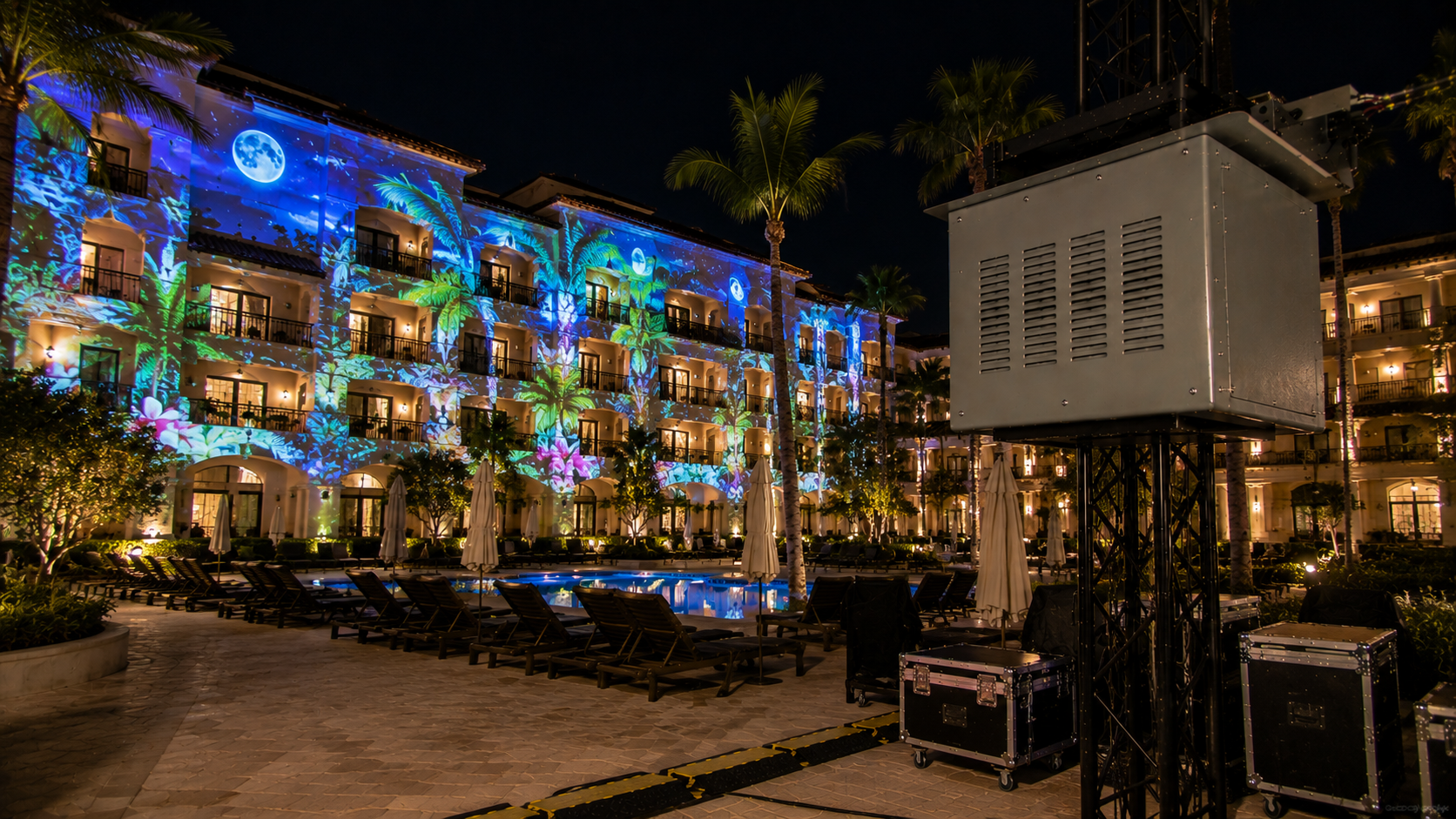
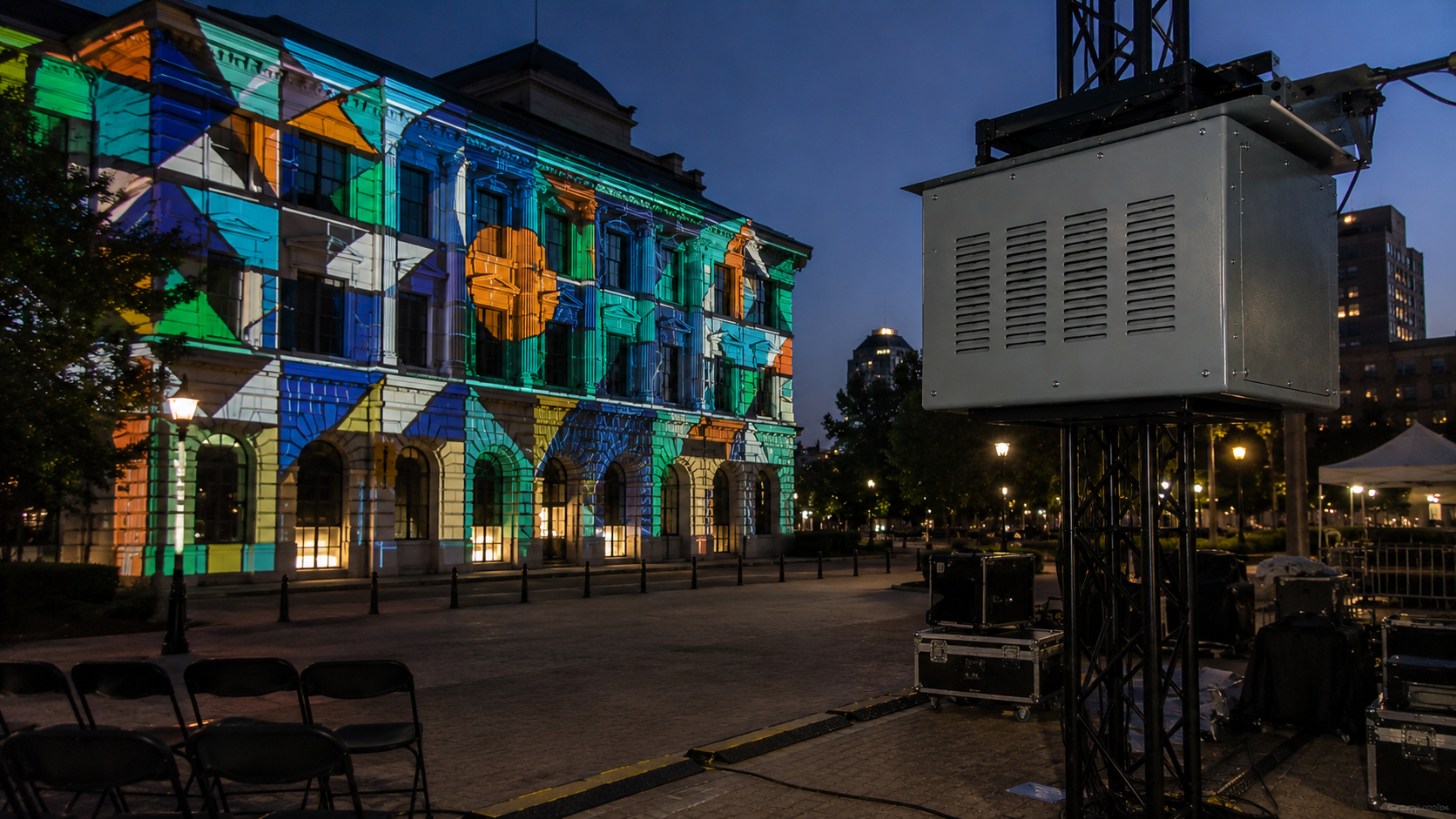
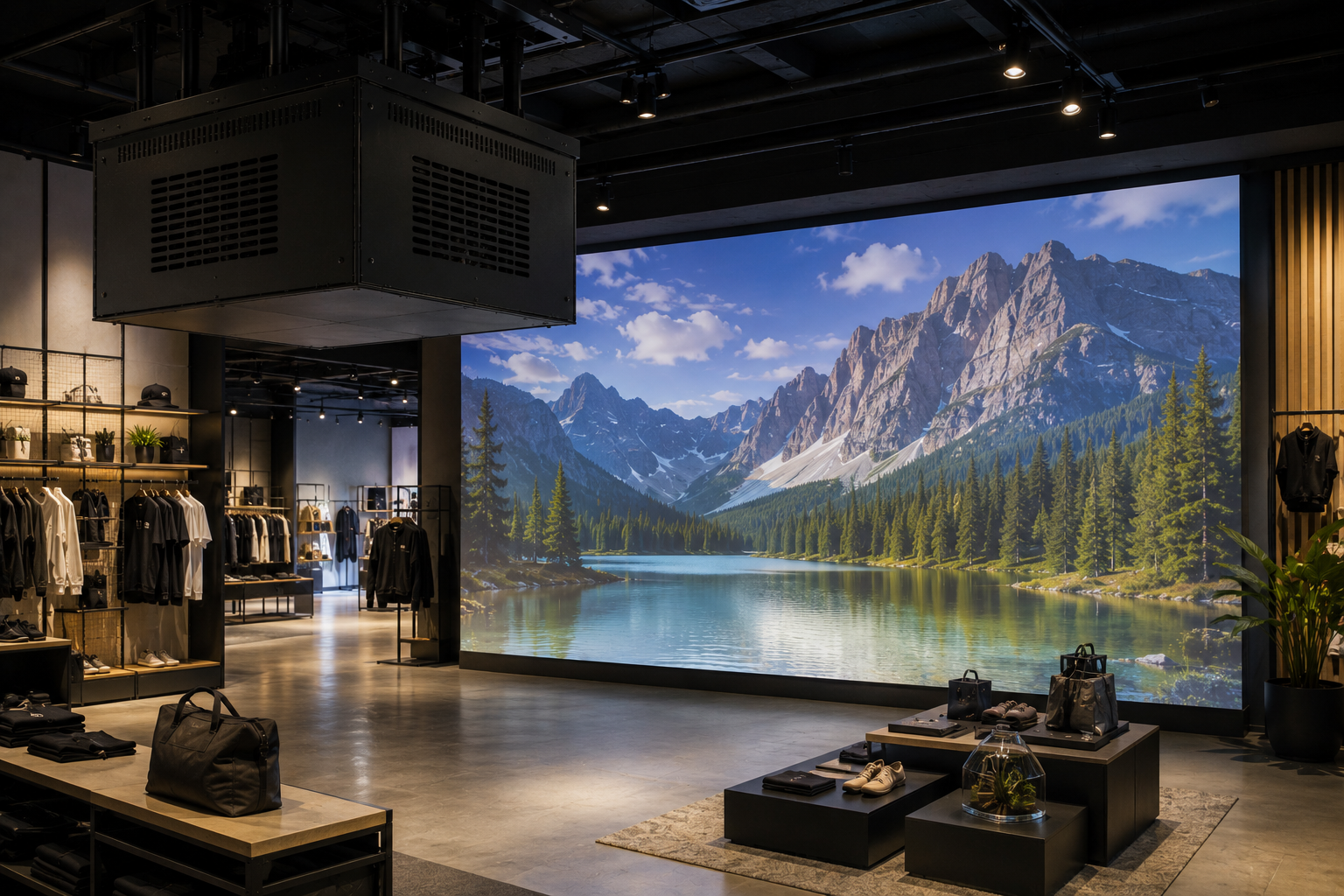
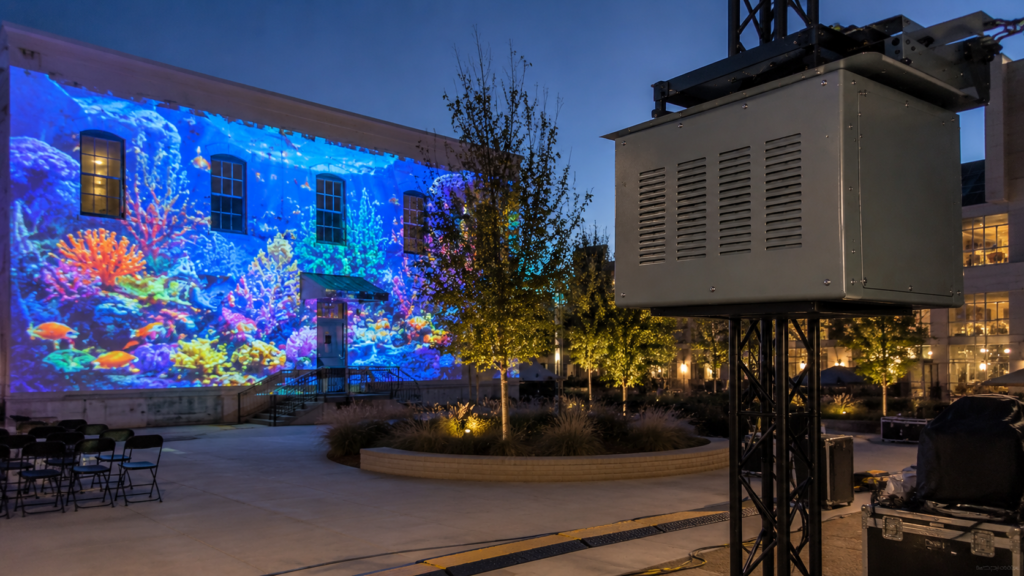
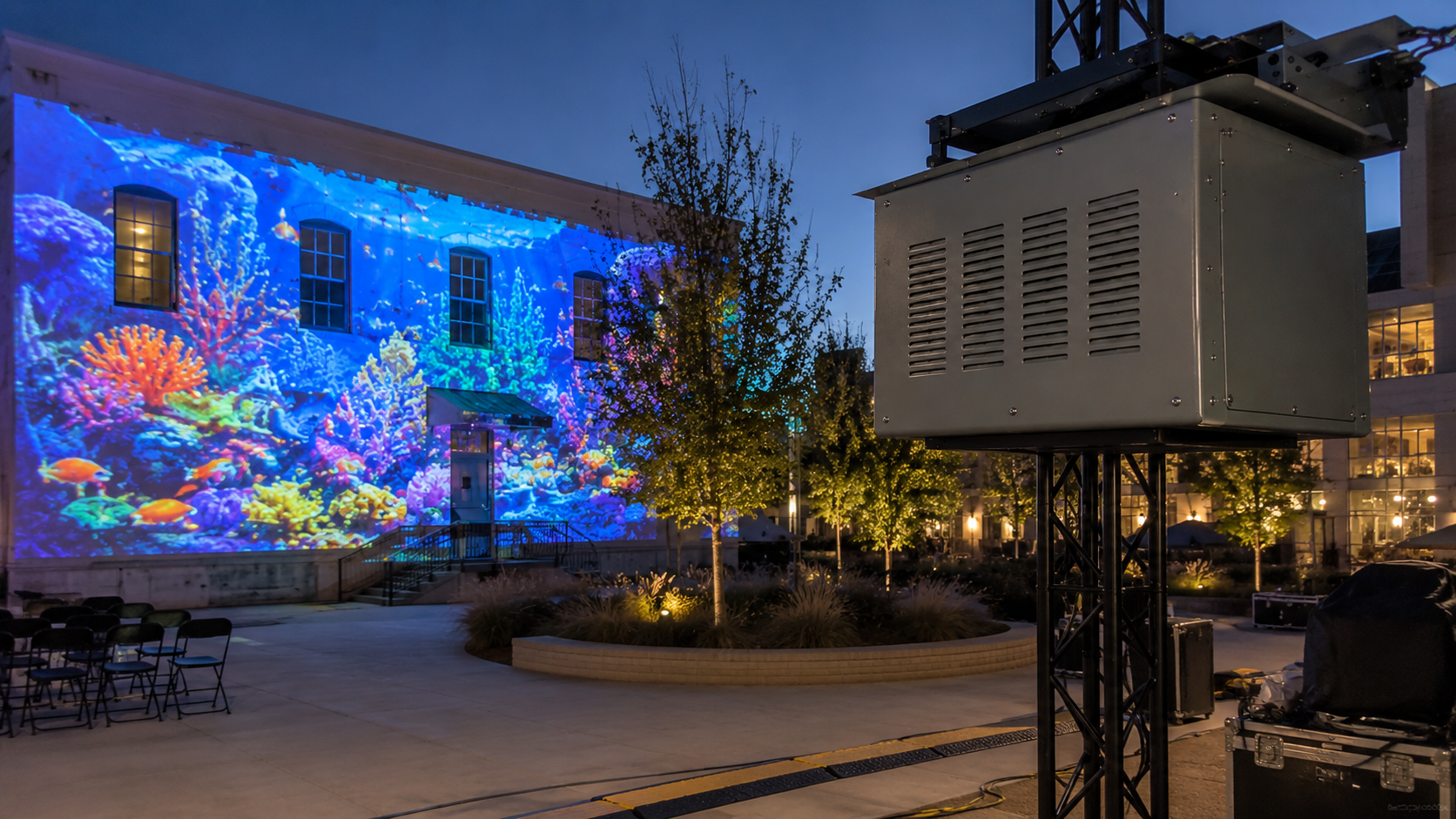
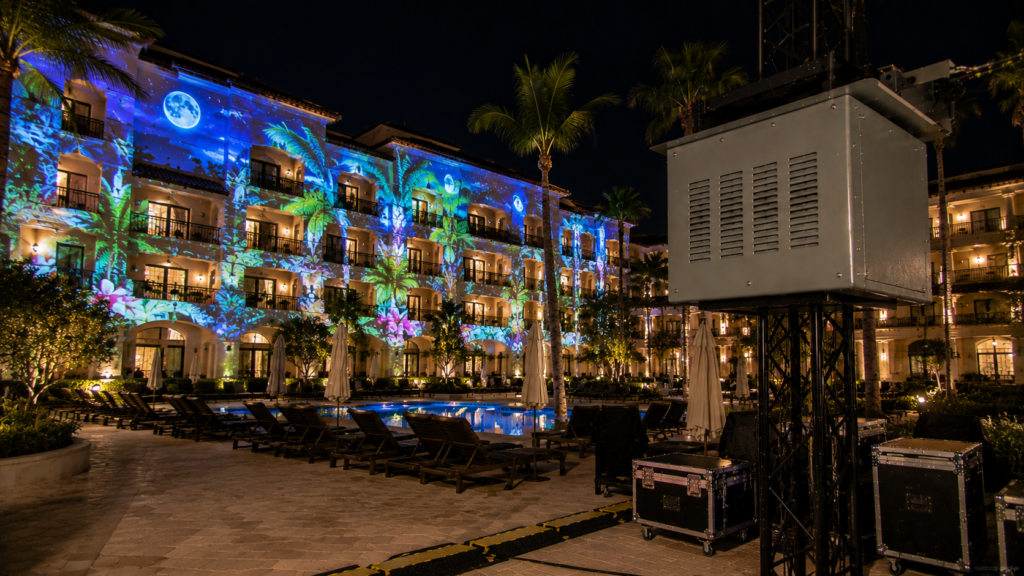
Climate controlled projector enclosure supporting resort projection mapping in an outdoor hospitality courtyard.

Climate controlled projector enclosures for resort projection mapping help protect projectors used in hotels, casinos, outdoor lounges, pool decks, entry plazas, courtyards, restaurants, and immersive guest experiences. Resorts use projection mapping to create atmosphere, tell brand stories, guide guests, and turn ordinary surfaces into memorable destinations.

However, hospitality environments can be tough on projector equipment.

A resort projector may run for hours every night. It may sit outdoors near pools, landscaping, kitchens, fountains, coastal air, guest traffic, and changing weather. Because of that, the projector needs more than a basic cover or indoor-style housing.

A climate controlled enclosure helps keep the projector protected, aligned, and ready for repeat operation.


Resort Projection Mapping Has to Feel Effortless

Guests should see the experience, not the technical struggle behind it. A mapped hotel facade, pool wall, garden feature, casino entrance, or outdoor dining area should feel smooth and intentional.

Still, the system behind the scene has to work every night.

Projection mapping depends on stable alignment. If the projector shifts, the visuals no longer fit the surface correctly. In addition, if heat, humidity, dust, or moisture affects the projector, image quality and reliability can suffer.

Therefore, the enclosure becomes part of the guest experience. It protects the projector that makes the visual moment possible.


Hospitality Environments Create Real Equipment Risk

Resorts combine beauty with environmental stress. A projector may be mounted near palms, pools, fountains, fire features, outdoor kitchens, patios, or ocean air. These areas look amazing, but they can challenge AV equipment.

Common resort projection risks include:

  • Humidity from pools, fountains, and coastal air
  • Heat from daytime sun and hardscape
  • Dust, pollen, sand, and landscaping debris
  • Insects around lights and warm equipment
  • Rain, wind, and sudden weather shifts
  • Guest-facing tampering or accidental contact
  • Long nightly operating schedules
  • Limited service windows during business hours

Because of those risks, projector protection should be planned before the system goes live.

ProjectorEnclosure.com describes the Defender Series as climate controlled projector enclosures built for outdoor and harsh-environment installations. These enclosures combine weather-resistant construction, insulation, secure access, active climate control, and service-friendly design.


Climate Control Supports Nightly Operation

Resort projection systems often run on a schedule. The projector may power on each evening, play loops for several hours, and shut down late at night.

That repeated use creates heat. Meanwhile, outdoor conditions may change from warm afternoons to cooler, more humid nights. In poolside or coastal environments, moisture can become a constant concern.

A climate controlled enclosure helps create a more stable operating space around the projector. As a result, the system can better support repeat operation without constant setup and teardown.

For hospitality teams, that matters. Reliable equipment protects the guest experience and reduces avoidable service interruptions.


Defender Series Enclosures for Resorts and Hotels

The Defender Series is designed for outdoor projector protection where standard housing is not enough. ProjectorEnclosure.com states that these climate controlled projector enclosures help protect projection equipment from changing temperatures, humidity, rain, snow, dust, and public-facing installation risks.

That makes Defender-style enclosures useful for:

  • Hotel facade projection mapping
  • Resort poolside visuals
  • Casino entry experiences
  • Outdoor restaurant ambience
  • Courtyard projection shows
  • Branded arrival moments
  • Nightly lobby exterior visuals
  • Seasonal holiday overlays
  • Spa and wellness garden experiences
  • Private event mapping

In addition, custom sizing, finish options, mounting support, lens clearance adjustments, access panel changes, and cable routing can help the enclosure fit the resort design.


Guest-Facing Projection Needs Secure Housing

Hospitality venues are public-facing. Guests, staff, vendors, cleaning crews, and event teams may move around projector locations daily.

That creates a higher risk of accidental impact, tampering, blocked access, or cable disturbance.

A secure climate controlled enclosure helps protect the projector from both environmental and human factors. Locking access panels and durable housing can reduce risk while giving technicians a serviceable installation.

In addition, the enclosure can make the projector setup look more professional. That matters in resort environments where visible equipment should still feel clean and intentional.


Dust, Sand, and Landscaping Debris Can Affect Performance

Many resorts use outdoor landscaping to create atmosphere. However, plants, mulch, sand, gravel, and high foot traffic can move debris through the air.

Dust can affect projector performance and airflow. BenQ notes that dusty environments can impact projectors and recommends protecting them from dust exposure.
https://www.benq.com/en-us/knowledge-center/knowledge/what-can-you-do-to-protect-your-school-projectors-from-dust.html

For resort projection mapping, dust can reduce image clarity and increase maintenance. Because mapped visuals rely on sharp alignment and strong image quality, the projector needs a cleaner operating environment.

A climate controlled enclosure helps reduce direct exposure to airborne debris.


Moisture Is a Major Hospitality Concern

Pools, fountains, spas, coastal air, irrigation, and evening humidity can all increase moisture exposure. Over time, unmanaged moisture can affect equipment, surfaces, and systems.

The U.S. EPA explains that moisture control matters because unmanaged moisture can affect materials and systems over time.
https://www.epa.gov/sites/default/files/2014-08/documents/moisture-control.pdf

Although that guidance focuses on buildings, the principle applies to outdoor AV installations as well. Moisture should be managed as part of the design, especially when the projector stays installed.

For resorts, this is not only a technical issue. It is also an operations issue. Fewer moisture-related problems mean fewer service interruptions.


Harsh Conditions Should Not Stop the Show

Resorts often host events, weddings, conferences, seasonal programs, and nightly entertainment. Because schedules are public-facing, the projection system needs to work when guests expect it.

ProjectorEnclosure.com discusses projection mapping in harsh conditions and explains that Defender climate controlled enclosures help make mapping possible in rain, snow, or heat.

That matters for hospitality teams because weather does not always cooperate. A better enclosure strategy helps protect the projector before, during, and after the event.


Design Integration Matters in Luxury Spaces

A resort projector enclosure cannot look like an afterthought. It may need to blend into a pergola, rooftop edge, pool cabana, landscape structure, truss, ceiling, or architectural feature.

Because of that, finish and placement matter.

ProjectorEnclosure.com lists custom options such as custom dimensions, custom color or powder coat finish, projector and lens clearance adjustments, modified ventilation or climate-control layout, custom mounting support, locking access modifications, branding, vinyl wrapping, camouflage finishes, and project-specific cable or power routing.

Those options can help the enclosure support the resort’s visual standards while still protecting the projector.


Lens Direction and Mapping Alignment Need Early Planning

Projection mapping in hospitality spaces often targets branded surfaces, decorative walls, pool features, entrances, or architectural details. The projector must aim correctly, and the enclosure must support that position.

Before choosing the enclosure location, confirm:

  • Projection surface size
  • Projector model
  • Lens model
  • Throw distance
  • Beam path
  • Guest sightlines
  • Mounting height
  • Service access
  • Cable route
  • Environmental exposure
  • Finish requirements
  • Operating schedule

ProjectorEnclosure.com recommends sharing projector model, lens model, dimensions, installation location, exposure level, temperature range, humidity concerns, mounting method, access direction, finish preference, and clearance limits before sizing a climate controlled enclosure.

With those details, SSI can help review fitment, airflow, lens clearance, and enclosure direction.


Service Access Helps Hospitality Teams Stay Operational

Resorts do not always have long service windows. Many areas stay active throughout the day and evening. Therefore, projector maintenance needs to be practical.

A strong enclosure plan should allow technicians to:

  • Open access panels safely
  • Inspect vents and filters
  • Check power and signal connections
  • Clean the projection window if needed
  • Adjust the projector
  • Remove equipment if required
  • Work without disrupting guests
  • Keep cables organized and protected

Good service access keeps maintenance faster, cleaner, and less disruptive.


Final Takeaway

Resort and hospitality projection mapping needs reliable equipment, stable alignment, clean design, guest-facing security, and protection from outdoor conditions. Heat, humidity, dust, rain, insects, coastal air, and long nightly runtimes can all affect projector performance.

Climate controlled projector enclosures for resort projection mapping help protect the projector while supporting a polished guest experience. For hotels, casinos, pool decks, courtyards, outdoor restaurants, and resort entrances, a Defender Series enclosure gives the system a stronger foundation.

Call 888-631-5880 or visit ProjectorEnclosure.com to review your projector model, lens, resort layout, mapped surface, and environmental conditions.


Sources

ProjectorEnclosure.com — Climate Controlled Projector Enclosures
https://projectorenclosure.com/climate-controlled-projector-enclosures/

ProjectorEnclosure.com — Projection Mapping in Harsh Conditions
https://projectorenclosure.com/mapping-harsh-environments/

BenQ — Protecting Projectors From Dust
https://www.benq.com/en-us/knowledge-center/knowledge/what-can-you-do-to-protect-your-school-projectors-from-dust.html

U.S. EPA — Moisture Control Guidance
https://www.epa.gov/sites/default/files/2014-08/documents/moisture-control.pdf

ProjectorEnclosure.com — The Defender Series Enclosures
https://projectorenclosure.com/store/the-defender-series-enclosures/

ProjectorEnclosure.com — Projector Enclosures Overview
https://projectorenclosure.com/projector-enclosures/

Element14 — How Sunlight, Humidity, and Moisture Affect Electronics
https://community.element14.com/learn/learning-center/the-tech-connection/b/blog/posts/how-do-sunlight-humidity-and-moisture-affect-electronics

SSI Displays — Projector Enclosures
https://ssidisplays.com/projector-enclosures/
Read more

Climate Controlled Projector Enclosures for Museum and Exhibit Projection Mapping

Climate Controlled Projector Enclosures for Museum Projection Mapping

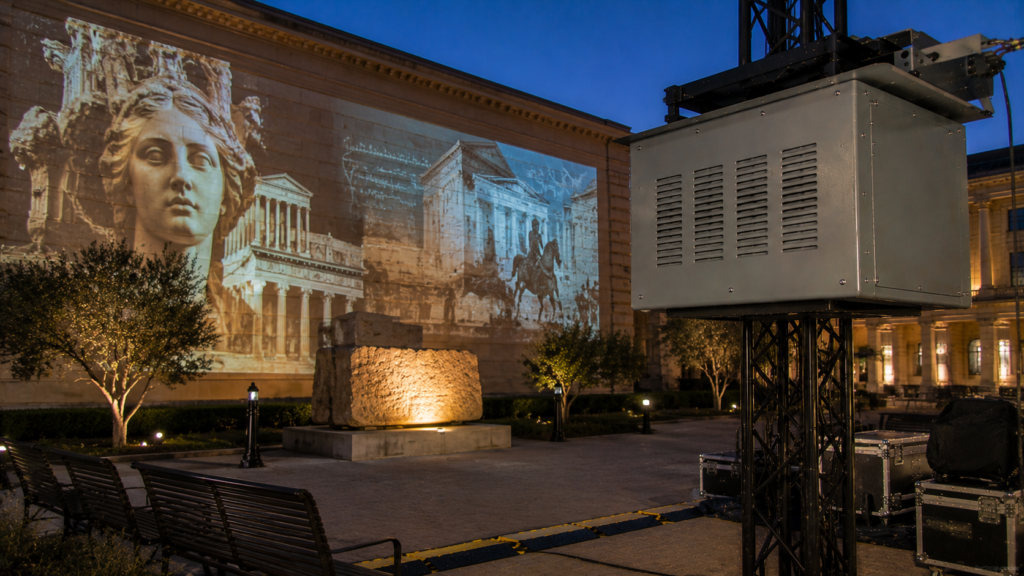
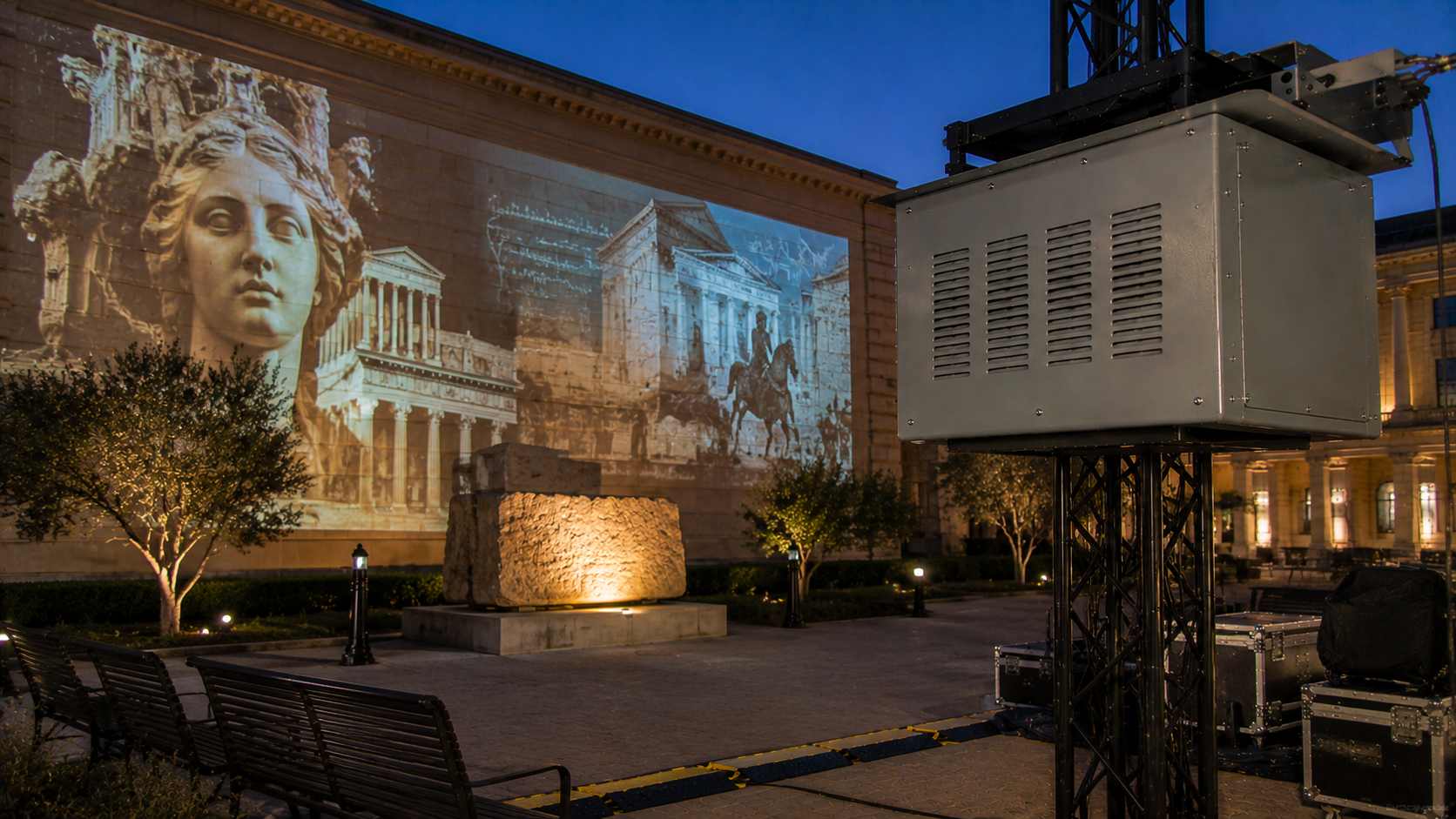
Climate controlled projector enclosure supporting museum projection mapping in an outdoor exhibit courtyard.

Climate controlled projector enclosures for museum projection mapping help protect projectors used in exhibits, immersive galleries, outdoor museum walls, artifact storytelling, historical displays, and interactive visitor experiences. Museums rely on consistency. Therefore, the projector system needs to run cleanly, stay aligned, and avoid avoidable downtime.

Projection mapping in a museum environment can be delicate. The content often supports education, atmosphere, or storytelling. In addition, the projector may run daily for long hours, sometimes near guests, exhibits, dust, humidity changes, or mixed indoor/outdoor conditions.

Because of that, the enclosure should protect both the projector and the visitor experience.


Museum Mapping Needs Precision and Reliability

Projection mapping works best when the projected content fits the surface perfectly. In a museum, that surface may be a wall, sculpture, artifact replica, exhibit set, architectural detail, immersive room, or outdoor facade.

Once alignment is complete, the projector should stay fixed.

If the projector shifts, the mapped image may drift away from the exhibit details. Likewise, if the projector overheats, collects dust, or develops moisture issues, the display may lose clarity or stop working.

A climate controlled projector enclosure helps support that precision. It keeps the projector protected while allowing the installation to remain stable over time.


Museums Often Have Mixed Environmental Conditions

Some museum mapping projects happen indoors. Others sit in lobbies, courtyards, atriums, outdoor exhibit paths, historic buildings, or semi-covered spaces.

Those environments can create changing conditions.

Dust can collect from visitor traffic. Humidity can rise in older buildings or outdoor-adjacent spaces. Heat can build inside equipment areas. Meanwhile, outdoor installations may also face rain, wind, insects, and temperature swings.

ProjectorEnclosure.com describes the Defender Series as climate controlled projector enclosures designed for outdoor and harsh-environment installations. These enclosures combine weather-resistant construction, insulation, secure access, active climate control, and service-friendly design.

That feature set matters when museums need dependable operation in spaces that are not perfectly controlled.


Long Runtime Exhibits Need Better Protection

Museum projectors often run for many hours per day. In some exhibits, the projector starts before doors open and stays active until closing.

That creates heat. Over time, heat can increase stress on projector components if the system lacks proper airflow and environmental management.

In addition, long runtimes can make dust buildup more noticeable. Air movement around equipment may pull particles toward vents, filters, and projector surfaces.

A climate controlled enclosure helps create a cleaner, more stable operating space for the projector. As a result, the exhibit has a stronger foundation for daily use.


Defender Series Enclosures for Exhibit Environments

The Defender Series is built for projector protection where standard housing is not enough. ProjectorEnclosure.com states that these climate controlled projector enclosures help protect projection equipment from changing temperatures, humidity, rain, snow, dust, and public-facing installation risks.

That makes Defender-style enclosures useful for:

  • Outdoor museum facade mapping
  • Immersive exhibit rooms
  • Historical storytelling displays
  • Sculpture projection mapping
  • Visitor center experiences
  • Science museum installations
  • Natural history exhibits
  • Atrium projection systems
  • Traveling exhibit activations
  • Semi-outdoor museum courtyards

In addition, custom sizing, finish options, projector and lens clearance adjustments, cable routing, and mounting support can help the enclosure fit the exhibit design.


Visitor-Facing Projectors Need Security

Museums are public spaces. Even when guests behave respectfully, projector equipment can still be exposed to accidental contact, curious hands, bags, strollers, carts, cleaning equipment, and maintenance activity.

Therefore, projector security matters.

A climate controlled enclosure can help protect the projector from tampering, impact, and public-facing risks. At the same time, it can make the installation look more finished and intentional.

This is especially important when the projector cannot be hidden in a projection booth or ceiling cavity.


Dust Can Affect Exhibit Quality

Dust is a real issue in public spaces. Visitors, HVAC movement, carpets, fabrics, exhibit materials, and maintenance work can all move particles through the environment.

BenQ notes that dust can affect projector performance and recommends protecting projectors from dusty environments.
https://www.benq.com/en-us/knowledge-center/knowledge/what-can-you-do-to-protect-your-school-projectors-from-dust.html

For museum mapping, dust can weaken the visitor experience. If particles collect near the projection path, the image may look softer. If dust affects airflow, the projector may run hotter than expected.

A protective enclosure helps reduce direct exposure and supports a cleaner installation.


Moisture Matters in Historic and Outdoor Museum Spaces

Museums often use historic buildings, older structures, outdoor courtyards, gardens, and architectural facades. Those spaces may not behave like modern climate-controlled rooms.

Humidity, moisture, and condensation can become concerns, especially in older buildings or outdoor-adjacent exhibit zones.

The U.S. EPA explains that unmanaged moisture can affect materials and systems over time.
https://www.epa.gov/sites/default/files/2014-08/documents/moisture-control.pdf

For projector systems, moisture planning should not be ignored. A climate controlled enclosure helps protect the equipment side of the exhibit while the museum protects the visitor-facing environment.


Projection Mapping in Harsh Museum Environments

Museum mapping is not always indoors. Outdoor museum walls, seasonal night exhibits, sculpture gardens, courtyards, and cultural centers may need projection systems that survive weather.

ProjectorEnclosure.com discusses projection mapping in harsh conditions and explains that Defender climate controlled enclosures help make mapping possible in rain, snow, or heat.

This matters when museums use projection mapping for special events, donor nights, outdoor education, public art, or seasonal programming.

A protected projector setup can help the museum expand what it can show and where it can show it.


Lens Direction and Exhibit Alignment Must Stay Clean

Museum mapping often targets specific details. A projected timeline may follow a wall shape. Animated graphics may wrap around a sculpture. A historical overlay may line up with architectural features.

Because of that, alignment matters.

Before choosing the enclosure location, confirm:

  • Projection surface type
  • Exhibit dimensions
  • Projector model
  • Lens model
  • Throw distance
  • Mounting height
  • Beam path
  • Guest sightlines
  • Service access
  • Projection window alignment
  • Cable routing
  • Environmental exposure

ProjectorEnclosure.com recommends sharing projector model, lens model, dimensions, installation location, exposure level, temperature range, humidity concerns, mounting method, access direction, finish preference, and clearance limits before sizing a climate controlled enclosure.

That information helps SSI review fitment, airflow, lens clearance, service access, and enclosure direction.


Clean Design Matters in Museum Spaces

Museum AV equipment should not distract from the exhibit. The enclosure should look clean, intentional, and appropriate for the environment.

Depending on the project, the enclosure may need to blend into a wall, ceiling, truss, exhibit structure, outdoor facade, or service area. Custom finishes can help. So can clean cable routing and thoughtful mounting.

A good enclosure protects the projector without becoming the visual focus.

In exhibit design, that matters. The content should lead. The hardware should support.


Service Access Keeps Exhibits Running

Museum staff and AV technicians need practical access to projector systems. If a projector requires inspection, cleaning, or adjustment, the enclosure should not make service difficult.

A strong enclosure plan should allow teams to:

  • Open access panels safely
  • Clean projection windows if needed
  • Check vents and filters
  • Inspect cables
  • Adjust projector position
  • Remove equipment when required
  • Service the system without disrupting guests

Good service access reduces downtime. More importantly, it helps the exhibit stay reliable over time.


Final Takeaway

Museum projection mapping needs precision, reliability, clean design, and long-term equipment protection. Projectors may run daily, face public spaces, sit near exhibits, or operate in mixed indoor/outdoor environments.

Climate controlled projector enclosures for museum projection mapping help protect projectors from heat, dust, humidity, moisture, weather, and public-facing risks. For immersive exhibits, facade mapping, sculpture projection, and cultural experiences, a Defender Series enclosure gives the system a stronger foundation.

Call 888-631-5880 or visit ProjectorEnclosure.com to review your projector model, lens, exhibit surface, and installation environment.


Sources

ProjectorEnclosure.com — Climate Controlled Projector Enclosures
https://projectorenclosure.com/climate-controlled-projector-enclosures/

ProjectorEnclosure.com — Projection Mapping in Harsh Conditions
https://projectorenclosure.com/mapping-harsh-environments/

BenQ — Protecting Projectors From Dust
https://www.benq.com/en-us/knowledge-center/knowledge/what-can-you-do-to-protect-your-school-projectors-from-dust.html

U.S. EPA — Moisture Control Guidance
https://www.epa.gov/sites/default/files/2014-08/documents/moisture-control.pdf

ProjectorEnclosure.com — The Defender Series Enclosures
https://projectorenclosure.com/store/the-defender-series-enclosures/

ProjectorEnclosure.com — Projector Enclosures Overview
https://projectorenclosure.com/projector-enclosures/

Element14 — How Sunlight, Humidity, and Moisture Affect Electronics
https://community.element14.com/learn/learning-center/the-tech-connection/b/blog/posts/how-do-sunlight-humidity-and-moisture-affect-electronics

SSI Displays — Projector Enclosures
https://ssidisplays.com/projector-enclosures/
Read more

Why Outdoor Home Theatres Need Climate Controlled Projector Enclosures

Climate Controlled Enclosures for Outdoor Home Theatres: Why Protection Matters

Climate controlled projector enclosure protecting an outdoor home theatre projector with the lens facing the backyard projection screen.

Climate controlled enclosures for outdoor home theatres make it possible to enjoy a serious backyard projection setup without leaving your projector exposed to heat, cold, dust, rain, and humidity. A projector may look tough on a patio, pergola, pool deck, or outdoor wall mount, but inside the housing, it still relies on sensitive electronics, optics, fans, lenses, and power components.

That is where the enclosure matters.

A projector built for indoor use can deliver a great image outdoors. However, it needs a controlled environment around it. Without that protection, weather can shorten the projector’s life, reduce image quality, clog airflow, and create service headaches at the worst possible time.

For homeowners building a premium outdoor theatre, the projector enclosure should not be an afterthought. It should be part of the system design from the start.


The Problem With Outdoor Projector Setups

Outdoor home theatres face more stress than indoor media rooms. During one night, the environment can shift from direct sun and heat to cool air, moisture, and dew. In addition, wind can push dust, pollen, leaves, and debris toward the projector intake vents.

That creates several problems:

Projectors need airflow to stay cool. However, outdoor air is rarely clean or consistent. Dust can build up inside the unit, while humidity can increase the chance of corrosion or electrical issues over time. Also, sudden temperature swings can create condensation concerns, especially in covered patios, poolside spaces, and coastal areas.

Because of this, simply placing a projector on a shelf or under a roof usually does not provide enough protection.


What a Climate Controlled Projector Enclosure Does

A climate controlled projector enclosure creates a protected operating space around the projector. Instead of letting the projector fight the environment alone, the enclosure helps manage heat, cold, moisture, dust, and weather exposure.

For outdoor home theatres, this matters because the projector often sits outside for long periods. Even if the projector only runs at night, it still sits through daytime heat, rain events, humidity, insects, dirt, and seasonal temperature changes.

A proper enclosure can help:

  • Keep the projector cleaner
  • Support stable operating conditions
  • Reduce exposure to rain and moisture
  • Protect the lens and electronics
  • Improve long-term reliability
  • Make permanent outdoor installs more practical

As a result, homeowners can treat the outdoor theatre more like a real entertainment space instead of a temporary weekend setup.


Why Climate Control Beats Basic Weather Covering

A basic cover may block rain, but it does not solve the full problem. In fact, a poorly planned cover can trap heat around the projector. That can create a new problem while trying to solve the first one.

Climate controlled projector enclosures take a more complete approach. They focus on the actual operating needs of the projector, including ventilation, temperature management, moisture control, and service access.

This becomes especially important for brighter home theatre projectors. Higher-output projectors often create more heat, and that heat needs a safe path out of the enclosure. Meanwhile, the lens still needs a clear projection path toward the screen, wall, or projection surface.

For outdoor home theatres, that balance is everything: protect the projector, control the environment, and keep the image clean.


Best Outdoor Home Theatre Applications

Climate controlled enclosures work well for many residential projection setups, including:

  • Backyard movie theatres
  • Poolside entertainment areas
  • Patio projection systems
  • Pergola-mounted projectors
  • Outdoor sports viewing zones
  • Holiday projection mapping
  • Permanent backyard cinema builds
  • Luxury outdoor living spaces

In addition, homeowners can use these systems for more than movies. For example, one enclosure can support live sports nights, gaming events, outdoor parties, seasonal visuals, and projection mapping effects on the home.

That flexibility makes the enclosure more than a protective box. It becomes the foundation for a year-round outdoor display system.


What to Consider Before Choosing an Enclosure

Before selecting an outdoor projector enclosure, gather the full projector details. This avoids sizing issues and helps the enclosure support the projector correctly.

You should know:

  • Projector make and model
  • Lens model
  • Projector dimensions
  • Combined projector and lens depth
  • Power draw
  • Mounting location
  • Expected temperature range
  • Rain, dust, humidity, or coastal exposure
  • Screen location
  • Throw distance
  • Access needs for service and maintenance

Also, always confirm that the projector lens faces the projection surface with the correct clearance. The enclosure should protect the system without blocking the projection path or restricting airflow.


Why Buy From ProjectorEnclosure.com

ProjectorEnclosure.com offers outdoor projector enclosure solutions designed for real installation environments, including climate controlled models for harsh outdoor conditions. These enclosures support permanent projector installs where basic covers, shelves, or DIY boxes will not cut it.

For outdoor home theatres, that means homeowners can build cleaner, more reliable projection systems with better protection from the elements.

Screen Solutions International can also help review projector models, lens sizes, installation locations, and environmental concerns before recommending an enclosure.

Call 888-631-5880 or visit ProjectorEnclosure.com to get help choosing the right enclosure.


Final Takeaway

A great outdoor home theatre needs more than a bright projector and a big screen. It needs a protected, climate managed projector location. Climate controlled enclosures for outdoor home theatres help protect the projector from heat, cold, rain, dust, and humidity while making permanent backyard projection far more practical.

If the goal is a clean, reliable, premium outdoor cinema experience, start with the enclosure.


Sources

ProjectorEnclosure.com — Climate Controlled Projector Enclosures
https://projectorenclosure.com/climate-controlled-projector-enclosures/

ProjectorEnclosure.com — Projector Enclosures Home Page
https://projectorenclosure.com/

SSI Displays — Outdoor Projector Enclosures
https://ssidisplays.com/projector-enclosures/

BenQ — Projector Guidance on Dust and Humidity
https://www.benq.com/en-us/knowledge-center/knowledge/what-can-you-do-to-protect-your-school-projectors-from-dust.html

BenQ — Avoid Excessive Humidity, Dust, or Smoke Around Projectors
https://www.benq.com/content/b2c/en-ca/support/downloads-faq/faq/product/application/projector-faq-01651.html

U.S. EPA — Moisture Control Guidance
https://www.epa.gov/sites/default/files/2014-08/documents/moisture-control.pdf

Element14 — How Sunlight, Humidity, and Moisture Affect Electronics
https://community.element14.com/learn/learning-center/the-tech-connection/b/blog/posts/how-do-sunlight-humidity-and-moisture-affect-electronics

Read more

Climate Controlled Projector Enclosures for Theme Park Projection Mapping

Climate Controlled Projector Enclosures for Theme Park Projection Mapping

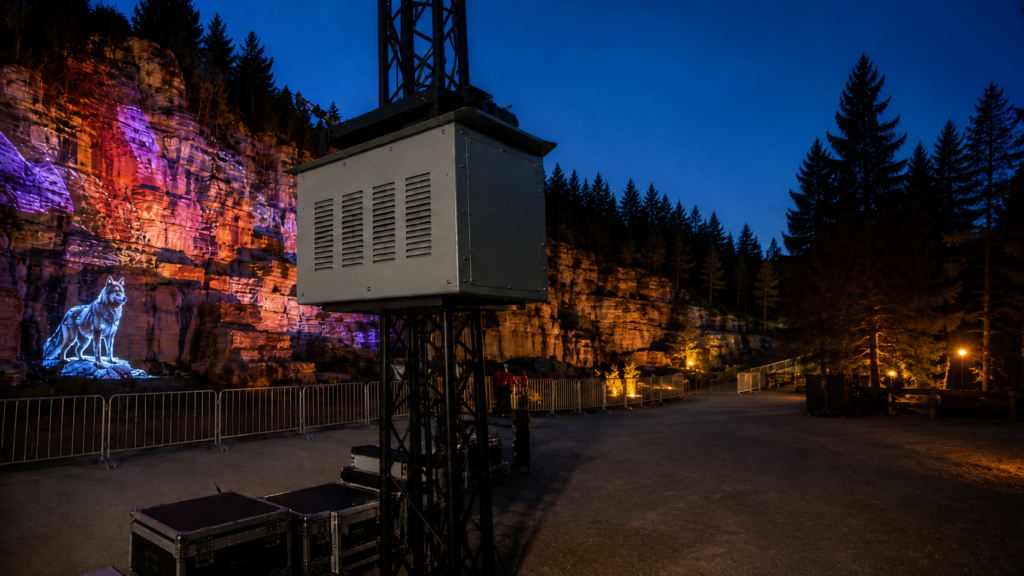
Climate controlled projector enclosure supporting projection mapping for a theme park attraction.

Climate controlled projector enclosures for theme park projection mapping help protect projectors used in attractions, nighttime shows, immersive queues, seasonal events, walk-through experiences, and themed environments. Theme parks depend on repeatable show quality. Therefore, the projector system needs to perform night after night without becoming a maintenance nightmare.

Projection mapping in a theme park is different from a one-time event. The projector may run for long hours, stay installed outdoors, face heavy guest traffic, and deal with heat, humidity, dust, rain, insects, cold nights, and daily temperature changes.

Because of that, the enclosure is not just a protective box. It becomes part of the show system.


Theme Park Mapping Needs Repeatable Performance

Theme park guests expect the same experience every time. A mapped castle, facade, rock wall, ride entrance, tunnel, or scenic prop should look aligned and bright each night.

However, projection mapping depends on exact projector placement. If the projector shifts even slightly, the image can drift away from the mapped surface. In addition, if heat, dust, or moisture affects the projector, the show may lose brightness, clarity, or reliability.

A climate controlled enclosure helps protect that repeatability. It allows the projector to remain installed in a fixed position while reducing exposure to harsh outdoor conditions.

As a result, operators can focus more on show quality and less on emergency projector issues.


Outdoor Attractions Create Harsh Conditions

Theme park environments can be rough on AV equipment. Outdoor projectors may sit near landscaping, fog effects, water features, guest paths, food areas, ride structures, parade routes, or show control zones.

Those locations can introduce several risks:

  • Heat from sun, pavement, and nearby structures
  • Moisture from rain, humidity, fog, or water effects
  • Dust from landscaping, foot traffic, and wind
  • Insects around warm equipment
  • Long nightly runtimes
  • Tampering or accidental guest contact
  • Difficult service access
  • Seasonal temperature swings

Because of these factors, exposed projectors or basic housings rarely make sense for serious attraction work.

ProjectorEnclosure.com describes the Defender Series as climate controlled projector enclosures built for outdoor and harsh-environment installations, combining weather-resistant construction, insulation, secure access, active climate control, and service-friendly design.


Climate Control Supports Long Show Runs

Theme park projection systems often run longer than casual displays. A projector may power on before guests arrive in an area, continue through multiple show cycles, and remain active late into the night.

That extended runtime creates heat. Meanwhile, the outside environment may shift from warm afternoon air to cooler, more humid evening conditions. Therefore, the projector needs a housing that supports both operation and protection.

Climate controlled enclosures help manage the environment around the projector. In turn, the system has a better chance of staying stable during long attraction schedules.

This matters most when the projector supports a key guest experience. Downtime is not just technical. It affects the show.


Defender Series Enclosures Fit Attraction Environments

The Defender Series is designed for outdoor projector protection where standard housing is not enough. ProjectorEnclosure.com states that these climate controlled projector enclosures help protect projection equipment from changing temperatures, humidity, rain, snow, dust, and public-facing installation risks.

That makes Defender-style enclosures useful for theme park applications such as:

  • Nighttime spectaculars
  • Castle or facade projection mapping
  • Queue line effects
  • Ride pre-show rooms with outdoor exposure
  • Outdoor scenic walls
  • Seasonal Halloween and holiday overlays
  • Water feature projection effects
  • Resort entertainment areas
  • Museum-style park exhibits
  • Immersive walk-through attractions

Additionally, custom sizing, projector and lens clearance adjustments, custom mounting support, finish options, access panel modifications, and project-specific cable routing can help the enclosure fit the attraction design.


Guest-Facing Installs Need Security

Theme parks have heavy foot traffic. Even when the projector sits above guests or behind barriers, the system may still face public-facing risks.

Guests may touch equipment, bump nearby structures, spill drinks, or enter areas they should avoid. Meanwhile, outdoor maintenance crews, performers, and operations teams may move through the same space.

For that reason, secure access matters.

A climate controlled enclosure with locking access and durable construction helps protect the projector from tampering, accidental impact, and environmental exposure. It also helps keep the installation looking intentional instead of temporary.

That is especially important when the equipment is visible from guest areas.


Dust, Fog, and Moisture Can Affect Image Quality

Theme parks often use fog, mist, water effects, landscaping, and textured scenic surfaces. Those features look great for guests, but they can create more exposure for projectors.

Dust can collect around airflow paths. Moisture can affect optical clarity. Insects can gather around warm housings and lights. Over time, these factors can increase maintenance needs.

BenQ notes that dust can affect projector performance and recommends protecting projectors from dusty environments.
https://www.benq.com/en-us/knowledge-center/knowledge/what-can-you-do-to-protect-your-school-projectors-from-dust.html

Meanwhile, the U.S. EPA explains that unmanaged moisture can affect materials and systems over time.
https://www.epa.gov/sites/default/files/2014-08/documents/moisture-control.pdf

For theme park mapping, both concerns are practical. If the projection path gets dirty or the projector struggles with moisture, the show can look weaker.


Harsh Conditions Should Be Planned Before Installation

Projection mapping in theme parks often happens in difficult locations. Some projectors mount on truss, rooftops, poles, platforms, scenic structures, or custom steel frames. Others sit inside equipment areas with limited access.

Because of that, enclosure planning should happen early.

ProjectorEnclosure.com discusses projection mapping in harsh conditions and explains that Defender climate controlled enclosures help make mapping possible in rain, snow, or heat.

That matters because retrofitting protection after the install can become expensive. Proper planning helps avoid blocked vents, poor service access, wrong cable paths, and awkward projection angles.


Lens Direction and Surface Alignment Stay Critical

Theme park mapping often targets complex surfaces. Unlike a flat screen, a mapped surface may include arches, rock textures, windows, columns, scenic props, show set pieces, or ride architecture.

Therefore, the projector must aim precisely.

Before choosing the enclosure location, confirm:

  • Mapping surface dimensions
  • Projector model
  • Lens model
  • Throw distance
  • Lens shift needs
  • Mounting height
  • Beam path
  • Scenic obstructions
  • Guest sightlines
  • Service access
  • Power and signal routing
  • Weather exposure level

ProjectorEnclosure.com recommends sharing projector model, lens model, dimensions, location, exposure level, temperature range, humidity concerns, mounting method, access direction, finish preference, and clearance limits before sizing a climate controlled enclosure.

With those details, SSI can help review fitment, airflow, lens clearance, and enclosure direction.


Service Access Keeps Attractions Running

Theme park technicians need practical access to projector systems. A show-critical projector should not require a major teardown for basic inspection.

A strong enclosure plan should allow teams to:

  • Open service panels safely
  • Inspect vents and filters
  • Clean projection windows when needed
  • Check cable connections
  • Remove or adjust the projector
  • Access power components
  • Maintain alignment
  • Work around guest areas safely

Good service access reduces downtime. It also makes preventive maintenance easier, which matters in environments with nightly operation.


Better Enclosures Help Protect the Creative Investment

Projection mapping content takes planning, design, animation, calibration, and testing. The projector is the final delivery point for all that work.

If the projector fails, the content cannot do its job.

A climate controlled enclosure protects that creative investment by supporting the hardware behind the experience. It helps the projector stay aligned, protected, and serviceable in real theme park conditions.

That is why enclosure planning should sit beside content design, projector selection, media playback, mounting, and show control from the start.


Final Takeaway

Theme park projection mapping needs repeatable performance, stable alignment, long-runtime support, weather protection, guest-area security, and practical service access.

Climate controlled projector enclosures for theme park projection mapping help protect projectors from heat, cold, humidity, rain, dust, insects, and public-facing installation risks. For attractions, nighttime shows, seasonal overlays, and immersive environments, a Defender Series enclosure gives the system a stronger technical foundation.

Call 888-631-5880 or visit ProjectorEnclosure.com to review your projector model, lens, attraction layout, mapped surface, and environmental conditions.


Sources

ProjectorEnclosure.com — Climate Controlled Projector Enclosures
https://projectorenclosure.com/climate-controlled-projector-enclosures/

ProjectorEnclosure.com — Projection Mapping in Harsh Conditions
https://projectorenclosure.com/mapping-harsh-environments/

BenQ — Protecting Projectors From Dust
https://www.benq.com/en-us/knowledge-center/knowledge/what-can-you-do-to-protect-your-school-projectors-from-dust.html

U.S. EPA — Moisture Control Guidance
https://www.epa.gov/sites/default/files/2014-08/documents/moisture-control.pdf

ProjectorEnclosure.com — The Defender Series Enclosures
https://projectorenclosure.com/store/the-defender-series-enclosures/

ProjectorEnclosure.com — Projector Enclosures Overview
https://projectorenclosure.com/projector-enclosures/

Element14 — How Sunlight, Humidity, and Moisture Affect Electronics
https://community.element14.com/learn/learning-center/the-tech-connection/b/blog/posts/how-do-sunlight-humidity-and-moisture-affect-electronics

SSI Displays — Projector Enclosures
https://ssidisplays.com/projector-enclosures/
Read more

Climate Controlled Projector Enclosures for Event Projection Mapping

Climate Controlled Projector Enclosures for Event Projection Mapping

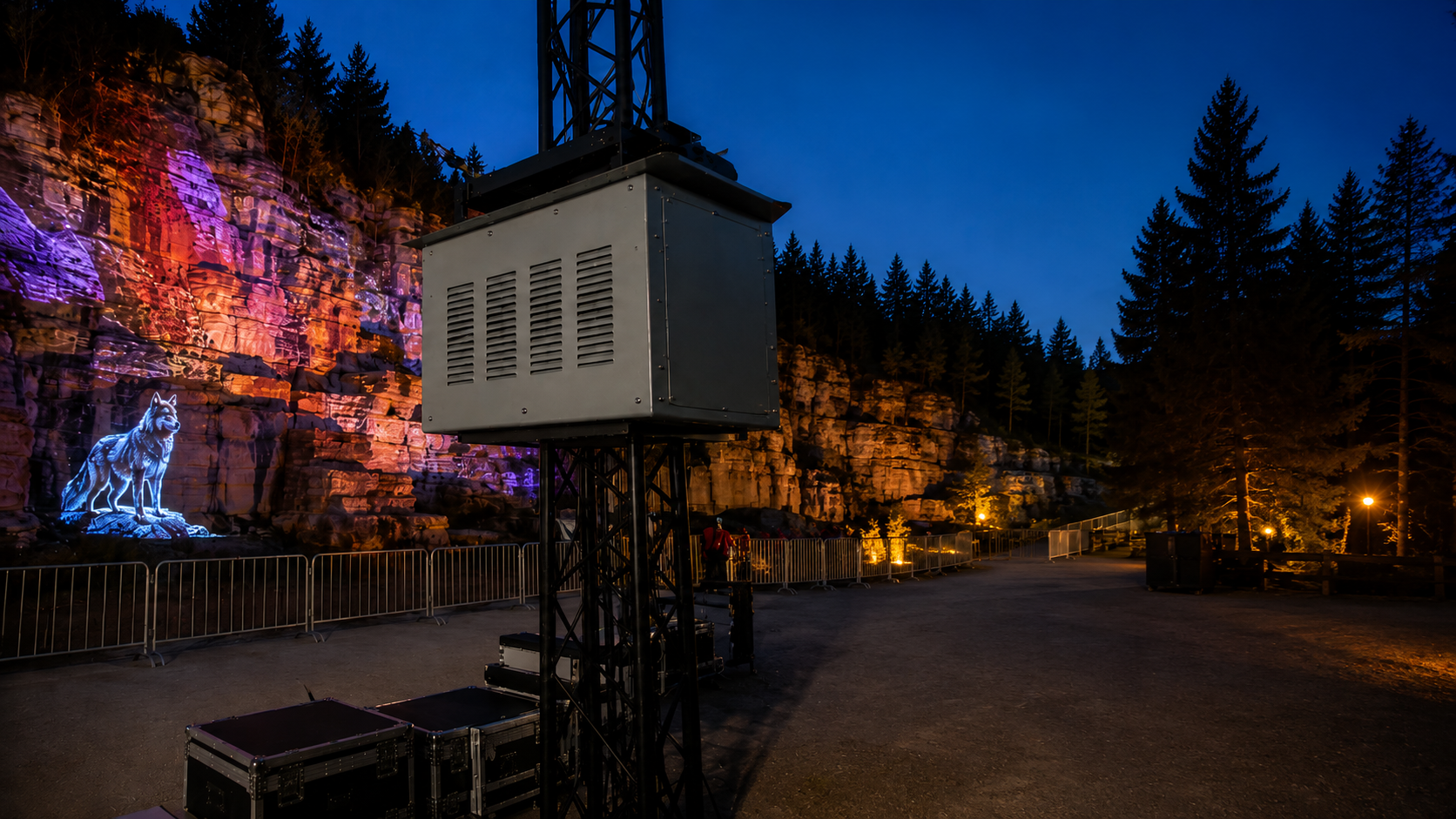
Climate controlled projector enclosure mounted on truss for a temporary event projection mapping setup.

Climate controlled projector enclosures for event projection mapping help protect projectors during outdoor shows, brand activations, festivals, corporate events, public art displays, and seasonal experiences. Event mapping often looks temporary, but the technical demands are serious.

A projector may only run for one night. However, the setup can still face rain, humidity, heat, dust, wind, cold, long runtimes, and security concerns.

Because of that, event projection mapping needs more than a projector on a stand. The projector must stay aligned, protected, accessible, and ready from setup through teardown.


Temporary Events Still Need Serious Projector Protection

Temporary does not mean low-risk.

Event crews may install equipment hours or days before the show. During that time, projectors can sit outside through weather shifts, dust, site traffic, and temperature changes. In addition, mapped content usually depends on precise alignment. If the projector moves after calibration, the entire visual can look off.

For that reason, the projector enclosure should support both protection and position stability.

A climate controlled enclosure helps keep the projector protected while allowing the mapping team to hold alignment throughout rehearsal, showtime, and teardown.


Event Mapping Faces Real-World Conditions

Outdoor events rarely happen in perfect environments. A plaza, courtyard, stadium concourse, resort lawn, museum exterior, or festival site can change quickly once the sun goes down.

Wind can pick up. Humidity can rise. Dust can move across the site. Rain can appear without much warning. Meanwhile, the projector may run for several hours at high output.

ProjectorEnclosure.com describes the Defender Series as climate controlled projector enclosures built for outdoor and harsh-environment installations. These enclosures combine weather-resistant construction, insulation, secure access, active climate control, and service-friendly design.

That makes them a strong fit for temporary projection mapping events that still need professional reliability.


Why Climate Control Matters During Long Event Runs

Projection mapping events often start before guests arrive. The system may run through testing, alignment, rehearsal, preshow content, the main show, and post-event visuals.

As a result, the projector may operate longer than expected.

Heat management becomes important during those extended runs. At the same time, outdoor temperature may drop after sunset, which can increase moisture concerns. Because projectors rely on optics, electronics, and airflow, those changing conditions can affect performance.

Climate controlled projector enclosures help support a more stable equipment environment. In turn, the projector has a better chance of staying consistent throughout the event.


Projection Mapping Requires Locked-In Alignment

Event mapping usually involves custom content built for a specific surface. That surface may be a building, stage set, sculpture, branded structure, vehicle, wall, or temporary scenic element.

Once the content lines up, the projector should not move.

Even a small shift can create obvious issues. Graphics may slide off architectural details. Animated outlines may miss the intended edges. Textures may no longer match the physical object.

Therefore, enclosure mounting should be planned around stability. A Defender-style enclosure can mount to truss, platforms, structural supports, or other project-specific hardware, depending on site requirements and engineering review.


Defender Series Enclosures Support Event Environments

The Defender Series is designed for outdoor projector protection where standard housings are not enough. ProjectorEnclosure.com states that these climate controlled projector enclosures help protect projection equipment from changing temperatures, humidity, rain, snow, dust, and public-facing installation risks.

That protection supports event mapping applications such as:

  • Outdoor corporate activations
  • Festival projection mapping
  • Museum event projections
  • Resort and hospitality shows
  • Retail launch events
  • Public art installations
  • Holiday mapping displays
  • Temporary building projections
  • Stadium and arena exterior visuals
  • Brand experience environments

Additionally, custom sizing, cable routing, finish options, lens clearance changes, and mounting support can help the enclosure fit the event layout.


Harsh Weather Can Hit During Setup

Most people think about showtime conditions. However, setup conditions matter too.

Crews may install equipment during the day, when heat and dust are worse. Then, the show may run at night, when humidity rises. Finally, teardown may happen late, when temperatures drop further.

ProjectorEnclosure.com discusses projection mapping in harsh conditions and explains that Defender climate controlled enclosures help make mapping possible in rain, snow, or heat.

For event producers, that matters because the schedule is tight. If the projector has problems during setup or rehearsal, the entire production can fall behind.


Dust and Moisture Can Create Event-Day Problems

Event sites can be dusty. Truss movement, foot traffic, landscaping, staging, vehicles, and wind can all push debris toward equipment.

Dust near the lens or projection window can soften the image. It can also affect airflow over time. BenQ notes that dust can affect projector performance and recommends protecting projectors from dusty environments.
https://www.benq.com/en-us/knowledge-center/knowledge/what-can-you-do-to-protect-your-school-projectors-from-dust.html

Moisture is another concern. The U.S. EPA explains that unmanaged moisture can affect materials and systems over time.
https://www.epa.gov/sites/default/files/2014-08/documents/moisture-control.pdf

Although those sources are not event-specific, the point applies clearly to outdoor AV: protect equipment before small environmental problems become big production problems.


Cable Routing Should Be Clean and Safe

Temporary projection mapping often requires power, signal, networking, media playback, and control cabling. If those cables run through public or crew areas, they must be organized carefully.

A clean event setup should plan for:

  • Power distribution
  • Signal cable runs
  • Network lines
  • Media server location
  • Cable ramps
  • Weather-safe routing
  • Service loops
  • Truss access
  • Backup equipment
  • Technician reach

ProjectorEnclosure.com lists project-specific cable and power routing as a custom option for climate controlled enclosure projects.

That flexibility helps event teams build cleaner, safer, and more professional mapping installations.


Service Access Matters During Live Events

Event crews need access. If the projector needs adjustment, inspection, or troubleshooting, the enclosure should not block the work.

Before installation, confirm:

  • Access panels can open fully
  • The projector can be adjusted inside the enclosure
  • Vents have clearance
  • Cable connections can be reached
  • The enclosure can be serviced from a safe position
  • The mounting location does not block emergency access
  • The projection path stays clear of guests and crew

With good planning, technicians can solve small issues faster. Without it, simple fixes can become show-stopping delays.


Temporary Mapping Can Still Look Professional

Event projection mapping should look polished, even when the installation is temporary. A climate controlled enclosure helps hide the projector inside a cleaner, more finished system.

Instead of an exposed projector sitting on a stand, the setup can look like professional AV infrastructure. The enclosure, truss, cable ramps, and production cases can all read as intentional.

That matters for brand activations, corporate events, high-end hospitality shows, and public-facing productions. The audience may not focus on the gear, but clean gear still improves the overall impression.


Final Takeaway

Temporary event projection mapping still needs stable alignment, weather protection, heat management, moisture control, cable planning, and service access. A projector may only run for one night, but that one night has to work.

Climate controlled projector enclosures for event projection mapping help protect the projector before, during, and after the show. For festivals, brand activations, building projections, public art, resorts, and corporate events, a Defender Series enclosure gives the mapping system a stronger foundation.

Call 888-631-5880 or visit ProjectorEnclosure.com to review your projector model, lens, event surface, mounting method, and site conditions.


Sources

ProjectorEnclosure.com — Climate Controlled Projector Enclosures
https://projectorenclosure.com/climate-controlled-projector-enclosures/

ProjectorEnclosure.com — Projection Mapping in Harsh Conditions
https://projectorenclosure.com/mapping-harsh-environments/

BenQ — Protecting Projectors From Dust
https://www.benq.com/en-us/knowledge-center/knowledge/what-can-you-do-to-protect-your-school-projectors-from-dust.html

U.S. EPA — Moisture Control Guidance
https://www.epa.gov/sites/default/files/2014-08/documents/moisture-control.pdf

ProjectorEnclosure.com — The Defender Series Enclosures
https://projectorenclosure.com/store/the-defender-series-enclosures/

ProjectorEnclosure.com — Projector Enclosures Overview
https://projectorenclosure.com/projector-enclosures/

Element14 — How Sunlight, Humidity, and Moisture Affect Electronics
https://community.element14.com/learn/learning-center/the-tech-connection/b/blog/posts/how-do-sunlight-humidity-and-moisture-affect-electronics

SSI Displays — Projector Enclosures
https://ssidisplays.com/projector-enclosures/
Read more

Fan-Cooled Projector Enclosures for Corporate Boardrooms, Training Rooms, and Experience Centers

Fan-Cooled Projector Enclosures for Corporate AV Spaces

Fan-cooled projector enclosure installed in a corporate boardroom with the projected display as the main focus.

A fan-cooled projector enclosure gives corporate boardrooms, training rooms, executive briefing centers, innovation labs, conference rooms, and customer experience centers a cleaner way to protect projector equipment.

Corporate spaces rely on AV systems every day. Teams use projectors for presentations, training sessions, product demos, investor meetings, hybrid collaboration, internal events, and branded experiences. Because these rooms often support high-value conversations, the technology needs to work without drawing attention to itself.

However, exposed projectors can create problems.

Dust collects around vents. Cables look messy. Employees may bump equipment during room resets. Visitors may see exposed hardware in premium presentation spaces. In addition, projectors can run for long meetings, workshops, and back-to-back training sessions.

Therefore, a projector needs more than a basic ceiling mount.

A fan-cooled projector enclosure helps protect the projector while still supporting airflow. As a result, the room looks cleaner, the equipment stays better protected, and the AV system feels more intentional.


Why Corporate Spaces Need Projector Protection

Corporate AV has become more important as companies redesign spaces for collaboration, training, hybrid work, and customer engagement. AVIXA explains that modern conference room design brings together acoustics, lighting, technology, and layout to support collaboration and productivity.

That matters because projectors often support the main visual experience in the room. A boardroom may use projection for executive presentations. A training room may use it for all-day instruction. A customer experience center may use it for branded storytelling and product demos.

Because of that, the projector should not feel like an exposed afterthought.

Instead, it should look integrated into the space. A fan-cooled enclosure helps make that happen.


Why Airflow Matters in Meeting Rooms

Projectors generate heat. They also need clean airflow to operate safely.

Epson explains that projector air filters and vents need cleaning to help prevent overheating caused by blocked ventilation. BenQ also recommends avoiding tight enclosed spaces and keeping projector vents clear.

This matters in corporate rooms because projectors may run for long periods. For example, a training room may host sessions all day. A boardroom may support a long quarterly review. A conference room may run through multiple meetings without a break.

Therefore, the projector needs protection. However, it also needs air.

A sealed cabinet can trap heat. In contrast, a purpose-built fan-cooled enclosure helps move air through the housing while protecting the projector.


What a Fan-Cooled Projector Enclosure Does

A fan-cooled projector enclosure gives the projector a ventilated protective housing. It helps guard against dust, tampering, accidental contact, cable clutter, and heat buildup.

ProjectorEnclosure.com explains that fan-cooled systems bring in filtered ambient air and exhaust hot air from the enclosure. It also positions fan-cooled enclosures as a way to help keep projectors protected, clean, and cool.

Screen Solutions International also lists the Integrator as its fan-cooled enclosure line and offers Defender climate-controlled enclosures, Hush enclosures, UST enclosures, and projector cage options for different applications.

Because of that, fan-cooled enclosures fit many corporate applications where the projector stays indoors, under cover, or in a mild operating location.

They can help protect against:

  • Dust
  • Heat buildup
  • Cable clutter
  • Accidental contact
  • Unauthorized access
  • Ceiling debris
  • Long meeting runtimes
  • Visual distraction from exposed hardware
  • Frequent room reconfiguration
  • Service access issues

For corporate spaces, that protection helps support a more polished presentation environment.


Best Corporate Applications for Fan-Cooled Projector Enclosures

A fan-cooled projector enclosure can support many corporate rooms. However, it works best when the projector sits indoors, under cover, and in a mild operating environment.

1. Boardrooms

Boardrooms need to look sharp. Executives, clients, partners, and investors may all use the same room. Therefore, exposed AV equipment can weaken the design.

A fan-cooled enclosure helps hide and protect the projector while giving the ceiling installation a cleaner finish.

2. Training Rooms

Training rooms often run projectors for long sessions. In addition, companies may move tables, chairs, laptops, whiteboards, and presentation equipment between sessions.

Because of that, projector protection matters. A fan-cooled enclosure helps reduce dust exposure and accidental contact while supporting airflow during long training days.

3. Executive Briefing Centers

Executive briefing centers often host important customer meetings, sales demos, product presentations, and leadership sessions.

In these spaces, appearance matters. A black or white powder-coated enclosure can help the projector blend into the room while keeping the technology protected.

4. Innovation Labs

Innovation labs and demo rooms often use projection for prototypes, interactive displays, digital twins, product walkthroughs, and design reviews.

Because these rooms may change layouts often, a secured projector enclosure helps protect the equipment from movement, contact, and setup activity.

5. Customer Experience Centers

Customer experience centers use AV to tell a brand story. Projection can support large visuals, product explainers, immersive walls, branded motion graphics, and launch presentations.

As a result, the projector becomes part of the customer journey. A fan-cooled enclosure helps keep the hardware secondary while the projected experience takes the spotlight.


Corporate AV Is Becoming More Flexible

Corporate rooms now need to support both in-person and remote collaboration. Microsoft’s Work Trend Index tracks the shift in how work changes across industries, and Microsoft has also discussed the rise of hybrid meetings and collaboration technology.

This shift affects room design. Teams now expect meeting rooms to work smoothly, look professional, and support different presentation formats.

AVIXA also notes that small conference rooms need clear audio, quality displays, versatile cameras, and user-friendly technology.

Although many rooms use flat panels, projection still makes sense when companies need larger images, flexible screen sizes, immersive visuals, or cleaner wall design.

Therefore, the projector should match the professionalism of the room.

A fan-cooled enclosure helps make the installation look planned instead of temporary.


Real-World Places Where This Makes Sense

Fan-cooled projector enclosures can help corporate AV spaces in business hubs where companies invest heavily in meeting rooms, training spaces, and executive experience centers.

New York City, New York

New York corporate offices, finance firms, law firms, showrooms, and executive meeting spaces often need clean presentation environments. A fan-cooled enclosure can help protect projectors in high-value boardrooms and client-facing spaces.

San Francisco and Silicon Valley, California

Technology companies often use innovation labs, demo rooms, and customer experience centers. Projection can support product storytelling, training, and immersive presentations.

Chicago, Illinois

Chicago corporate offices, consulting firms, universities, and training centers often rely on flexible presentation rooms. Fan-cooled enclosures can help protect projectors during daily use.

Dallas, Texas

Dallas has strong corporate, finance, healthcare, and technology sectors. Training rooms, briefing centers, and conference rooms can benefit from protected projector installations.

Atlanta, Georgia

Atlanta corporate campuses and training facilities often support large teams and regional meetings. A fan-cooled enclosure can help standardize projector protection across multiple rooms.

London, United Kingdom

London boardrooms, financial offices, and customer presentation centers often require refined interiors. A clean projector enclosure can help protect the technology while preserving the room design.


Fan-Cooled vs. Hush vs. Climate-Controlled

Different corporate spaces need different enclosure types.

A fan-cooled projector enclosure works best when the projector needs protection and airflow in an indoor, covered, or mild environment.

A Hush enclosure works better when noise control creates the main concern. For example, a quiet boardroom, executive briefing center, or recording room may need reduced projector noise more than basic protection.

A climate-controlled projector enclosure works better when the projector faces heat, cold, humidity, outdoor exposure, or harsh environmental conditions. This can apply to outdoor corporate patios, rooftop presentation areas, and exposed brand activations.

So, for a standard training room or boardroom, fan-cooled often makes sense. However, for a quiet executive presentation space, Hush may work better. For outdoor corporate projection, climate-controlled protection may be required.


Why Companies Should Avoid DIY Projector Cabinets

A custom cabinet may look clean at first. However, it can create a serious airflow problem.

Projectors need open intake and exhaust paths. If a cabinet blocks those paths, heat can build up quickly. Then the projector may dim, shut down, show warning lights, or suffer long-term damage.

Therefore, corporate teams should avoid random millwork boxes, sealed cabinets, and decorative covers that restrict ventilation.

A purpose-built fan-cooled projector enclosure supports airflow, service access, mounting, cable routing, and security. In other words, it protects the projector without suffocating it.

That difference matters when the room hosts important meetings.


Benefits for Corporate AV and Facility Teams

Cleaner Room Design

First, the enclosure helps the projector look integrated. Instead of exposed hardware, the room gets a finished AV installation.

Better Dust Protection

Next, the enclosure helps reduce exposure to dust, ceiling debris, HVAC movement, and daily room activity.

Better Airflow

Because the enclosure uses ventilation, it helps move air instead of trapping heat around the projector.

More Security

Also, locking access helps reduce unauthorized handling in shared rooms, public-facing offices, and customer experience centers.

Easier Standardization

In addition, companies can use similar enclosure styles across multiple rooms. That helps IT and facilities teams create a consistent AV standard.

Stronger Client Presentation

Finally, protected projection keeps the focus on the meeting, presentation, or brand story instead of the equipment.


What to Check Before Choosing an Enclosure

Before ordering a fan-cooled projector enclosure for a corporate space, confirm the projector model, lens length, total depth, width, height, wattage, airflow direction, throw distance, mounting location, and service access.

Also, ask:

  • Will the projector mount above executives, visitors, or customers?
  • Will the room run long meetings or all-day training sessions?
  • Does the room need a quiet AV environment?
  • Can employees or visitors reach the projector?
  • Will facilities teams need easy service access?
  • Does the ceiling design need a clean finished look?
  • Does the enclosure allow enough airflow?
  • Will the room use projection mapping or large-format visuals?
  • Will the projector sit indoors, under cover, or outdoors?
  • Does the space need fan-cooled, Hush, or climate-controlled protection?

If the projector sits indoors and needs protection plus ventilation, fan-cooled often makes sense. However, if the room needs stronger noise control, consider Hush. If the projector faces outdoor exposure, choose climate-controlled protection.


Final Takeaway

A fan-cooled projector enclosure gives corporate boardrooms, conference rooms, training centers, innovation labs, and customer experience centers a practical way to protect projector equipment. It helps reduce dust exposure, heat buildup, tampering, accidental contact, and visual clutter while still supporting airflow.

Most importantly, it helps corporate AV systems look cleaner and perform more reliably during high-value meetings and presentations.

For help choosing the right enclosure size for a corporate projector, contact ProjectorEnclosure.com or Screen Solutions International at 888-631-5880.


Sources

  1. ProjectorEnclosure.com — Fan-Cooled Projector Enclosures
    URL: https://projectorenclosure.com/fan-cooled-projector-enclosures/
    Used for fan-cooled Integrator enclosure features, mild-environment positioning, standard sizes, color options, quick shipping, and no external ducting.
  2. ProjectorEnclosure.com — Home Page
    URL: https://projectorenclosure.com/
    Used for general fan-cooled enclosure positioning, including filtered ambient air intake, hot air exhaust, dust control, and projector protection.
  3. Screen Solutions International — Projector Enclosures
    URL: https://ssidisplays.com/projector-enclosures/
    Used for SSI’s projector enclosure lineup, including Integrator fan-cooled enclosures, Defender climate-controlled enclosures, Hush enclosures, UST enclosures, and projector cages.
  4. Screen Solutions International — Integrator Series
    URL: https://ssidisplays.com/product/integrator-series-2/
    Used for Integrator Series positioning, product style, and enclosure feature references.
  5. 2025 Updated Enclosure Price Sheet — Screen Solutions International
    Uploaded PDF in this chat.
    Used for visual reference of the Integrator Series fan-cooled enclosure likeness and standard black/white powder coat note.
  6. Epson — Projector Maintenance
    URL: https://files.support.epson.com/docid/cpd4/cpd41026/source/maintenance/concepts/maint_projector_pl470_bl485wi.html
    Used for projector maintenance guidance, including cleaning air filters and air vents to help prevent overheating.
  7. BenQ — How to Reduce Projector Fan Noise
    URL: https://www.benq.com/en-us/knowledge-center/knowledge/how-to-reduce-projector-fan-noise.html
    Used for projector ventilation guidance, including avoiding tight enclosed spaces and keeping vents clear.
  8. AVIXA — Conference Room Design Guide for AV Professionals
    URL: https://www.avixa.org/explore/articles/conference-room-design
    Used for corporate conference room design context, including acoustics, lighting, technology, and layout.
  9. AVIXA — Optimizing a Small Conference Room with Essential AV Equipment
    URL: https://www.avixa.org/explore/articles/optimizing-a-small-conference-room-for-av
    Used for meeting room AV context, including clear audio, quality displays, versatile cameras, and user-friendly technology.
  10. Microsoft — Work Trend Index
    URL: https://www.microsoft.com/en-us/worklab/work-trend-index
    Used for hybrid work and changing workplace collaboration context.
  11. Microsoft — Hybrid Work and Teams Rooms Innovation
    URL: https://www.microsoft.com/en-us/microsoft-365/blog/2021/09/09/brace-yourselves-hybrid-work-is-hard-heres-how-microsoft-teams-and-office-365-can-help/
    Used for hybrid meeting and collaboration technology context.
  12. AVNetwork — AV/IT Technologies Supporting a Culture of Collaboration
    URL: https://www.avnetwork.com/news/av-it-technologies-supporting-a-culture-of-collaboration
    Used for modern AV/IT collaboration trends, hybrid work environments, and flexible meeting technology.
Read more

Climate Controlled Projector Enclosures for Building Projection Mapping

Climate Controlled Projector Enclosures for Building Projection Mapping

Climate controlled projector enclosure mounted on truss for building projection mapping on an outdoor facade.

Climate controlled projector enclosures for building projection mapping help protect projectors used to transform walls, facades, storefronts, museums, resorts, campuses, and event venues into large-scale visual displays. Building mapping can look effortless from the audience side, yet the technical setup has to work through real outdoor conditions.

That means heat, cold, rain, dust, humidity, wind, long runtimes, and strict projector alignment all matter.

A projector cannot shift, overheat, fog, or collect debris during a mapped show. If it does, the image may lose alignment, brightness, or clarity. Because of that, the enclosure should be treated as a core part of the projection mapping system, not a last-minute accessory.


Building Mapping Depends on Fixed Alignment

Projection mapping on a building requires precision. The content is designed around the actual surface, including windows, columns, doors, rooflines, signs, and architectural details.

Once the projector is aligned, even a small movement can create visible problems.

For example, a graphic that once lined up with a window may suddenly land on a wall section. Likewise, animated edges can drift away from architectural corners. As a result, the illusion breaks quickly.

A climate controlled enclosure helps keep the projector mounted in a fixed position. In addition, it protects the projector from weather and environmental exposure while the system stays in place.


Outdoor Facades Create Tough Conditions

Building projection mapping often happens outside. Therefore, the projector has to deal with conditions that indoor AV systems never face.

During the day, the enclosure may sit in heat or direct environmental exposure. At night, humidity can rise. Meanwhile, dust, pollen, insects, and wind can move through the site. Rain or snow may also affect the area before or after the show.

ProjectorEnclosure.com describes the Defender Series as climate controlled projector enclosures built for outdoor and harsh-environment installations. These enclosures combine weather-resistant construction, insulation, secure access, active climate control, and service-friendly design.

That combination makes sense for building mapping because the projector has to stay protected without losing its mapped position.


Climate Control Protects the Show, Not Just the Projector

A climate controlled enclosure protects the projector hardware. However, it also protects the quality of the show.

When a projector overheats, the mapped experience can stop completely. When dust collects around the lens or projection window, the image may look softer. If moisture builds up near optics or electronics, reliability can suffer.

Therefore, climate control supports the final visual result.

A strong enclosure strategy can help with:

  • Heat management
  • Cold-weather protection
  • Moisture reduction
  • Dust and pollen protection
  • Secure fixed mounting
  • Cleaner cable routing
  • Service access
  • Projection window alignment
  • Long-term outdoor installation

Because building mapping projects often involve public audiences, event deadlines, and high-value content, those details matter.


Defender Series Enclosures for Mapped Buildings

The Defender Series is built for outdoor projector protection where standard housing is not enough. ProjectorEnclosure.com states that Defender climate controlled projector enclosures help protect projection equipment from changing temperatures, humidity, rain, snow, dust, and public-facing installation risks.

That protection supports building projection mapping applications such as:

  • Museum facade mapping
  • Retail storefront visuals
  • Resort and hotel activations
  • University campus projections
  • City event mapping
  • Stadium exterior visuals
  • Holiday building projections
  • Corporate event displays
  • Outdoor art installations
  • Theme park structures

In many of these settings, the projector may remain installed for days, weeks, or longer. So, the enclosure needs to protect the system before, during, and after showtime.


Lens Direction and Window Alignment Are Critical

Building mapping depends on a clean beam path. The projector lens must face the mapped surface, and the enclosure must support that exact direction.

If the enclosure includes an acrylic or glass projection window, the window must align with the lens. Otherwise, reflections, brightness loss, distortion, or beam clipping can affect the mapped image.

Before installation, confirm:

  • Building surface dimensions
  • Projector model
  • Lens model
  • Throw distance
  • Mounting height
  • Lens shift range
  • Beam angle
  • Window alignment
  • Service panel access
  • Cable route
  • Site exposure

ProjectorEnclosure.com recommends sharing projector model, lens model, dimensions, installation location, exposure level, temperature range, humidity concerns, mounting method, access direction, finish preference, and clearance limits before sizing a climate controlled enclosure.

That information helps SSI review fitment, airflow, lens clearance, service access, and enclosure direction before quoting.


Weather Can Interrupt Poorly Protected Mapping Setups

Building mapping is often scheduled around public events. That leaves very little room for projector failure.

Rain, heat, cold, dust, or humidity can create problems if the projector sits in the wrong housing. Even a temporary event can face rough conditions during setup, rehearsal, showtime, and teardown.

ProjectorEnclosure.com discusses projection mapping in harsh conditions and explains that Defender climate controlled enclosures help make mapping possible in rain, snow, or heat.

That matters because mapped events are visual. If the projector fails, the audience sees the problem immediately.


Dust and Moisture Can Reduce Image Quality

Large building projections need as much clarity as possible. Dust near the projection path can soften the image. Moisture can also create long-term reliability concerns for exposed electronics and optical surfaces.

BenQ notes that dust can affect projector performance and recommends protecting projectors from dusty environments.
https://www.benq.com/en-us/knowledge-center/knowledge/what-can-you-do-to-protect-your-school-projectors-from-dust.html

In addition, the U.S. EPA explains that unmanaged moisture can affect materials and systems over time.
https://www.epa.gov/sites/default/files/2014-08/documents/moisture-control.pdf

For outdoor mapping, these concerns are practical. Dust and moisture do not need to destroy a projector overnight to cause problems. Instead, they can slowly reduce performance, increase maintenance, and raise failure risk.


Permanent and Temporary Mapping Both Need Enclosures

Some building mapping projects run for one night. Others become semi-permanent or seasonal installations. Either way, the projector needs protection.

Temporary projects still need weather-resistant planning because setup can begin days before the event. Meanwhile, permanent installs need even stronger protection because the projector remains exposed for much longer.

A climate controlled enclosure can support both scenarios.

For temporary projects, it helps protect the projector during event conditions. For permanent installs, it helps create a stable long-term equipment location.

Either way, the enclosure protects the projector’s role in the show.


Cable Routing Should Be Planned Early

Building projection mapping often requires more than one cable. Power, signal, network, control, media playback, and backup systems may all be involved.

Because of that, cable routing should be planned before the projector enclosure is mounted.

A clean system should consider:

  • Power source location
  • Signal cable path
  • Network access
  • Media server location
  • Cable ramps or covers
  • Weather-safe routing
  • Service loops
  • Locking access
  • Backup equipment placement
  • Technician access

ProjectorEnclosure.com lists project-specific cable and power routing as one of the custom options available for climate controlled enclosure projects.

That flexibility helps integrators build cleaner and more reliable mapping systems.


Better Enclosures Make Better Production Workflows

Projection mapping projects often involve creative teams, AV integrators, designers, installers, event producers, and site managers. When the enclosure is planned correctly, the workflow improves.

The projector stays in position. Technicians can access the equipment. Cables route cleanly. The projector has better protection from weather. Also, the final installation looks more professional.

As a result, the creative team can focus on the content instead of fighting the hardware.

That is the real value of a proper enclosure. It makes the technical system feel dependable.


Final Takeaway

Building projection mapping needs precision, protection, and repeatable performance. A projector must stay aligned to the facade while surviving outdoor exposure, weather changes, dust, humidity, and long runtimes.

Climate controlled projector enclosures for building projection mapping help protect the projector and the show itself. For facades, museums, resorts, retail spaces, campuses, and public events, a Defender Series enclosure gives the mapping system a stronger technical foundation.

Call 888-631-5880 or visit ProjectorEnclosure.com to review your projector model, lens, building surface, and installation environment.


Sources

ProjectorEnclosure.com — Climate Controlled Projector Enclosures
https://projectorenclosure.com/climate-controlled-projector-enclosures/

ProjectorEnclosure.com — Projection Mapping in Harsh Conditions
https://projectorenclosure.com/mapping-harsh-environments/

BenQ — Protecting Projectors From Dust
https://www.benq.com/en-us/knowledge-center/knowledge/what-can-you-do-to-protect-your-school-projectors-from-dust.html

U.S. EPA — Moisture Control Guidance
https://www.epa.gov/sites/default/files/2014-08/documents/moisture-control.pdf

ProjectorEnclosure.com — The Defender Series Enclosures
https://projectorenclosure.com/store/the-defender-series-enclosures/

ProjectorEnclosure.com — Projector Enclosures Overview
https://projectorenclosure.com/projector-enclosures/

Element14 — How Sunlight, Humidity, and Moisture Affect Electronics
https://community.element14.com/learn/learning-center/the-tech-connection/b/blog/posts/how-do-sunlight-humidity-and-moisture-affect-electronics

SSI Displays — Projector Enclosures
https://ssidisplays.com/projector-enclosures/
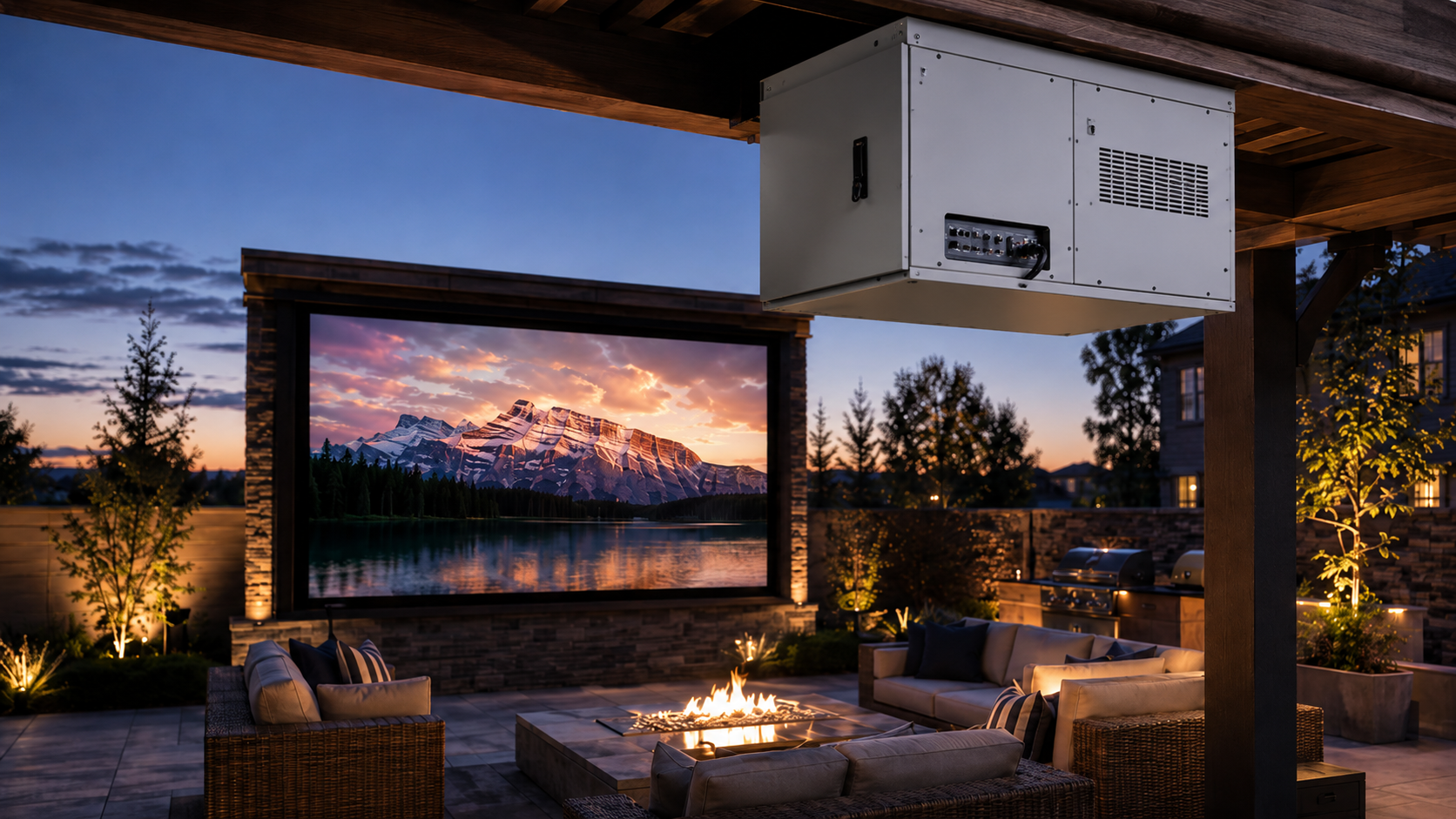
Read more

Fan-Cooled Projector Enclosures for Retail Stores, Showrooms, and Experiential Brand Spaces

Fan-Cooled Projector Enclosures for Retail Projection Displays

Fan-cooled projector enclosure installed in a retail showroom with the projected display as the main focus

A fan-cooled projector enclosure gives retail stores, showrooms, flagship locations, product launch spaces, shopping centers, and experiential brand environments a cleaner way to protect projector equipment.

Retail projection can do a lot. It can animate storefront windows, create immersive product displays, support projection mapping, add branded motion graphics, highlight seasonal promotions, and turn a plain wall into a visual feature.

However, retail spaces create real challenges for AV equipment.

Customers walk nearby. Staff move displays. Cleaning teams work after hours. Dust collects. HVAC systems move air through the store. In addition, projectors may run for long store hours, especially in flagship locations and high-traffic retail environments.

Because of that, a projector should not hang exposed in a customer-facing retail space.

Instead, it needs a clean, protected, ventilated installation. A fan-cooled projector enclosure helps protect the projector while still supporting airflow. As a result, the store gets a more polished display system and a better long-term AV setup.


Why Retail Stores Need Projector Protection

Retail is no longer only about shelves and checkout counters. Stores now need to create memorable in-person experiences.

Epson notes that retailers use experiential digital signage to create interactive, dynamic, and eye-catching moments that heighten shopper experiences. In other words, digital visuals can help physical stores feel more engaging and memorable.

Projection can support that same goal. It can create movement, atmosphere, storytelling, product education, and seasonal impact without requiring every surface to become a permanent screen.

However, once projection becomes part of the retail experience, the projector becomes important. If it overheats, shifts, collects dust, or looks messy, the display loses impact.

Therefore, projector protection matters.

A fan-cooled enclosure helps protect the projector while keeping the store design clean and intentional.


Why Airflow Matters in Retail Environments

Projectors generate heat. They also rely on clean airflow to operate safely.

Epson explains that projector air filters and air vents need cleaning to prevent overheating caused by blocked ventilation. Epson also recommends cleaning the projector interior once a year because dust buildup can create electrical or fire risks.

That matters in retail spaces because projectors may run for long hours. A store may keep projection content active during business hours, private events, window-shopping hours, or product launch nights. In addition, retail spaces often use HVAC, open doors, moving displays, and frequent cleaning, which can move dust and debris around the room.

Therefore, the projector needs protection. However, it also needs air.

A sealed cabinet can trap heat. In contrast, a purpose-built fan-cooled enclosure helps move air through the housing while protecting the projector.


What a Fan-Cooled Projector Enclosure Does

A fan-cooled projector enclosure gives the projector a ventilated protective housing. It helps guard against dust, tampering, accidental contact, and heat buildup.

ProjectorEnclosure.com explains that fan-cooled enclosures bring in filtered ambient air and exhaust hot air from the enclosure. It also positions the Integrator Series as a fan-cooled solution designed to keep projectors protected, clean, and cool.
URL: https://projectorenclosure.com/

In addition, Screen Solutions International lists the Integrator as its fan-cooled enclosure line and offers Hush, Defender climate-controlled, UST, and projector cage options for different applications.
URL: https://ssidisplays.com/projector-enclosures/
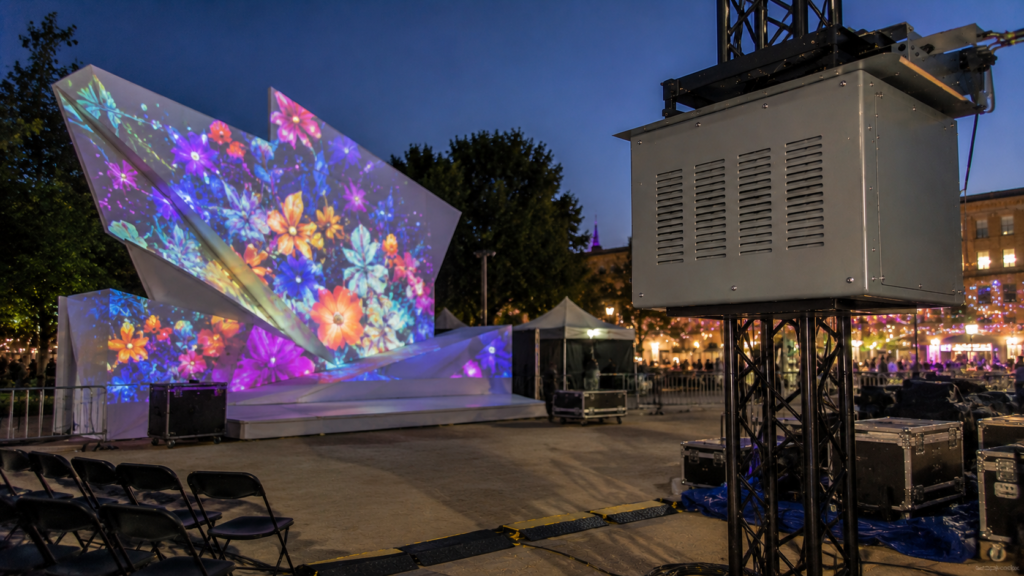
Because of that, fan-cooled enclosures fit many retail applications where the projector stays indoors, under cover, or in a mild operating location.

They can help protect against:

  • Dust
  • Heat buildup
  • Customer contact
  • Staff contact
  • Public-area tampering
  • Cleaning activity
  • Cable clutter
  • Ceiling debris
  • Long store-hour runtimes
  • Visual distraction from exposed hardware

For retail stores, that protection can help preserve the experience.


Best Retail Applications for Fan-Cooled Projector Enclosures

A fan-cooled projector enclosure can support many retail and showroom environments. However, it works best when the projector sits indoors, under cover, and away from direct weather exposure.

1. Storefront Window Projection

Storefront projection can help a store stand out after dark. Retailers can use it for seasonal graphics, sale announcements, product teasers, luxury visuals, or branded motion loops.

However, storefront displays often sit near glass, public sidewalks, and customer traffic. Therefore, a clean enclosure helps protect the projector while keeping the display professional.

2. Flagship Retail Stores

Flagship stores often focus on experience. They use lighting, digital signage, product storytelling, interactive displays, and immersive content to create brand impact.

Because projection can cover large surfaces or unusual shapes, it works well in these spaces. However, the projector should not distract from the store design. A black or white powder-coated fan-cooled enclosure can help the equipment blend into the environment.

3. Product Launch Areas

Retail stores and showrooms often create special zones for product launches. Projection can add motion graphics, brand videos, product highlights, and launch-day energy.

Since these displays may run for long hours, airflow matters. A fan-cooled enclosure helps protect the projector during repeated use.

4. Automotive and Luxury Showrooms

Showrooms can use projection to display vehicle specs, lifestyle content, brand visuals, animations, or large-format scenic backgrounds.

Because presentation quality matters in premium showrooms, exposed projector hardware can look unfinished. A fan-cooled enclosure helps make the installation feel more intentional.

5. Pop-Up Retail and Brand Activations

Pop-up stores and temporary brand activations often rely on high-impact visuals. Projection can transform walls, props, shelving, and product zones quickly.

However, temporary environments can create more equipment risk. Crews move fast. Visitors stand close. Displays change often. As a result, a fan-cooled enclosure can help protect the projector and simplify the installation.


Projection Mapping Can Make Retail More Immersive

Projection mapping can turn physical retail surfaces into animated media. It can map visuals onto shoes, mannequins, furniture, walls, shelves, display props, or architectural features.

ProjectorCentral explains that projection mapping can transform objects, venues, stadiums, concert halls, and building exteriors with projected visuals.
URL: https://www.projectorcentral.com/what-is-projection-mapping-2.htm

Bluewater Technologies also describes retail projection mapping as a way for brands to project video and images onto 3D surfaces to deliver stronger customer experiences.
URL: https://bluewatertech.com/projection-mapping-in-retail/

This matters because retail stores need ways to make physical spaces feel worth visiting. Projection can add motion and story without rebuilding the entire store.

However, projection mapping depends on alignment. If the projector shifts, the mapped content may no longer match the display surface.

Therefore, a secure fan-cooled enclosure can help protect both the projector and the visual alignment.


Real-World Places Where This Makes Sense

Fan-cooled projector enclosures can help retail stores and showrooms in cities where flagship shopping, luxury retail, and experiential brand activations drive demand.

New York City, New York

New York retail often needs strong storefront impact. Flagship stores, pop-ups, fashion launches, and product activations can use projection to create motion and attention in high-traffic areas.

Los Angeles, California

Los Angeles stores, showrooms, and brand spaces often blend retail with entertainment. Projection can support product launches, lifestyle storytelling, and immersive customer experiences.

Miami, Florida

Miami retail and hospitality spaces often use bold visuals and premium design. Fan-cooled enclosures can work well for indoor stores and covered showrooms. However, humidity should be reviewed carefully in semi-outdoor retail areas.

Las Vegas, Nevada

Las Vegas retail spaces compete with entertainment-heavy surroundings. Projection can help stores create stronger visual energy. However, exposed or outdoor installations may need climate-controlled protection because of heat.

London, United Kingdom

London flagship retail, luxury showrooms, and heritage storefronts can use projection to create immersive brand moments without permanent surface changes.

Dubai, UAE

Dubai malls and luxury retail spaces often demand premium presentation. Fan-cooled enclosures can work well indoors, while exposed or hot installations may require climate-controlled protection.


Fan-Cooled vs. Climate-Controlled for Retail Displays

Different retail spaces need different enclosure types.

A fan-cooled projector enclosure works best for indoor, covered, mild, or semi-protected retail environments. It helps with dust, airflow, security, and cleaner installation.

A climate-controlled projector enclosure works better when the projector faces direct weather, high heat, cold, rain, humidity, or long-term outdoor exposure. For example, an outdoor shopping district, open-air mall, or exposed storefront installation may need climate control instead of basic fan cooling.

So, for an indoor flagship store or showroom, fan-cooled often makes sense. However, for an outdoor shopping center façade projection, climate-controlled protection offers the safer path.


Why Retailers Should Avoid DIY Projector Boxes

A decorative projector box may seem like a quick fix. However, it can create real problems.

If the box blocks intake or exhaust vents, heat can build up quickly. Then the projector may dim, shut down, trigger warnings, or suffer long-term damage.

Epson Europe notes that projector overheating warnings can appear when vents are blocked or the air filter becomes clogged.

Therefore, retailers should avoid random cabinets, display covers, and sealed boxes that restrict airflow.

A purpose-built fan-cooled projector enclosure supports ventilation, service access, mounting, cable routing, and security. In other words, it protects the projector without suffocating it.

That difference matters when a store depends on projection as part of the brand experience.


Benefits for Retail and Showroom Teams

Cleaner Store Design

First, the enclosure helps the projector look integrated. Instead of exposed hardware, the room gets a finished AV installation.

Better Dust Protection

Next, the enclosure helps reduce exposure to dust, ceiling debris, customer activity, and cleaning movement.

Better Airflow

Because the enclosure uses ventilation, it helps move air instead of trapping heat around the projector.

More Security

Also, locking access helps reduce tampering in customer-facing stores, showrooms, and public retail environments.

Stronger Brand Presentation

In addition, protected projection keeps the focus on the content, not the hardware.

Better Long-Hour Operation

Finally, the projector gains protection during long store hours, product launches, and seasonal campaigns.


What to Check Before Choosing an Enclosure

Before ordering a fan-cooled projector enclosure for a retail store or showroom, confirm the projector model, lens length, total depth, width, height, wattage, airflow direction, throw distance, mounting location, and service access.

Also, ask:

  • Will the projector mount above customers?
  • Will the projector run during full store hours?
  • Does the store collect dust from foot traffic or HVAC?
  • Can customers or staff reach the projector?
  • Will the display require precise projection mapping alignment?
  • Will cleaning teams work near the equipment?
  • Does the enclosure allow enough airflow?
  • Does the retail environment need quiet operation?
  • Will the projector sit indoors, under cover, or outdoors?
  • Does the space need fan-cooled or climate-controlled protection?

If the projector sits indoors and needs protection plus ventilation, fan-cooled often makes sense. However, if the projector faces outdoor heat, rain, humidity, or direct exposure, climate-controlled protection is the better move.


Final Takeaway

A fan-cooled projector enclosure gives retail stores, showrooms, flagship locations, pop-up activations, and experiential brand spaces a practical way to protect projector equipment. It helps reduce dust exposure, heat buildup, tampering, accidental contact, and visual clutter while still supporting airflow.

Most importantly, it helps keep the focus on the customer experience, not the projector.

For help choosing the right enclosure size for a retail or showroom projector, contact ProjectorEnclosure.com or Screen Solutions International at 888-631-5880.


Sources

  1. ProjectorEnclosure.com — Fan-Cooled Projector Enclosures
    URL: https://projectorenclosure.com/fan-cooled-projector-enclosures/
    Used for fan-cooled Integrator enclosure features, mild-environment positioning, standard sizes, color options, quick shipping, and no external ducting.
  2. ProjectorEnclosure.com — Home Page
    URL: https://projectorenclosure.com/
    Used for general fan-cooled enclosure positioning, including filtered ambient air intake, hot air exhaust, dust control, and projector protection.
  3. Screen Solutions International — Projector Enclosures
    URL: https://ssidisplays.com/projector-enclosures/
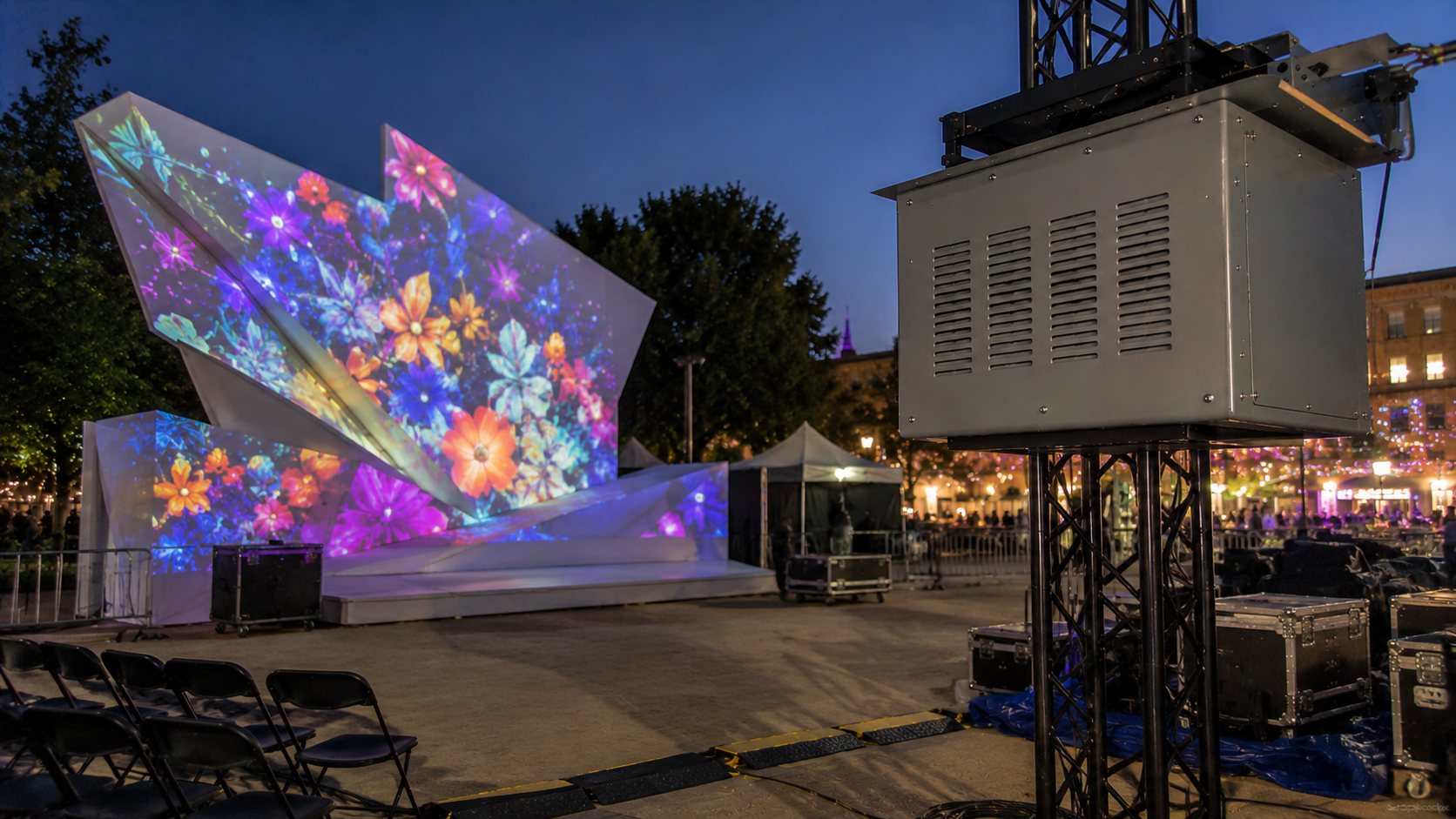
    Used for SSI’s projector enclosure lineup, including Integrator fan-cooled enclosures, Defender climate-controlled enclosures, Hush enclosures, UST enclosures, and projector cages.
  4. Screen Solutions International — Integrator Series
    URL: https://ssidisplays.com/product/integrator-series-2/
    Used for Integrator Series positioning, product style, and enclosure feature references.
  5. 2025 Updated Enclosure Price Sheet — Screen Solutions International
    Used for visual reference of the Integrator Series fan-cooled enclosure likeness and standard black/white powder coat note.
  6. Epson — Building an Immersive Retail Shopping Experience with Digital Signage
    URL: https://news.epson.com/news/digital-signage-immersive-retail-experiences
    Used for retail digital signage and experiential retail context.
  7. Epson — Projector Maintenance
    URL: https://files.support.epson.com/docid/cpd5/cpd59255/source/maintenance/concepts/maint_projector_laser.html
    Used for projector maintenance guidance, including cleaning air filters and air vents to help prevent overheating.
  8. Epson Europe — Projector Air Filter Cleaning FAQ
    URL: https://www.epson.eu/en_EU/faq/KA-01509/contents
    Used for overheating warnings related to blocked vents and clogged air filters.
  9. ProjectorCentral — What Is Projection Mapping?
    URL: https://www.projectorcentral.com/what-is-projection-mapping-2.htm
    Used for projection mapping context across objects, venues, stadiums, concert halls, and building exteriors.
  10. Bluewater Technologies — Projection Mapping in Retail
    URL: https://bluewatertech.com/projection-mapping-in-retail/
    Used for retail projection mapping context and 3D surface projection in brand environments.
  11. RetailNext — Crafting Immersive Store Experiences With Digital Signage
    URL: https://retailnext.net/blog/crafting-immersive-store-experiences-with-digital-signage-better-together
    Used for experiential retail and digital signage context.
  12. CRI — Designing Unforgettable Retail Experiences with Digital Signage
    URL: https://cri.com/news-and-insights/designing-unforgettable-retail-experiences-digital-signage
    Used for customer engagement and retail digital signage context.
Read more

Climate Controlled Enclosures for Projection Mapping Projects

Climate Controlled Enclosures for Projection Mapping Projects

Climate controlled projector enclosure mounted on truss for an outdoor projection mapping installation.

Climate controlled enclosures for projection mapping help protect projectors used in outdoor shows, building mapping, immersive displays, seasonal events, and permanent visual installations. Projection mapping looks clean when the audience sees the final image. However, behind that image, the projector has to survive heat, cold, humidity, dust, rain, wind, long runtimes, and fixed alignment demands.

That is where the enclosure becomes critical.

Unlike a casual indoor projector setup, projection mapping usually requires precision. The projector must stay locked into position, aimed correctly, and protected from the environment. If the projector moves, overheats, fogs, or gets dirty, the mapped image can shift, fade, distort, or fail completely.

Because of that, the enclosure should be planned as part of the projection mapping system from the beginning.


Projection Mapping Needs a Stable Projector Position

Projection mapping depends on alignment. The content is designed to fit a specific surface, such as a building, wall, sculpture, stage set, retail facade, museum exhibit, or outdoor structure.

Once that content is mapped, even small projector movement can create visible problems. A slight bump can throw the image off the edges. A mounting shift can break the illusion. In addition, lens movement or poor enclosure placement can make the mapped content look sloppy.

Therefore, the projector needs a stable, protected mounting location.

A climate controlled enclosure helps keep the projector installed in a fixed position while protecting it from outdoor exposure. As a result, the mapping system becomes easier to operate night after night.


Outdoor Mapping Creates More Stress Than Movie Projection

Projection mapping projects often run longer than standard movie presentations. Some systems operate for several hours per night. Others run for weeks during seasonal events, public art displays, hospitality activations, retail campaigns, or themed attractions.

During that time, the projector faces changing outdoor conditions.

Heat can build during long runtimes. Meanwhile, humidity can rise after sunset. Dust, pollen, and insects can collect around vents. Rain or wind can also create exposure issues, especially on fully outdoor installs.

ProjectorEnclosure.com describes the Defender Series as climate controlled projector enclosures built for outdoor and harsh-environment installations, with weather-resistant construction, insulation, secure access, active climate control, and service-friendly design.

That feature set fits projection mapping because the projector must stay protected without losing alignment.


Why Climate Control Matters for Mapped Installations

A standard protective box may block some rain or dust. However, projection mapping requires more than basic coverage.

The projector still needs a controlled operating environment. It must breathe properly, stay within safe temperature ranges, avoid moisture problems, and maintain a clear optical path. Otherwise, performance can suffer during the show.

Climate controlled enclosures help support:

  • Temperature management
  • Moisture reduction
  • Dust protection
  • Secure projector placement
  • Cleaner cable routing
  • Service access
  • Lens and window alignment
  • More reliable long-term operation

Because mapping projects depend on repeatable performance, climate control becomes part of the creative system. It protects the hardware that makes the visual illusion possible.


Defender Series Enclosures for Projection Mapping

The Defender Series is a strong choice for projection mapping because it is built for demanding outdoor environments. ProjectorEnclosure.com states that these enclosures help protect projection equipment from changing temperatures, humidity, rain, snow, dust, and public-facing installation risks.

That protection matters for mapped installations in locations such as:

  • Building facades
  • Theme parks
  • Museums
  • Resorts
  • Universities
  • Stadiums
  • Outdoor event spaces
  • Retail environments
  • Public art installations
  • Holiday projection shows

In addition, Defender-style enclosures can support custom sizing, custom finishes, projector and lens clearance adjustments, modified ventilation, custom mounting support, locking access panel changes, and project-specific cable or power routing.

Those options help the enclosure fit the projector, surface, environment, and installation design.


Projection Mapping in Harsh Conditions

Outdoor mapping often happens where weather cannot be perfectly controlled. Even if the event runs only at night, the projector may sit outside through daytime sun, wind, moisture, dust, and temperature swings.

ProjectorEnclosure.com specifically discusses projection mapping in harsh conditions and explains that Defender climate controlled enclosures help make mapping possible in rain, snow, or heat.

That is important because mapped installations often have tight timelines. If a projector goes down during a show, the issue becomes visible fast.

A climate controlled enclosure helps reduce that risk by protecting the projector before, during, and after the event.


Dust and Moisture Can Damage Image Quality

Projection mapping depends on image clarity. Dust near the lens, dirt on the projection window, or moisture around optics can weaken the final image.

BenQ notes that dust can affect projector performance and recommends protecting projectors from dusty environments.
https://www.benq.com/en-us/knowledge-center/knowledge/what-can-you-do-to-protect-your-school-projectors-from-dust.html

Moisture deserves the same attention. The U.S. EPA explains that unmanaged moisture can affect materials and systems over time.
https://www.epa.gov/sites/default/files/2014-08/documents/moisture-control.pdf

Although those sources do not focus only on projection mapping, the lesson applies clearly: outdoor electronics need protection from dust and moisture if they are expected to perform reliably.


Lens Direction and Projection Window Planning

For projection mapping, lens direction matters from day one. The projector must aim directly at the mapped surface, and the enclosure must support that angle.

If the projector uses an acrylic or glass projection window, the window must line up cleanly with the lens. Poor alignment can cause reflections, brightness loss, distortion, or unwanted beam clipping.

Before installation, confirm:

  • Projector model
  • Lens model
  • Throw distance
  • Mapping surface size
  • Beam path
  • Lens shift requirements
  • Mounting height
  • Service access
  • Cable routing
  • Window alignment
  • Outdoor exposure level

ProjectorEnclosure.com recommends sharing projector model, lens model, dimensions, installation location, exposure level, temperature range, humidity concerns, mounting method, access direction, finish preference, and clearance limits before sizing a climate controlled enclosure.

With that information, SSI can help match the enclosure to the projector and mapping environment.


Better Enclosure Planning Means Better Shows

Projection mapping is visual storytelling. The audience sees motion, color, architecture, atmosphere, and illusion. However, the show only works when the technical foundation stays reliable.

A climate controlled enclosure supports that foundation.

It helps keep the projector fixed, protected, serviceable, and ready. In addition, it makes the installation look more professional by organizing the projector, mount, power, and cabling into a cleaner system.

For serious outdoor mapping, the enclosure should not be treated as a last-minute accessory. It should be part of the production plan.


Final Takeaway

Outdoor projection mapping needs more than a bright projector. It needs stable alignment, environmental protection, clean airflow, moisture control, secure mounting, and service access.

Climate controlled enclosures for projection mapping help protect the projector from heat, cold, rain, dust, humidity, and long-term outdoor exposure. For building mapping, event visuals, public displays, and permanent installations, a Defender Series enclosure gives the projector a stronger foundation.

Call 888-631-5880 or visit ProjectorEnclosure.com to review your projector model, lens, mapping surface, and installation environment.


Sources

ProjectorEnclosure.com — Climate Controlled Projector Enclosures
https://projectorenclosure.com/climate-controlled-projector-enclosures/

ProjectorEnclosure.com — Projection Mapping in Harsh Conditions
https://projectorenclosure.com/mapping-harsh-environments/

SSI Displays — Projector Enclosures
https://ssidisplays.com/projector-enclosures/
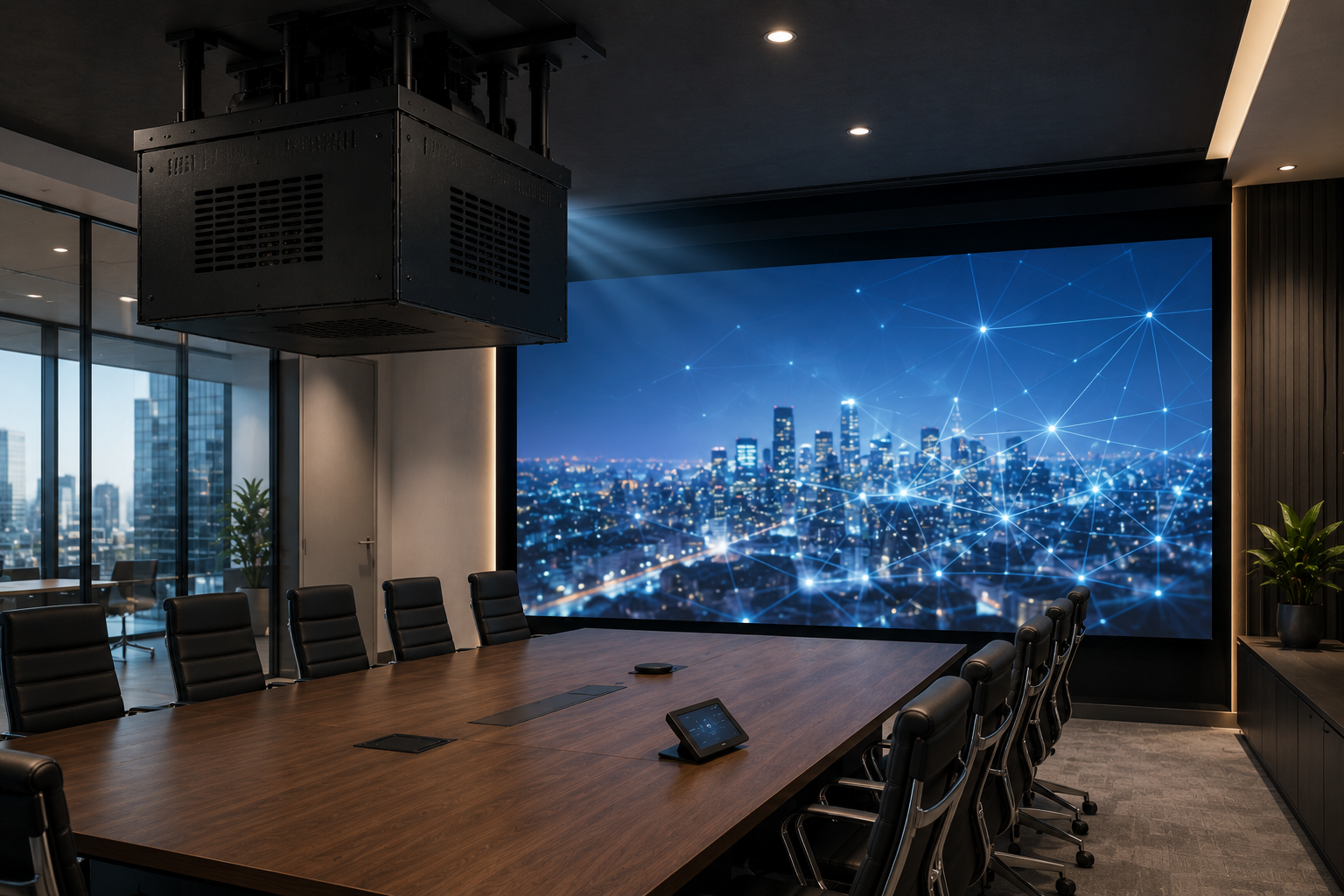
ProjectorEnclosure.com — The Defender Series Enclosures
https://projectorenclosure.com/store/the-defender-series-enclosures/

ProjectorEnclosure.com — Projector Enclosures Overview
https://projectorenclosure.com/projector-enclosures/

BenQ — Protecting Projectors From Dust
https://www.benq.com/en-us/knowledge-center/knowledge/what-can-you-do-to-protect-your-school-projectors-from-dust.html

U.S. EPA — Moisture Control Guidance
https://www.epa.gov/sites/default/files/2014-08/documents/moisture-control.pdf

Element14 — How Sunlight, Humidity, and Moisture Affect Electronics
https://community.element14.com/learn/learning-center/the-tech-connection/b/blog/posts/how-do-sunlight-humidity-and-moisture-affect-electronics

Read more

Climate Controlled Projector Enclosures for Outdoor Sports Viewing

Climate Controlled Projector Enclosures for Outdoor Sports Viewing

Climate controlled projector enclosure projecting a football game onto an outdoor backyard screen for sports viewing.

Climate controlled projector enclosures for outdoor sports viewing help homeowners turn patios, pool decks, pergolas, and backyard lounge areas into reliable game-day entertainment spaces. A big outdoor screen can completely change football Sundays, playoff nights, UFC events, racing parties, and family gatherings.

However, the projector needs more than brightness.

Outdoor sports setups often run for hours. In addition, they may operate during hot afternoons, cool evenings, light rain, dusty conditions, or humid nights. Because of that, a projector mounted outside needs protection from the environment before it can become part of a permanent viewing system.

That is where a climate controlled projector enclosure becomes the difference between a temporary setup and a true outdoor sports theatre.


Why Outdoor Sports Viewing Is Hard on Projectors

Sports viewing pushes outdoor projection systems differently than casual movie nights. A movie may run for two hours. A game-day setup, on the other hand, can run all afternoon and into the evening.

That longer runtime creates more heat. Meanwhile, the outdoor environment keeps changing around the projector. Sun fades into dusk, temperatures drop, humidity rises, and dust continues moving through the yard.

Common outdoor sports viewing challenges include:

  • Long projector runtimes
  • Hot afternoon temperatures
  • Cooler evening conditions
  • Wind-driven dust and pollen
  • Humidity after sunset
  • Light rain or storm risk
  • Insects around warm equipment
  • Splash exposure near pools
  • More people moving around the equipment

Because of these conditions, a projector should not sit exposed on a table, open shelf, or unprotected mount.


Permanent Game-Day Setups Need Real Protection

A temporary projector setup can work for one event. Still, it becomes frustrating when homeowners want to use the system every week.

Each game night may require carrying equipment outside, connecting cables, aiming the projector, adjusting the image, checking audio, and packing everything away afterward. Eventually, that routine gets old.

With a permanent enclosure, the projector can stay installed and ready. As a result, homeowners can turn the system on faster and use the backyard more often.

ProjectorEnclosure.com describes the Defender Series as a climate controlled projector enclosure system designed for outdoor and harsh-environment installations. The system combines weather-resistant construction, insulation, secure access, active climate control, and service-friendly design.

For outdoor sports viewing, that type of protection helps support longer events and more frequent use.


Heat Builds Fast During Afternoon Games

Many sports events happen before sunset. Therefore, outdoor projectors often run when patios, walls, and outdoor structures are still warm from the day.

A covered patio can help shade the projector. Even so, the air beneath that cover may remain hot. If the projector sits inside a poorly ventilated box, heat can build even faster.

That is a problem because projectors already create heat during operation. When the enclosure does not manage that heat correctly, the projector may work harder than it should.

A climate controlled enclosure helps protect the projector’s operating environment. In turn, the system becomes better suited for long game-day runtimes.


Evening Humidity Can Sneak Up After Sunset

Sports viewing does not end when the sun goes down. In fact, many events continue into cooler evening hours.

As the air cools, humidity can become a bigger concern. Pool areas, lakeside homes, coastal backyards, and shaded patios may see moisture collect faster after sunset. Over time, that moisture can affect projector equipment, cable areas, lens surfaces, and internal components.

The U.S. EPA explains that moisture control matters because unmanaged moisture can affect materials and systems over time.
https://www.epa.gov/sites/default/files/2014-08/documents/moisture-control.pdf

Although that guidance focuses on buildings, the same idea applies to outdoor AV systems. Moisture should be managed, not ignored.


Dust and Pollen Are Game-Day Killers Too

Backyard sports parties usually bring activity. People walk around, landscaping gets stirred up, food is cooked, fire pits run, and wind moves debris through the space.

Because projectors depend on airflow, dust and pollen can cause real issues. Dirt around vents can reduce cooling efficiency. Debris near the projection window can affect image clarity. Insects can also gather around warm electronics and lights.

BenQ notes that dust can affect projector performance and recommends protecting projectors from dusty environments.
https://www.benq.com/en-us/knowledge-center/knowledge/what-can-you-do-to-protect-your-school-projectors-from-dust.html

For backyard sports viewing, a climate controlled enclosure helps reduce direct exposure while keeping the system cleaner between events.


Defender Series Enclosures Support Outdoor Sports Theatres

The Defender Series works well for outdoor sports viewing because it supports permanent projector placement in real outdoor conditions. ProjectorEnclosure.com states that these climate controlled projector enclosures help protect valuable projection equipment from changing temperatures, humidity, rain, snow, dust, and public-facing installation risks.

That makes Defender-style enclosures a strong fit for:

  • Football watch parties
  • Basketball playoff nights
  • Baseball and soccer viewing
  • UFC and boxing events
  • Racing and motorsport gatherings
  • Poolside sports lounges
  • Outdoor bar and grill areas
  • Covered patio theatres
  • Backyard tailgate setups
  • Vacation rental entertainment spaces

Instead of building a temporary setup each time, homeowners can create a true outdoor viewing zone.


The Enclosure Should Aim Cleanly at the Screen

Sports content needs a sharp, bright, well-aligned image. Fast movement, score graphics, and live camera cuts all look better when the projector lines up cleanly with the screen.

For that reason, enclosure placement matters.

The projector lens should aim directly at the projection surface. If the lens sits behind an acrylic window, the window must align with the beam path. Otherwise, the image may suffer from distortion, brightness loss, or unwanted reflections.

Before installation, confirm:

  • Screen location
  • Throw distance
  • Lens height
  • Lens shift range
  • Beam path
  • Mounting angle
  • Acrylic window alignment
  • Service door clearance
  • Cable path
  • Viewing angle from seating

A good enclosure protects the projector without compromising the image.


Game-Day Spaces Also Need Security

Outdoor sports nights bring people together. That is great for entertainment, but it also means the equipment may sit near guests, kids, pets, food areas, pool traffic, and service workers.

A secure enclosure helps protect the projector from accidental contact and tampering. In addition, a durable housing can reduce risk around impact, dust, and exposure.

ProjectorEnclosure.com lists secure access and durable housing as part of Defender Series projector protection.

For high-value projectors, that protection matters. A backyard party should not put expensive AV equipment at risk.


Better Outdoor Sports Viewing Starts With Less Setup

The best outdoor sports setups feel easy. Guests arrive, the screen turns on, and the game starts. Nobody wants to troubleshoot cables during kickoff.

A climate controlled projector enclosure helps reduce that friction. Since the projector can remain installed, homeowners spend less time setting up and more time enjoying the event.

In addition, a clean enclosure makes the space look more finished. Cables can route through the structure, the projector can sit out of the way, and the installation can blend into the patio design.

That cleaner look matters in premium outdoor living spaces.


What to Send Before Choosing an Enclosure

Before ordering, collect the details needed to size the enclosure correctly.

ProjectorEnclosure.com recommends sending the projector make and model, lens model, projector dimensions, installation location, exposure level, expected temperature range, humidity concerns, mounting method, access direction, desired finish, and site clearance limits.

For sports viewing setups, also include:

  • Expected event runtime
  • Screen size
  • Screen location
  • Projector brightness
  • Mounting height
  • Power location
  • Seating layout
  • Outdoor kitchen or grill location
  • Pool or spa proximity
  • Weather exposure level

With that information, SSI can help review the best enclosure direction for the projector and backyard layout.


Final Takeaway

Outdoor sports viewing needs a projector setup that can handle long runtimes, changing temperatures, humidity, dust, rain risk, and frequent use. A temporary projector may work once in a while, but a permanent game-day theatre needs better protection.

Climate controlled projector enclosures for outdoor sports viewing help homeowners keep the projector installed, protected, and ready for the next big event. For patios, poolside lounges, outdoor kitchens, and backyard theatres, a Defender Series enclosure gives the system a stronger foundation.

Call 888-631-5880 or visit ProjectorEnclosure.com to review your projector, lens, screen location, and outdoor sports viewing setup.


Sources

ProjectorEnclosure.com — Climate Controlled Projector Enclosures
https://projectorenclosure.com/climate-controlled-projector-enclosures/

ProjectorEnclosure.com — The Defender Series Enclosures
https://projectorenclosure.com/store/the-defender-series-enclosures/

SSI Displays — Projector Enclosures
https://ssidisplays.com/projector-enclosures/
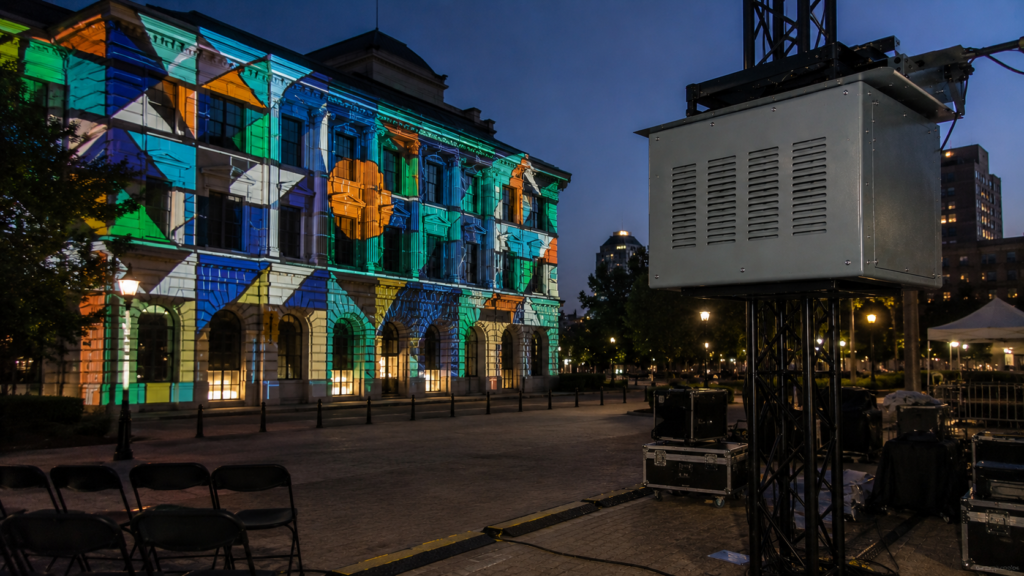
ProjectorEnclosure.com — Projector Enclosures Overview
https://projectorenclosure.com/projector-enclosures/
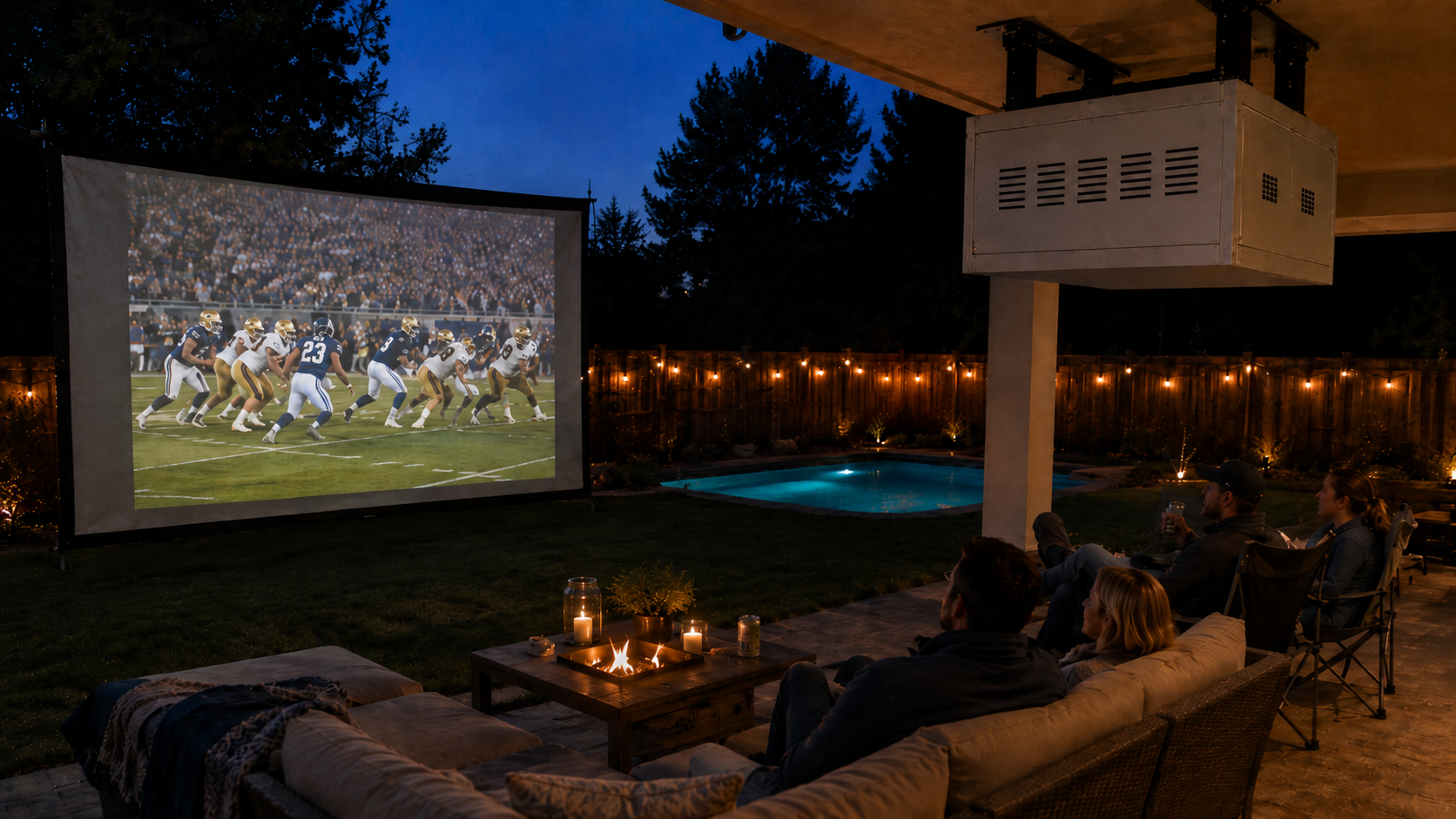
ProjectorEnclosure.com — 5 Questions to Ask Before Choosing a Projector Enclosure
https://projectorenclosure.com/choosing-outdoor-enclosure/

U.S. EPA — Moisture Control Guidance
https://www.epa.gov/sites/default/files/2014-08/documents/moisture-control.pdf

BenQ — Protecting Projectors From Dust
https://www.benq.com/en-us/knowledge-center/knowledge/what-can-you-do-to-protect-your-school-projectors-from-dust.html

Element14 — How Sunlight, Humidity, and Moisture Affect Electronics
https://community.element14.com/learn/learning-center/the-tech-connection/b/blog/posts/how-do-sunlight-humidity-and-moisture-affect-electronics

Read more