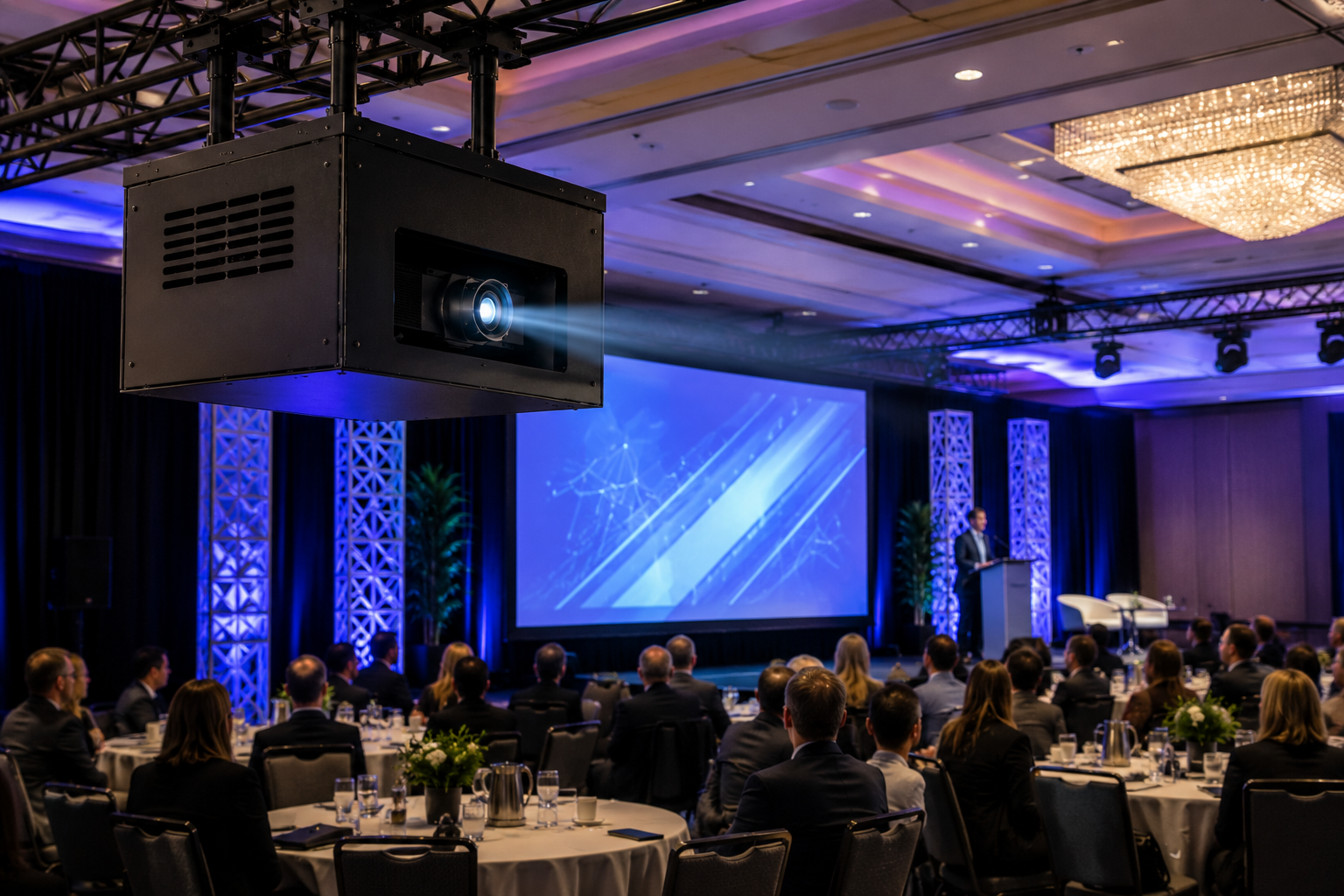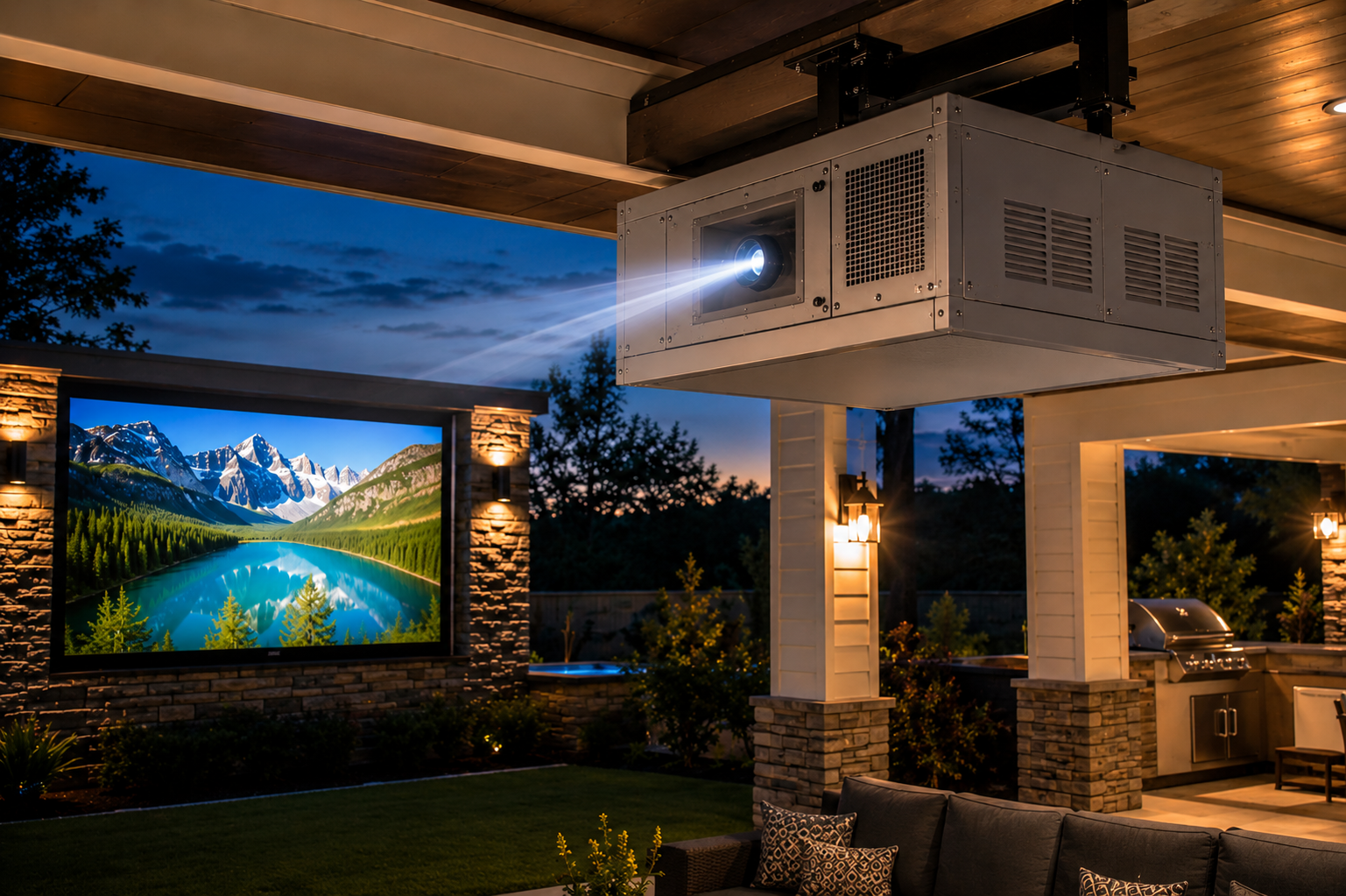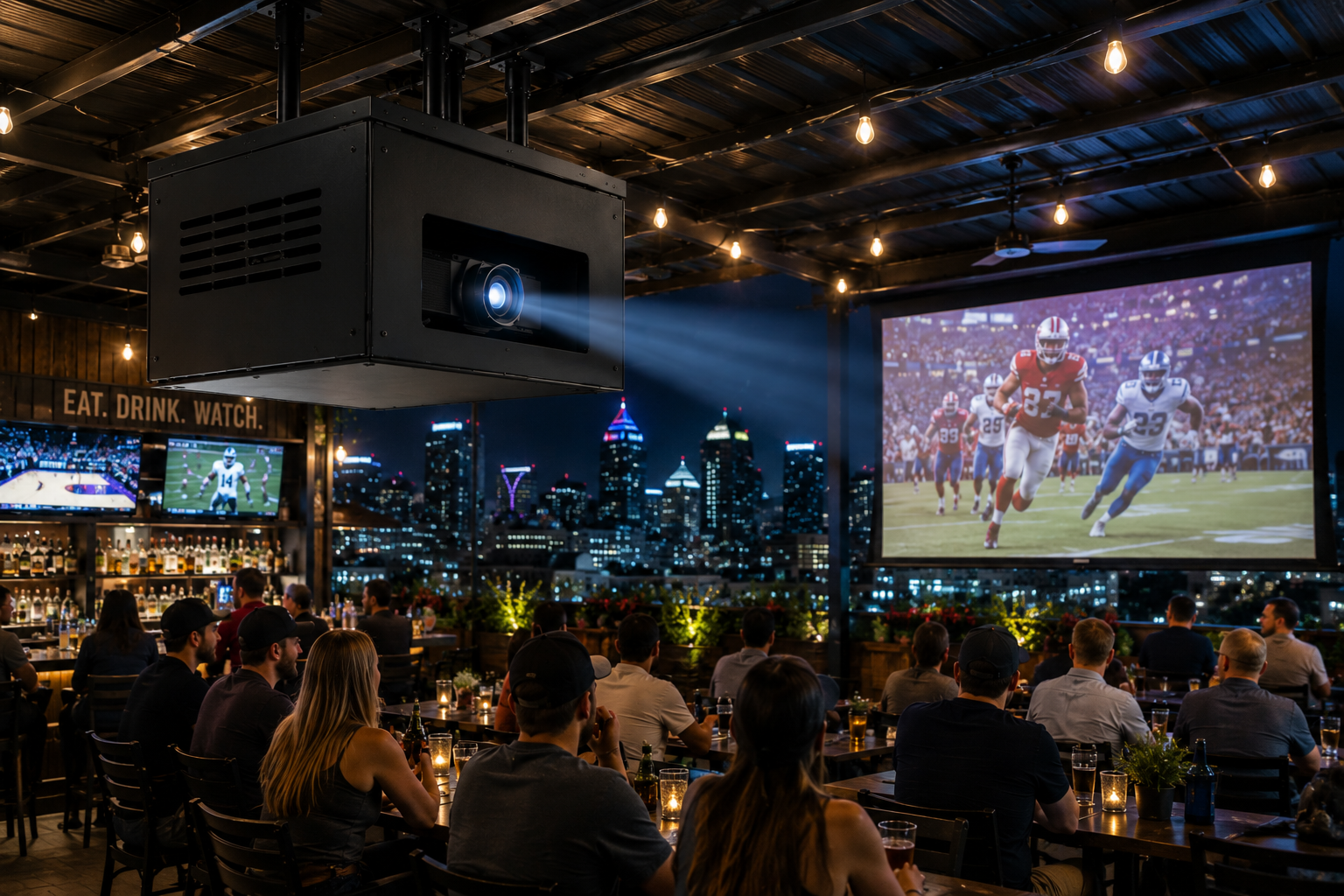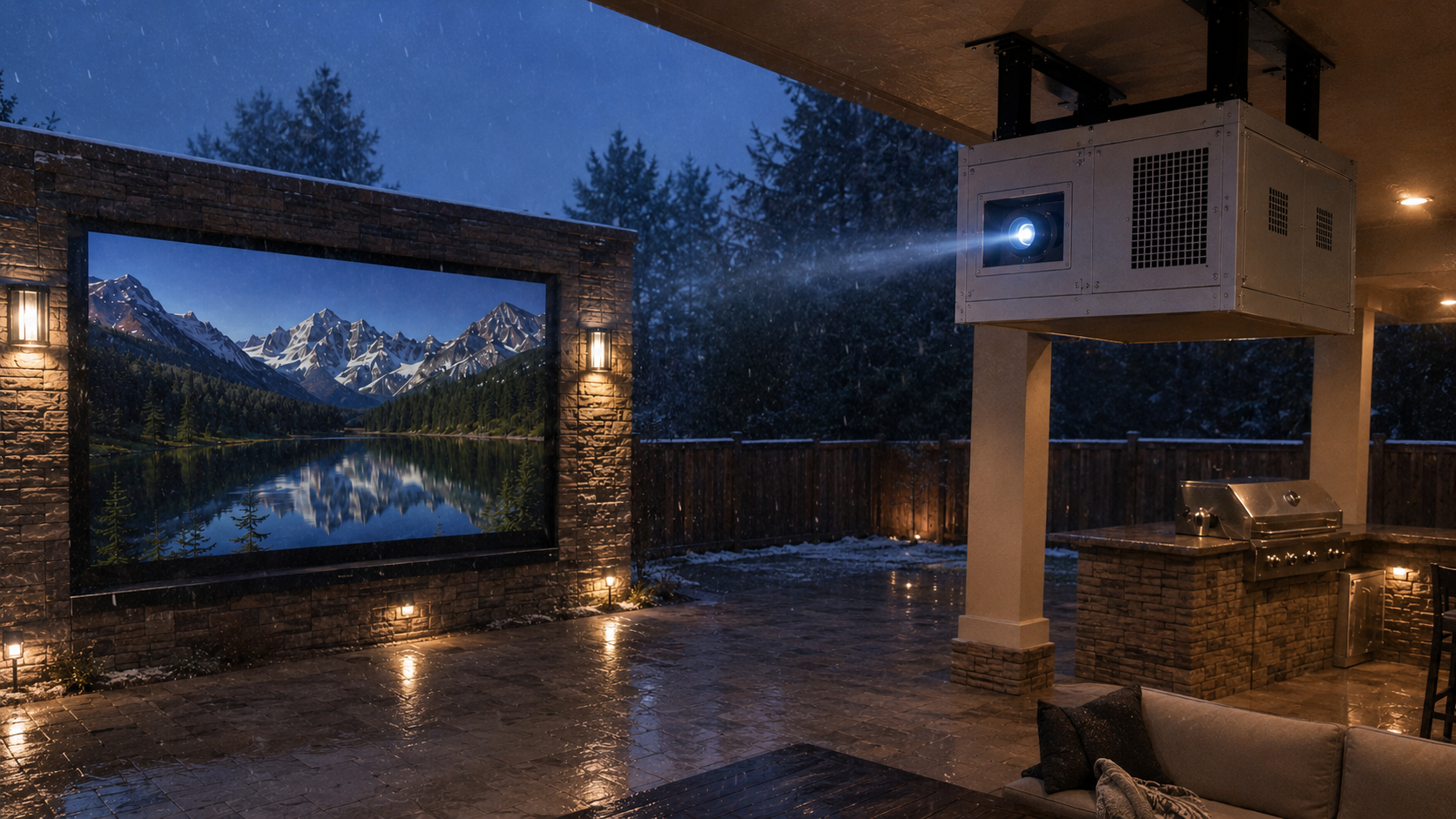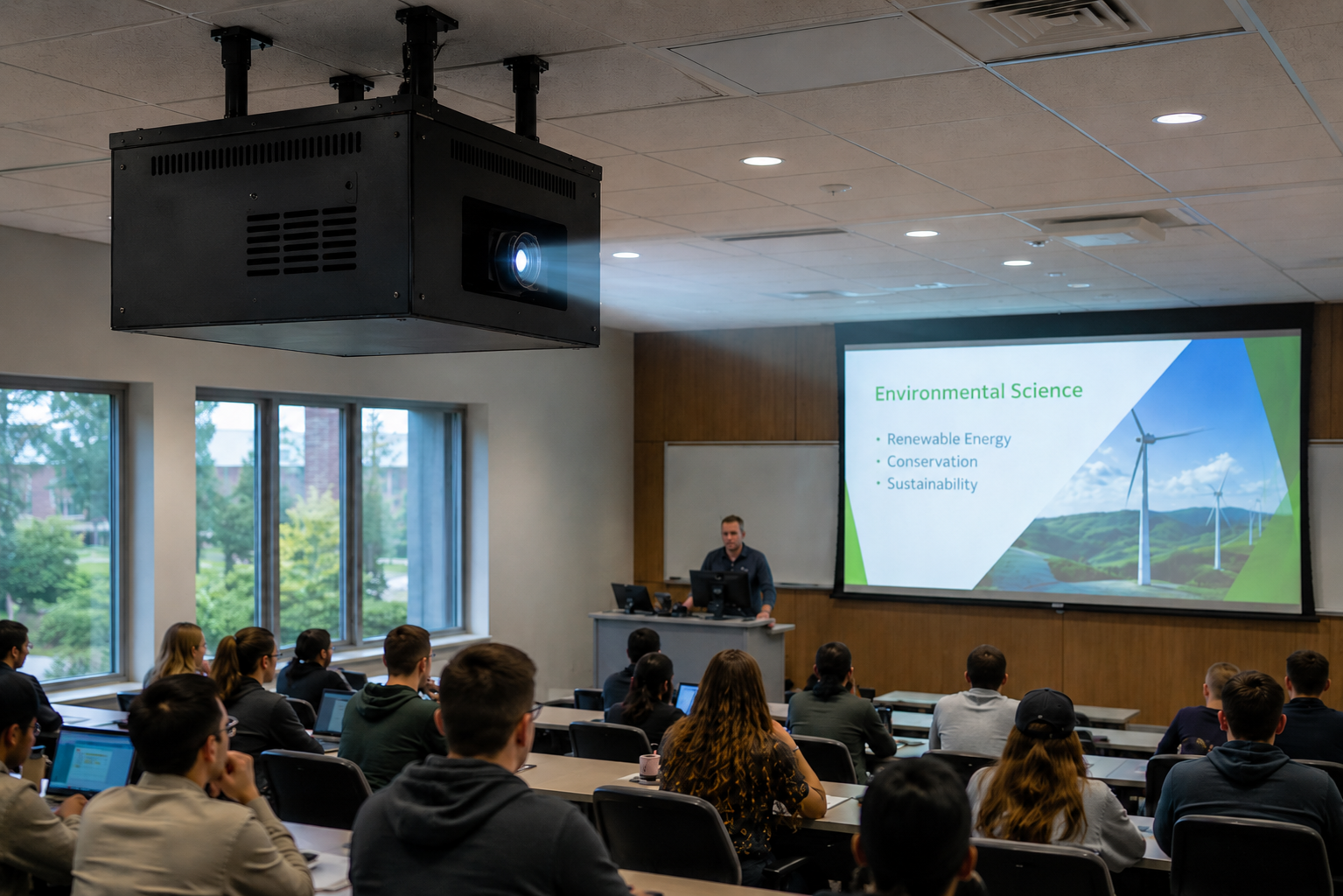

Fan-cooled projector enclosure installed in an event venue with the projector lens facing the screen.

Fan-Cooled Projector Enclosures for Attractions and Immersive Spaces
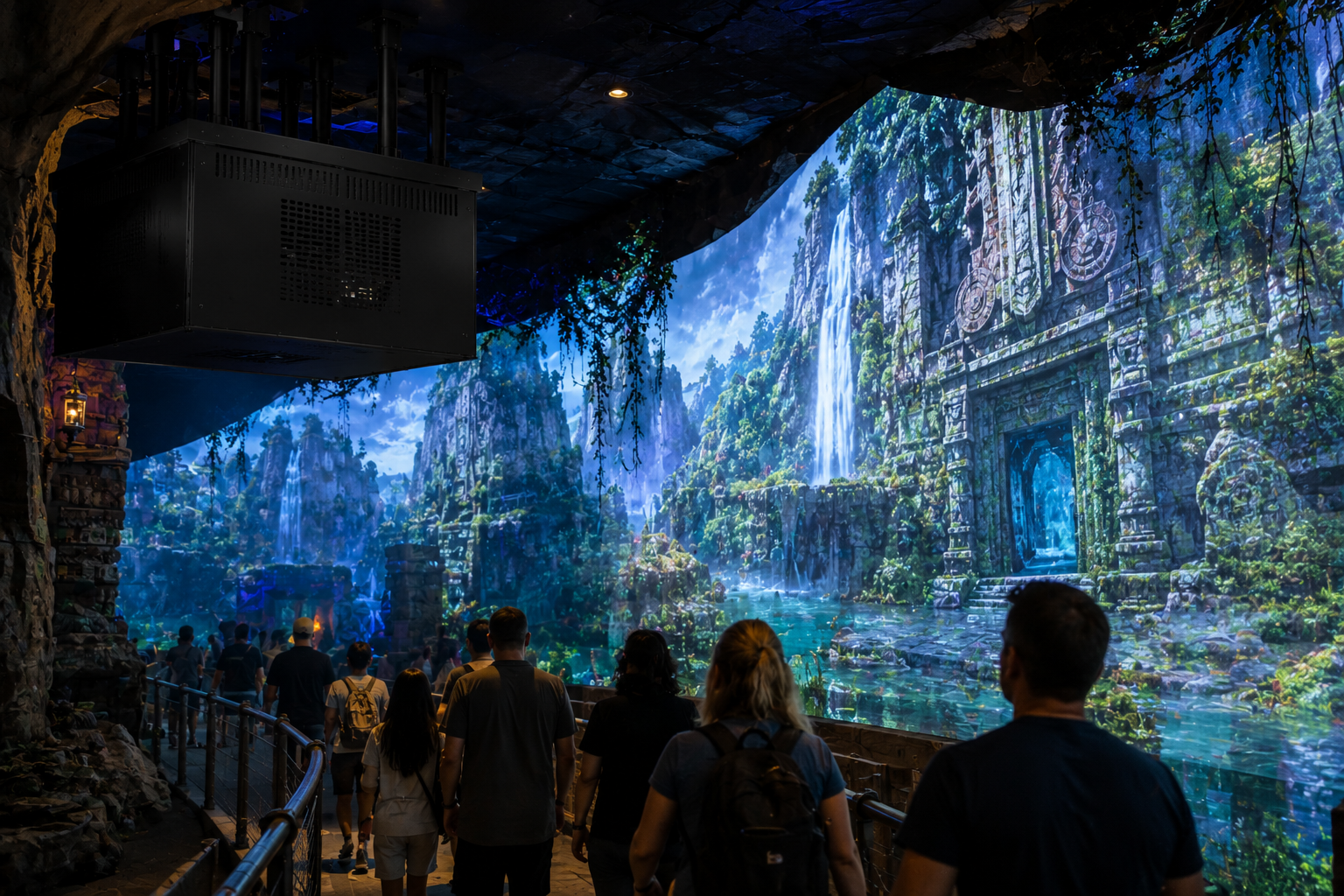
Fan-cooled projector enclosure installed in a theme park attraction with the projector lens facing the projection surface.

A fan-cooled projector enclosure gives theme parks, museums, aquariums, zoos, visitor centers, branded attractions, and immersive entertainment venues a cleaner way to protect projector equipment.

These spaces depend on reliability. A projection effect may support a preshow, queue experience, dark ride, walkthrough exhibit, interactive room, mapped wall, seasonal overlay, or branded photo moment. Therefore, the projector does more than display an image. It helps drive the guest experience.

However, attractions can be tough on AV equipment.

Guests move through the space all day. Staff clean around the system. HVAC moves dust through the room. Show lighting creates heat. In addition, projection systems may run for long hours with limited downtime.

Because of that, a projector should not hang exposed in a guest-facing attraction.

A fan-cooled projector enclosure helps protect the projector while still supporting airflow. As a result, attraction teams get a cleaner installation, better equipment protection, and a more polished guest experience.


Why Attractions Need Projector Protection

Attractions run differently than standard conference rooms or classrooms. They often repeat the same experience all day, every day. A projector may operate during open hours, rehearsal windows, private events, seasonal overlays, and maintenance testing.

In addition, many attractions hide AV equipment inside themed spaces. A projector may sit near scenic walls, truss, ceiling structures, queue lines, props, projection windows, or service catwalks. Therefore, dust, heat, access, and alignment all matter.

Projection also plays a growing role in themed entertainment. IAAPA promotes immersive experiences and technology innovation across the attractions industry, while Panasonic’s recent IAAPA-focused article highlights projection mapping as part of immersive booth and attraction storytelling.

So, projector protection becomes part of show reliability. If the projector overheats, shifts, collects dust, or becomes visible in the wrong way, the illusion weakens.

A fan-cooled enclosure helps reduce those risks.


Projection Supports More Than One Attraction Type

Projection works across many attraction formats. It can support large scenic backdrops, animated environments, interactive rooms, character moments, preshow visuals, mapped props, museum storytelling, and branded experiences.

For example, projection mapping can place images onto irregular shapes, non-flat surfaces, buildings, landmarks, and scenic environments. Barco describes projection mapping as a way to use light and color on irregular surfaces, while ProjectorCentral explains that projection mapping can transform objects, venues, stadiums, concert halls, and building exteriors.

Therefore, projectors often sit in non-standard locations. They may aim at a cave wall, dome surface, theater scrim, themed doorway, exhibit wall, animatronic scene, or architectural façade.

That flexibility creates opportunity. However, it also creates installation challenges.

A fan-cooled projector enclosure helps attraction teams protect the projector in these more complex environments.


Why Airflow Matters During Long Operating Hours

Projectors generate heat. They also need clean airflow to operate safely.

Epson explains that projector air filters and air vents need cleaning to help prevent overheating caused by blocked ventilation. Epson also warns users to check blocked ventilation vents and clogged filters when a projector overheats.

That matters in attractions because many projectors run for long periods. A museum exhibit may run all day. A themed queue may loop content continuously. A dark ride effect may trigger hundreds of times per day. A visitor center may run orientation content from opening to close.

Therefore, the projector needs protection. However, it also needs air.

A random decorative box can trap heat. In contrast, a purpose-built fan-cooled enclosure helps protect the projector while moving air through the housing.


What a Fan-Cooled Projector Enclosure Does

A fan-cooled projector enclosure gives the projector a ventilated protective housing. It helps guard against dust, contact, tampering, heat buildup, and visual clutter.

ProjectorEnclosure.com explains that its fan-cooled Integrator Series uses filters to help keep projectors protected, clean, and cool. It also positions fan-cooled and climate-controlled systems as ways to protect projectors from the elements.

Screen Solutions International also lists the Integrator as its fan-cooled enclosure line and explains that SSI offers fan-cooled, climate-controlled, Hush, UST, and cage-style projector enclosure options.

Because of that, fan-cooled enclosures can work well in many indoor, covered, or mild attraction environments.

They can help protect against:

  • Dust
  • Heat buildup
  • Guest contact
  • Staff contact
  • Ceiling debris
  • Public-area tampering
  • Themed décor contact
  • Cable clutter
  • Projection alignment issues
  • Long daily runtimes

For attractions, that protection can help preserve the show.


Best Attraction Applications for Fan-Cooled Enclosures

A fan-cooled projector enclosure can support many visitor-facing environments. However, it works best when the projector stays indoors, under cover, or in a mild operating space.

1. Theme Park Queue Lines

Queue lines often use projection to build anticipation before the main attraction. A projector may support animated windows, character briefings, themed maps, environmental effects, or story moments.

However, queues also create constant guest traffic. As a result, projectors need protection from tampering, dust, and accidental contact.

A fan-cooled enclosure can help protect the projector while keeping the installation visually controlled.

2. Dark Ride and Walkthrough Effects

Dark rides and walkthrough attractions often use projectors for scene extensions, animated walls, portals, ghosts, weather effects, and interactive moments.

Because these effects depend on alignment, the projector should stay secure. If the projector shifts, the mapped effect can lose impact.

Therefore, a locking fan-cooled enclosure can help protect both the equipment and the illusion.

3. Museums and Science Centers

Museums and science centers often use projection for immersive storytelling, historical environments, interactive exhibits, and educational displays.

These spaces may run projectors for long hours. In addition, they often need clean installations that do not distract from the exhibit. A fan-cooled enclosure helps protect the projector and improve the finished look.

4. Aquariums and Zoos

Aquariums and zoos use projection for habitat storytelling, educational rooms, donor experiences, digital maps, and immersive theater spaces.

However, these locations may have humidity, dust, visitor traffic, and unique maintenance needs. Therefore, teams should review each location carefully. A fan-cooled enclosure may work in protected indoor areas. However, exposed or humid spaces may need climate-controlled protection.

5. Branded Attractions and Experience Centers

Brands use projection for product launches, immersive rooms, retail activations, photo moments, and interactive visitor journeys.

In these spaces, presentation matters. A black powder-coated Integrator-style enclosure can help make the projection system look intentional instead of temporary.


Real-World Places Where This Makes Sense

Fan-cooled projector enclosures can help attractions in cities and destinations where immersive entertainment, museums, tourism, and themed environments drive demand.

Orlando, Florida

Orlando has theme parks, hotels, museums, attractions, restaurants, and visitor experiences. Projection can support preshows, queues, exhibit rooms, and seasonal overlays. However, humidity can become a major factor. Therefore, teams should use fan-cooled enclosures only in protected, mild spaces and choose climate-controlled protection for exposed areas.

Las Vegas, Nevada

Las Vegas uses projection in casinos, immersive attractions, lounges, event spaces, restaurants, and branded experiences. Because extreme heat can affect outdoor or semi-outdoor installs, teams should review location conditions carefully.

Los Angeles, California

Los Angeles attractions, studios, museums, and experience centers often use projection for storytelling and branded environments. Fan-cooled enclosures can work well in controlled indoor attractions and covered themed spaces.

New York City, New York

New York museums, observation decks, flagship retail spaces, and immersive venues often use projection to create high-impact visitor moments. Because many venues operate in compact rooms, clean projector protection can help keep the installation organized.

London, United Kingdom

London’s museums, heritage attractions, galleries, and branded environments can use projection to transform historic and modern spaces. A clean enclosure helps protect the projector while keeping the room visually refined.

Dubai, UAE

Dubai’s attractions, malls, museums, hotels, and branded environments often demand premium presentation. However, extreme heat makes enclosure selection critical. In many exposed locations, climate-controlled protection will make more sense.


Fan-Cooled vs. Climate-Controlled for Attractions

Different attraction spaces need different enclosure types.

A fan-cooled projector enclosure works best for indoor, covered, mild, or semi-protected attraction environments. It helps with dust, airflow, security, and cleaner installation.

A climate-controlled projector enclosure works better when the projector faces direct weather, high heat, cold, rain, humidity, or long-term outdoor exposure. ProjectorEnclosure.com explains that climate-controlled enclosures add heating, cooling, and humidity regulation for long-term outdoor exposure and extreme climates.

So, for an indoor queue line or exhibit room, fan-cooled may be the right fit. However, for an outdoor projection show, open-air amphitheater, exposed façade projection, or humid animal habitat area, climate-controlled protection offers the safer path.


Why Attractions Should Avoid DIY Projector Boxes

A themed box may look simple. However, it can create a serious heat problem.

If the box blocks intake or exhaust vents, heat can build up quickly. Then the projector may dim, shut down, trigger warnings, or suffer long-term damage.

Epson Europe notes that overheating warnings may appear when vents get blocked or the air filter becomes clogged.

Therefore, attraction teams should avoid random scenic boxes, decorative covers, and sealed cabinets that restrict airflow.

A purpose-built fan-cooled projector enclosure supports airflow, service access, projection alignment, mounting, power routing, and security. In other words, it protects the projector without suffocating it.

That difference matters in attraction environments where the show has to work every time.


Benefits for Attraction Designers and Operators

Cleaner Show Design

First, the enclosure helps hide and organize the projector. Instead of exposed equipment, the attraction gets a cleaner technical installation.

Better Projector Protection

Next, the enclosure helps reduce dust exposure, accidental contact, tampering, and scenic damage.

More Reliable Daily Operation

Because the enclosure supports airflow, it helps reduce heat-related risk during long operating schedules.

Better Alignment Protection

Also, a secured projector can help preserve projection mapping alignment and show consistency.

Easier Maintenance Planning

In addition, a purpose-built enclosure gives technicians a more predictable access point for inspection and service.

More Professional Guest Experience

Finally, protected equipment helps keep guests focused on the story, not the hardware.


What to Check Before Choosing an Enclosure

Before ordering a fan-cooled projector enclosure for an attraction, confirm the projector model, lens length, total depth, width, height, wattage, airflow direction, mounting method, throw distance, and service access.

Also, ask:

  • Will the projector sit indoors, outdoors, or under cover?
  • Will guests walk near the projector?
  • Will the projector run all day?
  • Does the room use haze, fog, dust, water effects, or scenic materials?
  • Does the projector need to stay aligned for mapping?
  • Does the room need quiet operation?
  • Will technicians need fast service access?
  • Does the enclosure allow enough airflow?
  • Does humidity create a concern?
  • Does the location require climate control instead of fan cooling?

If the projector sits indoors or in a covered mild area, fan-cooled often makes sense. However, if the projector faces heat, rain, humidity, cold, or long-term outdoor exposure, choose climate-controlled protection.


Final Takeaway

A fan-cooled projector enclosure gives theme parks, museums, aquariums, zoos, visitor centers, branded attractions, and immersive entertainment venues a practical way to protect projector equipment. It helps reduce dust exposure, heat buildup, tampering, accidental contact, and visual clutter while still supporting airflow.

Most importantly, it helps attractions keep the show running cleanly and consistently.

For help choosing the right enclosure size for an attraction, exhibit, or immersive venue projector, contact ProjectorEnclosure.com or Screen Solutions International at 888-631-5880.


Sources

  1. ProjectorEnclosure.com — Fan-Cooled Projector Enclosures
    URL: https://projectorenclosure.com/fan-cooled-projector-enclosures/
    Used for fan-cooled Integrator enclosure features, mild-environment positioning, standard sizes, color options, quick shipping, and no external ducting.
  2. ProjectorEnclosure.com — Home Page
    URL: https://projectorenclosure.com/
    Used for general fan-cooled enclosure positioning, including filtered ambient air intake, hot air exhaust, and projector protection.
  3. ProjectorEnclosure.com — Choosing the Right Projector Enclosure
    URL: https://projectorenclosure.com/choosing-the-right-projector-enclosure/
    Used for fan-cooled vs. climate-controlled enclosure selection guidance.
  4. Screen Solutions International — Projector Enclosures
    URL: https://ssidisplays.com/projector-enclosures/
    Used for SSI’s projector enclosure lineup, including Integrator fan-cooled enclosures, Defender climate-controlled enclosures, Hush enclosures, UST enclosures, and projector cages.
  5. Screen Solutions International — Integrator Series
    URL: https://ssidisplays.com/product/integrator-series-2/
    Used for Integrator Series features, including black or white powder coat, cable and power pass-throughs, internal outlets and breakers, vandal-resistant locks, and uni-strut mounting.
  6. 2025 Updated Enclosure Price Sheet — Screen Solutions International
    Used for the visual reference of the Integrator Series fan-cooled enclosure likeness and standard black/white powder coat note.
  7. Epson — Projector Maintenance
    URL: https://files.support.epson.com/docid/cpd4/cpd41026/source/maintenance/concepts/maint_projector_pl470_bl485wi.html
    Used for projector maintenance guidance, including cleaning air filters and vents to help prevent overheating.
  8. Epson — Projector Overheating FAQ
    URL: https://epson.com/faq/SPT_EMP-8100~faq-46379
    Used for blocked ventilation and clogged air filter overheating guidance.
  9. Epson Europe — Projector Air Filter Cleaning FAQ
    URL: https://www.epson.eu/en_EU/faq/KA-01509/contents
    Used for overheating warnings related to blocked vents and clogged air filters.
  10. IAAPA — Global Association for the Attractions Industry
    URL: https://iaapa.org/
    Used for attractions industry context around immersive experiences and technology innovation.
  11. Panasonic Connect — Immersion Trends in Theme Parks
    URL: https://connect.na.panasonic.com/blog/av/visual/customized-innovative-all-consuming-immersion-trends-set-to-dominate-the-theme-park-industry-in-2026
    Used for projection mapping and immersive technology context in themed entertainment.
  12. ProjectorCentral — What Is Projection Mapping?
    URL: https://www.projectorcentral.com/what-is-projection-mapping-2.htm
    Used for projection mapping context across objects, venues, stadiums, concert halls, and building exteriors.
  13. Barco — Projection Mapping
    URL: https://www.barco.com/en/solutions/projection-mapping
    Used for defining projection mapping on irregular shapes, non-flat surfaces, public buildings, and landmarks.
  14. Blooloop — IAAPA Expo 2025 Review
    URL: https://blooloop.com/iaapa-expo-2025-review/
    Used for attractions industry context around projection mapping, multisensory effects, and immersive storytelling.
Read more

Fan-Cooled Projector Enclosures for Fitness Studios, Yoga Rooms, and Immersive Wellness Spaces

Fan-Cooled Projector Enclosures for Fitness and Wellness Spaces

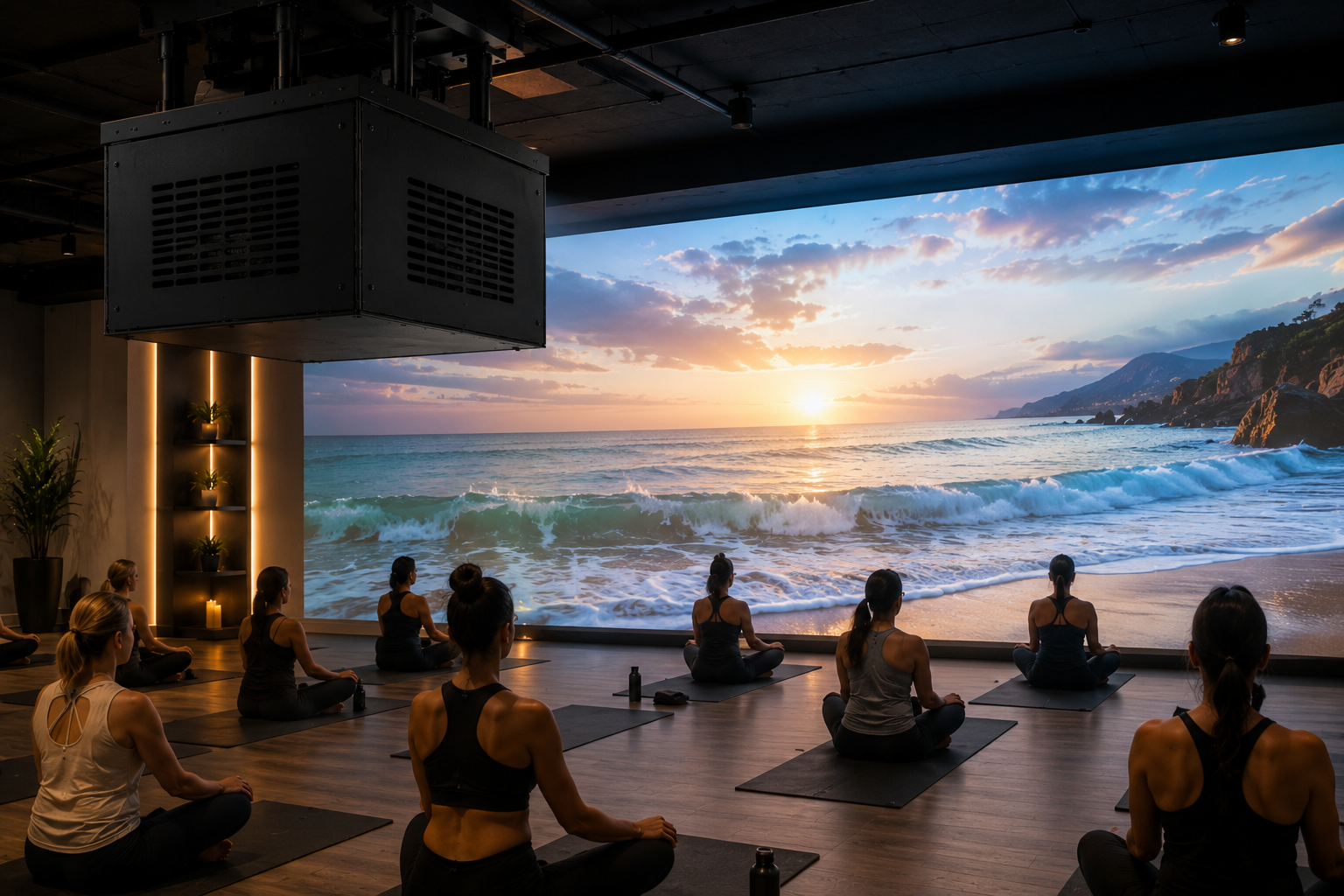
Fan-cooled projector enclosure installed in an immersive fitness studio with the projected display as the main focus.

A fan-cooled projector enclosure gives fitness studios, yoga rooms, wellness centers, cycling studios, Pilates rooms, meditation spaces, and immersive training rooms a cleaner way to protect projector equipment.

Projection can transform a simple workout room into something more powerful. It can create scenic landscapes, branded class visuals, ambient motion backgrounds, training instructions, countdown timers, immersive yoga environments, and high-energy cycling experiences.

However, fitness spaces can challenge AV equipment.

People move constantly. Rooms get warm. Dust collects. Sweat, humidity, cleaning chemicals, and airflow can affect the space. In addition, projectors may run through back-to-back classes every day.

Because of that, a projector should not hang exposed above a fitness room or sit unprotected near class activity.

A fan-cooled projector enclosure helps protect the projector while still supporting airflow. As a result, the room gets a cleaner installation, better equipment protection, and a more professional immersive experience.


Why Fitness Studios Need Projector Protection

Fitness studios now compete on atmosphere. A strong class experience can help a studio stand out, especially when the room feels more like an immersive environment than a plain workout space.

For example, AVNetwork reported on Casa Boost, a wellness studio in Geneva, Switzerland, that uses immersive projection to turn a yoga wall into a dynamic visual canvas for meditation and movement sessions. The installation uses projected scenic and cosmic imagery to support the emotional tone of the class.

That type of installation shows where wellness spaces are heading. Projection no longer just displays information. Instead, it can shape the mood of the room.

However, once projection becomes part of the experience, the projector becomes more important. If it overheats, shifts, gets bumped, or collects dust, the room loses part of its atmosphere.

Therefore, projector protection matters.


Why Airflow Matters in Fitness Rooms

Projectors generate heat. They also rely on clean airflow to operate safely.

Epson explains that projector air filters and air vents need periodic cleaning to prevent overheating caused by blocked ventilation. Epson also notes that dirty air filters and blocked vents can cause projector overheating warnings.

This matters in fitness spaces because these rooms often run warm. Cycling studios, group training rooms, and hot yoga-adjacent spaces may have higher temperatures, more airflow, and more airborne particles than a standard office or classroom.

In addition, studios often clean rooms between classes. That can introduce moisture, chemical residue, dust movement, and extra equipment activity.

Therefore, the projector needs protection. However, it also needs air.

A sealed box can trap heat. In contrast, a purpose-built fan-cooled enclosure helps move air through the housing while protecting the projector.


What a Fan-Cooled Projector Enclosure Does

A fan-cooled projector enclosure gives the projector a ventilated protective housing. It helps guard against dust, tampering, accidental contact, and heat buildup.

ProjectorEnclosure.com explains that its fan-cooled systems use filtered ambient air intake and hot air exhaust to keep projectors protected, clean, and cool. Its fan-cooled Integrator Series also comes in standard sizes, ships quickly, and supports mild environments without external ducting.

Screen Solutions International also lists the Integrator as its outdoor fan-cooled enclosure line and offers Hush, Defender climate-controlled, UST, and projector cage options for different applications.

Because of that, fan-cooled enclosures fit many indoor fitness and wellness spaces where the projector needs protection and airflow.

They can help protect against:

  • Dust
  • Heat buildup
  • Accidental contact
  • Public-area tampering
  • Cleaning activity
  • Visual clutter
  • Cable mess
  • Long class schedules
  • Ceiling debris
  • Equipment movement

For fitness studios, that protection can help preserve the experience.


Best Fitness Applications for Fan-Cooled Projector Enclosures

A fan-cooled projector enclosure can support many wellness and training environments. However, it works best when the projector sits indoors, under cover, and in a mild operating location.

1. Yoga Studios

Yoga studios often need calm, clean, visually quiet spaces. Projection can add moving landscapes, sunrise visuals, flowing textures, stars, oceans, forests, or guided meditation backgrounds.

Because these rooms depend on atmosphere, exposed equipment can distract from the experience. A fan-cooled enclosure helps the projector feel integrated rather than temporary.

2. Cycling Studios

Cycling studios use energy, lighting, motion, and music to create momentum. Projection can show leaderboards, landscapes, branded graphics, speed zones, class timers, or immersive road visuals.

However, cycling rooms can get warm and active. Therefore, a ventilated enclosure helps protect the projector without blocking airflow.

3. Pilates and Barre Rooms

Pilates and barre studios can use projection for branded visuals, instructional content, ambient motion graphics, and premium class environments.

Because these rooms often use clean design and soft lighting, a black or white powder-coated enclosure can help the projector blend into the room.

4. Meditation and Recovery Rooms

Wellness centers may use projection for guided relaxation, breathwork, sound baths, and sensory experiences. Projection can help create a calming environment without large permanent displays.

As a result, a clean enclosure can support the mood of the space while protecting the projector.

5. Fitness Clubs and Training Centers

Larger fitness clubs may use projectors for group fitness rooms, athletic training, mobility sessions, sports simulation, and branded member experiences.

Because these rooms often see heavy daily use, projector protection becomes practical, not just aesthetic.


Real-World Places Where This Makes Sense

Fan-cooled projector enclosures can help fitness and wellness spaces in cities where boutique studios, health clubs, and immersive wellness concepts continue to grow.

Los Angeles, California

Los Angeles has a strong fitness and wellness culture. Studios often compete through atmosphere, branding, lighting, and premium class design. Fan-cooled enclosures can help protect projectors in yoga rooms, cycling studios, and wellness spaces.

New York City, New York

New York fitness studios often work in compact rooms with limited ceiling space. Therefore, a clean protected projector installation can help reduce visual clutter while supporting immersive programming.

Miami, Florida

Miami’s wellness spaces, hotel gyms, rooftops, and boutique studios often blend fitness with lifestyle experiences. However, humidity should be reviewed carefully, especially in semi-outdoor or pool-adjacent spaces.

Austin, Texas

Austin’s fitness and wellness market supports boutique studios, yoga rooms, and performance training spaces. Fan-cooled enclosures can help protect projectors in indoor studios with repeated daily use.

London, United Kingdom

London wellness studios and high-end fitness clubs often use design-forward interiors. A sleek enclosure can help projection feel integrated into the architecture.

Geneva, Switzerland

The Casa Boost example shows how immersive projection can support a premium wellness environment. Similar studios can use fan-cooled enclosures when the projector needs protection, ventilation, and a clean installation.


Fan-Cooled vs. Hush vs. Climate-Controlled

Different wellness spaces need different enclosure types.

A fan-cooled projector enclosure works best when the projector needs protection and airflow in an indoor, covered, or mild environment.

A Hush enclosure works better when projector noise creates the main issue. For example, quiet meditation rooms, high-end yoga rooms, and sound bath spaces may need noise control as much as physical protection.

A climate-controlled projector enclosure works better when the projector faces direct weather, high humidity, heat, cold, or long-term outdoor exposure. This can apply to rooftop wellness decks, outdoor yoga pavilions, poolside gyms, or resort fitness spaces.

So, for a standard indoor yoga or cycling studio, fan-cooled may be the right choice. However, for a silent meditation room, Hush may work better. For an outdoor resort fitness area, climate-controlled protection may be required.


Why Fitness Studios Should Avoid DIY Projector Boxes

A DIY projector box may look simple. However, it can restrict airflow and cause heat problems.

Projectors need open intake and exhaust paths. If a decorative box blocks those paths, heat can build up quickly. Then the projector may dim, shut down, trigger warnings, or suffer long-term damage.

Therefore, fitness studios should avoid random cabinets, wood boxes, and decorative covers that restrict ventilation.

A purpose-built fan-cooled projector enclosure supports airflow, service access, mounting, cable routing, and security. In other words, it protects the projector without suffocating it.

That difference matters during back-to-back classes.


Benefits for Fitness and Wellness Operators

Cleaner Studio Design

First, the enclosure helps the projector look integrated. Instead of exposed hardware, the room gets a finished AV installation.

Better Dust Protection

Next, the enclosure helps reduce exposure to dust, ceiling debris, and daily room activity.

Better Airflow

Because the enclosure uses ventilation, it helps move air instead of trapping heat around the projector.

More Security

Also, locking access helps reduce tampering in shared studios, clubs, and public-facing fitness rooms.

Better Class Reliability

In addition, protected equipment can support repeated classes with fewer installation concerns.

Stronger Guest Experience

Finally, the projector stays visually secondary while the projected environment becomes the main focus.


What to Check Before Choosing an Enclosure

Before ordering a fan-cooled projector enclosure for a fitness or wellness space, confirm the projector model, lens length, total depth, width, height, wattage, airflow direction, throw distance, mounting location, and service access.

Also, ask:

  • Will the projector mount above active movement?
  • Will the room get warm during classes?
  • Does the studio use humidity, mist, or heat?
  • Will the projector run through back-to-back sessions?
  • Can clients or staff reach the projector?
  • Will cleaning activity happen near the equipment?
  • Does the room need quiet operation?
  • Does the enclosure allow enough airflow?
  • Will the projected visuals cover a wall, screen, floor, or full room?
  • Does the space need fan-cooled, Hush, or climate-controlled protection?

If the projector sits indoors and needs protection plus ventilation, fan-cooled often makes sense. However, if the room needs silence, consider Hush. If the room faces high humidity or outdoor exposure, consider climate-controlled protection.


Final Takeaway

A fan-cooled projector enclosure gives fitness studios, yoga rooms, wellness centers, cycling studios, Pilates rooms, meditation spaces, and immersive training facilities a practical way to protect projector equipment. It helps reduce dust exposure, heat buildup, tampering, accidental contact, and visual clutter while still supporting airflow.

Most importantly, it helps the projected environment stay beautiful, reliable, and focused on the guest experience.

For help choosing the right enclosure size for a fitness or wellness projector, contact ProjectorEnclosure.com or Screen Solutions International at 888-631-5880.


Sources

  1. ProjectorEnclosure.com — Fan-Cooled Projector Enclosures
    URL: https://projectorenclosure.com/fan-cooled-projector-enclosures/
    Used for fan-cooled Integrator enclosure features, mild-environment positioning, standard sizes, color options, quick shipping, and no external ducting.
  2. ProjectorEnclosure.com — Home Page
    URL: https://projectorenclosure.com/
    Used for general fan-cooled enclosure positioning, including filtered ambient air intake, hot air exhaust, dust control, and projector protection.
  3. Screen Solutions International — Projector Enclosures
    URL: https://ssidisplays.com/projector-enclosures/
    Used for SSI’s projector enclosure lineup, including Integrator fan-cooled enclosures, Defender climate-controlled enclosures, Hush enclosures, UST enclosures, and projector cages.
  4. Screen Solutions International — Integrator Series
    URL: https://ssidisplays.com/product/integrator-series-2/
    Used for Integrator Series positioning, product style, and enclosure feature references.
  5. 2025 Updated Enclosure Price Sheet — Screen Solutions International
    Used for visual reference of the Integrator Series fan-cooled enclosure likeness and standard black/white powder coat note.
  6. Epson — Projector Maintenance
    URL: https://files.support.epson.com/docid/cpd4/cpd41026/source/maintenance/concepts/maint_projector_pl470_bl485wi.html
    Used for projector maintenance guidance, including cleaning air filters and air vents to help prevent overheating.
  7. Epson Europe — Projector Air Filter Cleaning FAQ
    URL: https://www.epson.eu/en_EU/faq/KA-01509/contents
    Used for overheating warnings related to blocked vents and clogged air filters.
  8. AVNetwork — A Blend of Meditation and Mesmerizing Visuals Creates Immersive Yoga Experience
    URL: https://www.avnetwork.com/news/a-blend-of-meditation-and-mesmerizing-visuals-creates-immersive-yoga-experience
    Used for a real-world wellness studio example using immersive projection in yoga and meditation sessions.
  9. Interactive & Immersive HQ — What Is Projection Mapping?
    URL: https://interactiveimmersive.io/blog/outputs/what-is-projection-mapping/
    Used for projection mapping context in immersive environments.
  10. HeavyM — Interactive Projection Mapping Projects
    URL: https://www.heavym.net/5-interactive-projection-mapping-projects/
    Used for interactive projection mapping context and how projection can respond to movement, sound, and user interaction.
  11. AV Alliance — Immersive Projection Techniques
    URL: https://avalliance.com/immersive-projection-techniques-360-projection-mapping-and-real-time-tracking/
    Used for immersive projection context, including 360-degree projection mapping and real-time tracking.
Read more

Climate Controlled Projector Enclosures for Casual Backyard Movie Nights

Climate Controlled Projector Enclosures for Casual Backyard Movie Nights

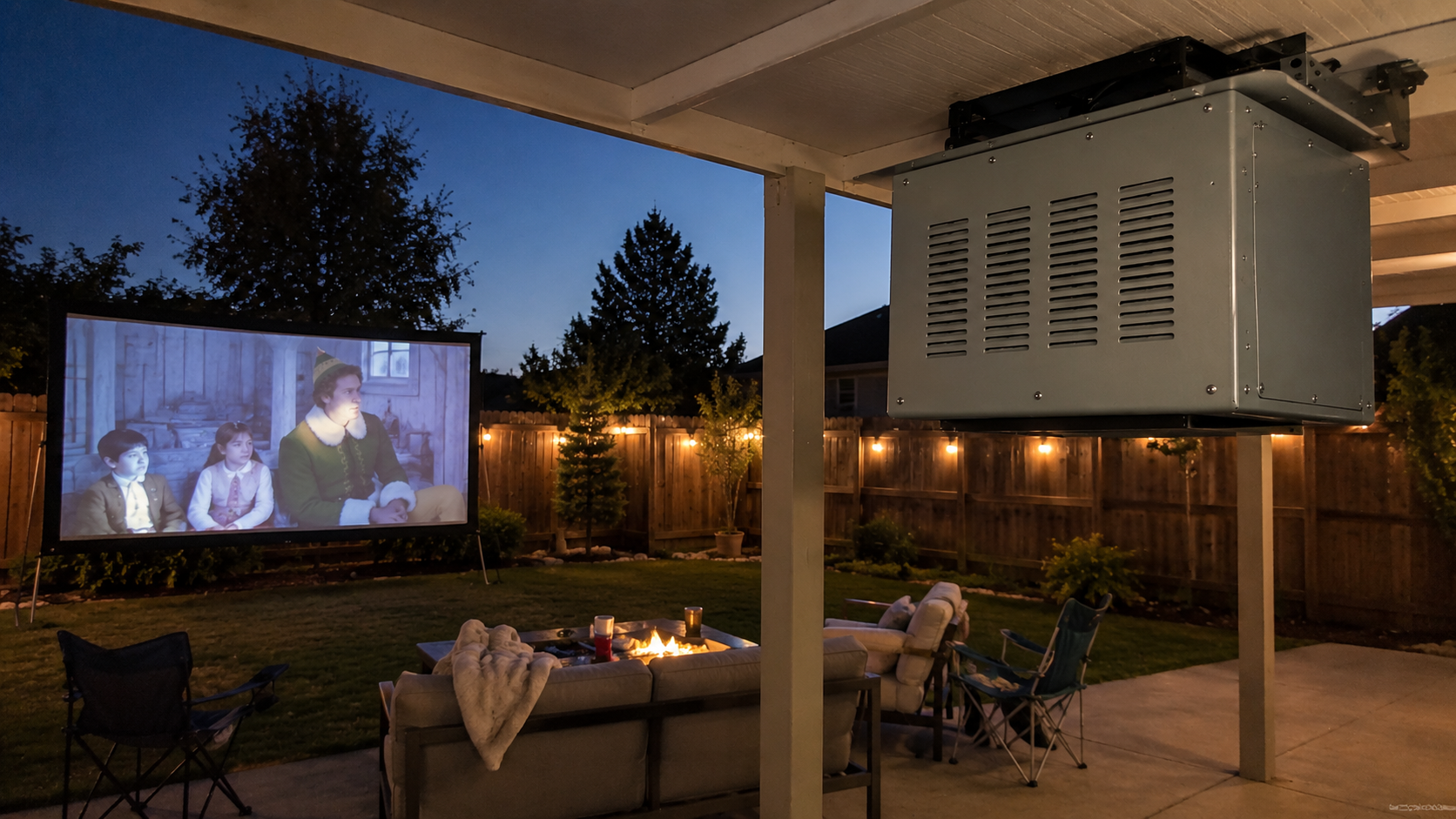
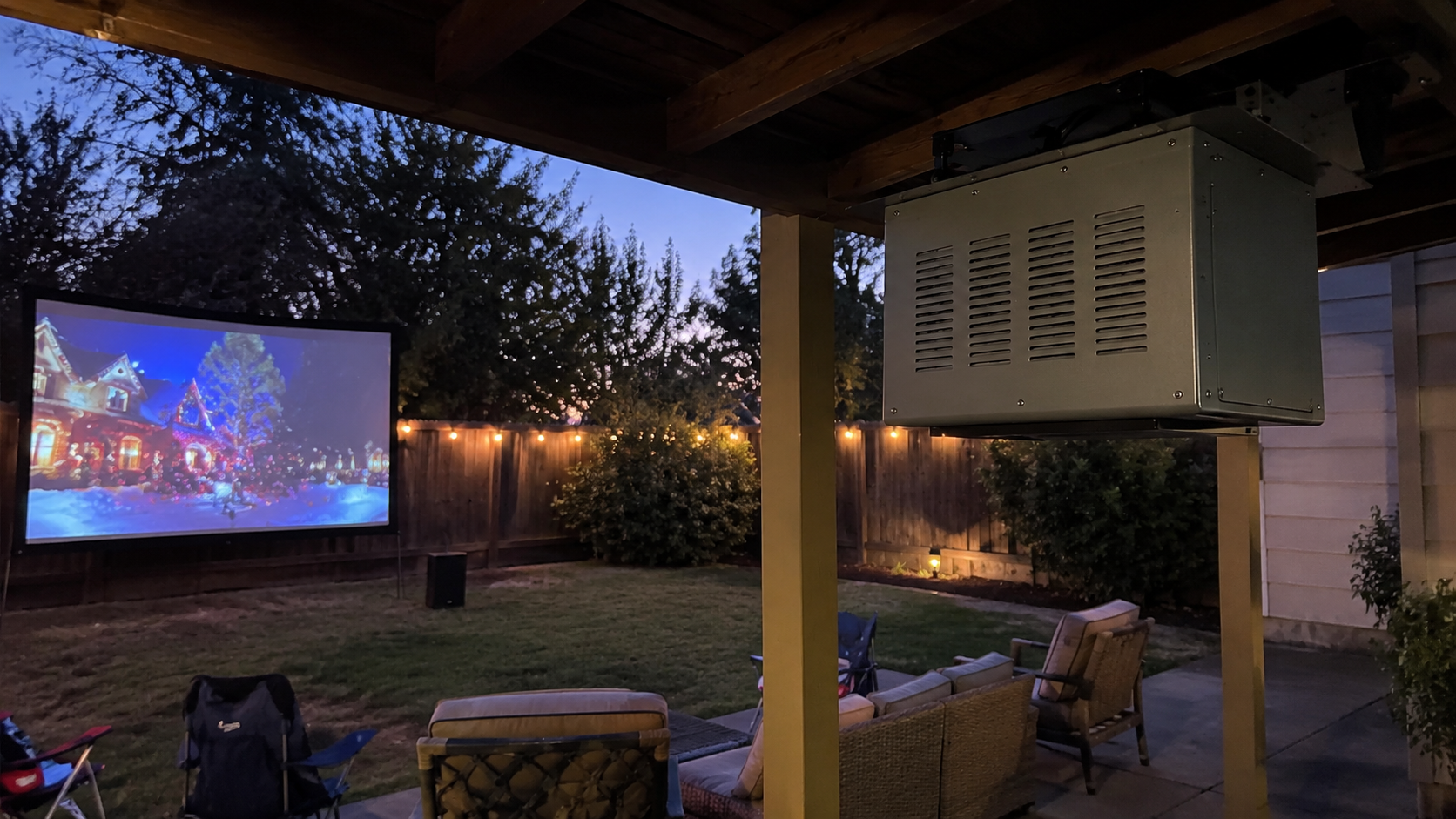
Casual backyard movie night with a climate controlled projector enclosure mounted under a covered patio.

Climate controlled projector enclosures for backyard movie nights are not only for luxury estates or large commercial installs. They also make sense for homeowners who want a casual, reliable outdoor theatre without dragging equipment outside every time.

A simple backyard setup can still benefit from serious protection.

Maybe the screen is a basic outdoor projection screen. Perhaps the seating is a mix of patio couches, folding chairs, blankets, and a fire table. Either way, the projector still faces real outdoor conditions. Heat, humidity, dust, insects, rain, and temperature swings do not care whether the theatre looks fancy or casual.

Because of that, the projector enclosure should match the environment, not just the style of the backyard.


Casual Does Not Mean Temporary

Many homeowners start with a casual setup. They buy a screen, set up a few chairs, connect a streaming device, and enjoy the first movie night. However, once the family starts using the space often, the setup routine becomes annoying.

Each movie night may require:

  • Carrying the projector outside
  • Running power cables
  • Connecting the media source
  • Aiming the projector
  • Adjusting focus
  • Checking audio
  • Watching the weather
  • Packing everything away afterward

At first, that process feels manageable. After several weekends, though, the effort adds friction.

A climate controlled enclosure solves that problem by allowing the projector to stay installed and protected. As a result, casual backyard movie nights become much easier to enjoy.


Outdoor Conditions Still Affect Simple Setups

A backyard theatre does not need a pool, outdoor kitchen, or custom stone wall to face outdoor exposure. Even a basic lawn setup can create projector risks.

Dust can move through the yard. Pollen can collect on equipment. Insects can gather near warm electronics. Meanwhile, humidity can rise after sunset, especially in shaded yards or areas with nearby landscaping.

Rain can also arrive quickly. Even if the projector sits under a covered patio, wind can push moisture sideways. Therefore, a roof or pergola should not be treated like a sealed equipment room.

ProjectorEnclosure.com describes the Defender Series as a climate controlled projector enclosure system for outdoor and harsh-environment installations. The system combines weather-resistant construction, insulation, secure access, active climate control, and service-friendly design.

That level of protection helps casual outdoor theatres become more dependable.


Why a Basic Projector Cover Falls Short

A basic cover may seem like the easy answer. It can help keep dust off the projector when the system is not running. However, it does not create a safe operating environment.

During use, the cover must usually come off. At that point, the projector is exposed again. If the cover stays too close while the projector runs, it can restrict airflow and trap heat.

That creates a problem.

Projectors need ventilation. In addition, outdoor setups need protection from moisture and dust. A climate controlled projector enclosure handles both sides of the problem better because it protects the projector while supporting operation.

For casual backyard users, that means less worry and fewer setup steps.


The Screen Can Stay Simple

A backyard movie night does not need a built-in stone screen wall. In many cases, a simple projection screen is the right choice.

A freestanding screen, pull-down screen, wall-mounted screen, or tensioned outdoor screen can work well. The important part is projector alignment. The enclosure should aim cleanly toward the screen, and the beam path should stay clear of posts, lights, trees, umbrellas, and people walking through the yard.

For best results, plan:

  • Screen location
  • Projector throw distance
  • Mounting height
  • Seating layout
  • Beam path
  • Power access
  • Audio location
  • Service access
  • Weather exposure

Once those pieces line up, the setup feels simple without being sloppy.


Defender Series Protection for Everyday Backyard Use

The Defender Series is built for outdoor projector protection where standard housing is not enough. ProjectorEnclosure.com states that these climate controlled projector enclosures help protect projection equipment from changing temperatures, humidity, rain, snow, dust, and public-facing installation risks.

For casual backyard movie nights, that means the projector can stay mounted in a safer, cleaner location.

A Defender-style enclosure can support:

  • Backyard movie nights
  • Patio theatres
  • Lawn projection setups
  • Outdoor sports viewing
  • Holiday movies
  • Family gaming nights
  • Neighborhood watch parties
  • Seasonal outdoor entertainment

In addition, secure access helps protect the projector from accidental contact, curious kids, pets, guests, and general backyard activity.


Heat and Humidity Matter Even at Night

Many outdoor movie nights happen after sunset. Because of that, homeowners sometimes assume heat is not a major concern. However, the projector may sit outside all day before the movie starts.

Covered patios can hold warm air. Walls and hardscape can radiate heat. Later, as the evening cools, humidity may rise.

That day-to-night shift can create stress for outdoor electronics. The U.S. EPA explains that unmanaged moisture can affect materials and systems over time, which makes moisture control an important planning factor.
https://www.epa.gov/sites/default/files/2014-08/documents/moisture-control.pdf

Although the EPA guidance focuses on buildings, the same principle applies to outdoor AV planning: moisture should be managed before it becomes a problem.


Dust and Pollen Can Reduce Image Quality

A clear image depends on a clean optical path. When dust, pollen, or insects collect near the projector lens or projection window, the picture can lose clarity.

BenQ notes that dust can affect projector performance and recommends protecting projectors from dusty environments.
https://www.benq.com/en-us/knowledge-center/knowledge/what-can-you-do-to-protect-your-school-projectors-from-dust.html

For backyard users, dust does not always look dramatic. Still, it builds up over time. Grass clippings, leaves, pollen, dirt, and fire pit ash can all reach outdoor AV equipment.

A climate controlled enclosure helps reduce that direct exposure while keeping the projector installation cleaner.


Better Setup Means More Movie Nights

Outdoor theatres succeed when they are easy to use. If every movie night feels like a chore, the system will sit unused.

A protected, permanent projector location changes that. Instead of rebuilding the theatre each time, homeowners can simply set out snacks, invite people over, and start the show.

That matters because the best backyard theatres are not always the fanciest ones. They are the ones people actually use.

With a climate controlled enclosure, a simple backyard movie setup can feel ready on demand. Therefore, families can enjoy more spontaneous movie nights, sports events, gaming sessions, and holiday viewings.


What to Send Before Choosing an Enclosure

Before choosing a climate controlled enclosure, gather the details needed for proper sizing.

ProjectorEnclosure.com recommends sharing the projector make and model, lens model, dimensions, installation location, exposure level, expected temperature range, humidity concerns, mounting method, access direction, desired finish, and site clearance limits before sizing a Defender Series enclosure.

For casual backyard movie nights, also include:

  • Screen type
  • Screen size
  • Throw distance
  • Mounting location
  • Seating layout
  • Power access
  • Audio plan
  • Covered or uncovered exposure
  • Preferred enclosure color
  • Service access needs

With that information, SSI can help match the enclosure to the projector and the backyard layout.


Final Takeaway

Casual backyard movie nights still need serious projector protection. A simple screen and relaxed seating area can create a great outdoor theatre, but the projector still faces heat, humidity, dust, insects, rain, and changing weather.

Climate controlled projector enclosures for backyard movie nights help homeowners keep the projector installed, protected, and ready to use. For families who want less setup and more time outside, a Defender Series enclosure is a smart upgrade.

Call 888-631-5880 or visit ProjectorEnclosure.com to review your projector, screen, and backyard movie night layout.


Sources

ProjectorEnclosure.com — Climate Controlled Projector Enclosures
https://projectorenclosure.com/climate-controlled-projector-enclosures/

ProjectorEnclosure.com — The Defender Series Enclosures
https://projectorenclosure.com/store/the-defender-series-enclosures/

SSI Displays — Projector Enclosures
https://ssidisplays.com/projector-enclosures/

ProjectorEnclosure.com — Projector Enclosures Overview
https://projectorenclosure.com/projector-enclosures/

ProjectorEnclosure.com — 5 Questions to Ask Before Choosing a Projector Enclosure
https://projectorenclosure.com/choosing-outdoor-enclosure/

U.S. EPA — Moisture Control Guidance
https://www.epa.gov/sites/default/files/2014-08/documents/moisture-control.pdf

BenQ — Protecting Projectors From Dust
https://www.benq.com/en-us/knowledge-center/knowledge/what-can-you-do-to-protect-your-school-projectors-from-dust.html

Element14 — How Sunlight, Humidity, and Moisture Affect Electronics
https://community.element14.com/learn/learning-center/the-tech-connection/b/blog/posts/how-do-sunlight-humidity-and-moisture-affect-electronics

Read more

Fan-Cooled Projector Enclosures for Golf Simulators, Indoor Golf Bays, and Training Facilities

Fan-Cooled Projector Enclosures for Golf Simulators

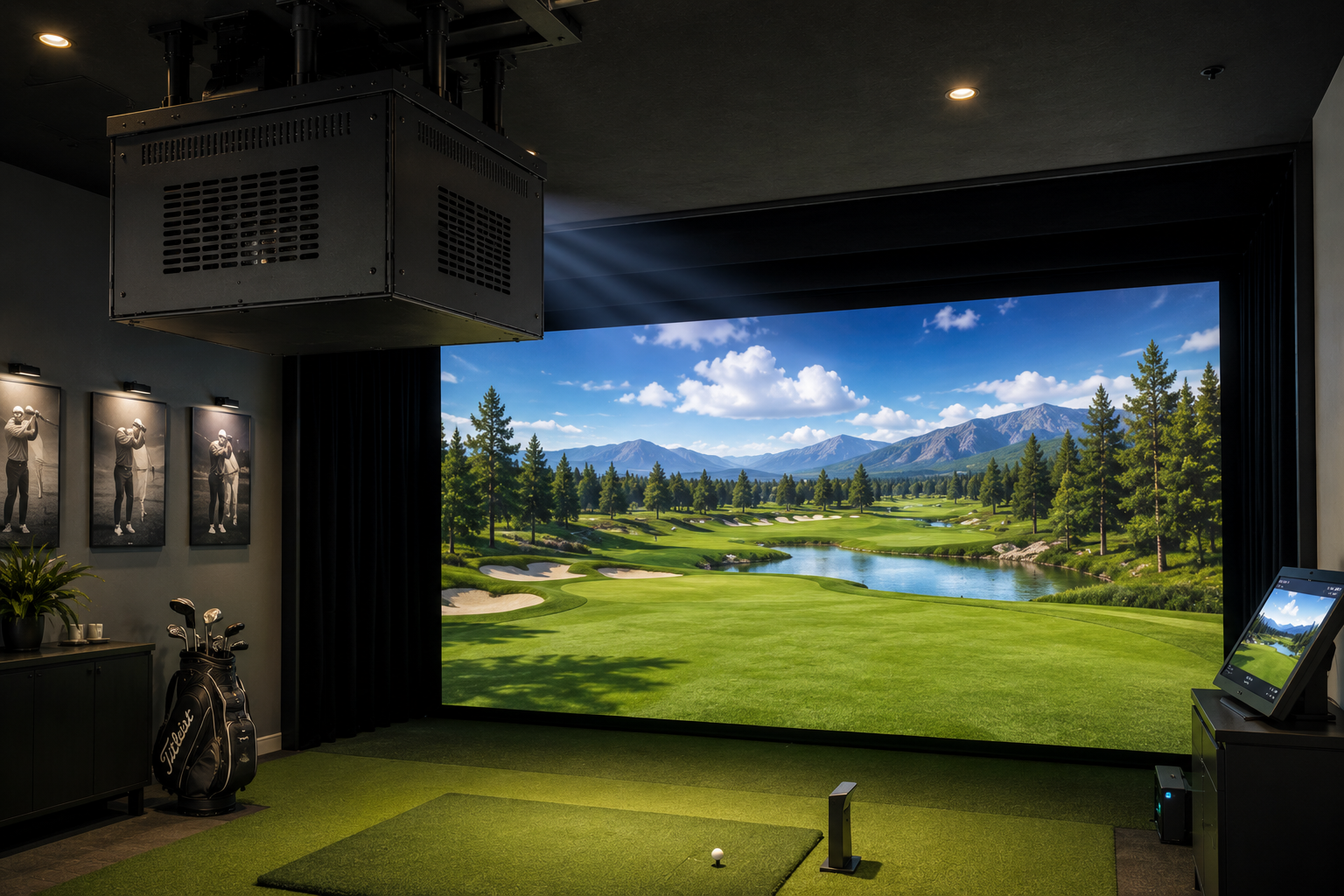
Fan-cooled projector enclosure installed above an indoor golf simulator with the display as the main focus.

A fan-cooled projector enclosure gives golf simulators, indoor golf bays, swing studios, training centers, clubhouses, and entertainment venues a cleaner way to protect projector equipment.

Golf simulator rooms can be tough on projectors. Players swing clubs. Golf balls hit impact screens at high speed. Mats collect dust. HVAC moves debris through the room. In addition, many simulator projectors run for long sessions during lessons, league nights, parties, and private practice.

Because of that, a projector should not hang fully exposed above the hitting area.

Instead, the system needs a protected, ventilated installation. A fan-cooled projector enclosure helps guard the projector from dust, accidental contact, tampering, and heat buildup while still allowing airflow.

As a result, the simulator room looks cleaner, operates more professionally, and gives the projector a better environment.


Why Golf Simulators Need Projector Protection

Golf simulator projectors often sit close to the action. Many setups mount the projector overhead to reduce shadows and keep the player’s body from blocking the image. BenQ explains that ceiling mounting is one of the most popular projector placement options for golf simulator setups because it helps create a more immersive experience and keeps the projector away from the hitting path.

However, overhead mounting does not remove every risk.

Golf simulator rooms still create dust, vibration, ball impact risk, club movement, and heavy use. In commercial facilities, players may rotate through bays all day. In home golf rooms, families may also use the space for movies, gaming, sports, and general entertainment.

Therefore, projector protection matters.

A fan-cooled enclosure helps create a cleaner, more stable projector installation without turning the projector into an exposed ceiling accessory.


Golf Simulators Are Becoming More Common

Golf simulators are no longer just a luxury add-on. They now support home training rooms, indoor golf clubs, teaching academies, entertainment venues, sports bars, hotels, and country clubs.

Grand View Research estimated the global golf simulator market at $2.12 billion in 2025 and projects it to reach $4.12 billion by 2033, driven in part by growing demand for indoor and home-based sports experiences.

That growth matters because more simulator rooms means more projector installations. In addition, more commercial golf simulator venues means more long runtime, high-use projector environments.

As a result, projector protection becomes a smarter part of the overall simulator build.


Why Airflow Matters in Golf Simulator Rooms

Projectors generate heat. They also rely on clean airflow to operate safely.

Epson explains that projector air filters and air vents may need cleaning to prevent overheating caused by blocked ventilation. Epson also warns that clogged filters can prevent proper ventilation, which can cause overheating and projector damage.

That matters in golf simulator rooms because the projector may operate for hours at a time. For example, a teaching facility may use the same projector through multiple lessons. A commercial indoor golf venue may run projectors from opening to close. A home simulator may support golf practice, movie nights, and gaming in the same space.

Therefore, the projector needs protection. However, it also needs air.

A basic cabinet or homemade box can trap heat. In contrast, a purpose-built fan-cooled enclosure helps move air through the housing while protecting the projector.


What a Fan-Cooled Projector Enclosure Does

A fan-cooled projector enclosure gives the projector a ventilated protective housing. It helps guard against dust, tampering, accidental contact, and heat buildup.

ProjectorEnclosure.com describes fan-cooled projector enclosures from Screen Solutions International as protection systems for environments where airflow, dust control, security, and service access matter. The same page lists golf simulators as one of the ideal applications for these enclosures.

In addition, ProjectorEnclosure.com explains that fan-cooled Integrator Series enclosures use filtered ambient air and hot air exhaust to help keep projectors protected, clean, and cool.

Because of that, these enclosures fit many simulator applications where the projector sits indoors or in a mild protected space.

They can help protect against:

  • Dust from mats and floors
  • Ceiling debris
  • Accidental contact
  • Public-area tampering
  • Heat buildup
  • Cable clutter
  • Long daily runtimes
  • Visual clutter
  • Service access issues
  • Simulator room activity

For golf simulator projects, that combination matters.


Best Golf Simulator Applications for Fan-Cooled Enclosures

A fan-cooled projector enclosure can support many golf simulator environments. However, it works best when the projector sits indoors, under cover, and outside direct impact zones.

1. Home Golf Simulator Rooms

Home golf simulators often double as entertainment rooms. A homeowner may use the projector for practice, movies, sports, gaming, and family events.

Because of that, the projector should look integrated. A fan-cooled enclosure gives the system a cleaner finished appearance while also protecting the projector from dust and accidental contact.

2. Commercial Indoor Golf Bays

Commercial simulator bays may run all day. Customers come and go. Staff clean the rooms. Equipment gets adjusted. In addition, each bay needs to feel premium and reliable.

Therefore, a fan-cooled enclosure helps protect the projector while giving the room a more professional AV finish.

3. Golf Instruction Studios

Teaching studios rely on repeatability. Coaches may use swing cameras, launch monitors, impact screens, and projectors throughout the day.

A protected projector helps keep the room organized and reduces unnecessary equipment exposure. It also helps prevent people from touching or adjusting the projector.

4. Country Clubs and Clubhouse Simulators

Country clubs may use simulator rooms for lessons, member events, off-season training, and private entertainment.

In these settings, appearance matters. A black or white powder-coated enclosure can help the projector blend into the room while keeping the installation polished.

5. Sports Bars and Entertainment Venues

Golf simulator lounges, sports bars, and entertainment venues often combine simulation, food, drinks, and group events. That creates more guest traffic and more equipment risk.

As a result, a locking fan-cooled enclosure can help protect the projector in a public-facing room.


Real-World Places Where This Makes Sense

Fan-cooled projector enclosures can help simulator projects in regions where indoor golf and year-round training are especially valuable.

Chicago, Illinois

Cold winters make indoor practice more useful. Golf simulator rooms in training centers, clubs, and homes can help players practice when outdoor golf becomes difficult.

Minneapolis, Minnesota

Long winters create strong demand for indoor golf options. Fan-cooled enclosures can help protect projectors in commercial golf bays and home simulator rooms.

Toronto, Canada

Indoor golf facilities, clubhouses, and residential simulator rooms can help extend the golf season. Therefore, projector protection becomes important in high-use simulator spaces.

New York and New Jersey

Golf simulator lounges, private clubs, residential builds, and commercial training centers can benefit from protected projector installations in dense, high-value spaces.

Dallas, Texas

Golf simulator venues and private indoor bays can support training and entertainment during hot weather, storms, and evening events.

Scottsdale, Arizona

Scottsdale has a strong golf culture. However, high heat can push some practice and entertainment indoors. In these indoor simulator spaces, fan-cooled enclosures can help protect projector systems.


Fan-Cooled vs. Projector Cage vs. Climate-Controlled

Different simulator spaces need different projector protection.

A fan-cooled projector enclosure works best when the projector needs ventilation, dust control, security, and a cleaner indoor installation.

A projector cage works better when direct impact or theft protection creates the main concern. However, a cage does not provide the same enclosed dust control or fan-cooled airflow approach.

A climate-controlled projector enclosure works better when the projector sits outdoors, in a garage with extreme temperature swings, or in a non-conditioned space with heat, cold, or humidity concerns.

So, for a finished indoor golf room, fan-cooled often makes sense. However, for an exposed garage simulator in a harsh climate, the enclosure choice may require a closer look.


Why Golf Simulator Owners Should Avoid DIY Boxes

A DIY projector box may seem like an easy solution. However, it can create airflow problems.

Projectors need open intake and exhaust paths. If a box blocks those paths, heat can build up quickly. Then the projector may dim, shut down, trigger warnings, or suffer long-term damage.

Therefore, simulator owners should avoid random cabinets, wood boxes, and decorative covers that restrict airflow.

A purpose-built fan-cooled projector enclosure supports ventilation, service access, mounting, cable routing, and security. In other words, it protects the projector without suffocating it.

That difference matters during long simulator sessions.


Benefits for Golf Simulator Rooms

Cleaner Installation

First, the enclosure makes the projector look integrated. Instead of exposed hardware, the room gets a finished AV system.

Better Dust Protection

Next, the enclosure helps reduce exposure to dust from mats, floors, ceiling areas, and room activity.

Better Airflow

Because the enclosure uses fans and ventilation, it helps move air instead of trapping heat around the projector.

More Security

Also, locking access helps reduce tampering in commercial simulator bays and shared facilities.

Better Room Appearance

In addition, a black powder-coated Integrator-style enclosure can blend well into dark ceilings, simulator bays, and premium training rooms.

More Reliable Long Sessions

Finally, better protection and airflow can help support longer simulator sessions with less installation risk.


What to Check Before Choosing an Enclosure

Before ordering a fan-cooled projector enclosure for a golf simulator, confirm the projector model, lens length, total depth, width, height, wattage, airflow direction, throw distance, and mounting location.

Also, ask:

  • Will the projector mount overhead, behind the player, or near the screen?
  • Will the projector sit near the swing path?
  • Could a club or ball contact the projector area?
  • Does the simulator room collect dust from mats or flooring?
  • Will the projector run for long sessions?
  • Will customers or guests access the room?
  • Does the projector need service access?
  • Does the enclosure allow enough airflow?
  • Does the room need impact protection, cooling, or both?
  • Does the space have stable indoor temperature control?

If the projector sits indoors and needs protection plus ventilation, fan-cooled often makes sense. However, if direct ball impact creates the primary risk, add stronger impact protection planning. If the space faces extreme heat, cold, or humidity, consider climate-controlled protection.


Final Takeaway

A fan-cooled projector enclosure gives golf simulators, indoor golf bays, swing studios, country clubs, training centers, and entertainment venues a practical way to protect projector equipment. It helps reduce dust exposure, heat buildup, tampering, accidental contact, and visual clutter while still supporting airflow.

Most importantly, it helps make the simulator room feel more polished, reliable, and professionally installed.

For help choosing the right enclosure size for a golf simulator projector, contact ProjectorEnclosure.com or Screen Solutions International at 888-631-5880.


Sources

  1. ProjectorEnclosure.com — Fan-Cooled Projector Enclosures
    URL: https://projectorenclosure.com/fan-cooled-projector-enclosures/
    Used for fan-cooled Integrator enclosure features, mild-environment positioning, golf simulator application fit, standard sizes, color options, and no external ducting.
  2. ProjectorEnclosure.com — Home Page
    URL: https://projectorenclosure.com/
    Used for general fan-cooled enclosure positioning, including filtered ambient air intake, hot air exhaust, dust control, and projector protection.
  3. Screen Solutions International — Projector Enclosures
    URL: https://ssidisplays.com/projector-enclosures/
    Used for SSI’s projector enclosure lineup, including Integrator fan-cooled enclosures, Defender climate-controlled enclosures, Hush enclosures, UST enclosures, and projector cages.
  4. Screen Solutions International — Integrator Series
    URL: https://ssidisplays.com/product/integrator-series-2/
    Used for Integrator Series positioning, product style, and enclosure feature references.
  5. 2025 Updated Enclosure Price Sheet — Screen Solutions International
    Used for visual reference of the Integrator Series fan-cooled enclosure likeness and standard black/white powder coat note.
  6. Epson — Projector Maintenance
    URL: https://files.support.epson.com/docid/cpd4/cpd41026/source/maintenance/concepts/maint_projector_pl470_bl485wi.html
    Used for projector maintenance guidance, including cleaning air filters and air vents to help prevent overheating.
  7. Epson — Air Filter Cleaning FAQ
    URL: https://epson.com/faq/SPT_V11H335120~faq-150403
    Used for guidance that clogged air filters can prevent ventilation and cause overheating or projector damage.
  8. BenQ — Golf Simulator Projector Placement
    URL: https://www.benq.com/en-us/golf-simulator-projector/knowledge/what-is-the-best-place-to-mount-a-golf-simulator-projector.html
    Used for golf simulator projector placement context, including ceiling mounting and reducing shadows.
  9. BenQ Europe — Ceiling Mounted Golf Simulation Projector Setup
    URL: https://www.benq.eu/en-eu/business/campaign/golf-simulator-projector/resources/how-to-video-quick-projector-setup.html
    Used for golf simulator projector setup context, including ceiling mounting and filling the impact screen.
  10. Grand View Research — Golf Simulator Market Size & Share Report
    URL: https://www.grandviewresearch.com/industry-analysis/golf-simulator-market-report
    Used for golf simulator market growth context and demand for indoor/home-based sports experiences.
  11. National Golf Foundation — The Golf Simulator Opportunity
    URL: https://www.ngf.org/wp-content/uploads/2025/04/2025-NGF-White-Paper-The-Golf-Simulator-Opportunity.pdf
    Used for broader indoor golf and simulator facility trend context.
Read more

Climate Controlled Projector Enclosures for Backyard Projection Mapping

Climate Controlled Projector Enclosures for Backyard Projection Mapping and Outdoor Movie Nights

Climate controlled projector enclosure supporting backyard projection mapping and outdoor movie nights.

Climate controlled projector enclosures for backyard projection mapping help homeowners use outdoor projectors for more than movie nights. A backyard theatre can show films, sports, gaming, seasonal visuals, holiday scenes, party graphics, and projection mapping effects across walls, screens, fences, pool areas, or architectural surfaces.

However, projection mapping creates a tougher installation challenge.

The projector often needs to stay mounted in a fixed position. The image must line up accurately with the surface. Also, the system may run for long periods during events, holidays, or parties. Because of that, the projector needs reliable outdoor protection that supports permanent placement, clean alignment, and long-term use.

A climate controlled projector enclosure gives the system that foundation.


Why Projection Mapping Needs a Stable Projector Position

Projection mapping works best when the projector stays in the same position. Once the image is aligned to a wall, screen, garage door, patio structure, or architectural feature, even a small movement can throw the mapped content out of place.

That makes temporary setups frustrating.

If the projector gets moved after every use, the homeowner may need to realign the image again and again. In contrast, a fixed projector position helps keep the mapped content consistent. As a result, the system becomes easier to use for holidays, parties, sports nights, and outdoor entertainment.

A climate controlled enclosure supports that fixed position by allowing the projector to remain installed outdoors while staying protected.


Outdoor Mapping Creates More Environmental Risk

Projection mapping is often used at night, but the projector still sits outside during the day. That means the equipment deals with heat, dust, humidity, rain, insects, pollen, and seasonal temperature changes even when the system is off.

In addition, mapped projects may run for several hours at a time. Holiday visuals, event loops, Halloween scenes, Christmas displays, and outdoor parties often require longer projector runtimes than a single movie.

Because of that, the enclosure needs to do more than cover the projector. It needs to help protect the operating environment.

ProjectorEnclosure.com describes the Defender Series as a climate controlled projector enclosure system built for outdoor and harsh-environment installations. The system combines weather-resistant construction, insulation, secure access, active climate control, and service-friendly design.


Climate Control Helps Protect Image Reliability

Projection mapping depends on repeatable alignment and consistent projector performance. If the projector overheats, shuts down, fogs at the lens area, or gets dirty around the projection path, the experience suffers fast.

Therefore, the projector location should support:

  • Clean airflow
  • Stable temperature management
  • Moisture protection
  • Dust reduction
  • Proper lens alignment
  • Easy access for service
  • Secure mounting
  • A clear beam path to the projection surface

A climate controlled enclosure helps create that protected environment. Meanwhile, the projector can remain aimed exactly where it needs to be.

That combination is especially useful for homeowners who want a polished outdoor experience without constant adjustment.


Backyard Mapping Is Not Just for Holidays

Holiday projection mapping gets the spotlight, but backyard mapping can do much more.

Homeowners can use mapped visuals for:

  • Halloween effects
  • Christmas and winter scenes
  • Birthday parties
  • Poolside ambience
  • Outdoor dinner parties
  • Sports team graphics
  • Movie night countdowns
  • Gaming backgrounds
  • Architectural lighting effects
  • Branded events at private homes

In addition, projection mapping can transform blank walls into animated scenery. A plain stucco wall, fence, garage door, cabana, or projection screen can become part of the show.

However, the projector has to stay protected and aligned. Otherwise, the magic turns into maintenance.


Why Basic Covers Do Not Work Well for Mapping

A basic projector cover may help during downtime, but it does not support a clean permanent mapping setup.

The projector still needs to be uncovered before use. Then, once exposed, it faces dust, moisture, temperature shifts, and insects. Also, if the projector gets bumped during setup or storage, the mapping alignment can change.

A DIY box can create problems too. It may trap heat, block airflow, limit access, or misalign the projection window. In some cases, the box may protect against light rain but fail against humidity, condensation, and long-term outdoor exposure.

By contrast, a climate controlled projector enclosure is designed around the projector’s real operating needs.


Defender Series Enclosures for Outdoor Mapping

The Defender Series fits backyard mapping projects because it supports outdoor protection, fixed installation, and service access. ProjectorEnclosure.com states that Defender climate controlled projector enclosures help protect valuable projection equipment from changing temperatures, humidity, rain, snow, dust, and public-facing installation risks.

That matters for mapping because the projector may need to stay installed for weeks, months, or year-round.

A Defender-style enclosure can support:

  • Outdoor projection mapping
  • Permanent backyard theatres
  • Holiday projection installations
  • Poolside visual effects
  • Architectural wall mapping
  • Patio entertainment systems
  • Long-runtime event visuals
  • Outdoor movie and sports setups

More importantly, it helps keep the projector ready instead of turning every event into a fresh setup.


Lens Direction and Acrylic Window Placement Matter

For projection mapping, the beam path must stay clean. The projector lens should aim directly at the mapped surface, whether that surface is a screen, wall, fence, garage door, or outdoor structure.

If the enclosure uses an acrylic projection window, that window must align with the lens. Poor window placement can create image distortion, brightness loss, reflections, or edge issues.

Before installation, confirm:

  • The projector lens faces the projection surface
  • The acrylic window aligns with the lens
  • The beam path clears posts, beams, fans, and lights
  • The enclosure mount holds position securely
  • The projector can be adjusted inside the enclosure
  • Service panels remain accessible
  • The window can be cleaned safely

This planning keeps the mapped image more consistent over time.


Permanent Mapping Requires Cleaner Cable Routing

Backyard projection mapping often needs more than power. Depending on the system, the projector may connect to a media player, computer, controller, streaming device, network line, or AV receiver.

Because of that, cable routing should be planned early.

A clean installation should consider:

  • Power location
  • HDMI or signal path
  • Network access
  • Media player placement
  • Weather-safe cable routing
  • Service loops
  • Access for future upgrades
  • Protection from guests, pets, and landscaping

ProjectorEnclosure.com lists project-specific cable and power routing as one of the custom options available for climate controlled enclosure projects.

That option can help the final installation look more professional and easier to maintain.


Moisture and Dust Can Hurt Mapping Quality

Projection mapping relies on image clarity. Dust near the lens, dirt on the projection window, or moisture around optical surfaces can reduce the final effect.

BenQ notes that dusty environments can affect projector performance and recommends protecting projectors from dust exposure.
https://www.benq.com/en-us/knowledge-center/knowledge/what-can-you-do-to-protect-your-school-projectors-from-dust.html

Moisture also deserves attention. The U.S. EPA explains that unmanaged moisture can affect materials and systems over time.
https://www.epa.gov/sites/default/files/2014-08/documents/moisture-control.pdf

For outdoor projection systems, those issues can show up as maintenance, reduced clarity, or reliability problems. Therefore, climate control and enclosure design should be part of the mapping plan from the start.


Backyard Projection Mapping Works Best as a System

The best backyard mapping setups do not treat the projector as a loose device. Instead, they treat the projector, enclosure, screen or surface, media source, power, cabling, audio, and control system as one complete setup.

That approach improves the experience.

The projector stays protected. The image remains aligned. Cables look cleaner. Events start faster. Also, the homeowner can use the system more often because setup time drops.

A climate controlled enclosure helps make that possible. It turns the projector from a fragile temporary device into part of the backyard entertainment infrastructure.


What to Send Before Choosing an Enclosure

Before choosing a climate controlled enclosure for backyard projection mapping, gather both projector details and mapping details.

ProjectorEnclosure.com recommends sharing the projector make and model, lens model, dimensions, location, exposure level, expected temperature range, humidity concerns, mounting method, access direction, finish preference, and clearance limits before sizing a Defender Series enclosure.

For mapping projects, also include:

  • Projection surface type
  • Mapping distance
  • Screen or wall dimensions
  • Desired mounting height
  • Beam path direction
  • Media source location
  • Expected runtime
  • Seasonal use plans
  • Weather exposure
  • Service access requirements

With that information, SSI can help review the best enclosure direction for the projector and installation.


Final Takeaway

Backyard projection mapping can turn an outdoor home theatre into a full entertainment system. However, it needs a stable projector position, clean alignment, reliable protection, and a permanent installation plan.

Climate controlled projector enclosures for backyard projection mapping help protect the projector from heat, cold, humidity, rain, dust, and long-term outdoor exposure. For homeowners who want movies, sports, holidays, and mapped effects from one outdoor setup, a Defender Series enclosure is the right foundation.

Call 888-631-5880 or visit ProjectorEnclosure.com to review your projector model, lens, mapping surface, and backyard installation layout.


Sources

ProjectorEnclosure.com — Climate Controlled Projector Enclosures
https://projectorenclosure.com/climate-controlled-projector-enclosures/

ProjectorEnclosure.com — The Defender Series Enclosures
https://projectorenclosure.com/store/the-defender-series-enclosures/

SSI Displays — Projector Enclosures
https://ssidisplays.com/projector-enclosures/

ProjectorEnclosure.com — Projection Mapping in Harsh Conditions
https://projectorenclosure.com/mapping-harsh-environments/

ProjectorEnclosure.com — Projector Enclosures Overview
https://projectorenclosure.com/projector-enclosures/

BenQ — Protecting Projectors From Dust
https://www.benq.com/en-us/knowledge-center/knowledge/what-can-you-do-to-protect-your-school-projectors-from-dust.html

ProjectorEnclosure.com — 5 Questions to Ask Before Choosing a Projector Enclosure
https://projectorenclosure.com/choosing-outdoor-enclosure/

U.S. EPA — Moisture Control Guidance
https://www.epa.gov/sites/default/files/2014-08/documents/moisture-control.pdf

Element14 — How Sunlight, Humidity, and Moisture Affect Electronics
https://community.element14.com/learn/learning-center/the-tech-connection/b/blog/posts/how-do-sunlight-humidity-and-moisture-affect-electronics

Read more

Fan-Cooled Projector Enclosures for Event Venues, Ballrooms, and Immersive AV Installations

Fan-Cooled Projector Enclosures for Event Venues

Fan-cooled projector enclosure installed in an event venue with the projector lens facing the screen.

A fan-cooled projector enclosure gives event venues, hotel ballrooms, conference centers, banquet halls, galleries, and immersive AV spaces a cleaner way to protect projector equipment.

These spaces depend on flexible technology. One day, the room may host a corporate keynote. The next day, it may support a wedding, fundraiser, product launch, projection mapping show, awards dinner, or private party.

Because of that, the projector needs more than a basic mount.

It needs protection from dust, heat buildup, tampering, accidental contact, staging activity, and repeated event changeovers. At the same time, it still needs airflow. Therefore, a purpose-built fan-cooled enclosure can help venue teams protect the projector without creating a heat trap.

As a result, the AV system looks cleaner, operates in a more controlled environment, and supports more professional event production.


Why Event Venues Need Projector Protection

Event venues move fast. Crews load in. Decorators hang materials. Lighting teams adjust fixtures. Production teams run cable. Guests arrive. Then, a few hours later, the room resets for the next event.

That constant activity can put projectors at risk.

A projector may sit near truss, rigging, ceiling beams, drape lines, lighting fixtures, staging equipment, or balcony railings. In addition, event spaces often deal with dust, haze, confetti, décor materials, and heavy foot traffic.

Because of that, exposed projectors can become vulnerable quickly.

A fan-cooled projector enclosure helps protect the projector from daily venue activity while keeping the installation visually contained. Instead of a projector hanging loose above the room, the venue gets a cleaner, more intentional AV system.


Projection Is Still a Major Event Tool

Projection remains one of the most flexible tools in live events. It can support keynote slides, branded visuals, sponsor graphics, scenic backdrops, mapped architecture, immersive room effects, and large-scale storytelling.

Freeman explains that projection mapping can transform keynote stages, venue façades, and irregular surfaces into immersive event environments. (freeman.com)

Barco also describes projection mapping as a technique that uses light and color to project virtual images onto irregular shapes and non-flat surfaces, including public buildings and landmarks. (barco.com)

Therefore, projectors often do more than display a PowerPoint. They help shape the entire event experience.

However, the more important the projector becomes, the more important protection becomes.


Why Airflow Matters During Long Events

Projectors generate heat. They also rely on clean airflow to operate safely.

Epson explains that projector air filters and air vents need cleaning to help prevent overheating caused by blocked ventilation. (files.support.epson.com)

That matters in event venues because projectors may run for long hours. For example, a corporate event may start with rehearsal in the morning, continue through keynote sessions, run sponsor loops during breaks, and then support an evening reception.

Meanwhile, a ballroom projection mapping system may run continuously during dinner, speeches, awards, and entertainment.

So, the projector needs protection. However, it also needs room to breathe.

A random decorative box can block airflow. A purpose-built fan-cooled enclosure solves that problem by combining protection with ventilation.


What a Fan-Cooled Projector Enclosure Does

A fan-cooled projector enclosure gives the projector a ventilated protective housing. It helps guard against dust, contact, tampering, and heat buildup while allowing air to move through the enclosure.

ProjectorEnclosure.com explains that its fan-cooled systems use filters on the Integrator Series to help keep projectors protected while still keeping them clean and cool. (projectorenclosure.com)

In addition, Screen Solutions International lists the Integrator as its fan-cooled enclosure line and explains that SSI offers fan-cooled, climate-controlled, Hush, UST, and projector cage options. (ssidisplays.com)

Because of that, fan-cooled enclosures fit many event environments where the projector stays indoors, under cover, or in a mild operating location.

They can help protect against:

  • Dust
  • Heat buildup
  • Event décor contact
  • Accidental bumps
  • Unauthorized handling
  • Cable clutter
  • Ceiling debris
  • Public-area tampering
  • Temporary staging activity
  • Long event runtimes

For venues, that combination matters.


Best Event Venue Applications for Fan-Cooled Enclosures

A fan-cooled projector enclosure can support many professional event spaces. However, it works best when the projector sits indoors, under cover, or in a mild environment.

1. Hotel Ballrooms

Hotel ballrooms host conferences, weddings, galas, sales meetings, awards dinners, and charity events. Since these rooms change layouts often, projectors need stable protection.

A fan-cooled enclosure can help keep the projector secured above the room while reducing exposure to setup crews, décor teams, and event traffic.

2. Conference Centers

Conference centers often run projectors all day. General sessions, breakout rooms, training rooms, and expo spaces may all rely on projection.

Because these rooms support repeated daily use, fan-cooled enclosures can help protect projectors while giving the facility a more consistent AV standard.

3. Banquet Halls and Wedding Venues

Wedding venues often use projectors for photo slideshows, ceremony visuals, monograms, live video feeds, sponsor content, and reception graphics.

However, these rooms also involve décor, flowers, lighting, drape, fog, DJs, and guest movement. Therefore, projector protection helps reduce risk during busy setup and breakdown windows.

4. Immersive Galleries

Galleries and immersive art venues often use projectors for wall-sized visuals, ambient content, interactive rooms, and mapped surfaces.

Because these environments depend on clean visual presentation, exposed hardware can distract from the experience. A fan-cooled enclosure helps make the installation feel more finished.

5. Corporate Experience Centers

Corporate venues may use projection for product launches, investor events, training programs, innovation centers, and branded presentations.

In these spaces, appearance matters. A sleek black fan-cooled enclosure helps the system look intentional instead of temporary.


Real-World Places Where This Makes Sense

Fan-cooled projector enclosures can help event venues in cities where conferences, hospitality, entertainment, and immersive experiences drive demand.

Las Vegas, Nevada

Las Vegas has major hotels, conference centers, casinos, lounges, and entertainment venues. Many projection systems run for long events and high-impact experiences. However, heat can become a serious factor for outdoor or semi-outdoor installs, so venues should choose climate-controlled protection when exposure demands it.

New York City, New York

New York venues often combine historic architecture with modern event production. AVNetwork recently reported on a major projection mapping upgrade at Cipriani 25 Broadway, where 17 4K projectors support a large immersive multimedia environment. (avnetwork.com)

That kind of project shows how important projection can become inside premium event spaces.

Orlando, Florida

Orlando venues often support conventions, brand activations, theme-adjacent experiences, hospitality events, and private productions. Because humidity can become a concern, venues should carefully review each projector location before choosing fan-cooled or climate-controlled protection.

Chicago, Illinois

Chicago has hotels, conference centers, historic venues, museums, and corporate event spaces. Fan-cooled enclosures can help protect indoor projectors in ballrooms, training rooms, and exhibit spaces.

London, United Kingdom

London event venues often use projection for luxury events, heritage buildings, museums, galleries, and corporate launches. A clean enclosure can help protect the projector while respecting the design of the room.

Dubai, UAE

Dubai venues often demand premium presentation in hotels, event halls, rooftops, and brand spaces. However, extreme heat makes enclosure selection critical. For exposed or long-term outdoor systems, climate-controlled protection often makes more sense.


Fan-Cooled vs. Climate-Controlled for Event Venues

Different event spaces need different enclosure types.

A fan-cooled projector enclosure works best for indoor, covered, mild, or semi-protected event environments. It helps with dust, airflow, security, and cleaner installation.

A climate-controlled projector enclosure works better when the projector faces direct weather, high heat, humidity, cold, rain, or long-term outdoor exposure. ProjectorEnclosure.com explains that climate-controlled enclosures add heating, cooling, and humidity regulation for long-term outdoor exposure and extreme climates. (projectorenclosure.com)

So, for an indoor hotel ballroom, fan-cooled may be the right fit. However, for an outdoor amphitheater, rooftop event deck, or exposed courtyard projection system, climate-controlled protection offers the safer path.


Why Venues Should Avoid DIY Projector Boxes

A DIY projector box may look simple. However, it can create real problems.

If the box blocks intake or exhaust vents, heat can build up fast. Then the projector may dim, shut down, trigger warnings, or suffer long-term damage.

Epson specifically ties overheating risk to blocked ventilation, clogged filters, and dirty air vents. (files.support.epson.com)

Therefore, event venues should avoid random cabinets, decorative covers, and sealed boxes that restrict airflow.

A purpose-built fan-cooled projector enclosure supports airflow, service access, projection alignment, mounting, power routing, and security. In other words, it protects the projector without suffocating it.

That difference matters during long events and fast room resets.


Benefits for Event Venues and Production Teams

Cleaner Room Design

First, the enclosure makes the projector look integrated. Instead of exposed AV equipment, the venue gets a cleaner ceiling or truss-mounted system.

Better Projector Protection

Next, the enclosure helps reduce dust exposure, accidental contact, tampering, and setup-related damage.

More Reliable Event Operation

Because the enclosure supports airflow, it helps reduce the chance of heat-related issues during long events.

Better Security

Also, locking access helps protect expensive projector equipment in public, rented, or shared spaces.

Faster Room Turnovers

In addition, a mounted and protected projector can reduce setup time between events.

More Professional AV Standards

Finally, a standardized enclosure can help venues create repeatable AV installations across ballrooms, breakout rooms, and event halls.


What to Check Before Choosing an Enclosure

Before ordering a fan-cooled projector enclosure for an event venue, confirm the projector model, lens length, total depth, width, height, wattage, airflow direction, mounting method, and service access.

Also, ask:

  • Will the projector sit indoors, outdoors, or under cover?
  • Will event crews work near the projector?
  • Will the projector run all day?
  • Does the room use haze, fog, confetti, or décor?
  • Can guests or staff reach the projector?
  • Does the projector need to stay aligned for mapping?
  • Does the room need quiet operation?
  • Does the enclosure allow enough airflow?
  • Will the venue need fast access for maintenance?
  • Does the environment require climate control instead of fan cooling?

If the projector sits indoors or in a covered mild area, fan-cooled often makes sense. However, if the projector faces heat, rain, humidity, or long-term outdoor exposure, choose climate-controlled protection.


Final Takeaway

A fan-cooled projector enclosure gives event venues, ballrooms, conference centers, banquet halls, immersive galleries, and corporate experience spaces a practical way to protect projector equipment. It helps reduce dust exposure, heat buildup, tampering, accidental contact, and visual clutter while still supporting airflow.

Most importantly, it helps venues deliver cleaner, more reliable projection experiences across many different event types.

For help choosing the right enclosure size for an event venue projector, contact ProjectorEnclosure.com or Screen Solutions International at 888-631-5880.


Sources

  1. ProjectorEnclosure.com — Fan-Cooled Projector Enclosures
    URL: https://projectorenclosure.com/fan-cooled-projector-enclosures/
    Used for fan-cooled Integrator enclosure features, mild-environment positioning, standard sizes, color options, quick shipping, and no external ducting.
  2. ProjectorEnclosure.com — Home Page
    URL: https://projectorenclosure.com/
    Used for general fan-cooled enclosure positioning, including filtered ambient air intake and hot air exhaust.
  3. ProjectorEnclosure.com — Fan-Cooled vs. Climate-Controlled
    URL: https://projectorenclosure.com/fan-cooled-vs-climate-controlled/
    Used for comparing fan-cooled projector enclosures against climate-controlled projector enclosures.
  4. Screen Solutions International — Projector Enclosures
    URL: https://ssidisplays.com/projector-enclosures/
    Used for SSI’s projector enclosure lineup, including Integrator fan-cooled enclosures, Defender climate-controlled enclosures, Hush enclosures, UST enclosures, and projector cages.
  5. Screen Solutions International — Integrator Series
    URL: https://ssidisplays.com/product/integrator-series-2/
    Used for Integrator Series features, including black or white powder coat, cable and power pass-throughs, internal outlets and breakers, vandal-resistant locks, and uni-strut mounting.
  6. Epson — Projector Maintenance
    URL: https://files.support.epson.com/docid/cpd5/cpd59255/source/maintenance/concepts/maint_projector_laser.html
    Used for projector maintenance guidance, including cleaning air filters and vents to help prevent overheating from blocked ventilation.
  7. Epson — Cleaning the Air Intake Vents
    URL: https://files.support.epson.com/docid/cpd6/cpd65128/EN/Maintenance/Tasks/cleaning_air_intake_vent.html
    Used for air intake vent cleaning and overheating prevention guidance.
  8. Freeman — Projection Mapping for Events
    URL: https://www.freeman.com/resources/projection-mapping-for-events/
    Used for event projection mapping context, including immersive stages, venue façades, and attendee experience.
  9. Barco — Projection Mapping
    URL: https://www.barco.com/en/solutions/projection-mapping
    Used for defining projection mapping on irregular shapes, non-flat surfaces, public buildings, and landmarks.
  10. AVNetwork — Massive NYC Landmark Gets Spectacular Projection Mapping Experience
    URL: https://www.avnetwork.com/news/massive-nyc-landmark-gets-spectacular-projection-mapping-experience
    Used for real-world event venue projection mapping context involving a premium New York landmark venue and multiple projectors.
  11. HelloEndless — Projection Mapping in Events: What You Need to Know
    URL: https://helloendless.com/projection-mapping-in-events-need-know/
    Used for broader event projection mapping context and immersive attendee experience.
  12. Mercury Sound & Lighting — Projection Mapping and Budgeting for Your Next Event
    URL: https://www.mercurysl.com/projection-mapping/
    Used for event projection planning context, including projector count, venue conditions, ambient lighting, and technical planning.
Read more

Why Climate Controlled Projector Enclosures Are Better Than Bringing the Projector Inside After Every Movie Night

Climate Controlled Projector Enclosures for Easy Outdoor Home Theatres

Climate controlled projector enclosure mounted above a backyard patio for an easy permanent outdoor home theatre setup.

Climate controlled projector enclosures make outdoor home theatres easier to use because the projector can stay installed, protected, and ready. Instead of carrying the projector outside every time, setting up cables, adjusting the image, and packing everything away later, homeowners can build a more permanent backyard cinema system.

That convenience matters.

A backyard theatre should feel enjoyable, not annoying. However, when every movie night starts with setup and ends with cleanup, the system gets used less often. Over time, the hassle kills the experience.

With the right climate controlled enclosure, the projector becomes part of the outdoor space. As a result, the theatre is cleaner, faster to use, and better protected from heat, humidity, dust, rain, and temperature swings.


The Problem With Portable Outdoor Projector Setups

Portable projectors are fine for occasional use. They work well for quick backyard movie nights, temporary events, and casual setups. Still, they come with a few frustrating tradeoffs.

Each time you use the system, you may need to:

  • Carry the projector outside
  • Set up a table or stand
  • Run power and signal cables
  • Aim the projector at the screen
  • Adjust focus and keystone
  • Check audio connections
  • Protect the projector from moisture
  • Pack everything away after the movie

At first, that routine may seem manageable. After a few weekends, though, it starts to feel like work.

Because of that, many homeowners eventually want a system that stays in place. A climate controlled projector enclosure helps make that possible.


Permanent Installation Creates a Better Experience

A permanent outdoor home theatre feels more polished. The screen stays in place. Seating is already arranged. Audio can be integrated. Lighting can be planned. Most importantly, the projector is ready when the homeowner wants to use it.

Instead of building the theatre from scratch every night, the user can simply turn on the system.

That one change makes a big difference. In addition, permanent setups look better because cables, mounts, and equipment can be hidden or organized. The outdoor theatre becomes part of the patio, pool area, pergola, or backyard living space.

For homeowners investing in luxury outdoor entertainment, that finished look is the whole point.


Why the Projector Still Needs Protection Outside

Keeping a projector installed outdoors creates convenience. However, it also increases exposure.

A projector that lives outside has to deal with daytime heat, cool nights, humidity, dust, pollen, insects, rain, and wind-driven debris. Even under a patio roof, outdoor conditions can still affect the equipment.

ProjectorEnclosure.com describes the Defender Series as a climate controlled projector enclosure system for outdoor and harsh-environment installations. It combines weather-resistant construction, insulation, secure access, active climate control, and service-friendly design.

That protection helps bridge the gap between convenience and reliability. Homeowners can keep the projector installed without leaving it exposed.


A Basic Cover Does Not Solve the Full Problem

A basic projector cover may block dust or light moisture while the system is not in use. However, it does not create a controlled operating environment.

During operation, projectors generate heat. Therefore, a cover must come off before use, or it may trap heat around the projector. At the same time, once the cover is removed, the projector becomes exposed again.

This creates an awkward cycle: cover it, uncover it, use it, cool it down, cover it again.

A climate controlled projector enclosure works differently. It is designed to house the projector while supporting outdoor protection, airflow, and environmental management. As a result, the projector can remain inside the enclosure during use and downtime.

That is a much cleaner solution for a permanent outdoor theatre.


Climate Control Helps With Real Backyard Conditions

Backyards are not controlled environments. Temperature, humidity, wind, dust, and moisture can shift throughout the day.

For example, a projector may sit in warm air during the afternoon. Later, cooler evening temperatures can increase condensation risk. Around pools, lakes, or coastal properties, humidity can create additional concerns. Meanwhile, pollen and dust can settle into vents and surfaces.

Element14 notes that sunlight, humidity, and moisture can affect electronics, especially when exposure is unmanaged.
https://community.element14.com/learn/learning-center/the-tech-connection/b/blog/posts/how-do-sunlight-humidity-and-moisture-affect-electronics

Because projectors rely on optics, electronics, fans, and precise internal components, outdoor protection should go beyond a loose cover.


Defender Series Enclosures Support Long-Term Outdoor Use

The Defender Series is built for installations where standard projector housing is not enough. ProjectorEnclosure.com states that these climate controlled projector enclosures help protect valuable projection equipment from changing temperatures, humidity, rain, snow, dust, and public-facing installation risks.

That makes them a smart fit for homeowners who want their outdoor theatre to stay ready.

Common residential applications include:

  • Backyard movie theatres
  • Poolside viewing areas
  • Covered patios
  • Pergola-mounted projectors
  • Outdoor kitchens
  • Sports viewing lounges
  • Holiday projection setups
  • Vacation homes
  • Luxury outdoor living spaces

Additionally, the secure housing helps protect the projector from impact, tampering, and accidental damage.


Easier Use Means More Nights Outside

A backyard theatre should be used often. Otherwise, the investment does not deliver its full value.

When the projector stays installed, the system becomes easier to enjoy. Families can watch movies after dinner. Friends can gather for sports. Kids can play games outside. Holidays can include projection mapping or themed visuals. Meanwhile, parties feel more memorable because the entertainment system is already built into the space.

This is where climate controlled enclosures really shine. They do not just protect equipment. They also remove friction.

Less setup means more use. More use means better value.


What to Plan Before Installing the Enclosure

Before choosing an enclosure, gather the right projector and site details. This helps avoid fitment problems and makes the recommendation more accurate.

ProjectorEnclosure.com recommends reviewing the projector make and model, lens model, dimensions, location, exposure level, temperature range, humidity concerns, mounting method, access direction, finish preference, and clearance limits before sizing a climate controlled enclosure.

For outdoor home theatres, also consider:

  • Screen size and screen location
  • Throw distance
  • Mounting height
  • Service access
  • Power location
  • Cable path
  • Seating layout
  • Outdoor lighting
  • Weather exposure
  • Preferred enclosure finish

Once these details are clear, the enclosure can fit the projector and the backyard design.


Better Protection, Cleaner Design, Less Hassle

The best outdoor theatres feel effortless. The projector disappears into the design. The image looks clean. The screen feels intentional. Cables stay organized. Most importantly, the homeowner does not have to rebuild the setup every night.

A climate controlled enclosure helps create that experience.

Instead of treating the projector like fragile temporary equipment, the enclosure lets it become part of the home’s outdoor entertainment system. For premium backyards, that is the right move.


Final Takeaway

Portable projector setups work for casual movie nights, but they become frustrating when homeowners want a permanent outdoor theatre. Climate controlled projector enclosures solve that problem by allowing the projector to stay installed, protected, and ready to use.

With the right Defender Series enclosure, homeowners can reduce setup time, protect their projector, improve the look of the patio, and enjoy more nights outside.

Call 888-631-5880 or visit ProjectorEnclosure.com to review your projector, lens, and backyard theatre layout.


Sources

ProjectorEnclosure.com — Climate Controlled Projector Enclosures
https://projectorenclosure.com/climate-controlled-projector-enclosures/

ProjectorEnclosure.com — The Defender Series Enclosures
https://projectorenclosure.com/store/the-defender-series-enclosures/

SSI Displays — Projector Enclosures
https://ssidisplays.com/projector-enclosures/

ProjectorEnclosure.com — 5 Questions to Ask Before Choosing a Projector Enclosure
https://projectorenclosure.com/choosing-outdoor-enclosure/

U.S. EPA — Moisture Control Guidance
https://www.epa.gov/sites/default/files/2014-08/documents/moisture-control.pdf

ProjectorEnclosure.com — Projector Enclosures Overview
https://projectorenclosure.com/projector-enclosures/

Element14 — How Sunlight, Humidity, and Moisture Affect Electronics
https://community.element14.com/learn/learning-center/the-tech-connection/b/blog/posts/how-do-sunlight-humidity-and-moisture-affect-electronics

BenQ — Protecting Projectors From Dust
https://www.benq.com/en-us/knowledge-center/knowledge/what-can-you-do-to-protect-your-school-projectors-from-dust.html

Read more

Fan-Cooled Projector Enclosures for Restaurants, Sports Bars, Rooftop Patios, and Hospitality Venues

Fan-Cooled Projector Enclosures for Restaurants and Bars

Fan-cooled projector enclosure installed in a rooftop restaurant patio with the projector lens facing the screen.

A fan-cooled projector enclosure gives restaurants, sports bars, breweries, hotel patios, rooftop lounges, and hospitality venues a cleaner way to protect projector equipment.

These spaces use projection for big games, outdoor movie nights, branded visuals, private events, menu promotions, sponsor graphics, seasonal parties, and live entertainment. However, hospitality environments can be rough on AV equipment.

Guests move around. Staff clean the space. Drinks spill. Dust collects. Outdoor patios deal with heat, humidity, insects, and wind. In addition, projectors may run for several hours during games, events, or late-night programming.

Therefore, a projector should not sit exposed on a shelf, table, pipe mount, or patio structure.

A fan-cooled projector enclosure helps protect the projector while still allowing airflow. As a result, the venue gets a cleaner installation, better equipment protection, and a more professional entertainment setup.


Why Hospitality Venues Need Projector Protection

Restaurants and bars now compete on experience, not just food and drinks. A good outdoor patio, sports-viewing area, or private event space can help bring guests in and keep them there longer.

The National Restaurant Association recommends shade, rain protection, fans, airflow, and weather planning for outdoor dining areas. That same thinking applies to outdoor AV planning. If guests need protection from heat, sun, and weather, then the projector also needs a smarter installation plan.

In addition, CEDIA notes that outdoor A/V, lighting, and smart systems can help turn outdoor spaces into everyday entertainment areas. That trend matters because restaurants, hotels, and bars increasingly use patios as full guest-experience zones, not just overflow seating.

Because of that, the projector becomes part of the venue experience. If it overheats, gets bumped, collects dust, or looks messy, the guest experience suffers.

A fan-cooled enclosure helps reduce those risks.


Why Airflow Matters in Restaurants and Bars

Projectors generate heat. They also rely on open airflow to operate safely.

Epson explains that projector air filters and vents need periodic cleaning to help prevent overheating caused by blocked ventilation. BenQ also warns against placing projectors in tight enclosed spaces that restrict airflow.

That matters in hospitality spaces because projectors may run for long stretches. For example, a sports bar may turn on the projector before kickoff and run it through the final post-game coverage. A rooftop lounge may use projection for several hours each night. A hotel patio may use the same projector for corporate events, weddings, and weekend movie nights.

Therefore, the projector needs protection, but it also needs room to breathe.

A proper fan-cooled projector enclosure solves that problem better than a DIY box. It helps protect the projector while moving air through the enclosure.


What a Fan-Cooled Projector Enclosure Does

A fan-cooled projector enclosure gives the projector a ventilated protective housing. It helps guard against dust, contact, tampering, insects, and heat buildup.

ProjectorEnclosure.com explains that fan-cooled enclosures bring in filtered ambient air and exhaust hot air from the enclosure. It also positions the Integrator Series as a fan-cooled solution designed to keep projectors protected, clean, and cool.

In addition, Screen Solutions International lists the Integrator as its fan-cooled enclosure line and notes that SSI offers fan-cooled, climate-controlled, Hush, UST, and cage-style projector enclosure options.

Because of that, the fan-cooled enclosure works well for many indoor, covered, or mild outdoor hospitality installs.

It can help protect against:

  • Dust
  • Heat buildup
  • Insects
  • Guest contact
  • Staff contact
  • Accidental bumps
  • Public-area tampering
  • Visual clutter
  • Cable mess
  • Semi-outdoor patio conditions

For restaurants and bars, that combination matters.


Best Hospitality Applications for Fan-Cooled Projector Enclosures

A fan-cooled projector enclosure can support many restaurant, bar, and hospitality projects. However, it works best when the projector sits indoors, under cover, or in a mild outdoor environment.

1. Sports Bars

Sports bars need reliable screens. A projector can create a large-format viewing experience for football, soccer, basketball, baseball, UFC, racing, and major tournament events.

However, sports bars also create risk. Guests get loud. Staff move quickly. Tables shift. Drinks spill. In addition, the projector may run for hours.

Therefore, a fan-cooled enclosure helps protect the projector while keeping the installation cleaner and more secure.

2. Rooftop Bars

Rooftop bars often use projection for branded visuals, live sports, DJ backgrounds, skyline events, and private parties.

However, rooftops can expose equipment to wind, dust, humidity, and temperature swings. A fan-cooled enclosure can work well if the projector sits under a covered structure. However, if the projector faces rain, direct sun, or harsh weather, the venue should use a climate-controlled enclosure instead.

3. Restaurant Patios

Restaurant patios can use projection for sports nights, outdoor movies, seasonal events, and branded content.

The National Restaurant Association specifically recommends shade and rain-protection elements such as umbrellas, awnings, gazebos, sails, and tents for outdoor dining areas. In many cases, those same covered structures can also create better mounting opportunities for protected AV equipment.

As a result, a fan-cooled enclosure can help turn a casual patio into a more polished entertainment space.

4. Breweries and Taprooms

Breweries often host trivia nights, game-day events, live music, product launches, and community gatherings. Projection can help support those events without requiring a permanent LED wall or large TV array.

Because breweries may have high ceilings, open doors, dust, concrete floors, and heavy foot traffic, projector protection becomes important. A fan-cooled enclosure can help keep the projector protected and visually contained.

5. Hotel Courtyards and Pool Areas

Hotels often use outdoor projection for movie nights, weddings, corporate receptions, resort entertainment, and guest events.

However, pool areas and courtyards need careful planning. Humidity, splashes, heat, and guest access can all create risk. Therefore, fan-cooled enclosures may work in covered, protected areas. For exposed pool decks or long-term outdoor installs, climate-controlled protection usually makes more sense.


Real-World Places Where This Makes Sense

Fan-cooled projector enclosures can help hospitality venues in cities where outdoor dining, sports viewing, rooftop events, and nightlife play a major role.

Las Vegas, Nevada

Las Vegas venues use projection for sports, nightlife, private events, casino lounges, pool decks, restaurants, and hospitality activations. However, extreme heat creates a major planning factor. Therefore, fan-cooled enclosures may work for covered nighttime use, while permanent outdoor installs may need climate control.

Miami, Florida

Miami restaurants, hotels, rooftops, and pool areas often blend indoor and outdoor hospitality. However, humidity and salt air can create challenges. As a result, fan-cooled enclosures should stay in covered, mild locations. Exposed installs should use climate-controlled protection.

Austin, Texas

Austin restaurants, breweries, rooftop bars, and music venues often use patios for events and entertainment. Therefore, fan-cooled enclosures can work well under covered structures where the projector needs airflow, security, and dust protection.

Nashville, Tennessee

Nashville venues often combine live music, sports, private parties, and branded entertainment. A fan-cooled projector enclosure can help protect projection systems in bars, restaurants, and hospitality spaces with repeated event use.

New York City, New York

New York rooftops, restaurants, hotel courtyards, and private event spaces often need clean AV installations in tight spaces. A fan-cooled enclosure can help keep the projector protected and visually controlled.

Dubai, UAE

Dubai’s hospitality venues often demand high-end presentation. Hotels, lounges, rooftops, and restaurants can use projection for branded environments and private events. However, extreme heat makes enclosure selection critical. In many exposed locations, climate-controlled protection may be required.


Outdoor Conditions Still Matter

A fan-cooled projector enclosure helps protect the projector, but the environment still drives the final decision.

The National Weather Service explains that heat index combines air temperature and humidity to show how hot conditions feel. In addition, the EPA recommends keeping indoor humidity between 30% and 50%, which gives hospitality teams a useful benchmark when thinking about moisture and comfort.

That matters because patios, rooftops, pool areas, and open-air venues can shift quickly. A mild evening setup may still experience heat during the day. A covered patio may still collect dust and humidity. A rooftop may also face stronger wind than a ground-level space.

Therefore, venue owners should evaluate the actual projector location, not just the city climate.


Fan-Cooled vs. Climate-Controlled for Hospitality Spaces

Different hospitality spaces need different types of projector protection.

A fan-cooled projector enclosure works best when the projector needs protection and ventilation in an indoor, covered, or mild outdoor environment. It helps with dust, airflow, security, and cleaner installation.

A climate-controlled projector enclosure works better when the projector faces direct weather, high heat, cold, rain, humidity, or long-term outdoor exposure. ProjectorEnclosure.com describes climate-controlled enclosures as sealed, all-weather projector boxes with heating, cooling, and humidity regulation for long-term outdoor exposure and extreme climates.

So, for a covered restaurant patio, fan-cooled may be the right choice. However, for a rooftop projector exposed to weather year-round, climate-controlled protection offers the safer path.


Why Restaurants Should Avoid DIY Projector Boxes

A restaurant owner may feel tempted to build a simple box around the projector. However, that can create a heat trap.

Projectors need airflow. If a box blocks the intake or exhaust vents, heat can build up quickly. Then the projector may dim, shut down, trigger warnings, or suffer long-term damage.

Therefore, restaurants should avoid random cabinets, wood boxes, and decorative covers that restrict airflow.

A purpose-built fan-cooled projector enclosure supports airflow, service access, projection alignment, mounting, power routing, and security. In other words, it protects the projector without suffocating it.

That difference matters during long games, busy weekends, and private events.


Benefits for Restaurants, Bars, and Hospitality Teams

Better Guest Experience

First, the projector stays protected and ready for events, sports nights, and branded visuals.

Cleaner Design

Next, the enclosure helps the AV system look intentional. Instead of an exposed projector, the venue gets a finished installation.

More Security

Also, locking access helps reduce tampering in public-facing spaces.

Better Airflow

Because the enclosure uses fan-cooled ventilation, it helps move air instead of trapping heat around the projector.

Faster Event Setup

In addition, a mounted and protected projector can reduce setup time for recurring events.

Better Equipment Care

Finally, the projector gains protection from dust, insects, accidental contact, and general venue activity.


What to Check Before Choosing an Enclosure

Before ordering a fan-cooled projector enclosure for a restaurant or hospitality venue, confirm the projector model, lens length, total depth, width, height, wattage, airflow direction, and mounting location.

Also, ask:

  • Will the projector sit indoors, outdoors, or under cover?
  • Will guests or staff walk near it?
  • Will the projector run for long games or events?
  • Does the location collect dust, grease, smoke, or insects?
  • Does the space get direct sun?
  • Does the area face high humidity?
  • Will the projector stay mounted permanently?
  • Does the enclosure allow enough airflow?
  • Will staff need easy access for service?
  • Does the projector need climate control instead of fan cooling?

If the projector sits in a covered, mild, or semi-protected space, fan-cooled often makes sense. However, if the projector faces harsh weather or long-term outdoor exposure, choose climate-controlled protection.


Final Takeaway

A fan-cooled projector enclosure gives restaurants, sports bars, breweries, rooftop lounges, hotel patios, and hospitality venues a practical way to protect projector equipment. It helps reduce dust exposure, heat buildup, guest contact, tampering, and visual clutter while still supporting airflow.

Most importantly, it helps venues create a cleaner, more reliable entertainment experience for guests.

For help choosing the right enclosure size for a restaurant, bar, rooftop patio, or hospitality projector, contact ProjectorEnclosure.com or Screen Solutions International at 888-631-5880.


Sources

  1. ProjectorEnclosure.com — Fan-Cooled Projector Enclosures
    URL: https://projectorenclosure.com/fan-cooled-projector-enclosures/
    Used for fan-cooled Integrator enclosure features, mild-environment positioning, standard sizes, color options, quick shipping, and no external ducting.
  2. ProjectorEnclosure.com — Home Page
    URL: https://projectorenclosure.com/
    Used for general fan-cooled enclosure positioning, including filtered ambient air intake and hot air exhaust.
  3. ProjectorEnclosure.com — Fan-Cooled vs. Climate-Controlled
    URL: https://projectorenclosure.com/fan-cooled-vs-climate-controlled/
    Used for comparing fan-cooled projector enclosures against climate-controlled projector enclosures.
  4. Screen Solutions International — Projector Enclosures
    URL: https://ssidisplays.com/projector-enclosures/
    Used for SSI’s projector enclosure lineup, including Integrator fan-cooled enclosures, Defender climate-controlled enclosures, Hush enclosures, UST enclosures, and projector cages.
  5. Screen Solutions International — Integrator Series
    URL: https://ssidisplays.com/product/integrator-series-2/
    Used for Integrator Series features, including black or white powder coat, cable and power pass-throughs, internal outlets and breakers, vandal-resistant locks, and uni-strut mounting.
  6. Epson — Projector Maintenance / Air Filter Guidance
    URL: https://epson.com/faq/SPT_V11H119020~faq-34726
    Used for projector overheating support related to clogged filters, cooling fan issues, and ventilation concerns.
  7. BenQ — How to Reduce Projector Fan Noise
    URL: https://www.benq.com/en-us/knowledge-center/knowledge/how-to-reduce-projector-fan-noise.html
    Used for projector ventilation guidance and avoiding airflow-restricted enclosed spaces.
  8. National Restaurant Association — Outdoor Dining Tips
    URL: https://restaurant.org/education-and-resources/resource-library/10-tips-to-make-outdoor-dining-pleasant-and-profitable/
    Used for outdoor dining planning guidance, including shade, rain protection, fans, airflow, and weather planning.
  9. CEDIA — Smart Outdoor Living: Lighting, AV & Automation
    URL: https://cedia.org/en-us/homeowners/smart-home-room/smart-outdoor-space/
    Used for outdoor A/V and entertainment space context.
  10. National Weather Service — Heat Forecast Tools
    URL: https://www.weather.gov/safety/heat-tools
    Used for heat index context and how humidity affects outdoor heat conditions.
  11. EPA — Care for Your Air: Guide to Indoor Air Quality
    URL: https://www.epa.gov/indoor-air-quality-iaq/care-your-air-guide-indoor-air-quality
    Used for humidity benchmark context and moisture-control discussion.
  12. CEDIA Expo — Outdoor Custom Installation Technology
    URL: https://cediaexpo.com/news/cedia-expo-2024-to-presents-industry-leading-outdoor-custom-installation-technology-at-destination-outdoors/152284/
    Used for broader outdoor entertainment and custom installation trend context.
Read more

Climate Controlled Projector Enclosures for Cold Weather Outdoor Home Theatres

Climate Controlled Projector Enclosures for Cold Weather Outdoor Home Theatres

Cold-weather outdoor home theatre with a climate controlled projector enclosure projecting through an acrylic window toward the screen.

Outdoor Home Theatre Enclosures for Cold Weather and Seasonal Temperature Swings

Climate controlled projector enclosures for outdoor home theatres help protect projectors from cold weather, moisture, and seasonal temperature swings. Outdoor theatres often get marketed around summer movie nights, but many homeowners want to use their backyard entertainment space throughout the year.

That creates a bigger challenge.

A projector installed outdoors may face warm afternoons, cool nights, damp mornings, freezing temperatures, wind, dust, and sudden weather changes. Even when the projector sits under a covered patio, the surrounding air can still shift quickly.

Because of that, outdoor projector protection should not only focus on rain or heat. Cold weather matters too.


Why Cold Weather Affects Outdoor Projector Setups

Projectors rely on electronics, optics, fans, power components, and precise internal systems. When temperatures drop, those parts still need a stable operating environment.

Cold conditions can create several issues:

  • Slower warm-up behavior
  • Moisture and condensation concerns
  • Stress from rapid temperature changes
  • Fogging around lens areas or projection windows
  • Increased risk around exposed electronics
  • Brittle cables or mounting materials in harsh climates
  • More difficult service access during winter months

In addition, the projector may sit idle for days or weeks between uses. During that downtime, cold air and moisture can still affect the installation.

Therefore, the enclosure needs to protect the projector even when nobody is watching a movie.


Temperature Swings Can Be Worse Than Cold Alone

A steady cold environment is one problem. However, fast temperature swings can create even more risk.

For example, a backyard may warm up during the day and cool quickly after sunset. After rain, moisture can linger in the air. Later, when the temperature drops, condensation risk increases around cold surfaces.

This cycle can repeat throughout fall, winter, and spring.

Because outdoor home theatre projectors often remain installed full-time, they experience these changes again and again. Over time, that repeated exposure can create maintenance problems.

A climate controlled enclosure helps reduce that risk by creating a more protected space around the projector.


Why Moisture Control Matters in Cold Seasons

Cold weather and moisture often work together. Damp air, rain, fog, frost, and condensation can all affect outdoor AV equipment.

The U.S. EPA explains that unmanaged moisture can affect materials and systems over time, which is why moisture control matters in building environments.
https://www.epa.gov/sites/default/files/2014-08/documents/moisture-control.pdf

That same principle applies to outdoor projector installations. When moisture reaches sensitive electronics, cable areas, lens surfaces, or internal components, long-term reliability can suffer.

For that reason, homeowners should choose an enclosure that helps manage both temperature and moisture exposure.


How Climate Controlled Enclosures Help in Cold Weather

A climate controlled projector enclosure gives the projector a more stable operating environment. Instead of exposing the projector directly to cold air, moisture, wind, and seasonal conditions, the enclosure creates a protected housing around the system.

ProjectorEnclosure.com describes the Defender Series as a climate controlled projector enclosure system built for outdoor and harsh-environment installations. The Defender Series combines weather-resistant construction, insulation, secure access, active climate control, and service-friendly design.

That combination is important for winter and shoulder-season use. The projector needs protection from more than direct rain. It also needs support against temperature changes, humidity, dust, and service challenges.


Defender Series Enclosures for Year-Round Outdoor Theatres

The Defender Series is built for installations where standard projector housing is not enough. According to ProjectorEnclosure.com, these climate controlled projector enclosures help protect valuable projection equipment from changing temperatures, humidity, rain, snow, dust, and public-facing installation risks.

That makes the Defender Series a strong choice for outdoor home theatres in areas with seasonal weather.

Good applications include:

  • Covered patios in cold climates
  • Backyard theatres used in fall and winter
  • Poolside theatres with cool evening air
  • Mountain homes and cabins
  • Lakeside homes
  • Coastal homes with damp air
  • Pergola-mounted projector systems
  • Outdoor sports viewing areas
  • Holiday projection setups
  • Projection mapping on homes

As a result, homeowners can use the theatre beyond warm summer nights.


Why Covered Patios Still Need Climate Control

A patio cover can block direct rain or snow. However, it does not control temperature.

Cold air can still move through the space. Humidity can still rise. Wind can still carry dust and moisture. In addition, covered areas may trap pockets of damp air after storms.

So, while a covered patio helps, it should not be treated like an indoor room.

A climate controlled projector enclosure bridges that gap. It lets the projector stay installed in an outdoor space while gaining stronger protection than a roof or simple cover can provide.


Outdoor Sports Viewing Makes Cold Weather Protection More Important

Many homeowners build outdoor theatres for movie nights. However, sports are another major use case.

Football season, playoff games, holiday events, and evening gatherings often happen during colder months. If the projector only works comfortably during summer, the outdoor theatre loses a major part of its value.

With a climate controlled enclosure, homeowners can keep the projector installed and ready for more of the year. Therefore, the backyard theatre becomes useful for:

  • Football watch parties
  • Holiday movie nights
  • Outdoor gaming nights
  • Seasonal projection mapping
  • Family gatherings
  • Backyard events
  • Winter patio entertainment

More use means more value from the entire outdoor living space.


Plan the Enclosure Around the Real Climate

Before choosing an enclosure, define the actual installation environment. A projector in Sacramento, California faces different challenges than a projector in the mountains, Midwest, Northeast, or coastal Pacific Northwest.

Consider these factors:

  • Lowest expected temperature
  • Highest expected temperature
  • Humidity levels
  • Rain, fog, frost, or snow exposure
  • Whether the area is covered or fully exposed
  • Wind direction during storms
  • Mounting height and service access
  • Screen location
  • Lens direction
  • Power and cable routing
  • Projector operating schedule

ProjectorEnclosure.com recommends sharing the projector model, lens model, dimensions, installation location, exposure level, temperature range, humidity concerns, mounting method, access direction, finish preference, and site clearance limits before sizing a climate controlled enclosure.

That information helps SSI recommend the right Defender Series enclosure for the real environment, not just the ideal viewing night.


Lens Windows and Cold Weather Clarity

Many outdoor enclosures use a projection window so the projector can remain protected while the image passes through. In cold or damp environments, this window should stay clean, aligned, and accessible.

If the lens or acrylic window becomes dirty, foggy, or misaligned, image quality can suffer. Therefore, placement and service access matter.

Before installation, confirm:

  • The projector lens lines up with the acrylic window
  • The beam path points directly at the screen
  • The projection window can be cleaned safely
  • Access panels open without obstruction
  • Vents have enough clearance
  • The enclosure can be reached during colder months

These small details make the system easier to maintain.


Avoid Temporary Winter Protection Mistakes

Some homeowners try to protect outdoor projectors with bags, tarps, plastic covers, or DIY boxes during colder months. Although that may seem practical, these options can create problems.

A tarp may trap moisture. A tight cover may limit airflow. A DIY box may hold heat during operation but fail to manage condensation during downtime. Meanwhile, cables and openings can still allow moisture, dust, and insects inside.

In contrast, a climate controlled enclosure is designed for the projector’s operating needs. It supports a cleaner, safer, more permanent installation.

That matters when the projector stays outside all season.


Final Takeaway

Cold weather, moisture, and seasonal temperature swings can create serious problems for outdoor home theatre projectors. A covered patio helps, but it does not create a controlled environment.

Climate controlled projector enclosures for outdoor home theatres help protect the projector from cold, humidity, rain, dust, and changing conditions throughout the year. For homeowners who want more than a summer-only backyard cinema, the Defender Series is the right direction.

Call 888-631-5880 or visit ProjectorEnclosure.com to review your projector model, lens, outdoor theatre location, and seasonal climate needs.


Sources

ProjectorEnclosure.com — Climate Controlled Projector Enclosures
https://projectorenclosure.com/climate-controlled-projector-enclosures/

ProjectorEnclosure.com — The Defender Series Enclosures
https://projectorenclosure.com/store/the-defender-series-enclosures/

SSI Displays — Projector Enclosures
https://ssidisplays.com/projector-enclosures/

ProjectorEnclosure.com — Projector Enclosures Overview
https://projectorenclosure.com/projector-enclosures/

ProjectorEnclosure.com — 5 Questions to Ask Before Choosing a Projector Enclosure
https://projectorenclosure.com/choosing-outdoor-enclosure/

U.S. EPA — Moisture Control Guidance
https://www.epa.gov/sites/default/files/2014-08/documents/moisture-control.pdf

Element14 — How Sunlight, Humidity, and Moisture Affect Electronics
https://community.element14.com/learn/learning-center/the-tech-connection/b/blog/posts/how-do-sunlight-humidity-and-moisture-affect-electronics

BenQ — Protecting Projectors From Dust
https://www.benq.com/en-us/knowledge-center/knowledge/what-can-you-do-to-protect-your-school-projectors-from-dust.html

Read more

Fan-Cooled Projector Enclosures for Schools, Universities, and Classroom AV Systems

Fan-Cooled Projector Enclosures for Schools and Classrooms

Fan-cooled projector enclosure installed in a school classroom AV system.

A fan-cooled projector enclosure gives schools, universities, training centers, lecture halls, auditoriums, libraries, gyms, and multipurpose education spaces a cleaner way to protect projector equipment.

School projectors work hard every day. Teachers use them for lessons. Students use them for presentations. IT teams maintain them. Facility teams mount them. Outside presenters may also rely on them during events.

Because so many people depend on the same system, schools need projector installations that stay protected, ventilated, secure, and easy to maintain.

However, many classroom projectors still hang fully exposed.

That creates problems. Dust collects around the projector. Students may touch the equipment. Gym balls can hit it. Ceiling debris may fall near vents. In addition, public schools and universities often need better protection against tampering or theft.

As a result, a fan-cooled projector enclosure can help protect the projector while still allowing proper airflow.


Why Schools Need Projector Protection

Projectors play an important role in modern education. Teachers use them for lesson slides, video content, maps, science visuals, student projects, virtual speakers, and large-format instruction.

In addition, universities and training centers often use projection in lecture halls, labs, auditoriums, and flexible learning spaces. EDUCAUSE explains that modern learning spaces support multiple teaching and learning modes, especially active learning.

Therefore, classroom AV systems now support the learning experience directly. When a projector fails, the lesson can lose momentum quickly.

For that reason, schools should treat projector protection as more than an equipment issue. It also protects the classroom experience.


Why Airflow Matters in Classrooms

Projectors generate heat. They also rely on airflow to keep internal components operating safely.

Epson explains that projector lenses, air filters, and air vents may need periodic cleaning to help prevent overheating caused by blocked ventilation.

This matters even more in schools.

Classrooms can collect dust from carpets, ceiling tiles, paper, craft materials, HVAC movement, and heavy daily use. Meanwhile, gyms, auditoriums, and multipurpose rooms often create even more dust, movement, and impact risk.

Therefore, schools should never place a projector inside a random closed box. That can trap heat and create a bigger problem.

Instead, a purpose-built fan-cooled enclosure protects the projector while helping air move through the system.


What a Fan-Cooled Projector Enclosure Does

A fan-cooled projector enclosure gives the projector a ventilated protective housing. It helps guard against dust, contact, tampering, and heat buildup.

ProjectorEnclosure.com describes its fan-cooled Integrator enclosures as sleek projector protection solutions for indoor and outdoor projector projects. These enclosures support mild environments, come in standard sizes, offer black or white color options, and do not require external ducting.

Because of that, they fit many education applications.

Instead of leaving the projector exposed, the enclosure creates a cleaner and more controlled installation. As a result, the projector gains better protection from daily classroom conditions.

A fan-cooled enclosure can help protect against:

  • Dust
  • Ceiling debris
  • Accidental bumps
  • Unauthorized access
  • Student tampering
  • Heat buildup
  • Visual clutter
  • Impact risks in multipurpose rooms

For schools, that combination matters.


Best School Applications for Fan-Cooled Projector Enclosures

A fan-cooled projector enclosure can support many education environments. However, it works especially well in spaces where the projector stays indoors, covered, or installed in a mild environment.

1. Classrooms

Classrooms create the most common use case. Teachers may use the projector every school day for slides, videos, notes, digital lessons, and student presentations.

Because the projector often hangs above students, protection helps reduce access, dust exposure, and visual clutter.

2. Lecture Halls

Lecture halls often use higher-brightness projectors and longer daily runtimes. In colleges and universities, these rooms may host multiple classes back-to-back.

Therefore, a fan-cooled enclosure helps protect the projector during long operating schedules. It also gives the room a more professional installation.

3. School Auditoriums

Auditoriums support assemblies, plays, guest speakers, awards nights, parent meetings, graduations, and film screenings. Since these rooms serve many events, the projector may sit near staging activity, ladders, decorations, and public access.

For that reason, a locking enclosure can help keep the system secure.

4. Libraries and Media Centers

Libraries often use projectors for workshops, reading programs, training sessions, clubs, and presentations. These spaces usually need clean, organized, and quiet AV installs.

As a result, a fan-cooled enclosure helps protect the projector without making the room feel overly technical.

5. School Gyms and Multipurpose Rooms

Gyms create tough conditions for AV equipment. Basketballs, volleyballs, decorations, ladders, event setups, and daily activity can all create risk.

A fan-cooled enclosure can help protect projectors in these rooms. However, if direct impact creates the biggest concern, a projector cage may also make sense. SSI offers projector cage options for vandalism, theft, and recreational damage protection.


Real-World Places Where This Makes Sense

Fan-cooled projector enclosures can help school districts, colleges, universities, private schools, training facilities, and education centers around the world.

California School Districts

California schools often use classrooms, gyms, cafeterias, and multipurpose spaces for learning and community events. Therefore, projector protection can help reduce equipment exposure and maintenance issues.

Texas Universities

Large campuses in Austin, Dallas, Houston, and San Antonio often use lecture halls, auditoriums, and training rooms all day. As a result, fan-cooled enclosures can help protect projector systems in busy academic spaces.

Florida Education Facilities

Florida schools and universities often deal with humidity, heavy HVAC use, and multi-use spaces. For indoor and covered environments, fan-cooled enclosures may work well. However, exposed outdoor installations should use climate-controlled protection instead.

New York and Northeast Campuses

Older school buildings and university lecture halls may have tall ceilings, limited AV infrastructure, or difficult access points. Therefore, a fan-cooled enclosure can help create a cleaner and more controlled projector installation.

International Schools

International schools, training centers, and universities often need durable AV systems across different facility conditions. A fan-cooled enclosure can help standardize projector protection across multiple rooms.


Fan-Cooled vs. Projector Cage vs. Climate-Controlled

Different education spaces need different types of projector protection. Therefore, the room should guide the enclosure choice.

A fan-cooled projector enclosure works best when the projector needs both protection and ventilation. It fits classrooms, lecture halls, libraries, auditoriums, and mild covered spaces.

A projector cage works better when vandalism, theft, recreational damage, or impact protection creates the main concern. SSI describes its projector cages as a protection solution for vandalism, theft, and recreational damage, without adding cooling or environmental protection.

A climate-controlled projector enclosure works better for outdoor classrooms, stadium presentations, open-air campus events, or harsh environments. SSI’s projector enclosure lineup includes fan-cooled enclosures and fully climate-controlled Defender enclosures for different project needs.

So, for a standard classroom, fan-cooled may be the right choice. However, for a gym where balls create the biggest risk, a cage may work better. For outdoor campus projection, climate-controlled protection may be required.


Why Schools Should Avoid DIY Projector Boxes

A wooden box or cabinet may seem like an easy fix. However, it can restrict airflow and cause overheating.

Epson Europe notes that projector overheating warnings may appear when vents get blocked or the air filter becomes clogged.

Therefore, projector protection needs careful planning.

A purpose-built fan-cooled enclosure supports airflow, projection alignment, mounting, service access, and security. In other words, it protects the projector without suffocating it.

That difference matters.

A basic box can become a heat trap. A fan-cooled enclosure works as a projector protection system.


Benefits for Schools and AV Teams

Better Equipment Protection

First, the enclosure helps protect the projector from dust, contact, tampering, and ceiling debris.

Cleaner Classroom Appearance

Next, the installation looks more finished. Instead of an exposed projector and visible wiring, the projector gets a dedicated housing.

Improved Security

Also, locking access helps reduce unauthorized handling in public or student-facing spaces.

More Reliable Daily Use

Because the projector gains better protection and ventilation, it can support repeated classroom use more confidently.

Easier Facility Planning

Finally, standard enclosure sizes can help IT and facility teams create consistent AV installations across multiple rooms.


What to Check Before Choosing an Enclosure

Before ordering a fan-cooled projector enclosure for a school or university, confirm the projector model, lens length, total projector depth, width, height, airflow direction, wattage, and mounting location.

Also, ask:

  • Will the projector go in a classroom, gym, library, or auditorium?
  • Can students reach the projector?
  • Does the projector face dust or ceiling debris?
  • Will the room support daily use?
  • Does the projector run for long periods?
  • Does impact damage create a major concern?
  • Does the space need cooling, security, or both?
  • Will the projector stay indoors or outdoors?
  • Will IT staff need easy service access?
  • Does the enclosure allow enough clearance for airflow?

If the projector stays indoors and needs both protection and ventilation, fan-cooled often makes sense. However, if impact creates the primary concern, choose a cage. If the projector sits outdoors, choose climate-controlled protection.


Final Takeaway

A fan-cooled projector enclosure gives schools, universities, classrooms, lecture halls, libraries, auditoriums, training centers, and multipurpose education spaces a practical way to protect projector equipment. It helps reduce dust exposure, heat buildup, accidental contact, and tampering while still supporting airflow.

Most importantly, it helps keep classroom AV systems ready for daily use.

For help choosing the right enclosure size for a school projector, contact ProjectorEnclosure.com or Screen Solutions International at 888-631-5880.


Sources

  1. ProjectorEnclosure.com — Fan-Cooled Projector Enclosures
    URL: https://projectorenclosure.com/fan-cooled-projector-enclosures/
    Used for fan-cooled Integrator enclosure features, mild-environment positioning, standard sizes, color options, quick shipping, and no external ducting.
  2. ProjectorEnclosure.com — Home Page
    URL: https://projectorenclosure.com/
    Used for general positioning that projector enclosures are available as fan-cooled or full climate-controlled systems to help keep projectors clean and cool.
  3. Screen Solutions International — Projector Enclosures
    URL: https://ssidisplays.com/projector-enclosures/
    Used for SSI’s projector enclosure lineup, including indoor projector cages, Hush enclosures, Integrator outdoor fan-cooled enclosures, and Defender climate-controlled enclosures.
  4. Screen Solutions International — Projector Cages
    URL: https://ssidisplays.com/product/projector-cages/
    Used for projector cage positioning where vandalism, theft, recreational damage, or impact protection are the primary concerns.
  5. Screen Solutions International — Indoor Projector Enclosures
    URL: https://ssidisplays.com/indoor-projector-enclosures/
    Used for indoor enclosure benefits, including security, protection from accidental bumps, tampering, dust, and ceiling debris.
  6. Epson — Projector Maintenance
    URL: https://files.support.epson.com/docid/cpd6/cpd65465/EN/Maintenance/Concepts/projector_maintenance.html
    Used for projector maintenance guidance, including cleaning air filters and air vents to help prevent overheating.
  7. Epson Europe — Projector Air Filter Cleaning FAQ
    URL: https://www.epson.eu/en_EU/faq/KA-01509/contents
    Used for overheating warnings related to blocked vents and clogged air filters.
  8. EDUCAUSE — Learning Space Rating System
    URL: https://www.educause.edu/focus-areas-and-initiatives/teaching-and-learning-program/initiatives/learning-space-rating-system
    Used for broader education context around modern learning spaces supporting multiple learning and teaching modes.
  9. EDUCAUSE — Learning Spaces
    URL: https://www.educause.edu/research-and-publications/books/educating-net-generation/learning-spaces
    Used for supporting the role of technology and learning spaces in higher education.
  10. EDUCAUSE Review — Beyond Active Learning: Transformation of the Learning Space
    URL: https://er.educause.edu/articles/2015/6/beyond-active-learning-transformation-of-the-learning-space
    Used for supporting the development of smart classrooms and audiovisual equipment in education.
Read more